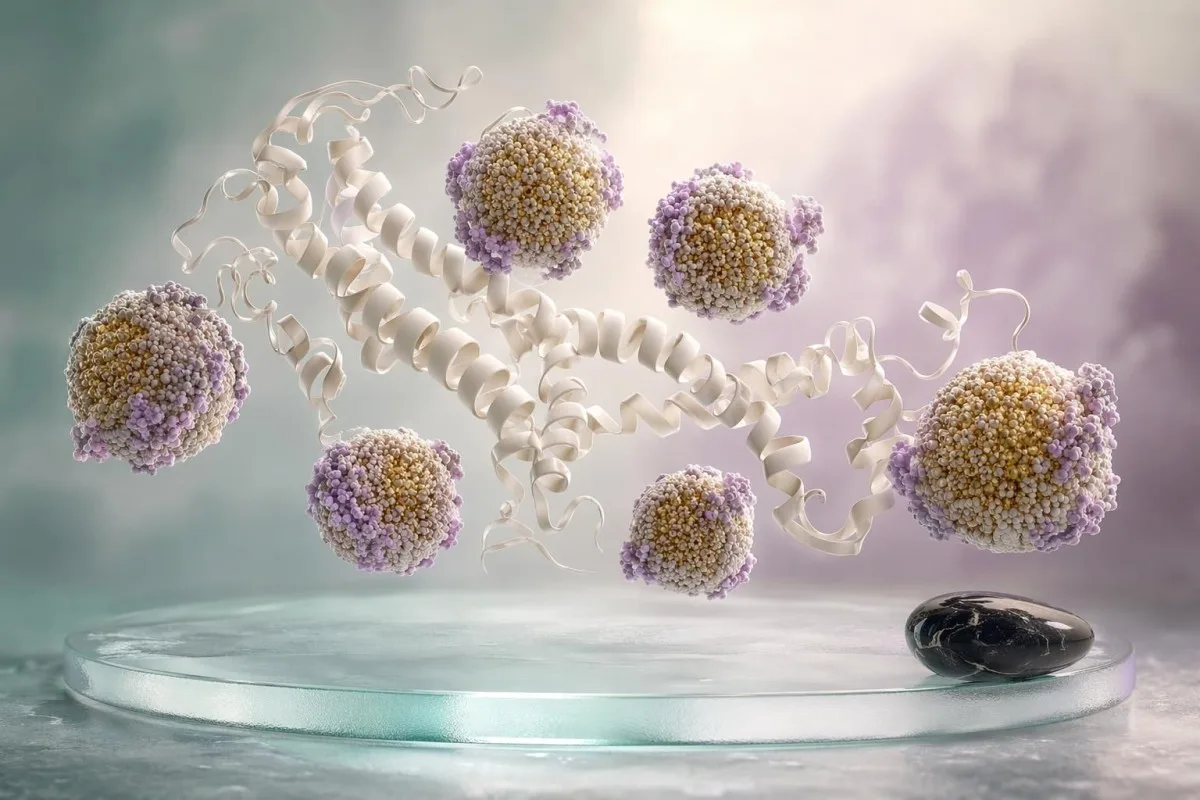
ApoA1 is not just another cholesterol number. It can reveal whether your HDL story looks protective, misleading, or overwhelmed by ApoB-driven plaque risk.


- ApoA1 blood test measures apolipoprotein A-I, the main structural protein on HDL particles, usually reported in mg/dL or g/L.
- Typical ApoA1 levels are roughly 110–180 mg/dL in adult men and 120–200 mg/dL in adult women, but laboratory ranges vary.
- ApoA1 vs HDL matters because HDL cholesterol measures cholesterol cargo, while ApoA1 better reflects HDL particle structure and number.
- Low ApoA1 below about 120 mg/dL in men or 140 mg/dL in women can suggest weaker HDL support, especially with high triglycerides or insulin resistance.
- High ApoA1 is often favorable, but values above 200–220 mg/dL do not guarantee low heart risk if ApoB or Lp(a) is high.
- ApoB priority remains central because ApoB counts atherogenic particles; high ApoB can outweigh a reassuring ApoA1 result.
- ApoA1 ApoB ratio is calculated as ApoB divided by ApoA1 using the same units; ratios above 0.8 often suggest higher cardiometabolic risk.
- Retesting timing is usually 6–12 weeks after major diet, weight, medication, or inflammatory changes because ApoA1 moves slowly.
What the ApoA1 blood test really tells you
The ApoA1 blood test measures apolipoprotein A-I, the main protein scaffold of HDL particles, so it gives clues about HDL particle quantity and function rather than just HDL cholesterol cargo. As of May 24, 2026, I use ApoA1 most when HDL cholesterol looks reassuring but the broader lipid pattern does not. At Kantesti AI, our AI reads ApoA1 beside ApoB, triglycerides, non-HDL cholesterol, glucose markers, inflammation, and previous trends.
ApoA1 is the dominant protein on HDL, and it helps HDL accept cholesterol from cells through ABCA1 transporters before enzymes such as LCAT mature the particle. HDL cholesterol of 65 mg/dL can look excellent, yet ApoA1 of 112 mg/dL may suggest fewer or less resilient HDL particles than the HDL-C number implies.
I see this pattern in clinic: a 46-year-old cyclist has HDL-C of 72 mg/dL, triglycerides of 210 mg/dL, ApoB of 124 mg/dL, and ApoA1 of 128 mg/dL. The HDL-C looks impressive, but the ApoB pressure is high; our deeper guide to the ApoB blood test explains why that particle count often drives the risk conversation.
ApoA1 is not a direct HDL function test, and that distinction matters. Cholesterol efflux capacity, anti-inflammatory HDL activity, and HDL proteomics are research-grade in most settings; ApoA1 is a practical clinical proxy that is cheaper, available, and interpretable beside routine lipid markers.
Thomas Klein, MD, writes this with a bias from practice: isolated numbers mislead patients. In our analysis of 2M+ uploaded blood test reports, the useful signal usually appears when ApoA1 is read as a ratio, a trend, and a context marker rather than as a standalone badge of good or bad health.
ApoA1 levels: reference ranges, units, and cutoffs
Typical ApoA1 levels are about 110–180 mg/dL in adult men and 120–200 mg/dL in adult women, although each laboratory sets its own range. In g/L, those same values are roughly 1.10–1.80 g/L for men and 1.20–2.00 g/L for women.
ApoA1 below 120 mg/dL in men or below 140 mg/dL in women often deserves a closer cardiovascular risk review, especially when ApoB is above 90 mg/dL or triglycerides exceed 150 mg/dL. Some European laboratories use lower reference limits near 1.04 g/L for men and 1.08 g/L for women, so I never interpret the number without the lab’s own interval.
Unit conversion is simple: 1 g/L equals 100 mg/dL. A report showing ApoA1 of 1.32 g/L is the same as 132 mg/dL, and Kantesti AI normalizes unit differences before comparing patterns across countries in our biomarker guide.
Very low ApoA1 is a different story. ApoA1 below 50 mg/dL, and especially below 20 mg/dL, raises the possibility of rare genetic HDL disorders, severe liver synthetic problems, major protein loss, or significant acute illness rather than ordinary lifestyle variation.
ApoA1 vs HDL: why the two results can disagree
ApoA1 vs HDL comes down to protein structure versus cholesterol cargo: ApoA1 reflects the main HDL protein, while HDL-C measures how much cholesterol sits inside HDL particles. A high HDL-C result can still coexist with modest ApoA1 if the HDL particles are cholesterol-rich but not numerous.
HDL-C of 60 mg/dL is not the same as ApoA1 of 160 mg/dL. HDL-C is a cargo measurement, similar to weighing luggage; ApoA1 is closer to counting and characterizing the vehicles carrying that luggage.
The Emerging Risk Factors Collaboration reported in JAMA that HDL-C and ApoA1 were both inversely associated with vascular risk, but adding apolipoproteins to standard cholesterol measures produced only modest improvement in population-level prediction (Emerging Risk Factors Collaboration, 2009). That is why I do not order ApoA1 for every healthy 24-year-old with a simple lipid panel; I use it when the pattern is discordant.
A common mismatch is high HDL-C with low-normal ApoA1 in people with triglycerides above 200 mg/dL. If you are trying to understand the ordinary HDL number first, our HDL range guide gives the baseline cutoffs before you move into apolipoproteins.
HDL can become less protective during systemic stress. Acute inflammation, oxidative stress, uncontrolled diabetes, and chronic kidney disease can change HDL protein composition, so a static HDL-C number may overstate the benefit of the particle.
When ApoA1 adds value beyond a standard lipid panel
ApoA1 adds the most value when HDL-C, LDL-C, triglycerides, and ApoB point in different directions. It is most useful in people with insulin resistance, high triglycerides, premature family heart disease, unusually high HDL-C, or suspected inherited lipid disorders.
The 2018 AHA/ACC cholesterol guideline treats ApoB ≥130 mg/dL as a risk-enhancing factor, particularly when triglycerides are ≥200 mg/dL (Grundy et al., 2019). ApoA1 is not emphasized as strongly in that guideline, which mirrors real-world practice: ApoB usually changes treatment decisions more often than ApoA1.
Where ApoA1 helps is the gray zone. A 58-year-old woman with LDL-C of 118 mg/dL, HDL-C of 82 mg/dL, triglycerides of 168 mg/dL, ApoB of 112 mg/dL, and ApoA1 of 132 mg/dL has a different risk pattern from someone with the same HDL-C but ApoB of 72 mg/dL and ApoA1 of 178 mg/dL.
Patients often ask why a standard panel is not enough. The answer is that a lipid panel reading estimates risk from cholesterol mass, whereas ApoA1 and ApoB add particle biology; those are related but not identical.
The evidence here is honestly mixed for routine screening. In my practice, ApoA1 is a second-line test, not a first-line test, unless there is a strong family history, a very unusual HDL-C result above 90–100 mg/dL, or a clinician is calculating an ApoB/ApoA1 ratio.
How to interpret low ApoA1 without overreacting
Low ApoA1 usually means HDL particle support is weaker than expected, but the clinical meaning depends on ApoB, triglycerides, liver function, inflammation, and recent illness. ApoA1 of 105 mg/dL is more concerning with ApoB of 135 mg/dL than with ApoB of 65 mg/dL.
Low ApoA1 with high ApoB is the pattern I take most seriously. It suggests fewer protective HDL protein scaffolds while atherogenic particle burden is elevated, which is exactly the combination that can hide behind a merely borderline LDL-C result.
Low ApoA1 often travels with HDL-C below 40 mg/dL in men or below 50 mg/dL in women, but not always. If the standard HDL number is also low, our low HDL guide covers the common causes patients can actually change.
Recent infection can temporarily lower ApoA1. If hs-CRP is above 10 mg/L, ferritin has jumped, or albumin has fallen, I usually repeat apolipoproteins after 2–6 weeks rather than treating one post-viral lipid snapshot as destiny.
Very low ApoA1 plus orange-tinged tonsils, neuropathy, corneal clouding, or HDL-C under 10 mg/dL is unusual but not subtle. That pattern needs a lipid specialist, because inherited ABCA1 or ApoA1 pathway disorders require different thinking from ordinary cardiometabolic risk.
How to interpret high ApoA1 and very high HDL
High ApoA1 is often favorable, but it is not a guarantee of low heart risk. ApoA1 above 180 mg/dL in men or above 200 mg/dL in women can reflect strong HDL protein levels, yet high ApoB, high Lp(a), smoking, diabetes, or hypertension can still dominate risk.
Very high HDL-C can be misleading. Several cohorts have shown a U-shaped relationship between HDL-C and mortality, and while ApoA1 may clarify some cases, it does not prove HDL is functioning normally in every person with HDL-C above 90 mg/dL.
ApoA1 can rise with estrogen therapy, pregnancy, regular endurance training, and some genetic variants. I also see higher ApoA1 in people who drink alcohol regularly; that does not mean alcohol is a heart prescription, because blood pressure, liver enzymes, cancer risk, and triglycerides may move the wrong way.
If HDL-C is high but LDL-C or non-HDL cholesterol is also high, do not let the HDL story distract you. Our guide to LDL with normal HDL explains why clinicians usually treat the atherogenic side first.
A practical reading is simple: high ApoA1 is reassuring only when ApoB, non-HDL cholesterol, triglycerides, blood pressure, A1c, and inflammatory markers also look controlled. If ApoB is 130 mg/dL, ApoA1 of 205 mg/dL is not a free pass.
ApoA1 ApoB ratio: the particle balance that often matters
The ApoA1 ApoB ratio is usually calculated as ApoB divided by ApoA1 using the same units. Ratios below 0.6 are often favorable, 0.6–0.8 is a middle zone, and ratios above 0.8 suggest more atherogenic particle pressure relative to HDL support.
ApoB/ApoA1 ratio is unitless when both markers use the same unit. ApoB of 120 mg/dL divided by ApoA1 of 130 mg/dL gives a ratio of 0.92, which I would treat as a high-risk signal even if HDL-C looks decent.
INTERHEART, a 52-country Lancet case-control study, found the ApoB/ApoA1 ratio was among the strongest lipid-related markers associated with myocardial infarction across regions and sexes (Yusuf et al., 2004). That result is one reason many lipid clinicians still like the ratio, even though modern guidelines often prioritize ApoB targets.
The ratio is not magic. A person with ApoB of 55 mg/dL and ApoA1 of 95 mg/dL has a ratio of 0.58, but the low ApoA1 still deserves context; a person with ApoB of 95 mg/dL and ApoA1 of 190 mg/dL has a ratio of 0.50, yet ApoB may still be too high for someone after a heart attack.
Kantesti AI checks the ratio beside non-HDL cholesterol because both describe the atherogenic side from different angles. When they disagree, trend history and clinical risk usually settle the argument.
How Kantesti interprets ApoA1 with ApoB and trends
Kantesti AI interprets ApoA1 by pattern-matching it against ApoB, LDL-C, non-HDL cholesterol, triglycerides, HDL-C, A1c, CRP, kidney markers, liver enzymes, medications, and prior results. Our AI does not label ApoA1 as good or bad in isolation.
ApoA1 trend direction can matter more than one value. A fall from 168 to 123 mg/dL over 9 months, paired with triglycerides rising from 108 to 238 mg/dL, often points toward worsening insulin resistance even if the new ApoA1 still sits inside the lab range.
Our medical validation standards require the AI to separate pattern recognition from diagnosis. That matters for ApoA1 because a low result can mean cardiometabolic risk, inflammation, protein loss, liver disease, rare genetics, or simply a different laboratory method.
When patients upload a PDF or photo, our AI blood test platform normalizes units, checks internal contradictions, and flags ratios that many portals never calculate. For apolipoproteins, the model is deliberately conservative: high ApoB never gets softened just because ApoA1 looks strong.
Thomas Klein, MD, reviews these lipid logic rules with our clinical team because apolipoprotein testing is easy to overinterpret. The aim is not to frighten someone with a borderline ApoA1 of 119 mg/dL; the aim is to show whether the rest of the cardiovascular picture agrees.
Common causes of low ApoA1 that patients miss
Low ApoA1 is commonly linked with insulin resistance, high triglycerides, smoking, obesity, systemic inflammation, liver disease, kidney protein loss, and some medications. The most actionable clue is usually the cluster around it, not the ApoA1 result alone.
Insulin resistance is one of the most common low-ApoA1 settings I see. Triglycerides above 150 mg/dL, HDL-C below 40–50 mg/dL, fasting insulin above roughly 10–15 µIU/mL, and waist gain often travel together before A1c crosses the diabetes threshold.
If A1c still looks normal, do not dismiss the pattern. Our article on insulin resistance testing explains why fasting insulin, triglycerides, HDL-C, and HOMA-IR can shift years before a formal diabetes diagnosis.
Liver status matters because ApoA1 is produced largely in the liver and intestine. ALT above 40 IU/L, GGT above 60 IU/L, high triglycerides, and low ApoA1 can point toward fatty liver physiology, although imaging and clinical context are needed.
Protein loss is the quieter cause. When ApoA1 is low alongside albumin below 3.5 g/dL, urine albumin-creatinine ratio above 30 mg/g, or swelling, I think less about HDL function and more about kidney, gut, or inflammatory protein loss.
Changes that can improve the ApoA1–ApoB pattern
The most reliable way to improve the ApoA1–ApoB pattern is usually to lower ApoB while improving triglycerides, insulin sensitivity, fitness, and smoking status. Raising ApoA1 alone is rarely the primary treatment goal.
ApoB often falls faster and more predictably than ApoA1 rises. A Mediterranean-style dietary shift can reduce LDL-C by 5–15% in many patients, while weight loss of 5–10% can meaningfully lower triglycerides and improve HDL-related patterns.
Soluble fiber is practical, not glamorous. About 5–10 g/day of viscous fiber from oats, barley, psyllium, beans, or lentils can modestly lower LDL-C, and our guide to cholesterol-lowering foods explains what to recheck after 8–12 weeks.
Exercise tends to improve HDL function more than it dramatically raises HDL-C. In my experience, 150–300 minutes/week of brisk aerobic work plus 2 resistance sessions is more useful than chasing a supplement that promises a 10 mg/dL HDL bump.
Supplements need lab context because niacin can raise HDL-C but has not consistently improved outcomes when added to modern therapy, and it can raise glucose, uric acid, or liver enzymes. If you are considering non-prescription options, read the lab safety checks in our cholesterol supplement guide before buying.
Ordering the ApoA1 blood test: prep and retest timing
The ApoA1 blood test usually does not require fasting, but fasting can help interpret triglycerides, calculated LDL-C, insulin, and the full lipid context. If you are measuring ApoA1 with ApoB, I prefer a stable baseline rather than a test taken during acute illness.
ApoA1 is commonly measured by immunoturbidimetric or nephelometric methods on serum or plasma. The result is usually available within 1–3 business days, although some local laboratories send apolipoproteins to a reference lab.
Fasting is less critical for ApoA1 than for triglycerides. If your clinician is also checking fasting insulin, triglycerides, or calculated LDL-C, our nonfasting cholesterol guide explains which results can shift after meals.
Retest timing should match the intervention. After starting a statin, changing diet, losing weight, stopping smoking, or beginning thyroid treatment, 6–12 weeks is usually enough time to see ApoB and triglyceride movement, while ApoA1 may change more subtly.
Do not compare mg/dL with g/L by eye. Lab portals sometimes change units between countries or hospital systems, and our guide to unit changes shows why a result can look 100 times different when it is not.
Special situations: sex, age, family history, and children
ApoA1 interpretation changes with sex hormones, pregnancy, menopause, childhood lipid disorders, kidney disease, liver disease, and family history. A value that is average for one person may be unexpected for another with premature coronary disease in the family.
Women often have higher ApoA1 than men before menopause, partly because estrogen tends to support HDL-related markers. After menopause, LDL-C and ApoB often rise, and ApoA1 may not offset that atherogenic shift.
ApoA1 is not a routine pediatric screening test, but it can help in specialist evaluation when a child has very low HDL-C, xanthomas, pancreatitis history, or strong premature heart disease in relatives. Our children’s cholesterol guide covers the ordinary pediatric ranges before advanced markers are considered.
Family patterns matter more than a single adult result. If a parent had a heart attack before age 55 in men or 65 in women, ApoB, Lp(a), LDL-C, non-HDL cholesterol, and sometimes ApoA1 become more useful together; our hereditary marker guide explains what to ask about.
Ethnicity and ancestry can influence baseline lipid patterns, but individual risk still wins. I have seen patients from the same family with nearly identical ApoA1 levels and very different ApoB, blood pressure, A1c, and calcium scan results.
When ApoA1 results need medical follow-up
ApoA1 needs medical follow-up when it is very low, falling quickly, paired with high ApoB, or accompanied by symptoms or other abnormal labs. The result is rarely an emergency by itself, but the pattern can uncover risk that deserves action.
Call your clinician promptly if ApoA1 is below 50 mg/dL, especially with HDL-C below 20 mg/dL, neuropathy symptoms, corneal clouding, enlarged tonsils, unexplained liver abnormalities, or a strong family history of early heart disease. Those findings are uncommon, but they should not be managed from a wellness dashboard alone.
If ApoB is above 130 mg/dL, LDL-C is above 190 mg/dL, or Lp(a) is very high, the ApoA1 number should not delay risk reduction. Our guide to heart-risk blood tests explains why plaque-forming particle markers usually deserve priority.
Chest pressure, breathlessness with exertion, fainting, or new neurologic symptoms require urgent care regardless of ApoA1. Blood tests help stratify risk; they do not rule out an active heart problem, and our article on heart problem markers separates prevention labs from acute cardiac testing.
A steady ApoA1 of 125 mg/dL with ApoB of 68 mg/dL, triglycerides of 88 mg/dL, A1c of 5.2%, and normal blood pressure is usually not a crisis. Context prevents overtreatment.
Kantesti research, clinical review, and next steps
Kantesti AI supports ApoA1 interpretation by combining apolipoproteins with the full blood test pattern, not by replacing a clinician. If your report includes ApoA1 and ApoB, you can upload it to Try Free AI Blood Test Analysis and receive a structured explanation in about 60 seconds.
Our medical team reviews lipid logic against clinical standards and edge cases, including discordant HDL-C, high ApoB, unit conversion errors, and acute inflammation traps. You can read about our physicians on the Medical Advisory Board page.
Kantesti LTD is a UK company building AI-powered blood test interpretation for 2M+ users across 127+ countries and 75+ languages. The Kantesti workflow is designed to explain uncertainty clearly, because a patient with ApoA1 of 118 mg/dL needs a different conversation depending on ApoB, triglycerides, A1c, CRP, medications, and family history.
Klein, T., Mitchell, S., Kantesti Clinical AI Group. (2026). Clinical Validation of the Kantesti AI Engine (2.78T) on 100,000 Anonymised Blood Test Cases Across 127 Countries: A Pre-Registered, Rubric-Based, Population-Scale Benchmark Including Hyperdiagnosis Trap Cases — V11 Second Update. Figshare. DOI: 10.6084/m9.figshare.32095435. ResearchGate: publication search. Academia.edu: publication search.
Klein, T., Mitchell, S., Kantesti Clinical AI Group. (2026). Multilingual AI Assisted Clinical Decision Support for Early Hantavirus Triage: Design, Engineering Validation, and Real-World Deployment Across 50,000 Interpreted Blood Test Reports. Figshare. DOI: 10.6084/m9.figshare.32230290. ResearchGate: publication search. Academia.edu: publication search.
Frequently Asked Questions
What does the ApoA1 blood test measure?
The ApoA1 blood test measures apolipoprotein A-I, the main structural protein found on HDL particles. Typical adult ranges are roughly 110–180 mg/dL in men and 120–200 mg/dL in women, although laboratories vary. ApoA1 helps estimate HDL particle support, but it is not a direct test of cholesterol efflux or HDL anti-inflammatory function.
Is ApoA1 better than HDL cholesterol?
ApoA1 is not always better than HDL cholesterol, but it can add information when HDL-C looks unusually high, low, or discordant with other lipids. HDL cholesterol measures cholesterol cargo, while ApoA1 reflects the main HDL protein scaffold. In practice, ApoA1 is most useful when read with ApoB, triglycerides, non-HDL cholesterol, A1c, and family history.
What is a low ApoA1 level?
A low ApoA1 level is often below about 120 mg/dL in adult men or below 140 mg/dL in adult women, depending on the laboratory range. Values below 50 mg/dL are unusual and should prompt repeat testing and medical review. Low ApoA1 is more concerning when ApoB is above 90–130 mg/dL, triglycerides exceed 150 mg/dL, or HDL-C is also low.
What does a high ApoA1 level mean?
A high ApoA1 level usually suggests stronger HDL protein presence, often above 180 mg/dL in men or 200 mg/dL in women. High ApoA1 can occur with favorable fitness patterns, estrogen effects, pregnancy, or genetics, but it does not cancel high ApoB or high Lp(a). If ApoB is 130 mg/dL or higher, cardiovascular risk may still be elevated despite high ApoA1.
How do I calculate the ApoA1 ApoB ratio?
Calculate the ApoA1 ApoB ratio by dividing ApoB by ApoA1 using the same units, usually mg/dL or g/L. For example, ApoB of 120 mg/dL divided by ApoA1 of 150 mg/dL equals 0.80. Ratios below 0.60 are often favorable, 0.60–0.80 is a middle zone, and values above 0.80 commonly suggest higher atherogenic particle pressure.
Do I need to fast before an ApoA1 blood test?
Fasting is usually not required for an ApoA1 blood test because ApoA1 changes little after a meal. Fasting for 8–12 hours may still be useful if the same panel includes triglycerides, fasting insulin, or calculated LDL-C. Avoid testing during acute illness when possible because inflammation can temporarily lower ApoA1 and distort the lipid pattern.
Can lifestyle raise ApoA1?
Lifestyle can improve the ApoA1-related pattern, but ApoA1 itself may move modestly compared with ApoB and triglycerides. Regular aerobic exercise, resistance training, smoking cessation, weight loss of 5–10%, and better insulin sensitivity often improve HDL function markers. Clinically, lowering ApoB and triglycerides usually matters more than chasing a higher ApoA1 number.
How should ApoA1 be interpreted during pregnancy?
Pregnancy normally changes cholesterol, triglycerides, and apolipoproteins, so an ApoA1 result may not reflect your usual cardiovascular baseline. Review it with your obstetric clinician; for long-term risk assessment, repeat testing after delivery when pregnancy-related lipid changes have settled.
Why might my doctor order an Lp(a) test along with ApoA1?
Because Lp(a) is a mostly inherited ApoB-containing particle, it can raise cardiovascular risk even when ApoA1 or HDL cholesterol looks favorable. Ask about measuring Lp(a) at least once in adulthood, particularly if close relatives had premature heart disease.
Can medications change my ApoA1 result?
Yes. Hormone therapy, some lipid medicines, major weight-loss treatments, and drugs that affect the liver or triglycerides can shift ApoA1 indirectly, so bring your current medication and supplement list when reviewing results.
Get AI-Powered Blood Test Analysis Today
Join over 2 million users worldwide who trust Kantesti for instant, accurate lab test analysis. Upload your blood test results and receive comprehensive interpretation of 15,000+ biomarkers in seconds.
📚 Referenced Research Publications
Klein, T., Mitchell, S., & Weber, H. (2026). Clinical Validation of the Kantesti AI Engine (2.78T) on 100,000 Anonymised Blood Test Cases Across 127 Countries: A Pre-Registered, Rubric-Based, Population-Scale Benchmark Including Hyperdiagnosis Trap Cases — V11 Second Update. Kantesti AI Medical Research.
Klein, T., Mitchell, S., & Weber, H. (2026). Multilingual AI Assisted Clinical Decision Support for Early Hantavirus Triage: Design, Engineering Validation, and Real-World Deployment Across 50,000 Interpreted Blood Test Reports. Kantesti AI Medical Research.
📖 External Medical References
⚕️ Medical Disclaimer
This article is for educational purposes only and does not constitute medical advice. Always consult a qualified healthcare provider for diagnosis and treatment decisions.
E-E-A-T Trust Signals
Experience
Physician-led clinical review of lab interpretation workflows.
Expertise
Laboratory medicine focus on how biomarkers behave in clinical context.
Authoritativeness
Written by Dr. Thomas Klein with review by Dr. Sarah Mitchell and Prof. Dr. Hans Weber.
Trustworthiness
Evidence-based interpretation with clear follow-up pathways to reduce alarm.