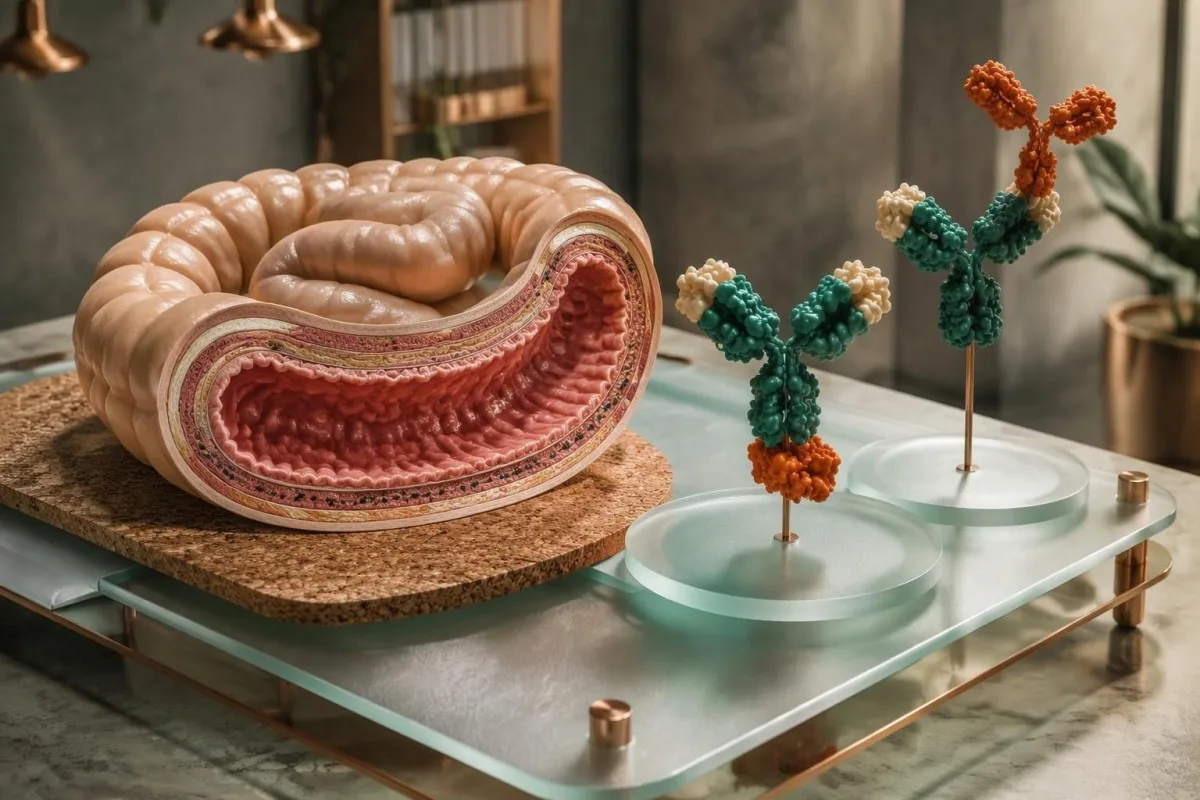
An infliximab level test pairs drug concentration with antibodies to explain loss of IBD control. Low drug without significant antibodies suggests inadequate exposure; low drug with persistent high antibodies suggests immune-mediated clearance. Active inflammation despite adequate exposure raises possible mechanistic failure—but only after confirming inflammation, correct sampling, and a target appropriate to the treatment goal.

Клучни заклучоци
- Paired results distinguish insufficient infliximab exposure from antibody-associated clearance; neither result alone proves why symptoms returned.
- Pre-infusion sampling means collecting the laboratory sample before the next intravenous infusion starts, not 2 days afterward.
- Maintenance benchmarks differ: the 2017 AGA guideline suggested at least 5 µg/mL for reactive monitoring, while expert consensus describes 5–10 µg/mL for maintenance.
- Low infliximab levels with absent antibodies can reflect faster clearance, intestinal protein loss, delayed dosing, or an interval that is too long.
- Antibodies to infliximab matter most when they are persistent, substantial for that assay, and accompanied by very low or undetectable drug.
- Possible mechanistic failure requires objectively active IBD despite adequate exposure; diarrhea with a trough of 8 µg/mL does not establish it.
- Assay units are not interchangeable: infliximab 1 µg/mL equals 1 mg/L, but antibody U/mL and AU/mL cannot be universally converted.
- Treatment changes belong with your IBD team; selected loss-of-response cases may warrant exposure of 10–15 µg/mL before infliximab is abandoned.
What does an infliximab level test actually tell you?
Ан infliximab level test measures circulating infliximab, usually alongside anti-drug antibodies, to investigate inadequate exposure or immune-mediated drug clearance. A result of 2 µg/mL with no detected antibodies asks a different question from 2 µg/mL with persistent high antibodies; neither automatically means that the medicine must be stopped.
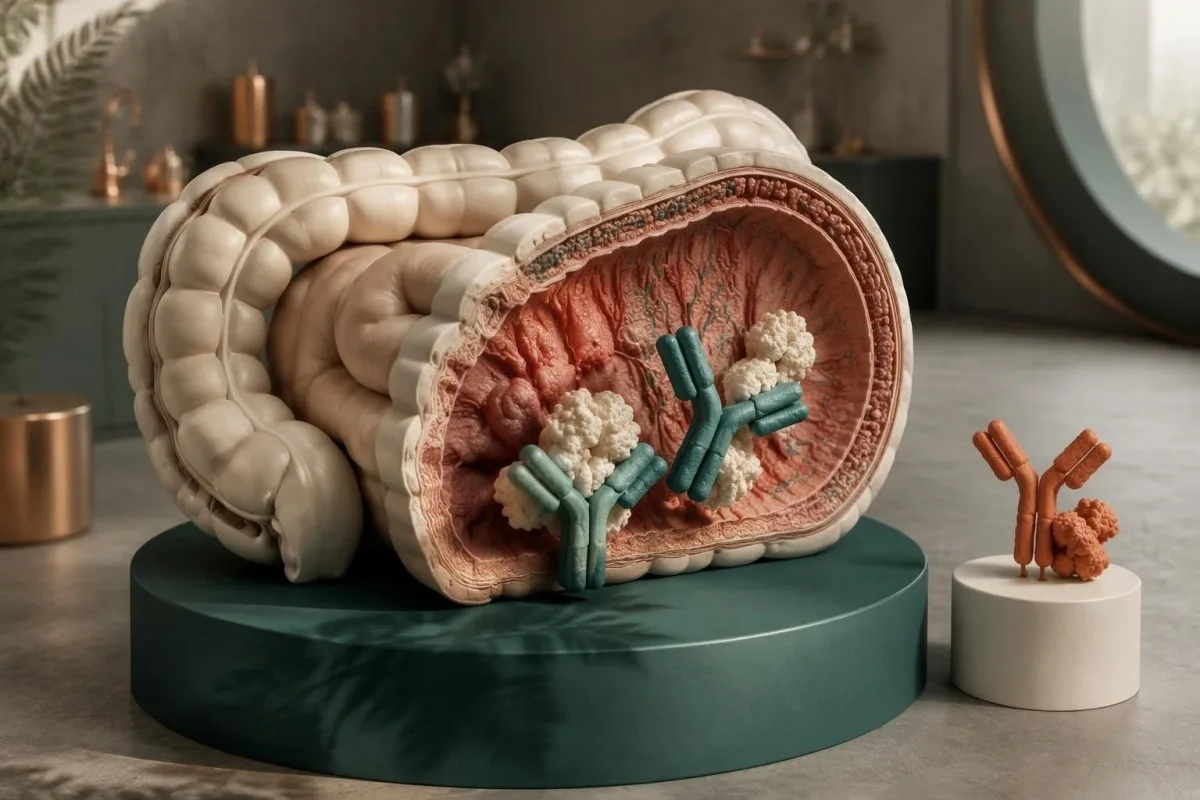
Reactive therapeutic drug monitoring is testing prompted by worsening symptoms or evidence of active disease. It differs from proactive monitoring during apparent remission: a hypothetical trough of 4 µg/mL may justify investigation during a documented flare, yet require a different discussion when endoscopy and stool markers show sustained healing.
Infliximab blocks tumor necrosis factor, commonly abbreviated TNF; the concentration test does not measure whether every intestinal TNF signal has been neutralized. A serum result of 7 µg/mL measures drug in the circulation, not drug activity inside each affected bowel segment or the extent of intestinal healing.
The practical interpretation uses at least 3 inputs: drug concentration, antibody findings, and objective disease activity. Previous response also matters—returning symptoms after 18 months of control represent secondary loss of response, whereas never achieving control during initial treatment raises different questions about induction exposure and treatment mechanism.
Кантести е анализатор на крвна слика со вештачка интелигенција that helps readers understand paired infliximab findings without treating 1 laboratory number as a dosing instruction. Our platform is operated by Kantesti LTD, UK Company No. 17090423; information about нашата организација is separate from the clinical evidence supporting therapeutic drug monitoring.
When should infliximab trough levels be sampled?
Intravenous infliximab trough levels should be sampled immediately before the next infusion begins, when the concentration is near its lowest point in that dosing interval. A sample collected 2 days after an infusion is not a trough and should not be compared directly with pre-infusion maintenance targets.
Sampling timing can change the apparent meaning of a result without any change in treatment effectiveness. For example, a hypothetical 18 µg/mL collected shortly after an infusion and 3 µg/mL collected before the following infusion could describe the same dosing cycle—not a sudden deterioration between 2 independent treatment states.
Record the previous infusion date, actual dose in mg, scheduled interval, and collection time before interpreting the report. If an 8-week infusion is delayed until week 10, the resulting concentration describes a longer drug-free interval; it cannot cleanly answer whether the original 8-week schedule provided sufficient exposure.
Collection from a line recently used to administer infliximab can contaminate the specimen and produce a misleadingly high result. Ask the infusion service about its collection protocol, and tell it if sampling occurred after treatment started; the timing principles resemble other pre-dose medication tests, although their targets differ.
Fasting is generally not required for the infliximab concentration itself, but another test ordered during the same visit may have preparation requirements. Our водич за подготовка на првично земање примероци explains how to document medication timing; for this test, an accurate infusion timeline usually matters more than an 8-hour fast.
What infliximab level is considered adequate?
Постојат no universal adequate infliximab trough for every patient, disease phenotype, assay, and treatment phase. The 2017 AGA guideline suggested at least 5 µg/mL during reactive maintenance monitoring, while a 2021 expert consensus described maintenance concentrations of 5–10 µg/mL and higher exposure in selected loss-of-response situations.
The AGA benchmark of at least 5 µg/mL is a clinical decision aid, not a healthy-population reference range (Feuerstein et al., 2017). Infliximab is a prescribed biologic: an untreated person normally has no circulating infliximab, so a laboratory's therapeutic interval should never be read like the normal range for sodium.
The TAXIT trial enrolled 263 adults with stable responses and optimized intravenous infliximab toward 3–7 µg/mL before randomized follow-up. Its primary remission endpoint did not improve with concentration-based dosing, although some secondary outcomes favored that approach; this explains why the historical 3–7 µg/mL window is useful context rather than a universal modern target (Vande Casteele et al., 2015).
Cheifetz et al. (2021) recommended considering exposure of 10–15 µg/mL before discontinuing infliximab for secondary loss of response in selected patients. This is expert consensus, not proof that everyone should be escalated to 15 µg/mL; fistulas, endoscopic goals, disease severity, safety, and prior optimization affect whether that reasoning applies.
A concentration of 12 µg/mL is not automatically toxic, and a concentration of 4 µg/mL does not automatically require escalation in an asymptomatic patient with documented healing. Unlike the narrower toxicity discussions around some други лекови што се следат со ниво пред доза, infliximab has no single established serum toxicity cutoff that dictates action.
| Ниво | Опсег | Што значи |
|---|---|---|
| Historical TAXIT optimization window | 3–7 µg/mL | Studied in adults with stable responses; not a universal threshold for active disease or fistula healing. |
| AGA reactive maintenance benchmark | At least 5 µg/mL | Suggested in the 2017 guideline for reactive monitoring; interpret alongside objective activity and the assay. |
| Expert-consensus maintenance range | 5–10 µg/mL | Described by the 2021 consensus; the appropriate goal varies with disease phenotype and desired outcome. |
| Selected loss-of-response reassessment | 10–15 µg/mL | Exposure experts suggest considering before abandoning treatment in selected cases; not a routine target or toxicity range. |
Why are infliximab levels low without antibodies?
Low infliximab levels with no significant antibodies usually suggest pharmacokinetic underexposure: too little drug remains available over the dosing interval. A trough of 1.5 µg/mL can reflect faster clearance, intestinal protein loss, a delayed infusion, or insufficient dose or frequency—not necessarily failure of TNF blockade as a treatment mechanism.

Severe intestinal disease can increase infliximab clearance and allow protein, including therapeutic antibody, to be lost through the bowel. A hypothetical patient with albumin of 28 g/L and a trough of 1 µg/mL therefore needs assessment of disease burden and protein loss, not just a question about whether the infusion was attended.
Low albumin is associated with faster infliximab clearance, but it is not a direct measure of drug binding or an instruction to apply a free-drug correction. Albumin of 30 g/L and 40 g/L may provide different clearance context; our водич за толкување на серумски протеини explains why inflammation, liver synthesis, nutrition, and loss must be distinguished.
Infliximab is mainly broken down through protein-catabolic pathways rather than cleared unchanged by the kidneys. A creatinine of 90 µmol/L cannot predict the infliximab trough, and the medicine should not be interpreted using small-molecule renal dosing assumptions; body size, inflammatory burden, and treatment interruptions may be more informative.
Kantesti AI helps place a low trough alongside reported albumin, CRP, and infusion timing; 1 result cannot identify the clearance pathway by itself. Low albumin should not automatically trigger protein supplements, because inflammation also changes circulating proteins—as explained in our guide to inflammation and transferrin.
What do low drug levels plus antibodies suggest?
Low or undetectable infliximab with persistent high antibodies suggests immune-mediated pharmacokinetic failure: antibodies can accelerate clearance, neutralize drug activity, or both. A trough below an assay's 0.5 µg/mL quantification limit with a substantial antibody result is more concerning than a weak antibody signal alongside a maintained drug concentration.
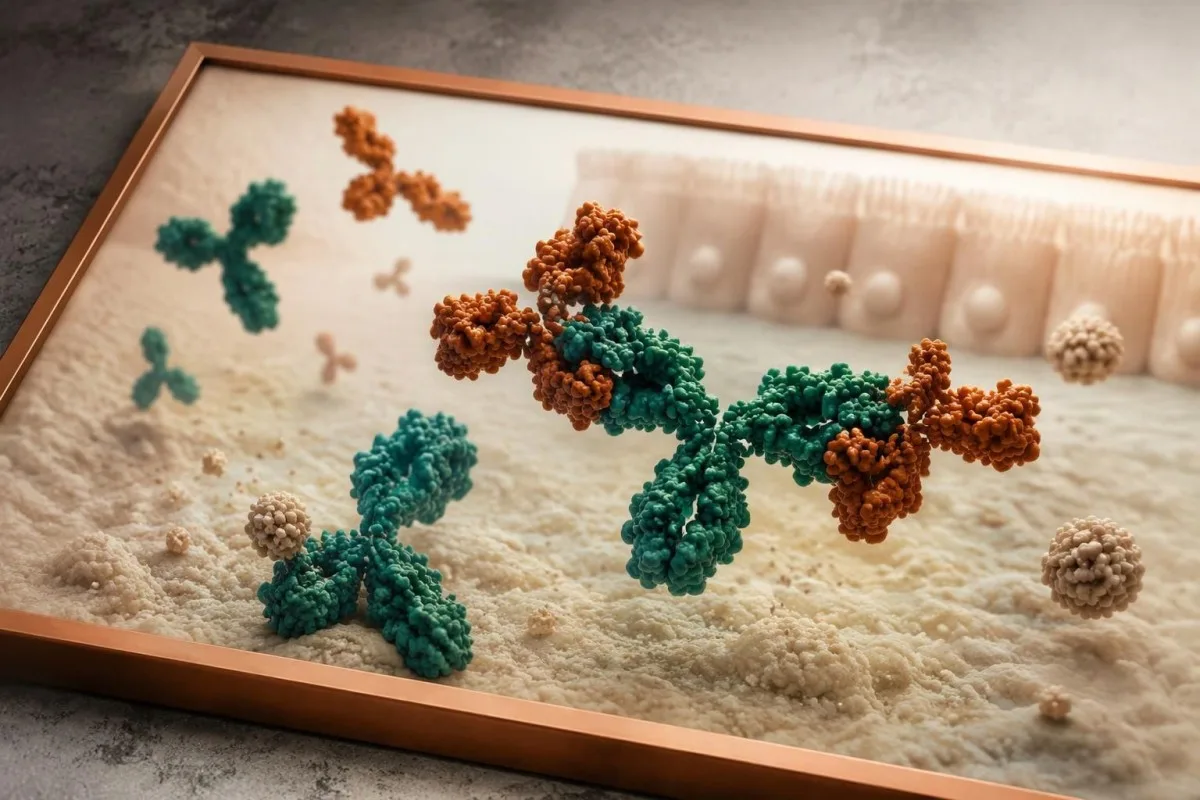
Anti-infliximab antibody tests usually detect binding antibodies; they do not all directly measure neutralizing activity. A positive result of 20 U/mL therefore identifies an assay-defined antibody signal, not a universal percentage of blocked infliximab or a precise prediction of how much benefit remains.
Antibody persistence and magnitude influence whether dose optimization is likely to recover exposure. Cheifetz et al. (2021) described low-titer antibodies as below 10 U/mL for the homogeneous mobility shift assay specifically; that threshold must not be transferred to an ELISA reporting AU/mL or to another laboratory's calibration.
A single low antibody result may be transient or become less clinically relevant after supervised treatment optimization. Repeating paired drug and antibody testing can distinguish a 1-time signal from a rising pattern, but severe disease or an infusion reaction may require action before a second result is available.
Antibodies to infliximab are not the same as antibodies against your own bowel, and they do not by themselves diagnose an immediate allergy. Our explanation of типови на резултати на позитивни антитела helps separate these concepts; breathlessness or faintness during an infusion still requires immediate attention regardless of the antibody number.
When does an adequate trough suggest mechanistic failure?
Possible mechanistic failure means objectively active IBD persists despite sufficient infliximab exposure for the treatment goal. A trough of 8 µg/mL with confirmed active colitis may raise this possibility, but selected patients need further exposure optimization before clinicians conclude that another inflammatory pathway should be targeted.
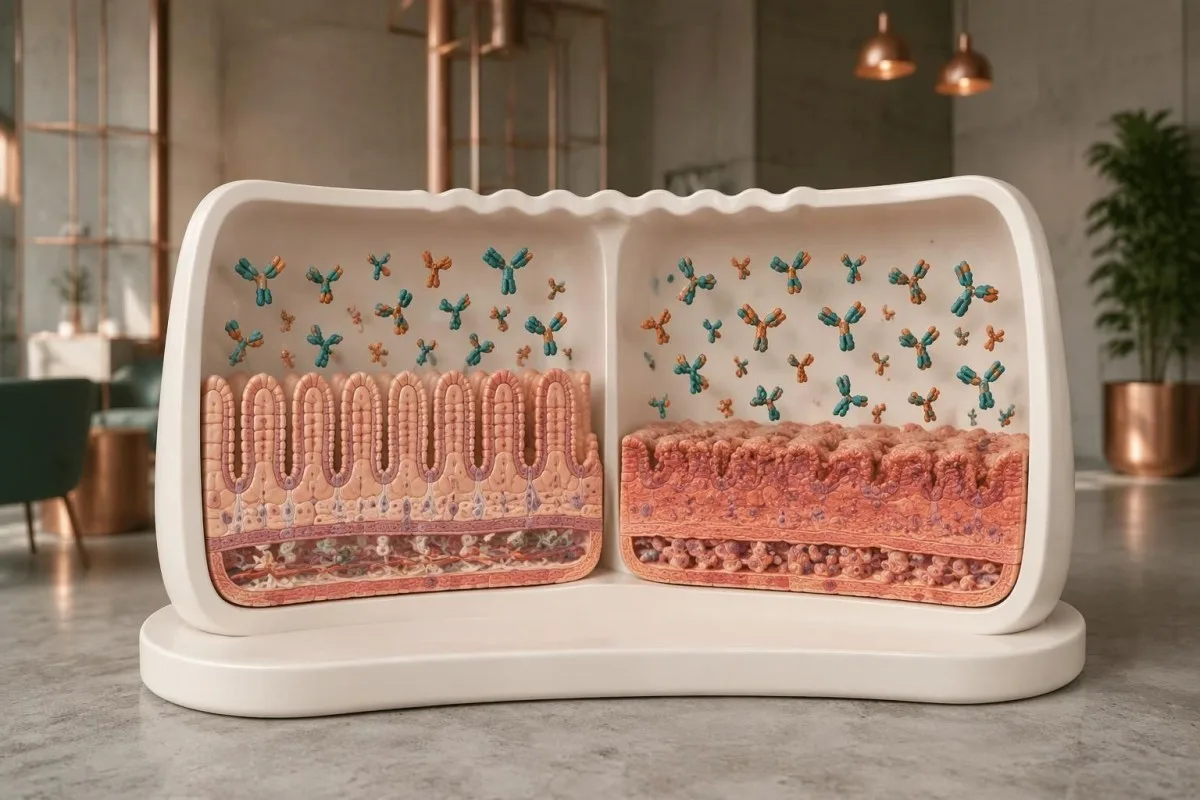
An adequate serum concentration cannot prove that TNF is the only pathway driving a person's current disease. Persistent endoscopic activity with a trough of 12 µg/mL is more supportive of a mechanism problem than the same concentration with normal objective testing and symptoms from bile acid diarrhea.
Calling treatment failure at exactly 5 µg/mL can be premature when the goal is fistula control or substantial endoscopic improvement. The 10–15 µg/mL reassessment discussed in the 2021 consensus provides a safeguard against abandoning an under-optimized treatment, but it is not a requirement to escalate every patient with symptoms.
Objective evidence also has limits: CRP of 3 mg/L does not exclude active IBD, especially in people whose CRP has remained low during previous flares. Borderline stool results need context and sometimes repetition; our guide to граничен фекален калпротектин explains why an isolated intermediate value should not determine a biologic switch.
The strongest case for changing mechanism combines 3 findings: documented inflammation, adequate exposure on a correctly timed sample, and an inadequate clinical response despite appropriate optimization. Structural complications, such as a fixed Crohn's stricture, can also cause symptoms that neither more infliximab nor a different biologic will reliably reverse.
Can antibodies be positive when infliximab is adequate?
Antibodies can be detected while infliximab remains measurable or adequate, particularly with drug-tolerant assays. A trough of 7 µg/mL and a weak positive antibody result do not automatically mean treatment failure; the assay, antibody trend, and evidence of disease activity determine how much weight that finding deserves.
Drug-tolerant methods can identify antibodies in samples containing infliximab that would interfere with some drug-sensitive methods. This greater analytical sensitivity may reveal early or low-level immunogenicity, but 1 newly detected signal does not necessarily establish clinically meaningful loss of response.
A qualitative positive result contains less information than a quantitative result with the assay's cutoff and units. A report reading only positive cannot distinguish a value just above a 10 AU/mL cutoff from a much larger signal; our guide to квалитативни и квантитативни тестови explains what each format can establish.
Compare antibody trajectories using the same laboratory method whenever feasible. Hypothetical results of 12, 15, and 13 AU/mL across 3 correctly timed visits may carry a different implication from 12, 80, and 200 AU/mL, although analytical variability and clinical findings still prevent interpretation from trend alone.
Кантести е AI платформа за толкување крвна слика that helps distinguish a reported antibody cutoff from a treatment target. When the report lacks the method or units, our interpretation should preserve that uncertainty rather than labeling 1 positive result as proof that infliximab has stopped working.
Why do laboratory methods and antibody units matter?
Infliximab and antibody results are method-dependent, so values from different assays are not always interchangeable. Infliximab 1 µg/mL equals 1 mg/L, but antibody results in U/mL, AU/mL, or ng/mL do not have a universal conversion because laboratories use different standards, detection limits, and approaches to drug interference.
An assay may report free or functionally available drug differently from another method that detects a broader pool of circulating drug. Two laboratories can therefore produce somewhat different concentrations from similar specimens; a change from 6 to 8 µg/mL after switching methods may not represent a true gain in exposure.
Below the quantification limit means the assay cannot reliably assign a numerical concentration below its validated boundary. A report of less than 0.4 µg/mL is not proof of exactly 0 µg/mL, and greater than 100 U/mL cannot tell you whether the true antibody result is 110 or 1,000 U/mL.
Some laboratories use reflex antibody testing only when the drug concentration falls below a preset threshold. If antibodies were not tested because infliximab was 9 µg/mL, the result is not equivalent to antibodies negative; ask whether the antibody field says not performed, not detected, or below detection.
Kantesti's report interpretation should retain the assay name, units, and collection context instead of silently converting 20 AU/mL into another method's scale. Our информации за клиничката методологија explains the distinction between technical interpretation and clinical decision-making; no AI explanation removes the need to confirm an unusual result with the reporting laboratory.
How do clinicians confirm that returning symptoms are IBD?
Returning symptoms do not necessarily mean returning intestinal inflammation; clinicians combine stool markers, CRP, infection testing, endoscopy, and imaging as appropriate. Three loose stools daily with a trough of 6 µg/mL can arise from active IBD, an intestinal infection, bile acid diarrhea, or a functional bowel disorder.
Fecal calprotectin and lactoferrin assess intestinal inflammatory activity rather than infliximab exposure. A hypothetical calprotectin of 800 µg/g adds different information from a trough of 2 µg/mL; our stool inflammation marker comparison explains why paired disease and drug measurements answer separate clinical questions.
C. difficile testing can be necessary during new or worsening diarrhea, even without recent antibiotics. A positive screening test and negative toxin result require contextual interpretation, not automatic classification as an IBD flare; our guide to несогласни резултати за C. difficile describes why 2 test components can disagree.
Bile acid diarrhea is particularly relevant after ileal disease or resection and can persist despite controlled inflammation. A person with a trough of 10 µg/mL and reassuring objective IBD assessment may need a different evaluation; our explanation of SeHCAT retention results covers one diagnostic route where that test is available.
Bloating, gas, and altered stool frequency can also reflect bacterial overgrowth or carbohydrate malabsorption. At least 2 explanations can coexist with IBD, so a satisfactory trough should not end the assessment; our SIBO breath test guide explains preparation and limitations rather than treating breath testing as proof of every symptom's cause.
How might an IBD team respond to low exposure?
Low exposure without substantial persistent antibodies may lead an IBD team to increase the infliximab dose, shorten the dosing interval, or address a treatment interruption. A common adult intravenous maintenance schedule is 5 mg/kg every 8 weeks after induction, but any adjustment requires individualized prescribing and reassessment of disease activity.
For a hypothetical 70 kg adult, 5 mg/kg corresponds to 350 mg before local preparation or rounding rules. Shortening an unchanged dose from every 8 weeks to every 6 weeks increases average drug administered per unit time by about 33%; the trough increase cannot be predicted as exactly 33% because clearance is not constant.
Increasing the dose and shortening the interval are not pharmacokinetically identical strategies. A larger dose changes peak exposure, while a shorter interval reduces time for concentrations to decline; a hypothetical patient whose symptoms repeatedly return during week 7 may prompt a different discussion from someone symptomatic throughout all 8 weeks.
A useful reassessment checks both exposure and the treatment outcome rather than declaring success because the trough rose. If infliximab increases from 2 to 9 µg/mL but calprotectin remains 900 µg/g and endoscopic disease persists, the new result has narrowed the explanation without necessarily improving the underlying disease.
The timing of repeat testing depends on severity, the revised schedule, and the clinical question; waiting 3 months is not appropriate for every deteriorating patient. Our водич за трендови на безбедност на лекови explains why comparable dates and methods matter, but an app should never independently recommend extra infusions.
When are switching treatment or combination therapy considered?
Persistent high antibodies with low drug may favor changing treatment, while adequate exposure with confirmed active IBD may favor switching to a different mechanism. Low-level immunogenicity can sometimes be addressed through supervised optimization or an immunomodulator, but a result of 15 U/mL alone cannot determine which option offers the best benefit-risk balance.
Switching within the anti-TNF class can make sense when infliximab previously controlled disease but antibody-associated clearance now prevents adequate exposure. Switching to another mechanism becomes more persuasive when inflammation persists with adequate exposure; these are 2 different failure patterns, not interchangeable reasons to choose the next medicine.
An immunomodulator such as azathioprine or methotrexate may reduce immunogenicity in selected circumstances, but adding one introduces additional monitoring and adverse-effect risks. Before azathioprine, TPMT testing and safety assessment can inform prescribing; TPMT and NUDT15 assessment do not replace ongoing CBC and liver monitoring, even when baseline results are normal.
If a person already takes a thiopurine, metabolite testing can help clarify exposure or a metabolism pattern before assuming combination therapy has failed. For example, 2 patients prescribed the same mg dose may have very different metabolite findings; our thiopurine treatment pattern guide explains why prescription dose alone is incomplete.
Restarting infliximab after a long interruption deserves a separate safety discussion because immunogenicity and infusion reactions can complicate re-exposure. A treatment gap of 6 months is not equivalent to a routine 1-week scheduling delay; never restart, add an immunomodulator, or stop an existing medicine based solely on an online interpretation.
Do induction, fistulas, children, and injections change targets?
Treatment phase, disease phenotype, age, and formulation can change the relevant exposure goal; intravenous maintenance targets should not be copied into every setting. Standard adult intravenous induction commonly uses 5 mg/kg at weeks 0, 2, and 6, and those early concentrations are interpreted differently from an established 8-week maintenance trough.

The 2021 expert consensus described induction goals of approximately 20–25 µg/mL at week 2, 15–20 µg/mL at week 6, and 7–10 µg/mL at week 14 (Cheifetz et al., 2021). These are consensus exposure goals influenced by disease phenotype and outcome, not interchangeable minimums from one definitive randomized trial.
Perianal fistula outcomes may require higher exposure than symptom control in uncomplicated luminal disease, but observational associations do not establish a universal healing threshold. A fistula still draining at 10 µg/mL may also need imaging, drainage of an abscess, or procedural care; raising the trough cannot substitute for addressing an undrained collection.
Children can have different clearance and dosing requirements, particularly with lower body weight or severe disease. An adult maintenance benchmark of 5 µg/mL should not become a parent-directed dosing rule; our discussion of AI толкување за деца explains why pediatric specialist context and age-appropriate interpretation remain necessary.
Subcutaneous infliximab produces a different concentration-time profile from intermittent intravenous infusions, and availability and prescribing schedules vary internationally. A concentration of 15 µg/mL during injection treatment should not be labeled excessive merely because an intravenous report lists 3–7 µg/mL; the formulation, actual regimen, and sampling convention must be specified.
How do paired results change the clinical reasoning?
Paired results guide the next question rather than dictate a prescription: low drug without antibodies suggests underexposure, low drug with persistent antibodies suggests immunogenicity, and adequate drug with inflammation raises possible mechanism failure. The following 4 examples are entirely hypothetical; the concentrations are illustrative, not personalized treatment recommendations.
Example 1: a 34-year-old with Crohn's disease has a true trough of 1.8 µg/mL, no detected antibodies, albumin of 29 g/L, and calprotectin of 1,100 µg/g. This pattern supports underexposure in active disease; confirming the infusion schedule and considering supervised optimization are more logical than immediately declaring TNF blockade ineffective.
Example 2: a 46-year-old with ulcerative colitis has infliximab below 0.4 µg/mL and antibodies above the laboratory's 100 U/mL reporting limit on 2 visits. Assuming the assay defines that antibody signal as substantial, persistent immunogenicity is plausible; simply increasing the dose may be less successful than a clinician-directed treatment change.
Example 3: a 28-year-old has a trough of 11 µg/mL, no significant antibodies, and repeatedly active colitis on endoscopy despite appropriate optimization. Example 4: a 61-year-old has the same 11 µg/mL trough but reassuring endoscopy and diarrhea after ileal resection; the first pattern raises mechanism failure, whereas the second prompts investigation of non-inflammatory causes.
Кантести е Алатка за анализа на крвни тестови со вештачка интелигенција (AI) that helps organize these distinctions when the report and treatment details are supplied. Our објаснување на AI технологијата describes how laboratory context informs interpretation; if a 2-week-old report lacks sampling timing, the missing information must stay visible rather than being guessed.
Што треба да понесете на контролниот преглед и кои докази се применливи?
Bring the complete report, infusion timeline, and objective disease results to your IBD review; these 3 evidence streams make paired drug-antibody testing actionable. Seek earlier care for severe deterioration rather than waiting for the next trough, and distinguish infliximab-specific clinical research from general educational publications about accompanying laboratory abnormalities.
A useful review record includes the previous 2 infusion dates, actual dose, collection timing, assay name, antibody units, and recent CRP, albumin, and fecal calprotectin. Add symptom timing, steroid use, recent antibiotics, and missed doses; ask whether the proposed change addresses insufficient exposure, immunogenicity, active non-TNF disease, or a non-inflammatory explanation.
Contact your clinical team promptly for worsening diarrhea with dehydration, persistent vomiting, new significant bleeding, or fever of 38°C or higher while immunosuppressed. Severe abdominal pain with distension, fainting, or inability to keep fluids down may require emergency assessment; during an infusion, sudden breathing difficulty or collapse requires immediate staff attention, not interpretation of an antibody report.
Kantesti provides educational interpretation, not independent biologic prescribing, and our принципи за одговорна вештачка интелигенција explain that boundary. A reassuring trough of 10 µg/mL does not establish that an infusion is safe during an acute illness; the treating service must assess symptoms, examination findings, and any necessary investigations.
The 2 Zenodo publications listed below address accompanying laboratory interpretation, not infliximab target validation: our RDW и водич за црвените крвни клетки concerns anemia patterns, while our Упатство за BUN и креатинин concerns renal and hydration context. These educational deposits are not evidence for anti-drug antibody cutoffs; the AGA guideline, TAXIT trial, and biologic-monitoring consensus supply the directly relevant clinical references.
Најчесто поставувани прашања
Што значи ниско ниво на инфликсимаб?
Ниско ниво на инфликсимаб значи дека изложеноста на циркулирачкиот лек е под референтната вредност избрана за таа фаза и цел на лекувањето; тоа не значи автоматски дека инфликсимаб треба да се прекине. Вистинска минимална концентрација при одржувачка терапија од 2 µg/mL без значајни антитела може да укажува на побрз клиренс, загуба на протеини преку цревата или недоволна доза или интервал. Ниско ниво на лекот со упорно присуство на значителни антитела, пак, укажува на клиренс посредуван од имунолошкиот систем. Вашиот тим за ИБД треба да го толкува резултатот заедно со објективната активност на болеста, времето на инфузијата и анализата.
Кое е добро trough ниво на инфликсимаб за ИБД?
Не постои една единствена оптимална најниска концентрација на инфликсимаб за сите лица со IBD. Насоките на AGA од 2017 година препорачуваат најмалку 5 µg/mL при реактивно следење на одржувачката терапија, додека експертски консензус од 2021 година наведува одржувачки концентрации од 5–10 µg/mL. Кај одбрани пациенти со секундарно губење на одговорот може да биде потребна повторна процена при 10–15 µg/mL пред да се прекине терапијата. Индукцијата, фистулите и поткожната терапија бараат различен контекст, па затоа лабораторискиот референтен интервал не е универзална цел за дозирање.
Кога треба да го направам тестот за нивото на инфликсимаб?
For intravenous infliximab, a trough sample should be collected immediately before the next infusion begins. A sample obtained 2 days after an infusion is not comparable with routine pre-infusion targets. Record the last infusion date, dose, scheduled interval, and actual collection time, especially if an 8-week appointment was delayed. Subcutaneous infliximab has a different exposure profile, so sampling should follow the prescribing team's and laboratory's instructions.
Can antibodies to infliximab disappear?
Low-level antibodies to infliximab can sometimes become undetectable or less clinically relevant, but persistent substantial antibodies with very low drug are harder to overcome. The 2021 expert consensus described low-titer antibodies as below 10 U/mL for one homogeneous mobility shift assay; that cutoff cannot be applied to every laboratory method. Supervised optimization or an immunomodulator may help selected patients, while others need a treatment change. Repeat paired testing can clarify persistence, but patients should not alter treatment themselves.
Can infliximab stop working even if the level is normal?
Infliximab can fail to control objectively active IBD despite an adequate circulating concentration, which raises possible mechanistic failure. A trough of 10 µg/mL does not guarantee intestinal healing or establish that TNF is the only pathway driving the disease. Before changing mechanism, clinicians confirm inflammation, assess structural or infectious complications, and consider whether exposure was adequate for the specific treatment goal. Diarrhea with reassuring objective assessment may have a non-inflammatory cause instead.
Is a high infliximab level dangerous?
A high infliximab concentration is not automatically dangerous, and no single established serum toxicity cutoff applies to all IBD patients. A result of 15 µg/mL may be interpreted differently during induction, fistula treatment, or subcutaneous therapy than during routine intravenous maintenance. Safety depends on the overall treatment regimen, infections, infusion reactions, and other clinical findings rather than the concentration alone. Do not skip an infusion or reduce a dose without discussing the result with your prescribing team.
Why did my infliximab antibody results change after switching laboratories?
Infliximab antibody results can change after switching laboratories because assays differ in calibration, units, detection limits, and tolerance of circulating drug. A result of 20 AU/mL cannot be universally converted into U/mL or ng/mL. A drug-tolerant method may detect antibodies that a drug-sensitive assay misses when infliximab remains measurable. Compare trends using the same method when possible, and ask whether the antibody test was actually performed rather than omitted through a reflex-testing rule.
Дознајте како да ги читате крвните резултати
Поставете го вашиот лабораториски извештај и AI на Kantesti ќе го објасни секој биомаркер на разбирлив јазик за неколку секунди. Го користат повеќе од 2 милиони луѓе ширум светот.
Референци
- Клајн, Т., Мичел, С., & Вебер, Х. (2026). Крвен тест за RDW: целосен водич за RDW-CV, MCV и MCHC. Kantesti AI за медицински истражувања. ДОИ
- Клајн, Т., Мичел, С., & Вебер, Х. (2026). Објаснување на BUN/Креатинин соотношение: водич за тест на функцијата на бубреците. Kantesti AI за медицински истражувања. ДОИ
- Feuerstein JD et al. (2017). American Gastroenterological Association Institute Guideline on Therapeutic Drug Monitoring in Inflammatory Bowel Disease. Гастроентерологија. ДОИ
- Vande Casteele N et al. (2015). Trough concentrations of infliximab guide dosing for patients with inflammatory bowel disease. Гастроентерологија. ДОИ
- Cheifetz AS et al. (2021). A Comprehensive Literature Review and Expert Consensus Statement on Therapeutic Drug Monitoring of Biologics in Inflammatory Bowel Disease. The American Journal of Gastroenterology. ДОИ
- 2 милиони+Анализирани тестови
- 127+Земји
- 100+Јазици
За медицинскиот тим


Сигнали за доверба E-E-A-T
Искуство
Клиничка ревизија водена од лекар за работните текови на толкување на лабораториски резултати.
Експертиза
Фокус на лабораториска медицина за тоа како биомаркерите се однесуваат во клинички контекст.
Авторитивност
Медицински рецензирано од д-р Thomas Klein, со придонес од д-р Sarah Mitchell и проф. д-р Hans Weber.
Доверливост
Толкување засновано на докази со јасни патеки за следење за да се намали алармирањето.






Медицинско одрекување од одговорност
Овој напис е само за едукативни цели и не претставува медицински совет. Секогаш консултирајте се со квалификуван здравствен работник за одлуки за дијагноза и третман.
Објавено · Контактирајте го уредничкиот тим
Објавено од Kantesti Ltd, регистрирана во Англија и Велс, регистарски број на компанијата. 17090423, Лондон, Обединето Кралство.
