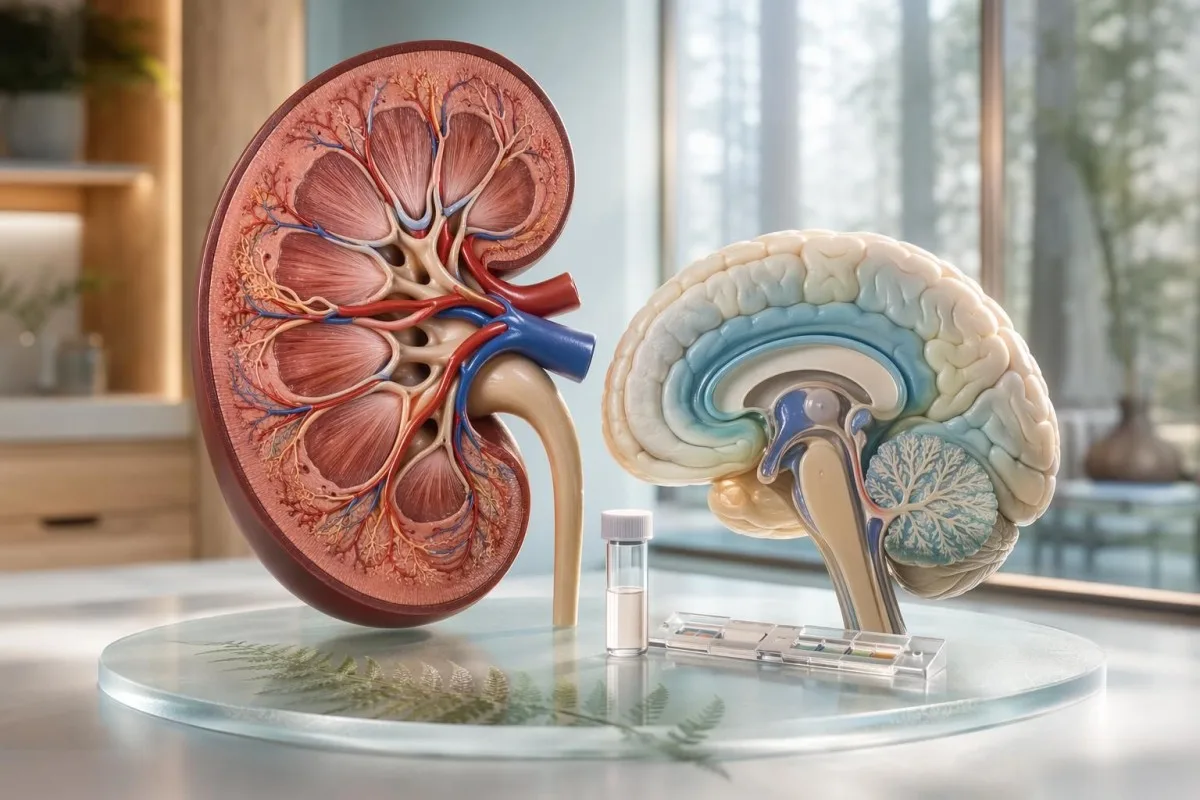
A high sodium result is usually a water-balance problem, not someone eating one salty meal. The clinical trick is deciding whether water loss is simple, kidney-driven, medication-related, or urgent.


- High sodium usually means serum sodium above 145 mmol/L; severe hypernatremia often starts above 155-160 mmol/L.
- Simple dehydration usually produces concentrated urine, often urine osmolality above 600 mOsm/kg if the kidneys can respond normally.
- Diabetes insipidus is suspected when sodium is high, thirst is intense, urine volume exceeds 3 L/day, and urine remains dilute below about 300 mOsm/kg.
- Medication causes include lithium, loop diuretics, osmotic agents, SGLT2 inhibitors, lactulose, high-dose sodium bicarbonate, and hypertonic saline exposure.
- High glucose can cause osmotic diuresis; corrected sodium rises by about 1.6-2.4 mmol/L for each 100 mg/dL glucose above 100 mg/dL.
- Neurologic warning signs such as confusion, seizure, new weakness, severe drowsiness, or fainting with sodium above 150 mmol/L need urgent medical review.
- Correction speed matters; chronic hypernatremia is often corrected by no more than 10-12 mmol/L in 24 hours unless a specialist directs otherwise.
- Lab confirmation matters because saline-line contamination, indirect ion-selective electrode artifacts, and mismatched units can make a sodium blood test high when the body sodium is not truly high.
What a high sodium result usually means on a blood test
High sodium causes are usually water-loss problems: dehydration, diabetes insipidus, osmotic urination from high glucose, medication effects, or less often direct sodium gain. In adults, serum sodium above 145 mmol/L is hypernatremia; above 155-160 mmol/L can injure the brain, especially if it develops quickly. Doctors separate simple dehydration from water-loss disorders by checking thirst, urine volume, urine concentration, glucose, kidney function, medication history, and neurologic symptoms. Kantesti is an AI blood test analyzer that reads sodium alongside creatinine, glucose, urea, chloride, bicarbonate, and urine markers rather than treating one flagged number as the whole diagnosis.
A sodium blood test high result is not the same as “too much table salt” in most clinic rooms. In my experience, the more common story is that the body has lost more water than sodium — through fever, diarrhoea, sweating, uncontrolled diabetes, poor access to fluids, or a kidney that cannot conserve water.
The normal adult serum sodium range is commonly 135-145 mmol/L, although some laboratories print 136-144 mmol/L or 134-146 mmol/L depending on the analyser and local validation. If your report uses a UK-style U&E panel, our U&E kidney results guide explains why sodium is interpreted beside potassium, urea, creatinine, and bicarbonate.
Adrogué and Madias described hypernatremia as a disorder of water balance rather than sodium balance in the New England Journal of Medicine, and that framing is still the one I use at the bedside (Adrogué & Madias, 2000). A 52-year-old runner with sodium 149 mmol/L after a hot race is a different patient from an 82-year-old with sodium 149 mmol/L, confusion, and urine output of 4.5 L/day.
Kantesti’s biomarker guide treats sodium as one electrolyte in a larger pattern because isolated sodium interpretation is where patients get misled. A sodium of 147 mmol/L with high albumin and high urea often points toward dehydration; the same sodium with very dilute urine points somewhere else entirely.
How doctors confirm high sodium before blaming dehydration
Doctors confirm high sodium by repeating the sample, reviewing collection method, and checking serum osmolality when the result does not fit the patient. A true sodium above 145 mmol/L should usually align with high serum osmolality, commonly above 295 mOsm/kg, unless there is a measurement artifact.
A surprisingly practical clue is whether the sample came from a line recently flushed with saline. Even a tiny amount of saline contamination can push sodium and chloride upward together, and I have seen repeat peripheral samples drop from 154 mmol/L to 142 mmol/L within an hour.
Pseudohypernatremia is uncommon, but it can occur with some indirect ion-selective electrode methods when proteins or lipids are very abnormal. Kantesti’s neural network flags discordant patterns against clinical chemistry rules used in our medical validation workflow, but no algorithm should replace a repeat test when the patient looks well and the number looks odd.
The chloride pattern helps. True water loss often raises sodium and chloride in parallel, while isolated sodium elevation with a normal chloride can suggest reporting, unit, or sample issues; the normal chloride range is usually 98-107 mmol/L in adults.
Thomas Klein, MD, my own name on this article, is included here for a reason: abnormal electrolytes are one of the places where physician judgement still matters. A clean repeat sample, medication list, and urine result often settle the question faster than ordering a dozen rare endocrine tests.
Simple dehydration has a recognisable lab pattern
Simple dehydration usually causes high sodium with concentrated urine, higher urea or BUN, and sometimes high albumin or hematocrit. If the kidneys are healthy, urine osmolality often rises above 600 mOsm/kg because antidiuretic hormone tells the kidneys to save water.
The pattern I trust most is sodium 146-152 mmol/L, urea or BUN above baseline, creatinine mildly up, urine darker than usual, and a clear story: vomiting, diarrhoea, fever, poor intake, or heavy sweating. In that scenario, the kidney is doing its job; the person simply lacks enough free water.
A BUN/creatinine ratio above 20:1 in US units can support reduced effective circulating volume, though it is not diagnostic by itself. Our guide on high BUN danger explains why urea rises with dehydration, high protein intake, gastrointestinal bleeding, and kidney perfusion changes.
Albumin can also look high from hemoconcentration. Adult albumin is often reported around 35-50 g/L or 3.5-5.0 g/dL; a value above the range with high sodium and thirst is often a water-loss clue rather than a protein disorder.
The practical question is not “did I drink enough yesterday?” but “can I safely replace water, and why did I lose it?” A frail older adult with sodium 150 mmol/L after two days of poor intake needs a different plan from a healthy adult at 146 mmol/L after a long sauna session.
When dilute urine points toward diabetes insipidus
Diabetes insipidus is suspected when high sodium appears with excessive thirst, high urine volume, and urine that stays dilute despite dehydration. In adults, urine output above 3 L/day with urine osmolality below 300 mOsm/kg is a classic clue.
Many patients describe a very specific story: waking several times nightly to urinate, carrying water everywhere, craving cold drinks, and feeling panicky if water is not nearby. The old term diabetes insipidus is still widely used, although many endocrine teams now say arginine vasopressin deficiency or arginine vasopressin resistance.
Christ-Crain and colleagues reviewed diabetes insipidus in Nature Reviews Disease Primers and emphasised that diagnosis depends on pairing blood osmolality with urine concentration, not symptoms alone (Christ-Crain et al., 2019). A person with sodium 148 mmol/L, serum osmolality 305 mOsm/kg, and urine osmolality 120 mOsm/kg is not behaving like simple dehydration.
Kantesti reads this pattern beside thirst-related clues because constant thirst can also come from diabetes mellitus, high calcium, kidney disease, dry mouth medicines, or anxiety. Our guide to a blood test for constant thirst lays out the first split doctors usually make.
Urine specific gravity can be a useful bedside clue, but it is rough. A specific gravity below 1.005 suggests very dilute urine, while values above 1.020 usually suggest concentration; glucose or protein in urine can distort the reading.
How central and nephrogenic diabetes insipidus are separated
Central diabetes insipidus improves after desmopressin because the body lacks vasopressin signal, while nephrogenic diabetes insipidus improves little because the kidney cannot respond. A urine osmolality rise above about 50% after desmopressin supports central disease; a minimal rise often suggests nephrogenic disease.
The classic water-deprivation test is not a DIY experiment. It can be unsafe when sodium is already high, and in partial diabetes insipidus the results sit in a messy middle zone that even endocrinologists debate.
In specialist centres, stimulated copeptin is increasingly used because copeptin tracks vasopressin secretion more reliably than measuring vasopressin itself. A stimulated copeptin above roughly 4.9 pmol/L after hypertonic saline testing has been used to distinguish primary polydipsia from central diabetes insipidus, though protocols differ by country.
Nephrogenic diabetes insipidus has a very different medication and kidney story. Lithium is the classic cause; after long-term exposure, some series report impaired urinary concentration in 20-40% of users, though clinically severe hypernatremia is far less common.
Night urination matters because polyuria is often noticed first at 2 a.m., not during a clinic visit. Our night urination lab guide explains how glucose, kidney function, sodium, and urine concentration are sorted before rare diagnoses are pursued.
Medication effects that can make sodium run high
Medications raise sodium by causing water loss, blocking vasopressin action, increasing glucose-related urination, or adding sodium directly. Lithium, loop diuretics, mannitol, lactulose, SGLT2 inhibitors, sodium bicarbonate, and hypertonic saline are common names doctors check first.
Lithium deserves its own line because it can cause nephrogenic diabetes insipidus months or years after starting therapy. A patient may have sodium 147-151 mmol/L, urine osmolality below 300 mOsm/kg, and a medication history that quietly explains the whole thing.
Loop diuretics can contribute by increasing salt and water loss, especially when appetite is poor or fluid access is limited. SGLT2 inhibitors usually do not cause dangerous hypernatremia on their own, but the combination of glycosuria, heat, low carbohydrate intake, vomiting, or reduced drinking can move sodium upward.
Lactulose, bowel preparations, and osmotic agents can create large stool or urine water losses. Sodium bicarbonate tablets and effervescent medicines can add a real sodium load; some preparations contain hundreds of milligrams of sodium per dose.
When Kantesti reviews medication-linked patterns, the medication timeline matters as much as the value. Our medication monitoring guide is useful because sodium changes often appear within days for diuretics but may take months or years for lithium-related concentrating defects.
High glucose can hide or reveal hypernatremia
High glucose causes osmotic diuresis, which can produce severe water loss and high sodium after correction. Corrected sodium rises by about 1.6-2.4 mmol/L for every 100 mg/dL glucose above 100 mg/dL, depending on the formula used.
This is one of the places where the printed sodium can fool people. In marked hyperglycaemia, water shifts out of cells and may lower measured sodium, so a “normal” sodium of 140 mmol/L with glucose 600 mg/dL can actually represent corrected hypernatremia.
Kantesti is an AI-powered blood test analysis tool used by people in many countries, so our interpretation handles both mg/dL and mmol/L glucose units. A glucose of 33.3 mmol/L is about 600 mg/dL, and the sodium correction should not be skipped just because the units look unfamiliar.
Hyperosmolar hyperglycaemic state is the dangerous end of this spectrum. Doctors worry when glucose is very high, effective osmolality approaches or exceeds 320 mOsm/kg, the patient is confused or drowsy, and sodium correction reveals a large free-water deficit.
If high glucose appears on the same panel, read our high glucose cutoffs before assuming dehydration is the only issue. In practice, glucose-driven water loss and ordinary dehydration often coexist.
Gut loss, sweating and fever can raise sodium quickly
Diarrhoea, vomiting, fever, and heavy sweating raise sodium when water loss exceeds sodium loss or when replacement fluid is too salty. Fever can increase insensible water loss by roughly 10-15% per 1°C rise in body temperature, which is enough to matter in frail patients.
The stool history is often more useful than the first lab printout. Large watery diarrhoea for 24-48 hours can raise sodium if the person cannot keep up with free water, especially in older adults or children.
Sweat contains sodium, but it is usually hypotonic compared with plasma. Sweat sodium varies widely, often around 20-80 mmol/L, so prolonged sweating without enough fluid can leave the blood relatively concentrated.
Endurance athletes create a different diagnostic puzzle. Low sodium is more famous after races, but high sodium happens when heat, inadequate drinking, vomiting, or limited aid-station access produce net water loss; our diarrhoea blood test guide covers the infection and dehydration clues doctors pair with sodium.
Liamis and colleagues’ practical review in Postgraduate Medicine stresses that identifying the route of water loss is central to treatment choice (Liamis et al., 2016). A patient losing water through stool needs a different prevention plan from someone losing water through dilute urine.
True sodium gain is less common but clinically important
True sodium gain causes hypernatremia when sodium enters the body faster than water can balance it. Hypertonic saline, high-dose sodium bicarbonate, salt poisoning, overly concentrated tube feeds, and dialysis-related sodium shifts are the main situations doctors look for.
This group is smaller but not benign. A hospitalised patient receiving hypertonic saline, repeated sodium bicarbonate, or sodium-rich infusions can move from 142 mmol/L to 152 mmol/L faster than an outpatient losing water gradually.
Chloride helps separate patterns because sodium chloride exposure usually raises chloride too. Adult chloride commonly sits around 98-107 mmol/L, and a chloride of 115 mmol/L beside sodium 153 mmol/L makes me ask about saline, bicarbonate, kidney handling, and acid-base status.
Tube feeds are another under-discussed cause. If formula is concentrated, free-water flushes are missed, or diarrhoea develops, sodium can rise even without a dramatic change in kidney function.
Our chloride blood test guide is worth reading when sodium and chloride travel together. The sodium-chloride pairing often tells a clearer story than either number alone.
Neurologic warning signs after a high sodium result
Confusion, seizure, severe drowsiness, new weakness, fainting, or inability to drink safely after a high sodium result needs urgent medical assessment. Brain cells shrink during acute hypernatremia, and symptoms become more likely as sodium moves above 150-155 mmol/L.
The brain is the organ that makes hypernatremia dangerous. Rapid sodium rise pulls water out of brain cells; slow sodium rise lets the brain adapt with osmolytes, which is why treatment speed must be judged carefully.
A common safe correction target for chronic hypernatremia is no more than 10-12 mmol/L per 24 hours, or about 0.5 mmol/L per hour. Acute hypernatremia may be handled differently in hospital, but that decision belongs with clinicians who can monitor sodium every 2-4 hours.
Thomas Klein, MD, speaking as a physician rather than a software executive here: I would rather over-triage confusion with sodium 151 mmol/L than reassure someone over a portal message. High sodium symptoms can look like tiredness, irritability, poor coordination, headache, or delirium before seizure ever appears.
If dizziness, fainting, palpitations, or weakness are part of the presentation, our dizziness lab guide explains why clinicians often check glucose, sodium, potassium, kidney function, CBC, and blood pressure together.
Older adults, infants and pregnancy change the risk calculation
Older adults, infants, people with neurologic disability, and some pregnant patients can develop dangerous high sodium faster because thirst and access to water may be impaired. A sodium of 148 mmol/L is more concerning in a frail or confused person than in a healthy adult who can drink normally.
Older adults often have a weaker thirst response and lower kidney concentrating reserve. Add a heat wave, infection, diuretic, or two days of poor intake, and sodium can rise before anyone notices the drinking pattern changed.
Infants are vulnerable because they cannot request water and have higher water turnover relative to body size. Formula mixing errors, fever, diarrhoea, or poor feeding can produce sodium values above 150 mmol/L that need prompt paediatric assessment.
Pregnancy usually lowers sodium slightly because plasma osmolality resets downward; many pregnant patients sit near 130-138 mmol/L without disease. So a sodium of 145 mmol/L in pregnancy may deserve more attention than the same number in a non-pregnant adult, especially with vomiting or reduced intake.
For caregivers, trend and behaviour beat one isolated number. Our elderly lab guide focuses on the patterns that connect dehydration, falls, kidney function, medications, and cognition.
Follow-up labs doctors often order after high sodium
Follow-up testing after high sodium usually includes repeat electrolytes, glucose, urea or BUN, creatinine, calcium, serum osmolality, urine osmolality, urine sodium, and sometimes urine specific gravity. The goal is to locate the water problem: gut, skin, kidney, glucose, medication, or sodium load.
The fastest emergency pattern is usually a basic metabolic panel or renal panel. Sodium, potassium, chloride, bicarbonate, urea or BUN, creatinine, and glucose can be processed quickly in many hospitals, often within 30-90 minutes depending on the lab.
Urine osmolality is the separator I wish more patients knew about. Concentrated urine above 600 mOsm/kg points away from diabetes insipidus, while dilute urine below 300 mOsm/kg during hypernatremia points toward a water-conservation failure.
Calcium and potassium matter because hypercalcaemia and hypokalaemia can reduce kidney concentrating ability. A calcium above roughly 2.60 mmol/L or potassium below 3.5 mmol/L can contribute to polyuria and should not be ignored.
Our BMP blood test guide explains why emergency doctors order this panel early. It is not glamorous, but it quickly separates many high-risk electrolyte patterns from slower outpatient follow-up problems.
Trend analysis prevents overreaction to one sodium flag
Trend analysis is useful because a sodium rise from 139 to 146 mmol/L over two years means something different from a rise from 139 to 152 mmol/L in two days. Doctors compare baseline, symptoms, medications, fluid intake, urine pattern, and recent illness before deciding urgency.
Most healthy adults hold sodium in a narrow personal band, often within 2-3 mmol/L across routine checks. A repeated drift upward, even inside the printed range, can hint at worsening fluid access, diuretic intensity, glucose control, or kidney concentrating reserve.
Kantesti stores prior results so a patient can see whether sodium 146 mmol/L is new or a familiar edge-of-range result. Our clinicians on the medical advisory board review how we present these patterns so the output supports, rather than replaces, clinical judgement.
In outpatient care, a mild asymptomatic sodium of 146-148 mmol/L is often rechecked after hydration and medication review, commonly within days to a few weeks depending on context. A symptomatic sodium above 150 mmol/L is not a “wait for annual labs” situation.
If you are tracking family members or long-term conditions, our longitudinal analysis guide shows how baseline changes are easier to interpret than isolated red flags. Sodium is a perfect example because small shifts can be trivial or meaningful depending on the person.
Kantesti research notes and physician oversight
As of June 26, 2026, Kantesti interprets sodium in the context of hydration, kidney function, glucose, medication exposure, and paired urine data when available. Kantesti is an AI lab test interpretation service built with physician oversight, multilingual support, and privacy-focused handling for users across 127+ countries.
The company background matters in medical AI because electrolyte advice can change triage decisions. You can read more about Kantesti as an organisation on our About Us page, including the clinical and engineering structure behind the product.
Our published reference work is broader than sodium alone because real lab interpretation rarely happens marker by marker. The serum proteins guide is relevant to dehydration because albumin and total protein can concentrate when free water is low.
The complement testing guide is a separate immunology publication, but it shows the same principle: lab values need context, specimen quality checks, and clinical boundaries. I do not want any patient treating an AI interpretation as emergency care; neurologic symptoms with high sodium still belong with urgent clinicians.
Formal Kantesti research citations are listed below with DOI links, ResearchGate search links, and Academia.edu search links for verification. They are not substitutes for hypernatremia guidelines, but they document our broader method of structured biomarker interpretation.
Frequently Asked Questions
What are the most common high sodium causes?
The most common high sodium causes are water-loss states such as dehydration, diarrhoea, fever, heavy sweating, uncontrolled diabetes with osmotic urination, diabetes insipidus, and medication effects. In adults, high sodium usually means serum sodium above 145 mmol/L. Direct sodium gain from hypertonic saline, sodium bicarbonate, salt poisoning, or concentrated tube feeding is less common but clinically important. Doctors separate these causes by checking urine volume, urine osmolality, glucose, kidney function, and medication history.
What high sodium symptoms should worry me?
High sodium symptoms that should prompt urgent medical review include confusion, severe drowsiness, seizure, fainting, new weakness, inability to drink, or marked behaviour change. Symptoms become more concerning when sodium is above 150-155 mmol/L or when the rise appears sudden. Mild hypernatremia around 146-150 mmol/L can cause thirst, dry mouth, weakness, headache, or irritability, but symptoms vary. A person with neurologic symptoms and a sodium blood test high result should not wait for routine follow-up.
How do doctors tell dehydration from diabetes insipidus?
Doctors separate dehydration from diabetes insipidus by comparing blood sodium and osmolality with urine concentration and urine volume. Simple dehydration usually produces concentrated urine, often above 600 mOsm/kg, because the kidneys conserve water. Diabetes insipidus is suspected when urine output exceeds about 3 L/day and urine remains dilute, often below 300 mOsm/kg, despite high sodium or high serum osmolality. Desmopressin response or copeptin testing may be used under specialist supervision.
Can medications make a sodium blood test high?
Yes, medications can make a sodium blood test high by increasing water loss, blocking vasopressin action, raising glucose-related urination, or adding sodium. Lithium can cause nephrogenic diabetes insipidus, while loop diuretics, mannitol, lactulose, bowel preparations, and SGLT2 inhibitors can contribute to water loss in the right setting. Sodium bicarbonate tablets, hypertonic saline, and some effervescent medicines can add sodium directly. The timing matters: diuretic effects may appear within days, while lithium-related concentrating problems may develop over months or years.
Can high glucose cause high sodium?
High glucose can cause or hide high sodium because glucose pulls water into urine and changes measured sodium through water shifts. Corrected sodium rises by about 1.6-2.4 mmol/L for every 100 mg/dL glucose above 100 mg/dL, depending on the formula used. A measured sodium of 140 mmol/L with glucose around 600 mg/dL may represent true hypernatremia after correction. This pattern is especially important in hyperosmolar hyperglycaemic state, where effective osmolality can exceed 320 mOsm/kg.
Is sodium of 146 or 147 dangerous?
A sodium of 146 or 147 mmol/L is mild hypernatremia and is not automatically dangerous in a well adult, but it should be interpreted in context. It is more concerning if it is new, rising, paired with confusion, fever, vomiting, diarrhoea, high glucose, kidney dysfunction, or very high urine output. Many clinicians repeat the test, review medications, and check hydration markers before ordering rare endocrine tests. In older adults, infants, pregnancy, or anyone unable to drink safely, even mild elevation deserves more caution.
How fast should high sodium be corrected?
Chronic high sodium is commonly corrected by no more than 10-12 mmol/L in 24 hours, or about 0.5 mmol/L per hour, because overly rapid correction can cause brain swelling. Acute hypernatremia may sometimes be corrected faster in hospital, but that requires close monitoring and clinician judgement. The safe rate depends on how long sodium has been high, symptoms, kidney function, glucose, and the cause of water loss. People with sodium above 155-160 mmol/L or neurologic symptoms generally need urgent monitored care.
Should I use sports drinks to lower a high sodium result?
Sports drinks are not a reliable treatment for hypernatremia because their sodium and sugar content varies, and they may not address the underlying cause. Use fluids recommended by your clinician, especially if you have diabetes, kidney disease, heart failure, or ongoing vomiting or diarrhea.
Get AI-Powered Blood Test Analysis Today
Join over 2 million users worldwide who trust Kantesti for instant, accurate lab test analysis. Upload your blood test results and receive comprehensive interpretation of 15,000+ biomarkers in seconds.
📚 Referenced Research Publications
Klein, T., Mitchell, S., & Weber, H. (2026). Serum Proteins Guide: Globulins, Albumin & A/G Ratio Blood Test. Kantesti AI Medical Research.
Klein, T., Mitchell, S., & Weber, H. (2026). C3 C4 Complement Blood Test & ANA Titer Guide. Kantesti AI Medical Research.
📖 External Medical References
Liamis G et al. (2016). Evaluation and treatment of hypernatremia: a practical guide for physicians. Postgraduate Medicine.
Christ-Crain M et al. (2019). Diabetes insipidus. Nature Reviews Disease Primers.
⚕️ Medical Disclaimer
This article is for educational purposes only and does not constitute medical advice. Always consult a qualified healthcare provider for diagnosis and treatment decisions.
E-E-A-T Trust Signals
Experience
Physician-led clinical review of lab interpretation workflows.
Expertise
Laboratory medicine focus on how biomarkers behave in clinical context.
Authoritativeness
Written by Dr. Thomas Klein with review by Dr. Sarah Mitchell and Prof. Dr. Hans Weber.
Trustworthiness
Evidence-based interpretation with clear follow-up pathways to reduce alarm.