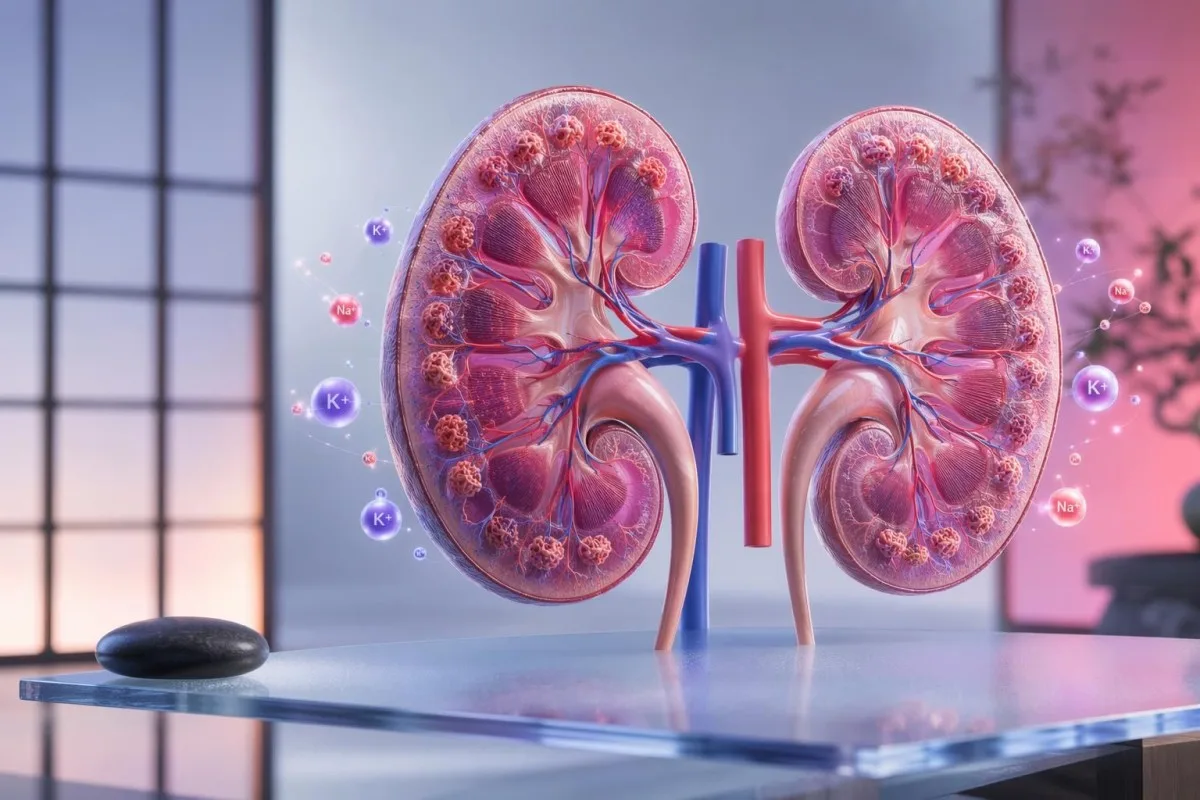
U&E is one of the commonest blood test abbreviations on NHS forms, but the results can look cryptic. Here is how UK clinicians read urea, salts and kidney function together.


- U&E stands for urea and electrolytes, a UK blood test used to assess kidney function, hydration and body salts.
- Core markers usually include sodium, potassium, urea, creatinine and often eGFR; some labs also report chloride and bicarbonate.
- Sodium is commonly 133–146 mmol/L in UK adults; values below 125 mmol/L or above 150 mmol/L often need urgent clinical context.
- Potassium is usually about 3.5–5.3 mmol/L; potassium at or above 6.5 mmol/L can affect heart rhythm and is treated as urgent.
- Urea is commonly 2.5–7.8 mmol/L in adults; a high value can reflect dehydration, high protein breakdown, bleeding in the gut or reduced kidney clearance.
- Creatinine is interpreted with age, sex and muscle mass; eGFR below 60 mL/min/1.73 m² for at least 3 months can meet criteria for chronic kidney disease.
- A single abnormal U&E may be caused by a delayed sample, haemolysis, recent exercise, medicines or fasting, so repeat timing matters.
- U&E results explained properly means reading patterns: sodium plus urea for hydration, potassium plus creatinine for kidney risk, and eGFR plus urine ACR for early damage.
What U&E Means on a UK Blood Test Form
U&E stands for urea and electrolytes. In the UK, the U&E blood test meaning is a kidney-and-salts panel that helps doctors check hydration, sodium, potassium, urea, creatinine and often eGFR; it is ordered constantly in GP surgeries, A&E, pre-op clinics and medication reviews.
As of June 25, 2026, most NHS pathology systems still use U&E rather than spelling out urea and electrolytes, which is why patients often see the abbreviation before anyone explains it. As Dr Thomas Klein, MD, I usually describe it as the blood test that asks: are the kidneys clearing waste, are the salts safe, and does the fluid balance make sense?
Kantesti is an AI blood test interpretation platform that reads U&E results in the same pattern-based way clinicians use at the bedside: potassium is not judged without creatinine, and urea is not judged without hydration clues. You can read more about our organisation and why we focus so heavily on lab-context interpretation.
A normal U&E does not prove the kidneys are perfect, and an abnormal U&E does not automatically mean kidney failure. In my experience, a urea of 9.2 mmol/L after a 14-hour fast often means something very different from a urea of 9.2 mmol/L with swelling, protein in urine and a falling eGFR.
Which Results Are Usually Included in U&E
A UK U&E panel usually includes sodium, potassium, urea, creatinine and eGFR, with chloride and bicarbonate added by many laboratories. The exact mix depends on the NHS trust, analyser setup and whether the request was sent as U&E, renal profile or biochemistry profile.
Sodium and potassium are the headline electrolytes because severe shifts can affect the brain, muscles and heart rhythm within hours. Sodium is measured in mmol/L, potassium is measured in mmol/L, and both can change quickly with vomiting, diarrhoea, diuretics, kidney injury or IV fluids.
Urea and creatinine are waste products, but they behave differently. Urea rises with dehydration and protein breakdown; creatinine rises more specifically when kidney filtration drops, although muscle mass, creatine supplements and recent heavy exercise can muddy the picture.
Patients often confuse U&E with FBC, LFT or CRP, so I like to separate abbreviations early; our guide to blood test abbreviations covers the common UK flags and units that appear beside U&E results. A small wording difference on the form can change what gets measured.
Typical UK Reference Ranges for U&E Results
Typical UK adult U&E reference ranges are sodium 133–146 mmol/L, potassium 3.5–5.3 mmol/L, urea 2.5–7.8 mmol/L and creatinine roughly 45–84 µmol/L in many adult women and 59–104 µmol/L in many adult men. Local ranges vary, so the lab range printed beside your result wins.
Creatinine ranges vary more than patients expect because muscle mass changes the baseline. A muscular 32-year-old man with creatinine 112 µmol/L may have normal filtration, while a frail 82-year-old woman with creatinine 92 µmol/L may have a meaningfully reduced eGFR.
UK laboratories may use slightly different analyser methods, and paediatric ranges are not adult ranges shrunk down. If your old result was in a different country or unit system, compare it carefully with our guide to lab values in different units before assuming a real change.
One practical detail: U&E results are usually serum or plasma chemistry results, not whole-blood bedside readings. That matters because a delayed or damaged sample can falsely raise potassium by 0.3–1.5 mmol/L, especially if the collection was difficult.
What Urea Says About Hydration and Protein Breakdown
Urea is a nitrogen waste product made when the liver processes protein, and UK laboratories usually report it in mmol/L. A urea result above about 7.8 mmol/L often points to dehydration, increased protein breakdown, gastrointestinal bleeding, steroid use or reduced kidney clearance.
The urea result is useful because it is sensitive to fluid status, but that sensitivity makes it less specific than creatinine. I have seen urea jump from 5.6 to 11.4 mmol/L after a weekend of gastroenteritis, then return to 6.1 mmol/L within 48 hours of rehydration.
The US term BUN means blood urea nitrogen, and it is not numerically identical to UK urea. To estimate BUN in mg/dL from UK urea in mmol/L, multiply by about 2.8; our BUN and urea conversion guide explains why international kidney results can look mismatched.
A low urea, for example below 2.5 mmol/L, is usually less alarming than a high one but can be seen with pregnancy, low protein intake, severe liver dysfunction or overhydration. The clinical trap is dismissing a low urea in a patient with swelling and low albumin, because that pattern may point away from a simple hydration issue.
How Creatinine and eGFR Measure Kidney Function
Creatinine is a muscle-derived waste product, and eGFR estimates how much blood the kidneys filter each minute per 1.73 m² body surface area. An eGFR below 60 mL/min/1.73 m² for at least 3 months can meet criteria for chronic kidney disease when persistent or paired with other kidney damage markers.
KDIGO 2024 defines chronic kidney disease by kidney structure or function abnormalities lasting more than 3 months, including eGFR below 60 mL/min/1.73 m² or persistent albuminuria (KDIGO CKD Work Group, 2024). That time element matters: a single low eGFR during dehydration or infection may be acute, not chronic.
Inker et al. published race-free creatinine and cystatin C eGFR equations in the New England Journal of Medicine in 2021, and many services now prefer equations that avoid race adjustment (Inker et al., 2021). For plain-language interpretation, our eGFR guide shows how age, creatinine and trend change the meaning.
Kantesti AI flags a creatinine rise of 26 µmol/L or more within 48 hours as a possible acute kidney injury pattern when previous results are available. That threshold mirrors widely used AKI criteria, but it still needs a clinician to ask about vomiting, new medicines, obstruction, sepsis and fluid intake.
Why Sodium on U&E Is Really a Water-Balance Result
Sodium on a U&E is best understood as a water-balance result, not simply a salt-intake result. In adults, sodium is commonly 133–146 mmol/L; values below 125 mmol/L or above 150 mmol/L can be dangerous, especially if symptoms develop quickly.
Low sodium, called hyponatraemia, is often caused by excess water relative to sodium. Diuretics, heart failure, liver disease, kidney disease, adrenal insufficiency, vomiting and SIADH can all produce a sodium of 128 mmol/L, but the treatment choices are very different.
High sodium, called hypernatraemia, usually means water loss has exceeded salt loss. In an older patient with confusion, a sodium of 153 mmol/L and urea of 14 mmol/L makes me worry about dehydration and reduced access to fluids before I think about dietary salt.
Symptoms change urgency: seizures, severe confusion, fainting or rapidly worsening weakness with abnormal sodium should not wait for routine follow-up. For a deeper look at causes, see our guide to a low sodium result.
Potassium: The U&E Result Doctors React To Fast
Potassium is the U&E result clinicians often act on fastest because it affects heart rhythm. A typical adult range is 3.5–5.3 mmol/L, while potassium at or above 6.5 mmol/L, or below about 2.5 mmol/L, is usually treated as potentially urgent.
Kantesti is an AI-powered blood test analysis tool used by 2M+ people across 127+ countries, and potassium is one of the markers our system treats with extra safety rules. A potassium of 5.8 mmol/L with normal creatinine and a haemolysis flag is a different problem from 5.8 mmol/L with eGFR 22 and new weakness.
Common high-potassium triggers include ACE inhibitors, ARBs, spironolactone, trimethoprim, NSAIDs, acute kidney injury and advanced chronic kidney disease. Common low-potassium triggers include loop diuretics, vomiting, diarrhoea, laxative overuse and high-dose salbutamol.
False high potassium is surprisingly common after a difficult collection, prolonged tourniquet time, fist clenching or delayed processing. Our potassium ranges article explains when repeat testing is reasonable and when same-day care is safer.
Chloride and Bicarbonate: The Quiet Acid-Base Clues
Chloride and bicarbonate are not always shown on a UK U&E, but when present they help explain acid-base balance. Typical adult chloride is about 95–108 mmol/L, and bicarbonate or total CO2 is often about 22–29 mmol/L depending on the laboratory method.
A low chloride with high bicarbonate can fit prolonged vomiting or diuretic-related alkalosis. A high chloride with low bicarbonate can appear after diarrhoea, large volumes of normal saline or certain kidney tubular problems.
Bicarbonate below 18 mmol/L deserves attention, particularly if paired with high potassium, kidney impairment, high glucose, lactate elevation or severe illness. In A&E, this pattern often triggers blood gas testing rather than a simple repeat U&E in 2 weeks.
Patients sometimes see CO2 on an international metabolic panel and assume it means lung carbon dioxide. It usually reflects bicarbonate in the chemistry panel; our CO2 blood test guide separates respiratory and metabolic clues.
Why NHS Doctors Order U&E So Often
Doctors order U&E so often because it gives a fast safety check before decisions about fluids, medicines, surgery, scans and acute illness. In many NHS settings, U&E is one of the first panels requested when a patient feels faint, confused, breathless, swollen, dehydrated or generally unwell.
Before starting or increasing an ACE inhibitor, ARB, diuretic or spironolactone, clinicians usually want potassium and creatinine because the wrong combination can push potassium above 5.5 mmol/L or worsen kidney function. After a dose change, repeat U&E is often checked within 1–2 weeks in higher-risk patients.
Before contrast CT, an eGFR result helps estimate contrast-associated kidney risk. Before many operations, potassium and kidney function help anaesthetists decide whether surgery can proceed safely that day.
Long-term medication monitoring is where U&E quietly prevents harm. Our medication monitoring guide lists common timelines for kidney and electrolyte checks after blood pressure tablets, anti-inflammatory use and diabetes medication changes.
Common U&E Patterns Doctors Recognise
U&E patterns are more useful than single numbers because the markers move together in recognisable clinical ways. High urea with mildly raised creatinine often suggests dehydration, while high potassium with rising creatinine raises concern for kidney impairment or medicine-related risk.
Dehydration often produces high urea out of proportion to creatinine, concentrated urine and sometimes high sodium. A patient with urea 13 mmol/L, creatinine 105 µmol/L and sodium 147 mmol/L after diarrhoea has a very different pattern from a patient with creatinine 280 µmol/L and potassium 6.1 mmol/L.
Chronic kidney disease tends to show reduced eGFR over time, sometimes with high potassium, high phosphate, low bicarbonate or anaemia in later stages. The trend matters: eGFR drifting from 82 to 58 over 4 years is not the same story as 82 to 58 over 4 days.
A renal panel may include calcium, phosphate and albumin in addition to U&E, which is useful when the question is broader than hydration. Our renal panel guide explains what extra markers add when kidney disease is suspected.
Why Urine Tests Complete the Kidney Picture
A normal U&E can miss early kidney damage, so urine albumin-creatinine ratio is often needed to complete the kidney assessment. Urine ACR detects small albumin leaks that may appear before creatinine rises or eGFR falls.
NICE guideline NG203 recommends using eGFR and urine ACR together when assessing chronic kidney disease risk, particularly in people with diabetes, hypertension or cardiovascular disease (NICE, 2021). An ACR of 3 mg/mmol or higher is a common UK threshold for abnormal albumin leakage, though repeat confirmation is usually needed.
I have reviewed many patients with eGFR 92 mL/min/1.73 m² who still had significant albumin in urine. That is why a normal creatinine should not reassure someone with diabetes, high blood pressure, swelling or a strong family history unless urine has also been checked.
For early kidney damage, urine often tells the story first. Our urine ACR guide explains how albumin leakage is staged and why morning samples can reduce noise.
How to Prepare for U&E and Avoid Misleading Results
Most U&E blood tests do not require fasting, but hydration, exercise, supplements and sample handling can change results. Heavy exercise, vomiting, diarrhoea, creatine use and recent medication changes should be recorded because they alter how clinicians interpret creatinine, urea and electrolytes.
If you are well and having a planned GP test, drink normally rather than arriving deliberately dehydrated. A 12-hour fast with little fluid can raise urea and albumin concentration, making a borderline result look more dramatic than it is.
Kantesti is an AI biomarker interpretation platform that asks for context such as fasting status, medicines and symptoms because a potassium of 5.4 mmol/L after a difficult draw is not automatically hyperkalaemia. Creatine supplements can also raise creatinine without true kidney damage in some muscular patients.
Repeat timing should match risk. A mildly abnormal, asymptomatic result may be repeated in days to weeks, but a potassium above 6.0 mmol/L, sodium below 125 mmol/L, or creatinine rising quickly deserves faster advice; our guide on when to repeat abnormal tests gives practical timelines.
How Kantesti AI Explains U&E Results in Context
Kantesti AI interprets U&E results by analysing marker clusters, reference ranges, previous results and patient context rather than simply labelling values high or low. That approach is especially useful for U&E because hydration, kidney function and medicines constantly overlap.
In our analysis of 2M+ uploaded reports, we consistently see the same patient worry: one red flag appears, but the rest of the pattern is normal. Kantesti AI separates isolated flags from combinations that need follow-up, using methodology described in our AI methods guide.
As Dr Thomas Klein, MD, I still want patients to use AI output as a structured explanation, not as a diagnosis. Our clinical validation process focuses on whether the system gives safe next-step guidance, especially when values approach urgent thresholds such as potassium 6.5 mmol/L.
The most useful U&E interpretation often comes from comparing today with your own baseline. A creatinine change from 62 to 82 µmol/L may be meaningful in a small older adult, while 82 µmol/L may be entirely ordinary for someone else; our trend analysis guide explains this personal-baseline approach.
Research Notes, Review Standards and Same-Day Safety
Same-day medical advice is sensible for U&E results with potassium at or above 6.5 mmol/L, potassium below 2.5 mmol/L, sodium below 125 mmol/L, sodium above 150 mmol/L, or a rapid creatinine rise with symptoms. Severe weakness, chest pain, fainting, seizures, confusion or very low urine output changes the risk immediately.
Kantesti's medical reviewers treat U&E safety limits conservatively because electrolyte emergencies can be time-sensitive. Our doctors and advisors are listed on the Medical Advisory Board, and borderline kidney interpretations are built around follow-up rather than reassurance by default.
For readers who want deeper technical background, our research archive includes kidney-adjacent methodology such as the BUN creatinine ratio guide. Related Kantesti publications are cited in APA form here: Kantesti AI Clinical Research Group. (2026). aPTT Normal Range: D-Dimer, Protein C Blood Clotting Guide. Zenodo. DOI. ResearchGate. Academia.edu.
A second related publication is: Kantesti AI Clinical Research Group. (2026). Serum Proteins Guide: Globulins, Albumin & A/G Ratio Blood Test. Zenodo. DOI. ResearchGate. Academia.edu. Those papers do not replace NHS guidance, but they show how Kantesti documents lab interpretation logic for complex panels.
Frequently Asked Questions
What does U&E stand for on NHS blood test results?
U&E stands for urea and electrolytes, a common UK blood test panel used to assess kidney function, hydration and body salts. It usually includes sodium, potassium, urea, creatinine and eGFR, and some laboratories also include chloride and bicarbonate. Typical adult values include sodium 133–146 mmol/L, potassium 3.5–5.3 mmol/L and urea 2.5–7.8 mmol/L, but each NHS lab prints its own reference range.
Is a U&E blood test the same as a kidney function test?
A U&E blood test is one of the main kidney function blood tests, but it is not the whole kidney assessment. Creatinine and eGFR estimate filtration, while urea and electrolytes show hydration and salt balance. Doctors often add urine ACR because albumin leakage of 3 mg/mmol or higher can show kidney damage even when eGFR is still above 90 mL/min/1.73 m².
What is a dangerous potassium level on U&E?
A potassium level at or above 6.5 mmol/L is commonly treated as urgent because it can disturb heart rhythm. Potassium below about 2.5 mmol/L can also be dangerous, especially with weakness, palpitations, fainting or ECG changes. A single mildly high result such as 5.4 mmol/L may be due to sample haemolysis, but it should be interpreted with creatinine, eGFR, medicines and symptoms.
Can dehydration affect U&E results?
Yes, dehydration commonly affects U&E results by raising urea and sometimes sodium, and it may raise creatinine if kidney filtration drops. A urea above about 7.8 mmol/L with concentrated urine and a history of vomiting, diarrhoea or poor fluid intake often fits dehydration. Persistent abnormalities after rehydration need medical review because kidney injury, medicines or obstruction may be involved.
Do I need to fast before a U&E blood test?
Most U&E blood tests do not require fasting, and drinking water normally is usually better than arriving dehydrated. Long fasting, heavy exercise and creatine supplements can affect urea or creatinine, while difficult sample collection can falsely raise potassium. If your U&E is being done with glucose, lipids or another panel, follow the specific instructions given by your GP practice or clinic.
Why is eGFR normal but creatinine flagged high?
Creatinine can be flagged high while eGFR is still acceptable because creatinine is influenced by muscle mass, sex, age, supplements and laboratory reference ranges. A muscular person may have creatinine just above 104 µmol/L with a normal eGFR, while a frail older adult may have a normal-looking creatinine with reduced filtration. The trend over time and urine ACR often decide whether the result is reassuring.
When should I contact a doctor about U&E results?
Contact a doctor promptly if your U&E shows potassium at or above 6.5 mmol/L, sodium below 125 mmol/L, sodium above 150 mmol/L, or a rapidly rising creatinine, especially with symptoms. Confusion, seizures, chest pain, fainting, severe weakness, breathlessness, swelling or very low urine output should be treated as same-day concerns. Mild isolated abnormalities can often be repeated, but the timing depends on medicines, kidney history and symptoms.
Can anti-inflammatory painkillers affect my U&E results?
Yes. NSAIDs such as ibuprofen or naproxen can reduce blood flow to the kidneys, especially during dehydration or when combined with diuretics and ACE inhibitors or ARBs. Check with a pharmacist or prescriber before using them regularly if you have reduced eGFR or previous kidney problems.
Can pregnancy change U&E blood test results?
Yes. Pregnancy increases kidney blood flow, so creatinine and urea often run lower than before pregnancy; a result that seems normal outside pregnancy may need different interpretation. Your midwife or clinician will consider blood pressure, urine protein and symptoms alongside the U&E.
Get AI-Powered Blood Test Analysis Today
Join over 2 million users worldwide who trust Kantesti for instant, accurate lab test analysis. Upload your blood test results and receive comprehensive interpretation of 15,000+ biomarkers in seconds.
📚 Referenced Research Publications
Klein, T., Mitchell, S., & Weber, H. (2026). aPTT Normal Range: D-Dimer, Protein C Blood Clotting Guide. Kantesti AI Medical Research.
Klein, T., Mitchell, S., & Weber, H. (2026). Serum Proteins Guide: Globulins, Albumin & A/G Ratio Blood Test. Kantesti AI Medical Research.
📖 External Medical References
KDIGO CKD Work Group (2024). KDIGO 2024 Clinical Practice Guideline for the Evaluation and Management of Chronic Kidney Disease. Kidney International.
National Institute for Health and Care Excellence (2021). Chronic kidney disease: assessment and management. NICE guideline NG203. NICE.
⚕️ Medical Disclaimer
This article is for educational purposes only and does not constitute medical advice. Always consult a qualified healthcare provider for diagnosis and treatment decisions.
E-E-A-T Trust Signals
Experience
Physician-led clinical review of lab interpretation workflows.
Expertise
Laboratory medicine focus on how biomarkers behave in clinical context.
Authoritativeness
Written by Dr. Thomas Klein with review by Dr. Sarah Mitchell and Prof. Dr. Hans Weber.
Trustworthiness
Evidence-based interpretation with clear follow-up pathways to reduce alarm.