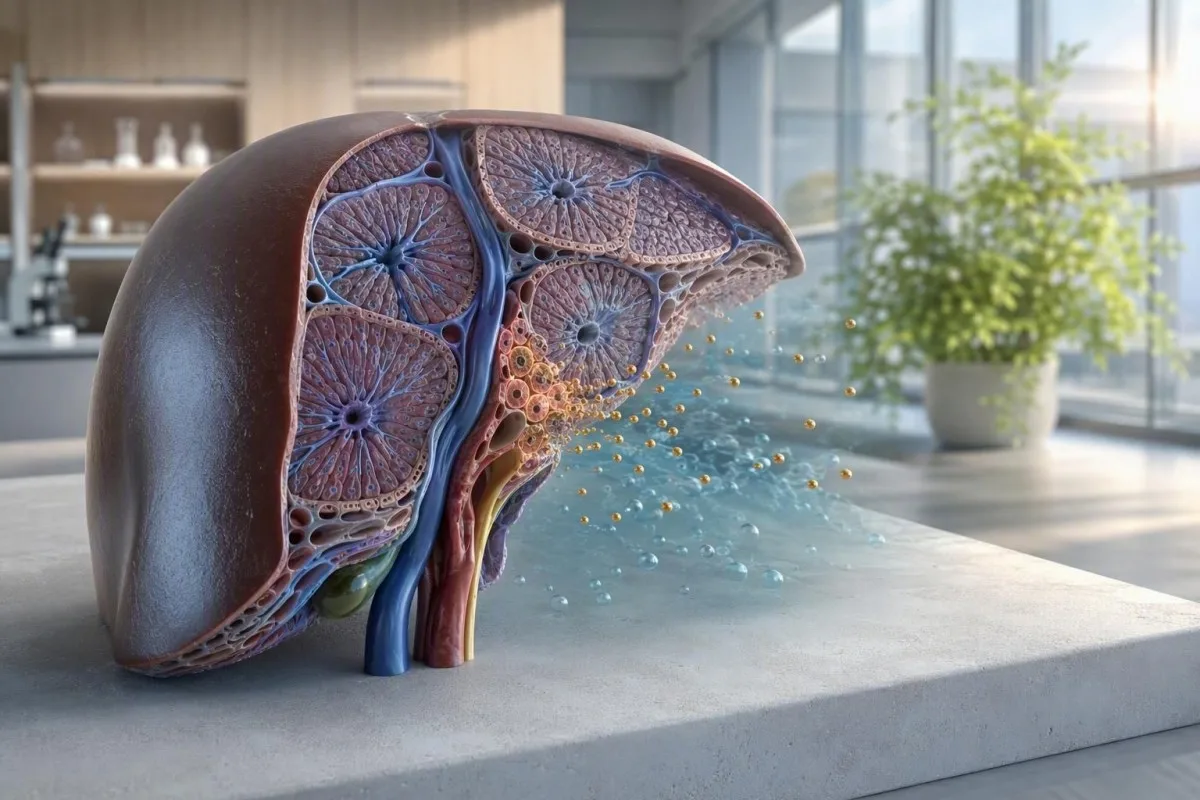
An elevated AST result rarely causes symptoms by itself; symptoms come from the liver, muscle, heart, or systemic condition behind it. The accompanying lab pattern matters far more than a single flagged value.


- Usually silent: An AST of 45-100 U/L often produces no direct symptoms and needs context, not panic.
- Reference range: Many adult laboratories use an AST upper limit near 35-40 U/L, but sex-specific limits vary by assay.
- Exercise clue: Heavy resistance exercise can raise AST and CK for 7 days or longer, sometimes with AST exceeding ALT.
- Urgent signs: Yellow eyes, confusion, repeated vomiting, severe weakness, chest pressure, or cola-coloured urine need same-day assessment.
- Pattern matters: AST with high CK suggests muscle release; AST with bilirubin, INR, or alkaline phosphatase abnormalities raises concern for liver or bile-flow disease.
- Do not self-treat: Stop non-essential supplements only after discussing them with a clinician, and do not stop prescribed medicines abruptly.
- Useful retest: For a mild isolated rise, clinicians commonly repeat AST, ALT, ALP, bilirubin, CK, and GGT after avoiding strenuous exercise and alcohol for several days.
Does a high AST result cause symptoms by itself?
High AST symptoms are usually absent because AST is a leakage enzyme, not a toxin. Most people with a mild AST elevation feel entirely well; symptoms, when present, reflect the underlying liver, muscle, heart, or systemic problem rather than the AST number itself.
AST, or aspartate aminotransferase, is found in liver cells but also in skeletal muscle, heart, red-cell-rich samples, kidneys, and brain tissue. A result of 55 U/L may be only 1.4 times one laboratory's upper limit, while the same number can be closer to 2 times the upper limit at another laboratory; out-of-range flags are starting points, not diagnoses.
In my clinical work, the most anxious patients are often the ones who feel perfectly normal after a routine panel. That is expected: early fatty liver disease, medication-related enzyme release, and post-exercise muscle release can all be silent. Dr. Thomas Klein sees the practical mistake repeatedly—assuming an abnormal enzyme must itself explain fatigue, when sleep loss, anaemia, thyroid disease, or mood symptoms may be separate problems.
Kantesti is an AI blood test analyzer that reads AST alongside ALT, bilirubin, alkaline phosphatase, GGT, CK, age, sex, medicines, and prior values rather than assigning meaning to one isolated flag. As of August 21, 2026, our safest message remains simple: feeling well is reassuring, but it does not replace pattern-based follow-up.
Why a normal feeling does not settle the question
A mildly elevated AST can be transient, but silent liver disease is common enough that persistence matters. The American College of Gastroenterology recommends confirming an abnormal liver chemistry result before launching a broad work-up, then evaluating the pattern and risk factors (Kwo et al., 2017).
AST ranges: when is a result mildly high or more concerning?
Adult AST reference limits are commonly about 10-40 U/L, although each laboratory's printed range is the correct comparator. An AST above 3 times the upper limit deserves timely clinical review, while values above 10-15 times the upper limit need urgent assessment even if symptoms are limited.
AST does not measure how well the liver performs its jobs. Bilirubin, INR or prothrombin time, albumin, platelet count, and mental state better address bile handling, clotting-factor production, chronic scarring clues, and acute liver failure risk. A normal albumin does not rule out a new liver injury because albumin changes slowly, often over weeks.
A 52-year-old marathon runner with AST 89 U/L, ALT 42 U/L, and CK 1,900 U/L after a downhill race has a very different risk profile from a sedentary person with AST 89 U/L, ALT 130 U/L, bilirubin 48 µmol/L, and dark urine. The first pattern often reflects muscle recovery; the second may need same-day liver assessment. Our AST-versus-ALT companion guide explains why the pair should be read together.
Kantesti AI is an AI blood test interpretation platform that compares the degree of AST elevation with a person's own earlier results, because a rise from 18 to 78 U/L can be clinically more informative than a stable value around 45 U/L. A sudden change also warrants checking sample quality and timing.
Why liver-related AST elevations can stay silent
Early liver injury often causes no obvious symptoms because the liver has substantial functional reserve. People generally notice symptoms only when inflammation, impaired bile flow, advanced fibrosis, or systemic illness becomes more significant.
Metabolic dysfunction-associated steatotic liver disease, formerly often called fatty liver disease, is one common silent explanation for mild AST or ALT elevations. The 2024 EASL-EASD-EASO guideline advises case-finding in people with type 2 diabetes, obesity, or multiple metabolic risk factors because liver enzymes alone can be normal despite steatosis or fibrosis (EASL-EASD-EASO, 2024).
The uncomfortable truth is that tiredness is nonspecific. In clinic, I do not attribute fatigue to AST 58 U/L without asking about sleep apnoea, alcohol intake, viral illness, depression, iron status, thyroid results, and medication changes. A liver-related cause becomes more likely when nausea, right-upper-abdominal discomfort, itch, jaundice, pale stool, or dark urine appear together; see our guide to bilirubin warning signs.
AST predominance is sometimes associated with alcohol-related liver injury, particularly when AST:ALT exceeds 2, but that ratio is neither sensitive nor diagnostic on its own. Advanced fibrosis, cirrhosis, vitamin B6 deficiency, and muscle injury can alter the ratio too—one of those clinical details that gets lost in online shortcuts.
The symptom that changes the urgency
New confusion, unusual drowsiness, easy bruising, or rapidly increasing jaundice with an elevated AST is not a routine repeat-test scenario. These features can signal impaired liver function and require urgent in-person evaluation, including bilirubin, INR, glucose, kidney function, and medication review.
Muscle-related high AST symptoms: soreness, weakness, and CK
Muscle injury can raise AST substantially, often before or alongside muscle soreness, and CK is the key clarifying test. AST higher than ALT after demanding exercise is common; high CK, normal bilirubin, and normal GGT make a muscle source more plausible.
Skeletal muscle contains abundant AST. Pettersson and colleagues found that intensive weightlifting in healthy men raised AST, ALT, CK, myoglobin, and lactate dehydrogenase for at least 7 days, while bilirubin, GGT, and alkaline phosphatase remained normal (Pettersson et al., 2008). That is why a hard workout 24-72 hours before a “liver panel” can produce a misleading story.
A person with delayed-onset muscle soreness after a new CrossFit session may have AST 120 U/L and ALT 55 U/L without liver disease. Severe generalized weakness, swollen muscles, reduced urine output, fever, or tea-coloured urine is different: it can indicate significant muscle breakdown and needs urgent CK, creatinine, potassium, phosphate, calcium, and urine testing. Read more about dangerous CK patterns.
Haemolysis in the collection tube can also falsely elevate AST because red cells contain AST. If the lab reports haemolysis or an implausible one-off AST jump, a clean redraw may be more valuable than extensive testing; our hemolysed sample redraw guide covers the practical details.
High AST causes doctors separate first
The main high AST causes are liver-cell injury, skeletal-muscle release, alcohol exposure, medicines or supplements, viral illness, reduced liver blood flow, and sample haemolysis. The safest next step is to separate liver-pattern from muscle-pattern abnormalities rather than guessing from AST alone.
Liver-pattern clues include ALT elevation, bilirubin elevation, raised GGT or alkaline phosphatase, low platelets, and an abnormal INR. Muscle-pattern clues include high CK, recent unaccustomed exertion, trauma, seizures, intramuscular injections, statin-associated muscle symptoms, or inflammatory muscle disease. AST is less liver-specific than ALT, so an isolated AST rise needs extra caution before it is labelled “liver damage.”
Medicines deserve a precise history: prescribed drugs, over-the-counter pain medicines, herbal mixtures, bodybuilding products, and “detox” blends all count. Acetaminophen or paracetamol toxicity can cause AST and ALT values in the thousands of U/L, whereas chronic low-level medication effects may be modest and asymptomatic. Never stop a prescribed statin, antiseizure drug, or antidepressant based only on an app result—ask the prescriber first.
Kantesti is an AI-powered blood test analysis tool that identifies paired signals such as AST plus CK, or AST plus bilirubin and ALP, then prompts an appropriate clinician discussion. Readers considering supplements should also review our evidence-based list of liver product risks.
Red flags that need urgent care, not just a repeat AST
High AST needs same-day medical assessment when it accompanies jaundice, confusion, fainting, severe abdominal pain, chest symptoms, repeated vomiting, very dark urine, or profound weakness. These warning signs point to the condition behind AST, not a dangerous AST level by itself.
Go to emergency care now for chest pressure, breathlessness, sweating, collapse, or pain spreading to the jaw, arm, or back. AST can rise with heart-muscle injury, but troponin and ECG findings—not AST—guide modern heart-attack diagnosis; our troponin urgency guide explains the distinction.
Seek urgent review for yellow eyes, confusion, inability to keep fluids down, marked right-upper-abdominal pain, or a rapidly worsening illness. Acute liver failure is defined by acute liver injury with coagulopathy, typically INR of 1.5 or higher, plus encephalopathy in a person without known cirrhosis; it is a hospital emergency, not a home-monitoring problem.
Dark brown urine after severe exertion, heat exposure, or immobilisation deserves urgent assessment even without pain because myoglobin can injure the kidneys. If the urine is simply concentrated after poor fluid intake, the picture is less clear; the dark urine differential helps frame the questions a clinician will ask.
How AST, ALT, bilirubin, ALP, GGT, and CK work together
AST becomes clinically useful when interpreted as a pattern with ALT, bilirubin, alkaline phosphatase, GGT, CK, and sometimes INR. No single companion test proves the source, but combinations sharply change the likelihood of liver, bile-duct, or muscle involvement.
AST and ALT both elevated, particularly with ALT predominance, often suggest hepatocellular injury. Alkaline phosphatase and GGT rising with direct bilirubin point more toward cholestasis or impaired bile flow; a detailed cholestasis pattern guide can help readers prepare for that conversation.
AST elevated with CK 5 times the upper limit, normal bilirubin, and normal GGT is much more consistent with a muscle contribution than a liver-only process. Conversely, an AST of 70 U/L with bilirubin 70 µmol/L and INR 1.7 is concerning despite the modest enzyme number, because enzyme height and liver function are not the same measurement.
Dr. Thomas Klein advises patients to take a photo of the complete report, including reference intervals and collection time, rather than reporting only “my AST was high.” Kantesti AI compares complete panels and trends, while our liver-panel checklist shows which values are commonly missing from a basic panel.
What the AST:ALT ratio can and cannot tell you
An AST:ALT ratio above 2 can support alcohol-related liver injury in the right clinical setting, but it cannot diagnose alcohol use or cirrhosis. Exercise, advanced fibrosis, muscle disease, and vitamin B6 status can also produce AST predominance.
The ratio is calculated by dividing AST by ALT using the same units. AST 80 U/L and ALT 40 U/L gives a ratio of 2.0, yet the practical interpretation depends on GGT, bilirubin, platelet count, alcohol history, muscle symptoms, CK, and earlier results. A ratio without the actual enzyme values is especially easy to overinterpret.
Ratios below 1 do not rule out significant liver disease. In metabolic liver disease, ALT may be higher than AST earlier on, while AST can become relatively higher with progressive fibrosis; clinicians use non-invasive scores and imaging rather than a ratio alone. Our borderline ALT follow-up guide explains the usual staged approach.
The evidence is honestly mixed on using an exact ratio cutoff outside alcohol-related presentations. It is a useful clinical hint, not a verdict—and that distinction keeps people from both false reassurance and unnecessary shame.
Before a repeat AST test: exercise, alcohol, fasting, and timing
For a mild unexplained AST rise, avoiding strenuous exercise and alcohol before repeat testing can clarify the result. Many clinicians use a 5-7 day exercise break when muscle release is plausible, although the exact interval depends on CK level, symptoms, and training intensity.
Do not attempt to “flush out” AST with excessive water, fasting, or a detox product. Hydration is sensible if you are normally able to drink fluids, but it does not repair liver injury or prevent muscle breakdown. Maintain usual meals unless your clinician gives fasting instructions, and list every supplement with its dose and start date.
Alcohol can elevate AST directly, aggravate steatotic liver disease, and magnify certain medication risks. A period without alcohol before repeat testing may help interpretation, but an improvement does not prove alcohol was the sole cause; trends must be read with the complete clinical story. For realistic expectations, see blood marker changes after stopping alcohol.
Kantesti AI uses date-stamped trend analysis to show whether AST normalised after a workout break or continued rising despite it. That distinction often prevents the common but unhelpful response of ordering the same test repeatedly without changing the pre-test conditions.
Tests clinicians may order after persistent elevated AST
Persistent AST elevation usually leads to repeat liver chemistries plus tests targeted to the suspected source, such as CK for muscle or hepatitis screening for liver injury. A broad “everything panel” is rarely the best first move; history and the initial pattern should guide testing.
A typical confirmed liver-pattern work-up may include ALT, ALP, GGT, total and direct bilirubin, albumin, INR, complete blood count, hepatitis B and C testing, iron studies, glucose or HbA1c, lipid profile, and ultrasound where indicated. Kwo and colleagues' ACG guideline recommends evaluating common causes systematically rather than treating the AST number in isolation (Kwo et al., 2017).
If muscle release is possible, CK, creatinine, electrolytes, urine testing, thyroid markers, medication review, and occasionally myositis evaluation may be more informative. Persistent weakness with elevated CK is not simply “post-gym soreness”; our myositis antibody overview describes the specialist pathway.
Kantesti's AI lab test interpretation service organises these companion values into a clinician-friendly report, but it cannot diagnose hepatitis, muscle disease, or medication injury from laboratory data alone. It is designed to support questions for a real appointment, not replace examination or imaging.
AST interpretation in athletes, pregnancy, and older adults
AST interpretation changes with recent training, pregnancy, frailty, medicines, and muscle mass. A result that is likely exercise-related in a competitive athlete may deserve a different evaluation in an older adult with new weakness or a pregnant patient with high blood pressure.
Athletes often have higher baseline CK and larger post-exercise AST excursions, particularly after eccentric exercise such as downhill running or heavy lowering phases. The useful question is not “is the AST high?” but “how high relative to prior training-associated results, CK, kidney function, symptoms, and recovery?” Our endurance athlete testing guide adds context beyond a routine panel.
During pregnancy, AST or ALT elevations with headache, visual symptoms, upper abdominal pain, high blood pressure, or low platelets require urgent obstetric assessment because pre-eclampsia and HELLP syndrome are time-sensitive possibilities. Pregnancy-specific reference intervals and the clinical setting matter; see same-day pregnancy lab red flags.
In older adults, lower muscle mass can make a “normal” CK less reassuring when weakness is prominent, while polypharmacy increases the chance of drug interactions. This is one area where I favour a careful examination over confident remote interpretation.
Is high AST dangerous, or is the cause dangerous?
High AST is a signal of cell stress or injury, not a disease that harms the body by itself. The danger depends on the source, speed of change, degree of elevation, accompanying bilirubin or INR abnormalities, symptoms, and whether kidney or heart involvement is present.
An AST of 48 U/L discovered once in a well person is usually not an emergency, especially after exercise or a recent viral illness. An AST of 480 U/L with jaundice, abdominal pain, and rising bilirubin is a different clinical situation even though neither number alone determines prognosis. Trend plus function is the rule.
Severe liver injuries can show falling AST and ALT while the patient worsens because fewer cells remain able to release enzymes; rising INR, bilirubin, lactate, or confusion are more ominous in that setting. This counterintuitive pattern is why “my enzymes came down” is not always a safe conclusion after a hospital illness.
Kantesti AI flags combinations that need prompt clinician review and directs readers to human oversight through our Medical Advisory Board. If you feel acutely unwell, do not wait for a digital interpretation.
Common misconceptions about elevated AST symptoms
Feeling nothing does not prove a high AST is harmless, and feeling tired does not prove AST is causing the fatigue. Both statements can be true at the same time, which is why a complete review is more useful than symptom-spotting.
“AST means liver damage” is incomplete. AST can come from skeletal muscle, and a laboratory sample damaged during handling can raise it as well. “My ALT is normal, so I am fine” is also incomplete because muscle disease, alcohol-related patterns, and some chronic liver conditions can show AST predominance.
“Liver detoxes” are not a treatment for abnormal liver enzymes and can themselves contain concentrated botanicals with liver-injury potential. A safer evidence-based approach is to identify the source, avoid unnecessary alcohol and supplements, manage diabetes or weight where relevant, and follow the retest plan; our food and liver support review separates realistic advice from marketing.
Finally, do not compare results across laboratories without noting the assay and reference range. Some European laboratories use lower sex-specific AST upper limits, so the same result can receive a different flag despite no real biological change.
What to bring to an appointment about high AST
The most useful appointment preparation is a dated complete lab report plus a 7-day timeline of exercise, alcohol, illness, medicines, supplements, and symptoms. This information often identifies a reversible explanation faster than repeating AST without context.
Bring prior AST, ALT, bilirubin, ALP, GGT, CK, platelet, and creatinine results if available. Record the timing of strenuous exercise, fever, travel, new medicines, dose changes, injectable treatments, and supplements. A one-line note such as “heavy leg training 36 hours before test” can materially change the interpretation.
Ask four direct questions: Is this more likely liver or muscle? Which companion results support that? Should I repeat testing, and under what conditions? Which symptoms should send me to urgent care? Our blood test summary checklist can help you organise that discussion without substituting for it.
Dr. Thomas Klein recommends bringing the original PDF rather than manually copied values, because units, laboratory comments, and hidden companion markers are frequently omitted. Kantesti's trend tools can help present the timeline, and our clinical validation approach describes the safeguards behind result interpretation.
A practical next-step plan for a high AST result
Mild isolated AST elevation without red-flag symptoms usually calls for a planned repeat test and context review; marked elevation or warning symptoms needs prompt in-person care. Do not use symptoms alone to decide whether the result matters.
If AST is under about 2 times the laboratory upper limit and you feel well, contact the clinician who ordered the test, review exercise, alcohol, medicines, and supplements, and ask whether a repeat panel with CK is appropriate. Avoid strenuous training until the plan is clear if muscle release is suspected. Do not delay urgent care if symptoms emerge.
If AST persists for more than 3-6 months, rises on repeat testing, or travels with ALT, bilirubin, ALP, GGT, platelet, or INR abnormalities, the cause deserves a more deliberate work-up. Metabolic risk factors, viral hepatitis exposure, family history of iron overload, and medication exposures all change the test sequence.
Kantesti is an AI biomarker interpretation platform built to make these patterns and trends easier to discuss, not to reassure away a dangerous combination. For patient-specific accuracy and safety principles, review our AI technology guide and seek direct medical care for any red flag.
Frequently Asked Questions
Can high AST make you feel tired?
High AST does not usually cause tiredness directly; fatigue comes from the underlying condition, such as viral illness, liver inflammation, poor sleep, anaemia, thyroid disease, depression, or medication effects. A mild AST elevation of 45-100 U/L can occur in people who feel completely well. Fatigue with jaundice, dark urine, repeated vomiting, confusion, or marked weakness needs prompt medical review because those symptoms may reflect significant liver or muscle disease. The full panel, especially ALT, bilirubin, ALP, GGT, CK, and INR where indicated, is more informative than AST alone.
What AST level is dangerous?
No single AST value is dangerous by itself, but the urgency rises with the magnitude, rate of increase, symptoms, and companion tests. AST above 10 times the laboratory upper limit, often above roughly 350-400 U/L where the upper limit is 35-40 U/L, warrants prompt clinical assessment. Even AST values below 100 U/L can be concerning when bilirubin is high, INR is 1.5 or higher, or confusion and jaundice are present. Conversely, AST around 80 U/L after demanding exercise with high CK and normal bilirubin may be muscle-related rather than liver failure.
Can exercise cause high AST with normal ALT?
Yes, strenuous or unfamiliar exercise can raise AST with normal or only mildly elevated ALT because skeletal muscle contains AST. Intensive weightlifting can keep AST and CK elevated for at least 7 days, while bilirubin, GGT, and alkaline phosphatase may remain normal. A clinician may recommend avoiding hard training for 5-7 days before repeat AST, ALT, and CK testing when the history fits. Cola-coloured urine, severe weakness, muscle swelling, reduced urine, or fever after exercise requires urgent assessment rather than a routine retest.
Should I stop alcohol before repeating an AST test?
Avoiding alcohol before a repeat AST test is commonly sensible because alcohol can contribute to AST elevation and complicate interpretation. The ideal interval varies with the amount and pattern of alcohol use, other liver results, symptoms, and medications, so ask the ordering clinician for specific advice. An AST:ALT ratio above 2 may support alcohol-related liver injury in the proper context, but it is not diagnostic and can also occur with muscle injury or advanced fibrosis. Do not use a short alcohol-free period and an improved result as proof that no other liver condition is present.
Can high AST mean a heart attack?
AST can rise after heart-muscle injury, but it is not used to diagnose a heart attack because it is not specific enough. Modern emergency assessment relies on symptoms, ECG findings, and serial cardiac troponin results. Chest pressure, shortness of breath, sweating, fainting, or pain radiating to the jaw, arm, back, or shoulder needs emergency care regardless of the AST value. An isolated outpatient AST elevation without cardiac symptoms is much more often evaluated for liver, muscle, medication, alcohol, or sample-related causes.
What tests should be repeated with AST?
A repeat AST is often paired with ALT, alkaline phosphatase, GGT, total and direct bilirubin, albumin, complete blood count, and sometimes INR to assess a possible liver pattern. CK, creatinine, electrolytes, and urine testing are useful when recent exercise, injury, seizures, muscle pain, weakness, or dark urine suggest a muscle source. Hepatitis testing, iron studies, metabolic screening, ultrasound, and medication review may follow if the elevation persists. The correct selection depends on whether AST is mildly elevated, rising, or accompanied by symptoms or abnormal liver-function markers.
Get AI-Powered Blood Test Analysis Today
Join over 2 million users worldwide who trust Kantesti for instant, accurate lab test analysis. Upload your blood test results and receive comprehensive interpretation of 15,000+ biomarkers in seconds.
📚 Referenced Research Publications
Klein, T., Mitchell, S., & Weber, H. (2026). Serum Proteins Guide: Globulins, Albumin & A/G Ratio Blood Test. Kantesti AI Medical Research.
Klein, T., Mitchell, S., & Weber, H. (2026). C3 C4 Complement Blood Test & ANA Titer Guide. Kantesti AI Medical Research.
📖 External Medical References
Pettersson J et al. (2008). Muscular exercise can cause highly pathological liver function tests in healthy men. British Journal of Clinical Pharmacology.
EASL-EASD-EASO (2024). EASL-EASD-EASO Clinical Practice Guidelines on the management of metabolic dysfunction-associated steatotic liver disease (MASLD). Journal of Hepatology.
⚕️ Medical Disclaimer
This article is for educational purposes only and does not constitute medical advice. Always consult a qualified healthcare provider for diagnosis and treatment decisions.
E-E-A-T Trust Signals
Experience
Physician-led clinical review of lab interpretation workflows.
Expertise
Laboratory medicine focus on how biomarkers behave in clinical context.
Authoritativeness
Written by Dr. Thomas Klein with review by Dr. Sarah Mitchell and Prof. Dr. Hans Weber.
Trustworthiness
Evidence-based interpretation with clear follow-up pathways to reduce alarm.