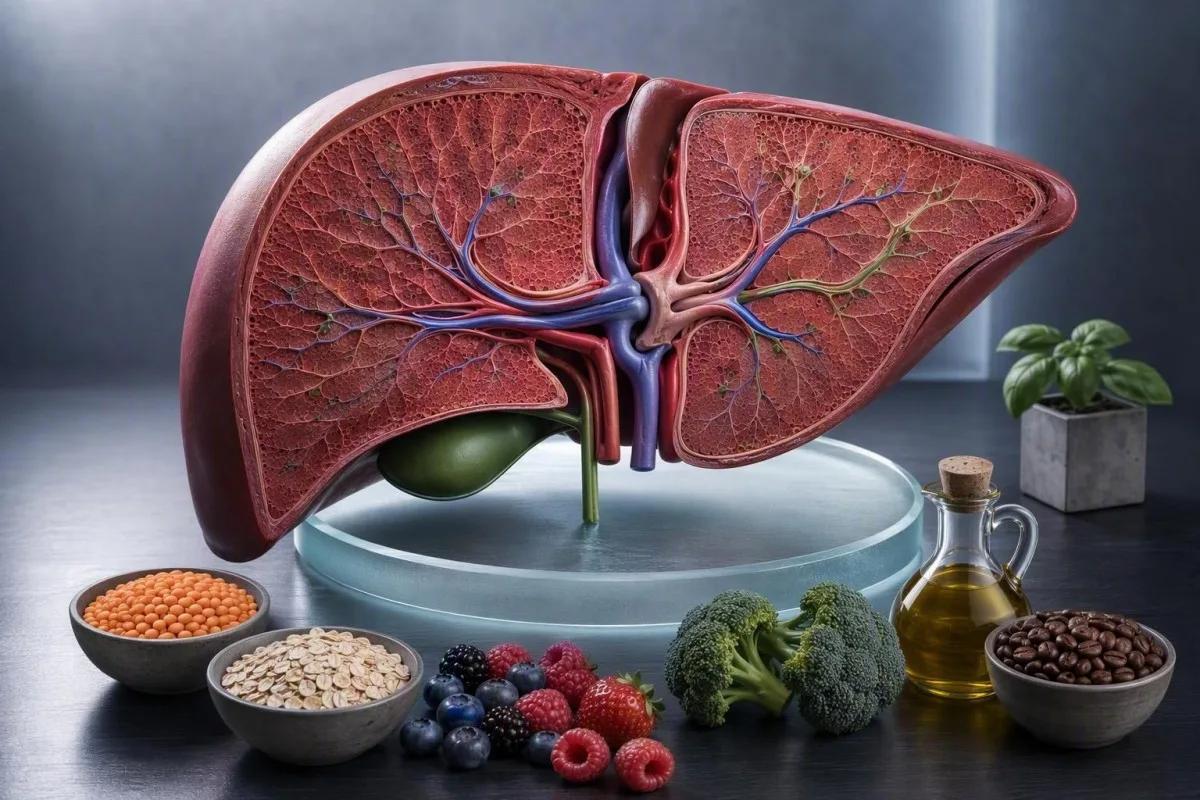
No food flushes toxins from your liver. A consistent dietary pattern can reduce liver fat and metabolic strain, but it cannot diagnose or treat an abnormal liver panel.


- Detox claim: No food, juice, tea, or supplement has been shown to cleanse toxins from a functioning liver.
- ALT context: A healthy ALT is often below 25 IU/L in women and below 33 IU/L in men, although laboratory limits differ.
- Best pattern: Mediterranean-style eating, gradual weight loss when indicated, and alcohol reduction have better evidence than a liver detox diet.
- Coffee: About 2 cups of filtered or instant coffee daily is associated with lower chronic liver disease risk in observational research.
- Fiber target: Adults generally need about 25 g/day of fiber for women and 38 g/day for men; increase slowly if you are not used to it.
- Alcohol: Anyone with raised liver enzymes, fatty liver, hepatitis, or cirrhosis should avoid alcohol until a clinician has clarified the cause.
- Red flags: Jaundice, confusion, fever with right-upper abdominal pain, or very dark urine require prompt clinical assessment.
- Testing: ALT, AST, ALP, GGT, bilirubin, albumin, platelets, glucose, and triglycerides are more informative as a pattern than as isolated results.
Do foods for liver detox actually cleanse the liver?
Foods for liver detox do not cleanse toxins from the liver. They can support the conditions in which the liver works well—adequate nutrition, steadier glucose, less liver fat, and no alcohol—but a detox drink cannot reverse hepatitis, bile-duct obstruction, medication injury, or cirrhosis. As of August 14, 2026, that distinction is the safest place to begin.
The liver already performs chemical processing continuously through enzyme systems, bile production, and kidney-bound waste pathways. In my clinical experience, the misleading part of “detox” marketing is the promise of a short reset: liver recovery is usually measured in weeks to months, and its course depends on the actual cause. What a liver panel includes is a better starting point than a three-day juice plan.
Kantesti is an AI blood test analyzer that places ALT, AST, ALP, GGT, bilirubin, albumin, and prior results beside the reporting laboratory’s reference intervals; it does not present a juice cleanse as treatment. A single ALT of 46 IU/L may reflect fatty liver, a recent hard workout, medication exposure, or a temporary viral illness, while ALT 46 with rising bilirubin is a different clinical problem.
As Dr. Thomas Klein, I tell patients that “supporting” the liver is a fair goal, whereas “flushing toxins” is not a medical mechanism. The practical first move is to list alcohol intake, prescribed medicines, over-the-counter pain relievers, herbal products, recent exercise, weight change, and any prior liver tests before changing your diet.
What your liver does before any detox diet enters the picture
The liver converts nutrients, makes bile, regulates fuel, produces proteins, and modifies medicines for removal. It does not store vague “toxins” waiting for celery juice; its workload changes with alcohol, infection, insulin resistance, medicines, and inherited conditions.
Roughly 25% of cardiac output passes through the liver, which receives nutrient-rich portal blood from the intestine and oxygen-rich arterial blood at the same time. Hepatocytes package fat, convert excess glucose to glycogen, make cholesterol and clotting proteins, and conjugate bilirubin so it can leave in bile. That is why liver problems can alter glucose, triglycerides, bilirubin, and clotting rather than one “detox score.”
Albumin has a half-life of about 20 days, so a low value can reflect prolonged liver synthetic impairment but also inflammation, kidney protein loss, or inadequate intake. I often use albumin alongside INR and platelet count rather than alone; our albumin and globulin guide explains why the A/G ratio adds context.
Bile is a particularly underappreciated part of this story. Bilirubin, cholesterol, and many medication metabolites exit through bile, so itching, pale stool, dark urine, and a high ALP or GGT pattern point clinicians toward impaired bile flow—not toward adding more lemon water.
Why liver cleanse foods and products can backfire
Commercial cleanses can cause harm when they involve fasting, laxatives, concentrated extracts, or unregulated supplements. The risk is not theoretical: supplement-related liver injury is a recognised cause of abnormal liver tests and can look very similar to viral or autoimmune hepatitis.
A whole turmeric-containing meal is not equivalent to a high-dose curcumin extract combined with piperine, green-tea extract, or multiple proprietary herbs. Concentrated products expose the liver to larger and less predictable doses, and labels do not always identify contaminants or every active ingredient. Review liver-health supplement risks before starting a “natural” protocol.
Juice-only plans can also drive a large calorie deficit with very little protein, sodium, or fibre. In practice, patients may feel lighter after 72 hours because glycogen and water fall, not because liver fat or fibrosis has disappeared; rapid dietary shifts can temporarily change bilirubin, ketones, uric acid, and even ALT.
Stop a new supplement and seek medical advice promptly if you develop yellow eyes, dark urine, persistent nausea, itching, unusual fatigue, or right-upper abdominal discomfort. Bring the container or a clear photo of every ingredient to the appointment—brand names alone are often not enough to identify the exposure.
Which liver detox diet pattern has the best evidence?
A Mediterranean-style pattern has the best practical evidence for supporting fatty-liver risk because it improves weight, insulin resistance, triglycerides, and food quality together. It is not a cleanse, and it does not replace evaluation for persistently abnormal enzymes.
The EASL-EASD-EASO 2024 MASLD guideline recommends a Mediterranean-style dietary pattern, regular physical activity, and avoidance of sugar-sweetened drinks for people with metabolic dysfunction-associated steatotic liver disease. A 5% body-weight reduction can reduce liver fat, while 7% to 10% weight loss is commonly associated with improvement in steatohepatitis and fibrosis measures in people who have excess weight.
The useful feature is substitution, not restriction theatre: vegetables, beans, intact grains, nuts, olive oil, fish or other protein sources displace ultra-processed snacks and sweet drinks. A patient with ALT 74 IU/L and triglycerides 310 mg/dL generally gains more from changing those daily exposures than from adding a “detox” powder. Mediterranean diet lab markers are worth tracking over 8 to 12 weeks.
I would not prescribe one template to everyone. Someone with advanced cirrhosis, diabetes treated with insulin, inflammatory bowel disease, chronic kidney disease, or an eating-disorder history needs more individualised nutrition planning, because fasting and aggressive carbohydrate restriction can be unsafe in those settings.
Is coffee one of the foods that support liver health?
Coffee is one of the few everyday dietary exposures consistently associated with lower chronic liver disease and liver cancer risk in observational studies. The association does not prove that coffee treats liver disease, but filtered or instant coffee is usually a reasonable choice for most adults who tolerate caffeine.
Kennedy and colleagues reported in BMJ in 2017 that coffee consumption, including decaffeinated coffee, was associated with lower hepatocellular carcinoma risk; roughly 2 cups daily correlated with about a 35% lower relative risk in pooled observational data. This is association, not a prescription, and it cannot offset heavy alcohol use or untreated viral hepatitis.
Keep the preparation boring. A coffee drink containing 40 g of added sugar and large amounts of cream does not serve the same metabolic purpose as plain coffee, and unfiltered boiled coffee can raise LDL cholesterol in some people through cafestol and kahweol. For enzyme context, see our guide to GGT meaning.
Most adults should keep caffeine at or below 400 mg per day; pregnancy guidance is lower at 200 mg per day. Palpitations, panic symptoms, poorly controlled reflux, or certain arrhythmias may make coffee a poor fit, and decaffeinated coffee is a sensible alternative for many patients.
How fibre-rich plants support the gut-liver axis
Fibre does not scrub the liver, but it can improve satiety, glucose handling, and triglycerides—metabolic factors closely tied to liver fat. A realistic adult target is about 25 g/day for women and 38 g/day for men, built up over two to four weeks.
Soluble fibre from oats, beans, lentils, citrus, apples, and psyllium slows carbohydrate absorption and can modestly lower LDL cholesterol. Fermentable fibres also produce short-chain fatty acids in the colon, which interact with gut barrier and liver metabolism; this is interesting biology, although it does not mean that a specific “gut detox” has been clinically proven.
A useful plate often includes half non-starchy vegetables, one quarter protein, and one quarter high-fibre carbohydrate such as lentils or intact grains. One cup of cooked lentils provides roughly 15.5 g of fibre, which is more meaningful than a token sprinkle of chia on an otherwise low-fibre diet. Food changes that lower triglycerides can be particularly relevant when fatty liver and triglycerides rise together.
Increase fibre with fluids and patience. Sudden jumps above 40 g/day can cause bloating, pain, or loose stools, especially in irritable bowel syndrome; people with a known bowel narrowing should take individual advice rather than following a high-fibre plan from social media.
Do protein and choline matter for liver nutrition?
Adequate protein helps preserve muscle and supports normal liver metabolism, while choline is required for normal lipid transport from the liver. Neither nutrient is a detox treatment, and more is not automatically better.
For most healthy adults, the basic protein allowance is 0.8 g/kg/day, although older adults, highly active people, and people recovering from illness often need more. In cirrhosis, many liver teams use about 1.2 to 1.5 g/kg/day to reduce muscle loss, usually spread across meals and with individual advice; protein restriction is rarely appropriate even when confusion has occurred.
Choline is found in eggs, soy foods, fish, poultry, legumes, and some nuts. Very low choline intake has been linked to altered liver fat handling in controlled feeding studies, but I would reach for food first rather than high-dose capsules because the clinical target depends on diet, pregnancy, genetics, and liver status. Protein needs by age provides practical portions.
Low albumin is not proof that a person “needs more protein.” A low albumin with ankle swelling, reduced eGFR, high CRP, or prolonged diarrhoea needs diagnostic thinking, because the liver may be making less albumin or the body may be losing it.
Which fats and sugars put the most strain on liver fat?
Excess calories, sugar-sweetened drinks, refined starches, and some saturated-fat-heavy patterns can worsen liver fat, particularly when insulin resistance is present. The relevant target is the whole metabolic pattern, not fear of every gram of dietary fat.
Fructose from whole fruit comes packaged with water, fibre, and chewing; fructose from soft drinks arrives rapidly and often adds calories without fullness. A standard 330 mL sweetened soda can contain around 35 g of sugar, close to 140 kcal, and frequent intake is a practical exposure to reduce when ALT or triglycerides are high.
Replacing butter-heavy processed meals, fried foods, and refined snacks with olive oil, nuts, seeds, fish, avocado, and legumes is generally more useful than pursuing a low-fat extreme. Triglycerides of 150 to 499 mg/dL are elevated, while values of 500 mg/dL or higher raise pancreatitis concern and deserve timely clinician-led management. Metabolic syndrome cutoffs explain the related waist, glucose, blood-pressure, HDL, and triglyceride pattern.
Kantesti AI is an AI biomarker interpretation platform that can flag the combined pattern of triglycerides, glucose, HbA1c, and liver tests rather than treating an isolated ALT result as a food verdict. Medication, genetics, menopause, sleep apnea, and polycystic ovary syndrome can all contribute, so dietary advice should not become blame.
Can a liver detox diet make up for alcohol?
No liver detox diet cancels alcohol-related liver injury. If liver enzymes are raised or a clinician suspects fatty liver, hepatitis, fibrosis, or cirrhosis, avoiding alcohol while the cause is assessed is the cautious recommendation.
Alcohol metabolism produces acetaldehyde and shifts the liver’s redox balance, promoting fat accumulation and oxidative stress. A UK alcohol unit contains 8 g of pure alcohol, and the UK low-risk guideline advises no more than 14 units weekly for people who choose to drink; that is a population-risk limit, not a liver-safe threshold for every individual.
AST can exceed ALT after alcohol exposure, and an AST:ALT ratio above 2 raises suspicion for advanced alcohol-associated liver disease in the right setting, but it is neither sensitive nor diagnostic by itself. GGT may fall over weeks of abstinence, yet it can also be elevated by fatty liver, medicines, and bile-duct conditions. Biomarker trends after stopping alcohol can help set realistic expectations.
Do not stop suddenly without support if you drink heavily every day or have had withdrawal symptoms, seizures, hallucinations, or delirium in the past. Alcohol withdrawal can become life-threatening within 6 to 72 hours, and it needs medical planning rather than a solitary cleanse.
Can fasting or rapid weight loss improve liver tests?
Gradual weight loss can improve liver fat, but aggressive fasting may temporarily worsen liver tests and is not suitable for everyone. A loss rate around 0.25 to 0.75 kg per week is usually easier to maintain and less likely to involve muscle loss or gallstone formation.
I have seen a 52-year-old marathon runner with AST 89 IU/L become alarmed by a “liver” result after a long race; muscle injury and training load can raise AST, and sometimes ALT, for several days. Equally, a person beginning a very-low-calorie plan can show a short-lived ALT rise as fat is mobilised. Timing matters more than a detox narrative.
Avoid scheduling an interpretation blood draw 24 to 72 hours after unusually strenuous exercise, a binge-drinking episode, or major dietary restriction when possible. If results are mildly abnormal, clinicians often repeat them after addressing reversible factors, but persistent elevation merits investigation rather than endless retesting. Our article on ALT after weight loss explains this nuance.
Dr. Thomas Klein’s practical rule is simple: protect muscle while losing fat. Include protein at meals, keep resistance or walking activity within your capacity, and do not use fasting if you are pregnant, underweight, using insulin or sulfonylureas, have an eating disorder, or have advanced liver disease without specialist advice.
How to read liver enzymes without chasing a cleanse
ALT and AST suggest hepatocyte stress, while ALP and GGT help assess bile-duct patterns; bilirubin, albumin, INR, and platelets describe a different layer of liver function and severity. A result outside range is a clue, not a diagnosis.
The American College of Gastroenterology guideline states that a healthy ALT is roughly 19 to 25 IU/L for women and 29 to 33 IU/L for men, lower than the upper limits used by some laboratories. ALT above that range deserves context, but the degree, duration, symptoms, and accompanying tests decide urgency; a value of 41 IU/L is not interpreted like 410 IU/L.
An isolated ALP elevation with normal GGT can come from bone rather than liver, especially after a fracture or during high bone turnover. By contrast, ALP and GGT both elevated with direct bilirubin elevation suggest a cholestatic pattern and usually prompts imaging or specialist-directed testing. Borderline ALT follow-up covers the common mild-rise scenario.
Kantesti reviews uploaded panels with the laboratory’s stated ranges and compares prior measurements, but it cannot determine the cause of abnormal liver chemistries from numbers alone. A prescription list, alcohol history, symptoms, family history, and examination are clinical data—not optional extras.
When abnormal liver enzymes need evaluation, not a liver cleanse
Persistently abnormal liver tests need a cause-based evaluation, even if you feel well. Common causes include MASLD, alcohol, medicines or supplements, viral hepatitis, autoimmune disease, iron overload, and bile-duct disorders; food alone cannot sort these apart.
Kwo and colleagues’ 2017 American College of Gastroenterology guideline recommends confirming an abnormal liver chemistry result and then tailoring evaluation to the pattern and clinical context. For a hepatocellular pattern, that may include hepatitis B and C testing, metabolic assessment, iron studies, autoimmune markers, and an ultrasound; it is not appropriate to order every test for every person.
Bilirubin above 3 mg/dL with jaundice, new confusion, vomiting, fever, severe abdominal pain, or abnormal INR is more urgent than an isolated mild ALT rise. Dark urine and pale stools are especially relevant because they can signal conjugated bilirubin and reduced bile delivery to the gut. Read more about cholestatic blood-test patterns.
Kantesti uses pattern-based explanations as a bridge to a better clinical conversation, while our medical validation and oversight describes the boundaries of AI interpretation. It does not replace a doctor, urgent care, imaging, or confirmatory testing when a liver pattern is concerning.
A realistic two-week plan for foods that support liver health
A liver-supporting food plan is repetitive in a good way: mostly plants, enough protein, high-fibre carbohydrates, unsweetened drinks, and no alcohol while abnormal tests are being clarified. The aim is to create a stable baseline before the next test, not to manufacture a perfect number overnight.
For breakfast, consider oats with plain yoghurt or soy yoghurt, berries, and nuts; for lunch, a lentil or bean salad with olive oil and vegetables; for dinner, vegetables plus tofu, fish, eggs, or poultry and an intact grain. Choose water, sparkling water, unsweetened tea, or coffee without added sugar. This pattern commonly reaches 25 to 35 g of fibre daily without a supplement.
Build in one swap rather than ten rules: replace a daily sweet drink with water, replace two refined-snack occasions with fruit and nuts, and add legumes at least four times weekly. If triglycerides are high, avoid trying to “cleanse” them with fruit juice—the liquid sugar load is more likely to work against the goal. Lab-guided diet planning can make those swaps more specific.
Recheck timing should fit the question. For a dietary intervention in stable metabolic fatty liver, 8 to 12 weeks is often enough to see a useful direction in ALT, triglycerides, and glucose, but a clinician may repeat sooner for higher results, symptoms, medication changes, or suspected acute injury.
Use food changes and lab trends safely over time
The safest way to judge a diet change is by trends in symptoms, weight or waist where relevant, alcohol exposure, and repeat laboratory results—not by how “clean” you feel. One normal test does not exclude liver disease, and one abnormal test does not prove it.
Try to use the same laboratory when practical, record whether you were fasting, note hard exercise during the prior 72 hours, and list new medicines or supplements. Laboratory variation and ordinary biological variation can move values modestly; the direction across two or three comparable draws is often more useful than chasing a single decimal point. Tracking meaningful lab change explains why.
Kantesti is an AI lab test interpretation service that can organise liver-related results over time and identify combinations worth discussing with a clinician, including enzyme trends with bilirubin, albumin, platelets, glucose, and lipids. Our clinical content is reviewed with input from the Medical Advisory Board because algorithmic pattern recognition must remain connected to real-world medical judgement.
My final clinical point is deliberately unglamorous: eat recognisable food most of the time, avoid alcohol if your liver tests are abnormal, and do not let a detox label delay care. If you have jaundice, confusion, fever with abdominal pain, vomiting, or rapidly worsening weakness, seek urgent assessment rather than waiting for the next meal plan.
Frequently Asked Questions
What foods are best for liver detox?
No food detoxifies or cleanses the liver in the commercial sense. Foods that support liver health include vegetables, beans, lentils, oats, fruit, nuts, olive oil, fish or other adequate protein sources, and unsweetened coffee if tolerated. A useful fibre target is about 25 g/day for women and 38 g/day for men, increased gradually. These foods support metabolic health, but they cannot treat hepatitis, bile-duct obstruction, medication injury, or cirrhosis.
Can lemon water cleanse your liver?
Lemon water does not cleanse the liver or lower liver enzymes through a unique detox mechanism. It can be a pleasant low-sugar alternative to soft drinks, which may indirectly help if it replaces a 330 mL sugary drink containing roughly 35 g of sugar. Water with lemon does not reverse fatty liver, fibrosis, alcohol-related injury, or viral hepatitis. Persistent abnormal liver tests still need cause-based clinical evaluation.
Does coffee help fatty liver?
Coffee intake is associated with lower risk of chronic liver disease outcomes in observational research, but it is not a treatment for fatty liver. A 2017 BMJ meta-analysis by Kennedy et al. found that about 2 cups of coffee daily was associated with roughly 35% lower relative risk of hepatocellular carcinoma. Plain filtered or instant coffee is usually preferable to high-sugar coffee drinks, and most adults should remain at or below 400 mg of caffeine daily. People with palpitations, reflux, pregnancy, or certain heart-rhythm conditions may need lower amounts or decaffeinated coffee.
How can I lower ALT naturally?
ALT may improve when the underlying cause improves, especially through alcohol avoidance, gradual weight loss when appropriate, reduced sugar-sweetened drinks, regular activity, and a Mediterranean-style eating pattern. The ACG healthy ALT reference is about 19 to 25 IU/L in women and 29 to 33 IU/L in men, though laboratory ranges vary. Do not assume an ALT rise is diet-related: medicines, supplements, viral hepatitis, autoimmune disease, iron overload, and muscle injury can contribute. An ALT value that remains elevated on repeat testing deserves medical review.
Can fasting repair the liver?
Fasting does not repair the liver as a stand-alone therapy, and severe restriction can temporarily alter bilirubin, uric acid, ketones, and liver enzymes. Gradual weight loss of roughly 0.25 to 0.75 kg per week is generally safer and more sustainable for people who need to reduce liver fat. Fasting can be risky during pregnancy, with an eating disorder, in people using insulin or sulfonylureas, and in advanced liver disease. Individual advice is appropriate before prolonged fasting when liver tests are abnormal.
When should I worry about elevated liver enzymes?
Elevated liver enzymes need prompt assessment when they occur with jaundice, dark urine, pale stools, fever, severe right-upper abdominal pain, vomiting, new confusion, or abnormal clotting tests. ALT or AST values more than 5 times the laboratory upper limit also warrant prompt clinical attention, particularly if bilirubin is elevated. Mild isolated elevations below 2 times the upper limit are often rechecked after reviewing alcohol, exercise, medicines, supplements, and metabolic risk, but persistence still needs evaluation. A normal feeling does not reliably exclude significant liver disease.
Get AI-Powered Blood Test Analysis Today
Join over 2 million users worldwide who trust Kantesti for instant, accurate lab test analysis. Upload your blood test results and receive comprehensive interpretation of 15,000+ biomarkers in seconds.
📚 Referenced Research Publications
Klein, T., Mitchell, S., & Weber, H. (2026). aPTT Normal Range: D-Dimer, Protein C Blood Clotting Guide. Kantesti AI Medical Research.
Klein, T., Mitchell, S., & Weber, H. (2026). Serum Proteins Guide: Globulins, Albumin & A/G Ratio Blood Test. Kantesti AI Medical Research.
📖 External Medical References
⚕️ Medical Disclaimer
This article is for educational purposes only and does not constitute medical advice. Always consult a qualified healthcare provider for diagnosis and treatment decisions.
E-E-A-T Trust Signals
Experience
Physician-led clinical review of lab interpretation workflows.
Expertise
Laboratory medicine focus on how biomarkers behave in clinical context.
Authoritativeness
Written by Dr. Thomas Klein with review by Dr. Sarah Mitchell and Prof. Dr. Hans Weber.
Trustworthiness
Evidence-based interpretation with clear follow-up pathways to reduce alarm.