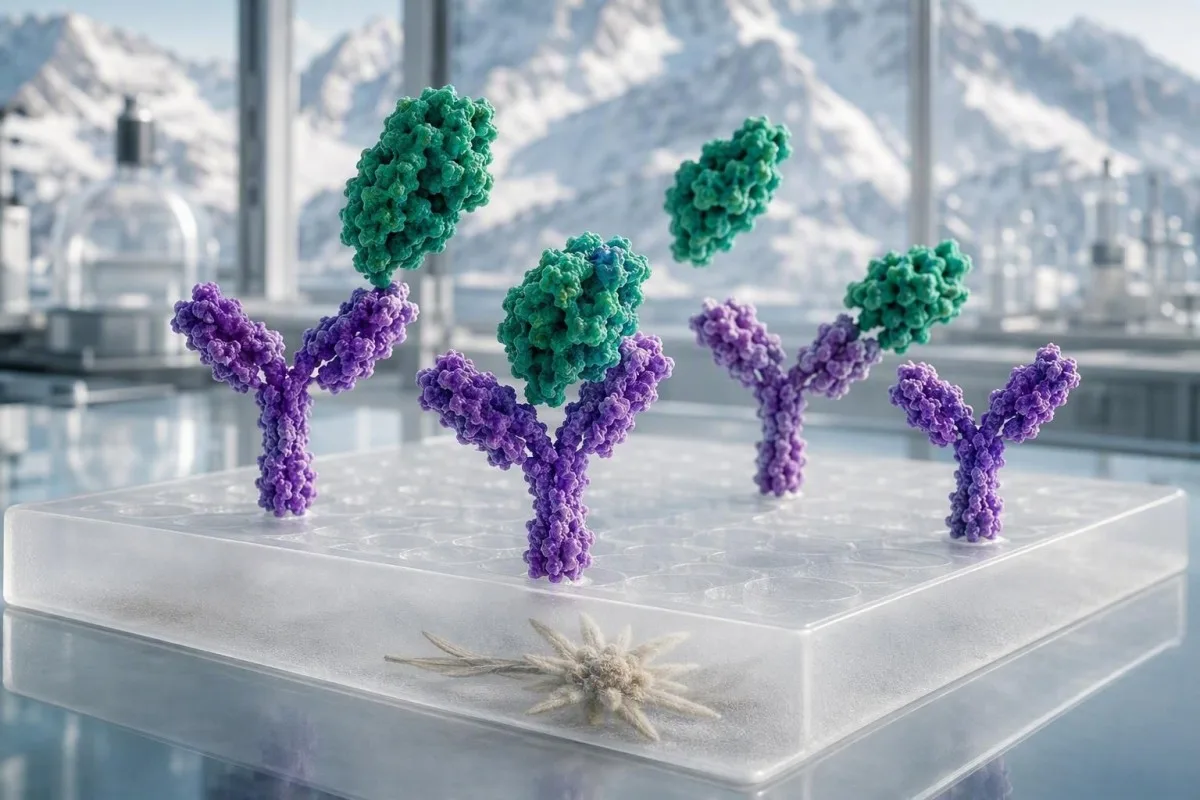
Tha toraidhean clàraidh adhartach ag innse dhut gun do dh’ aithnich IgE rudeigin ann am measgachadh. Faodaidh deuchainn co-phàirteach an pròtain fa leth a tha an sàs a chomharrachadh—agus uaireannan mìneachadh carson nach eil an toradh a’ maidseadh nan comharran a thachras nad bheatha.


- IgE sònraichte de 0.10 kUA/L no barrachd a’ nochdadh brosnachadh, chan e aileirdsidh bìdh no poilean clionaigeach leis fhèin.
- Ara h 2 tha brosnachadh nas làidire co-cheangailte ri fìor aileirdsidh cearc na toradh clàraidh cearc leis fhèin, ged nach eil aon luach ag ath-bhualadh dè cho dona sa tha an t-ath-bheachd.
- Ara h 8 mar as trice a’ nochdadh tar-fhreagairt poilean beithe agus gu tric a’ toirt air a’ bheul a bhith a’ tachas leis an cearc amh an àite ath-bheachdan siostamach.
- Pròtainean stòraidh leithid Cor a 9, Cor a 14, Ana o 3, agus Bos d 8 buailteach a bhith seasmhach ri teas agus cnàmhadh, a dh’ atharraicheas an còmhradh cunnairt.
- Glèidheadh co-phàirtean tar-fhreagairteach faodaidh iad deimhinnean aileirdsidh fala farsaing, ìosal-ìre a chruthachadh nach eil a’ dearbhadh comharraidhean gu earbsach.
- Deuchainnean rùn co-phàirteach chan eil feum air eachdraidh freagairt faiceallach no dùbhlan bìdh beòil fo stiùir nuair a tha an dearbhadh fhathast mì-chinnteach.
- IgE iomlan chan eil crìoch àbhaisteach uile-choitcheann ann airson aileirdsidh agus cha bu chòir a chleachdadh gus cho dona sa tha freagairt bìdh fa leth a mheas.
- Comharraidhean èiginneach às deidh biadh a nochdadh - trioblaid anail, faochadh, cur a-mach ath-chuairteach, no sèididh farsaing - feumaidh iad measadh èiginn ge bith dè na toraidhean co-phàirteach.
Dè a tha deuchainn co-phàirteach a’ cur ris a bharrachd air deuchainn fala àbhaisteach airson aileirdsidh
bidh deuchainnean aileirdsidh moileciuil a' tomhas IgE an aghaidh pròtainean ailearcanach fa leth seach às-tharraing iomlan, mar sin faodaidh e aileirdsidh prìomhach a tha coltach a sgaradh bho bhith a' dèiligeadh gu neo-iomchaidh. Faodaidh deuchainn fala aileirdsidh stèidhichte air às-tharraing a bhith deimhinneach nuair nach do dh'fhuiling duine a-riamh ris a' bhiadh sin; bidh pàtran nam pròtainean gu tric a' mìneachadh carson.
is e measgachaidhean a th' ann an às-tharraingean. Tha às-tharraing cnò-chnò, mar eisimpleir, a' gabhail a-steach pròtainean stòraidh, pròtainean a tha a' gluasad lipid, pròfilins, agus pròtainean a tha air an roinn le poilean beithe; tha toradh dearbhach ag innse dhuinn dìreach gu bheil IgE serum ceangailte ri co-dhiù aon phàirt den mheasgachadh sin. is e inneal-anailichte fala AI a th' ann a chuireas ainmean co-phàirtean air an aithris ri taobh an dòigh-obrach, na h-aonadan, agus eachdraidh nan comharran a chuir an neach-cleachdaidh a-steach. airson bunaitean cruth nan toraidhean, tha ar stiùireadh càileachdail an aghaidh cainnteach feumail.
Anns a' chlinic, chunnaic mi neach 29-bliadhna le IgE às-tharraing cnò-chnò de 7.8 kUA/L a dh'ith ìm cnò-chnò gach seachdain gun trioblaid. Bha an toradh Ara h 8 aice, le Ara h 1, 2, 3, 6, agus 9 àicheil, a' freagairt air làimhseachadh co-cheangailte ri beithe - gun adhbhar airson cnò-chnò a thoirt air falbh bhon daithead aice. Bha an àireamh nas lugha na am pròtain agus an sgeulachd mun bhiadh.
tha dearbhadh co-phàirteach, ris an canar cuideachd CRD, as fheumail nuair a tha an eachdraidh agus toradh an às-tharraing eadar-dhealaichte, nuair a tha grunn biadhan nach eil ceangailte gu lusach a' deuchainn dearbhach, no nuair a bhios iad a' bruidhinn air dùbhlan bìdh. Tha iad a' snìomh an coltas; chan eil iad a' dearbhadh aileirdsidh ann an falamh. Mhìnich Matricardi et al. gur e cuideachadh a th' ann an aileard-eòlas moileciuil ri co-dhùnaidhean clionaigeach, chan e àite a ghabhail orra (Matricardi et al., 2016).
Chan eil brosnachadh mar an ceudna ri aileirdsidh clionaigeach
tha deuchainn fala aileirdsidh dearbhach a' sealltainn mothachadh IgE, fhad 's a tha aileirdsidh clionaigeach ag iarraidh comharran ath-riochdachaidh às deidh nochdadh. bidh a' mhòr-chuid de leabharlannan a' clàradh IgE sònraichte bho 0.10 kUA/L suas, ach chan innis an ìre chruinneachaidh sin dhuinn a bheil duine a' dol a dh'fhuiling nuair a bhios iad ag ithe a' bhiadh.
tha toraidhean IgE sònraichte gu tric air an cruinneachadh mar ìosal, meadhanach, no àrd, ach tha na roinnean sin nan cleachdaidhean obrachaidh seach criochan cunnairt uile-choitcheann. Faodaidh luach 0.35 kUA/L airson ugh a bhith cudromach ann an leanabh le sèid taobh a-staigh 15 mionaidean bho ugh sgrìobte, agus faodaidh 15 kUA/L a bhith gun fheum clionaigeach ann an inbheach a tha mothachail air poilean a dh'itheas ugh bakte gun chomharran. tha nochdadh fhathast na dheuchainn cuideam breithneachaidh.
gu tric bidh IgE iomlan air a thogail ann an eczema, galar parasitic, smocadh, agus grunn chumhachan dìonach; chan urrainn dha aileirdsidh bìdh a dhearbhadh. Tha IgE iomlan os cionn 100 IU/mL cumanta ann an galar atopic, ach chan eil dùmhlachd IgE iomlan ann a dhearbhas gu bheil biadh sònraichte cunnartach. Faodaidh luchd-leughaidh a tha air an uamhasachadh leis an toradh aonaranach seo ath-sgrùdadh dè as urrainn do IgE àrd a bhith a' ciallachadh.
Is e aon sanas feumail gu sàmhach an co-mheas eadar toraidhean nam pàirtean seach an toradh às-tharraing a-mhàin. Bu chòir do chomharran farsaing aig ìre ìosal gu pròfilins no structaran carbohydrate, còmhla ri eachdraidh gun fhreagairt, toirt air neach-clionaigeach stad mus moladh e seachnadh. Faodaidh daithead cuingealaichte stèidhichte air mothachadh a-mhàin cron beathachaidh agus sòisealta adhbhrachadh - gu sònraichte ann an clann.
Mar a dh’ atharraicheas tar-fhreagairt toradh dearbhach
bidh làimhseachadh neo-iomchaidh a' tachairt nuair a dh'aithnicheas IgE structaran pròtain coltach ann an diofar stòran, a' toirt a-mach deuchainnean dearbhach gun chunnart clionaigeach co-ionann. is e na teaghlach moileciuil as cumanta pròtainean PR-10, pròfilins, tropomyosins, pròtainean a tha a' gluasad lipid, agus determinants carbohydrate a tha a' làimhseachadh gu neo-iomchaidh.
Tha Bet v 1 dearc-bhàrr Beithe agus pròtainean PR-10 bìdh a' roinn gu leòr de structar gus IgE a cheangal gu tar-cheanglach. Faodaidh neach le mothachadh air beithe, mar sin, deuchainn adhartach a dhèanamh airson Mal d 1 ùbhlan, Cor a 1 cnòthan-call, Gly m 4 soy, Ara h 8 cnòthan-ola, Api g 1 soilire, agus Dau c 1 curran; tha comharran, nuair a tha iad an làthair, gu tric air an cuingealachadh ri itchadh a' bheòil le biadhan amh. Bidh còcaireachd gu tric ag atharrachadh pròtainean PR-10, ged nach eil e gu leòr gus seo a dheuchainn gu cas aig an taigh.
Mothachadh air profilin faodaidh e cuideachd pannal a tha a' coimhead iongantach a thoirt gu buil thar dearc-bhàrr, mealain, bananathan, tomàtothan, agus latex. Tha Latex Hev b 8 na profilin agus chan eil an aon bhrìgh aige ri fìor mhothachadh air latex gu pròtainean latex a tha cudromach gu clionaigeach. Tha stiùireadh allergy bìdh EAACI a' comhairleachadh gum feumar deuchainn breithneachaidh a leantainn le eachdraidh a tha ag amas air aileardaidh seach sgrìonadh farsaing (Santos et al., 2023).
Tha luchd-dearbhaidh charbohydrate a tha a' dol thairis, gu tric air an aithris mar CCD no MUXF3, nan stuthan siùcair planntrais agus meanbh-bhiastagan seach pròtainean. Faodaidh IgE sònraichte do CCD leantainn gu toraidhean às-tharraing ioma-dhathach, gu sònraichte gu dearc-bhàrr, puinnseanan, agus biadhan planntrais, ach is ann ainneamh a tha e a' buntainn ri comharran. Is e seo aon adhbhar gum faod pannal co-phàirteach deuchainn fala aileirdidh a tha troimh-chèile a dhèanamh nas lugha, chan ann nas motha.
Co-phàirtean cearc: carson a tha Ara h 2 agus Ara h 8 ag innse sgeulachdan eadar-dhealaichte
Tha Ara h 2 agus Ara h 6 nan pròtainean stòraidh cnòthan-ola a tha a' toirt taic do fhìor aileardas cnòthan-ola nas làidire na às-tharraing cnòthan-ola leis fhèin, fhad 's a tha Ara h 8 gu tric a' nochdadh tar-ghealladh co-cheangailte ri beithe. Chan urrainn don dà cho-phàirt an dòs cheart a nochdadh a bheir freagairt no cho dona 'sa bhios tachartas san àm ri teachd.
Tha Ara h 1, Ara h 2, Ara h 3, agus Ara h 6 nan pròtainean stòraidh sìol a tha an aghaidh teasachaidh agus cnàmhaidh. Thar luchd-iomraidh, is e Ara h 2 mar as trice an co-phàirt cnòthan-ola singilte as feumail gu breithneachail; tha luachan os cionn 0.1 kUA/L a' stèidheachadh mothachaidh, fhad 's a tha crìochan co-dhùnaidh ag atharrachadh a rèir aois, sgrùdadh, agus an t-sluaigh ionadail. Nam eòlas, feumaidh leanabh le cruinnean sa bhad còmhla ri Ara h 2 de 12 kUA/L còmhraidhean gu math eadar-dhealaichte bho neach-fàs gun chomharran le Ara h 8 de 2 kUA/L.
Tha Ara h 9 na phròtain gluasaid lipid neo-shònraichte, no LTP. Chithear e nas trice ann an sluagh Meadhan-thìreach agus faodaidh e a bhith co-cheangailte ri freagairtean siostaim, uaireannan air an cur ris le eacarsaich, alcol, cungaidhean anti-inflammatory neo-steroidal, no tinneas eadar-ghnìomhach. Tha na co-fhactaran sin air am feumadh a bhith air an clàradh oir faodar an aon bhiadh a bhith air fhulang air latha àbhaisteach agus chan ann às dèidh ruith fhada.
Chan eil Ara h 2 àicheil a' dèanamh cnòthan-ola gu fèin-obrachail sàbhailte. Tha Ara h 6, Ara h 1, Ara h 3, Ara h 9, suidheachadh cruinn-eòlais an neach, agus an aithris freagairt uile fhathast buntainneach; is dòcha gu moladh alergist fhathast dùbhlan fo stiùireadh. Airson co-theacs comharraidhean practaigeach, faic ar stiùireadh gu deuchainnean fala airson craiceann a tha a’ rùsgadh.
Faodaidh co-phàirtean chraobhan-chnò casg a chuir air cus diagnosachd agus soilleireachadh cunnart
Tha Cor a 9 agus Cor a 14 cnòthan-call, Ana o 3 cashews, agus Jug r 1 cnòthan-mòra a' comharrachadh phròtainean stòraidh sìol seasmhach agus mar as trice tha barrachd cuideam clionaigeach aca na co-phàirtean co-cheangailte ri dearc-bhàrr. Chan eil toradh adhartach gu aon chraobh-chnò a' dearbhadh aileardas gu gach craobh-chnò.
Tha deuchainn cnòthan-call na ribe eòlach. Tha Cor a 1 na phròtain PR-10 co-cheangailte ri beithe agus gu tric a' freagairt air comharran beòil iomallach le cnòthan-call amh, fhad 's a tha Cor a 9 agus Cor a 14 nan pròtainean stòraidh a tha nas co-cheangailte ri aileardas siostaim air cnòthan-call. Tha an eadar-dhealachadh cudromach oir tha cnòthan-call a' nochdadh ann an sgaoilidhean, toraidhean bèice, siùcairean, agus biadhan pùdarrach far a bheil am pròtain air a theasachadh seach air a sgrios.
Ana o 3 na phròtain stòraidh 2S albumin ann an cashews agus is e comharra a tha gu sònraichte cuideachail nuair a tha aileardas cashew air a bhith fo amharas. Tha cashews agus pistachios a' roinn tar-ghealladh clionaigeach mòr, ach chan eil toradh obair-lann a' stèidheachadh gum feumar a h-uile cnò eile a thoirmeasg. Mar as trice bidh mi a' faighneachd dìreach dè na cnòthan a chaidh ithe gu sàbhailte, ann an dè an cruth, agus dè cho fada air ais mus leudaich mi an seachnadh.
Faodaidh pannalan craobh-cnò a bhith nan fuaim nuair a thèid an òrdachadh mar dheuchainnean sgrìonaidh. Chan fhaod leanabh a tha a' fulang almon, cnòthan-mòra, agus pecan a chall an fheadhainn biadhan sin dìreach leis gu bheil às-tharraing cnò nach eil co-cheangailte air a bhith lag adhartach; faodaidh cumail suas biadhan a tha air am fulang cumail suas measgachadh daithead agus lughdachadh iomagain. Feumaidh teaghlaichean a tha a' rannsachadh comharraidhean co-cheangailte ri biadh cuideachd eadar-dhealachadh a dhèanamh air aileardas bho ullachadh deuchainn gluten, a tha a' dèiligeadh ri slighe dìonachd eadar-dhealaichte.
Bidh co-phàirtean bainne is ugh a’ cuideachadh le bhith a’ deasbad fulangas biadh bakte
Tha casein ann am bainne agus ovomucoid ann an ugh nan pròtainean seasmhach ri teas, mar sin faodaidh IgE gu Bos d 8 no Gal d 1 an coltas gun tèid foirmean bèice gu farsaing a bhith air an fulang a lughdachadh. Tha iad nan comharran cunnairt, chan e ceadan airson bainne no ugh bèice a dhèanamh gun phlana air leth.
Tha bainne a' gabhail a-steach caseins agus pròtainean meallain. Tha casein Bos d 8 a' fuireach gu math seasmhach rè bèicearachd agus cnàmhaidh, fhad 's a tha Bos d 4 alpha-lactalbumin agus Bos d 5 beta-lactoglobulin nas buailtiche do theas; faodaidh an clàr seo cuideachadh le alergist co-dhùnadh a bheil dùbhlan bainne bèice ri reusanta. Chan eil toraidhean casein de 0.2 kUA/L a' giùlan an aon coltachd ann an naoidh mìosan a dh'aois 'sa tha ann an leanabh aois sgoile le ro-gheamhradh roimhe seo às deidh bainne.
Tha roinn practaigeach coltach aig an ugh. Tha Gal d 1 ovomucoid an ìre mhath seasmhach ri teas, fhad “s a tha Gal d 2 ovalbumin nas mothachail do theas; faodaidh neach a tha mothachail gu sònraichte ri ovalbumin gabhail ri ugh air a bhruich gu farsaing, ach feumar seo a dhearbhadh gu sàbhailte. Chan eil ”deuchainnean ugh air am bruich” aig an taigh neo-neòineach nuair a tha duilgheadas anail, cuir a-mach ath-aithriseach, no turas èiginn roimhe seo air a bhith ann.
Tha Kantesti na àrd-ùrlar mìneachadh deuchainn fala AI a tha ag eadar-theangachadh ainmean phàirtean an obair-lann gu ceistean airidh air an toirt gu neach-clionaigeach aileardsaidh, an àite biadhan a chomharrachadh mar sàbhailte no neo-shàbhailte. Bu chòir atharrachaidhean beathachaidh a bhith gu sònraichte faiceallach ann an clann òg, daoine le eas-òrdughan ithe, agus neach sam bith le grunn dùnadh; ar artaigil mu bhiadh agus slàinte gut a’ còmhdach buaidh às dèidh sin air cuingealachadh neo-riatanach.
Faodaidh co-phàirtean cruithneachd nochdadh ath-bheachdan a tha an urra ri eacarsaich
Tha Tri a 19, ris an canar cuideachd omega-5 gliadin, na phrìomh phàirt co-cheangailte ri anaileagsis a tha air a bhrosnachadh le gnìomhachd corporra às deidh cruithneachd. Dh’ fhaodadh neach gabhail ri cruithneachd aig fois ach freagairt nuair a thig caitheamh cruithneachd às dèidh gnìomhachd, deoch làidir, cungaidhean-leighis coltach ri aspirin, teas, no galar.
Tha IgE searbhach cruithneachd duilich a mhìneachadh leis gu bheil mothachadh poilean feòir gu tric a’ toirt toraidhean deimhinneach ìosal. Tha Tri a 19 mòran nas sònraichte nuair a tha tachartasan a’ toirt a-steach urticaria, wheeze, tuiteam, no droch chomharran gastrointestinal às dèidh gnìomhachd corporra taobh a-staigh timcheall air 1 gu 4 uairean bho bhith ag ithe cruithneachd. Tha an ùine gach cuid den bhiadh agus gnìomhachd nas fhiosraiche na an clas searbhach a-mhàin.
Rinn mi sgrùdadh aon uair air rothaiche cur-seachad a bha trì freagairtean “gun mhìneachadh” thairis air 18 mìosan, uile às deidh bracaist stèidhichte air cruithneachd agus turas 40-cilemeatair. Bha an toradh searbhach cruithneachd aige meadhanach aig 1.1 kUA/L, ach bha omega-5 gliadin gu soilleir deimhinneach; bha a bhith a’ seachnadh cruithneachd airson grunn uairean ro eacarsaich seasmhachd mar phàirt den phlana aige air leth. Feumaidh an dearbhadh seo input bho neach-alergist leis gu bheil crìochan co-fheumachaidh ag atharrachadh gu mòr.
Chan e galar celiac, neo-fhulangas cruithneachd celiac, no neo-fhulangas a th’ ann an aileardsaidh cruithneachd. Bidh deuchainn celiac a’ tomhas fèin-ghluasadach – mar as trice targaid targaid transglutaminase IgA agus total IgA – an àite IgE sònraichte do bhiadh. Ma tha total IgA ìosal, feumaidh mìneachadh slighe eadar-dhealaichte, air a mhìneachadh anns an stiùireadh deuchainn IgA ìosal againn.
Tha sligean, puinnsean, agus latex a’ sealltainn carson a tha teaghlaichean pròtain cudromach
Faodaidh Tropomyosin ceangal a dhèanamh eadar toraidhean maorach agus mothachadh mite duslach an taighe, fhad ‘s a dh’ fhaodadh pàirtean puinnsean agus latex aithneachadh pròtainean a tha buntainneach gu clionaigeach nas mionaidiche na searbhachdan slàn. Tha na pannalan sin as luachmhoire nuair a dh’ fhaodadh eachdraidh freagairt atharrachadh làimhseachadh èiginn no comhairle obrach.
Tha Pen a 1 na tropomyosin crevice; Tha Der p 10 na tropomyosin mite. Leis gu bheil tropomyosin air a ghleidheadh thairis air invertebrates, is dòcha gum bi daoine a tha mothachail air mite a’ sealltainn ìrean ìosal de IgE maorach gun a bhith air maorach ithe no freagairt ris. Air an làimh eile, faodaidh aileardsaidh rionnach fìor a bhith cudromach gu clionaigeach eadhon nuair a tha neach a’ gabhail ri iasg, leis gu bheil iasg agus maorach nan buidhnean bìdh nach eil càirdeach gu bith-eòlasach.
Faodaidh deuchainn pàirt puinnsean eadar-dhealachadh a dhèanamh air mothachadh bunaiteach de phòla meala, gu tric a’ toirt a-steach Api m 1, bho phàtranan far a bheil deuchainn searbhach nas soilleire. Faodaidh e cur ri co-dhùnaidhean mu immunotherapy puinnsean, ach tha tryptase bunaiteach, cho dona sa tha an fhreagairt, cunnart nochda, agus measadh an neach-alergist a tha a’ làimhseachadh uile cudromach. Tha freagairt losgaidh coitcheann le dizziness no comharran slighe-adhair airidh air ath-sgrùdadh eòlaiche eadhon ged a tha toradh pàirt beag.
Tha deuchainn Latex cuideachd a’ faighinn buannachd bho mhion-fhiosrachadh molecular. Tha Hev b 5 agus Hev b 6 nas buntainniche gu clionaigeach ann an mòran de fhreagairtean latex co-cheangailte ri cùram slàinte na Hev b 8 profilin a-mhàin; dh’ fhaodadh seo a bhith cudromach ron obair-lann agus do luchd-obrach a’ cleachdadh uidheamachd dìon. Tha grunn ana-cainnte neo-aileardeach aig broth craiceann, mar sin ar stiùireadh deuchainn fala airson duilgheadasan craiceann faodaidh cuideachadh le bhith a’ cruthachadh cheistean nas fharsainge.
Carson nach tomhais luachan co-phàirteach dè cho dona sa tha an t-ath-bheachd
Mar as trice bidh luach nas àirde de IgE a tha sònraichte do phàirt ag àrdachadh coltas aileardsaidh clionaigeach san t-suidheachadh cheart, ach chan urrainn dha ro-innse an robh an ath fhreagairt a bhios ann lag no marbhtach. Tha cho dona sa tha e an urra ri dòs, smachd air a’ chuingeachadh, co-fheumachdan, làimhseachadh fadalach, agus cothrom a bharrachd air mothachadh.
Mar as trice bidh Sònraichte IgE air aithris ann an kUA/L, agus chan eil luachan assay dìreach eadar-ghluasadach le meud wheal prìne craiceann ann am millimeatairean. Faodaidh luach a tha a’ dol am meud thairis air deuchainnean ath-aithris nochdadh atharrachadh mothachaidh, ach faodaidh an aon toradh a bhith ag atharrachadh le 20% no barrachd air sgàth caochlaideachd assay agus caochlaideachd bith-eòlasach. Feumaidh mìneachadh gluasad an aon dòigh obair-lann nuair a ghabhas sin dèanamh.
Tha toradh pàirt gu sònraichte dona ann a bhith a’ ro-innse stairsneach freagairt pearsanta. Dh’ fhaodadh neach le Ara h 2 de 0.9 kUA/L freagairt ri beagan milligram de phròtain cnò, fhad ‘s a dh’ fhaodadh neach eile aig 20 kUA/L gun a bhith a’ freagairt gus an tig dòs mòran nas motha; faodaidh sgrùdaidhean cunntas a thoirt air cuibheasach buidhne, chan e gealladh neach fa-leth. Is e seo aon de na raointean sin far a bheil co-theacsa nas cudromaiche na brataich le dathan.
Is dòcha gur e an dùbhlan bìdh an ìre as fheàrr nuair a dh’atharraicheas am freagairt an làimhseachadh agus gu bheil an cunnart iomchaidh. Tha aithisg bhuidheann-obrach AAAAI 2020 a’ suidheachadh dòsan structarail, slatan-tomhais airson stad, agus riatanasan sgrùdaidh airson dùbhlain bìdh beòil (Bird et al., 2020). Cùm clàr ceann-latha de dh’ath-bheachdan agus de chungaidh-leigheis; tha ar stiùireadh loidhne-tìm nan deuchainnean fala againn a’ mìneachadh carson a bu chòir co-theacsa clionaigeach a bhith an cois criochan obair-lann sam bith.
Cuin a tha e ri fhiach òrdachadh deuchainnean rùn co-phàirteach
Tha deuchainnean co-phàirtean alergenan as fheumail às dèidh eachdraidh stèidhichte agus panail stèidhichte air glanadh a tha mì-chinnteach no farsaing, chan ann mar dheuchainn sgrìonaidh airson biadhan a thathas ag ithe gu sàbhailte. Faodaidh e casg a chuir air seachnadh neo-riatanach nuair a tha coltas ann gu bheil tar-fhreagairt ann agus stiùireadh iomraidh nuair a tha mothachadh pròtain seasmhach an làthair.
Tha comharran reusanta a’ toirt a-steach ath-bheachdan cinnteach le IgE glanaidh air a’ chrìoch, toradh glanaidh dearbhach ann am biadh a thèid ithe gu tric, coltas gu bheil tar-fhreagairt bho pholl bhuidheann ann, amharas air ath-bheachdan cruithneachd-eacarsaich, alergidh puinnsean neo-chinnteach, agus measadh ro dhùbhlan bìdh fo stiùir. Bidh deuchainn a h-uile co-phàirt a tha ri fhaighinn gun cheist chlinigeach a’ meudachadh lorgaidhean gun fhiosta. Ann an cleachdadh an Dotair Thomas Klein, is e an tairgse as feumail gu tric am fear as lugha.
Mus dèan thu deuchainn, clàraich an cruth bìdh, an tomhas tuairmseach, mionaidean gu toiseach nan comharran, ath-riochdachadh, an làimhseachadh a chleachdadh, agus na co-chomharraidhean. Tha comharran a tha a’ tòiseachadh taobh a-staigh mionaidean gu 2 uair nas co-chòrdail ri alergidh bìdh air a bhrosnachadh le IgE na dìreach bloating an ath latha, ged a tha eisimpleirean ann. Chan eil antihistamines ag atharrachadh toraidhean IgE sònraichte serum, eu-coltach ris a’ bhuaidh aca air deuchainnean prìne craiceann.
Bidh Kantesti a’ cuideachadh luchd-cleachdaidh gus an aithisg tùsail, luachan ath-aithris, agus notaichean comharraidhean a chuir air dòigh ann an aon chlàr a ghabhas ath-sgrùdadh thar chànanan. Ma tha thu a’ roinn aithisg, cleachd na dìonan practaigeach nar liosta-sgrùdaidh prìobhaideachd luchdachadh suas deuchainn fala; cha bu chòir toraidhean prìobhaideach a bhith air an cur ann am buidhnean poblach airson mìneachadh.
Mar a leughas tu aithisg co-phàirt aileirgein gun a bhith a’ freagairt cus
Leugh an stòr alergen an toiseach, an uairsin an co-phàirt fa leth, aonad toraidh, gearradh anailitach, agus an eachdraidh nochdaidh agad. Tha aithisg air a chomharrachadh mar “dearbhach” na lorgaireachd anailitach; chan e òrdugh èiginn a th’ ann agus cha bu chòir dha a bhith na àite airson plana gnìomh an neach-clionaige.
Thoir sùil a bheil an deuchainn a’ cleachdadh aithris singilte ann an stoidhle ImmunoCAP, microarray ioma-fhillte, no dòigh eile. Faodaidh panalan ioma-fhillte mòran mothachaidhean ìosal a lorg bho shampall beag, ach faodaidh na raointean àireamhach agus dearbhadh clionaigeach aca a bhith eadar-dhealaichte bho sgrùdaidhean aon-alergen. Cha bu chòir toradh de 0.12 kUA/L a bhith air a làimhseachadh mar co-ionann ri stairsneach àrd, dearbhte le dùbhlan, de chomas.
Coimhead airson pàtranan, chan e dotagan fa leth: tha cnò-tìre Ara h 2 a bharrachd air Ara h 6 eadar-dhealaichte bho Ara h 8 a-mhàin; tha cnò-calltainn Cor a 14 eadar-dhealaichte bho Cor a 1 a-mhàin. Ma tha an PDF air a losgadh no air a sganadh, tha samhlaidhean aonad agus puingean deicheach nan earrbadan sgriobadh cumanta—aon adhbhar gum bi ar liosta-sgrùdaidh airson mearachd luchdachadh suas PDF a’ moladh sgrùdadh a dhèanamh air duilleag obair-lann tùsail mus dèan thu gnìomh.
Tha Kantesti ag obair mar Inneal mion-sgrùdaidh deuchainn fala le cumhachd AI a tha a’ comharrachadh an analyte, an aonad, agus an bratach obair-lann a chaidh aithris, ach chan urrainn dha am biadh a dh’ith thu, na comharran analach agad, no na toraidhean sgrùdaidh agad fhaicinn. Bu chòir do thagairt molecular ceistean nas fheàrr a bhrosnachadh, chan e ath-chur a-steach fèin-stiùirichte no seachnadh iomlan.
Deimhinnean meallta, àicheil meallta, agus crìochan sgrùdaidh
Tha toraidhean fallsa-dearbhach alergidh cumanta nuair nach eil deuchainn air a stiùireadh le comharraidhean, agus faodaidh neo-fhìor àicheil tachairt nuair a tha am pròtain buntainneach a dhìth no fo-riochdaichte ann an glanadh. Leasaichidh co-phàirtean rùn, ach cha chuir iad às do chrìochan sgrùdaidh no neo-chinnteachd bith-eòlasach.
Bidh càileachd glanaidh ag atharrachadh oir tha stòran alergenan eadar-dhealaichte a rèir cultar, ràithe, giullachd, agus seasmhachd pròtain. Faodaidh pròtainean neo-sheasmhach a bhith gann ann an glanadh malairteach, fhad ‘s a dh’ fhaodadh pròtainean seasmhach a bhith fìor mhath; tha seo a’ cuideachadh le mìneachadh carson a dh’ fhaodadh neach le comharran beòil soilleir a bhith aige toradh glanaidh ìosal. Air an làimh eile, faodaidh glanadh farsaing a bhith ann structaran tar-fhreagairteach a nì suas mothachadh coltas.
Chan eil stuthan cur-ris biotin nan duilgheadas mòr àbhaisteach airson a’ mhòr-chuid de sgrùdaidhean IgE sònraichte, ach faodaidh antibodies heterophile agus factaran teicnigeach buaidh a thoirt air immunoassays bho àm gu àm. Faodar sampall air a chruinneachadh rè ath-bheachdan dian a mhìneachadh fhathast airson IgE sònraichte, ged a tha riaghailtean làimhseachaidh sònraichte airson tryptase a tha mothachail air ùine. Ma tha toradh mì-chreidsinneach, faodaidh ath-dheuchainn no dòigh breithneachaidh eile a bhith iomchaidh.
Tha cruinneas cuideachd an urra ri a bheil toradh air a mhìneachadh taobh a-staigh a bhunait fianais. Bidh Kantesti AI a’ cur an sàs sgrùdaidhean structarail airson aonadan, comharran iomraidh, agus pàtranan obair-lann neo-chunbhalach; tha ar an dòigh-obrach airson dearbhadh clionaigeach **Mìneachadh:** Tha eisimpleirean de rudan a nì ath-bhreithneachadh air adhbharan annasach ann an ospadalan. Chan eil eòlas mar sin mar chungaidh-leigheis.
Barrachd beachdachadh air clann, asma, agus torrachas
Feumaidh clann le ecsema agus daoine le asma nach eil fo smachd ath-bhreithneachadh aileardaidh gu sònraichte faiceallach oir tha an dà chuid a’ togail an stacan de sheachnadh mearachdach agus freagairtean dona. Chan eil toradh IgE co-phàirteach a’ toirt air falbh toradh ceàrr, ach atharraichidh e mar a bu chòir planaichean biadh agus dùbhlain a bhith air an dèanamh gu faiceallach.
Bidh clann le ecsema meadhanach gu dona gu tric a’ faighinn biadh-sònraichte IgE a dh’ fhaodar a thoirt seachad gun fhreagairtean sa bhad gu biadh sam bith a tha deimhinneach. Faodaidh toirt air falbh bainne, ugh, cruithneachd, no iomadh stàpladan air bunait sgrìonaidh a bhith a’ cur bacadh air pròtain, calcium, iarann, agus caitheamh lùth; tha cairtean fàis agus comhairle bho neach-beathachaidh a’ buntainn mar as motha ri clas co-phàirteach. Chan fhaodar atharrachaidhean foirmle a dhèanamh a-mhàin bho ath-bhreithneachadh air-loidhne.
Tha fìor dhroch asma na fhactar cunnairt aithnichte airson toraidhean dona rè anaflacsais, ged nach eil e a“ dèanamh luach co-phàirteach ”nas miosa.” Feumaidh neach sam bith le casadaich, wheeze, atharrachadh guth, laigse, no cur a-mach ath-aithris a bhith aige bho neach-leighis. Faodaidh comharran asma a bhith air an sgaradh le iomagain, ach sin gu bràth adhbhar gus comharran analachaidh geur a dhiùltadh.
Nuair a tha thu trom, faodaidh seachnadh bìdh ùr leathann a bhith a’ cruthachadh easbhaidhean beathachaidh agus mì-thlachd a dh’ fhaodar a sheachnadh. Dh’ fhaodadh neach-leigheis aileardaidh dùbhlan bìdh a chuir dheth mura atharraicheadh an toradh cùram gu mòr; cha bu chòir làimhseachadh èiginn anaflacsais a bhith air a chuir dheth oir tha cuideigin trom. Tha an leabhar-làimhe dearg-ghaoil rannsachaidh air torrachas a’ còmhdach a’ phrionnsapail nas fharsainge de mheasadh clionaigeach ùineail.
Dè a nì thu às dèidh dhut toraidhean pannal co-phàirteach fhaighinn
Is e an ath cheum às deidh deuchainn co-phàirteach am pàtran molecular a mhaidseadh ri nochdaidhean fìor agus co-dhùnadh a bheil seachnadh, dùbhlan fo stiùir, planadh èiginn, no gun atharrachadh iomchaidh. Na dèan deuchainn gu faiceallach air aileargen a tha fo amharas aig an taigh às deidh freagairt siostamach roimhe seo.
Cuir air dòigh ath-bhreithneachadh aileardaidh luath airson freagairtean a tha a’ toirt a-steach duilgheadas analachaidh, teannachadh amhach, laigse, dizziness leantainnach, no cur a-mach ath-aithris às deidh biadh, bìdeadh biast, no nochdadh latex. Tha seirbheisean èiginn iomchaidh airson comharran dona gnìomhach; bu chòir inneal-stealladh adrenaline fèin-ghluasadach, nuair a thèid òrdachadh, a chleachdadh a rèir a’ phlana gnìomh fa leth an àite feitheamh ri toradh obair-lann. Tha itch beul tlàth le measan amh eadar-dhealaichte, ach tha e fhathast airidh air co-theacsa.
Thoir a-steach an aithisg gun deasachadh, clàr freagairt, liosta cungaidh-leigheis, suidheachadh asma, agus dealbhan de sheilleanan ma tha iad rim faighinn. Faighnich ceithir ceistean concrait: Dè am pròtain a bha deimhinneach? A bheil am pàtran seo a“ freagairt air mo fhreagairt? A bheil am biadh seo sàbhailte an-dràsta anns an dòigh a dh” itheas mi e? An atharrachadh a dhèanadh dùbhlan fo stiùir meidigeach an rianachd? Tha an còmhradh sin nas cinntiche na bhith a’ faighneachd a bheil toradh gu sìmplidh “àrd.”
Mar an 31 Lùnastal, 2026, is e an ath-bhreithneachadh as sàbhailte fhathast co-chruinneachadh fo stiùir clionaigeach de eachdraidh, deuchainn, agus - nuair a tha feum air - dùbhlan. Tha susbaint meidigeach Kantesti air ath-sgrùdadh le stiùireadh lighiche; faodaidh luchd-leughaidh na clionaichean a tha an sàs fhaicinn tron Bòrd Comhairleachaidh Meidigeach againne agus ionnsachadh mar a tha innealan co-theacsa toraidh ag obair anns an stiùireadh teicneòlais AI.
Ceistean Bitheanta
Dè th' ann an dearbhadh air a roinn le co-phàirtean ann an deuchainn fala airson aileirdsidh?
Tomhaisean dearbhaidh roinnte air co-phàirtean IgE an aghaidh phròtainean alergen fa leth an àite dìreach an aghaidh earrann de bhiadh gu lèir, de phollan, de phuinnsean, no de latex. Tha toradh IgE sònraichte de 0.10 kUA/L no nas àirde mar as trice a' comharrachadh mothachadh saotharlainne, ach chan eil e leis fhèin a' dearbhadh aileirdsidh clionaigeach. Mar eisimpleir, tha peanut Ara h 2 a' comharrachadh pàtran cunnairt eadar-dhealaichte na tha aig Ara h 8 co-cheangailte ri beithe. Bidh clionaigiche a' cothlamadh a' phròifil co-phàirteach le àm na freagairt, an ìre a chaidh ithe, agus an robh am biadh air a fhulang.
A bheil toradh Ara h 2 deimhinneach a' ciallachadh aileirdsidh cnò-chnò?
[B]Tha toraidhean Ara h 2 deimhinneach a’ meudachadh coltas fìor alergidh ris an cnò-chnò, gu h-àraid nuair a bha comharran a’ nochdadh taobh a-staigh 2 uairean bho nochdadh ris an cnò-chnò, ach chan e sin breithneachadh cinnteach. Tha luachan Ara h 2 air an aithris ann an kUA/L, agus chan eil aon chuinge a’ ro-innse alergidh cho math anns gach buidheann aoise no obair-lann. Faodaidh Ara h 6, Ara h 1, Ara h 3, eachdraidh freagairt, agus toraidhean dùbhlan bìdh beòil atharrachadh air an eadar-mhìneachadh. Chan urrainn Ara h 2 ro-innse cho dona sa bhios freagairt san àm ri teachd no dìreach an ìre de chnò-chnò a bhrosnaicheas comharran.[/B].
An urrainn do aileiridh poilean adhbharachadh deuchainn fala aileirgeadh bìdh mearachdach adhartach?
Faodaidh, faodaidh mothachadh gu poilean adhbhrachadh deuchainn-fala adhartach airson aileardsaidh bìdh tro phròtainean a tha a’ freagairt gu neo-dhìreach leithid pròtainean PR-10 agus profilins. Gu tric bidh Ara h 8 co-cheangailte ri beithe ann am cnò-talmhainn, Cor a 1 ann an calltainn, agus Mal d 1 ann an ùbhlan a’ buntainn ri lotan beòil bho bhiadh amh seach ath-bheachdan siostamach. Tha toraidhean aig no os cionn 0.10 kUA/L a’ sealltainn ceangal IgE, chan e gu riatanach feum air am biadh a sheachnadh. Faodaidh teasachadh gnìomhachd PR-10 a lughdachadh, ach cha bu chòir do dhaoine aileirgean a tha fo amharas a dhearbhadh aig an taigh às dèidh freagairt dhona sam bith roimhe.
Dè tha ìrean àrd de IgE iomlan a' ciallachadh airson aileardsaidh bìdh?
Chan eil àrd-iomlan IgE ag aithneachadh dè am biadh a dh’ adhbhraicheas comharraidhean agus chan eil e a’ tomhas cho dona sa tha aileirdsidh bidhe. Tha àrd-iomlan IgE os cionn 100 IU/mL cumanta ann an eczema agus suidheachaidhean atopic eile, fhad ‘s a tha cuid de dhaoine le aileirdsidh bidhe dearbhte air IgE iomlan taobh a-staigh raon-ama obair-lann. Tha IgE sònraichte do cho-phàirtean agus eachdraidh clionaigeach nas feumail na IgE iomlan airson aon bhiadh a mheasadh. Faodaidh toradh IgE iomlan glè àrd fhathast a bhith airidh air eadar-mhìneachadh meidigeach nas fharsainge nuair a thachras e le gabhaltasan a tha a’ tilleadh, dermatitis dona, no comharran neo-àbhaisteach eile.
An urrainn do dhearbhadh co-phàirt cur an àite dùbhlan bìdh beòil?
Chan urrainn deuchainnean co-phàirteach a bhith nan àite làn-fhillte airson dùbhlan bìdh beòil fo stiùireadh nuair a tha an dearbhadh fhathast mì-chinnteach agus gum atharrachadh am freagairt an cùram. Bidh dùbhlan bìdh beòil a' cleachdadh dòsan tomhaiste a tha a' sìor dhol am meud fo stiùireadh meidigeach trèanaichte, le slatan-tomhais stad agus sgrùdadh nach gabh ath-riochdachadh aig an taigh. Faodaidh mothachadh pròtain seasmhach, leithid Ana o 3 no Bos d 8, cuideachadh le bhith a' taghadh euslaintich a dh'fheumas barrachd faiceall mus dèanar dùbhlan. Tha aithisg dùbhlain bìdh beòil AAAAI 2020 a' cur cuideam air dòsan structaraichte agus ullachadh èiginn seach a bhith an urra ri aon luach IgE.
Dè na co-phàirtean aileardsaidh a tha a' moladh gur dòcha nach eilear a' gabhail ri bainne air a bhruich no ugh air a bhruich cho math?
Tha pròtainean Bos d 8 bho bhainne (casein) agus Gal d 1 bho ugh (ovomucoid) gu math seasmhach ri teas, mar sin faodaidh mothachadh dhiubh sin an coltas a bhith a’ fulang bainne no ugh air a bhruich gu farsaing a lughdachadh. Thathas a’ tomhas an toraidhean ann an kUA/L, ach chan eil luach uile-choitcheann ann a cheadaicheas gu sàbhailte toirt a-steach aig an taigh. Bidh cuid de dhaoine le toraidhean dearbhach airson Bos d 8 no Gal d 1 fhathast a’ fulang stuthan air am bèiceadh, ach chan eil cuid eile. Dh’ fhaodadh neach-alergidh an eachdraidh gu lèir, deuchainn craiceann, pàtran co-phàirteach, agus dùbhlan fo stiùir a chleachdadh gus na ceumannan a leanas a cho-dhùnadh.
Cuin a bu chòir dhomh aire èiginn iarraidh airson ath-bhualadh aillseach a tha fo amharas?
Iarr cobhair èiginn sa bhad airson trioblaid analach, teannachadh amhach, atharrachadh guth, faileas, ceann aotrom trom, no cuir a-mach ath-aithris às deidh a bhith fosgailte do alergen a thathar a’ creidsinn. Faodaidh na comharran sin comharrachadh gu anaphylaxis eadhon ged a tha clèibh air falbh agus eadhon ged a bha an deuchainn fala aileirdidh roimhe seo ìosal no àicheil. Cleachd adrenaline òrdaichte a rèir a’ phlana èiginn pearsanta agus na feith airson gum bi na comharran nas fhollaisiche. Tha deuchainn co-phàirtean feumail airson breithneachadh nas fhaide air adhart, ach chan eil dreuchd aige ann a bhith a’ riaghladh èiginn gnìomhach.
Faigh Mion-sgrùdadh Deuchainn Fala le Cumhachd AI an-diugh
Thig còmhla ri còrr is 2 mhillean neach air feadh an t-saoghail a tha a’ earbsa Kantesti airson mion-sgrùdadh sa bhad, ceart air deuchainnean obair-lann. Luchdaich suas na toraidhean deuchainn fala agad agus faigh mìneachadh coileanta air biomarcair 15,000+ ann an diogan.
📚 Foillseachaidhean Rannsachaidh le Iomraidhean
Klein, T., Mitchell, S., & Weber, H. (2026). Stiùireadh Pròtainean Serum: Deuchainn Fuil Globulins, Albumin & Co-mheas A/G. Rannsachadh Leigheis AI Kantesti.
Klein, T., Mitchell, S., & Weber, H. (2026). Stiùireadh Deuchainn Fuil Co-fhreagairt C3 C4 & Tìtear ANA. Rannsachadh Leigheis AI Kantesti.
📖 Iomraidhean Meidigeach Taobh a-muigh
⚕️ Àicheadh Meidigeach
Tha an artaigil seo dìreach airson adhbharan foghlaim agus chan eil e a’ dèanamh comhairle mheidigeach. Cuir fios an-còmhnaidh gu solaraiche cùram slàinte teisteanasach airson co-dhùnaidhean breithneachaidh is leigheis.
Comharran earbsa E-E-A-T
Eòlas
Lèirmheas clionaigeach air a stiùireadh le lighiche air sruthan-obrach mìneachaidh obair-lann.
Eòlas
Fòcas air leigheas obair-lann air mar a bhios bith-chomharraidhean (biomarkers) a’ giùlan ann an co-theacsa clionaigeach.
Ùghdarrasachd
Air a sgrìobhadh le Dr. Thomas Klein le ath-sgrùdadh le Dr. Sarah Mitchell agus Prof. Dr. Hans Weber.
Earbsachd
Mìneachadh stèidhichte air fianais le slighean leanmhainn soilleir gus dragh a lughdachadh.