Betroubere fiamine B12 komt út dierlike fiedings of spesifyk ferrike produkten; in fiedsume dieet kin net alle opnameproblemen oplosse. Hjir is hoe't ik pasjinten helje om fiedselkeuzes, symptomen, medisinen en laboratoariumresultaten opinoar ôf te stimmen.


- Deistige B12-need is 2.4 mcg foar de measte folwoeksenen, 2.6 mcg by swangerskip, en 2.8 mcg by boarstfieding.
- Beste fiedselboarnen omfetsje klaver, lever, fisk, fleis, suvel, aaien, en B12-ferrike fiedsels; net-ferrike plantfiedsels binne gjin betroubere boarnen.
- Runderlever leveret sawat 70 mcg B12 per 85 g kookte tsjinje, wylst 250 ml molke sawat 1.3 mcg leveret.
- Opnameplafond betsjut dat intrinsike faktor meastentiids mar sawat 1.5-2 mcg opnimt út in miel; rûchwei 1% fan in grutte orale doasis kin noch passyf ynkomme.
- Serum B12 ûnder 200 pg/mL (148 pmol/L) stipet faak tekoart, wylst 200-300 pg/mL faak metylmalonsyre of aktive B12-kontekst nedich hat.
- Metformine en soerûnderdrukkende medisinen kinne B12 yn 'e rin ferleegje, benammen as it gebrûk ferskate jierren duorret.
- Neurologyske symptomen lykas ferlies fan gefoel, feroaring yn gong, ûnthâldproblemen, of ferlies fan trillingssin freget medyske beoardieling, sels as der gjin bloedarmoede is.
- Allinnich iten is miskien net genôch om tekoart te ferbetterjen feroarsake troch pernisjeuse bloedarmoede, maagchirurgie, slimme malabsorpsje, of wichtige neurologyske symptomen.
Hokker fiedsels leverje de meast betroubere fiamine B12?
Fiedingsstoffen mei in protte B12 binne hast útslutend dierlike fiedingsstoffen en fiedingsstoffen dy't bewust fersterke binne mei cobalamine. Skelpen, lever, fisk, fleis, molke, yoghurt, tsiis, aaien, fersterke moarnsiten en fersterke plantdranken binne betroubere karren as it etiket de B12-ynhâld befêstiget.
Kokene skelpen kinne rûchwei leverje 84 mcg per 85 g, en kokene kijlever sa'n 70 mcg per 85 g; beide oertreffe it folwoeksen eask ferskate kearen. Ik stimulearje noch altyd ferskaat ynstee fan faak te fertrouwen op lever, om't lever ek tige heech is yn foarme fital A en gjin alledaags iten is by swierwêzen.
Fisk is in praktyske middenwei: kokene forel leveret sa'n 5,4 mcg per 85 g, salm sa'n 2,6 mcg, en blik tonyn rûchwei 2,5 mcg. In pasjint dy't gjin skelpen hâldt, kin meastentiids oan har fiedingsbehoeften foldwaan mei twa porties fisk yn de wike plus suvelprodukten, aaien, of fersterke fiedingsstoffen; ús B12 tsjin folaat-gids leit út wêrom't folaat gjin ferfanging wêze kin foar cobalamine.
Kantesti is in AI bloedtestanalysator dy't in B12-resultaat neist it medium corpusculêre folume, hemoglobine, folaat, nierfunksje, en medisynkontest pleatst. Dat is wichtich, om't immen dy't twa kear yn de wike fisk yt dochs tekoart kin krije as it probleem ynterferearjende faktor is ynstee fan yntak.
Hoefolle B12 sit der yn deistige fiedsels?
Ien portie fisk, fleis, of suvel kin in diel of alles fan de 2,4 mcg folwoeksen doel leverje, mar de hoemannichten ferskille sterk per fiedingsstof en portie. Etiketten en fiedingskomposysjetabellen binne skattingen, gjin garânsje fan wat yn de bloedsomrin komt.
In kop fan 250 ml koemolke leveret sa'n 1,3 mcg, 170 g gewoane yoghurt sa'n 1,0 mcg, ien grut aai sa'n 0,5 mcg, en 85 g kocht mager fleis sa'n 2,4 mcg. Suvel kin dêrom sinfol de yntak stypje, hoewol't twa aaien by it moarnsiten meastentiids net yn de hiele dei syn need foldwaanje.
Ik sjoch faak in misliedend patroan by minsken dy't harsels beskriuwe as 'meastentiids fegetarysk': ynsidintele aaien en tsiis kinne slimme útputting foarkomme, mar har yntak bliuwt moannenlang ûnder it doel. Dit is ien reden dat wurgens in bredere blik fertsjinnet dy't ek omfettet itenrike fiedselkarren en net allinnich in multivitamine.
Thomas Klein, MD, advisearret pasjinten om 7 dagen lang de eigentlike dielen te registrearjen foardat se beslute dat it dieet adekwaat is. In fiedseletsaiboek dat mar 0,5-1,0 mcg deis sjen lit, is klinysk nuttiger as de ûndúdlike útspraak 'Ik yt sûn'.'
Binne B12-ferrike fiedsels genôch foar fegetariërs?
B12-fersterke fiedings kinne foldwaan oan de needs foar feganes as se konsekwint yn mjitten hoemannichten iten wurde, mar net-fersterke plantefiedings kinne dat net betrouber dwaan. Seewier, paddestoelen, fermentearre fiedings en fiedingsgist sûnder in tafoege B12-label binne gjin betroubere ferfangings.
In protte ferfêstige plantebekers leverje 0,4-1,0 mcg per 250 mL, wylst in ferfêstige cereal-diel leverje kin 1,0-6,0 mcg. Lês elke kear it lokale etiket: produkten ferskille per lân, resept en tsjinje grutte, en 'befettet vitaminen' betsjut net automatysk dat it B12 befettet.
Cyanocobalamine is it meast foarkommende fersterkingsmiddel, om't it stabyl bliuwt by opslach en koken. De resinsje út 2010 troch O'Leary en Samman yn Nutrients beskriuwt wêrom't analogen dy't yn guon algen fûn wurde, gemysk op B12 lykje kinne, mar net betrouber minsklike B12-status stypje (O'Leary & Samman, 2010).
Kantesti is in AI bloedtest-útslachplatfoarm brûkt om lêzers te helpen dieetpatroan, B12 en relatearre markers yn ien eachopslach te setten. Minsken dy't in plantebasige dieet folgje, moatte ek rekken hâlde mei in plande nutriënt-gap bloedtest ynstee fan te wachtsjen op tinteljen of útputting.
Wat binne de deistige B12-behoeften neffens leeftiid en libbensfaze?
De measte folwoeksenen hawwe 2,4 mcg fitaalmine B12 deis nedich, wylst swangerskip 2,6 mcg fereasket en boarstfieding 2,8 mcg fereasket. Dizze doelen foarkomme tekoart by minsken mei gewoane absorption; it binne gjin behannelingsdosen foar fêststeld tekoart.
De Feriene Steaten Recommended Dietary Allowance is 0,4 mcg fan berte oant 6 moannen, 0,9 mcg op de leeftiid fan 1-3 jier, 1,2 mcg op 4-8 jier, 1,8 mcg op 9-13 jier, en 2,4 mcg fanôf 14 jier. De UK folwoeksen referinsje fiedingsynname is leger op 1,5 mcg deis, dus ynternasjonale fiedingsapps kinne ferskillende doelen werjaan sûnder dat ien fan beiden in flater is.
Aldere folwoeksenen hawwe faak deselde dieetbedrach nedich, mar hawwe in gruttere kâns op fiedingsbûn B12 malabsorption fanwegen fermindere maagzuur, gastritis, of medisinen. In normale appetit slút dit net út; ús gids foar B12-nivo's by bern lit ek sjen wêrom't leeftyd-spesifike kontekst wichtich is.
B12 wurdt opslein yn 'e lever, meastentiids by 2-5 mg, dêrom kin it 2-5 jier duorje oant depleted intake dúdlik wurdt. Dat fertraging is klinysk ûngemaklik: symptomen kinne opkomme lang neidat in restriktive dieet begûn is.
Hoe wurket B12-opname neidat jo it iten hawwe?
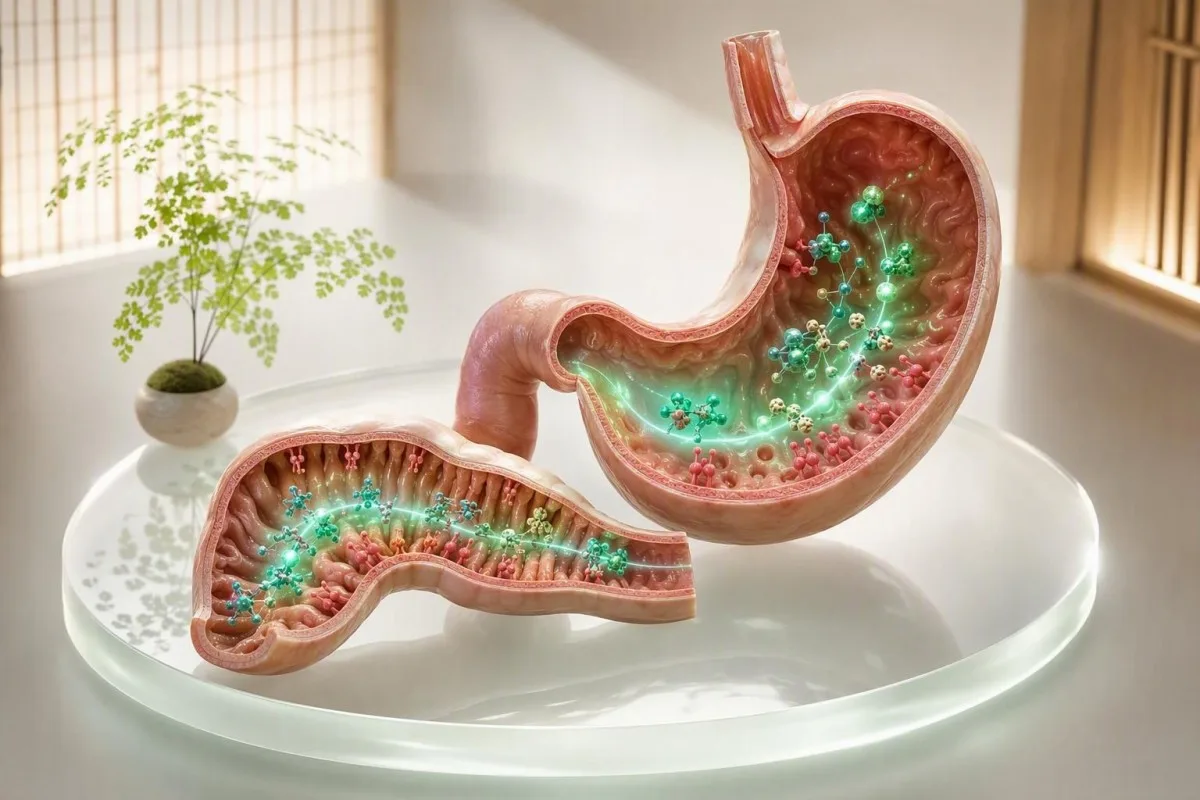
B12-absorpsje fereasket maagsoer, pankoaze-enzymen, en yntrinsike faktor fan mage-sellen foardat it opnommen wurdt yn it lêste ileum. In probleem yn ien fan 'e stappen kin in dieet mei hege B12-ynhâld ûnfoldwaande meitsje.
Fiedsel-bûn B12 wurdt frijjûn fan proteïne yn 'e mage, ferbynt earst mei haptocorrin, en giet dan oer nei yntrinsike faktor yn 'e tinne darm. It yntrinsike faktor-B12-kompleks wurdt opnommen yn it terminale ileum troch in receptor-mediearre proses; dit is wêrom sykte of ferwidering fan dat darmsegmint gefolgen hat.
Yntrinsike faktor-absorpsje saturearret by rûchwei 1.5-2 mcg per miel, wylst sa'n 1% fan in grutte orale dosis troch passyf diffúsje kin penetrearje. Dat lytse passive paad ferklearret wêrom't klinisy soms 1.000-2.000 mcg orale behannelingdosissen brûke, net om't ien 1.000 kear de dieetferlet hat.
Foar minsken mei chronike diarree, ûnferklearbere gewichtsverlies, of fertochte coeliakie, is in intake-berekkening net genôch. It besprekken fan de juste timing fan in gluten-útdaging foardat testen kin in falsk gerêststellend ûndersyk foarkomme.
Wat blokkeart B12-opname sels mei in goed dieet?
Pernisjeuse anemy, mage- of darmchirurgy, coeliakie, Crohn's sykte, langdurich metformin, en soerûnderdrukking kinne B12-absorpsje ferminderje. Yn dizze settings kin it ferheegjen fan fisk of ferrike granen de ôfnimming fertrage, mar kin de tekoart net korrigearje.
Autoimmune gastritis kin yntrinsike-faktor-produsearjende mage-sellen ferneatigje en feroarsaakje pernisieuze anemy, in absorpsjedoardering ynstee fan in dieetfout. NICE-rjochtline NG239, publisearre yn 2024, riedt oan om anty-yntrinsike faktor antwodytesting te beskôgjen as autoimmune gastritis wurdt fertocht, hoewol't in negatyf resultaat it net folslein útslút.
Metformin-assosjearre lege B12 is echt, mar fariabel. Yn de Diabetes Prevention Program Outcomes Study, lege of grinsljocht lege B12 wie faker mei metformin as placebo nei 5 jier, en it risiko naam ta mei langere bleatstelling (Aroda et al., 2016); dit is wêrom bloedûndersyk nei metformine net allinnich op glukoaze rjochtsje moat.
In 63-jierrige pasjint dy't ik sjen litten haw, iet wykliks salm en dronk deistich molke, mar hie B12 fan 156 pg/mL mei ferdoffe teannen nei jierren fan metformin en omeprazol. Iten wie net de ûntbrekkende stap - absorpsje wie.
Hokker bloedtests ferdúdlikje in mooglik B12-tekoart?
Serum B12 ûnder 200 pg/mL, of 148 pmol/L, stipet faak tekoart, wylst 200-300 pg/mL in yndeterminearre sône is dy't profitearret fan befêstigjende kontekst. Methylmalonyske soer, homocysteïne, aktive B12, folsleine bloedtelling, en folaat kinne ûnwissichheid oplosse.
Methylmalonyssoer rint meastentiids op as sellulêre B12 net genôch is; in MMA boppe 0,40 mikromol/L wurdt faak as ferhege beskôge, hoewol laboratoariumgrinzen ferskille. Nierynkonaasje kin MMA ûnôfhinklik ferheegje, dus in eGFR fan 35 mL/min/1.73 m² feroaret de betsjutting fan itselde resultaat.
Makrosytose is in oanwizing, gjin eask. In MCV boppe 100 fL kin foarkomme by B12-tekoart, mar in betiid tekoart kin in normale MCV hawwe, en izertekoart kin selfergrutting foar in part maskere; ferlykje it resultaat mei ús hege MCV opfolgje-gids.
Kantesti is in AI-oandreaune ark foar analyse fan bloedtests dy't B12 lêst mei MMA, MCV, RDW, kreatinine, en longitudinale feroarings ynstee fan in inkelde grins ta te passen. It diagnostyske ramt yn Devalia et al. (2014) stipet ek it brûken fan klinyske skaaimerken en twadde-line tests as serumb12 de fraach net oplost.
Kin B12-tekoart symptomen feroarsaakje sûnder bloedearmoede?
Ja, B12-tekoart kin nerve- en kognitive symptomen feroarsaakje foardat hemoglobine falt of MCV stige. Tingeling, baarnde fuotten, fermindere balâns, ferlies fan trillingssin, somberheid, en harsenswolk fertsjinje beoardieling as se oanhâlde.
In hemoglobine fan 13.2 g/dL en MCV fan 92 fL slute in funksjoneel B12-tekoart net út by in persoan mei progressive parestesia. Neurologyske herstel is minder foarsisber as symptomen al ferskate moannen oanwêzich west hawwe, dêrom advisearje ik net te wachtsjen op dúdlike anemia.
Folaat kin it bloed-tellen ferskine normalisearje, wylst B12-relatearre nerve-skansearring trochgiet. Dit is it klinyske probleem efter de warskôging oer hege-dosz folsäure; sjoch ús útlis fan heech folaat dat B12 maskearret foar de praktyske details.
Urgent seldei-ynstân is ferstannich by rap minder wurdende gongproblemen, nije betizing, markante swakte, of feroarings fan stoelgong en blaas. Dy symptomen hawwe ferskate oarsaken, mar B12 moat diel útmeitsje fan in rappe differinsjaaldiagnoaze ynstee fan in supplementeksperimint.
Wannear kin iten leech B12 ferbetterje, en wannear is behanneling nedich?
Iten kin in marzjinale lege yntak korrizjearje by immen mei yntakte opname, mar befêstige tekoart troch malabsorpsje freget faak hege-dosis mûnlinge behanneling of ynjeksjes. De kar hinget ôf fan de oarsaak, slimheid, folhâlding en neurologyske fynsten—net allinnich it serumgetal.
Foar fiedingsynstabiliteit sûnder slimme symptomen kinne dokters orale cyanocobalamine of methylcobalamine brûke yn doses lykas 50-150 mcg deis foar ûnderhâld, mei gruttere doses by it korrizjearjen fan tekoart. Krekte regimen ferskille per lân en moatte it protokol fan de behanneljende dokter folgje.
Pernisjeuse anemy, totale gastrektomy, serieuze ileale sykte, of substansjele neurologyske symptomen feroarje de diskusje meastal. Us detaillearre fergeliking fan B12-ynjeksjes en tabletten ferklearret wêrom hege-dosis tabletten noch wurkje kinne troch passive opname, wylst ynjeksjes foarkar krije kinne as sekerheid of snelheid fan belang is.
Nei myn ûnderfining is in iten-earst plan in poerbêste previnsje, mar earme rêdingsstipe foar symptomatyske malabsorpsje. Timing fan opnij kontrôles moat symptomen en funksjonele markers omfetsje, net allinnich in B12-resultaat dat fluch stige nei in ynjeksje.
Is methylated B12 better as cyanocobalamine?
Methylcobalamine en cyanocobalamine kinne beide B12-tekoart korrizjearje as de dosis en opname adekwaat binne; bewiis lit net sjen dat gemetallearre B12 universeel superieur is. Cyanocobalamine is stabyl, breed studearre, en faak brûkt yn fersterke fiedings.
It lichem konvertearret cobalamine yn aktive ko-enzyme-foarmen dy't brûkt wurde troch methionine synthase en methylmalonyl-CoA mutase. Marketing taal om 'gemetalleerde' produkten hinne rint faak fierder as fergelikend klinysk bewiis; opname, dosis, kosten en konsistinsje binne meastentiids beslissender.
Hydroxocobalamine wurdt faak brûkt by ynjeksje yn ferskate sûnenssystemen, om't it langer yn it lichem bliuwt as cyanocobalamine. Minsken mei chronike nier sykte of ûngewoane metaboalske steurnissen hawwe yndividueel advys nedich, om't MMA en behannelingkar mear yngewikkeld wurde kinne.
Foar in praktyske fergeliking fan produktchemie, doseloogika en laboratoariumopfolging, lês gemetallearre B12 tsjin cyanocobalamine. Stopje foarskreaune ynjeksjes net om't in supplementetiket in mear 'natuerlike' foarm belooft.
Hoe sjocht in praktyske dei fan B12-ryk iten derút?
In mingde dieet kin 2.4 mcg B12 berikke mei gewoane mielingen, wylst in Fegane patroon bewuste fersterke fiedingsplanning of in supplement nedich hat. It meast betroubere plan is ien dat jo kinne werhelje troch reizen, drokke wiken en feroaringen yn appetit.
Ien omnivoar foarbyld is yoghurt by it moarnsiten (1,0 mcg), in aai by it middeisiten (0,5 mcg), en 85 g salm by it iten (2,6 mcg). Dit leveret rûchwei 4,1 mcg foarôfgeand oan fariânsje fan iten-tafel, wylst it fersprieden fan yntak oer miel is noflik foar de measte minsken.
In fersterke fegane foarbyld kin brûke in plantdrank dy't leveret 1,0 mcg, krúsjaal leveret 1,5 mcg, en fersterke nutrisjonele gist dy't leveret 1,0 mcg. It probleem is konsistinsje: it feroarjen fan merken kin de fiedingsstof abrupte ferwiderje, dus bewarje in foto fan it label yn jo sûnensnotysjes.
B12 heart ta it bredere patroan fan wetteroplosbere fiedingsstoffen, proteïne, izer en enerzjyntak. Us wetteroplosbere fitaaminguide helpt de mienskiplike flater te foarkommen fan it behanneljen fan ien vitamine as de hiele ferklearring foar wurgens.
Wa moat foaral alert wêze op leech B12?
Feganen, âldere folwoeksenen, minsken dy't metformin of langduorjende soersuppressiva nimme, pasjinten nei maag- of ileale sjirurgy, en minsken mei inflammatoire darm sykte hawwe in heger risiko op B12-tekoart. It risiko nimt ta as mear dan ien faktor oanwêzich is.
Langduorjend gebrûk fan proton-pomp inhibitor kin de frijlitting fan B12 út fiedingsproteïne ferminderje troch maagsoer te ferleegjen. De assosjaasje is gjin reden om in foarskreaun medisyn abrupte te stopjen, mar it is in reden om te freegjen oft tafersjoch passend is nei 2 jier of mear fan trochgeand gebrûk.
Minsken âlder dan 60 jier kinne fiedsel-cobalamine malabsorpsje ûntwikkelje sels mei in fariearre dieet, soms neist atrofyske gastritis. In leger B12-nivo yn dizze groep is net automatysk 'gewoan leeftyd'; it kin in sinjaal wêze om symptomen, medisinen en autoimmune skiednis te ûndersykjen.
Ús lange-termyn PPI monitoringgids sketst ferbûne laboratoariumdiskusjes, ynklusyf magnesium en izer. It kombinearjen fan lege B12 mei ûnferklearbere izertekoart kin kliïns ferwize nei in maachsoerke ynstee fan twa ûnôfhinklike dieetgatten.
Wannear moatte B12-nivo's opnij hifke wurde nei it feroarjen fan dieet of behanneling?
Opnij testen bart faak 8-12 wiken nei in dieet- of orale behannelingwiziging, wylst symptoomhurdens en behannelmetoade earder klinysk ûndersyk kinne rjochtfeardigje. In serum B12-resultaat kin rap omheech gean nei supplementaasje en bewize weefselherstel net op himsels.
In folslein bloedtelling kin in retikulocytrespon binnen sawat sjen litte 1 wike nei effektive behanneling foar megaloblastyske anemia, wylst hemoglobine meastentiids yn ferskate wiken ferbetteret. Senuwsymptomen herstelle faak stadiger en soms ûnfolslein, foaral nei langere tekoart.
Stopje-en-start supplementaasje kin serum B12 der normaal útsjen litte op 'e dei fan testen, wylst MMA, symptomen, of makrosytose soargen bliuwe. Dit is ien reden om de klinikus krekt te fertellen wat jo namen, de dosis en de lêste dosisdatum foardat resultaten ynterpretearre wurde.
Kantesti AI kin B12, MCV, hemoglobine, RDW, folaat en kreatinine fergelykje oer ferskate rapporten om te identifisearjen oft in feroaring klinysk betsjuttend is. Foar lêzers dy't dizze feardigens leare, ús bloedtest-trendanalyse-gids ferklearret wêrom't ien isolearre resultaat selden it hiele ferhaal is.
Hokker B12-misfettingen kinne goede soarch fertrage?
De grutste misfetting oer B12 is dat it iten fan mear dierlik iten elk leech resultaat sil oplosse. Dieet helpt by de opname, mar it kin gjin yntrinsike faktor werstelle, darm sykte omkeare, of feilich evaluaasje fan neurologyske symptomen ferfange.
In oare myte is dat in heech serum B12 resultaat altyd in treflike status betsjut. In resultaat boppe 900 pg/mL wjerspegeet meastentiids oanfollingen of ynjeksjes, mar oanhâldende ûnferklearre ferheging kin ek foarkomme by leversykte, nier sykte, of guon hematologyske betingsten; kontekst is wichtiger as panyk.
Fanôf 1 septimber 2026 soe ik ek warskôgje tsjin it brûken fan enerzjyferbettering nei ien tablet as diagnostyske bewiis. Placebo-effekten, sliep, izerstatus, skildklier sykte, depresje, en glukoaze feroarings kinne allegear enerzjy beynfloedzje oer 1-4 wiken sûnder B12-tekoart te befêstigjen.
De klinyske ynhâld fan Kantesti wurdt beoardiele mei stipe fan ús Medyske Advysried, mar in AI-ynterpretaasje ferfangt nea in ûndersyk nei foarútgeande neurologyske symptomen. Lêzers kinne ús oanpak foar klinyske falidaasje besjen om te begripen hoe't wy opfolgjende fragen formulearje ynstee fan in diagnoaze te stellen.
Wat binne de feilichste folgjende stappen as jo in leech B12 fermoedzje?
As jo oanhâldende dôvens, lykwichtproblemen, kognitive feroaring, ûnferklearre makrosytose, of in B12 resultaat ûnder 200 pg/mL hawwe, regelje dan medysk ûndersyk ynstee fan allinich op iten te fertrouwen. Iere behanneling is benammen relevant as nerven belutsen wêze kinne.
Bring in list mei medisinen, oanfollingen, dieetpatroan, spijsverteringsdiagnosen, operaasjes, alkoholinname, en eardere laboratoariumrapporten. In klinikus kin dan beslute oft B12 werhelle wurde moat, MMA of homocysteine besteld wurde, folaat en folslein bloedtelling kontrolearje, of pernisjeuse anemia en malabsorpsje ûndersykje.
Thomas Klein, MD, riedt oan om heechdosis folsäure te foarkommen as selsbehanneling foar ûnferklearre makrosytose oant B12 ridlik beoardiele is. As jo gjin read flags hawwe en dieet opname dúdlik leech is, is in mjitten iten of oanfolling plan mei in werhelle resultaat yn 8-12 wiken faak ferstannich.
Kantesti ferbynt laboratoarium-rapport trends mei te begripen fragen foar jo ôfspraak, wylst de definitive diagnostyske beslútfoarming by jo klinikus bliuwt. Untdek ús referinsjegids foar biomarkers foar de laboratoarium termen dy't wierskynlik neist in B12 resultaat ferskine sille.
Faak stelde fragen
Hokker fiedsel hat it measte vitamine B12?
Klemmen en fleislever hearre ta de fiedingsstoffen mei de measte fitamine B12. In kocht stik fan 85 g klemmen kin sawat 84 mcg B12 leverje, wylst itselde stik fleislever sawat 70 mcg leveret; beide oertreffe de deistige doelstelling fan 2,4 mcg foar folwoeksenen grutdiels. Lever moat net as in deistich iten beskôge wurde by swangerskip fanwegen it tige hege foarme fitamine A-gehalte. Foar gewoane mielingen binne fisk, fleis, suvelprodukten, aaien en produsearre fersterke fiedingsstoffen praktysker boarnen.
Krijt feganes genôch B12 út iten allinnich?
Fegetearjers kinne harren fitaalmine B12-behoeften allinich út iten ferfâlde as se regelmjittich produkten brûke dy't fersterke binne mei B12 yn mjitten hoemannichten. Net-fersterke griente, paddestoelen, seewier, tempeh en fiedingsgist binne gjin betroubere B12-boarnen, om't harren kobalamine-ynhâld ôfwêzich is, net konsekwint is, of ynaktive analogen befetsje kin. In protte fersterke plantendranken leverje 0.4-1.0 mcg per 250 ml, mar de formuleringen ferskille per lân en merk. In B12-supplement is faak in ienfâldiger en mear betroubere feiligens foar fegane diëten.
Hoefolle B12 moat in folwoeksene deis krije?
Nea alle folwoeksenen hawwe deistich 2,4 mcg fiamine B12 nedich neffens de United States Recommended Dietary Allowance. Swangerskip ferheget it doel nei 2,6 mcg deistich, en boarstfieding ferheget it nei 2,8 mcg deistich. De UK referinsje fiedingsynname foar folwoeksenen is 1,5 mcg deistich, dus lânspesifike fiedingsetiketten kinne ferskille. Dizze wearden binne previnsjedoelen foar normale opname en binne folle leger as behannelingsdoseringen dy't brûkt wurde foar diagnostisearre tekoart.
Kin ik in B12-tekoart oplosse troch mear fleis en aaien te iten?
It kin B12-tekoart dat allinnich troch in lege fiedingsopname komt, ferhelpe om mear fleis, fisk, suvel, aaien of fersterke fiedings te iten, mar it kin net wurkje as de opname hinderet is. Perisjeus anemy, coeliakie, sykte fan Crohn, maagsjirurgy, slimme sjirurgy, metformin en langduorjende soersuppresive behanneling kinne de opname ferminderje, ek al iten jo B12-ryk. Serum B12 ûnder 200 pg/mL of 148 pmol/L rjochtfeardiget algemien in klinyske beoardieling fan de oarsaak. Neurologyske symptomen lykas ferdoofheid, min lykwicht of kognitive feroarings moatte net allinnich mei iten behannele wurde.
Wat helpt by de opname fan B12?
De opname fan fítamine B12 hinget ôf fan goede mageferwurking, pankreasenzymen, yntrinsike faktor, en in funksjonearjend terminale ileum. Yntrinsike faktor nimt aktyf mar sa'n 1,5-2 mcg B12 op út in miel, wylst rûchwei 1% fan in grutte orale dosis troch passive diffúsje binnenkomme kin. B12 ite mei iten is ridlik, mar gjin spesifike iten kombinaasje kin ôfwêzige yntrinsike faktor of serieuze ileale sykte ferhelpe. Hege-dosearre orale B12 of ynjeksjes kinne nedich wêze as de opname beheind is.
Hoksa B12-nivo wurdt as leech beskôge?
In serumvitamine B12-resultaat ûnder 200 pg/mL, lykweardich oan sawat 148 pmol/L, stipet faak B12-tekoart, hoewol laboratoaren ferskillende assaybereiken brûke. Resultaten fan 200-300 pg/mL wurde faak beskôge as grinsgefallen of ûnbepaalde en kinne metylmalonysûr, homocysteïne, aktyf B12, folslein bloedtelling, folaat, nierfunksje, en symptoomkonteks nedich hawwe. Metylmalonysûr boppe sawat 0.40 mikromol/L stipet sellulêr B12-tekoart, mar kin ek stige mei fermindere nierfunksje. In normale hemoglobine of MCV slút iere B12-relatearre nerve-symptomen net betrouber út.
Krij hjoed noch AI-oandreaune bloedtest-analyse
Doch mei oan mear as 2 miljoen brûkers wrâldwiid dy’t Kantesti fertrouwe foar direkte, krekte analyse fan laboratoariumtests. Upload jo bloedtest resultaten en ûntfange wiidweidige ynterpretaasje fan 15,000+-biomarkers yn sekonden.
📚 Ferwiisde ûndersykspublikaasjes
Klein, T., Mitchell, S., & Weber, H. (2026). Urobilinogen yn urine test: folsleine hantlieding foar urinalysis 2026. Kantesti AI Medysk Undersyk.
Klein, T., Mitchell, S., & Weber, H. (2026). Gids foar izerstúdzjes: TIBC, izerfersêding en bindingskapasiteit. Kantesti AI Medysk Undersyk.
📖 Eksterne medyske referinsjes
⚕️ Medyske disclaimer
Dit artikel is allinnich foar ûnderwiisdoelen en foarmet gjin medysk advys. Rieplachtsje altyd in kwalifisearre soarchferliener foar besluten oer diagnoaze en behanneling.
E-E-A-T fertrouwensignalen
Ûnderfining
Dokter-oandreaune klinyske resinsje fan lab-ynterpretaasje-wurkprosessen.
Ekspertize
Fokus fan laboratoariummedisyne op hoe’t biomarkers har gedrage yn in klinyske kontekst.
Autoriteit
Skreaun troch dr. Thomas Klein mei resinsje troch dr. Sarah Mitchell en prof. dr. Hans Weber.
Betrouberens
Bewiis-basearre ynterpretaasje mei dúdlike ferfolchpaadkes om alarm te ferminderjen.