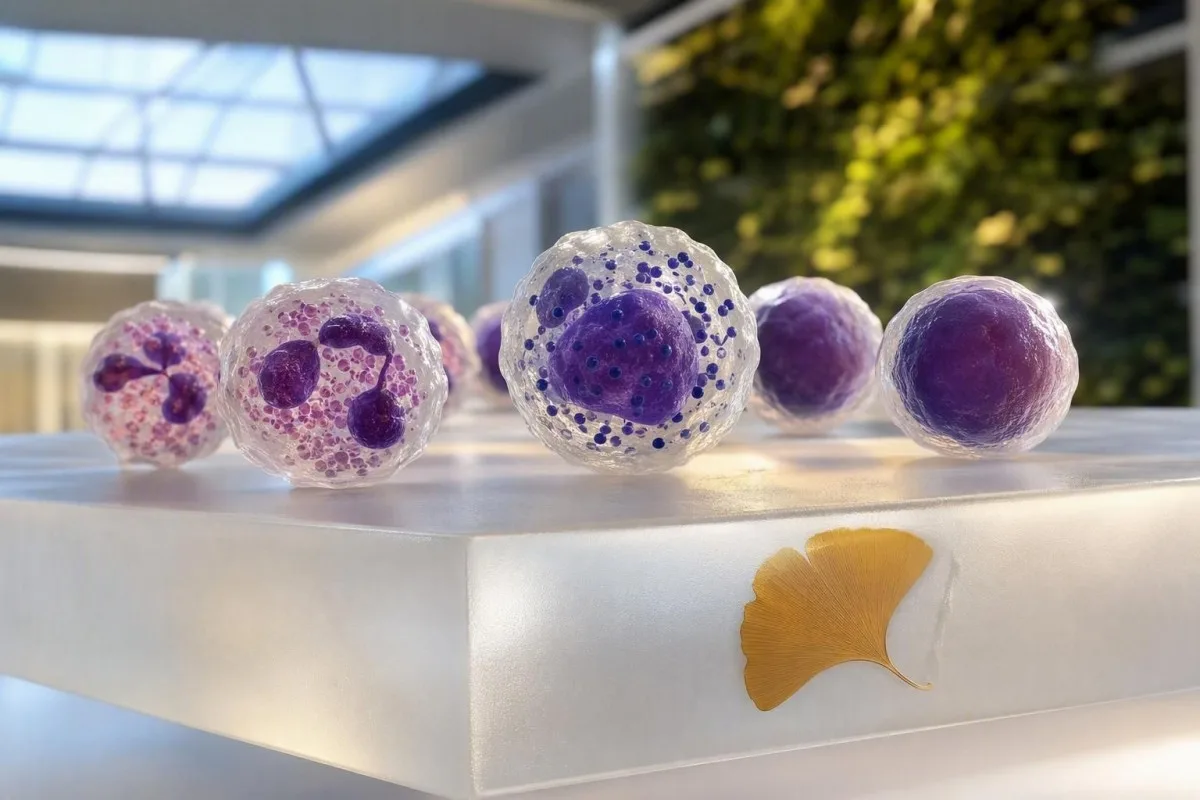
اکثر بزرگسالان بازوفیل مطلق 0.00–0.10 × 10⁹/L (0–100/µL) دارند، در حالی که درصد آن معمولاً 0–1% است. درصد کمی غیرعادی اغلب نشاندهنده تغییر در سایر گلبولهای سفید است؛ شمارش مطلق بازوفیل نتیجهای است که معمولاً پیگیری را هدایت میکند.


- بازوفیلهای مطلق معمولاً در بزرگسالان 0.00–0.10 × 10⁹/L (0–100/µL) است و از نظر بالینی مفیدتر از یک درصد به تنهایی است.
- درصد بازوفیلها معمولاً 0–1% از گلبولهای سفید است، اما زمانی که نوتروفیلها یا لنفوسیتها کاهش مییابند، حتی اگر شمارش مطلق طبیعی باشد، میتواند افزایش یابد.
- کودکان معمولاً پس از شیرخوارگی از همان حد بالای عملی 0.10 × 10⁹/L استفاده میکنند، اما فاصله سنی خاص آزمایشگاه اولویت دارد.
- تکرار CBC در 2-8 هفته برای بازوفیلی خفیف و ایزوله پس از آلرژی، عفونت یا تغییر دارو معقول است.
- بازوفیلی مداوم بالاتر از 0.20 × 10⁹/L شایسته بررسی بالینی است، به خصوص با گلبولهای سفید بالا، کمخونی، طحال بزرگ، یا علائم عمومی.
- بررسی فوری برای لکوسیتوز شدید، کاهش وزن بیدلیل، تعریق شبانه شدید، تب، یا احساس سیری زودرس در زیر دندههای چپ، لازم است.
- بازوفیل صفر در تفریق خودکار رایج است و معمولاً هیچ اهمیت بالینی ندارد.
- هوش مصنوعی کانتستی بازوفیلها را در کنار تعداد کل گلبولهای سفید، ائوزینوفیلها، تعداد پلاکتها، هموگلوبین و نتایج قبلی میخواند، نه اینکه یک پرچم را به عنوان یک تشخیص در نظر بگیرد.
بازوفیل مطلق در مقابل درصد بازوفیل
تعداد مطلق بازوفیلها از 0.00 تا 0.10 × 10⁹/L عموماً در بزرگسالان طبیعی است, ، در حالی که درصد بازوفیل 0 تا 11 درصد فقط بخشی از تعداد کل گلبولهای سفید است. هنگامی که این دو با هم مطابقت ندارند، پزشکان معمولاً وزن بیشتری به نتیجه مطلق میدهند.
یک درصد ممکن است صرفاً به این دلیل بالا به نظر برسد که نوع دیگری از گلبولهای سفید پایین است. به عنوان مثال، 1.5 درصد بازوفیل با تعداد گلبولهای سفید 3.0 × 10⁹/L، تعداد مطلق تنها 0.045 × 10⁹/L را تولید میکند - که در بسیاری از محدودههای بزرگسالان قرار دارد. به همین دلیل است که یک پرچم درصدی به تنهایی به ندرت کل داستان را بیان میکند.
محاسبه مستقیم است: تعداد کل گلبولهای سفید × درصد بازوفیل ÷ 100. تعداد گلبولهای سفید 12.0 × 10⁹/L و بازوفیل 2 درصد منجر به 0.24 × 10⁹/L میشود که یک افزایش واقعی است. برای زمینه گستردهتر، به راهنمای ما برای اینکه CBC چه چیزهایی را شامل میشود.
کانتستی یک آنالایزر آزمایش خون هوش مصنوعی مراجعه کنید که درصدها را به تعداد مطلق قابل مقایسه بالینی تبدیل میکند، زمانی که گزارش منبع، شمارش افتراقی را ارائه میدهد. از تجربه من، این یک تبدیل، مقدار قابل توجهی از زنگ خطر غیر ضروری را پس از یک چکاپ معمول سلامت، جلوگیری میکند.
چرا تعداد مطلق پایدارتر است
تحلیلگرهای خودکار هزاران رویداد سلولی را شمارش میکنند، اما بازوفیلها معمولاً نادر هستند - اغلب کمتر از 1 در 100 گلبول سفید. بنابراین، تغییرات کوچک تحلیلی و بیولوژیکی میتوانند درصد را به طور قابل توجهتری نسبت به تعداد مطلق تغییر دهند.
فواصل مرجع عملی بازوفیل بر اساس سن
اکثر آزمایشگاهها از بازه مرجع مطلق بازوفیل 0.00–0.10 × 10⁹/L از دوران کودکی تا بزرگسالی استفاده میکنند, ، اما محدودههای نوزادان ممکن است گستردهتر باشد. از بازه چاپ شده در کنار نتیجه خود استفاده کنید، زیرا محدودیتهای مرجع به روش تحلیلگر و جمعیت سالم محلی آزمایشگاه بستگی دارد.
برای نوزادان در هفتههای اول زندگی، برخی آزمایشگاههای کودکان، بازوفیلهای مطلق را تا حدود 0.20–0.40 × 10⁹/L میپذیرند. سیستم ایمنی نوزاد به سرعت در حال انطباق است، بنابراین محدودیتهای بزرگسالان نباید بدون ورودی کودکان بر روی نتیجه نوزاد اعمال شود.
از حدود 1 سالگی به بعد، بسیاری از خدمات از حد بالایی عملی نزدیک به 0.10 × 10⁹/L یا 100/µL استفاده میکنند. نتیجه 0.11 × 10⁹/L در کودکی سالم با تعداد طبیعی گلبولهای سفید، معمولاً یک سوال تکرار و زمینه است، نه یک مورد اورژانسی.
CLSI EP28-A3c توضیح میدهد که چرا آزمایشگاهها بازههای مرجع خود را ایجاد یا تأیید میکنند، به جای اینکه یک بازه جهانی را قرض بگیرند (CLSI، 2010). راهنمای محدوده سنی نوتروفیل ما همین اصل را برای شمارش افتراقی دیگری نشان میدهد.
درک واحدهای بازوفیل در گزارشهای بریتانیا، ایالات متحده و بینالمللی
تعداد بازوفیل 0.10 × 10⁹/لیتر معادل 100/میکرولیتر است., ، بنابراین گزارشهایی که از واحدهای مختلف استفاده میکنند میتوانند نتیجه یکسانی را توصیف کنند. شمارش کامل خون در انگلستان اغلب ×10⁹/لیتر را گزارش میکند، در حالی که آزمایشگاههای ایالات متحده معمولاً از سلول/میکرولیتر یا K/میکرولیتر استفاده میکنند.
برای تبدیل ×10⁹/لیتر به سلول/میکرولیتر، در 1000 ضرب کنید. بنابراین 0.05 × 10⁹/لیتر معادل 50/میکرولیتر است؛ 0.25 × 10⁹/لیتر معادل 250/میکرولیتر است. گزارشی که 0.0 را نشان میدهد ممکن است به جای اثبات اینکه عملاً هیچ بازوفیلی وجود ندارد، به یک رقم اعشار گرد شده باشد.
مقداری که به عنوان 0.2 K/µL ذکر شده معادل 0.20 × 10⁹/L است. این تمایز مهم است زیرا 0.2% و 0.2 K/µL اندازهگیریهای کاملاً متفاوتی هستند. بیماران به طور مرتب هنگام مقایسه گزارشها از دو کشور، اینها را با هم اشتباه میگیرند.
اگر گزارش شما به جای CBC، FBC را ذکر کرده است، اجزاء عمدتاً یکسان هستند؛ راهنمای شمارش کامل خون در انگلستان اصطلاحات رایج را ترجمه میکند.
چرا شمارش بازوفیل افزایش یا کاهش مییابد
بازوفیلی خفیف اغلب با آلرژی، التهاب مزمن، بهبودی از عفونت، یا تغییر ایمنی ناشی از دارو همراه است. تعداد کم یا صفر بازوفیل معمولاً معنیدار نیست زیرا این سلولها در تعداد بسیار کم در گردش هستند.
بازوفیلها گیرندههای IgE را حمل میکنند و پس از قرار گرفتن در معرض آلرژن میتوانند هیستامین و سایر واسطهها را آزاد کنند. رینیت آلرژیک فصلی، کهیر مزمن، آسم و برخی اختلالات پوستی میتوانند با افزایش اندک همراه باشند، اگرچه شمارش طبیعی هیچ یک از آنها را رد یا تایید نمیکند.
کمکاری تیروئید، بیماری التهابی روده، اختلالات روماتوئیدی و برخی عفونتهای مزمن نیز ممکن است با بازوفیلی همراه باشند. سوال مفید این نیست که “کدام بیماری باعث این میشود؟” بلکه “چه سیگنالهای دیگری وجود دارد؟”—CRP، ائوزینوفیلها، علائم، سابقه دارویی و روند زمانی اهمیت دارند.
افزایش IgE و تعداد ائوزینوفیل میتواند الگوی آلرژیک را تأیید کند، در حالی که خارش تنها ممکن است نیاز به بررسی گستردهتری داشته باشد؛ مقاله ما در مورد آزمایش خون برای پوست خارشدار محدودیتهای عملی تست CBC را توضیح میدهد.
چه زمانی باید CBC را برای بازوفیلها تکرار کنید؟
برای افزایش خفیف و مجزا بازوفیل پس از یک محرک موقت، به شرطی که حال عمومی خوب باشد و بقیه شمارش نگرانکننده نباشد، CBC را در 2 تا 8 هفته تکرار کنید. در مواردی که تعداد کل گلبولهای سفید در حال افزایش است یا چندین رده سلولی غیرطبیعی وجود دارد، زودتر، معمولاً در عرض چند روز تا 2 هفته، تکرار کنید.
برای تعداد مطلق بازوفیل 0.11–0.20 × 10⁹/L پس از سرماخوردگی، تشدید تب یونجه، واکسیناسیون، یا دوره کوتاه استروئید، من اغلب یک تکرار آرام را به زنجیرهای از آزمایشها ترجیح میدهم. سعی کنید از همان آزمایشگاه استفاده کنید و بیماری اخیر، داروها، تغییرات سیگار کشیدن و قرار گرفتن در معرض استروئید را ثبت کنید.
قبل از تکرار آزمایش، سعی نکنید تعداد را “بهبود” بخشید. هیدراتاسیون منطقی است، اما مکملها، آنتیهیستامینها، کورتیکواستروئیدها و ورزش استقامتی شدید میتوانند افتراق گستردهتر را تغییر دهند. ما راهنمای زمانبندی آزمایش خون جزئیات اثرات زمانبندی رایج را شرح میدهد.
کانتستی یک پلتفرم تفسیر آزمایش خون AI که تفاضل فعلی را با CBC های قبلی مقایسه میکند و افزایش مداوم را متفاوت از یک پرچم یکباره علامتگذاری میکند. روند طی 3-6 ماه اغلب آموزندهتر از یک نقطه اعشار منفرد است.
چگونه برای تکرار قابل اعتماد بازوفیل آماده شویم
آزمایش بازوفیل معمولاً به ناشتایی نیاز ندارد، اما تکرار CBC زمانی قابل تفسیرتر است که شما به شدت بیمار نباشید و شرایط نمونهگیری مشابه باشد. به جای تغییرات شدید، مایعات طبیعی، وعدههای غذایی معمولی و یک روز عادی را هدف قرار دهید.
از زمانبندی مجدد غیر فوری در دوران تب، شعلهور شدن شدید آلرژی، یا روز بعد از یک رویداد استقامتی غیرمعمول سخت، خودداری کنید، اگر هدف ایجاد خط پایه باشد. استرس حاد هورمونی و تغییرات مایعات میتواند چندین زیرمجموعه گلبول سفید را برای ساعتها تا روزها جابجا کند.
در مورد کورتیکواستروئیدهای سیستمیک، لیتیوم، درمانهای حاوی اپی نفرین، درمان بیولوژیکی اخیر و هر مکمل جدیدی به پزشک یا خونگیر اطلاع دهید. استروئیدها معمولاً بازوفیلها و ائوزینوفیلهای در گردش را کاهش میدهند، بنابراین یک نتیجه “نرمال” در حین مصرف آنها ممکن است خط پایه بدون درمان شما را نشان ندهد.
کیفیت نمونه هنوز هم مهم است. نمونههای EDTA لخته شده و تجزیه و تحلیل تاخیری میتواند تفاضلات خودکار را کمتر قابل اعتماد کند؛ اگر چندین مقدار CBC با هم عجیب به نظر میرسند، مرور کنید چه زمانی نیاز به خونگیری مجدد است.
الگوهای CBC که باعث اهمیت بیشتر بازوفیلهای بالا میشود
بازوفیلی زمانی نگرانکنندهتر است که بازوفیلهای مطلق از 0.20 × 10⁹/L فراتر روند و همراه با گلبولهای سفید مداوم بالاتر از 11.0 × 10⁹/L، کمخونی، تغییرات پلاکت، یا سلولهای نابالغ رخ دهد. این ترکیب - نه فقط بازوفیلها - تعیین میکند که پزشکان با چه سرعتی تحقیق میکنند.
فردی 44 سالهای که من بررسی کردم، بازوفیل 0.28 × 10⁹/L، گلبولهای سفید 16.4 × 10⁹/L، پلاکت 610 × 10⁹/L و احساس سیری زودرس داشت. این الگو مستلقیماً نیازمند مراجعه به مسیر خونشناسی در همان هفته بود؛ نتیجه بازوفیل منفرد تشخیص را قطعی نکرد، اما سرنخ مهمی بود.
بازوفیلی همراه با نوتروفیلهای بالا و علائم طحال میتواند در نئوپلاسمهای میلوپرولیفراتیو، از جمله لوسمی میلوئید مزمن رخ دهد. European LeukemiaNet هنگامیکه الگوی بالینی و شمارش خون این احتمال را مطرح میکند (Hochhaus et al., 2020)، آزمایش مولکولی و ارزیابی تخصصی را توصیه میکند.
لام محیطی میتواند تغییرات تفاضلی واقعی را از عدم قطعیت تحلیلگر تشخیص دهد و ممکن است شیفت چپ یا سلولهای غیر معمول را نشان دهد. درباره بیشتر بخوانید مسیرهای CBC سرطان خون بدون اینکه فرض کنید شمارش غیرطبیعی به معنای سرطان است.
علائم و نتایجی که نیاز به توجه فوری پزشکی دارند
در صورت بازوفیلی همراه با تب، تعریق شبانه شدید، کاهش وزن بدون دلیل، کبودی جدید، تنگی نفس، خستگی شدید، یا پری در قسمت بالای شکم، به دنبال ارزیابی فوری پزشکی باشید. این علائم ناشی از نتیجه کمی افزایش یافته بازوفیل به خودی خود نیستند؛ آنها نشان میدهند که تصویر بالینی گستردهتر نیاز به ارزیابی دارد.
شمارش کل گلبولهای سفید بالاتر از 30 × 10⁹/L، مقادیر با افزایش سریع، یا گرانولوسیتهای نابالغ قابل مشاهده در گزارش باید فوراً با پزشک تجویز کننده مورد بحث قرار گیرد. سردرد شدید، تغییر بینایی، درد قفسه سینه، یا علائم عصبی، صرف نظر از شمارش بازوفیل، نیاز به ارزیابی اورژانسی دارند.
اکثر افراد با 0.11–0.20 × 10⁹/L بازوفیل و بدون علائم، نیاز به مراقبت اورژانسی ندارند. با این حال، این یکی از آن مناطقی است که زمینه بیشتر از عدد اهمیت دارد، به خصوص اگر نتایج قبلی 0.02 × 10⁹/L بوده و شمارش جدید در حال افزایش است.
اگر همچنین تنگی نفس یا رنگ پریدگی دارید، مقادیر هموگلوبین و پلاکت همراه ممکن است فوریت بیشتری داشته باشند؛ ما را ببینید دلیل ارتباط غلظت اکسیژن، فریتین، عملکرد تیروئید و زمینه قلبی را توضیح می دهد..
منظور از بازوفیل پایین یا نتیجه صفر چیست
نتیجه بازوفیل 0.00 × 10⁹/L معمولاً طبیعی است و به ندرت به تنهایی نیاز به تکرار دارد. بازوفیلها ممکن است به دلیل کمیاب بودن طبیعی در گردش، زیر آستانه گزارش تحلیلگر باشند.
استرس حاد، عفونت، بارداری، پرکاری تیروئید و درمان با کورتیکواستروئیدها همگی می توانند به طور موقت بازوفیل های در گردش را کاهش دهند. با این حال، بر خلاف نوتروپنی که از نظر بالینی قابل توجه است، هیچ سندرم علامت شناخته شده ای که ناشی از کمبود بازوفیل های جدا شده باشد، وجود ندارد.
مشکل تحلیلی به راحتی نادیده گرفته می شود: اگر فقط چند بازوفیل شمارش شوند، تغییرپذیری نمونه گیری معمول می تواند 0.01 × 10⁹/L را در نمونه بعدی به 0.00 × 10⁹/L تبدیل کند. این لزوماً یک تغییر بیولوژیکی نیست.
توصیه عملی دکتر توماس کلاین این است که وقتی بقیه CBC طبیعی است و علائم مرتبطی وجود ندارد، پرچم کمبود بازوفیل را نادیده بگیرید. راهنمای اختصاصی ما توضیح می دهد بازوفیل ها در صفر.
بازوفیلها در بارداری و اواخر عمر
بارداری و پیری حد قطعیت خاصی برای بازوفیل ندارند؛ بازه آزمایشگاه گزارشگر و الگوی کامل سلول های سفید خون بهترین مرجع باقی می مانند. بارداری معمولاً سلول های سفید خون را از طریق نوتروفیل ها افزایش می دهد، که می تواند باعث شود درصد بازوفیل بدون کاهش واقعی بازوفیل، پایین تر به نظر برسد.
در دوران بارداری، شمارش کل سلول های سفید خون 12–15 × 10⁹/L، به ویژه در اواخر بارداری، می تواند فیزیولوژیکی باشد، بنابراین تفسیر مبتنی بر درصد حتی کمتر قابل اعتماد می شود. شمارش مطلق بازوفیل ترجیح داده می شود، اما علائم نگران کننده همچنان بر بازه مرجع ارجحیت دارند.
در افراد مسن، شمارش بازوفیل که به طور پایدار بالای 0.20 × 10⁹/L باشد، شایسته توجه است زیرا بار دارویی و اختلالات مغز استخوان با افزایش سن شایع تر می شوند. این تشخیصی نیست؛ صرفاً آستانه بررسی روند CBC و لام را پایین می آورد.
برای سایر اشتباهات تفسیری مربوط به بارداری، مرور کنید آزمایش خون در بارداری.
داروها، آلرژیها و نوسانات بازوفیل
علائم آلرژی ممکن است با افزایش خفیف بازوفیل ها همزمان باشد، در حالی که کورتیکواستروئیدهای سیستمیک اغلب آنها را در عرض چند روز کاهش می دهند. هیچ یک از این الگوها تشخیص آلرژی را تأیید نمی کند و یا ثابت نمی کند که یک دارو مسئول است.
آنتی هیستامین ها عمدتاً گیرنده های هیستامین را مسدود می کنند؛ آنها به طور قابل اعتمادی شمارش بازوفیل را نرمال نمی کنند. پردنیزولون خوراکی و سایر گلوکوکورتیکوئیدهای سیستمیک می توانند سلول های سفید خون را مجدداً توزیع کنند، که اغلب باعث کاهش ائوزینوفیل ها و بازوفیل ها و افزایش نوتروفیل های در گردش می شود.
لیتیوم یک سرنخ دارویی کمتر شایع اما مفید است زیرا می تواند تولید سلول های سفید خون را افزایش دهد. داروهای بیولوژیک، شیمی درمانی و درمان های تعدیل کننده ایمنی هرگز نباید به دلیل یک نتیجه CBC متوقف شوند - از تیم تجویز کننده بپرسید که چگونه نتیجه با برنامه نظارتی آنها مطابقت دارد.
افزایش شمارش بازوفیل همراه با خس خس سینه، کهیر، تورم صورت یا غش باید به عنوان یک مشکل علامتی مدیریت شود، نه یک معضل آزمایشگاهی. راهنمای ما راهنمای IgE بالا توضیح می دهد که کجا نشانگرهای آلرژی کمک می کنند و کجا گمراه می کنند.
پزشکان پس از بازوفیلی مداوم چه چیزی را بررسی میکنند
بازوفیلی مطلق پایدار معمولاً باعث تکرار CBC، بررسی لام دستی، بررسی دارو و علائم، و سپس آزمایش هدفمند در صورت غیرطبیعی بودن کل شمارش سلول های سفید خون یا سایر سلول ها می شود. پانل های گسترده سرطان معمولاً اولین قدم برای افزایش خفیف و جدا شده نیستند.
اولین نقطه انشعاب این است که آیا نتیجه جدا شده است یا خیر. هموگلوبین، پلاکت ها، شمارش سلول های سفید خون پایدار و لام طبیعی به شدت از یک برنامه محافظه کارانه حمایت می کنند؛ کم خونی، ترومبوسیتوز، لکوسیتوز، یا اسپلنومگالی ارزیابی را در جهت دیگری سوق می دهند.
هنگامی که اختلال میلوپرولیفراتیو محتمل است، پزشکان ممکن است آزمایش BCR::ABL1، آزمایش JAK2، لاکتات دهیدروژناز، اورات و بررسی تخصصی را درخواست کنند. والن و همکاران، بازوفیلی پایدار را به عنوان یک یافته معنی دار در طبقه بندی نئوپلاسم های بازوفیلی و میلوئید توصیف می کنند (والنت و همکاران، 2022).
شبکه عصبی Kantesti ترکیباتی را شناسایی می کند که شایسته بررسی هستند اما لوسمی را از CBC تشخیص نمی دهد. راهنمای ما اعتبارسنجی پزشکی ما توضیح میدهد که چرا تفسیر آزمایشگاهی باید نظارت بالینی را حفظ کند.
چگونه بازوفیلها را بدون واکنش بیش از حد ردیابی کنیم
یک روند معنیدار بازوفیل، تغییر مداوم جهتدار در CBCهای قابل مقایسه است، نه یک حرکت منفرد از 0.04 به 0.08 × 10⁹/L. با حد مرجع بزرگسالان 0.10 × 10⁹/L، هر دو مقدار علیرغم تفاوت عددی، در محدوده باقی میمانند.
شمارش مطلق، درصد، کل گلبولهای سفید، نوتروفیلها، ائوزینوفیلها، هموگلوبین، پلاکتها، تاریخ، بیماری اخیر و داروها را پس از هر نمونهگیری ذخیره کنید. این سابقه کوچک اطلاعات قابل استفادهتری نسبت به اسکرینشاتهای پرچمهای قرمزداری که ایزوله شدهاند، در اختیار پزشک شما قرار میدهد.
کانتستی یک ابزار تحلیل آزمایش خون مبتنی بر AI در کشورهای مختلف برای مقایسه نتایج CBC به صورت طولی ضمن حفظ بازه زمانی اعلام شده توسط آزمایشگاه منبع استفاده میشود. دکتر توماس کلین توصیه میکند حداقل دو نتیجه قابل مقایسه را قبل از نسبت دادن معنا به تغییرات دیفرانسیلی مرزی، بررسی کنید.
یک قانون مفید: اگر شمارش مطلق کمتر از 0.10 × 10⁹/L باقی بماند، تعداد کل گلبولهای سفید پایدار است و شما احساس خوبی دارید، پیگیری معمول در آزمایش خون برنامهریزی شده بعدی شما معمولاً کافی است. از ما استفاده کنید اختلافِ آزمایش خون برای قضاوت در مورد اینکه آیا یک تغییر احتمالا واقعی است.
سوالاتی که در قرار ملاقات پیگیری باید پرسید
بهترین سوال پیگیری این است که “شمارش مطلق بازوفیل من چقدر است و چه چیزهای دیگری در CBC تغییر کرده است؟” این عبارت گفتگو را به سمت متغیرهایی هدایت میکند که در واقع خطر بالینی را تغییر میدهند.
بپرسید که آیا شمارش جدید است، پایدار است، در حال افزایش است یا احتمالاً واکنشی است؛ آیا نیاز به بررسی اسمیر وجود دارد؛ و چه زمانی CBC بعدی باید گرفته شود. لیستی از عفونتهای اخیر، علائم آلرژی، داروها، مکملها، سفرها و سابقه خانوادگی اختلالات خونی را بیاورید.
اگر شمارش مطلق شما بالاتر از 0.20 × 10⁹/L به همراه افزایش کل گلبولهای سفید دارید، بپرسید که آیا مشاوره هماتولوژی مناسب است. اگر شمارش فقط کمی بالاتر از محدوده و ایزوله است، بپرسید چه تغییری باعث آزمایش زودتر میشود تا اینکه بدترین سناریو را فرض کنید.
استانداردهای آموزشی Kantesti که توسط پزشکان بررسی شدهاند، از طریق ما نظارت میشوند هیئت مشاوره پزشکی. از 30 اوت 2026، ایمنترین رویکرد همچنان ساده است: شمارش مطلق را تفسیر کنید، پایداری را تأیید کنید، و تنها زمانی سریعتر عمل کنید که الگوی گستردهتر آن را ایجاب کند.
سوالات متداول
تعداد طبیعی بازوفیل در بزرگسالان چقدر است؟
محدوده مرجع رایج برای بزرگسالان برای بازوفیل مطلق 10^9×0.00–0.10 لیتر است که معادل سلولهای 0–100 میکرولیتر است. بیشتر آزمایشگاهها درصد بازوفیل 0–1% را گزارش میکنند، اگرچه زمانی که تعداد کل گلبولهای سفید تغییر میکند، درصد میتواند گمراهکننده باشد. محدوده مرجع چاپ شده توسط آزمایشگاه شما اولویت دارد زیرا روشها و جمعیتهای مرجع محلی متفاوت هستند. نتیجه جداگانه 10^9×0.11 لیتر معمولاً به جای مراقبت اورژانسی، نیاز به بررسی زمینه یا تکرار برنامهریزی شده دارد.
آیا تعداد بازوفیلهای 2% بالا است؟
درصد بازوفیل 2% بالاتر از بسیاری از بازههای درصدی آزمایشگاهی است، اما برای قضاوت در مورد ریسک بدون در نظر گرفتن کل گلبولهای سفید کافی نیست. با گلبولهای سفید 4.0 × 10⁹/L، 2% برابر با شمارش مطلق بازوفیل 0.08 × 10⁹/L است که اغلب نرمال است. با گلبولهای سفید 15.0 × 10⁹/L، همان 2% برابر با 0.30 × 10⁹/L است و نیاز به بررسی بالینی دارد. همیشه قبل از تفسیر درصد، شمارش مطلق بازوفیل را پیدا کنید.
چه زمانی باید آزمایش CBC را برای ائوزینوفیل بالا تکرار کنم؟
تکرار CBC (شمارش کامل خون) در ۲ تا ۸ هفته برای بازوفیلی خفیف و ایزوله حدود ۰.۱۱ تا ۰.۲۰ × ۱۰⁹/L پس از یک بیماری، شعلهور شدن آلرژی یا تغییر دارو، معمولاً منطقی است. در صورت افزایش تعداد کل گلبولهای سفید، بیشتر بودن تعداد بازوفیلها از ۰.۲۰ × ۱۰⁹/L، یا غیرطبیعی بودن هموگلوبین و پلاکتها، زودتر تکرار کنید. در صورت امکان از آزمایشگاه مشابه استفاده کنید زیرا روشهای آنالایزر و بازههای مرجع متفاوت هستند. تب، کاهش وزن، تعریق شبانه، کبودی یا پری در قسمت بالا و چپ شکم، نیاز به بررسی فوری پزشکی دارد و نباید منتظر آزمایش مجدد روتین ماند.
آیا بازوفیل صفر خطرناک است؟
تعداد بازوفیل 0.00 × 10⁹/L معمولاً خطرناک نیست و در صورتی که بقیه CBC طبیعی باشد، عموماً نیازی به پیگیری ندارد. بازوفیلها سلولهای نادری هستند، بنابراین یک شمارش افتراقی خودکار روتین ممکن است صفر را گزارش دهد زیرا تعداد شناسایی شده کمتر از دقت گرد کردن یا گزارشدهی است. کورتیکواستروئیدها، استرس حاد، بارداری و عفونتها میتوانند به طور موقت بازوفیلهای در گردش خون را کاهش دهند. پزشکان از بازوفیلهای پایین ایزوله، نقص ایمنی را تشخیص نمیدهند.
آیا آلرژی می تواند باعث افزایش گلبول های سفید بازوفیل شود؟
شرایط آلرژیک ممکن است همزمان با افزایش خفیف بازوفیلها رخ دهد زیرا بازوفیلها در پاسخهای ایمنی مرتبط با IgE شرکت کرده و میانجیهایی مانند هیستامین را آزاد میکنند. تعداد بالای بازوفیل ثابت نمیکند که آلرژی عامل آن است و بسیاری از افراد با علائم آلرژی قابل توجه، تعداد بازوفیل طبیعی دارند. تعداد بالاتر از 10⁹ × 0.20 بر لیتر که پس از فروکش کردن علائم آلرژی ادامه یابد، باید همراه با CBC کامل بررسی شود. ائوزینوفیلها، IgE کل، علائم پوستی و مواجهه با دارو ممکن است زمینه مفیدتری را فراهم کنند.
شمارش بازوفیل که نشان دهنده لوسمی است؟
هیچ شمارش منفرد بازوفیل لوسمی را تشخیص نمیدهد، اما بازوفیلی مطلق پایدار بالاتر از 0.20 × 10⁹/L همراه با لکوسیتوز، کمخونی، ناهنجاریهای پلاکت، گرانولوسیتهای نابالغ، یا علائم طحال باید منجر به ارزیابی پزشکی شود. بازوفیلی میتواند در لوسمی میلوئیدی مزمن و سایر نئوپلاسمهای میلوپرولیفراتیو رخ دهد، اما علل واکنشی برای افزایشهای جزئی و ایزوله شایعتر هستند. پزشکان ممکن است تنها زمانی اسمیر و آزمایش مولکولی هدفمند مانند BCR::ABL1 را تجویز کنند که الگوی گستردهتر آن را تأیید کند. یک شمارش طبیعی گلبول سفید کل و CBC پایدار به طور قابل توجهی سطح نگرانی را تغییر میدهد.
همین امروز آنالیز آزمایش خون با هوش مصنوعی را دریافت کنید
به بیش از 2 میلیون کاربر در سراسر جهان بپیوندید که Kantesti را برای تحلیل فوری و دقیق آزمایشهای آزمایشگاهی مورد اعتماد قرار میدهند. نتایج آزمایش خون خود را بارگذاری کنید و در عرض چند ثانیه، تفسیر جامع 15,000+ از نشانگرهای زیستی را دریافت کنید.
📚 انتشارات پژوهشی ارجاعشده
کلاین، تی.، میچل، اس.، و وبر، اچ. (۲۰۲۶). راهنمای گروه خونی B منفی، آزمایش خون LDH و شمارش رتیکولوسیت. پژوهش پزشکی مبتنی بر هوش مصنوعی Kantesti.
کلاین، تی.، میچل، اس.، و وبر، اچ. (۲۰۲۶). اسهال بعد از روزهداری، لکههای سیاه در مدفوع و راهنمای دستگاه گوارش ۲۰۲۶. پژوهش پزشکی مبتنی بر هوش مصنوعی Kantesti.
📖 منابع پزشکی خارجی
مؤسسه استانداردهای بالینی و آزمایشگاهی (2010). تعریف، ایجاد و تأیید بازههای مرجع در آزمایشگاه بالینی. CLSI EP28-A3c.
⚕️ سلب مسئولیت پزشکی
این مقاله فقط برای اهداف آموزشی است و توصیه پزشکی محسوب نمیشود. برای تصمیمهای مربوط به تشخیص و درمان، همیشه با یک ارائهدهنده مراقبتهای بهداشتی واجد شرایط مشورت کنید.
سیگنالهای اعتماد E-E-A-T
تجربه
بازبینی بالینی مبتنی بر نظر پزشک از فرایندهای تفسیر آزمایشگاه.
تخصص
تمرکز بر پزشکی آزمایشگاهی و اینکه نشانگرهای زیستی در زمینه بالینی چگونه رفتار میکنند.
اقتدارگرایی
نوشتهشده توسط دکتر توماس کلاین، با بازبینی توسط دکتر سارا میچل و پروفسور دکتر هانس وبر.
قابل اعتماد بودن
تفسیر مبتنی بر شواهد با مسیرهای پیگیری روشن برای کاهش هشدارها.