CoQ10 is not a cholesterol treatment, but it may be most useful when muscle symptoms, statin use, heart failure risk, or blood pressure patterns line up. The trick is knowing which labs guide the decision — and which ones cannot prove benefit.


- CoQ10 supplement benefits are most plausible for statin-associated muscle symptoms, selected heart failure patients, and modest blood pressure support — not for directly lowering LDL-C.
- CoQ10 and statins is a reasonable discussion when muscle aches begin within 2-12 weeks of a statin change and CK is normal or mildly raised.
- CK blood test values above 4 times the lab upper limit suggest real muscle injury; values above 10 times the upper limit need urgent medication review.
- Heart-risk labs such as ApoB, non-HDL-C, LDL-C, hs-CRP, Lp(a), HbA1c, eGFR, and urine ACR guide cardiovascular risk better than CoQ10 levels.
- CoQ10 for blood pressure may lower systolic pressure by a small amount in some people, but home BP readings matter more than any blood marker.
- Plasma CoQ10 is usually about 0.4-1.9 µmol/L in adults, but results depend heavily on cholesterol transport and supplement timing.
- Dose range is commonly 100-200 mg/day for statin symptoms and 300 mg/day in divided doses in the Q-SYMBIO heart failure trial.
- Warfarin safety matters because CoQ10 may alter INR in some patients; check INR within 1-2 weeks after starting or stopping it.
When CoQ10 supplement benefits are most likely
CoQ10 supplement benefits are most likely when a person has statin-associated muscle symptoms, chronic heart failure under medical care, or high blood pressure where lifestyle and prescribed therapy are already being addressed. CoQ10 does not reliably lower LDL-C, ApoB, or Lp(a), so the lab win is usually safety and context, not a dramatic lipid change.
As of May 9, 2026, I do not treat CoQ10 as a first-line heart medicine. I treat it as a targeted add-on. In our clinical review workflow at Kantesti AI, the strongest signal is not a single low CoQ10 result; it is the pattern of statin timing, CK, AST, ALT, lipid risk, blood pressure readings, and kidney function.
A common example: a 58-year-old starts rosuvastatin, gets calf soreness after 5 weeks, has CK 238 U/L with a lab upper limit of 200 U/L, and LDL-C has fallen from 172 to 82 mg/dL. That is exactly where I may discuss CoQ10 100-200 mg/day while keeping the statin decision separate from the supplement decision. For pre-statin planning, our guide to statin baseline blood tests is more useful than guessing from symptoms alone.
CoQ10 is not a substitute for proven LDL-lowering therapy in a person with LDL-C 190 mg/dL or ApoB 130 mg/dL. Those numbers carry atherosclerotic risk even when someone feels perfectly well.
Thomas Klein, MD, my own bias after years of reviewing lab panels, is simple: supplements work best when the question is narrow. If the question is muscle tolerance or small blood pressure support, CoQ10 may be reasonable; if the question is plaque biology, the lipoprotein markers still rule the room.
What CoQ10 does in mitochondria and lipoproteins
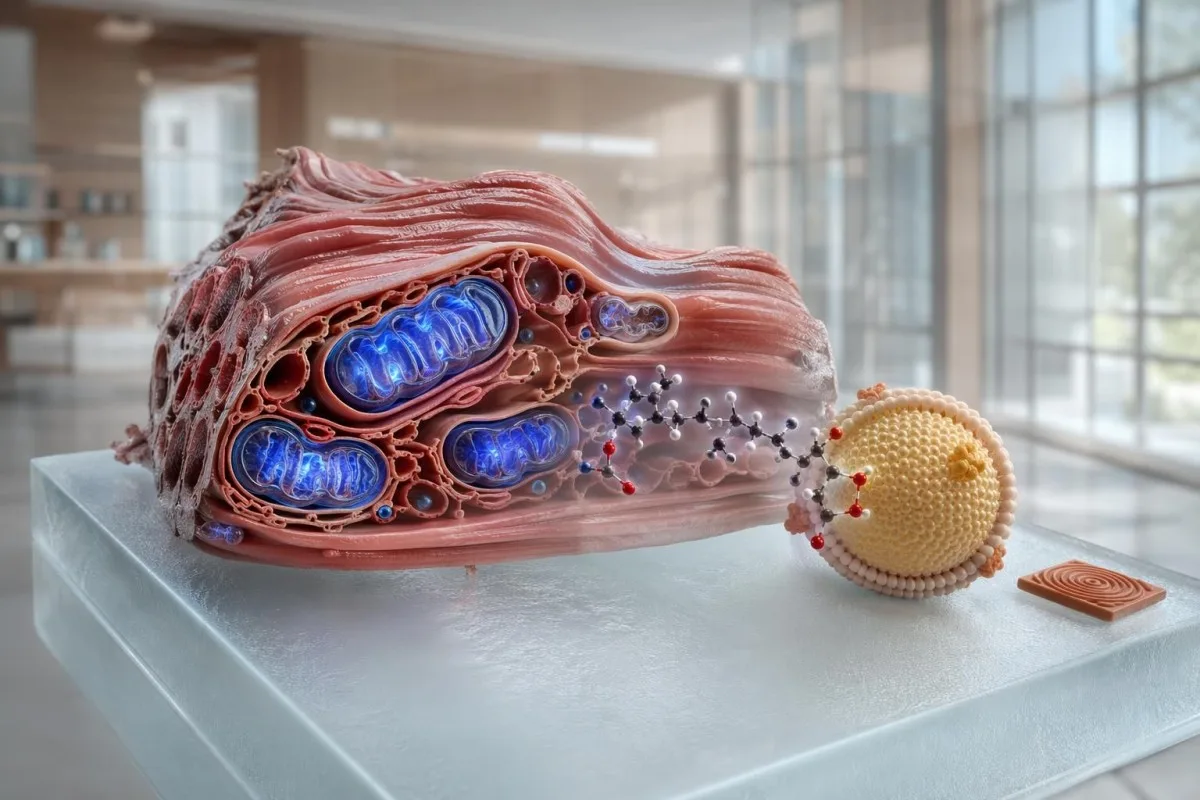
CoQ10 is a fat-soluble molecule that helps transfer electrons in the mitochondrial respiratory chain and also travels through the bloodstream on lipoproteins. That dual role explains why muscle symptoms, heart muscle energy demand, and cholesterol transport all complicate interpretation.
Coenzyme Q10 exists mainly as ubiquinone and ubiquinol; ubiquinol is the reduced antioxidant form, while ubiquinone is the oxidized form used in electron transfer. Adult plasma CoQ10 is often reported around 0.4-1.9 µmol/L, but reference intervals vary by method and by total cholesterol.
Here is the lab catch. Because CoQ10 is carried largely by LDL and VLDL particles, a person with very high LDL-C can look as if they have plenty of circulating CoQ10 even if tissue delivery is not ideal. Kantesti's biomarker guide flags this by interpreting CoQ10, LDL-C, triglycerides, and medication history together rather than treating one number as gospel.
Mitochondria-rich tissues — heart muscle, skeletal muscle, liver, and kidney — use CoQ10 continuously. That is why patients usually describe fatigue, heaviness, cramps, or exercise intolerance rather than a clean lab abnormality.
Some European specialty labs report a CoQ10-to-cholesterol ratio, sometimes in µmol/mmol, because raw CoQ10 rises when cholesterol-rich particles rise. I find that ratio more honest than a standalone value, though it still does not prove the heart or muscle cell has enough CoQ10 inside it.
CoQ10 and statins: who may notice the difference
CoQ10 and statins may matter most in people who develop symmetrical muscle aches, cramps, or weakness after starting or increasing a statin. The evidence is mixed, but the patient pattern is often more informative than the supplement marketing.
Statins lower cholesterol synthesis by inhibiting HMG-CoA reductase, and the same pathway also contributes to endogenous CoQ10 production. Plasma CoQ10 commonly falls after statin therapy, but that fall does not automatically mean the patient will have muscle symptoms.
Qu et al. reported in the Journal of the American Heart Association in 2018 that CoQ10 supplementation improved statin-associated muscle pain, weakness, cramps, and tiredness in pooled randomized trials, but did not significantly lower CK. That mismatch is clinically familiar: patients may feel better while their labs barely move.
The patients I am most willing to trial are those with new symptoms within 2-12 weeks of a statin change, normal thyroid tests, vitamin D not severely low, and CK less than 4 times the upper limit. If LDL-C interpretation is the confusing part, our LDL range guide explains why risk category changes the target.
A practical trial is usually 100 mg twice daily with the largest fat-containing meals for 8 weeks. If there is no symptom change by week 8-12, I usually stop it; endless supplements without a measurable reason become medical clutter.
CK, AST and ALT: lab clues before blaming statins
CK is the main blood marker for muscle injury, while AST and ALT help distinguish muscle stress from liver irritation. A normal CK does not exclude statin muscle symptoms, but a very high CK changes the urgency completely.
A typical CK upper limit is about 200 U/L in many adult women and 300 U/L in many adult men, but muscle mass, ethnicity, and exercise can shift the baseline. CK above 4 times the lab upper limit warrants prompt review, and CK above 10 times the upper limit is a red flag for significant muscle injury.
I still remember a 52-year-old marathon runner with AST 89 U/L, ALT 34 U/L, and CK 1,420 U/L the morning after hill repeats. That pattern was exercise muscle release, not statin liver toxicity. Our guide on exercise-related lab shifts walks through that exact trap.
AST is present in muscle and liver; ALT is more liver-enriched but not liver-only. An AST-dominant pattern with normal bilirubin and normal ALP often pushes me to ask about heavy training, cramps, falls, injections, or seizures before I blame the liver.
Kantesti AI interprets CK, AST, ALT, bilirubin, ALP, GGT, creatinine, and medication lists as a pattern. That is safer than seeing a single red flag and telling a patient to stop a life-saving statin without context.
For a deeper muscle-versus-liver pattern, our AST with normal ALT article is the one I send to patients who train hard.
Heart-risk labs CoQ10 can and cannot change
CoQ10 does not reliably lower LDL-C, ApoB, non-HDL-C, or Lp(a), so those markers should not be used to prove CoQ10 benefit. They should be used to decide whether the person also needs evidence-based cardiovascular risk treatment.
LDL-C below 100 mg/dL is a common primary-prevention target, while below 70 mg/dL is often used for higher-risk patients. ApoB below 80 mg/dL is a reasonable target in many high-risk settings, and ApoB 130 mg/dL or higher suggests a large burden of atherogenic particles.
Non-HDL-C is calculated as total cholesterol minus HDL-C, and it captures LDL, VLDL, IDL, and remnants. If triglycerides are 200-499 mg/dL, I often trust non-HDL-C and ApoB more than calculated LDL-C. Our ApoB blood test guide explains why normal LDL-C can miss particle risk.
Lp(a) is different. A value of 50 mg/dL or 125 nmol/L or higher is commonly treated as a risk-enhancing inherited marker, and CoQ10 does not lower it in a clinically meaningful way.
hs-CRP below 1 mg/L suggests lower inflammatory cardiovascular risk, 1-3 mg/L is intermediate, and above 3 mg/L is higher risk if repeated when the patient is well. If hs-CRP is above 10 mg/L, I usually repeat it after infection, injury, or dental inflammation settles rather than labeling it chronic risk.
For patients trying to understand particle risk, our Lp(a) guide pairs well with CoQ10 discussions because it keeps inherited risk separate from supplement expectations.
Heart failure markers where CoQ10 has the best signal
CoQ10 has its strongest heart-related trial signal in chronic heart failure, not in general wellness. NT-proBNP, BNP, eGFR, potassium, and medication history are the labs that keep this conversation clinically safe.
In stable outpatient settings, NT-proBNP below 125 pg/mL makes heart failure less likely in many adults, while much higher values need interpretation by age, kidney function, rhythm, and symptoms. BNP below 100 pg/mL is often used as a rule-out threshold in acute breathlessness, though local protocols vary.
Mortensen et al. reported in JACC: Heart Failure in 2014 that 300 mg/day of CoQ10 in Q-SYMBIO reduced major adverse cardiovascular events at 2 years, 15% versus 26%, in patients with chronic heart failure. It was a modest-sized trial, so I view it as supportive, not a reason to replace guideline-directed therapy.
The practical lab question is not whether CoQ10 lowers NT-proBNP by itself. The question is whether a patient with heart failure has safe kidney function, stable potassium, controlled fluid status, and no medication interactions while symptoms are monitored. Our BNP and NT-proBNP guide covers those patterns in detail.
I am especially cautious when eGFR is below 45 mL/min/1.73 m² or potassium is above 5.0 mmol/L because heart failure medications already require tight monitoring. CoQ10 may be benign for many people, but benign does not mean invisible in a complicated medication plan.
CoQ10 for blood pressure: what to measure instead of guessing
CoQ10 for blood pressure may help some people by a small amount, but the evidence is inconsistent and home readings are more reliable than blood tests for tracking response. Use a validated cuff and compare 7-day averages, not single readings.
Normal blood pressure is generally below 120/80 mmHg, while many US guidelines define hypertension at 130/80 mmHg or higher and many European clinic thresholds still use 140/90 mmHg. That difference matters when patients compare results across countries.
Ho, Li, and Wright concluded in a 2016 Cochrane review that evidence for CoQ10 lowering blood pressure in primary hypertension was not reliable enough for firm clinical claims. In practice, I sometimes see 3-5 mmHg systolic improvement, but I also see no change at all.
Before adding CoQ10, I want potassium, sodium, creatinine, eGFR, urine albumin-creatinine ratio, fasting glucose, HbA1c, and lipids reviewed. People with hypertension often have kidney, insulin, or medication clues hiding in plain sight. Our blood pressure supplement safety guide is a good companion.
A clean home protocol is two readings morning and evening for 7 days, discard day 1, then average days 2-7. If the average is still above 135/85 mmHg at home, talk to a clinician rather than simply raising the supplement dose.
Can blood tests show CoQ10 deficiency?
Blood tests can measure plasma or serum CoQ10, but they cannot reliably prove tissue CoQ10 sufficiency in muscle or heart. A low result may support the case for supplementation, while a normal result does not rule out symptom benefit.
Plasma CoQ10 often falls below about 0.5 µmol/L in deficiency-like states, but there is no universally accepted adult cutoff across all laboratories. The result is strongly affected by fasting status, recent supplement use, lipid levels, and assay method.
I prefer measuring after a 12-hour fast and before the morning dose if someone is already supplementing. If total cholesterol is 260 mg/dL, a raw CoQ10 value can look reassuring because more lipoprotein carriers are circulating.
Some specialty labs report ubiquinol percentage, total CoQ10, and CoQ10-to-cholesterol ratio. Those numbers are interesting, but they do not replace CK for muscle injury, NT-proBNP for heart failure strain, or ApoB for atherogenic particle burden.
Kantesti's neural network treats CoQ10 as an optional specialty marker, not a core cardiovascular biomarker. If units change between µg/mL and µmol/L, our unit conversion guide can prevent a false trend.
Dose, form and absorption: why the meal matters
Most adults who try CoQ10 use 100-200 mg/day, while heart failure trials have commonly used 300 mg/day in divided doses. Absorption is much better with a fat-containing meal than on an empty stomach.
Ubiquinol is often marketed as better absorbed than ubiquinone, and in some small pharmacokinetic studies it raises plasma levels more efficiently. Clinically, I care less about the label and more about whether the patient takes it consistently with food for 8-12 weeks.
For statin symptoms, I usually see trials of 100 mg once daily increasing to 100 mg twice daily if needed. For chronic heart failure, the studied Q-SYMBIO dose was 100 mg three times daily, but that should sit inside cardiology care, not replace it.
Taking CoQ10 with breakfast that contains no fat is a common reason for disappointment. Eggs, yogurt, olive oil, nuts, avocado, or another tolerated fat source can improve absorption without turning the supplement into a meal plan.
If you are already taking magnesium, omega-3, vitamin D, berberine, or creatine, timing gets messy fast. Our guide on supplement timing conflicts helps patients avoid stacking everything at 7 a.m. and then blaming one capsule for nausea.
Safety, interactions and who should be cautious
CoQ10 is usually well tolerated, but it can cause gastrointestinal upset, insomnia, headache, and possible INR changes in people taking warfarin. Safety depends more on the medication list than on the supplement label.
Common doses of 100-300 mg/day are generally used without serious adverse effects in trials, but mild nausea, loose stool, appetite change, or sleep disturbance can happen. I ask patients to stop for 7 days if symptoms start right after a new bottle or dose increase.
Warfarin deserves special respect. CoQ10 is structurally similar to vitamin K, and case reports suggest INR may decrease in some patients, although the effect is not predictable. Anyone on warfarin should check INR within 1-2 weeks after starting, stopping, or changing CoQ10.
Pregnancy, breastfeeding, active cancer treatment, transplant immunosuppression, and planned procedures are situations where I want clinician sign-off first. Our blood thinner testing article explains why INR and anti-Xa monitoring cannot be replaced by symptom tracking.
People taking multiple blood pressure medicines should monitor readings because even a small 3-5 mmHg change can matter if they already run low. Dizziness on standing, especially with systolic pressure below 100 mmHg, is not a wellness milestone.
What to recheck after 6 to 12 weeks
After starting CoQ10, the best follow-up depends on the reason for taking it: symptom scores and CK for statin aches, home blood pressure for hypertension, and cardiology markers for heart failure. Lipids are not expected to improve because of CoQ10 alone.
For statin symptoms, I use a simple 0-10 symptom score for pain, weakness, cramps, and exercise tolerance at baseline, week 4, and week 8. CK is useful if symptoms are moderate or severe, but it may remain normal even when a patient feels noticeably better.
For blood pressure, use the 7-day home average before starting and again after 6-8 weeks. A real response should be bigger than normal day-to-day noise, which is often 5-10 mmHg systolic depending on sleep, salt, caffeine, and stress.
For heart failure, follow the clinician's plan. NT-proBNP, creatinine, eGFR, potassium, sodium, weight trend, and symptoms belong together; a single improved number can be misleading if fluid status changed.
When trends look contradictory, our blood test variability guide helps separate analytical noise from a real biological shift. This is where Kantesti AI is useful: our platform reads the old PDF, the new PDF, units, flags, and dates in one pass.
When CoQ10 is the wrong focus
CoQ10 is the wrong focus when the main untreated problem is very high LDL-C, high ApoB, diabetes-range HbA1c, kidney damage, or symptoms suggesting acute heart disease. In those situations, delaying evaluation can be harmful.
LDL-C of 190 mg/dL or higher is severe hypercholesterolemia until proven otherwise. CoQ10 may help statin tolerance in that person, but it does not neutralize the risk carried by high LDL particle exposure over decades.
HbA1c of 6.5% or higher meets the diagnostic threshold for diabetes in many guidelines when confirmed, and fasting glucose of 126 mg/dL or higher is another diagnostic route. If glucose risk is the driver, our HbA1c range guide is a better starting point than CoQ10.
Chest pressure, new shortness of breath, fainting, one-sided weakness, or troponin elevation should never be managed with supplements. Troponin is a heart injury marker, and abnormal results require urgent clinical assessment.
I also pause CoQ10 enthusiasm when ferritin is 8 ng/mL, TSH is 9 mIU/L, vitamin D is 10 ng/mL, or B12 is 160 pg/mL. Fatigue may improve only after the actual deficiency or endocrine problem is treated.
How Kantesti reads supplement decisions from lab patterns
Kantesti AI interprets supplement decisions by combining biomarkers, medications, units, symptoms, age, sex, and prior trends rather than ranking supplements from a single abnormal result. That is exactly how CoQ10 should be considered.
Our AI blood test analyzer reviews over 15,000 biomarkers and can interpret uploaded PDFs or photos in about 60 seconds. For CoQ10 discussions, the useful cluster usually includes lipid panel, ApoB, CK, AST, ALT, creatinine, eGFR, HbA1c, hs-CRP, thyroid markers, vitamin D, and medication timing.
Kantesti is built by Kantesti Ltd in the UK, and our clinical standards are reviewed through documented medical governance rather than casual wellness scoring. You can read more about our organization on About Us.
For supplement suggestions, our model separates three categories: plausible benefit, safety monitoring, and no-lab-proof claims. That matters because CoQ10 may help symptoms without moving CK, and may support heart failure care without lowering LDL-C.
If you want a structured supplement review, upload your latest results through Try Free AI Blood Test Analysis. Our AI supplement recommendations page explains how we keep recommendations tied to measurable lab context.
Three blood-test patterns I see in real patients
The three CoQ10 patterns I see most often are statin muscle symptoms with low-to-moderate CK, heart failure patients with natriuretic peptide monitoring, and high blood pressure with metabolic lab clues. Each pattern needs a different decision.
Pattern one: LDL-C drops from 164 to 78 mg/dL after atorvastatin, CK is 178 U/L, TSH is 2.1 mIU/L, and the patient reports thigh soreness starting at week 6. I might try CoQ10 100 mg twice daily while also discussing statin dose, drug interactions, and exercise load.
Pattern two: a patient with chronic heart failure has NT-proBNP 1,240 pg/mL, eGFR 52 mL/min/1.73 m², potassium 4.7 mmol/L, and stable weight. CoQ10 may be discussed with cardiology, but the medication plan remains the anchor. Our heart blood markers guide gives the broader marker map.
Pattern three: office BP averages 148/92 mmHg, home average is 138/86 mmHg, triglycerides are 220 mg/dL, HbA1c is 5.9%, and ALT is 48 U/L. CoQ10 might modestly help readings, but insulin resistance, sleep, salt, alcohol intake, and fatty liver risk are bigger levers.
Thomas Klein, MD speaking plainly: if the lab pattern points to metabolic syndrome, a supplement can become a distraction. I would rather see triglycerides fall below 150 mg/dL and waist circumference improve than celebrate a marginal CoQ10 level.
A patient checklist before buying CoQ10
Before buying CoQ10, check why you want it, what you will measure, and whether any medication makes it risky. A supplement without a follow-up plan is just a subscription to uncertainty.
First, define the goal in one sentence: fewer statin aches, better exercise tolerance, blood pressure support, or cardiology-approved heart failure support. If the goal cannot be written down, it usually cannot be measured.
Second, gather baseline data. For statin symptoms, collect CK, AST, ALT, TSH, vitamin D, and medication timing; for blood pressure, collect 7 days of home readings plus kidney and electrolyte labs. Our monitoring medication timeline helps match follow-up timing to the treatment question.
Third, choose a stop date. I usually use 8 weeks for muscle symptoms and 6-8 weeks for blood pressure averages. If nothing changes, stopping is not failure; it is good clinical hygiene.
Fourth, tell your clinician if you use warfarin, chemotherapy, transplant medicines, multiple antihypertensives, or have surgery planned within 2 weeks. Supplements count when medication safety is being calculated.
Bottom line, Kantesti validation and related research
Bottom line: CoQ10 is most reasonable as a targeted add-on for statin muscle tolerance, selected heart failure care, or modest blood pressure support, but blood markers cannot prove every claimed benefit. Labs mainly help decide safety, risk priority, and whether another diagnosis is being missed.
Kantesti's clinical workflow is reviewed by physicians and advisors listed on our Medical Advisory Board. Our methodology and quality controls are described in Medical Validation, including how our AI handles abnormal patterns, unit differences, and high-risk result combinations.
Our AI-powered blood test interpretation is built for pattern recognition, not supplement hype. You can explore the broader system through AI-powered blood test interpretation or review our pre-registered benchmark, Kantesti AI Engine validation, which includes anonymised cases across multiple specialties.
For readers who want to test their own reports, the safest next step is simple: upload the latest lab PDF or photo, add medications and symptoms, then review the risk pattern before changing anything. Start with the free blood test demo.
Kantesti LTD. (2026). aPTT Normal Range: D-Dimer, Protein C Blood Clotting Guide. Zenodo. DOI: 10.5281/zenodo.18262555. ResearchGate: ResearchGate. Academia.edu: Academia.edu.
Kantesti LTD. (2026). Serum Proteins Guide: Globulins, Albumin & A/G Ratio Blood Test. Zenodo. DOI: 10.5281/zenodo.18316300. ResearchGate: ResearchGate. Academia.edu: Academia.edu.
Frequently Asked Questions
What are the main CoQ10 supplement benefits?
The main CoQ10 supplement benefits are possible reduction in statin-associated muscle symptoms, supportive use in selected chronic heart failure patients, and modest blood pressure support in some people. Typical adult doses are 100-200 mg/day for muscle symptoms and up to 300 mg/day in divided doses in heart failure trials. CoQ10 does not reliably lower LDL-C, ApoB, or Lp(a), so it should not be used as a cholesterol treatment.
Does CoQ10 help with statin muscle pain?
CoQ10 may help some people with statin muscle pain, especially when symptoms begin within 2-12 weeks of starting or increasing a statin. A 2018 meta-analysis by Qu et al. found improvement in muscle pain, weakness, cramps, and tiredness, but CK levels did not significantly change. I usually consider an 8-week trial of 100-200 mg/day when CK is normal or less than 4 times the lab upper limit and other causes have been checked.
Can a blood test show that CoQ10 is working?
A blood test can show whether plasma CoQ10 increased, but it cannot prove that muscle or heart tissue function improved. Plasma CoQ10 is often reported around 0.4-1.9 µmol/L, yet the value depends on cholesterol levels, fasting status, supplement timing, and assay method. For statin symptoms, symptom scores and CK are more useful; for blood pressure, 7-day home averages are more useful.
Is CoQ10 good for high blood pressure?
CoQ10 may modestly lower blood pressure in some people, but evidence is inconsistent and it should not replace prescribed hypertension treatment. A 2016 Cochrane review found the evidence was not reliable enough for firm claims in primary hypertension. If someone tries it, the best tracking method is a validated home cuff with morning and evening readings averaged over 7 days.
What dose of CoQ10 should I take with a statin?
A common CoQ10 dose with statins is 100 mg once daily or 100 mg twice daily with meals for 8 weeks. Taking it with fat improves absorption because CoQ10 is fat-soluble. If there is no improvement in muscle symptoms by 8-12 weeks, I usually advise stopping rather than increasing the dose indefinitely.
Can CoQ10 replace statins?
CoQ10 cannot replace statins because it does not reliably lower LDL-C, ApoB, or cardiovascular event risk in high-cholesterol patients. LDL-C of 190 mg/dL or higher and ApoB of 130 mg/dL or higher are strong risk signals that need evidence-based treatment discussion. CoQ10 may be considered to support statin tolerance, but the statin decision should be made separately with a clinician.
Who should avoid CoQ10 or ask a doctor first?
People taking warfarin should ask a clinician before using CoQ10 because INR may change, and INR should be rechecked within 1-2 weeks after starting or stopping it. People who are pregnant, breastfeeding, receiving cancer treatment, taking transplant medicines, or preparing for surgery should also get medical advice first. Anyone with dizziness, systolic blood pressure below 100 mmHg, or new heart symptoms should not treat themselves with supplements.
Can I take CoQ10 if I am pregnant or breastfeeding?
There is not enough reliable safety information to recommend routine CoQ10 use during pregnancy or breastfeeding. Ask your obstetric clinician before starting it, especially if you take blood-pressure, diabetes, or anticoagulant medicine.
Can I take CoQ10 at night, or is morning better?
CoQ10 can be taken morning or evening, but absorption is best with a meal that contains fat. If it upsets your stomach or seems to affect sleep, take it earlier in the day or split the dose.
Get AI-Powered Blood Test Analysis Today
Join over 2 million users worldwide who trust Kantesti for instant, accurate lab test analysis. Upload your blood test results and receive comprehensive interpretation of 15,000+ biomarkers in seconds.
📚 Referenced Research Publications
Klein, T., Mitchell, S., & Weber, H. (2026). aPTT Normal Range: D-Dimer, Protein C Blood Clotting Guide. Kantesti AI Medical Research.
Klein, T., Mitchell, S., & Weber, H. (2026). Serum Proteins Guide: Globulins, Albumin & A/G Ratio Blood Test. Kantesti AI Medical Research.
📖 External Medical References
⚕️ Medical Disclaimer
This article is for educational purposes only and does not constitute medical advice. Always consult a qualified healthcare provider for diagnosis and treatment decisions.
E-E-A-T Trust Signals
Experience
Physician-led clinical review of lab interpretation workflows.
Expertise
Laboratory medicine focus on how biomarkers behave in clinical context.
Authoritativeness
Written by Dr. Thomas Klein with review by Dr. Sarah Mitchell and Prof. Dr. Hans Weber.
Trustworthiness
Evidence-based interpretation with clear follow-up pathways to reduce alarm.