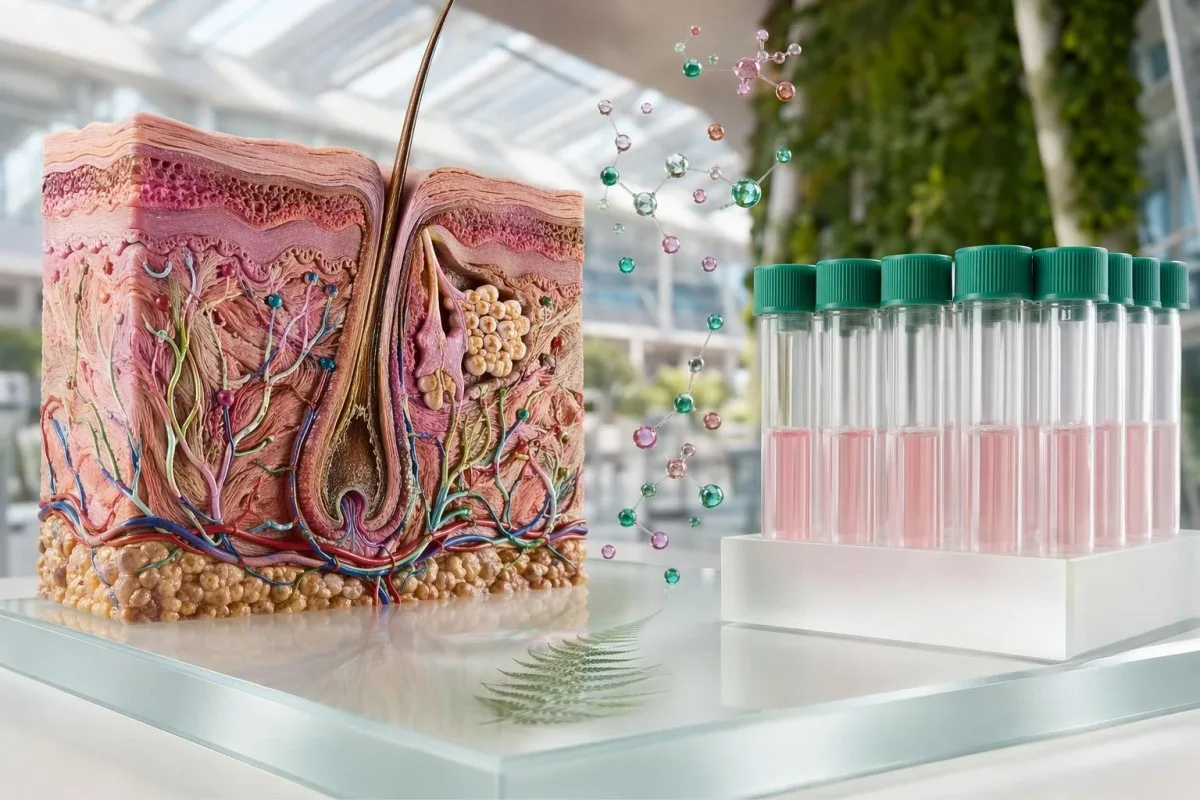
Before spending on collagen powder, zinc, omega-3s or vitamin stacks, your blood work may already be pointing to the real skin problem. The useful clue is rarely one result; it is the pattern.


- Ferritin below 30 ng/mL can support early iron depletion even when hemoglobin is still normal, especially with hair shedding.
- 25-OH vitamin D below 20 ng/mL is deficiency by most endocrine guidance; dose decisions should start with the blood level, not a guess.
- TSH above 4.0 mIU/L with low free T4 suggests overt hypothyroidism, a common lab pattern behind dry skin and coarse hair.
- hs-CRP above 3 mg/L can suggest higher inflammatory tone, but acne or eczema decisions need the CBC, ESR and clinical context too.
- A1c 5.7-6.4% meets the ADA prediabetes range and may explain slow healing, recurrent breakouts or sugar-driven inflammation.
- Serum zinc below 70 mcg/dL can fit poor healing or acne in the right setting, but long-term zinc above 40 mg/day may lower copper.
- Albumin below 3.5 g/dL is a protein-status red flag; collagen supplements rarely fix low protein intake or absorption problems alone.
- Biotin 5-10 mg/day can distort thyroid and hormone immunoassays, so many clinicians pause it for 48-72 hours before lab testing.
Which lab clues should you check before skin supplements?
Before buying supplements for skin health, check whether your labs point to low iron, low vitamin D, thyroid imbalance, inflammation, glucose dysregulation, protein deficiency or zinc-copper mismatch. In our clinical review of skin-related panels, these patterns explain more “mystery” dry skin, acne, slow healing and hair changes than most supplement labels do. Kantesti AI can help interpret those patterns, and our guide to vitamin deficiency markers shows why one isolated number is rarely enough.
A single “normal” blood test does not rule out a skin-relevant deficiency. I have seen ferritin at 18 ng/mL, vitamin D at 14 ng/mL and TSH at 6.2 mIU/L reported as “not urgent,” yet the patient had diffuse shedding, winter-dry skin and fatigue that made perfect biochemical sense.
Ferritin, TSH, free T4, 25-OH vitamin D, CBC, CRP, A1c, fasting glucose, albumin, zinc and copper are the usual first-pass clues. The pattern matters: ferritin at 25 ng/mL plus high RDW says something different from ferritin 25 ng/mL with CRP 18 mg/L, because inflammation can falsely raise ferritin.
As Thomas Klein, MD, I usually ask patients to bring the exact supplement dose and the exact lab units. A zinc bottle saying “50 mg” may mean 50 mg elemental zinc, which is above the adult tolerable upper intake level of 40 mg/day if used long enough.
How skin symptoms map to blood test patterns
Dry skin, acne, delayed healing and hair-skin texture changes map to different lab patterns, so buying the same supplement for every symptom is a poor bet. Hair shedding most often deserves iron, thyroid and vitamin D review first; acne needs glucose, inflammation and androgen context. For deeper hair-specific testing, see our hair loss blood test guide.
Dry skin plus cold intolerance often tracks with thyroid markers, especially TSH and free T4. Some European laboratories flag TSH above 4.0 mIU/L, while other settings still use upper limits near 4.5-5.0 mIU/L; that difference changes how many borderline patients get a second look.
Acne with irregular cycles or central weight gain often deserves fasting insulin, A1c, triglycerides, SHBG and androgen review. In women with acne and high-normal testosterone, a low SHBG can mean the free androgen signal is stronger than the total testosterone suggests.
Slow healing is a pattern problem. The labs I look for are A1c, albumin, CBC, zinc, vitamin D and CRP; our biomarker guide is useful because it keeps units and reference ranges visible instead of hiding them behind a generic “green” flag.
Guo and Katta’s 2017 review in Dermatology Practical & Conceptual made a point clinicians still repeat: nutrient supplements help most when a true deficiency or high-risk dietary pattern exists, not when they are taken blindly for every type of hair loss (Guo & Katta, 2017). That sounds obvious. In clinic, it is missed every week.
Ferritin, iron and CBC clues behind hair-skin changes
Low ferritin can contribute to hair shedding and poor skin resilience even before anemia appears. In adults, ferritin below 30 ng/mL often supports depleted iron stores, while hemoglobin may remain normal for months. Our article on low ferritin with normal hemoglobin explains why early iron loss is easy to miss.
The normal ferritin range is often printed as about 12-150 ng/mL for adult women and 30-400 ng/mL for adult men, but “normal” is not the same as optimal for symptoms. For hair shedding, many dermatology clinicians become more interested when ferritin is under 30-50 ng/mL, though the evidence is not perfectly settled.
The CBC adds context. High RDW above 14.5%, low MCH below about 27 pg or low MCV below 80 fL can suggest iron-restricted red cell production, while a normal CBC with ferritin 18 ng/mL may still mean early depletion rather than “no issue.”
Ferritin is also an acute-phase reactant, which is where patients get trapped. Ferritin at 110 ng/mL with CRP 22 mg/L can hide iron restriction; ferritin at 110 ng/mL with CRP 0.6 mg/L usually tells a different story.
I am cautious with iron supplements because too much iron is not cosmetic wellness; it is a medical exposure. Transferrin saturation above 45% or ferritin persistently above 300 ng/mL in men and 200 ng/mL in women deserves clinician review before anyone adds iron for hair.
Vitamin D blood levels before choosing a dose
A vitamin D supplement dose should be chosen from the 25-OH vitamin D level, calcium status, kidney function and risk profile. A 25-OH vitamin D below 20 ng/mL is commonly considered deficient, while 20-29 ng/mL is often called insufficient. Our dosing guide by level is here: vitamin D supplement dose.
The Endocrine Society’s 2011 clinical practice guideline defined vitamin D deficiency as 25-OH vitamin D below 20 ng/mL and insufficiency as 21-29 ng/mL, although some bone-health researchers accept 30 ng/mL as enough for many adults (Holick et al., 2011). That disagreement is real, not internet noise.
For many adults with 25-OH vitamin D around 12-18 ng/mL, clinicians may use 1,000-2,000 IU/day or short-term higher repletion depending on body size, absorption and comorbidities. I do not like “take 10,000 IU forever” plans unless calcium, creatinine and 25-OH vitamin D are being followed.
Vitamin D is not an acne cure, and the skin evidence is mixed. The signal is stronger for correcting deficiency in people with low levels, inflammatory skin disease, darker skin at high latitude, covered clothing, malabsorption or bariatric history.
A practical safety detail: check calcium when vitamin D doses exceed 4,000 IU/day for more than a brief period. Hypercalcemia is uncommon but not theoretical, and kidney stone history changes the risk discussion.
Thyroid patterns in dry skin and coarse hair
Hypothyroid lab patterns can cause dry skin, coarse hair, eyebrow thinning, puffiness and slower skin turnover. TSH above 4.0-4.5 mIU/L with low free T4 usually suggests overt hypothyroidism; high TSH with normal free T4 suggests subclinical hypothyroidism. Our thyroid panel guide explains why TSH alone can mislead.
Free T4 is the hormone result that reframes TSH. A TSH of 6.8 mIU/L with free T4 below range is not the same clinical picture as TSH 6.8 mIU/L with a comfortable free T4 and no symptoms.
Thyroid antibodies add the “why.” Positive TPO antibodies, often above 35 IU/mL depending on the assay, increase the likelihood of autoimmune thyroiditis, which may create fluctuating symptoms before the hormone numbers become clearly abnormal.
Biotin is the supplement trap here. Doses of 5-10 mg/day, common in hair-skin-nail products, can distort some thyroid immunoassays and create falsely low TSH or falsely high free T4; our biotin testing article covers the 48-72 hour pause many labs recommend.
In my experience, patients with dry skin are often sold collagen before anyone checks TSH. That is backwards if the person also has constipation, low pulse, heavy periods, high LDL cholesterol or unexplained weight gain.
Inflammation markers before omega-3 or anti-inflammatory stacks
Supplements for inflammation should not be chosen from skin appearance alone. CRP, hs-CRP, ESR, white cell differential and ferritin help separate recent infection, chronic inflammatory tone, autoimmune clues and metabolic inflammation. Our guide to inflammation blood tests compares these markers side by side.
Standard CRP is commonly normal below about 5 mg/L, while hs-CRP is used in lower ranges where 1-3 mg/L and above 3 mg/L can suggest rising inflammatory risk. A CRP of 38 mg/L is not “wellness inflammation”; it often means infection, tissue injury or another active process.
ESR moves slowly and is affected by age, sex, anemia and immunoglobulins. I pay more attention when ESR and CRP are both elevated, or when ESR is high with anemia, high globulin or joint symptoms.
Omega-3s can lower triglycerides at prescription-level doses, but skincare dosing is much less standardized. If triglycerides are 220 mg/dL, hs-CRP is 4.5 mg/L and ALT is mildly high, I think about insulin resistance and fatty liver before I think about a fancy anti-inflammatory stack.
A normal CRP does not rule out acne, rosacea or eczema activity. Skin can be locally inflamed while blood inflammation markers remain quiet, which is why lab results should guide risk and deficiencies rather than replace dermatologic assessment.
Glucose and insulin clues in acne and slow healing
Glucose dysregulation can worsen acne tendency, skin tags, recurrent infections and delayed healing. The ADA diagnostic cutoffs are fasting glucose 100-125 mg/dL for prediabetes, A1c 5.7-6.4% for prediabetes and A1c 6.5% or higher for diabetes when confirmed appropriately (American Diabetes Association Professional Practice Committee, 2024). Our A1c conversion chart helps translate the result.
Fasting glucose is a snapshot; A1c is a 2-3 month average. A person can have fasting glucose 94 mg/dL and A1c 5.8%, especially when post-meal glucose spikes are the real issue.
Fasting insulin gives another clue, though reference ranges are less standardized. In many labs, fasting insulin above 15-20 µIU/mL with normal glucose suggests the pancreas is working harder to keep glucose normal.
HOMA-IR is calculated from fasting glucose and fasting insulin, and values above roughly 2.0-2.5 often suggest insulin resistance in clinical wellness settings. If acne flares with sugar cravings, abdominal weight gain and triglycerides above 150 mg/dL, I want this pattern reviewed before adding more supplements.
Slow healing deserves respect. If A1c is 7.8%, zinc or collagen may help only at the margins until glucose improves; our HOMA-IR explainer shows how early insulin resistance can appear before diabetes is diagnosed.
Zinc, copper and alkaline phosphatase patterns
Zinc can be relevant for acne, dermatitis, taste changes and wound repair, but zinc supplementation is one of the easiest ways to create a second deficiency. Serum zinc is commonly about 70-120 mcg/dL in adults, and serum copper is often about 70-140 mcg/dL. Our guide to zinc food clues starts with food before capsules.
Serum zinc is imperfect because it falls after meals, illness and inflammation. A borderline zinc of 67 mcg/dL is more convincing if alkaline phosphatase is low, diet is restrictive and CRP is not elevated.
Alkaline phosphatase can be a quiet clue. Persistently low ALP, for example below 40 IU/L in many adult labs, may fit low zinc, hypothyroidism, malnutrition or rarer inherited causes, so I never treat it as a zinc-only result.
Copper matters because high-dose zinc blocks copper absorption. Long-term zinc above 40 mg/day can contribute to low copper, anemia, neutropenia or neurologic symptoms; our copper range guide explains the zinc-copper seesaw.
For acne, I usually prefer food-first zinc unless a deficiency pattern is present. Oysters are not practical or acceptable for everyone, so lentils, seeds, dairy, eggs or fortified foods may be safer daily options depending on the patient.
B12, folate, protein and albumin skin clues
B12, folate and protein status can show up as glossitis, angular cracking, slow healing, pallor, fragile nails or diffuse hair changes. Serum B12 below 200 pg/mL is commonly deficient, but symptoms may appear with borderline values around 200-350 pg/mL in some patients. Our B12 supplement guide covers dose and recheck timing.
B12 interpretation is messier than patients expect. Methylmalonic acid above about 0.40 µmol/L supports functional B12 deficiency, while homocysteine can rise with B12, folate or B6 problems.
Folate deficiency can cause macrocytosis, with MCV often above 100 fL, but mixed iron deficiency can hide that pattern. That is why the CBC can look “average” while RDW climbs first.
Albumin is a blunt but useful protein marker. Albumin below 3.5 g/dL can reflect inflammation, liver disease, kidney protein loss, poor intake or malabsorption, and collagen powder rarely solves the underlying reason by itself.
The thing is, skin repair is protein-expensive. If total protein is low, albumin is low-normal and diet history shows 40 g/day protein in a 75 kg adult, I talk about meals before I talk about marine collagen.
Liver, kidney and gut clues before high-dose supplements
Liver, kidney and absorption markers should be checked before high-dose vitamin A, niacin, herbal blends, collagen-heavy regimens or large mineral stacks. ALT, AST, ALP, GGT, bilirubin, creatinine, eGFR, BUN and albumin help separate safe experimentation from unnecessary risk. Patients using our AI blood test platform often discover these safety clues before the supplement plan is finalized.
ALT above about 35 IU/L in women or 45 IU/L in men, depending on the lab, may be mild but still relevant before retinol or herbal acne supplements. If GGT is also high, alcohol, bile flow, medication effects or fatty liver move higher on my list.
Kidney function changes mineral decisions. An eGFR below 60 mL/min/1.73 m² for 3 months is chronic kidney disease by standard criteria, and magnesium, potassium, vitamin D activation and protein advice all deserve a more careful plan.
Gut clues matter when someone keeps “failing” supplements. Low ferritin plus low vitamin D plus low B12, especially with diarrhea, weight loss or bloating, should prompt celiac or malabsorption thinking before another bottle is opened.
A patient once brought 17 supplements for acne, including high-dose vitamin A and green tea extract, while ALT was 92 IU/L. We stopped the noise, repeated liver markers in 4 weeks and used nutrition plus dermatology care; that was safer than adding supplement number 18.
Hormone patterns behind acne and hair-skin changes
Acne, oily skin, hirsutism and scalp shedding can reflect androgen signaling rather than a missing skin vitamin. Total testosterone, free testosterone or calculated free androgen index, SHBG, DHEA-S, prolactin, TSH and metabolic markers often need to be read together. Our PCOS blood test guide explains the most common pattern.
SHBG is the quiet modifier. Low SHBG, often below 30 nmol/L in many adult female reference systems, can raise free androgen exposure even when total testosterone looks only high-normal.
DHEA-S points more toward adrenal androgen contribution. Very high DHEA-S, such as above 700-800 µg/dL depending on age and lab, deserves medical review rather than supplement experimentation.
Prolactin and thyroid labs can mimic or aggravate cycle and skin problems. A mildly high prolactin should be repeated fasting, rested and without recent chest-wall stimulation because stress and timing can move it.
For supplements for hair loss, this is where I slow people down. Saw palmetto, zinc and “hormone balance” blends may affect lab interpretation or medication plans, and they do not replace a proper androgen and metabolic review.
Collagen, vitamin C and what labs cannot prove
Collagen supplements may modestly improve skin hydration or elasticity for some adults, but routine blood tests cannot prove that you “need collagen.” Labs can reveal protein deficiency, inflammation, glucose exposure, vitamin C risk factors and kidney-liver safety. Kantesti’s AI supplement recommendations are designed to separate plausible needs from marketing claims.
Most collagen studies use about 2.5-10 g/day for 8-12 weeks, and results vary by product, peptide size and outcome measured. I tell patients the evidence is promising in places, but honestly not as strong as correcting iron deficiency, hypothyroidism or diabetes when those are present.
Vitamin C deficiency is rare in many settings but still appears with restrictive eating, smoking, alcohol overuse, food insecurity and malabsorption. Easy bruising, gum changes and corkscrew-type hairs are clinical clues; plasma vitamin C testing exists but is not as commonly ordered as CBC, ferritin and albumin.
Glucose matters because glycation stiffens collagen. An A1c of 6.2% is a stronger skin-aging clue than many people expect, especially when triglycerides and waist circumference point the same direction.
Do not stack collagen with high-protein powders blindly if BUN is already high from dehydration or kidney function is reduced. Our guide to supplements timing also explains why iron, zinc, calcium and thyroid medication should not all be swallowed together.
Testing timing, biotin and recheck intervals
The best skin-supplement lab panel is usually done with consistent timing, medication disclosure and a clear recheck window. Fasting is useful for glucose, insulin and triglycerides, while ferritin, thyroid and vitamin D usually do not require fasting. Our fasting blood test guide helps decide what changes and what does not.
Biotin deserves repeating because it is so common. Hair-skin-nail products often contain 5,000-10,000 mcg, and that can interfere with thyroid, troponin and some hormone assays depending on the platform.
Ferritin rechecks are usually meaningful after about 8-12 weeks of consistent iron therapy, not 6 days. Vitamin D also commonly needs 8-12 weeks to show a stable response after dose changes.
A1c shifts more slowly because red cells live roughly 120 days. If the concern is post-meal glucose and acne flares, a short-term continuous glucose monitor or paired fingersticks may reveal spikes long before A1c moves.
Kantesti’s neural network pays close attention to units, because nmol/L and ng/mL vitamin D results differ by a factor of 2.5. If a result looks suddenly “changed,” our lab comparison guide is often more useful than chasing the newest supplement.
When not to start a skin supplement yet
Do not start a new skin supplement when labs suggest untreated diabetes, thyroid disease, liver injury, kidney impairment, anemia, pregnancy-related concerns or medication interactions. Supplements can blur the picture and delay the diagnosis. Kantesti’s clinicians and medical advisory board review these risk patterns because patient safety comes before wellness experiments.
Anemia is one example. Hemoglobin below 12 g/dL in many adult women or below 13 g/dL in many adult men should not be treated with random iron until the cause is clear, especially after age 50 or with bowel symptoms.
Liver enzyme elevation changes acne-supplement choices. ALT more than 3 times the upper limit of normal, or bilirubin elevation with dark urine or jaundice, deserves medical review rather than retinol, niacin or herbal experimentation.
Kidney impairment changes mineral safety. eGFR below 60 mL/min/1.73 m², potassium above 5.5 mmol/L or calcium above 10.5 mg/dL should stop the “just add magnesium, vitamin D and electrolytes” approach.
Thomas Klein, MD advice here is deliberately conservative: if a symptom is rapidly worsening, painful, infected-looking, associated with fever, or paired with unintentional weight loss, do not troubleshoot it in the supplement aisle. Get examined.
How Kantesti turns skin labs into a safer plan
Kantesti AI interprets skin-relevant lab results by reading biomarker patterns, units, reference ranges, age, sex, trend direction and supplement context together. Our platform can analyze uploaded blood test PDFs or photos in about 60 seconds, but it also flags when a clinician should be involved. You can try the free blood test analysis before buying another skin supplement.
Kantesti serves 2M+ users across 127+ countries and 75+ languages, which gives our AI unusual exposure to different units, lab ranges and reporting styles. A ferritin result in µg/L, ng/mL or pmol-related thyroid report should not derail interpretation.
Our clinical standards are not built around one flagged value. Kantesti’s CE-marked, HIPAA, GDPR and ISO 27001-certified environment compares CBC, iron studies, thyroid markers, vitamin D, glucose, inflammation and safety chemistry as a pattern; our medical validation page explains that framework.
For organizations, clinicians and researchers, the same logic can be delivered through our B2B API, mobile apps and Chrome workflow. You can read more about Kantesti as an organization and the pre-registered validation work on the Kantesti AI Engine benchmark.
Bottom line: the best supplement for skin health is sometimes vitamin D, zinc, iron, omega-3 or collagen, but sometimes it is thyroid treatment, glucose control, protein repletion, medication review or dermatology care. Upload the actual report, keep the dose list honest, and let the lab pattern argue before the advert does.
Frequently Asked Questions
What blood tests should I check before taking supplements for skin health?
Before taking supplements for skin health, the most useful baseline labs are CBC, ferritin, iron saturation, TSH, free T4, 25-OH vitamin D, CRP or hs-CRP, A1c, fasting glucose, albumin, zinc, copper, creatinine and liver enzymes. Ferritin below 30 ng/mL, vitamin D below 20 ng/mL, A1c 5.7-6.4% or TSH above 4.0-4.5 mIU/L can each point to a different reason for skin, hair or healing changes. The pattern is safer than buying collagen, zinc or omega-3s from symptoms alone.
Can low ferritin cause hair loss even if hemoglobin is normal?
Yes, low ferritin can contribute to hair shedding before hemoglobin becomes low. Ferritin below 30 ng/mL often supports depleted iron stores, while hemoglobin may remain within the normal range for weeks or months. Clinicians usually interpret ferritin with CRP, MCV, MCH, RDW and iron saturation because inflammation can hide iron deficiency by raising ferritin.
What vitamin D supplement dose should I take for skin health?
A vitamin D supplement dose should be based on your 25-OH vitamin D blood level, calcium, kidney function and risk factors. Many adults with deficiency below 20 ng/mL are treated with daily dosing around 1,000-2,000 IU or a clinician-directed repletion plan, then rechecked after about 8-12 weeks. Long-term doses above 4,000 IU/day should usually be monitored with calcium and kidney labs.
Do omega-3 supplements help skin inflammation?
Omega-3 supplements may help some inflammatory skin patterns, but blood tests should first separate systemic inflammation from local skin disease. Standard CRP below 5 mg/L is usually low, hs-CRP above 3 mg/L can suggest higher inflammatory tone, and CRP above 50-100 mg/L needs medical evaluation rather than supplement self-treatment. Triglycerides, ALT, A1c and BMI context often explain the inflammatory pattern better than CRP alone.
Can zinc supplements make skin or hair problems worse?
Yes, high-dose zinc can create copper deficiency and worsen anemia, neutropenia or neurologic symptoms if used too long. Serum zinc is commonly about 70-120 mcg/dL, while the adult tolerable upper intake level for elemental zinc is 40 mg/day. If someone takes 50 mg/day for months, copper, CBC and sometimes alkaline phosphatase should be reviewed.
Can thyroid problems look like a skin vitamin deficiency?
Yes, hypothyroidism can look like a nutrient problem because it may cause dry skin, coarse hair, eyebrow thinning, fatigue and brittle nails. TSH above 4.0-4.5 mIU/L with low free T4 suggests overt hypothyroidism, while high TSH with normal free T4 suggests a subclinical pattern. Biotin in hair-skin-nail supplements, especially 5-10 mg/day, can distort some thyroid tests and should be disclosed before testing.
When should I avoid starting skin supplements and see a doctor?
Avoid starting new skin supplements if your labs show A1c 6.5% or higher, hemoglobin below the adult reference range, ALT more than 3 times the upper limit, eGFR below 60 mL/min/1.73 m², calcium above 10.5 mg/dL or CRP above 50-100 mg/L. These results can signal diabetes, anemia, liver injury, kidney impairment, calcium disorders or active inflammation. Rapidly worsening skin symptoms, fever, painful swelling or unintentional weight loss also need clinical care.
Could a new rash be an allergic reaction to a skin supplement?
Yes. Herbal blends, flavorings, dyes, gelatin, and collagen products can trigger reactions in susceptible people. Stop the new product and seek urgent care for facial or throat swelling, wheezing, dizziness, or widespread hives; otherwise, discuss the reaction with a clinician before trying it again.
Could prescription medicines be the reason my skin changed instead of a vitamin deficiency?
Yes. Medicines such as retinoids, some diuretics, lithium, thyroid medicines and chemotherapy drugs can affect dryness, acne, hair shedding or lab results. Do not stop them yourself; ask your clinician to review timing, dose changes and safer options.
Get AI-Powered Blood Test Analysis Today
Join over 2 million users worldwide who trust Kantesti for instant, accurate lab test analysis. Upload your blood test results and receive comprehensive interpretation of 15,000+ biomarkers in seconds.
📚 Referenced Research Publications
Klein, T., Mitchell, S., & Weber, H. (2026). Urobilinogen in Urine Test: Complete Urinalysis Guide 2026. Kantesti AI Medical Research.
Klein, T., Mitchell, S., & Weber, H. (2026). Iron Studies Guide: TIBC, Iron Saturation & Binding Capacity. Kantesti AI Medical Research.
📖 External Medical References
American Diabetes Association Professional Practice Committee (2024). 2. Diagnosis and Classification of Diabetes: Standards of Care in Diabetes—2024. Diabetes Care.
⚕️ Medical Disclaimer
This article is for educational purposes only and does not constitute medical advice. Always consult a qualified healthcare provider for diagnosis and treatment decisions.
E-E-A-T Trust Signals
Experience
Physician-led clinical review of lab interpretation workflows.
Expertise
Laboratory medicine focus on how biomarkers behave in clinical context.
Authoritativeness
Written by Dr. Thomas Klein with review by Dr. Sarah Mitchell and Prof. Dr. Hans Weber.
Trustworthiness
Evidence-based interpretation with clear follow-up pathways to reduce alarm.