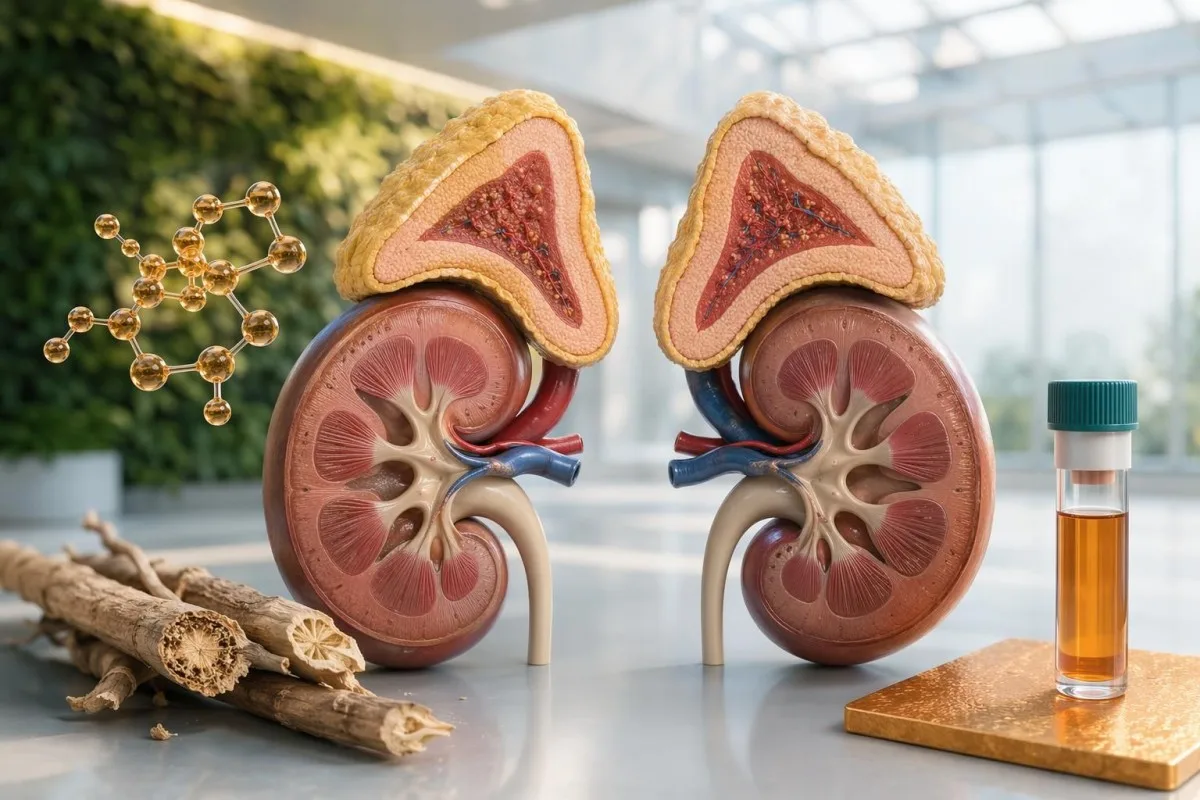
A physician’s guide to morning cortisol testing, thyroid and liver safety, pregnancy cautions, and medication checks before using ashwagandha for stress.


- Morning cortisol is usually highest around 6–9 a.m.; many adult lab ranges sit near 5–25 µg/dL, or about 138–690 nmol/L.
- Ashwagandha for cortisol may lower morning cortisol modestly after 4–8 weeks, especially at 240–600 mg/day of root extract.
- Ashwagandha blood test timing matters because the herb is more likely to change biology than falsely interfere with the assay itself.
- Low morning cortisol below 3 µg/dL can suggest adrenal insufficiency, while results above 15–18 µg/dL often make it less likely, depending on the assay.
- Ashwagandha and thyroid labs deserve caution because TSH, free T4 and free T3 can shift, particularly in people with Graves’ disease or levothyroxine use.
- Liver safety should include ALT, AST, ALP, GGT and bilirubin before use if you have liver disease, alcohol excess, jaundice history or multiple medications.
- Pregnancy and breastfeeding are situations where I generally advise avoiding ashwagandha because human safety data are not strong enough.
- Medication checks matter for sedatives, thyroid medicine, diabetes drugs, blood pressure drugs, immunosuppressants and peri-operative care.
- Retesting is usually most useful after 6–8 weeks, because thyroid and stress-hormone patterns often lag behind symptoms.
Can ashwagandha change a morning cortisol result?
Ashwagandha can lower measured morning cortisol in some stressed adults, so it may affect an 8 a.m. cortisol result if you have taken it consistently for several weeks. It usually does not “fake” the lab result; it may biologically shift the hypothalamic-pituitary-adrenal axis. If your clinician is checking adrenal insufficiency, Cushing’s syndrome or steroid recovery, disclose the dose and timing before the test. Our Kantesti AI platform reads cortisol in context with thyroid, liver and medication clues, not as a lonely number.
The practical issue is simple: if you start ashwagandha for stress and then book a morning cortisol test 3 weeks later, the result may reflect both your baseline biology and the supplement effect. For a deeper timing primer, our guide to morning cortisol testing explains why 7:30 a.m. and 10:30 a.m. are not interchangeable.
In clinic, I see this most often in people who feel wired at night, sleep poorly and then try a 300 mg extract before bed. A cortisol of 7 µg/dL at 8 a.m. can look borderline, but it means something different if the patient is well, sodium is 140 mmol/L, potassium is 4.2 mmol/L and they have been taking ashwagandha nightly.
I am Thomas Klein, MD, and my bias is to document first, not panic first. As of May 9, 2026, there is no universally accepted ashwagandha washout rule for cortisol testing, so the safest interpretation comes from knowing the exact product, dose, start date and reason the cortisol was ordered.
What morning cortisol ranges mean before supplements
A typical adult 8 a.m. serum cortisol range is about 5–25 µg/dL, which equals roughly 138–690 nmol/L, but each laboratory sets its own interval. Cortisol is a steep circadian hormone, so the clock time can matter as much as the number itself.
A morning cortisol below 3 µg/dL, or about 83 nmol/L, raises concern for adrenal insufficiency in the right clinical context. A morning cortisol above 15–18 µg/dL, or about 414–497 nmol/L, usually argues against adrenal insufficiency, though clinicians still disagree on the exact cutoff because newer assays read lower than older ones.
The awkward middle zone is common. A result between 3 and 15 µg/dL is not a diagnosis; it is a prompt to look at ACTH, sodium, potassium, glucose, blood pressure, steroid exposure and sometimes an ACTH stimulation test. Our cortisol pattern guide walks through high-versus-low patterns with the kind of context I use at the bedside.
Some European labs report cortisol in nmol/L, while many US labs still report µg/dL. To convert cortisol from µg/dL to nmol/L, multiply by 27.6; a result of 10 µg/dL is approximately 276 nmol/L.
What trials actually show about ashwagandha cortisol levels
Randomized trials suggest ashwagandha can reduce cortisol levels in stressed adults, but the evidence is modest and product-specific. The best-known trial used 300 mg twice daily of high-concentration root extract for 60 days and reported about a 27.9% fall in serum cortisol (Chandrasekhar et al., 2012).
Chandrasekhar and colleagues studied adults with chronic stress, not patients being evaluated for Addison’s disease, pituitary disease or Cushing’s syndrome. That distinction matters because a stress supplement trial cannot tell us whether ashwagandha is safe before diagnostic endocrine testing.
The common dose range in human stress studies is 240–600 mg/day of standardized root extract, often taken for 8 weeks. I am cautious with gummies and blends because “600 mg” may refer to raw powder, extract, or a proprietary mixture with very different withanolide exposure.
Saliva and urine cortisol tests add another layer of uncertainty. If you are comparing blood, saliva and dried urine hormone results, read our explanation of DUTCH hormone test limits before assuming the curves mean the same thing.
When to pause ashwagandha before a cortisol blood test
For a non-urgent baseline morning cortisol, many clinicians ask patients to stop ashwagandha for 1–2 weeks before testing, but this is a practical convention rather than a guideline-backed rule. If the test is urgent, do not delay; tell the ordering clinician exactly what you took.
The half-life of withanolides is not well standardized across products, and the downstream stress-axis effect may last longer than the compound itself. That is why I prefer a short washout plus documentation rather than pretending we know the perfect number of days.
If your doctor wants to know your real-world physiology while taking the supplement, stopping it defeats the purpose. Kantesti flags this distinction because an ashwagandha blood test review should answer the clinical question, not just chase a clean-looking result.
A useful note for the lab order is: ashwagandha extract, dose in mg, time of last dose, brand type if known, and whether biotin or steroids were taken. Steroid creams, inhalers and joint injections can suppress cortisol far more than most supplements, yet patients forget to mention them surprisingly often.
When cortisol testing is checking for adrenal disease
Do not use ashwagandha to “fix” cortisol before testing if your clinician is evaluating adrenal insufficiency, steroid withdrawal or Cushing’s syndrome. Diagnostic cortisol testing needs an unblurred medication and supplement history because treatment decisions can be serious.
The Endocrine Society guideline for Cushing’s syndrome recommends late-night salivary cortisol, 24-hour urinary free cortisol or a dexamethasone suppression test as first-line screening, not a random morning cortisol (Nieman et al., 2008). A normal 8 a.m. cortisol does not rule out Cushing’s syndrome.
Adrenal insufficiency is the opposite problem: the body may fail to produce enough cortisol during illness, surgery or dehydration. Clues include sodium below 135 mmol/L, potassium above 5.0 mmol/L, unexplained weight loss, low blood pressure and morning cortisol below 3 µg/dL.
Stress symptoms overlap with thyroid disease, anemia, B12 deficiency and panic physiology. Before blaming cortisol, our anxiety lab checklist shows the basic labs I usually want reviewed first.
Ashwagandha and thyroid labs: what to check first
Anyone with thyroid disease should check TSH and free T4 before using ashwagandha, and free T3 is reasonable if symptoms suggest hyperthyroidism. The usual adult TSH reference range is roughly 0.4–4.0 mIU/L, but age, pregnancy and medication timing change the interpretation.
Small studies and case reports suggest ashwagandha may increase thyroid hormone activity in some people. In practice, I worry most when TSH is already below 0.4 mIU/L, free T4 is high, or the patient has Graves’ disease, palpitations, tremor or unexplained weight loss.
Levothyroxine users should be especially careful because TSH often takes 6–8 weeks to reflect a dose or supplement change. Our thyroid panel guide explains why free T4 and antibodies sometimes matter more than a single TSH flag.
There is a lab-interference trap here: high-dose biotin can make thyroid immunoassays look wrong, often lowering TSH and raising free T4 depending on the platform. If you use hair, nail or “beauty” supplements, read our biotin thyroid warning and ask whether a 48–72 hour pause is appropriate.
Liver safety labs before taking ashwagandha
Check ALT, AST, ALP, GGT and bilirubin before ashwagandha if you have liver disease, heavy alcohol intake, prior jaundice, hepatitis risk or multiple medications. Most users do not develop liver injury, but published cases are real enough to respect.
ALT is often considered mildly elevated above about 35 IU/L in women and 45 IU/L in men, though some labs use lower cutoffs. A bilirubin above 1.2 mg/dL with dark urine, pale stools or itching deserves prompt medical review, not another supplement.
Björnsson and colleagues described ashwagandha-associated liver injury cases with jaundice and cholestatic or mixed enzyme patterns, typically appearing after several weeks of use (Björnsson et al., 2020). The pattern I do not ignore is ALT or AST above 3 times the upper limit of normal plus symptoms, or above 5 times the upper limit even without symptoms.
If your enzymes are already abnormal, start with our liver function test guide before adding ashwagandha. For stubborn abnormalities, our page on elevated liver enzymes explains when fatty liver, alcohol, viral hepatitis, muscle injury and bile-duct patterns separate.
Pregnancy, breastfeeding and fertility cautions
I generally advise avoiding ashwagandha during pregnancy and breastfeeding because human safety data are limited and product quality varies. If pregnancy is possible, check before starting rather than after a month of daily capsules.
Pregnancy naturally raises total cortisol because estrogen increases cortisol-binding globulin. That means a high total serum cortisol in pregnancy is not interpreted the same way as a high value in a non-pregnant adult.
Thyroid risk is also different in pregnancy. If TSH is being monitored for fertility treatment or early pregnancy, use trimester-specific targets and our pregnancy TSH ranges rather than the generic adult interval.
For prenatal panels, I care more about iron status, thyroid function, glucose, liver enzymes and medication safety than about experimenting with adaptogens. Our prenatal blood test guide lists the markers that actually change decisions during each trimester.
Medication factors to review before using ashwagandha
Ashwagandha should be reviewed with medications that affect sedation, thyroid hormone, glucose, blood pressure, immune function or surgery risk. The interaction data are not as clean as prescription-drug trials, but the clinical pattern is predictable enough to be cautious.
Sedation is the everyday issue. If you combine ashwagandha with benzodiazepines, Z-drugs, sedating antihistamines, opioids, alcohol or high-dose magnesium, morning grogginess and slower reaction time can become the problem you were trying to solve.
Glucose and blood pressure effects are usually modest, but they matter when a patient already uses insulin, sulfonylureas, GLP-1 medicines, beta blockers, ACE inhibitors or diuretics. Our guide to supplement timing conflicts is useful when several pills are being stacked at bedtime.
I also ask about immune-suppressing drugs such as tacrolimus, ciclosporin, methotrexate, biologics and long-term steroids. For people taking monitored medicines, the safer framework is the same one we use in our medication lab timeline: change one variable, record the date, and recheck the marker that could move.
Who should avoid ashwagandha or get medical supervision
Avoid ashwagandha unless a clinician specifically approves it if you are pregnant, breastfeeding, have active liver disease, uncontrolled thyroid disease, autoimmune disease, transplant history or unexplained low cortisol. These are not theoretical cautions; they are the groups where a small hormonal or immune shift can matter.
I am more relaxed about a healthy 32-year-old using 300 mg for 6 weeks than a 61-year-old with Graves’ disease, atrial fibrillation and a suppressed TSH of 0.08 mIU/L. Context wins every time.
Autoimmune disease is a grey zone. Some patients with Hashimoto’s tolerate ashwagandha without obvious lab movement, while others report palpitations or insomnia; if TPO antibodies are high and TSH is unstable, I prefer not to add noise.
Thomas Klein, MD, is my name on this piece because I want the caution to be plain: wellness supplements are still biologically active. If fatigue, panic or brain fog is driving the purchase, our mental health lab guide helps rule out common mimics before you spend money.
Dose and time of day: what is reasonable
Most stress trials use 240–600 mg/day of standardized ashwagandha root extract, usually for 6–8 weeks. Higher doses are not automatically better, and extracts are not equivalent to raw powder.
For sleep-heavy stress, many people take ashwagandha in the evening because sedation is less disruptive. For daytime anxiety, some split the dose, but I avoid morning dosing if the person is about to test 8 a.m. cortisol for a diagnostic reason.
A product stating 5% withanolides at 600 mg/day gives a different exposure from a 600 mg root powder capsule. I prefer third-party tested products because contamination, substitution and undeclared sedatives turn a mild supplement into a lab-interpretation mess.
If the goal is calmer sleep, compare ashwagandha with lower-risk basics first: consistent wake time, caffeine cutoff, light exposure and magnesium where appropriate. Our magnesium sleep guide explains why magnesium glycinate and citrate can feel different even when the label looks similar.
Baseline lab checklist before starting for stress
Before using ashwagandha for stress, the most useful baseline labs are TSH, free T4, ALT, AST, ALP, bilirubin, fasting glucose or HbA1c, CBC, sodium and potassium. Add morning cortisol only when symptoms or the clinical question justify it.
CBC can reveal anemia or infection patterns that feel like stress. Sodium below 135 mmol/L or potassium above 5.0 mmol/L changes how I read fatigue, dizziness and a low-normal cortisol result.
For people buying a broad wellness panel, I like a CMP, CBC, TSH, free T4, HbA1c, ferritin, B12 and vitamin D more than a dozen exotic hormone add-ons. Kantesti’s biomarker guide covers how these common markers interact with symptoms.
If you already have a recent panel, do not repeat everything blindly. Use our comprehensive panel explainer to check whether liver enzymes, electrolytes and thyroid markers were actually included.
How Kantesti reads cortisol, thyroid and liver patterns
Kantesti AI interprets ashwagandha-related lab questions by comparing timing, dose, trend direction, reference ranges, symptoms and medication risk in the same analysis. That matters because a cortisol value alone rarely answers the clinical question.
Our AI blood test analyzer can read a PDF or photo in about 60 seconds, but the useful part is not speed alone. The useful part is that a cortisol of 9 µg/dL is interpreted differently when TSH is 0.12 mIU/L, ALT is 88 IU/L, sodium is 132 mmol/L or the patient is using prednisolone.
Kantesti’s neural network is clinically governed through our medical validation standards, and our physician team reviews how the system handles endocrine edge cases. Readers who want the technical detail can see the clinical validation benchmark.
I still tell patients that AI is not a replacement for an endocrinologist when red flags appear. Our article on AI lab interpretation explains where our platform is strong and where a clinician needs to examine, prescribe or order dynamic testing.
When to recheck labs after starting or stopping
Recheck thyroid and liver labs about 6–8 weeks after starting ashwagandha if you have thyroid disease, baseline liver abnormalities or new symptoms. Cortisol retesting should be tied to the original clinical question, not repeated just because the first number was interesting.
Use the same lab, similar collection time and similar sleep schedule whenever possible. A cortisol drawn at 7:45 a.m. after 7 hours of sleep is not comparable to one drawn at 11:10 a.m. after a night shift.
A meaningful lab change depends on the marker. ALT moving from 28 to 42 IU/L may be noise or early signal, while bilirubin rising from 0.7 to 2.0 mg/dL with itching is a different conversation entirely.
Trend analysis is where Kantesti often helps families avoid overreacting to a single flag. Our guide to blood test comparison and our piece on lab variability explain why repeating under similar conditions is half the diagnosis.
Red flags: when to stop and call a clinician
Stop ashwagandha and seek medical advice if you develop jaundice, dark urine, severe itching, fainting, chest pounding, tremor, confusion, severe drowsiness or signs of an allergic reaction. These symptoms are uncommon, but waiting can make a manageable problem harder.
Palpitations plus weight loss, heat intolerance and a TSH below 0.4 mIU/L suggests thyroid excess until proven otherwise. Low blood pressure, vomiting, sodium below 135 mmol/L and marked weakness raise a different concern: inadequate cortisol response during stress.
Do not restart the supplement to “test the theory” after jaundice or a strong enzyme rise. Drug-induced liver injury can recur faster and more severely on re-exposure, even when the first episode settled.
If you need help deciding what your results mean, use our free blood test analysis to upload the report securely. Our Medical Advisory Board helps shape how high-risk endocrine and liver patterns are escalated in the app.
Bottom line for safe, lab-aware use
Ashwagandha may be reasonable for short-term stress support in carefully selected adults, but it should not be used casually when cortisol, thyroid, liver, pregnancy or medication factors are unresolved. The safest plan is baseline context, one change at a time, and a clear reason to retest.
If your morning cortisol is being checked for a true endocrine concern, tell your clinician before starting ashwagandha. If you already started, write down the dose, timing and start date so the result can be interpreted honestly.
Kantesti LTD was built to make that context easier to see across countries, units and languages. You can read more about our clinical team and how AI-powered blood test interpretation fits into safer self-advocacy.
The common mistake is treating stress as a single-hormone problem. In real patients, sleep, thyroid status, iron, B12, glucose, liver function, medication effects and life circumstances usually share the stage.
Frequently Asked Questions
Can ashwagandha lower morning cortisol on a blood test?
Ashwagandha can lower morning cortisol in some stressed adults, especially after 4–8 weeks of consistent use at about 240–600 mg/day of standardized root extract. The best-known 60-day trial reported an approximately 27.9% reduction in serum cortisol, but that was in chronically stressed adults rather than patients being tested for adrenal disease. If your 8 a.m. cortisol is being used to assess adrenal insufficiency, steroid recovery or another endocrine diagnosis, disclose ashwagandha before the test.
How long should I stop ashwagandha before a cortisol blood test?
For a non-urgent baseline cortisol blood test, many clinicians use a practical 1–2 week pause, although no major endocrine guideline gives a formal ashwagandha washout period. Do not stop or delay testing if the cortisol test is urgent or part of a supervised endocrine workup. Record the dose, last dose time, product type and start date so the result can be interpreted in context.
Does ashwagandha interfere with the cortisol assay itself?
Ashwagandha is more likely to change cortisol biology than to directly interfere with the cortisol assay. That means the result may be genuinely lower in some users rather than falsely low because of a laboratory artifact. Biotin, steroids, estrogen therapy, acute illness and collection time are usually bigger assay or interpretation issues than ashwagandha itself.
What thyroid labs should I check before ashwagandha?
Check TSH and free T4 before ashwagandha if you have thyroid disease, thyroid symptoms or take levothyroxine; free T3 is useful when hyperthyroid symptoms are present. A typical adult TSH range is about 0.4–4.0 mIU/L, but pregnancy and age-specific ranges may differ. Avoid unsupervised ashwagandha if TSH is below 0.4 mIU/L, free T4 is high, or you have Graves’ disease or palpitations.
Can ashwagandha affect liver blood tests?
Ashwagandha has been linked to rare liver injury cases, often with jaundice, itching and cholestatic or mixed liver enzyme patterns after several weeks of use. Before use, people with liver disease or multiple medications should consider ALT, AST, ALP, GGT and bilirubin testing. Stop the supplement and seek medical advice if ALT or AST rises above 3 times the upper limit of normal with symptoms, above 5 times without symptoms, or if bilirubin becomes elevated.
Is ashwagandha safe during pregnancy or breastfeeding?
Ashwagandha is generally best avoided during pregnancy and breastfeeding because human safety data are limited and product strength varies widely. Pregnancy also changes cortisol and thyroid interpretation, so supplement effects can be harder to separate from normal physiology. If pregnancy is possible, check first and discuss stress, sleep or anxiety options with an obstetric or primary-care clinician.
Which medications should not be mixed with ashwagandha without advice?
Ashwagandha should be reviewed with sedatives, alcohol, thyroid medication, diabetes drugs, blood pressure drugs, immunosuppressants and peri-operative medicines. The main practical concerns are excessive sedation, thyroid overactivity, low glucose, low blood pressure and immune-system unpredictability. If you take monitored medicines such as insulin, levothyroxine, tacrolimus, ciclosporin, methotrexate or long-term steroids, ask a clinician before starting.
Does a normal morning cortisol mean my stress symptoms are not real?
No. A single morning cortisol result is not a score for everyday stress and can be normal in people with significant anxiety, insomnia, or burnout. Use it mainly to help assess suspected adrenal disorders alongside symptoms and other tests; discuss persistent symptoms with a clinician.
Can stopping ashwagandha suddenly cause adrenal withdrawal?
Ashwagandha is not a steroid, so it is not expected to cause adrenal withdrawal like prednisone can. Some people notice sleep or stress symptoms returning; if you are sensitive, tapering over 3–7 days is a reasonable approach.
Get AI-Powered Blood Test Analysis Today
Join over 2 million users worldwide who trust Kantesti for instant, accurate lab test analysis. Upload your blood test results and receive comprehensive interpretation of 15,000+ biomarkers in seconds.
📚 Referenced Research Publications
Klein, T., Mitchell, S., & Weber, H. (2026). C3 C4 Complement Blood Test & ANA Titer Guide. Kantesti AI Medical Research.
Klein, T., Mitchell, S., & Weber, H. (2026). Nipah Virus Blood Test: Early Detection & Diagnosis Guide 2026. Kantesti AI Medical Research.
📖 External Medical References
⚕️ Medical Disclaimer
This article is for educational purposes only and does not constitute medical advice. Always consult a qualified healthcare provider for diagnosis and treatment decisions.
E-E-A-T Trust Signals
Experience
Physician-led clinical review of lab interpretation workflows.
Expertise
Laboratory medicine focus on how biomarkers behave in clinical context.
Authoritativeness
Written by Dr. Thomas Klein with review by Dr. Sarah Mitchell and Prof. Dr. Hans Weber.
Trustworthiness
Evidence-based interpretation with clear follow-up pathways to reduce alarm.