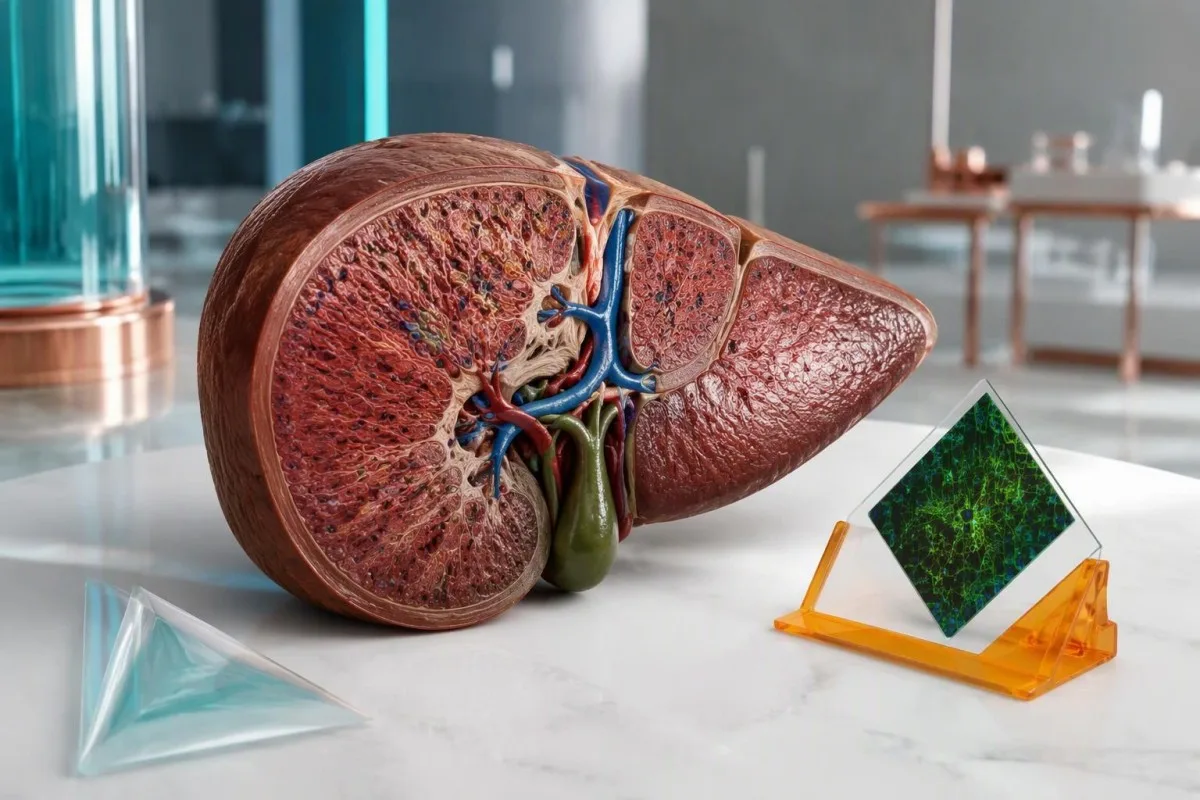
A positive antibody result is a clue, not a diagnosis. The useful question is whether it fits your liver enzymes, IgG level, medication history, and tissue findings.


- Positive smooth muscle antibodies alone do not diagnose autoimmune hepatitis; an adult ASMA titer of 1:40 contributes only 1 point to the simplified diagnostic score.
- Higher ASMA titers increase diagnostic support, but titers of 1:80 and 1:320 receive the same maximum 2 antibody points in the simplified criteria.
- F-actin antibodies identify a more specific antibody target, but a positive result still needs liver-test and clinical context; assay units cannot be converted into ASMA titers.
- Total IgG above the laboratory upper limit supports autoimmune hepatitis; a level above 1.1 times that limit receives 2 simplified-score points.
- Normalan ALT makes incidental positivity less concerning, although normal enzymes or IgG do not universally exclude autoimmune hepatitis.
- Medicinska anamneza o lijekovima should include prescriptions and supplements started months or years earlier, particularly nitrofurantoin and minocycline.
- Liver biopsy usually helps establish autoimmune hepatitis and assess fibrosis; urgent treatment decisions should not wait for elective testing in a severely ill patient.
- Potrebna je hitna procjena is needed for jaundice with confusion, significant drowsiness, or a rising INR; INR of at least 1.5 with encephalopathy can indicate acute liver failure.
Do positive smooth muscle antibodies mean autoimmune hepatitis?
Positive smooth muscle antibodies do not diagnose autoimmune hepatitis by themselves. A low-titer result such as 1:40 can be nonspecific; clinicians look for a matching pattern of elevated ALT or AST, increased IgG, exclusion of other liver diseases, and usually supportive liver tissue findings.
ASMA, also called SMA, detects antibodies reacting with components of smooth muscle and related cellular structures; it does not mean that your muscles are being destroyed. ASMA is most closely associated with type 1 autoimmune hepatitis, but it can also appear during other immune responses or liver disorders, which is why the laboratory word positive is not a disease label.
Consider 2 illustrative results: ASMA 1:40 with ALT 24 IU/L and normal IgG, versus ASMA 1:160 with ALT 286 IU/L and IgG above the laboratory limit. The second pattern deserves substantially more investigation, although neither establishes the cause without a clinical work-up. Our explanation of značenje pozitivnog rezultata na antitijela separates antibody detection from evidence of active disease.
Kantesti je AI analizator krvi that can help organize ASMA results alongside liver enzymes and IgG rather than treating a 1:40 flag as a diagnosis. As Thomas Klein, Chief Medical Officer, my approach in this article is to explain that reasoning openly, including where the numbers cannot settle the question. Our organizacija i klinički fokus provide context for this educational role; diagnosis remains a clinician's responsibility.
ASMA titer interpretation: what do 1:40 and 1:80 mean?
ASMA titers describe how far a sample can be diluted while antibody staining remains detectable. In adults, the simplified autoimmune hepatitis criteria assign 1 point for ANA or SMA at least 1:40 and 2 points at least 1:80; neither threshold independently diagnoses hepatitis.
Titar od 1:160 means staining remains detectable after greater dilution than at 1:40; it does not mean 4 times as much liver damage. In the Hennes et al. simplified criteria, antibody points stop at 2, so 1:80 and 1:640 do not keep adding diagnostic points. Antibody concentration, assay sensitivity, and tissue injury are related imperfectly—and that distinction prevents unnecessary alarm.
Laboratory methods affect comparability. Indirect immunofluorescence on tissue substrates, antigen-specific assays, starting dilutions, and reporting conventions differ between laboratories; a change from 1:40 to 1:80 may represent a single dilution step rather than a clinically meaningful change. The same caution applies to ANA test interpretation, particularly when several weakly positive antibodies appear together.
Children require different interpretation: SMA titers as low as 1:20 can be relevant in an appropriate pediatric presentation. Adult scoring thresholds should not be pasted onto a child's report without specialist judgment, and a negative adult-style screen may miss lower-titer pediatric findings. Ask the laboratory which substrate and starting dilution were used; those details are often more useful than repeating the test elsewhere.
Does an F-actin antibody positive result clarify the diagnosis?
An F-actin antibody positive result can strengthen suspicion of autoimmune hepatitis, but it is not a stand-alone confirmation. F-actin testing targets filamentous actin, one antigen recognized by some smooth muscle antibodies; its usefulness depends on the assay, strength of positivity, and accompanying liver abnormalities.
F-actin assays and ASMA titers are different measurements. Some commercial ELISA methods report less than 20 units as negative, 20–30 as weakly positive, and above 30 as positive, but other kits use different categories and units. A result of 25 units must therefore be read against that report's reference interval, not a cutoff copied from another laboratory or an online discussion.
A weak F-actin result with ASMA 1:40 and normal ALT may add little certainty; a clearly positive result alongside persistent enzyme elevation and increased IgG is more persuasive. F-actin antibodies can occur outside autoimmune hepatitis, including in other liver diseases, while some patients with autoimmune hepatitis lack detectable F-actin antibodies. This is a probability adjustment, not a yes-or-no confirmation switch.
Discordant tests deserve a method check before another diagnosis is added. ASMA may recognize targets other than F-actin, and antigen preparation can influence an ELISA result, so positive ASMA with negative F-actin is not automatically a laboratory error. Our guide to kvalitativni i kvantitativni rezultati explains why 1:80, 25 units, and a simple positive flag cannot be converted into one interchangeable number.
Why does total IgG matter more than another antibody flag?
Elevated total IgG supports autoimmune hepatitis because it reflects increased immunoglobulin production accompanying immune-mediated liver injury. The simplified criteria award 1 point above the laboratory upper limit and 2 points above 1.1 times that limit; normal IgG does not completely exclude the disease.
Adult IgG reference intervals commonly approximate 7–16 g/L, equivalent to 700–1,600 mg/dL, although laboratory and age-specific ranges take priority. If the upper limit is 16 g/L, an IgG of 17 g/L exceeds normal, while 18 g/L exceeds 1.1 times the limit of 17.6 g/L. Use the measured total IgG—not total protein—to make that comparison.
Globulin and the gamma gap cannot substitute for quantitative IgG. For example, total protein 84 g/L minus albumin 38 g/L produces a 46 g/L gap, but that gap contains proteins other than IgG and does not prove autoimmune hepatitis. Our gamma gap interpretation guide explains why an apparently useful shortcut can send the investigation down the wrong path.
Normal IgG should lower confidence in a classic presentation, not close the case when ALT is 500 IU/L or the patient is jaundiced. Acute presentations can lack the usual immunoglobulin pattern, and IgG can also rise with cirrhosis or other inflammatory conditions. Read IgG, IgA i IgM zajedno when the protein abnormality is broader than isolated IgG elevation.
Which liver-test pattern makes ASMA positivity more concerning?
Persistent ALT and AST elevation makes positive ASMA more concerning, especially when IgG is also elevated. Autoimmune hepatitis usually produces a hepatocellular pattern—aminotransferases rising more prominently than alkaline phosphatase—but the enzyme magnitude alone cannot identify the cause or accurately measure liver function.
ALT reflects injury more than function. An ALT of 240 IU/L with an upper limit of 40 is 6 times the upper limit, but that ratio does not distinguish autoimmune hepatitis from viral hepatitis, drug injury, or several other causes. Bilirubin, INR, albumin, symptoms, and the direction of change tell a different part of the story; our ALT rezultat objašnjenje separates these roles.
The R omjer compares ALT divided by its upper limit with ALP divided by its upper limit; a ratio at least 5 supports a hepatocellular injury pattern, particularly in drug-injury assessment. ALT 240/40 and ALP 120/120 give an R ratio of 6. This calculation classifies the pattern, not the diagnosis, and should use values obtained at the same time.
Disproportionate ALP elevation changes the differential diagnosis. If ALP is 3 times its upper limit while ALT is only mildly raised, clinicians consider biliary obstruction, primary biliary cholangitis, primary sclerosing cholangitis, or an overlap presentation rather than assuming isolated autoimmune hepatitis. Our guide to cholestatic liver-test patterns shows why GGT and imaging may become more useful than another ASMA measurement.
How reassuring are normal liver enzymes with positive ASMA?
Positive ASMA with repeatedly normal liver enzymes is generally less concerning than ASMA with unexplained enzyme elevation. In a retrospective cohort reported by Healey et al. in 2016, only 1 of 202 people with SMA positivity and ALT below 55 IU/L subsequently received an autoimmune hepatitis diagnosis.
The observed proportion was approximately 0.5%, not zero. That study's ALT threshold of 55 IU/L was part of its design and should not become everyone's definition of normal, particularly when your laboratory uses a lower limit. The retrospective population also cannot provide an individualized probability for someone with jaundice, high IgG, prior abnormal tests, or established liver disease.
For an illustrative patient with ASMA 1:40, ALT 26 IU/L, normal bilirubin, and normal IgG, the next step is usually clinical review rather than immediate immunosuppression. A clinician may choose a repeat liver panel in roughly 6–12 weeks when a recent illness, medication exposure, or uncertain baseline needs clarification, but there is no universal ASMA-specific retesting interval. Review mild ALT elevation follow-up if the supposedly normal result is actually borderline.
Previous results can overturn a reassuring snapshot. An ALT of 30 IU/L today means something different after an unexplained value of 300 IU/L last month, especially if corticosteroids were started between samples. Bring at least 2 dated panels when possible; the important question is whether injury never occurred, resolved after a trigger disappeared, or was suppressed by treatment rather than truly excluded.
Can medicines cause positive ASMA and autoimmune-like hepatitis?
Some medicines can cause liver injury with ASMA positivity, increased IgG, and tissue findings resembling autoimmune hepatitis. Nitrofurantoin and minocycline are classic examples; exposure may precede recognition by months or years, so a medication taken uneventfully for 2 years still belongs in the history.
The start date matters as much as the medicine name. Hydralazine, methyldopa, and some biologic medicines can also produce autoimmune-like liver injury, while herbal products may cause other injury patterns that coexist with incidental antibodies. Write down dose changes, intermittent courses, and supplements used during the preceding 12 months; include longer-standing drugs rather than limiting the list to something newly prescribed last week.
Drug-induced autoimmune-like hepatitis and idiopathic autoimmune hepatitis can look remarkably similar initially. Improvement after supervised withdrawal and the longer-term relapse pattern help distinguish them, but ALT may take weeks to fall and some patients still require corticosteroids. A fall from 400 to 200 IU/L is encouraging, not proof of the cause; persistent or recurrent injury needs reassessment rather than a premature label.
Kantesti je Platforma za tumačenje biomarkera pomoću AI that can help arrange laboratory trends beside medication dates, but it cannot determine causality from an ASMA titer of 1:80. Our vodič za AI interpretaciju objašnjava kako Kantesti-ova neuronska mreža ponderira susjedne biomarkere, smjer trenda i unutrašnju konzistentnost. Po mom iskustvu, to je najvažnije za granične vrijednosti BUN-a između describes the supporting workflow rather than a replacement for hepatology assessment. Do not stop an essential prescription on your own; suspected liver injury requires prompt prescriber advice, with emergency assessment when symptoms are severe.
What else must be excluded before calling this autoimmune hepatitis?
Viral hepatitis, drug injury, metabolic liver disease, and selected inherited conditions must be considered before attributing liver injury to positive ASMA. The AASLD practice guidance emphasizes compatible findings and exclusion of competing explanations; antibody positivity does not protect a patient from having a second, more common condition.
Acute hepatitis E can resemble autoimmune hepatitis, including marked aminotransferase elevation, and testing depends on exposure, geography, immune status, and clinical presentation. Hepatitis B and C assessment is also part of a standard liver work-up, with hepatitis A or other viruses considered when appropriate. Our hepatitis E testing explanation clarifies why IgM, IgG, and PCR answer different questions rather than supplying 3 interchangeable confirmations.
MASLD can coexist with positive autoantibodies. An illustrative person with metabolic risk factors, liver fat on imaging, ALT 65 IU/L, ASMA 1:40, and normal IgG may have steatotic liver disease rather than autoimmune hepatitis, although coexisting disease remains possible. Our guide to metabolic liver disease testing explains how fibrosis assessment differs from identifying an immune cause.
In younger patients, unexplained hepatitis may require consideration of Wilson disease; iron overload and alpha-1 antitrypsin deficiency enter the differential according to age and presentation. An ALP elevation of 3 times normal also raises questions about biliary disease or overlap syndromes rather than simply increasing the apparent strength of ASMA. Kantesti AI should support a discussion of missing context, not automatically order every available test because 1 antibody is positive.
When is liver biopsy needed to investigate positive ASMA?
Liver biopsy is usually needed to establish autoimmune hepatitis when the clinical and laboratory findings suggest it. Tissue assessment can identify hepatitis, evaluate fibrosis, and reveal competing explanations; the AASLD guidance advises against diagnosing autoimmune hepatitis without biopsy, while urgent or unsafe situations require specialist judgment.
Interface hepatitis describes immune-cell activity at the boundary between portal areas and liver-cell plates; it supports autoimmune hepatitis but is not unique to it. Plasma-cell-rich inflammation can be helpful, yet its absence does not exclude the diagnosis, and drug injury can produce similar appearances. A tissue report must be interpreted alongside ASMA 1:80, IgG, viral testing, and the medication timeline—not treated as another isolated positive test.
Fibrosis tests cannot replace diagnostic histology. Liver stiffness may rise during active hepatitis, so a FibroScan value obtained while ALT is 500 IU/L can overstate fibrosis relative to a measurement after the injury settles. Our FibroScan result guide explains the distinction between stiffness and cause; a scan cannot show the cellular pattern needed to evaluate autoimmune hepatitis.
Biopsy timing and route depend on safety. A patient with impaired clotting, fluid accumulation, or severe acute illness may need a transjugular approach or a different immediate plan rather than routine percutaneous sampling. Likewise, a FIB-4 risk calculation can be distorted by acute AST elevation or platelets falling for another reason; none of these tools should delay urgent care when INR is rising toward or above 1.5.
How do clinicians combine the autoimmune hepatitis score?
The simplified autoimmune hepatitis score combines autoantibodies, IgG, liver histology, and exclusion of viral hepatitis. Hennes et al. developed an 8-point system in which at least 6 points supports probable and at least 7 supports definite autoimmune hepatitis; the score assists clinical judgment rather than replacing it.
Autoantibody points are capped at 2. ANA 1:160 plus ASMA 1:160 does not produce 4 points, and adding F-actin positivity is not a separate extra-point category. Anti-LKM1 at the qualifying threshold or positive anti-SLA can contribute within the same antibody category, but assay details matter. This prevents several related tests from being mistaken for several independent proofs of one diagnosis.
An illustrative adult with ASMA 1:80, IgG 1.2 times normal, typical histology, and excluded viral hepatitis reaches 8 points: 2 in each category. Another patient could mathematically reach 6 without histology, but that arithmetic does not justify bypassing the AASLD biopsy recommendation or ignoring medication-related injury. The original Hennes et al. criteria are a clinical framework, not a self-diagnosis calculator.
A low simplified score does not reliably dismiss every atypical presentation. Acute severe disease, normal IgG, or absent conventional antibodies can require a specialist assessment using additional evidence or a more detailed scoring system. Our standardi kliničke metodologije explain why interpretation tools need explicit limitations; neither a 5-point estimate nor an 8-point estimate should independently decide whether someone starts immunosuppression.
Which findings need urgent assessment rather than routine follow-up?
Urgency depends on symptoms and liver dysfunction, not the ASMA titer. New jaundice with confusion, unusual drowsiness, significant bleeding, or rapidly worsening illness needs emergency assessment; INR at least 1.5 with hepatic encephalopathy can indicate acute liver failure in someone without pre-existing cirrhosis.
A rising INR can be more concerning than a rising antibody titer. Interpretation must account for warfarin, vitamin K deficiency, and other causes, but an unexplained INR of 1.6 during acute hepatitis deserves prompt clinical attention rather than waiting for repeat ASMA. Our objašnjenje rezultata INR-a distinguishes a clotting-time measurement from a diagnosis and explains why medication context changes its meaning.
ALT at least 5 times the upper limit warrants timely investigation, particularly with symptoms or increasing bilirubin, although there is no universal ASMA-specific ALT threshold that automatically means admission. A patient with ALT 220 IU/L, rising bilirubin, and poor intake may need faster assessment than someone with ALT 400 IU/L who has stable function and an established treatment plan. Numbers need a trajectory and a bedside assessment.
Conjugated bilirubin elevation points toward hepatobiliary dysfunction, but it does not distinguish autoimmune hepatitis from obstruction or another hepatitis. New yellow eyes or dark urine should prompt assessment, even if ASMA is only 1:40; our vodič za obrazac direktnog bilirubina explains the competing mechanisms. Do not wait for an AI interpretation, a second antibody result, or an elective appointment if confusion or significant drowsiness develops.
Should positive ASMA be treated with steroids or azathioprine?
Positive ASMA alone should not be treated with corticosteroids or azathioprine. Treatment targets confirmed or strongly supported active autoimmune hepatitis, not an antibody concentration; even a titer of 1:320 does not justify immunosuppression when the clinical evidence for liver disease is absent.
Confirmed autoimmune hepatitis is treatable, commonly with corticosteroid-based induction and a steroid-sparing medicine selected for the individual patient. Disease severity, cirrhosis, pregnancy considerations, infection risk, and medication tolerance affect the regimen, so a laboratory report cannot safely generate a dose. The initial aim is improvement and eventual normalization of ALT, AST, and IgG—not necessarily making an ASMA titer of 1:160 disappear.
Azathioprine requires safety assessment and monitoring. TPMT and, where appropriate, NUDT15 testing help identify susceptibility to severe thiopurine toxicity, but reassuring results do not remove the need for blood-count and liver-test monitoring. Our TPMT testing explanation describes these limits; early checks are often arranged within weeks, sometimes every 1–2 weeks during initiation or adjustment, according to the treating service's protocol.
Diet cannot erase positive smooth muscle antibodies or replace immunosuppression. Adequate protein and individualized calcium and vitamin D assessment may support patients receiving prolonged corticosteroids, whereas unregulated liver-detox supplements can complicate the investigation. Kantesti can help organize 2 or more dated panels for a treatment discussion, but treatment response, steroid tapering, and possible withdrawal must be managed by the clinician because relapse can occur despite previous normal results.
What should you do after receiving a positive ASMA report?
After a positive ASMA result, obtain the exact titer or assay value and review it with liver enzymes, total IgG, symptoms, and medication history. A useful first appointment needs the original report and previous results; 2 dated panels often reveal more than repeating the antibody immediately.
Bring the report rather than only a screenshot of the positive flag. Confirm whether the result was ASMA by immunofluorescence, F-actin by ELISA, or both, and include the laboratory reference interval and units. Kantesti is an Alat za analizu krvnih nalaza uz pomoć AI-a that can help organize this information, but an extracted value such as 25 units should always be checked against the original document before it influences care.
I would prioritize 3 questions: Is there persistent hepatocellular injury, is IgG genuinely elevated, and has a plausible competing cause been addressed? That is the reasoning Thomas Klein uses here—not a claim that one threshold can diagnose an individual reader. Our medicinski savjetodavni odbor describes the clinical expertise behind our educational approach; a hepatologist must still decide whether additional serology, imaging, or tissue assessment is appropriate.
Share only the information needed for the task, and check consent before uploading a relative's results. Our prakse privatnosti i obrade podataka describe the handling framework; laboratory identifiers and unrelated personal details deserve attention even when a result feels urgent. As of 20. oktobar 2026., the practical message remains unchanged: use ASMA as 1 component of a liver assessment, not as a diagnosis or a reason to start treatment yourself.
Publikacije istraživanja i dokazi koji stoje iza ove interpretacije
The clinical interpretation rests on autoimmune hepatitis guidance, diagnostic-criteria research, and outcome data—not on educational DOI registration alone. The 2008 Hennes criteria, 2019 AASLD guidance published in 2020, and Healey's 2016 cohort address different questions: diagnostic support, clinical management, and the significance of incidental SMA positivity.
The AASLD guidance supports a combined diagnostic assessment, including liver histology and exclusion of competing causes (Mack et al., 2020). Hennes et al. (2008) provide the 8-point simplified framework, while Healey et al. (2016) offer observational evidence about patients whose ALT was below 55 IU/L. These sources are not interchangeable: a retrospective follow-up study cannot replace a biopsy recommendation or determine an individual treatment plan.
Serum-protein education helps prevent misreading IgG-related clues. Naš vodič za interpretaciju serumske proteinske analize explains albumin and globulin distinctions, including why albumin 38 g/L and a raised protein gap do not establish immune-mediated hepatitis. The related Zenodo publication is listed below as supporting educational material, not as primary evidence validating ASMA specificity, the 1:80 threshold, or autoimmune hepatitis treatment.
Coagulation education explains a different part of liver assessment: the significance of impaired protein synthesis and interpretation of clotting results. Our coagulation biomarker guide provides background, but an INR of 1.5 during acute hepatitis must be assessed using the patient's clinical situation rather than an aPTT reference range. The 2 Kantesti educational publications below use n.d. where publication dates were not supplied; discovery links are searches, not claims of verified hosting on ResearchGate or Academia.edu.
Često postavljana pitanja
Šta znači pozitivan test na antitijela na glatke mišiće?
0 Pozitivan test na antitijela na glatke mišiće znači da su otkrivena antitijela koja reaguju s ćelijskim ciljnim strukturama povezanim s glatkim mišićima; to samo po sebi ne postavlja dijagnozu autoimunskog hepatitisa. Kod odraslih, ASMA u titru 1:40 donosi 1 bod u pojednostavljenom dijagnostičkom skoru, dok najmanje 1:80 donosi 2 boda. Kliničari ovaj nalaz tumače zajedno s ALT, AST, ukupnim IgG-om, lijekovima, testovima kojima se isključuju drugi uzroci i, obično, biopsijom jetre. Trajno normalni jetreni enzimi uglavnom znače da je slučajno pozitivan nalaz manje zabrinjavajući.
Da li je titar ASMA od 1:40 zabrinjavajući?
Titar ASMA od 1:40 je nizak titar kod odraslih koji se može javiti i bez autoimunskog hepatitisa. Prema pojednostavljenim kriterijima donosi 1 bod, ali nije dijagnoza niti pokazatelj oštećenja jetre. Rezultat od 1:40 uz ALT 25 IU/L i normalan IgG tumači se drugačije od istog titra uz trajno povišen ALT i žuticu. Kod djece mogu biti klinički značajni i niži titri, uključujući 1:20, pa je rezultate kod djece potrebno procjenjivati u skladu s dobi.
Potvrđuje li pozitivan anti-F-aktin antitijelo autoimuni hepatitis?
Pozitivan nalaz antitijela na F-aktin sam po sebi ne potvrđuje autoimuni hepatitis. Neki testovi vrijednosti manje od 20 jedinica klasifikuju kao negativne, a vrijednosti od 20 do 30 jedinica kao slabo pozitivne, ali ove granične vrijednosti zavise od kompleta za testiranje i prednost ima referentni interval laboratorije koja izdaje nalaz. Rezultati za F-aktin ne mogu se pretvoriti u titre razrjeđenja ASMA, kao što je 1:80. Povišeni jetreni enzimi, povećani IgG, isključenje drugih uzroka i, obično, histološki nalaz jetre određuju da li je rezultat klinički značajan.
Mogu li antitijela na glatke mišiće biti pozitivna uz normalne enzime jetre?
Antitijela na glatke mišiće mogu biti pozitivna uprkos normalnim jetrenim enzimima. U retrospektivnoj kohorti koju su Healey i saradnici objavili 2016. godine, 1 od 202 osobe s pozitivnim SMA i ALT-om ispod 55 IU/L kasnije je dobila dijagnozu autoimunskog hepatitisa, približno 0.5%. Prag iz te studije nije univerzalna granica za normalan ALT, a prethodni abnormalni nalazi, simptomi ili visok IgG mogu promijeniti procjenu. Praćenje treba prilagoditi pojedincu, umjesto pretpostavljati da antitijelo zahtijeva liječenje ili česta testiranja doživotno.
Do I need a liver biopsy if my ASMA test is positive?
An isolated positive ASMA test does not automatically require liver biopsy. Biopsy is usually needed when autoimmune hepatitis is clinically suspected because of persistent liver injury, elevated IgG, or other supporting findings; AASLD guidance advises against diagnosing autoimmune hepatitis without biopsy. A titer of 1:160 with normal liver tests is not, by itself, an indication for an urgent biopsy. Severe acute illness or an INR of at least 1.5 requires specialist assessment of urgency, safety, and the appropriate testing route.
Can positive smooth muscle antibodies go away?
Smooth muscle antibody results can become weaker or negative over time, particularly when a transient immune response or medication-related trigger resolves. A change from 1:80 to 1:40 is only 1 dilution step and may also reflect assay variation rather than a meaningful clinical improvement. In established autoimmune hepatitis, ALT, AST, and IgG are generally more useful treatment-response markers than repeated ASMA titers. Persistent antibody positivity alone is not a reason to start or increase immunosuppression.
Nabavite analizu krvne slike uz AI već danas
Pridružite se više od 2 miliona korisnika širom svijeta koji vjeruju Kantesti-u za trenutnu i tačnu analizu laboratorijskih testova. Otpremite svoje rezultate krvne slike i dobijte sveobuhvatno tumačenje 15,000+ biomarkera za nekoliko sekundi.
📚 Referisane naučne publikacije
Klein, T., Mitchell, S., & Weber, H. (2026). Normalni raspon aPTT-a: D-dimer, protein C, vodič za zgrušavanje krvi. Kantesti AI Medical Research.
Klein, T., Mitchell, S., & Weber, H. (2026). Vodič za serumske proteine: Test krvi za globuline, albumine i odnos A/G. Kantesti AI Medical Research.
📖 Eksterne medicinske reference
Mack CL et al. (2020). Diagnosis and Management of Autoimmune Hepatitis in Adults and Children: 2019 Practice Guidance and Guidelines From the American Association for the Study of Liver Diseases. Hepatology.
Hennes EM et al. (2008). Simplified criteria for the diagnosis of autoimmune hepatitis. Hepatology.
Healey R et al. (2016). Do anti-smooth muscle antibodies predict development of autoimmune hepatitis in patients with normal liver function? A retrospective cohort review. Autoimmunity Reviews.
⚕️ Medicinska izjava o odricanju odgovornosti
Ovaj članak je samo u edukativne svrhe i ne predstavlja medicinski savjet. Za odluke o dijagnozi i liječenju uvijek se posavjetujte s kvalifikovanim zdravstvenim radnikom.
E-E-A-T signal(i) povjerenja
Iskustvo
Klinička revizija radnih tokova tumačenja laboratorijskih nalaza koju vodi ljekar.
Stručnost
Fokus laboratorijske medicine na to kako se biomarkeri ponašaju u kliničkom kontekstu.
Autoritativnost
Napisao dr. Thomas Klein, uz recenziju dr. Sarah Mitchell i prof. dr. Hans Weber.
Pouzdanost
Tumačenje zasnovano na dokazima, s jasnim sljedećim koracima kako bi se smanjila uzbuna.