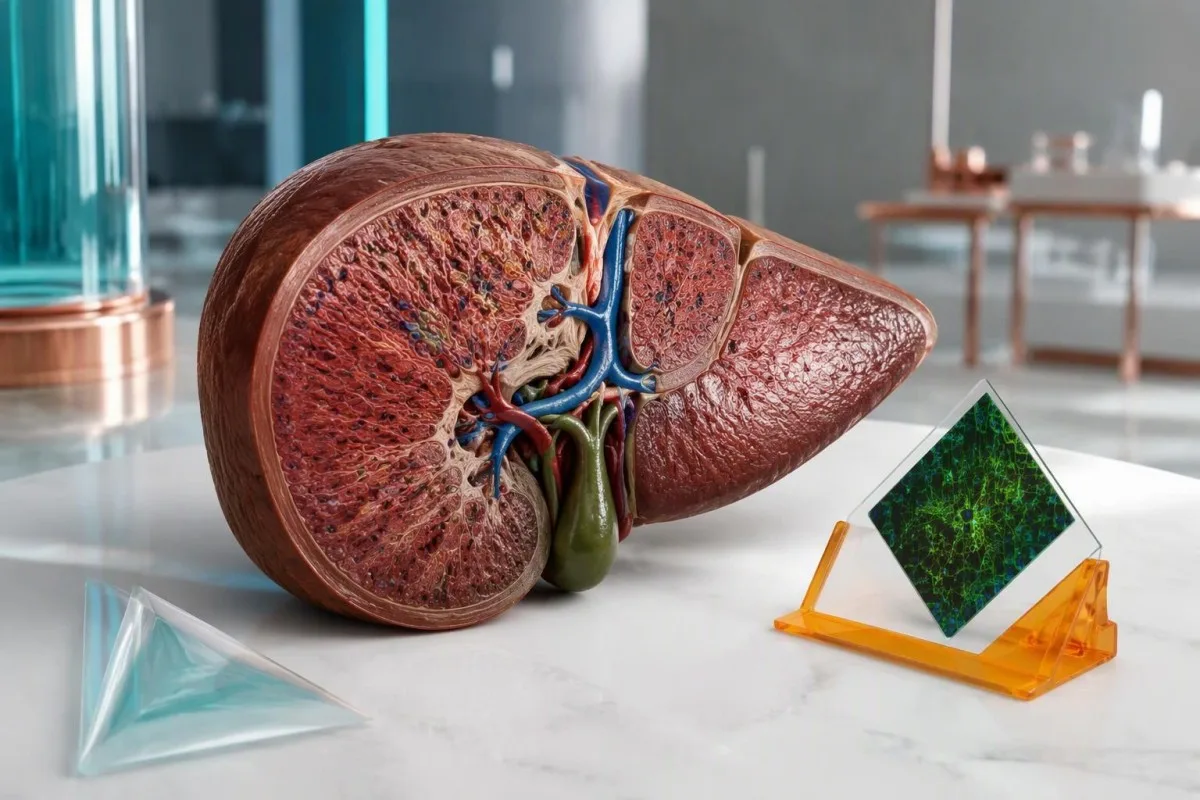
תוצאה חיובית של נוגדנים היא רמז, לא אבחנה. השאלה החשובה היא אם היא מתיישבת עם אנזימי הכבד שלך, רמת ה-IgG, היסטוריית התרופות וממצאי הרקמה.


- נוגדנים חיוביים לשריר חלק לבדם אינם מאבחנים דלקת כבד אוטואימונית; טיטר ASMA של 1:40 במבוגרים תורם נקודה אחת בלבד לניקוד האבחנתי המפושט.
- טיטרים גבוהים יותר של ASMA מחזקים את התמיכה באבחנה, אך טיטרים של 1:80 ושל 1:320 מקבלים את אותו ניקוד מרבי של 2 נקודות עבור נוגדנים בקריטריונים המפושטים.
- נוגדנים ל-F-actin מזהים מטרה ספציפית יותר של נוגדנים, אך גם תוצאה חיובית מחייבת התייחסות להקשר של בדיקות הכבד ושל המצב הקליני; אי אפשר להמיר יחידות של בדיקה לטיטרים של ASMA.
- IgG כולל מעל הגבול העליון של טווח הייחוס במעבדה תומך בדלקת כבד אוטואימונית; רמה מעל פי 1.1 מהגבול הזה מקבלת 2 נקודות בניקוד המפושט.
- ALT תקין הופכת חיוביות מקרית לפחות מדאיגה, אף שאנזימים או IgG תקינים אינם שוללים באופן גורף דלקת כבד אוטואימונית.
- היסטוריית תרופות צריך לכלול תרופות מרשם ותוספי תזונה שהתחלת ליטול חודשים או שנים קודם לכן, ובפרט ניטרופורנטואין ומינוציקלין.
- ביופסיית כבד בדרך כלל מסייע לבסס אבחנה של דלקת כבד אוטואימונית ולהעריך פיברוזיס; אין להמתין לבדיקות אלקטיביות כדי לקבל החלטות טיפול דחופות אצל מטופל במצב קשה.
- הערכה דחופה נדרש במקרה של צהבת המלווה בבלבול, ישנוניות משמעותית או INR עולה; INR של 1.5 לפחות עם אנצפלופתיה עשוי להעיד על אי-ספיקת כבד חריפה.
האם נוגדנים חיוביים לשריר חלק פירושם דלקת כבד אוטואימונית?
נוגדנים חיוביים לשריר חלק אינם מאבחנים דלקת כבד אוטואימונית בפני עצמם. תוצאה בטיטר נמוך, כגון 1:40, עשויה להיות לא ספציפית; הרופאים מחפשים דפוס תואם של ALT או AST מוגברים, IgG מוגבר, שלילת מחלות כבד אחרות, ובדרך כלל ממצאים תומכים ברקמת הכבד.
ASMA, הנקראים גם SMA, מזהים נוגדנים המגיבים עם רכיבים של שריר חלק ומבנים תאיים קשורים; אין פירוש הדבר שהשרירים שלך נהרסים. ASMA קשורים באופן הדוק ביותר ל דלקת כבד אוטואימונית מסוג 1, אך הם עשויים להופיע גם במהלך תגובות חיסוניות אחרות או במחלות כבד אחרות, ולכן המילה חיובי בדוח המעבדה אינה אבחנה של מחלה.
נבחן שתי תוצאות להמחשה: ASMA 1:40 עם ALT 24 IU/L ו-IgG תקין, לעומת ASMA 1:160 עם ALT 286 IU/L ו-IgG מעל הגבול העליון של המעבדה. הדפוס השני מצדיק בירור נרחב בהרבה, אף שאף אחת מהתוצאות אינה קובעת את הסיבה ללא בירור קליני. ההסבר שלנו ל משמעות תוצאת נוגדן חיובית מבחין בין זיהוי נוגדנים לבין ראיות למחלה פעילה.
קנטסטי הוא מנתח בדיקות דם בינה מלאכותית שיכולים לסייע לארגן את תוצאות ASMA לצד אנזימי כבד ו-IgG, במקום להתייחס לסימון 1:40 כאבחנה. כתומס קליין, מנהל רפואי ראשי, הגישה שלי במאמר זה היא להסביר את ההיגיון הזה בגלוי, לרבות המצבים שבהם המספרים אינם יכולים להכריע בשאלה. ה הארגון שלנו והמיקוד הקליני שלנו שלנו מספקים הקשר לתפקיד חינוכי זה; האבחון נותר באחריות הרופא.
פירוש טיטר ASMA: מה המשמעות של 1:40 ושל 1:80?
טיטרי ASMA מציינים עד כמה ניתן למהול דגימה ועדיין לזהות צביעת נוגדנים. במבוגרים, הקריטריונים הפשוטים לדלקת כבד אוטואימונית מעניקים נקודה אחת ל-ANA או SMA בטיטר של לפחות 1:40 ו-2 נקודות לטיטר של לפחות 1:80; אף אחד מהספים אינו מאבחן דלקת כבד בפני עצמו.
טיטר של 1:160 פירושו שניתן עדיין לזהות צביעה לאחר מיהול גדול יותר מאשר ב-1:40; אין פירושו שיש פי 4 יותר נזק לכבד. בקריטריונים הפשוטים של Hennes ואח', הניקוד על נוגדנים נעצר ב-2, כך שטיטרים של 1:80 ו-1:640 אינם מוסיפים נקודות אבחוניות נוספות. ריכוז הנוגדנים, רגישות הבדיקה ופגיעה ברקמה קשורים זה לזה באופן לא מושלם — וההבחנה הזאת מונעת דאגה מיותרת.
שיטות המעבדה משפיעות על יכולת ההשוואה. אימונופלואורסצנציה עקיפה על מצעי רקמה, בדיקות ספציפיות לאנטיגנים, מיהולים התחלתיים ומוסכמות דיווח שונים בין מעבדות; שינוי מ-1:40 ל-1:80 עשוי לייצג שלב מיהול יחיד ולא שינוי בעל משמעות קלינית. אותה הסתייגות חלה גם על פירוש בדיקת ANA, במיוחד כאשר מופיעים יחד כמה נוגדנים חיוביים חלשים.
נדרשת פרשנות שונה בילדים: טיטרי SMA נמוכים עד 1:20 עשויים להיות רלוונטיים כאשר התמונה הקלינית בילדים מתאימה. אין להחיל את ספי הניקוד למבוגרים על תוצאות של ילד ללא שיקול דעת של מומחה, ובדיקת סקר שלילית לפי אמות מידה של מבוגרים עלולה להחמיץ ממצאים בטיטר נמוך יותר בילדים. שאלו את המעבדה באיזה מצע ובאיזה מיהול התחלתי השתמשו; פרטים אלה מועילים לעיתים קרובות יותר מחזרה על הבדיקה במקום אחר.
האם תוצאה חיובית של נוגדנים ל-F-actin מבהירה את האבחנה?
An F-actin antibody positive result can strengthen suspicion of autoimmune hepatitis, but it is not a stand-alone confirmation. F-actin testing targets filamentous actin, one antigen recognized by some smooth muscle antibodies; its usefulness depends on the assay, strength of positivity, and accompanying liver abnormalities.
F-actin assays and ASMA titers are different measurements. Some commercial ELISA methods report less than 20 units as negative, 20–30 as weakly positive, and above 30 as positive, but other kits use different categories and units. A result of 25 units must therefore be read against that report's reference interval, not a cutoff copied from another laboratory or an online discussion.
A weak F-actin result with ASMA 1:40 and normal ALT may add little certainty; a clearly positive result alongside persistent enzyme elevation and increased IgG is more persuasive. F-actin antibodies can occur outside autoimmune hepatitis, including in other liver diseases, while some patients with autoimmune hepatitis lack detectable F-actin antibodies. This is a probability adjustment, not a yes-or-no confirmation switch.
Discordant tests deserve a method check before another diagnosis is added. ASMA may recognize targets other than F-actin, and antigen preparation can influence an ELISA result, so positive ASMA with negative F-actin is not automatically a laboratory error. Our guide to תוצאות איכותיות וכמותיות explains why 1:80, 25 units, and a simple positive flag cannot be converted into one interchangeable number.
מדוע רמת IgG הכוללת חשובה יותר מסימון חיובי של נוגדן נוסף?
Elevated total IgG supports autoimmune hepatitis because it reflects increased immunoglobulin production accompanying immune-mediated liver injury. The simplified criteria award 1 point above the laboratory upper limit and 2 points above 1.1 times that limit; normal IgG does not completely exclude the disease.
Adult IgG reference intervals commonly approximate 7–16 g/L, equivalent to 700–1,600 mg/dL, although laboratory and age-specific ranges take priority. If the upper limit is 16 g/L, an IgG of 17 g/L exceeds normal, while 18 g/L exceeds 1.1 times the limit of 17.6 g/L. Use the measured total IgG—not total protein—to make that comparison.
Globulin and the gamma gap cannot substitute for quantitative IgG. For example, total protein 84 g/L minus albumin 38 g/L produces a 46 g/L gap, but that gap contains proteins other than IgG and does not prove autoimmune hepatitis. Our gamma gap interpretation guide explains why an apparently useful shortcut can send the investigation down the wrong path.
Normal IgG should lower confidence in a classic presentation, not close the case when ALT is 500 IU/L or the patient is jaundiced. Acute presentations can lack the usual immunoglobulin pattern, and IgG can also rise with cirrhosis or other inflammatory conditions. Read IgG, IgA, ו-IgM יחד when the protein abnormality is broader than isolated IgG elevation.
איזה דפוס של בדיקות כבד הופך חיוביות של ASMA למדאיגה יותר?
Persistent ALT and AST elevation makes positive ASMA more concerning, especially when IgG is also elevated. Autoimmune hepatitis usually produces a hepatocellular pattern—aminotransferases rising more prominently than alkaline phosphatase—but the enzyme magnitude alone cannot identify the cause or accurately measure liver function.
ALT reflects injury more than function. An ALT of 240 IU/L with an upper limit of 40 is 6 times the upper limit, but that ratio does not distinguish autoimmune hepatitis from viral hepatitis, drug injury, or several other causes. Bilirubin, INR, albumin, symptoms, and the direction of change tell a different part of the story; our הסבר לתוצאת ALT separates these roles.
ה יחס R compares ALT divided by its upper limit with ALP divided by its upper limit; a ratio at least 5 supports a hepatocellular injury pattern, particularly in drug-injury assessment. ALT 240/40 and ALP 120/120 give an R ratio of 6. This calculation classifies the pattern, not the diagnosis, and should use values obtained at the same time.
Disproportionate ALP elevation changes the differential diagnosis. If ALP is 3 times its upper limit while ALT is only mildly raised, clinicians consider biliary obstruction, primary biliary cholangitis, primary sclerosing cholangitis, or an overlap presentation rather than assuming isolated autoimmune hepatitis. Our guide to cholestatic liver-test patterns shows why GGT and imaging may become more useful than another ASMA measurement.
עד כמה אנזימי כבד תקינים מרגיעים כש-ASMA חיובי?
Positive ASMA with repeatedly normal liver enzymes is generally less concerning than ASMA with unexplained enzyme elevation. In a retrospective cohort reported by Healey et al. in 2016, only 1 of 202 people with SMA positivity and ALT below 55 IU/L subsequently received an autoimmune hepatitis diagnosis.
The observed proportion was approximately 0.5%, not zero. That study's ALT threshold of 55 IU/L was part of its design and should not become everyone's definition of normal, particularly when your laboratory uses a lower limit. The retrospective population also cannot provide an individualized probability for someone with jaundice, high IgG, prior abnormal tests, or established liver disease.
For an illustrative patient with ASMA 1:40, ALT 26 IU/L, normal bilirubin, and normal IgG, the next step is usually clinical review rather than immediate immunosuppression. A clinician may choose a repeat liver panel in roughly 6–12 weeks when a recent illness, medication exposure, or uncertain baseline needs clarification, but there is no universal ASMA-specific retesting interval. Review mild ALT elevation follow-up if the supposedly normal result is actually borderline.
Previous results can overturn a reassuring snapshot. An ALT of 30 IU/L today means something different after an unexplained value of 300 IU/L last month, especially if corticosteroids were started between samples. Bring at least 2 dated panels when possible; the important question is whether injury never occurred, resolved after a trigger disappeared, or was suppressed by treatment rather than truly excluded.
האם תרופות יכולות לגרום ל-ASMA חיובי ולדלקת כבד דמוית אוטואימונית?
Some medicines can cause liver injury with ASMA positivity, increased IgG, and tissue findings resembling autoimmune hepatitis. Nitrofurantoin and minocycline are classic examples; exposure may precede recognition by months or years, so a medication taken uneventfully for 2 years still belongs in the history.
The start date matters as much as the medicine name. Hydralazine, methyldopa, and some biologic medicines can also produce autoimmune-like liver injury, while herbal products may cause other injury patterns that coexist with incidental antibodies. Write down dose changes, intermittent courses, and supplements used during the preceding 12 months; include longer-standing drugs rather than limiting the list to something newly prescribed last week.
Drug-induced autoimmune-like hepatitis and idiopathic autoimmune hepatitis can look remarkably similar initially. Improvement after supervised withdrawal and the longer-term relapse pattern help distinguish them, but ALT may take weeks to fall and some patients still require corticosteroids. A fall from 400 to 200 IU/L is encouraging, not proof of the cause; persistent or recurrent injury needs reassessment rather than a premature label.
קנטסטי הוא פלטפורמת פרשנות ביומרקרים של AI that can help arrange laboratory trends beside medication dates, but it cannot determine causality from an ASMA titer of 1:80. Our מדריך טכנולוגיית פענוח ה-AI describes the supporting workflow rather than a replacement for hepatology assessment. Do not stop an essential prescription on your own; suspected liver injury requires prompt prescriber advice, with emergency assessment when symptoms are severe.
מה עוד יש לשלול לפני שמאבחנים דלקת כבד אוטואימונית?
Viral hepatitis, drug injury, metabolic liver disease, and selected inherited conditions must be considered before attributing liver injury to positive ASMA. The AASLD practice guidance emphasizes compatible findings and exclusion of competing explanations; antibody positivity does not protect a patient from having a second, more common condition.
Acute hepatitis E can resemble autoimmune hepatitis, including marked aminotransferase elevation, and testing depends on exposure, geography, immune status, and clinical presentation. Hepatitis B and C assessment is also part of a standard liver work-up, with hepatitis A or other viruses considered when appropriate. Our hepatitis E testing explanation clarifies why IgM, IgG, and PCR answer different questions rather than supplying 3 interchangeable confirmations.
MASLD can coexist with positive autoantibodies. An illustrative person with metabolic risk factors, liver fat on imaging, ALT 65 IU/L, ASMA 1:40, and normal IgG may have steatotic liver disease rather than autoimmune hepatitis, although coexisting disease remains possible. Our guide to metabolic liver disease testing explains how fibrosis assessment differs from identifying an immune cause.
In younger patients, unexplained hepatitis may require consideration of Wilson disease; iron overload and alpha-1 antitrypsin deficiency enter the differential according to age and presentation. An ALP elevation of 3 times normal also raises questions about biliary disease or overlap syndromes rather than simply increasing the apparent strength of ASMA. Kantesti AI should support a discussion of missing context, not automatically order every available test because 1 antibody is positive.
מתי נדרשת ביופסיית כבד לבירור ASMA חיובי?
Liver biopsy is usually needed to establish autoimmune hepatitis when the clinical and laboratory findings suggest it. Tissue assessment can identify hepatitis, evaluate fibrosis, and reveal competing explanations; the AASLD guidance advises against diagnosing autoimmune hepatitis without biopsy, while urgent or unsafe situations require specialist judgment.
Interface hepatitis describes immune-cell activity at the boundary between portal areas and liver-cell plates; it supports autoimmune hepatitis but is not unique to it. Plasma-cell-rich inflammation can be helpful, yet its absence does not exclude the diagnosis, and drug injury can produce similar appearances. A tissue report must be interpreted alongside ASMA 1:80, IgG, viral testing, and the medication timeline—not treated as another isolated positive test.
Fibrosis tests cannot replace diagnostic histology. Liver stiffness may rise during active hepatitis, so a FibroScan value obtained while ALT is 500 IU/L can overstate fibrosis relative to a measurement after the injury settles. Our FibroScan result guide explains the distinction between stiffness and cause; a scan cannot show the cellular pattern needed to evaluate autoimmune hepatitis.
Biopsy timing and route depend on safety. A patient with impaired clotting, fluid accumulation, or severe acute illness may need a transjugular approach or a different immediate plan rather than routine percutaneous sampling. Likewise, a FIB-4 risk calculation can be distorted by acute AST elevation or platelets falling for another reason; none of these tools should delay urgent care when INR is rising toward or above 1.5.
כיצד קלינאים משלבים את הניקוד לדלקת כבד אוטואימונית?
The simplified autoimmune hepatitis score combines autoantibodies, IgG, liver histology, and exclusion of viral hepatitis. Hennes et al. developed an 8-point system in which at least 6 points supports probable and at least 7 supports definite autoimmune hepatitis; the score assists clinical judgment rather than replacing it.
Autoantibody points are capped at 2. ANA 1:160 plus ASMA 1:160 does not produce 4 points, and adding F-actin positivity is not a separate extra-point category. Anti-LKM1 at the qualifying threshold or positive anti-SLA can contribute within the same antibody category, but assay details matter. This prevents several related tests from being mistaken for several independent proofs of one diagnosis.
An illustrative adult with ASMA 1:80, IgG 1.2 times normal, typical histology, and excluded viral hepatitis reaches 8 points: 2 in each category. Another patient could mathematically reach 6 without histology, but that arithmetic does not justify bypassing the AASLD biopsy recommendation or ignoring medication-related injury. The original Hennes et al. criteria are a clinical framework, not a self-diagnosis calculator.
A low simplified score does not reliably dismiss every atypical presentation. Acute severe disease, normal IgG, or absent conventional antibodies can require a specialist assessment using additional evidence or a more detailed scoring system. Our תקני מתודולוגיה קלינית explain why interpretation tools need explicit limitations; neither a 5-point estimate nor an 8-point estimate should independently decide whether someone starts immunosuppression.
אילו ממצאים מצריכים הערכה דחופה במקום מעקב שגרתי?
Urgency depends on symptoms and liver dysfunction, not the ASMA titer. New jaundice with confusion, unusual drowsiness, significant bleeding, or rapidly worsening illness needs emergency assessment; INR at least 1.5 with hepatic encephalopathy can indicate acute liver failure in someone without pre-existing cirrhosis.
A rising INR can be more concerning than a rising antibody titer. Interpretation must account for warfarin, vitamin K deficiency, and other causes, but an unexplained INR of 1.6 during acute hepatitis deserves prompt clinical attention rather than waiting for repeat ASMA. Our INR distinguishes a clotting-time measurement from a diagnosis and explains why medication context changes its meaning.
ALT at least 5 times the upper limit warrants timely investigation, particularly with symptoms or increasing bilirubin, although there is no universal ASMA-specific ALT threshold that automatically means admission. A patient with ALT 220 IU/L, rising bilirubin, and poor intake may need faster assessment than someone with ALT 400 IU/L who has stable function and an established treatment plan. Numbers need a trajectory and a bedside assessment.
Conjugated bilirubin elevation points toward hepatobiliary dysfunction, but it does not distinguish autoimmune hepatitis from obstruction or another hepatitis. New yellow eyes or dark urine should prompt assessment, even if ASMA is only 1:40; our מדריך דפוסי הבילירובין הישיר שלנו explains the competing mechanisms. Do not wait for an AI interpretation, a second antibody result, or an elective appointment if confusion or significant drowsiness develops.
האם יש לטפל ב-ASMA חיובי בסטרואידים או באזתיופרין?
Positive ASMA alone should not be treated with corticosteroids or azathioprine. Treatment targets confirmed or strongly supported active autoimmune hepatitis, not an antibody concentration; even a titer of 1:320 does not justify immunosuppression when the clinical evidence for liver disease is absent.
Confirmed autoimmune hepatitis is treatable, commonly with corticosteroid-based induction and a steroid-sparing medicine selected for the individual patient. Disease severity, cirrhosis, pregnancy considerations, infection risk, and medication tolerance affect the regimen, so a laboratory report cannot safely generate a dose. The initial aim is improvement and eventual normalization of ALT, AST, and IgG—not necessarily making an ASMA titer of 1:160 disappear.
Azathioprine requires safety assessment and monitoring. TPMT and, where appropriate, NUDT15 testing help identify susceptibility to severe thiopurine toxicity, but reassuring results do not remove the need for blood-count and liver-test monitoring. Our TPMT testing explanation describes these limits; early checks are often arranged within weeks, sometimes every 1–2 weeks during initiation or adjustment, according to the treating service's protocol.
Diet cannot erase positive smooth muscle antibodies or replace immunosuppression. Adequate protein and individualized calcium and vitamin D assessment may support patients receiving prolonged corticosteroids, whereas unregulated liver-detox supplements can complicate the investigation. Kantesti can help organize 2 or more dated panels for a treatment discussion, but treatment response, steroid tapering, and possible withdrawal must be managed by the clinician because relapse can occur despite previous normal results.
מה עליך לעשות לאחר קבלת דו"ח ASMA חיובי?
After a positive ASMA result, obtain the exact titer or assay value and review it with liver enzymes, total IgG, symptoms, and medication history. A useful first appointment needs the original report and previous results; 2 dated panels often reveal more than repeating the antibody immediately.
Bring the report rather than only a screenshot of the positive flag. Confirm whether the result was ASMA by immunofluorescence, F-actin by ELISA, or both, and include the laboratory reference interval and units. Kantesti is an כלי לניתוח בדיקות דם מבוסס AI that can help organize this information, but an extracted value such as 25 units should always be checked against the original document before it influences care.
I would prioritize 3 questions: Is there persistent hepatocellular injury, is IgG genuinely elevated, and has a plausible competing cause been addressed? That is the reasoning Thomas Klein uses here—not a claim that one threshold can diagnose an individual reader. Our ועדה מייעצת רפואית describes the clinical expertise behind our educational approach; a hepatologist must still decide whether additional serology, imaging, or tissue assessment is appropriate.
Share only the information needed for the task, and check consent before uploading a relative's results. Our נוהלי הפרטיות והנתונים describe the handling framework; laboratory identifiers and unrelated personal details deserve attention even when a result feels urgent. As of 20 באוקטובר 2026, the practical message remains unchanged: use ASMA as 1 component of a liver assessment, not as a diagnosis or a reason to start treatment yourself.
פרסומי מחקר והראיות מאחורי פרשנות זו
The clinical interpretation rests on autoimmune hepatitis guidance, diagnostic-criteria research, and outcome data—not on educational DOI registration alone. The 2008 Hennes criteria, 2019 AASLD guidance published in 2020, and Healey's 2016 cohort address different questions: diagnostic support, clinical management, and the significance of incidental SMA positivity.
The AASLD guidance supports a combined diagnostic assessment, including liver histology and exclusion of competing causes (Mack et al., 2020). Hennes et al. (2008) provide the 8-point simplified framework, while Healey et al. (2016) offer observational evidence about patients whose ALT was below 55 IU/L. These sources are not interchangeable: a retrospective follow-up study cannot replace a biopsy recommendation or determine an individual treatment plan.
Serum-protein education helps prevent misreading IgG-related clues. שֶׁלָנוּ מדריך לפרשנות חלבון סרום explains albumin and globulin distinctions, including why albumin 38 g/L and a raised protein gap do not establish immune-mediated hepatitis. The related Zenodo publication is listed below as supporting educational material, not as primary evidence validating ASMA specificity, the 1:80 threshold, or autoimmune hepatitis treatment.
Coagulation education explains a different part of liver assessment: the significance of impaired protein synthesis and interpretation of clotting results. Our coagulation biomarker guide provides background, but an INR of 1.5 during acute hepatitis must be assessed using the patient's clinical situation rather than an aPTT reference range. The 2 Kantesti educational publications below use n.d. where publication dates were not supplied; discovery links are searches, not claims of verified hosting on ResearchGate or Academia.edu.
שאלות נפוצות
מה המשמעות של תוצאה חיובית בבדיקת נוגדנים לשריר חלק?
בדיקה חיובית לנוגדנים נגד שריר חלק פירושה שזוהו נוגדנים המגיבים עם מטרות תאיות הקשורות לשריר חלק; ממצא זה כשלעצמו אינו מאבחן דלקת כבד אוטואימונית. במבוגרים, ASMA בטיטר 1:40 תורם נקודה אחת לציון האבחוני הפשוט, ואילו טיטר של 1:80 לפחות תורם 2 נקודות. קלינאים מפרשים את הממצא לצד ALT, AST, IgG כללי, תרופות, בדיקות לשלילת גורמים אחרים ובדרך כלל גם ביופסיית כבד. ערכי אנזימי כבד תקינים שוב ושוב הופכים בדרך כלל ממצא חיובי מקרי לפחות מדאיג.
האם טיטר ASMA של 1:40 מעורר דאגה?
טיטר ASMA של 1:40 הוא טיטר נמוך במבוגרים שיכול להופיע גם ללא דלקת כבד אוטואימונית. הוא תורם נקודה אחת לקריטריונים הפשוטים, אך אינו אבחנה או מדד לנזק לכבד. תוצאה של 1:40 עם ALT של 25 IU/L ו-IgG תקין מתפרשת אחרת מאותו טיטר בנוכחות עלייה מתמשכת ב-ALT וצהבת. אצל ילדים עשויים להיות טיטרים נמוכים יותר בעלי משמעות קלינית, כולל 1:20, ולכן יש להעריך תוצאות בילדים בהתאם לגיל.
האם נוגדן חיובי ל-F-actin מאשר דלקת כבד אוטואימונית?
תוצאה חיובית של נוגדנים ל־F-actin אינה מאשרת כשלעצמה דלקת כבד אוטואימונית. בחלק מהבדיקות ערכים של פחות מ־20 יחידות מסווגים כשליליים, וערכים של 20–30 יחידות כחיוביים חלש, אך ערכי הסף הללו ספציפיים לערכת הבדיקה, ויש לתת עדיפות לטווח הייחוס של המעבדה המדווחת. לא ניתן להמיר תוצאות של F-actin לטיטרים של דילול ASMA, כגון 1:80. עלייה באנזימי הכבד, עלייה ב־IgG, שלילת גורמים אחרים ובדרך כלל גם ממצאים היסטולוגיים של הכבד קובעים אם לתוצאה יש משמעות קלינית.
האם נוגדנים נגד שריר חלק יכולים להיות חיוביים כאשר אנזימי הכבד תקינים?
נוגדנים לשריר חלק עשויים להיות חיוביים למרות אנזימי כבד תקינים. בקבוצת עוקבה רטרוספקטיבית שפורסמה על ידי Healey ואח' בשנת 2016, אדם אחד מתוך 202 אנשים עם SMA חיובי ורמת ALT נמוכה מ־55 IU/L אובחן בהמשך בדלקת כבד אוטואימונית, כ־0.5%. סף זה במחקר אינו ערך סף אוניברסלי לרמת ALT תקינה, ובדיקות קודמות לא תקינות, תסמינים או IgG גבוה יכולים לשנות את ההערכה. יש להתאים את המעקב באופן אישי, במקום להניח שהנוגדן מחייב טיפול או בדיקות תכופות לאורך כל החיים.
האם אני זקוק/ה לביופסיית כבד אם בדיקת ASMA שלי חיובית?
בדיקת ASMA חיובית מבודדת אינה מחייבת אוטומטית ביופסיית כבד. בדרך כלל יש צורך בביופסיה כאשר קיים חשד קליני להפטיטיס אוטואימונית בשל פגיעה מתמשכת בכבד, רמות IgG מוגברות או ממצאים תומכים אחרים; הנחיות AASLD ממליצות שלא לאבחן הפטיטיס אוטואימונית ללא ביופסיה. טיטר של 1:160 עם בדיקות כבד תקינות אינו כשלעצמו התוויה לביופסיה דחופה. מחלה חריפה קשה או INR של 1.5 ומעלה מחייבים הערכת מומחה בנוגע לדחיפות, לבטיחות ולמסלול הבדיקות המתאים.
האם נוגדנים חיוביים לשריר חלק יכולים להיעלם?
תוצאות נוגדנים לשריר חלק עשויות להיחלש או להפוך לשליליות עם הזמן, במיוחד כאשר תגובה חיסונית חולפת או גורם מעורר הקשור לתרופות חולף. שינוי מ־1:80 ל־1:40 הוא צעד דילול אחד בלבד, ועשוי לשקף גם שונות בבדיקה ולא שיפור קליני משמעותי. בהפטיטיס אוטואימונית מבוססת, ALT, AST ו־IgG הם בדרך כלל מדדים שימושיים יותר לתגובה לטיפול מאשר בדיקות חוזרות של טיטר ASMA. חיוביות מתמשכת של הנוגדנים לבדה אינה סיבה להתחיל טיפול מדכא חיסון או להגדיל את מינונו.
קבל ניתוח בדיקות דם מבוסס בינה מלאכותית כבר היום
הצטרף ליותר מ-2 מיליון משתמשים ברחבי העולם שסומכים על Kantesti לצורך ניתוח מיידי ומדויק של בדיקות מעבדה. העלה את תוצאות בדיקות הדם שלך וקבל פרשנות מקיפה של ביומרקרים של 15,000+ בתוך שניות.
📚 פרסומי מחקר עם הפניות
Klein, T., Mitchell, S., & Weber, H. (2026). טווח תקין של aPTT: מדריך לקרישת דם D-דימר וחלבון C. מחקר רפואי של Kantesti בינה מלאכותית.
Klein, T., Mitchell, S., & Weber, H. (2026). מדריך חלבונים בסרום: בדיקת דם לגלובולינים, אלבומין ויחס A/G. מחקר רפואי של Kantesti בינה מלאכותית.
📖 הפניות רפואיות חיצוניות
Mack CL et al. (2020). Diagnosis and Management of Autoimmune Hepatitis in Adults and Children: 2019 Practice Guidance and Guidelines From the American Association for the Study of Liver Diseases. הפטולוגיה.
Hennes EM et al. (2008). Simplified criteria for the diagnosis of autoimmune hepatitis. הפטולוגיה.
Healey R et al. (2016). Do anti-smooth muscle antibodies predict development of autoimmune hepatitis in patients with normal liver function? A retrospective cohort review.מדריך למטופל לפענוח בדיקות מעבדה עדכון 2026 מספרים חריגים במקצת שנבדקו על ידי קלינאי הם נפוצים, אבל התזמון של ה...
⚕️ הצהרת אחריות רפואית
מאמר זה מיועד למטרות חינוכיות בלבד ואינו מהווה ייעוץ רפואי. תמיד יש להתייעץ עם גורם מוסמך בתחום הבריאות לצורך החלטות אבחון וטיפול.
אותות אמון E-E-A-T
הִתנַסוּת
סקירה קלינית בהובלת רופא של תהליכי עבודה לפענוח בדיקות מעבדה.
מוּמחִיוּת
רפואה מעבדתית מתמקדת באופן שבו סמנים ביולוגיים מתנהגים בהקשר קליני.
סמכותיות
נכתב על ידי ד״ר תומאס קליין, עם סקירה על ידי ד״ר שרה מיטשל ופרופ׳ ד״ר האנס וובר.
אֲמִינוּת
פרשנות מבוססת-ראיות עם מסלולי המשך ברורים כדי להפחית בהלה.