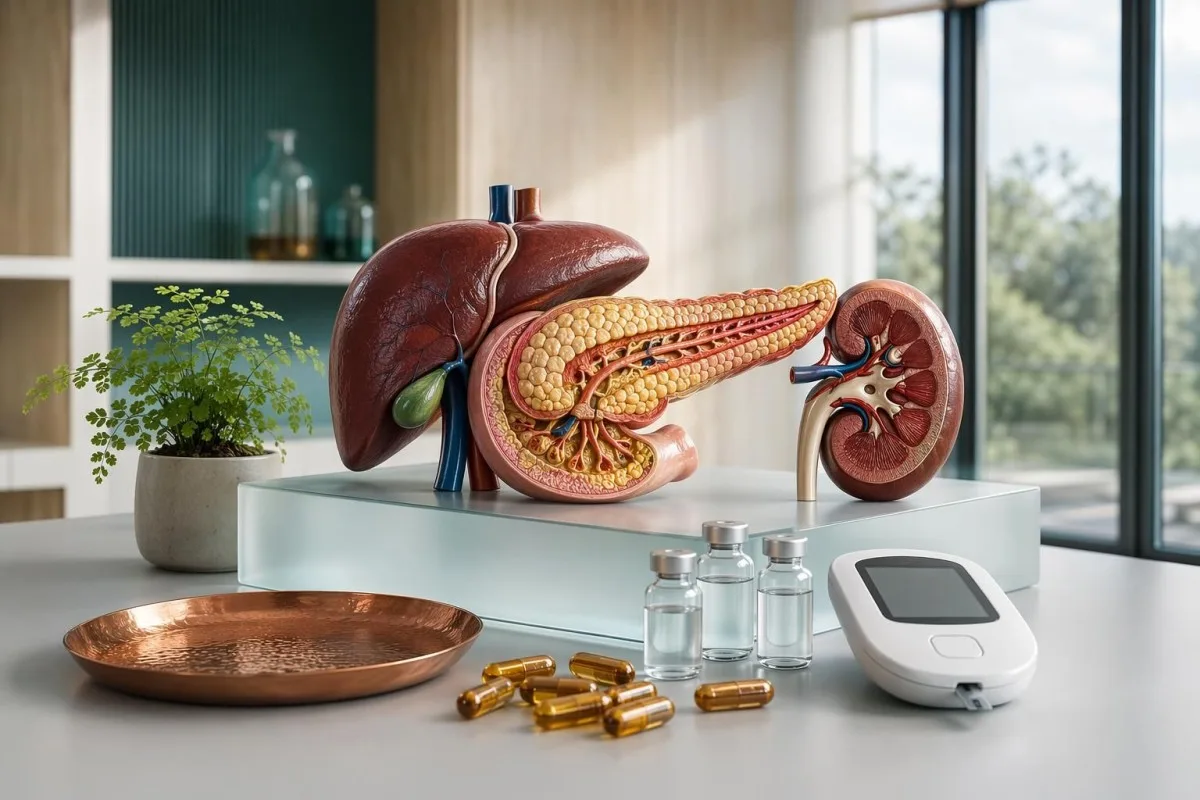
Berberine can move glucose markers in some people, but the safe way to judge response is with trends, not hope. Here is the lab pattern I want to see before anyone calls it a win.


- Berberine A1c should be checked after about 12 weeks, because HbA1c reflects roughly 8-12 weeks of red-cell glucose exposure.
- Fasting glucose below 100 mg/dL is usually normal, 100-125 mg/dL suggests prediabetes, and 126 mg/dL or higher on repeat testing meets a diabetes-range threshold.
- Fasting insulin has no universal diagnostic cutoff, but values above about 10-15 µIU/mL with high glucose often suggest insulin resistance.
- HOMA-IR is calculated as fasting glucose in mg/dL times fasting insulin in µIU/mL divided by 405; many clinicians treat results above 2.0-2.5 as insulin-resistance clues.
- Liver enzymes should be checked at baseline and rechecked if symptoms occur; ALT or AST above 3 times the lab upper limit deserves clinician review.
- Kidney function matters because dehydration, high-protein diets, diabetes, and medication combinations can distort creatinine, eGFR, and BUN results.
- Medication interactions are the biggest safety issue: insulin, sulfonylureas, anticoagulants, tacrolimus, cyclosporine, and multiple glucose-lowering drugs need clinician sign-off.
- Berberine supplement safety depends on product quality, dose, pregnancy status, kidney and liver history, and whether glucose is already near-normal.
How to track berberine for blood sugar without guessing
Berberine for blood sugar should be tracked with HbA1c at baseline and 12 weeks, fasting glucose sooner, and safety labs for liver and kidney function before problems appear. I also check fasting insulin or HOMA-IR when insulin resistance is the question. If you take insulin, sulfonylureas, blood thinners, transplant medicines, or several supplements, do not self-experiment quietly.
As of May 7, 2026, berberine is still a dietary supplement, not an approved substitute for diabetes medication. In our clinical review workflow at Kantesti AI, the useful question is not whether berberine is popular; it is whether your glucose trend improves without creating liver, kidney, or medication-risk signals.
A practical starting panel includes HbA1c, fasting glucose, fasting insulin, creatinine, eGFR, BUN, ALT, AST, ALP, GGT, bilirubin, and a lipid panel. If diabetes has already been diagnosed, I like comparing the new results with prior diabetes-range labs; our diabetes blood test guide explains which numbers diagnose versus monitor disease.
In my experience, the most misleading pattern is a person celebrating a 10 mg/dL fasting glucose drop while ALT has quietly doubled from 24 to 52 IU/L. That result may still be mild, but the direction matters; supplements deserve the same trend discipline we apply to prescriptions.
What HbA1c can and cannot prove after berberine
HbA1c is the main 12-week lab for berberine response, but it cannot prove that berberine caused the change. HbA1c below 5.7% is generally normal, 5.7-6.4% is prediabetes-range, and 6.5% or higher on appropriate testing is diabetes-range by American Diabetes Association criteria.
The American Diabetes Association Professional Practice Committee lists HbA1c 6.5% or higher as a diabetes diagnostic threshold when confirmed in the right clinical setting (ADA Professional Practice Committee, 2026). For readers near a cutoff, our HbA1c range guide goes deeper into why 5.6% and 5.7% can feel clinically different even when the lab flag barely changes.
A1c is not a glucose meter. It is affected by red-cell lifespan, iron deficiency, kidney disease, hemoglobin variants, recent transfusion, and pregnancy; that is why a patient with an A1c of 5.8% and fasting glucose of 132 mg/dL needs pattern review, not a single-number verdict.
The evidence for berberine is honestly mixed, but not empty. In a small clinical trial, Yin et al. reported meaningful reductions in HbA1c and fasting glucose among people with type 2 diabetes taking berberine, although the study size and design are not the same as the large cardiovascular-outcome trials we demand for licensed drugs (Yin et al., 2008).
When HbA1c and fingerstick readings disagree, I first check whether anemia, iron therapy, kidney dysfunction, or lab-unit confusion is present. Our article on HbA1c test accuracy is useful if your A1c looks too good, too bad, or simply odd compared with daily glucose.
Using fasting glucose to see earlier movement
Fasting glucose can show early movement within days to weeks, but it is noisier than HbA1c. A fasting glucose below 100 mg/dL is usually normal, 100-125 mg/dL suggests prediabetes, and 126 mg/dL or higher on repeat testing is diabetes-range.
A single fasting glucose of 112 mg/dL after poor sleep is not the same as six readings between 108 and 118 mg/dL under stable conditions. The morning liver glucose surge, late meals, alcohol, steroids, infection, sleep apnea, and night-shift schedules can all raise fasting glucose without proving berberine failure.
For a clean comparison, take readings after an 8-12 hour fast, before caffeine, exercise, or berberine. Our fasting blood sugar guide explains why morning glucose can be higher than expected even when evening meals look sensible.
I see this pattern often: fasting glucose falls from 118 to 103 mg/dL after four weeks, but post-meal glucose still reaches 190 mg/dL. That person may have improved hepatic insulin sensitivity while still struggling with meal glucose disposal; the next useful test is often a structured 1- or 2-hour post-meal reading.
If you use a continuous glucose monitor, compare the same time window before and after starting berberine. Our CGM versus fingerstick guide covers why interstitial readings may lag capillary glucose by roughly 5-15 minutes.
Fasting insulin, HOMA-IR, and C-peptide clues
Fasting insulin and HOMA-IR help show whether insulin resistance is improving, but they are not standardized diagnostic tests. Fasting insulin is often reported around 2-20 µIU/mL, while values above about 10-15 µIU/mL with high glucose commonly suggest excess insulin demand.
HOMA-IR is calculated as fasting glucose in mg/dL multiplied by fasting insulin in µIU/mL, then divided by 405. Many clinicians use a HOMA-IR above 2.0-2.5 as an insulin-resistance clue, but ethnicity, puberty, body composition, and assay method shift the meaning.
If fasting glucose improves while fasting insulin stays at 22 µIU/mL, I do not call that metabolic recovery. It may mean the pancreas is pushing hard to keep glucose acceptable; our insulin blood test guide explains why a normal glucose can hide high insulin demand.
C-peptide is useful when the question is insulin production rather than insulin resistance. A low or falling C-peptide in someone with high glucose is a different story from high C-peptide with high insulin; our C-peptide range guide separates those patterns.
Clinicians disagree on the perfect fasting insulin cutoff, and I am comfortable saying that out loud. In Kantesti reviews, we treat insulin as a trend marker: a drop from 18 to 10 µIU/mL with stable fasting glucose often carries more meaning than one isolated result labeled normal.
Liver enzymes to check before and after berberine
Liver safety checks for berberine should include ALT, AST, ALP, GGT, bilirubin, and albumin, ideally before starting if you already have fatty liver, heavy medication use, or abnormal labs. ALT or AST above 3 times the upper reference limit deserves clinician review.
ALT is usually more liver-specific than AST, but AST can rise from muscle injury after hard exercise. A 52-year-old marathon runner with AST 89 IU/L and ALT 31 IU/L may need creatine kinase checked before anyone blames the liver.
Some European and hepatology-focused references use lower healthy ALT thresholds than many lab reports, often near 30 IU/L for men and 19-25 IU/L for women. That is why I do not ignore an ALT of 48 IU/L just because the printed range says up to 56 IU/L; context beats the flag.
The reason we worry about ALT plus bilirubin is different from ALT alone. ALT 70 IU/L with normal bilirubin may be mild hepatocellular irritation, but ALT 250 IU/L with bilirubin 3.0 mg/dL and dark urine is a stop-and-call pattern, not a supplement-adjustment pattern.
If your panel already shows fatty liver clues, compare berberine plans with diet, weight, triglycerides, and alcohol exposure. Our liver function test guide walks through ALT, AST, ALP, and GGT patterns without treating every mild high as disaster.
Kidney function checks that keep the plan honest
Kidney function monitoring should include creatinine, eGFR, BUN, electrolytes, and urine albumin-to-creatinine ratio when diabetes risk is present. eGFR below 60 mL/min/1.73 m² for 3 months or longer is consistent with chronic kidney disease.
Creatinine is not purely a kidney number. A muscular person taking creatine may show creatinine 1.3 mg/dL with a reassuring cystatin C, while a frail older adult can have deceptively normal creatinine despite reduced filtration.
BUN rises with dehydration, gastrointestinal fluid loss, high-protein intake, corticosteroids, and reduced kidney perfusion. If BUN is 31 mg/dL, creatinine is 0.9 mg/dL, and urine is concentrated, I think hydration and protein load before I think berberine toxicity.
Diabetes risk changes the kidney conversation because albumin leakage can appear before creatinine rises. A urine albumin-to-creatinine ratio below 30 mg/g is usually normal, 30-300 mg/g is moderately increased, and above 300 mg/g is severely increased.
If your eGFR report worries you, compare it with age, body size, medication list, and prior values. Our eGFR plain-English guide and BUN-creatinine ratio guide are good companions for this section.
Medication-interaction red flags with berberine
Medication interactions are the highest-risk part of berberine supplement safety. Berberine may add to glucose-lowering effects and may affect drug transporters or liver enzymes, so insulin, sulfonylureas, anticoagulants, tacrolimus, cyclosporine, and complex medication lists need clinician oversight.
The hypoglycemia risk is not theoretical when a person combines berberine with insulin or sulfonylureas. A fasting glucose of 72 mg/dL with shakiness after adding 500 mg twice daily is not a success signal; it is a dose-and-medication review signal.
I am also cautious with warfarin, direct oral anticoagulants, clopidogrel, and aspirin stacks because bleeding risk is influenced by more than INR. Our blood thinner safety guide explains why INR, anti-Xa testing, platelets, kidney function, and symptoms all matter.
Tacrolimus, cyclosporine, antiarrhythmics, seizure medicines, and HIV or hepatitis antivirals should make you pause before taking berberine. These drugs often have narrow therapeutic windows; even a modest transporter or metabolism effect can be clinically annoying or dangerous.
If you take more than 5 regular medicines or more than 3 supplements, write the list down before starting. Our medication monitoring timeline and supplement timing guide can help you organize the conversation with your clinician.
Dose, timing, and fasting rules before labs
Most berberine studies use about 500 mg two or three times daily with meals, but product quality and tolerability vary. For fasting labs, keep the pre-test routine consistent and avoid taking berberine, caffeine, or exercise right before a fasting glucose comparison unless your clinician says otherwise.
I usually prefer one change at a time: do not start berberine, creatine, high-dose niacin, a ketogenic diet, and a new exercise block in the same week. When four variables move together, the lab trend becomes a detective story instead of a clean experiment.
A common approach is 500 mg with the largest meal for 3-7 days, then 500 mg twice daily if tolerated. Nausea, constipation, cramping, or loose stools often appear before lab toxicity, and pushing through severe gastrointestinal symptoms is rarely wise.
For fasting glucose, fasting insulin, triglycerides, and many metabolic panels, an 8-12 hour fast gives cleaner comparisons. Our fasting versus non-fasting guide explains which results shift after food and which barely move.
Water is allowed for most fasting labs and usually improves sample quality. Dehydration can falsely nudge BUN, albumin, sodium, hematocrit, and sometimes glucose upward, so do not turn a fasting test into a dehydration challenge.
Why lipids and fatty liver markers belong in the same review
Triglycerides, HDL, ALT, GGT, and fasting insulin often move together in insulin resistance, so they should be reviewed with berberine blood sugar labs. Triglycerides below 150 mg/dL are usually considered normal, while 150-499 mg/dL is elevated and 500 mg/dL or higher raises pancreatitis concern.
Lan et al. reviewed berberine trials and found improvements in glucose and lipid parameters, but many included studies were small and heterogeneous (Lan et al., 2015). That is the kind of evidence I treat as promising enough to measure carefully, not strong enough to replace prescribed therapy.
A useful metabolic response pattern is A1c down 0.3-0.7 percentage points, triglycerides down 20-50 mg/dL, fasting insulin down, and ALT stable or improved. A less reassuring pattern is glucose down but LDL-C up sharply, appetite suppressed by nausea, or kidney markers worse from dehydration.
The triglyceride-to-HDL ratio can be a rough insulin-resistance clue, but it behaves differently across ancestry groups and is not a diagnosis. Our high triglycerides guide explains why fasting status and recent carbohydrates can swing the result.
Fatty liver deserves its own plan rather than supplement roulette. If ALT, GGT, triglycerides, waist circumference, and fasting insulin all point in the same direction, our fatty liver diet guide is often the better next read.
Who should avoid berberine or get clinician sign-off
Pregnant people, breastfeeding parents, infants, transplant recipients, and people on high-risk medications should avoid berberine unless a qualified clinician specifically approves it. People with diabetes medications, chronic kidney disease, liver disease, or recurrent hypoglycemia also need medical supervision.
I am Thomas Klein, MD, and this is one of the areas where I sound more conservative than many supplement forums. Pregnancy and breastfeeding are not good times to test uncertain supplement pharmacology, and newborn bilirubin handling is a separate safety concern.
People using GLP-1 receptor agonists often ask whether berberine can speed weight or A1c changes. Maybe, but nausea, low intake, dehydration, gallbladder symptoms, and overly rapid medication stacking are real issues; our GLP-1 lab tracking guide covers the labs I watch.
Anyone with eGFR below 60 mL/min/1.73 m², ALT above 2 times the upper limit, bilirubin elevation, or unexplained anemia should pause before starting. A supplement is optional; a worsening organ-safety signal is not.
For lower-risk adults, our AI blood test platform can organize the baseline pattern before you discuss berberine with your clinician. The goal is not permission from an app; it is walking into the appointment with clean, comparable data.
How to tell real improvement from lab noise
A real berberine response should show a consistent pattern across time, not one flattering result. HbA1c changes below about 0.2 percentage points, fasting glucose shifts under 5 mg/dL, and triglyceride changes under 10-15% may be ordinary biological or laboratory variation.
Lab variability is why I like a baseline and a 12-week comparison, ideally from the same laboratory. Switching labs can change method, reference range, and units; a result may look improved when only the assay changed.
In our analysis of 2M+ blood test uploads across 127+ countries, the repeated problem is not lack of data; it is mismatched context. A fasting insulin drawn at 7:30 a.m. after 10 hours fasting should not be compared with one drawn at noon after coffee and a workout.
A convincing 90-day response might look like A1c 6.1% to 5.7%, fasting glucose 111 to 99 mg/dL, fasting insulin 16 to 10 µIU/mL, triglycerides 190 to 145 mg/dL, and ALT 42 to 31 IU/L. That is a pattern.
If you like seeing trends visually, our blood test variability guide and year-over-year tracking guide explain when a change is likely biological rather than noise.
Lab or symptom results that mean stop and call
Stop berberine and contact a clinician if you develop repeated glucose below 70 mg/dL, jaundice, severe abdominal pain, dark urine, fainting, confusion, allergic swelling, or a rapid kidney or liver lab decline. These are not normal adjustment symptoms.
A glucose below 70 mg/dL is hypoglycemia, and below 54 mg/dL is clinically significant hypoglycemia in diabetes care language. If berberine is layered on insulin or sulfonylureas, low glucose can arrive before the 12-week A1c ever reports improvement.
ALT or AST above 3 times the upper limit, bilirubin above 2 mg/dL, or new jaundice deserves prompt evaluation. Severe right-upper abdominal pain with vomiting is not a detox reaction; it needs medical assessment.
Kidney red flags include a sudden creatinine rise of 0.3 mg/dL or more, a large eGFR drop, persistent vomiting or diarrhea, and very low urine output. Dehydration plus glucose-lowering medication can turn a mild supplement side effect into a bigger problem.
If a lab report uses critical flags, do not wait for a trend line. Our critical blood test result guide explains which values usually require same-day action.
How Kantesti AI reads berberine blood sugar labs
Kantesti AI interprets berberine blood sugar labs by reading glucose, HbA1c, insulin, liver, kidney, lipid, and medication-context patterns together. Our platform does not diagnose from one marker; it highlights whether the pattern is improving, conflicting, or unsafe.
Kantesti's neural network analyzes uploaded blood test PDFs and photos across more than 15,000 biomarkers in about 60 seconds. For supplement monitoring, the key advantage is pattern detection: A1c, fasting glucose, insulin, ALT, eGFR, triglycerides, and medication warnings are not treated as separate silos.
Our clinicians and data science team built medical guardrails around common traps, including unit conversion errors, age-specific kidney interpretation, and A1c-glucose disagreement. You can read more about our clinical standards on medical validation and the wider biomarker guide.
Kantesti AI is CE marked and built under HIPAA, GDPR, and ISO 27001 controls, which matters when people upload real lab reports rather than toy examples. We also publish technical validation work, including the Kantesti AI engine benchmark, because medical AI should be inspectable.
The practical point is simple: if berberine improves glucose while worsening safety markers, our system should make that tension visible. A green glucose number should never hide a yellow liver or kidney pattern.
A practical 90-day berberine lab schedule
A safe 90-day plan checks baseline labs first, early safety if risk is higher, and HbA1c at week 12. Most people do not need weekly full panels; they need the right labs at the right time, with symptom-triggered testing when something feels wrong.
At baseline, I would consider HbA1c, fasting glucose, fasting insulin, CMP, lipid panel, creatinine with eGFR, BUN, electrolytes, and urine albumin-to-creatinine ratio if diabetes or hypertension risk is present. Add pregnancy testing when relevant; assumptions are not a safety plan.
At weeks 2-4, high-risk patients should focus on home glucose, symptoms, hydration, and medication effects. If insulin, sulfonylureas, anticoagulants, transplant medicines, kidney disease, or prior liver enzyme elevation are in the picture, earlier clinician-directed labs make sense.
At week 12, repeat HbA1c, fasting glucose, fasting insulin if it was abnormal, CMP, kidney markers, and lipids. A 0.3-0.5 percentage point A1c drop may be meaningful if diet, weight, medications, and lab method were stable.
You can upload baseline and follow-up reports to Try Free AI Blood Test Analysis if you want a structured comparison before your appointment. I still want medication changes handled by your own clinician, especially when glucose is already low or diabetes drugs are involved.
Research publications, evidence limits, and next steps
Berberine has plausible glucose and lipid effects, but the evidence base is still smaller and less definitive than for licensed diabetes medications. I treat berberine as a measurable intervention: if the labs improve safely, we acknowledge it; if they do not, we stop romanticizing it.
Thomas Klein, MD reviews Kantesti educational content with our physician advisory process, because supplement articles can easily drift into overclaiming. You can see the people behind the work on our Medical Advisory Board page and learn more about Kantesti LTD as an organization.
The best next step is not buying a larger bottle. It is setting a baseline, choosing a dose you can tolerate, avoiding high-risk combinations, and repeating the right labs at a biologically sensible interval.
Kantesti AI also maintains a broader research library for lab interpretation methods and patient education. Related Kantesti research publications include Kantesti AI Research Group. (2026). B Negative Blood Type, LDH Blood Test & Reticulocyte Count Guide. Figshare. https://doi.org/10.6084/m9.figshare.31333819 and Kantesti AI Research Group. (2026). Diarrhea After Fasting, Black Specks in Stool & GI Guide 2026. Figshare. https://doi.org/10.6084/m9.figshare.31438111.
My bottom line as a physician is practical: berberine may help some glucose patterns, but the labs decide whether it is helping you. Keep the monitoring boring, specific, and documented.
Frequently Asked Questions
How long does berberine take to lower A1c?
Berberine should not be judged by HbA1c until about 12 weeks, because HbA1c reflects roughly 8-12 weeks of glucose exposure in red cells. Some people see fasting glucose changes within 1-4 weeks, but that does not prove the 3-month A1c will improve. A meaningful A1c drop is often at least 0.3-0.5 percentage points when diet, medication, weight, and lab method are stable.
What labs should I check before taking berberine for blood sugar?
Before taking berberine for blood sugar, a sensible baseline includes HbA1c, fasting glucose, fasting insulin, creatinine, eGFR, BUN, electrolytes, ALT, AST, ALP, GGT, bilirubin, albumin, and a lipid panel. If diabetes, high blood pressure, or kidney risk is present, urine albumin-to-creatinine ratio adds useful early kidney information. People on insulin, sulfonylureas, anticoagulants, tacrolimus, or cyclosporine should speak with a clinician before starting.
Can berberine cause low blood sugar?
Berberine may contribute to low blood sugar when combined with insulin, sulfonylureas, or multiple glucose-lowering therapies. A glucose below 70 mg/dL is hypoglycemia, and a value below 54 mg/dL is clinically significant in diabetes care. Shakiness, sweating, confusion, faintness, or repeated low readings after starting berberine should trigger a medication and supplement review.
Does berberine affect liver enzymes?
Most people do not develop major liver enzyme problems from berberine, but ALT, AST, ALP, GGT, and bilirubin should be monitored when there is fatty liver, alcohol exposure, polypharmacy, or prior abnormal results. ALT or AST above 3 times the upper reference limit deserves clinician review and usually stopping nonessential supplements while the cause is assessed. Jaundice, dark urine, severe itching, or right-upper abdominal pain should be treated as warning symptoms.
Is fasting insulin useful when taking berberine?
Fasting insulin is useful when the goal is to track insulin resistance rather than glucose alone. Many labs report fasting insulin around 2-20 µIU/mL, but a value above about 10-15 µIU/mL with high fasting glucose often suggests excess insulin demand. HOMA-IR, calculated as fasting glucose in mg/dL times fasting insulin in µIU/mL divided by 405, often becomes more informative than insulin alone.
Should I stop metformin if berberine lowers my glucose?
Do not stop metformin or any prescribed diabetes medication just because berberine lowers glucose. Medication changes should be based on repeated glucose data, HbA1c, kidney function, side effects, and clinician review, especially if fasting glucose is near 70-90 mg/dL. Berberine is a supplement, while metformin dosing decisions require medical context and follow-up.
Who should not take berberine?
Berberine should generally be avoided during pregnancy, breastfeeding, infancy, and without specialist advice in transplant recipients or people taking narrow-therapeutic-index medicines. People using insulin, sulfonylureas, warfarin, direct oral anticoagulants, tacrolimus, cyclosporine, or several interacting medicines need clinician approval before starting. Chronic kidney disease with eGFR below 60 mL/min/1.73 m² or active liver enzyme elevation also raises the safety threshold.
Should I stop berberine before surgery or a medical procedure?
Tell the surgeon, anesthesiologist, and prescribing clinician that you use berberine as soon as a procedure is planned. They may advise pausing it because of possible effects on blood glucose and interactions with medicines; follow their individualized instructions rather than stopping prescribed diabetes treatment yourself.
Can I use a home glucose meter to see whether berberine is helping before my A1c changes?
Yes, a home glucose meter can show earlier patterns, especially fasting glucose and 1- to 2-hour after-meal readings. Track at the same times for 2 weeks, but do not adjust diabetes medicines based on home numbers without clinician guidance.
Get AI-Powered Blood Test Analysis Today
Join over 2 million users worldwide who trust Kantesti for instant, accurate lab test analysis. Upload your blood test results and receive comprehensive interpretation of 15,000+ biomarkers in seconds.
📚 Referenced Research Publications
Klein, T., Mitchell, S., & Weber, H. (2026). B Negative Blood Type, LDH Blood Test & Reticulocyte Count Guide. Kantesti AI Medical Research.
Klein, T., Mitchell, S., & Weber, H. (2026). Diarrhea After Fasting, Black Specks in Stool & GI Guide 2026. Kantesti AI Medical Research.
📖 External Medical References
American Diabetes Association Professional Practice Committee (2026). Standards of Care in Diabetes—2026. Diabetes Care.
⚕️ Medical Disclaimer
This article is for educational purposes only and does not constitute medical advice. Always consult a qualified healthcare provider for diagnosis and treatment decisions.
E-E-A-T Trust Signals
Experience
Physician-led clinical review of lab interpretation workflows.
Expertise
Laboratory medicine focus on how biomarkers behave in clinical context.
Authoritativeness
Written by Dr. Thomas Klein with review by Dr. Sarah Mitchell and Prof. Dr. Hans Weber.
Trustworthiness
Evidence-based interpretation with clear follow-up pathways to reduce alarm.