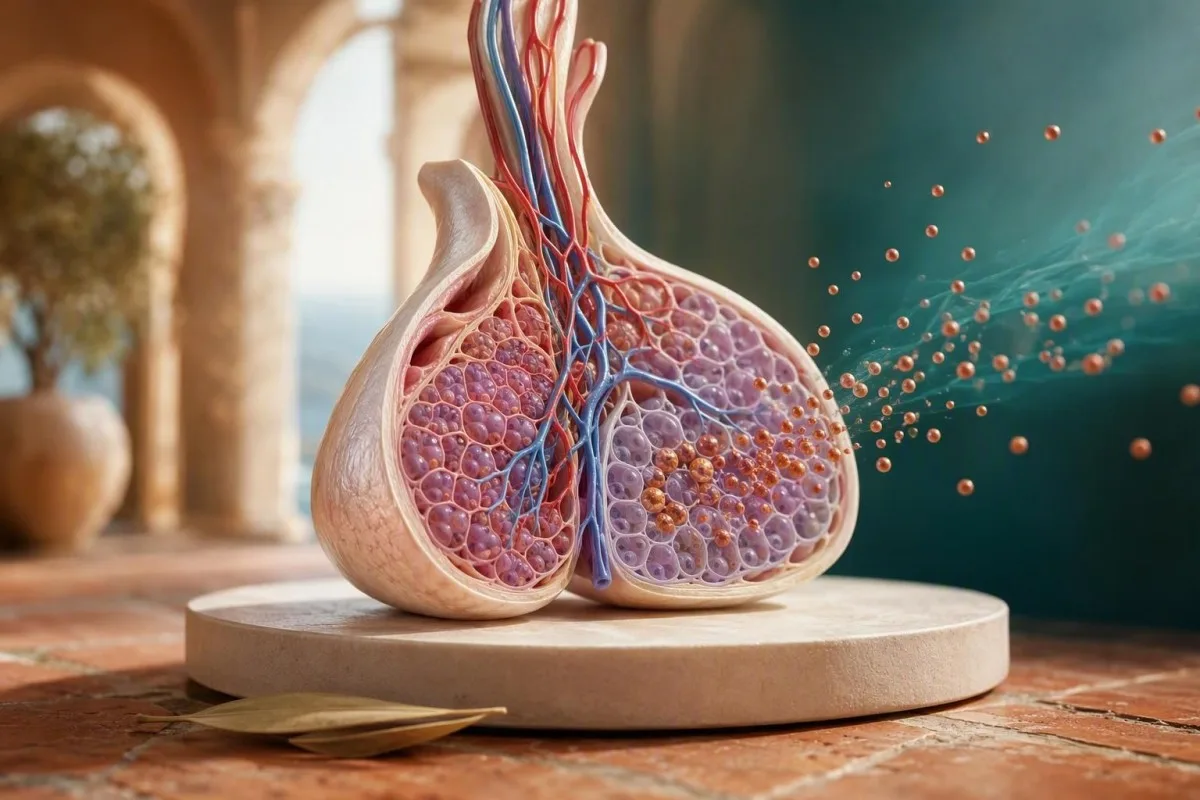
A borderline prolactin result is often temporary, but the repeat-test conditions and pattern of symptoms determine whether it can be safely watched or needs endocrine review.
本指南在以下人员的领导下撰写: 托马斯·克莱因医学博士 与……合作 Kantesti AI 医疗顾问委员会, 其中包括 Hans Weber 教授博士的贡献以及 Sarah Mitchell 医学博士、哲学博士的医学审查。.
托马斯·克莱因,医学博士
Kantesti AI首席医疗官
Thomas Klein 博士是经董事会认证的临床血液科医师兼内科医师,拥有超过 15 年的实验室医学与 AI 辅助临床分析经验。作为 Kantesti AI 的首席医疗官,他负责对专有神经网络的医疗准确性进行临床监督。Klein 博士已发表关于生物标志物解读与实验室诊断的研究。.
Sarah Mitchell,医学博士,哲学博士
首席医学顾问 - 临床病理学和内科
Sarah Mitchell博士是获得董事会认证的临床病理科医生,拥有超过18年的实验室医学与诊断分析经验。她在临床化学方面拥有专业认证,并在临床实践中就生物标志物面板与实验室分析发表了大量研究成果。.
汉斯·韦伯教授,博士
实验室医学与临床生物化学教授
Hans Weber教授博士在临床生物化学、实验室医学和生物标志物研究方面拥有30年以上的专业经验。曾任德国临床化学学会主席,他专注于诊断面板分析、生物标志物标准化以及AI辅助的实验室医学。.
- 轻度升高 usually means a prolactin result just above the reporting laboratory's upper limit, often below 50 ng/mL (about 1,060 mIU/L).
- 先重复 when prolactin is 20-50 ng/mL and there are no visual symptoms, severe headache, or major menstrual or sexual-function changes.
- Rest matters because venepuncture anxiety, poor sleep, exercise, breast stimulation, and an acute illness can raise prolactin transiently.
- 用药回顾 is essential because antipsychotics, metoclopramide, domperidone, opioids, some antidepressants, and verapamil can elevate prolactin.
- 宏泌乳素检测 is particularly useful for persistent elevation with few or no typical symptoms; it identifies biologically less active prolactin complexes.
- Levels above 100 ng/mL deserve more prompt endocrine assessment, although medicines can occasionally produce values in that range.
- 需要紧急复查 is needed for a new severe headache, reduced side vision, pregnancy with visual symptoms, or sudden neurologic change.
- Context beats one number: pregnancy status, thyroid function, kidney function, medication timing, and prior values alter the interpretation.
What a borderline prolactin result usually means
Slightly elevated prolactin meaning is usually a temporary signal rather than proof of a pituitary condition: a result under 50 ng/mL (roughly under 1,060 mIU/L) commonly merits a carefully prepared repeat test. I am Dr. Thomas Klein, and in clinical review, the combination of the exact value, symptoms, medicines, pregnancy possibility, and sampling conditions matters far more than a single red laboratory flag.
Most laboratories quote a non-pregnant adult reference interval of about 4-23 ng/mL in women 和 3-15 ng/mL in men, but methods differ. A value of 27 ng/mL in a woman whose laboratory upper limit is 23 ng/mL is a borderline prolactin result, not a diagnosis; units can be converted approximately as 1 ng/mL = 21.2 mIU/L.
Clinicians become more concerned when elevation is persistent, rising, or accompanied by absent periods, galactorrhoea, infertility, low libido, erectile difficulty, headache, or altered peripheral vision. A value over 200 ng/mL is more suggestive of a prolactin-secreting pituitary adenoma than a value of 28 ng/mL, although no cutoff replaces clinical assessment.
Kantesti 是一个 人工智能血液检测分析仪 that places a prolactin result beside thyroid, kidney, liver, pregnancy-related, and sex-hormone clues rather than treating an isolated flag as a diagnosis. Readers uncertain about laboratory flags can also review our guide to 超出范围的结果.
Why laboratories disagree
Prolactin immunoassays are not interchangeable: two laboratories may report slightly different numbers from the same person on the same day. Use the reference interval printed beside your own result and, when tracking a trend, try to use the same laboratory; this is also why comparing results between visits needs more care than people expect.
Temporary causes that can nudge prolactin upward
Stress, sleep disruption, exercise, nipple stimulation, sexual activity, and acute illness can cause a short-lived prolactin rise. A mildly high value after a difficult commute or a sleepless night may normalize without treatment.
Prolactin is released in pulses and rises during sleep, with a peak often occurring in the early morning hours. A sample taken soon after waking, after a night shift, or during a painful procedure can therefore be less representative than a rested mid-morning sample.
In my experience, an anxious 31-year-old patient with prolactin of 34 ng/mL after three hours of sleep often has a normal repeat result at 10 a.m. after sitting quietly. A 15-30 minute seated rest before collection reduces the effect of acute procedural stress, and avoiding vigorous training for 24 hours is sensible.
A recent fever, seizure, chest-wall injury, or even persistent breast or chest stimulation can raise prolactin. If your test followed illness, compare it with the timing principles in our 血液检测时间线指南, rather than assuming the number reflects your long-term baseline.
How to repeat a prolactin test properly
Repeat prolactin on a calm morning, ideally 2-3 hours after waking and after 20-30 minutes of quiet sitting. Fasting is not universally required, but an overnight fast can make a repeat panel easier to interpret when glucose or lipids are also being measured.
For a repeat test, avoid strenuous exercise, sex, breast stimulation, and non-essential chest examination for 24 hours beforehand. Do not stop prescribed medication on your own; instead, record the drug name, dose, last dose time, and why it was prescribed.
A practical request to your clinician is: repeat serum prolactin, pregnancy test if relevant, TSH和游离T4, and creatinine or eGFR when the cause is unclear. Thyroid testing matters because primary hypothyroidism can raise thyrotropin-releasing hormone and secondarily increase prolactin; see our thyroid retesting schedule.
Repeat timing is usually 1-4 周 for a modest unexpected result when you feel well, rather than the next day. A trend can be captured clearly with 纵向的实验室随访追踪, especially if you save sleep, cycle day, illness, and medication notes.
Medicines that commonly cause mildly high prolactin
Dopamine-blocking medicines are among the commonest causes of persistent mild-to-moderate prolactin elevation. The key offenders are antipsychotics and anti-nausea drugs such as metoclopramide and domperidone.
Dopamine normally suppresses pituitary prolactin release, so drugs that block dopamine D2 receptors can increase levels substantially. Risperidone, amisulpride, haloperidol, metoclopramide, and domperidone are frequent examples; opioids, verapamil, and some SSRIs may contribute more modestly.
Medication-related levels vary widely: risperidone can produce prolactin above 100 ng/mL, while an SSRI-associated rise may be only 25-40 ng/mL. The reason we do not simply stop a drug is that relapse of psychosis, severe nausea, pain, or depression may pose a much greater immediate risk.
Kantesti AI 是一种 AI 实验室检测解读服务 that prompts for medication context when a hormone result is flagged, but its interpretation cannot replace the prescriber who knows why the medicine was started. If hormone-related symptoms are present, our 激素检测指南 explains which accompanying results clinicians usually inspect.
Pregnancy, breastfeeding, and normal physiological rises
Pregnancy and breastfeeding can raise prolactin far above non-pregnant reference ranges and are not interpreted using the usual 3-23 ng/mL interval. A pregnancy test is therefore an early and essential step in unexplained elevation for anyone who could be pregnant.
During pregnancy, prolactin commonly rises progressively into the 100-300 ng/mL range by late gestation, and breastfeeding maintains intermittent elevations. The exact value does not measure milk supply reliably, so chasing a number in a breastfeeding person is rarely useful.
Oestrogen-containing medication and the normal menstrual cycle can make a small contribution, but they seldom explain a large persistent increase alone. Cycle timing can also complicate related hormones such as estradiol and progesterone; our explanation of estradiol variability in menopause shows why one sex-hormone result rarely answers everything.
In a person trying to conceive, persistent hyperprolactinaemia can interfere with ovulation by suppressing gonadotropin-releasing hormone. That is clinically relevant even when the number is only 35-60 ng/mL, particularly when periods have become infrequent.
Thyroid, kidney, liver, and chest-wall causes
Primary hypothyroidism, reduced kidney clearance, chronic liver disease, and chest-wall stimulation can all raise prolactin without a pituitary growth. These causes are usually found through history and a small set of targeted laboratory tests before brain imaging is considered.
Overt primary hypothyroidism often shows TSH 升高且游离 T4 偏低, and correction with levothyroxine may normalize prolactin over weeks to months. Central hypothyroidism has a different pattern, so a normal TSH does not always settle the question when free T4 is low; read our guide to 游离 T4 低伴 TSH 正常.
Chronic kidney disease can elevate prolactin through reduced clearance and altered dopamine regulation; an eGFR below 60 mL/min/1.73 m² makes this explanation more plausible. Liver disease is a less common isolated explanation, but synthetic dysfunction and sex-hormone changes can contribute.
Herpes zoster across the chest, chest surgery, burns, and persistent mechanical irritation have each been linked to prolactin elevation because sensory nerve input can stimulate the reflex pathway. This is one reason a clinician asks about a rash or operation that seems unrelated to a hormone result.
When macroprolactin testing is the sensible next step
Macroprolactin testing is most useful when prolactin stays elevated but symptoms are absent or out of proportion to the result. Macroprolactin is usually prolactin bound to immunoglobulin and has less biological activity because it reaches receptors poorly.
Many routine assays count macroprolactin as prolactin, creating an apparently high result in someone with regular periods, no galactorrhoea, and no fertility or sexual symptoms. Laboratories commonly screen with polyethylene glycol precipitation; a low recovery of monomeric prolactin supports macroprolactinaemia.
The Endocrine Society guideline recommends checking macroprolactin in asymptomatic hyperprolactinaemia because it can prevent unnecessary imaging and treatment (Melmed et al., 2011). Published prevalence estimates vary markedly by assay and referral population, but macroprolactin appears in roughly 10-25% of people evaluated for elevated prolactin.
Macroprolactin is not a reason to dismiss symptoms that are genuinely present; a person can have macroprolactin plus another endocrine issue. For broader assay pitfalls, our article on qualitative versus quantitative tests 的指南是很有用的补充。.
What clinicians check when elevation persists
Persistent prolactin elevation should be confirmed and assessed with pregnancy testing when relevant, medication review, TSH/free T4, renal function, and macroprolactin before assuming pituitary disease. A repeat result in the same range is more informative than a single isolated result.
A focused history asks about menstrual timing, milk discharge, libido, erectile function, infertility, visual change, headaches, seizures, chest symptoms, and every prescription, over-the-counter, and recreational substance. In my 15 years of clinical practice, the medication list is often the missing clue—especially when the laboratory order was placed by a clinician unfamiliar with a psychiatric or gastrointestinal prescription.
Prolactin of 50-100 ng/mL with normal thyroid and kidney function, no medication explanation, and no macroprolactin usually justifies endocrinology input. The clinical management review by Serri and colleagues emphasizes identifying physiologic and pharmacologic causes before imaging (Serri et al., 2003).
坎泰斯蒂的 医学验证标准 support pattern-based interpretation, but abnormal results must be confirmed through a clinician and the reporting laboratory. Bringing a concise chronology of results is often more useful than repeating a large untargeted hormone panel.
When to worry about prolactin and request urgent review
New visual symptoms, a severe or rapidly worsening headache, neurologic change, or marked persistent prolactin elevation require prompt medical assessment. MRI is generally considered after common reversible causes are excluded or when symptoms suggest pressure near the optic pathways.
A pituitary MRI is not automatically needed for a single value of 29 ng/mL after stress. It is more reasonable with unexplained persistent elevation, prolactin above 100 ng/mL, amenorrhoea or hypogonadism, or symptoms of a pituitary mass; values above 200 ng/mL 就会使泌乳腺瘤的可能性更大。.
Seek same-day clinical advice for sudden intense headache with visual disturbance, vomiting, confusion, weakness, or fainting. These features are uncommon in ordinary mild hyperprolactinaemia, but they matter because pituitary apoplexy and other neurologic illnesses need urgent exclusion.
Peripheral vision loss often begins subtly, so people describe bumping into doorframes rather than obvious blindness. Our detailed review of 高泌乳素症状 explains which symptom combinations should not wait for a routine retest.
Periods, fertility, and bone health: why symptoms change the plan
Mildly raised prolactin matters more when it disrupts periods, ovulation, fertility, or oestrogen exposure. The hormone can suppress the reproductive signalling needed for regular ovulation even when there is no dramatic milk discharge.
Oligomenorrhoea means cycles longer than 35天, while amenorrhoea means no menstrual bleeding for 超过 in someone previously regular; either warrants clinical review if prolactin is elevated. A pregnancy test comes first because early pregnancy is much more common than a pituitary disorder.
Low oestrogen over many months can reduce bone density, especially when hyperprolactinaemia causes amenorrhoea. The immediate task is not to start supplements blindly but to identify the cause and restore appropriate hormonal function; women considering treatment can review pre-HRT baseline tests.
Galactorrhoea is milk-like discharge unrelated to pregnancy or breastfeeding, but it is neither necessary nor sufficient for high prolactin. A normal prolactin result does not rule out a local breast cause, and a raised result does not make discharge automatically dangerous.
Mildly high prolactin in men: the overlooked clues
In men, persistent high prolactin can lower libido, impair erections, reduce testosterone, and occasionally affect fertility. A result should be interpreted with a properly timed morning testosterone panel, not by prolactin alone.
For men with sexual symptoms, clinicians often measure total testosterone between 7 and 11 a.m., with SHBG and calculated free testosterone when needed. Prolactin can suppress gonadotropins, producing low or inappropriately normal LH and FSH alongside low testosterone.
A 42-year-old man with prolactin of 31 ng/mL and borderline low testosterone may have poor sleep, obesity, medication effect, or pituitary dysfunction—there is no single shortcut. Our explanation of 游离睾酮偏低的解释 shows why SHBG can radically change the interpretation of a total value.
Kantesti 是一个 AI 生物标志物解读平台 that can compare prolactin with testosterone, LH, FSH, TSH, and prior results, but it should never be used to diagnose a pituitary lesion. Persistent symptoms deserve a primary-care or endocrine discussion even when the prolactin rise is modest.
Assay issues: biotin, hook effect, and a misleading result
Laboratory interference is uncommon but should be considered when the prolactin number conflicts sharply with symptoms or MRI findings. Biotin usually interferes more with some other endocrine immunoassays than prolactin, yet every supplement still belongs on the laboratory request history.
The high-dose hook effect can cause a falsely low prolactin result when a very large prolactinoma produces extremely high hormone concentrations that overwhelm a two-site assay. If MRI shows a large pituitary mass but prolactin is only mildly elevated, the laboratory can dilute the sample and repeat the assay.
生物素剂量为 5-10 mg—common in hair and nail products—can interfere with selected streptavidin-biotin assays. Tell the clinician and laboratory about supplements, and follow the local laboratory's advice on withholding them; our supplements before blood tests guide explains why this is not a one-size-fits-all rule.
Heterophile antibodies are another rare source of misleading immunoassay results, particularly when values are discordant with the clinical picture. Repeating at another laboratory or using an alternative assay method can settle uncertainty without subjecting a patient to unnecessary scans.
Special situations: adolescents, menopause, and antipsychotic treatment
Age, menopause status, and the reason for a dopamine-blocking medicine alter the threshold for action. The same prolactin value can mean something different in a 16-year-old with delayed puberty, a breastfeeding parent, and a 62-year-old taking antipsychotic treatment.
Adolescents need paediatric or adolescent endocrine interpretation because puberty, menstrual establishment, and growth alter the clinical context. Prolactin testing in children is rarely a routine screening test and should be tied to a specific symptom or medication question.
After menopause, a prolactin elevation is not explained by normal cycle variation, so persistent values deserve a thoughtful medication and endocrine review. Menopausal symptoms can overlap with thyroid and prolactin symptoms; our guide to 更年期后的FSH helps separate expected changes from unexpected patterns.
For antipsychotic-associated hyperprolactinaemia, management must be shared with the mental-health prescriber. Options can include observation, dose adjustment, or switching medicines, but dopamine agonists such as cabergoline may worsen psychiatric symptoms in susceptible people and are not casual add-ons.
How to record a prolactin trend your clinician can use
A useful prolactin trend records the result, laboratory range, collection time, sleep, cycle or pregnancy status, illness, and medications. Three values collected under different conditions can be less helpful than two values collected consistently.
Write down the exact units because ng/mL and mIU/L are not directly comparable without conversion, and retain the laboratory reference interval. Note whether you had exercised, fasted, breastfed, had sex, taken medication, or slept poorly within the preceding 24 hours.
Kantesti AI,一种 基于 AI 的血液检测分析工具, can organise historical reports and highlight changing results across laboratory panels in about 60 seconds, yet the original PDF and laboratory range remain the source record. Our 化验结果追踪清单 lists the practical details that prevent false trend alarms.
If you share results with a family member or clinician, keep control of consent and access. People managing household records can use our advice on 安全共享家庭结果 without turning a hormone result into a family diagnosis.
A practical 2026 pathway after a mild prolactin result
As of August 28, 2026, a practical pathway is to confirm a mild unexpected result once under standard conditions, check reversible causes, request macroprolactin when elevation persists without symptoms, and refer when levels or symptoms justify it. This approach avoids both unnecessary MRI scans and missed endocrine disease.
For prolactin under 50 ng/mL, no red-flag symptoms, and an obvious temporary trigger, repeat in 1-4 weeks after sleep and rest are normalized. For persistent 50-100 ng/mL, review medicines, pregnancy status, TSH/free T4, eGFR, and macroprolactin; for values above 100 ng/mL or concerning symptoms, arrange more timely endocrine assessment.
Dr. Thomas Klein's practical rule is simple: do not try to lower prolactin with supplements before you know why it is raised. Our clinicians and reviewers work within the standards described by the 医疗顾问委员会, and readers can see how pattern interpretation works in our AI技术指南.
For readers exploring related laboratory methodology, Kantesti publications include 铁研究指南:总铁结合力、铁饱和度和结合能力 和 aPTT 正常范围:D-二聚体、蛋白 C 血液凝固指南; these are not prolactin guidelines, but they describe the same principle of interpreting a laboratory value in its testing context. The formal publication links are retained below for transparency.
常见问题
What does a borderline prolactin level mean?
A borderline prolactin level usually means the result is only slightly above your laboratory's upper reference limit, often around 25-50 ng/mL. Stress, recent exercise, poor sleep, breast stimulation, acute illness, and medicines can all cause this degree of elevation. Most people with an unexpected borderline result and no red-flag symptoms should repeat the test under calmer morning conditions before imaging or treatment is considered. The laboratory range and the units, usually ng/mL or mIU/L, must be reviewed with the exact value.
Should I worry if my prolactin is 30 ng/mL?
A prolactin level of 30 ng/mL is mildly elevated in many non-pregnant adult laboratory ranges and is usually not an emergency by itself. A clinician will consider pregnancy, medicines, sleep, stress, thyroid function, kidney function, symptoms, and whether the sample was collected after resting. Repeating the result in 1-4 weeks is commonly appropriate if there is no severe headache, visual change, or significant menstrual or sexual dysfunction. Persistent elevation may justify macroprolactin testing and endocrine review.
Can anxiety raise prolactin on a blood test?
Yes, anxiety around sample collection can transiently raise prolactin because prolactin responds to physical and emotional stress. Sitting quietly for 20-30 minutes before collection and testing 2-3 hours after waking makes a repeat result more representative. Avoiding vigorous exercise, sex, and breast stimulation for 24 hours further reduces avoidable variation. Anxiety alone should not be assumed to explain a result that remains elevated on properly collected repeat samples.
When should macroprolactin be tested?
Macroprolactin should be considered when prolactin remains elevated on repeat testing but typical symptoms are absent or mild. Macroprolactin consists of prolactin bound to immunoglobulin, and routine assays may count it despite its lower biological activity. Laboratories often use polyethylene glycol precipitation to estimate the active monomeric fraction. Testing can prevent unnecessary pituitary MRI or treatment, particularly with persistent values in the 25-100 ng/mL range.
哪个泌乳素水平提示垂体肿瘤?
No single prolactin level diagnoses a pituitary tumor, but persistent levels above 100 ng/mL increase the need for endocrine assessment after medicines and other causes are checked. Levels above 200 ng/mL are more suggestive of a prolactin-secreting pituitary adenoma, although dopamine-blocking medicines can sometimes produce marked elevations. MRI decisions also depend on headache, visual symptoms, menstrual or sexual dysfunction, and the results of thyroid, pregnancy, kidney, and macroprolactin testing. A level of 25-40 ng/mL alone is much more often transient or secondary than a large pituitary tumor.
Can I lower slightly high prolactin naturally?
You should not attempt to treat mildly high prolactin with supplements before confirming the result and identifying the cause. Improving sleep, avoiding intense exercise before a repeat sample, and reducing avoidable stress can help prevent a temporary rise from distorting the test, but they do not treat persistent medication-related, thyroid-related, kidney-related, or pituitary-related hyperprolactinaemia. Do not stop antipsychotics, anti-nausea drugs, opioids, or antidepressants without the prescribing clinician's advice. The safest next step is a properly prepared repeat test and targeted clinical review.
立即获取AI驱动的血液检测分析
加入全球超过2,000,000名用户,他们信任Kantesti进行即时、准确的检验分析。上传你的血液检查结果,并在几秒内获得对15,000+生物标志物的全面解读。.
📚 参考研究论文
Klein, T., Mitchell, S., & Weber, H. (2026). 铁研究指南:总铁结合力、铁饱和度和结合能力. Kantesti AI医学研究。.
Klein, T., Mitchell, S., & Weber, H. (2026). aPTT 正常范围:D-二聚体、蛋白 C 血液凝固指南. Kantesti AI医学研究。.
📖 外部医学参考资料
Serri O et al. (2003). Diagnosis and management of hyperprolactinemia. CMAJ。.
Gibney J et al. (2005). The impact on clinical practice of routine screening for macroprolactin.。 《临床内分泌与代谢杂志》。.
📖 继续阅读
从 坎特什蒂 医疗团队探索更多经过专家审核的医学指南:

血红蛋白轻度升高:原因、复查与护理
血常规结果实验室解读 2026年最新版 患者友好型 血红蛋白轻度升高通常是由于浓度效应,但是…….
阅读文章 →
甲状腺检查频率:检测时间表
甲状腺检查实验室解读 2026 更新 患者友好型 大多数人不需要频繁进行甲状腺全套检查。合适的间隔…….
阅读文章 →
B12 注射剂与片剂:哪种能更快提高水平?
维生素 B12 检验解读 2026 年更新 患者友好型注射可立即引起血清峰值,但高剂量口服 B12 通常…….
阅读文章 →
SIADH 血液检查:钠、渗透压和尿液线索
低钠血症实验室检查解读 2026 年更新 患者友好版 SIADH 是一种模式诊断,而非单一异常结果。有用的…….
阅读文章 →
再生障碍性贫血血液检查:CBC 警示模式
血液学实验室解读 2026 年更新 患者友好版 再生障碍性贫血通常会产生显著的 CBC 三系异常模式:贫血、白细胞减少…….
阅读文章 →
儿童大便pH值低意味着什么:碳水化合物的线索
儿科消化内科实验室解读 2026 更新 患者友好型 粪便呈酸性可能提示未吸收糖类发酵,但它….
阅读文章 →发现我们所有的健康指南以及 基于AI的血液检查分析工具 在 kantesti.net
⚕️ 医疗免责声明
本文仅用于教育目的,不构成医疗建议。诊断和治疗决策请始终咨询合格的医疗专业人员。.
E-E-A-T信任信号
经验
由医生主导的临床审阅:实验室解读工作流程。.
专业知识
实验室医学重点:生物标志物在临床情境中的表现。.
权威
由 Thomas Klein 博士撰写,并由 Sarah Mitchell 博士与 Hans Weber 教授审阅。.
可信度
基于循证的解读,并提供清晰的后续路径以减少警报。.
