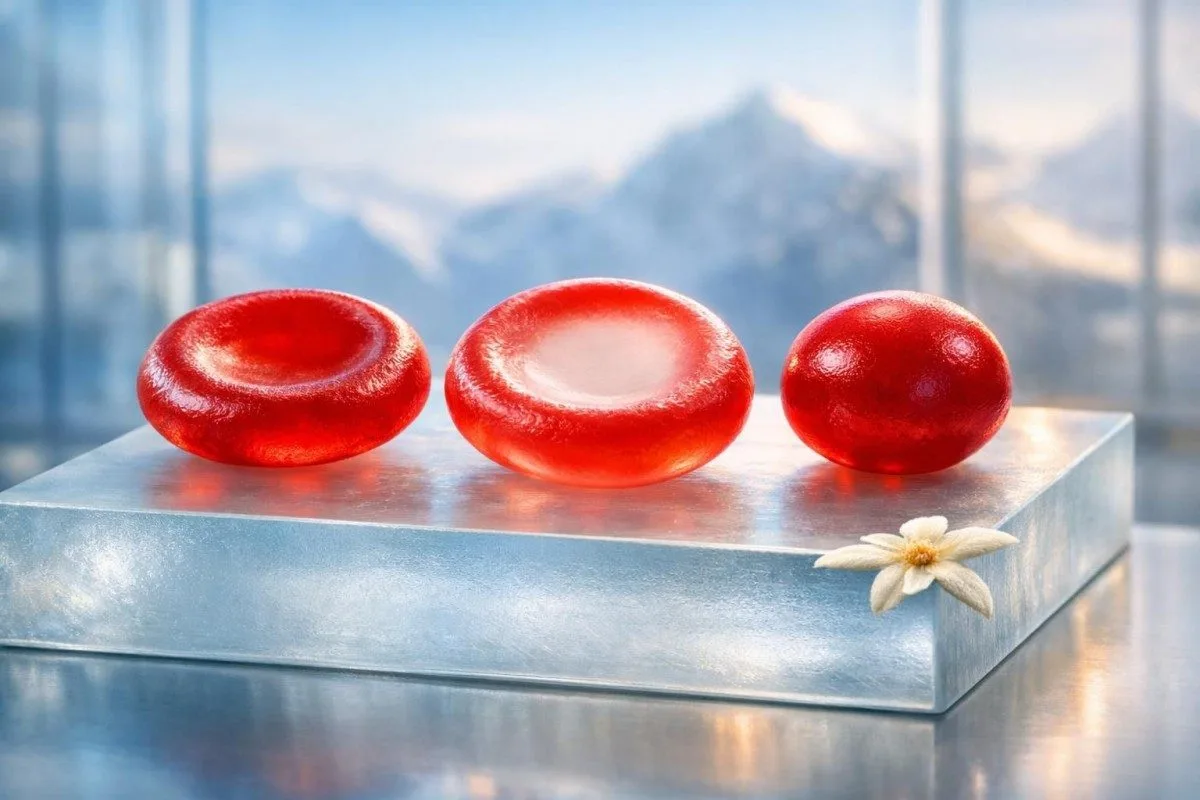
MCHC tells you how concentrated hemoglobin is inside each red cell. The useful part is not the label alone—it is the pattern MCHC forms with MCV, MCH, RDW, ferritin, and reticulocytes.


- MCHC normal range is usually 32-36 g/dL in adults, although some labs use 31.5-35.5 g/dL.
- Low MCHC meaning is usually hypochromia—red cells are underfilled with hemoglobin—and iron deficiency is the most common reason.
- High MCHC meaning above 36-37 g/dL is uncommon and should prompt a smear review or repeat CBC before anyone jumps to conclusions.
- MCH measures hemoglobin amount per red cell in picograms (pg), while MCHC measures hemoglobin concentration per cell in g/dL.
- MCV measures cell size in femtoliters (fL); low MCV plus low MCHC strongly points toward a microcytic pattern.
- Hemoglobin below 12.0 g/dL in most nonpregnant women and 13.0 g/dL in most men meets WHO anemia thresholds.
- Artifact clue: an MCHC of 39-42 g/dL is more suspicious for cold agglutinins, lipemia, or analyzer interference than true biology.
- Best follow-up tests for abnormal MCHC are ferritin, transferrin saturation, RDW, reticulocyte count, bilirubin, LDH, haptoglobin, and sometimes a blood smear.
What MCHC actually measures on a CBC
MCHC means mean corpuscular hemoglobin concentration—the average concentration of hemoglobin inside your red blood cells. On most adult CBC reports, 32-36 g/dL is considered normal. Low MCHC usually means the cells are underfilled with hemoglobin, most often from iron deficiency; high MCHC is less common and often points either to a lab artifact or to dense red cells such as spherocytes. On Kantesti AI we read MCHC beside MCV, because concentration makes sense only when you also know cell size.
Unlike total hemoglobin, MCHC is a ratio: hemoglobin ÷ hematocrit × 100. That formula matters because a false hemoglobin or false hematocrit automatically distorts MCHC; when I see 39-40 g/dL, I think 'check the sample' before I think 'rare disease.' If you want the wider CBC map, our how to read blood test results guide shows where MCHC fits.
I see this pattern often: a 29-year-old frequent blood donor has hemoglobin 12.4 g/dL, MCV 81 fL, and MCHC 31.2 g/dL with only mild fatigue. That is not a crisis, but it is an early clue that the red cells are getting paler before the anemia becomes obvious. These quiet shifts matter more than many patients expect.
In our review of more than 2 million uploaded lab reports, MCHC is rarely the star of the diagnosis, but it is often the tie-breaker between two reasonable possibilities. At Kantesti, Thomas Klein, MD, and our medical team treat it as a pattern marker, not a verdict. If CBC shorthand still feels opaque, our blood test abbreviations guide helps decode the alphabet soup.
MCHC vs MCH, MCV, and hemoglobin: four numbers, four jobs
MCHC tells you how densely hemoglobin is packed inside each cell, MCH tells you the amount of hemoglobin per cell, MCV tells you cell size, and hemoglobin tells you the total amount circulating in the blood. That is why a patient can have a low MCH with a normal hemoglobin, or a high MCH with a normal MCHC.
A bigger red cell usually contains more hemoglobin simply because it has more room. So when MCV rises above 100 fL, MCH often rises too, while MCHC stays normal because the cell is bigger, not denser. I see this in vitamin B12 deficiency, alcohol-related macrocytosis, and brisk reticulocyte recovery after treatment; our vitamin B12 test guide goes deeper on that pattern.
Low MCH can appear earlier than low MCHC. A cell may be slightly small and carry less hemoglobin in absolute terms, yet still keep a near-normal concentration. That is one reason MCHC is useful, but not especially sensitive, in very early iron deficiency.
Hemoglobin answers a different question: 'Do you have anemia right now?' WHO still uses <12.0 g/dL for most nonpregnant women and <13.0 g/dL for most men as practical anemia cutoffs (World Health Organization, 2011). If hemoglobin is low, I look next at the hematocrit and the cell indices to decide whether the problem is iron loss, hemolysis, dilution, marrow underproduction, or something mixed.
Normal MCHC range and when low or high actually matters
Most adult laboratories call MCHC 32-36 g/dL normal, although some use 31.5-35.5 g/dL and some European reports list 320-360 g/L. Low MCHC is usually below 32 g/dL; high MCHC starts above 36 g/dL, but results above 37 g/dL deserve a second look for artifact or spherocytes.
Reference intervals shift a little by analyzer, age, pregnancy status, and sample handling. Pregnancy often lowers hemoglobin before it meaningfully changes MCHC because plasma volume expands first. If you are unsure what was even measured on a routine panel, our standard blood test guide shows what a CBC can and cannot tell you.
Here is the practical rule I teach residents: mild lows around 31.5-31.9 g/dL are common and often chronic, while repeated highs above 37.0 g/dL are biologically unusual. Red cells have a packing limit; they do not comfortably carry infinite hemoglobin concentration. Trend the result on the same lab method when possible, because our blood test comparison guide explains how inter-lab shifts can create fake changes.
A single MCHC of 31.8 g/dL in an otherwise well patient is not the same as 31.8 g/dL plus ferritin 9 ng/mL, pica, and falling hemoglobin. Numbers live inside context. This is one of those indices where symptoms, ferritin, and reticulocytes often matter more than the decimal place.
Low MCHC meaning: iron deficiency first, but not iron deficiency only
Low MCHC meaning is usually hypochromia—red cells are relatively pale because they contain too little hemoglobin for their size. The commonest cause is iron deficiency, but thalassemia trait, anemia of chronic inflammation, sideroblastic processes, and occasionally lead exposure can do it too. When ferritin is <30 ng/mL, iron deficiency is likely in most adults; with inflammation, ferritin can look falsely reassuring, which is why I pair ferritin with TIBC and saturation rather than treating one number like gospel (Camaschella, 2015).
Early iron deficiency rarely arrives all at once. Ferritin falls first, then RDW often rises, then MCH drifts down, and only later does MCHC become clearly low. I see this especially in menstruating patients, endurance athletes, and frequent blood donors; our athlete blood test guide covers the training piece that gets missed.
Thalassemia trait looks different. A patient may have MCV 68 fL, MCH 21 pg, MCHC 31.5 g/dL, but an RBC count of 5.6 x10^12/L and a near-normal RDW. That pattern makes me pause before prescribing iron, and our iron studies guide explains why an iron tablet can muddy the picture when the real issue is inherited globin production.
Normal MCV does not rule out low MCHC relevance. In mixed deficiency states—say iron deficiency plus B12 deficiency—the average cell size can land in the normal 80-100 fL window and fool you. When a patient tells me, 'My MCV was normal, so iron can't be the issue,' that is usually the moment we slow down and widen the workup.
High MCHC meaning: when it is a real clue to dense red cells
High MCHC meaning is different: true elevation is uncommon and should make you think about spherocytes, hemolysis, or very dense red cells, while remembering that artifact is still common. A repeated MCHC of 36.5-38.0 g/dL with anemia, jaundice, reticulocytosis, or a family history of gallstones is a real clue. When this happens, I usually add a reticulocyte count and review the broader hemolysis pattern using LDH and bilirubin; our reticulocyte and LDH guide is helpful here, and the British guideline on hereditary spherocytosis still treats this combination as clinically meaningful (Bolton-Maggs et al., 2012).
Hereditary spherocytosis is the classic exam question, but it is also real clinic medicine. These cells lose membrane surface area, become rounder and denser, and often show MCHC around 36-38 g/dL with a low-normal MCV and elevated RDW. If bilirubin is up while liver enzymes stay normal, our bilirubin pattern guide shows why hemolysis jumps higher on the list than hepatitis.
Warm autoimmune hemolytic anemia can produce a similar CBC signature because the smear shows spherocytes formed during immune-mediated membrane loss. The reason we worry about high MCHC plus reticulocytosis plus indirect bilirubin is that together they suggest active red-cell destruction, whereas a mildly high MCHC alone often does not. In day-to-day practice, the smear and hemolysis panel usually settle the argument.
Now the caution: an MCHC of 39-42 g/dL is usually too high to believe at face value. Real biology can nudge MCHC upward; lab interference can launch it into the stratosphere. That distinction saves patients a lot of unnecessary worry.
When an abnormal MCHC is probably a lab artifact
An abnormal MCHC is a lab artifact more often than patients expect, especially when the result is high and the rest of the CBC looks internally inconsistent. Cold agglutinins, lipemia, marked jaundice, severe leukocytosis, sample aging, and dilution from IV fluid can all distort the calculation. We wrote about the general problem of spurious highs in our dehydration and false highs guide, but MCHC has its own telltale patterns.
Cold agglutinins are the classic trap. Red cells clump together at room temperature, the analyzer may undercount them, MCV can jump, and MCHC can look falsely high. If I see MCHC 38.5 g/dL, MCV 112 fL, and a low RBC count that does not match the clinical picture, I ask the lab to warm the sample to 37°C and rerun it.
Lipemia and marked hyperbilirubinemia cause a different problem: the photometric hemoglobin measurement can read too high. That means the numerator in the MCHC formula is inflated, so the calculated MCHC rises even if the cells themselves are ordinary. When jaundice is part of the story, our liver function test guide helps patients understand why the chemistry panel and CBC need to be read together.
Low MCHC can be artifactual too, although less dramatically. Samples drawn from an arm with running IV fluids may be diluted, and older EDTA samples can show cell swelling that nudges MCHC down. If the number does not fit the person, repeat the CBC from a fresh peripheral sample at a reliable lab; our guide to choosing a local lab explains what to look for.
Pattern-based anemia workups: how clinicians really use MCHC
Clinicians interpret MCHC by pattern, not in isolation. The most useful combination is MCHC + MCV + RDW + RBC count + ferritin + reticulocytes, because that cluster separates iron deficiency from thalassemia trait, mixed deficiencies, and hemolysis far better than any single value. When Kantesti AI reads an anemia panel, this pattern logic is exactly what our model uses, and our RDW guide fills in the variability piece that MCHC cannot capture.
Pattern one is the common one: low MCV, low MCHC, high RDW, ferritin <30 ng/mL, and a normal-to-low RBC count. In practice, that is iron deficiency until proven otherwise. If the patient also has heavy periods, GI symptoms, or endurance training, we start looking for the reason iron stores are falling, not just the CBC consequence.
Pattern two is the 'do not reflexively give iron' pattern: low MCV, low or low-normal MCHC, normal RDW, and an RBC count that is relatively high. A Mentzer index—MCV divided by RBC count—below 13 leans toward thalassemia trait, while above 13 leans toward iron deficiency. It is not perfect, but at the bedside it is surprisingly useful.
Pattern three is the sleeper: normal MCV with low MCHC. That can mean early iron deficiency, mixed iron and B12/folate deficiency, anemia of chronic disease with superimposed iron restriction, or simple lab drift. Pattern four is high MCHC with reticulocytosis and bilirubin or LDH elevation; that is when we stop thinking 'nutrition' and start thinking hemolysis or spherocytes.
When ferritin looks normal but iron deficiency is still possible
Ferritin is an acute-phase reactant. A ferritin of 60 ng/mL does not exclude iron deficiency if CRP is high or the patient has inflammatory disease; in that setting I pay more attention to saturation below 20% and the clinical history. This is one reason MCHC can drift low even when ferritin sits inside the reference range.
Why reticulocytes can briefly confuse the picture
Reticulocytes are large cells. During recovery from iron therapy or bleeding, reticulocytosis can nudge MCV upward by 2-5 fL and make the anemia look mixed for a week or two. Most patients never hear that, but it explains many 'Why did my MCV go up after treatment?' messages in clinic.
Why MCHC often lags behind ferritin
MCHC usually changes later than ferritin and often later than MCH. In plain language, a normal MCHC does not buy you a clean bill of iron status. That is why we do not use one reassuring CBC index to overrule a convincing iron story.
Symptoms, red flags, and when abnormal MCHC needs faster follow-up
MCHC changes do not cause symptoms by themselves; the symptoms come from the underlying anemia, hemolysis, or iron deficiency. Seek prompt care if abnormal MCHC comes with chest pain, fainting, shortness of breath at rest, black stools, jaundice, dark urine, or hemoglobin below about 8.0 g/dL. Our blood test symptoms decoder walks through which symptom-plus-lab combinations deserve faster attention.
Low MCHC patterns often travel with fatigue, reduced exercise tolerance, headaches, pica, brittle nails, hair shedding, or restless legs. Many patients call this 'just being tired,' but when ferritin is <15-30 ng/mL and the CBC is shifting, the body is telling a more specific story. We outline that workup in our fatigue labs guide.
High MCHC becomes more concerning when it appears beside jaundice, splenomegaly, dark urine, gallstone history, or a sudden drop in hemoglobin. In older adults, people with coronary disease, and pregnant patients, even moderate anemia can hit harder than the raw number suggests. Context changes urgency.
I tell patients not to panic over an isolated mild abnormality, but I do tell them not to ignore trends. A stable MCHC 31.7 g/dL for 5 years is a different conversation from 31.7 g/dL plus a new hemoglobin drop from 13.4 to 10.8 g/dL in 4 months. The timeline matters almost as much as the result.
How Kantesti AI interprets MCHC in context instead of in isolation
Kantesti AI interprets MCHC by testing whether the number makes sense against the rest of the CBC and the broader lab story. Our engine cross-checks MCHC with MCV, MCH, hemoglobin, hematocrit, RDW, ferritin, transferrin saturation, reticulocytes, bilirubin, LDH, kidney markers, and prior trends, then flags when the pattern looks biologically implausible. That methodology is summarized in our medical validation standards, and you can upload a report securely through our PDF upload workflow.
In our analysis of more than 2 million lab reports from 127+ countries, isolated MCHC changes are common, but clinically decisive MCHC patterns are usually the ones paired with at least one confirming marker. That is why our medical review team—detailed on the Medical Advisory Board page—trained the system to downgrade orphan results and elevate consistent clusters. It behaves more like a cautious clinician than a headline.
The tool is especially useful when the problem is trend recognition. A patient may have MCHC 32.4, 32.1, 31.8, and 31.4 g/dL over 18 months while hemoglobin still sits in range; that slow drift is easy to miss on paper. Our photo scan reader and timeline view make those small changes visible before the anemia becomes obvious.
We also try to be honest about uncertainty. Thomas Klein, MD, and our team built the interpretation layer so that conflicting data—for example, low MCHC with normal ferritin but high CRP—triggers 'consider mixed or inflammatory causes' rather than fake certainty. If you want the broader story of who we are, the About Us page is the cleanest overview.
Practical next steps after a low or high MCHC result
The next step after MCHC blood test low or high is usually simple: confirm whether anemia is present, then order the tests that explain the pattern. For low MCHC, that often means ferritin, transferrin saturation, and sometimes CRP; for high MCHC, it often means a smear, reticulocyte count, bilirubin, LDH, and haptoglobin. As of April 15, 2026, that is still the most sensible approach—and if you want a fast first pass, try our free blood test interpretation demo.
Ask three plain questions. Is hemoglobin actually low by WHO standards; is the pattern microcytic, normocytic, or hemolytic; and does the result fit the story of bleeding, diet, family history, inflammation, or recent illness? In my experience, those three questions cut through most of the noise.
If the MCHC is high, also ask whether the lab considered artifact. Was the sample repeated, warmed, or reviewed on smear; was there lipemia or jaundice; and did the CBC have analyzer flags? Thomas Klein, MD, teaches this exact sequence to residents because it prevents both overtesting and premature reassurance.
Bottom line: MCHC is a context marker, not a diagnosis. Low values usually mean underfilled red cells; high values usually mean either dense red cells or a misleading sample. If you want to see how the whole pattern fits together, our patient case stories show how small CBC clues can change follow-up.
Frequently Asked Questions
What does MCHC mean in blood test results?
MCHC means mean corpuscular hemoglobin concentration, which is the average concentration of hemoglobin inside your red blood cells. Most adult laboratories use a normal range of about 32-36 g/dL or 320-360 g/L. A low result usually means the cells are relatively pale or underfilled with hemoglobin, while a high result is less common and can point either to dense red cells or to a testing artifact. MCHC does not diagnose a condition by itself; clinicians read it with hemoglobin, MCV, MCH, RDW, ferritin, and reticulocytes.
What is low MCHC meaning on a CBC?
Low MCHC usually means hypochromia, which means red cells contain too little hemoglobin for their size. In practice, the most common cause is iron deficiency, especially when ferritin is <30 ng/mL, MCV is low, and RDW is high. Thalassemia trait, anemia of chronic inflammation, and mixed nutritional deficiencies can also lower MCHC. A mildly low value such as 31.5-31.9 g/dL is often not urgent, but it deserves context.
What is high MCHC meaning on a blood test?
High MCHC means the red cells appear unusually concentrated with hemoglobin, and values above 36-37 g/dL are uncommon. Real causes include hereditary spherocytosis, immune hemolysis with spherocytes, and occasionally other dense-cell states. However, very high values such as 39-42 g/dL are more often due to artifact from cold agglutinins, lipemia, or a misleading hemoglobin or hematocrit measurement. That is why a smear review or repeat CBC is often the next step.
Can you have normal hemoglobin and low MCHC?
Yes, you can have normal hemoglobin and low MCHC, especially in early iron deficiency. Ferritin may already be low, RDW may start to rise, and MCHC may drift below 32 g/dL before hemoglobin drops below WHO anemia thresholds. I see this fairly often in menstruating patients, blood donors, and endurance athletes. It is a good example of why a 'normal hemoglobin' does not always mean iron status is fine.
Is high MCHC usually a lab error?
High MCHC is not always a lab error, but it is a lab artifact often enough that clinicians should check consistency before acting on it. An MCHC just above 36 g/dL can be real, especially if the smear shows spherocytes and the reticulocyte count is elevated. An MCHC above 37-38 g/dL with a strange MCV or low RBC count often makes me think of cold agglutinins or measurement interference first. Repeating the sample, sometimes after warming it to 37°C, is a common and sensible move.
What tests should go with an abnormal MCHC?
The most useful follow-up tests for abnormal MCHC depend on whether the pattern is low or high. For low MCHC, I usually want ferritin, transferrin saturation, TIBC, RDW, and sometimes CRP; for high MCHC, I usually want a smear, reticulocyte count, bilirubin, LDH, and haptoglobin. Hemoglobin, MCV, MCH, RBC count, and hematocrit should always be reviewed at the same time because MCHC is a calculated value. If symptoms are significant or hemoglobin is below about 8.0 g/dL, the evaluation should move faster.
Can dehydration change MCHC?
Dehydration can concentrate some blood values, but it does not usually create a truly high MCHC on its own. A strikingly high MCHC—especially >37 g/dL—more often reflects sample or analyzer issues, or dense red-cell conditions such as spherocytosis. Mild dehydration can still complicate interpretation of the overall CBC and chemistry panel, which is why we compare MCHC with hematocrit, hemoglobin, and the clinical picture. In real practice, the pattern matters more than blaming one number on hydration alone.
Can a recent blood transfusion affect MCHC results?
Yes. Donor red cells mix with your own cells, so MCHC and other CBC indices can be harder to interpret for weeks to months; tell your clinician about any recent transfusion when results are compared.
Should I take iron supplements if my MCHC is low?
Not without checking iron stores unless a clinician has already diagnosed iron deficiency. Iron can cause nausea and constipation and may delay investigation of blood loss; ferritin testing usually helps determine whether treatment is appropriate.
Can low MCHC happen from thalassemia trait instead of iron deficiency?
Yes. Thalassemia trait can cause small, pale red cells with low MCH or MCHC, but ferritin is usually normal unless iron deficiency is also present. Your clinician may suggest hemoglobin electrophoresis or genetic testing if the pattern fits.
Get AI-Powered Blood Test Analysis Today
Join over 2 million users worldwide who trust Kantesti for instant, accurate lab test analysis. Upload your blood test results and receive comprehensive interpretation of 15,000+ biomarkers in seconds.
📚 Referenced Research Publications
Kantesti LTD (2026). B Negative Blood Type, LDH Blood Test & Reticulocyte Count Guide. Kantesti AI Medical Research.
Kantesti LTD (2026). Diarrhea After Fasting, Black Specks in Stool & GI Guide 2026. Kantesti AI Medical Research.
📖 External Medical References
World Health Organization (2011). Haemoglobin concentrations for the diagnosis of anaemia and assessment of severity. World Health Organization.
⚕️ Medical Disclaimer
This article is for educational purposes only and does not constitute medical advice. Always consult a qualified healthcare provider for diagnosis and treatment decisions.
E-E-A-T Trust Signals
Experience
Physician-led clinical review of lab interpretation workflows.
Expertise
Laboratory medicine focus on how biomarkers behave in clinical context.
Authoritativeness
Written by Dr. Thomas Klein with review by Dr. Sarah Mitchell and Prof. Dr. Hans Weber.
Trustworthiness
Evidence-based interpretation with clear follow-up pathways to reduce alarm.