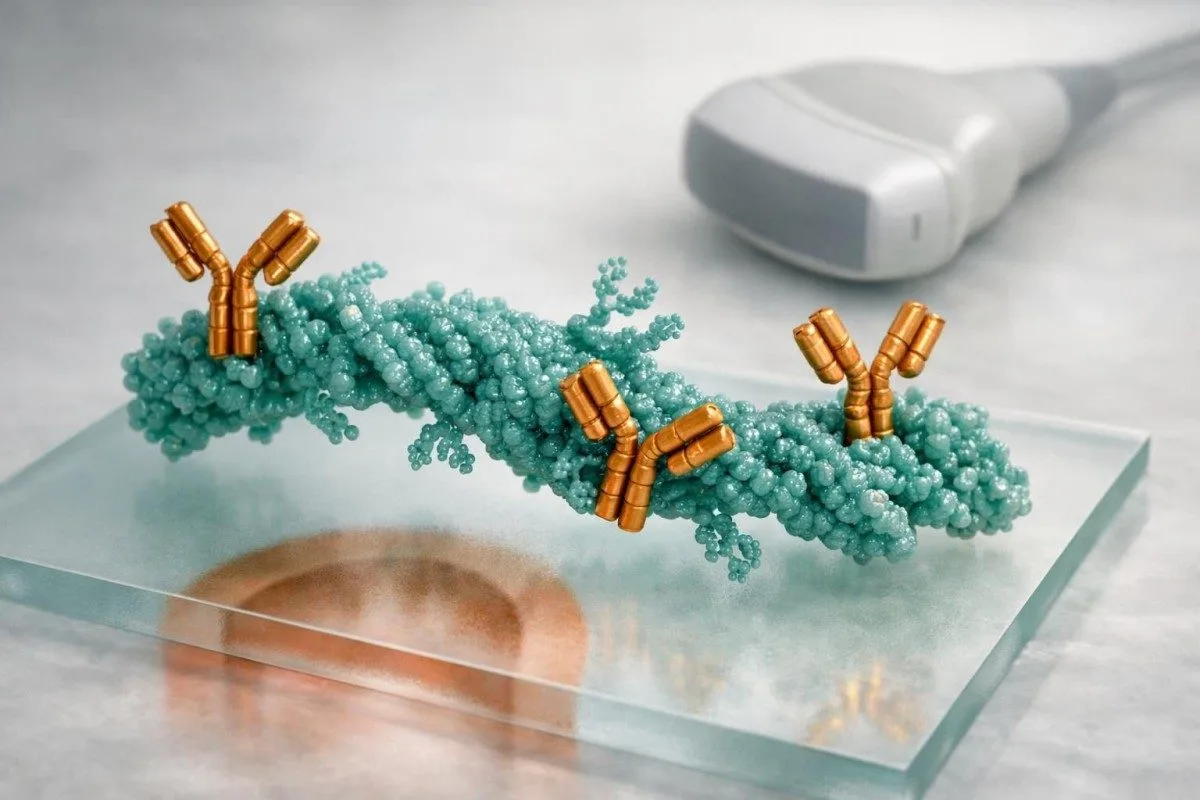
A high CA-125 does not diagnose ovarian cancer, and a normal CA-125 does not rule it out. Doctors usually interpret the result with symptoms, menopausal status, and ultrasound—then watch the trend, not one isolated number.


- Typical cutoff Most labs flag CA-125 above 35 U/mL as elevated, but the number alone does not diagnose cancer.
- Normal result About 80% of advanced epithelial ovarian cancers raise CA-125, but only about 50% of stage I cases do, so normal does not rule disease out.
- Benign causes Endometriosis, menstruation, fibroids, pregnancy, cirrhosis with ascites, and heart failure can all raise CA-125—sometimes to more than 200 U/mL.
- Trend over time A rise from 22 to 46 to 91 U/mL is usually more meaningful than one borderline result of 42 U/mL.
- Screening limit Major guidelines do not recommend CA-125 alone to screen average-risk, symptom-free women because false positives and false negatives are both common.
- Imaging matters Doctors usually pair CA-125 with pelvic ultrasound or CT because structure on imaging often changes risk more than the lab value itself.
- After treatment A rising CA-125 can precede symptoms by 3-5 months, but early treatment based only on that rise did not improve survival in Rustin et al., 2010.
- Practical next step Mild elevations with an obvious benign trigger are often repeated in 2-6 weeks, ideally using the same lab assay.
- Kantesti AI Our platform reviews uploaded CA-125 PDFs or photos in about 60 seconds and compares the marker with inflammation, liver, kidney, and CBC trends.
What the CA-125 blood test can detect—and what it misses
CA-125 is a useful tumor marker, but it cannot diagnose or exclude ovarian cancer by itself. A result above 35 U/mL needs context—symptoms, menopausal status, and imaging—and our Kantesti AI reviews often make more sense when paired with other cancer-related blood tests.
CA-125 is the lab shorthand for cancer antigen 125, now known biologically as MUC16, a very large surface glycoprotein. Mesothelial cells lining the peritoneum, pleura, and pericardium can release it when irritated, which is why the marker rises in several non-cancer conditions.
That biology explains one of the biggest misconceptions I hear in clinic: a high CA-125 is not the same as an ovarian cancer diagnosis. In a 63-year-old with new bloating, early satiety, and a complex adnexal mass, 148 U/mL raises my concern; in a 29-year-old with painful periods and known endometriosis, the exact same number can be benign.
Used well, tumor markers change probability rather than prove disease. Kantesti AI interprets a CA-125 blood test the way careful clinicians do—by asking what else is happening in the panel, whether symptoms fit, and whether imaging supports the story.
Patients are often surprised that a marker linked to cancer can still behave like an inflammation signal. That is one reason a standard blood panel may miss the real context unless someone looks across the full report.
CA-125 normal range: what counts as high?
Most laboratories define normal CA-125 as 0-35 U/mL. Mild elevations between 35 and 65 U/mL are common and often nonspecific, while values above 200 U/mL deserve faster imaging and specialist review—especially after menopause.
Some European labs report the unit as kU/L rather than U/mL; numerically, the value is the same. A practical point many websites miss: assay-to-assay variation of roughly 10-20% is real, so I prefer serial measurements from the same method before calling a small shift meaningful.
In my experience, numbers in the 40s are where context does most of the work. A single result of 42 U/mL may mean very little, but a stepwise rise from 22 to 46 to 91 U/mL over 6-10 weeks is harder to dismiss.
Kantesti's blood test biomarkers guide helps patients see where CA-125 sits among other marker types, and our lab trend guide explains why one flagged line can mislead. When our AI blood test platform spots serial CA-125 results from different labs, it flags that method mismatch before overinterpreting the trend.
Why benign conditions can push CA-125 up
Benign CA-125 rises happen because CA-125 comes from irritated lining surfaces, not only cancer cells. Endometriosis, menstruation, fibroids, pelvic inflammatory disease, cirrhosis with ascites, heart failure, pleural effusions, and pregnancy can all raise it.
Endometriosis is the classic example. I have seen values of 120-300 U/mL in patients whose MRI and later surgery showed no malignancy at all, just active inflammatory implants and pelvic adhesions.
Cirrhosis with ascites is another underappreciated confounder. In hepatology practice, CA-125 can climb above 500 U/mL simply from stretched, irritated peritoneal lining, and it often falls after fluid control rather than cancer treatment.
Heart failure with pleural effusions, pancreatitis, recent abdominal surgery, and peritoneal dialysis can do the same. If CA-125 rises alongside inflammation markers, a high CRP result, or abnormal liver enzyme patterns, I start by asking whether inflammation or fluid overload is the real driver.
The practical tip is simple: if there is a clear benign trigger, repeating the test after 2-6 weeks is often smarter than reacting to the first number. Most patients find that plan much easier to live with than being told one abnormal result means the worst.
A normal CA-125 does not rule out ovarian cancer
A normal CA-125 cannot exclude ovarian cancer, especially early-stage disease or certain histologic types. Roughly 80% of advanced epithelial cases have elevated CA-125, but only about 50% of stage I cancers do.
Some histologic types—particularly mucinous, some clear cell, borderline, and non-epithelial tumors—may secrete less CA-125. That is why a suspicious ultrasound can outweigh a reassuring blood result.
NICE advises CA-125 testing in women, especially those aged 50 years and older, with persistent bloating, early satiety, pelvic or abdominal pain, or urinary urgency. If symptoms persist and the result is 18 U/mL, I still keep going if the exam or scan is not right; our women's health guide is useful for spotting those patterns earlier.
As Thomas Klein, MD, I worry far more about the combination of new symptoms + fixed mass + changing imaging than about a single normal flag. The practical mistake is stopping the work-up because the lab looked calm, and our symptom decoder was built to prevent exactly that.
This is one of those areas where context matters more than the number. A CA-125 of 12 U/mL can sit next to a concerning scan, and a CA-125 of 112 U/mL can still turn out to be endometriosis.
Why doctors pair CA-125 with ultrasound and risk models
Doctors use CA-125 alongside pelvic ultrasound or CT because imaging shows structure while the marker shows biological activity. The combination separates many benign cysts from higher-risk masses better than either test alone.
Imaging answers a question the blood test cannot: what does the mass actually look like? A simple, thin-walled, unilocular cyst under 5 cm behaves very differently from a complex multilocular mass with solid projections, bilateral involvement, or ascites.
One common triage tool is the Risk of Malignancy Index (RMI), which multiplies an ultrasound score by menopausal status and CA-125. An RMI above 200 often prompts referral to gynecologic oncology, though local thresholds vary and some centers use different cutoffs.
Some services add other tumor markers such as HE4 and calculate ROMA, but even those models are triage tools, not proof. For readers who want a contrast with another marker used mainly for follow-up, our CEA guide is a useful comparison.
RMI helps triage; it does not diagnose
An RMI or ROMA score is best thought of as a referral aid. In my experience, a modest CA-125 of 48 U/mL becomes much more concerning when ultrasound shows papillary projections than when it shows a simple cyst, and that distinction is exactly where risk models earn their keep.
Why trends usually matter more than one CA-125 result
A rising or falling CA-125 trend is usually more useful than a single value because it filters out assay noise and temporary inflammation. Clinicians care about direction, speed of change, and whether imaging changes in parallel.
A small change can be noise. If expected variation is roughly 10-20%, then 31 to 34 U/mL may mean almost nothing, while 31 to 58 to 96 U/mL using the same method usually deserves a closer look; our how to read blood test results guide explains that logic step by step.
After surgery or chemotherapy, CA-125 often falls over several weeks when treatment is working. A post-treatment half-life under about 20 days has been associated with better outcomes in several oncology series, although I would never make treatment decisions from half-life alone.
Rustin et al. reported in The Lancet that treating recurrent disease earlier based only on a rising CA-125 did not improve overall survival compared with waiting for symptoms or imaging confirmation (Rustin et al., 2010). That trial genuinely changed practice, and our AI-powered blood test interpretation engine reflects that by prioritizing trend plus imaging, not the marker in isolation.
When a rise is unexpected, I usually repeat it in 2-4 weeks using the same lab method. Kantesti AI's neural network is especially useful here because it spots whether CRP, albumin, platelets, or liver tests are drifting at the same time.
Why CA-125 is a poor screening test for most healthy people
CA-125 is not recommended as a routine screening test for average-risk, symptom-free women. False positives are common, false negatives happen, and screening has not clearly reduced mortality enough to justify the downstream harm.
The USPSTF recommends against screening asymptomatic, average-risk women with CA-125, with or without ultrasound, because the harms outweigh the benefit (US Preventive Services Task Force, 2018). Those harms are not abstract—they include anxiety, repeat imaging, and sometimes surgery for something that was never cancer.
The large UKCTOCS trial used a longitudinal algorithm rather than a single 35 U/mL cutoff, which was far more sophisticated than what most clinics can reproduce. Even so, the primary analysis did not show a clear mortality reduction for average-risk screening (Jacobs et al., 2016).
The evidence here is honestly mixed only if you blur together screening and diagnostic work-up. For an average-risk person without symptoms, an at-home blood testing guide or an online lab ordering explainer can prevent the common mistake of ordering CA-125 as a yearly reassurance test.
Good uses are different: persistent symptoms, evaluation of an adnexal mass, and monitoring after a known diagnosis. That distinction sounds subtle, but it changes everything.
Common interpretation pitfalls: menopause, pregnancy, liver disease, and assay issues
Menopausal status, pregnancy, fluid overload, and even assay interference can skew CA-125 interpretation. The same result of 42 U/mL means more in a 68-year-old with new bloating than in a 26-year-old during menstruation.
Pregnancy can nudge CA-125 upward, especially in the first trimester, and severe endometriosis can push it above 200 U/mL. Fibroids and adenomyosis are common reasons younger patients are over-referred after one borderline lab report.
Fluid states matter too. Heart failure, pleural effusion, cirrhosis, and nephrotic-range ascites can elevate CA-125 even in men, because the marker reflects irritated serosal surfaces rather than female anatomy alone; when that pattern is suspected, a BNP review or an albumin guide can be surprisingly informative.
Then there are lab quirks: heterophile antibodies, rheumatoid factor, and rarely a very high-dose hook effect can distort immunoassays. If the result does not fit the clinical picture, a repeat sample, dilution study, or alternate assay is completely reasonable.
Ask whether the method changed
Some labs quietly switch assay platforms, and that alone can move a result by enough to create panic. When Thomas Klein, MD, reviews a questionable trend, one of the first checks is whether the platform changed before the biology did.
What doctors usually do after a high CA-125 result
The next step after a high CA-125 is usually not surgery; it is clinical correlation, repeat testing when appropriate, and imaging—often pelvic ultrasound. Urgency depends on the number, age, symptoms, and whether the scan is abnormal.
For a premenopausal patient with 38-60 U/mL and an obvious benign trigger, I often repeat the marker after the next cycle or after treating the inflammatory cause. For a postmenopausal patient, persistent symptoms plus CA-125 above 35 U/mL lowers my threshold for expedited ultrasound.
A level above 200 U/mL with a complex mass or ascites usually triggers urgent specialist referral rather than watchful waiting. If readers want to see how real follow-up decisions unfold over time, our case examples are more useful than generic internet lists.
Red flags that deserve prompt medical review include rapid abdominal enlargement, early satiety, unexplained weight loss, bowel habit change, and shortness of breath from fluid. Those symptoms matter more to me than whether the lab printed one or two exclamation points.
And no—supplements do not meaningfully 'treat' CA-125 itself. We treat the cause of the elevation, and sometimes the cause is plainly benign.
How Kantesti AI reads a CA-125 blood test in context
Kantesti AI does not label a single CA-125 as cancer or benign; it reads the result in context with age, symptoms, other labs, and prior reports. That is how clinicians actually think, and it is why our interpretation engine focuses on trend analysis rather than one flagged line.
Our platform reviews uploaded PDFs or photos in about 60 seconds and compares CA-125 with inflammation markers, liver proteins, kidney function, and CBC patterns. Readers can see how that works in our blood test PDF upload guide or through our AI blood test technology guide.
Across 2M+ users in 127+ countries and 75+ languages, we repeatedly see the same error: patients overreact to one borderline result and underreact to a steady rise. Thomas Klein, MD, built our medical review logic around that exact pattern, and our medical advisory board and medical validation pages explain the clinical standards behind it.
Kantesti operates with CE Mark, HIPAA, GDPR, and ISO 27001 safeguards, which matters when people are uploading sensitive oncology-adjacent lab results. If you want the company background, our About Us page is the right place to start.
As of April 15, 2026, the practical bottom line has not changed: do not panic over one number, and do not ignore a real trend. If you have a new result, try the free demo, browse our blog, or use our platform to organize the questions you want answered before your appointment.
Frequently Asked Questions
What level of CA-125 suggests ovarian cancer?
Most laboratories use 35 U/mL as the upper reference limit for CA-125, but no single level proves ovarian cancer. Values between 35 and 65 U/mL are often seen with benign conditions, while levels above 200 U/mL generally raise more concern and usually trigger imaging and specialist review. Menopausal status changes the meaning a lot; 42 U/mL after menopause is more concerning than 42 U/mL during menstruation. Doctors diagnose cancer from the full picture, not from the number alone.
Can CA-125 be high without cancer?
Yes—CA-125 can be elevated without cancer, sometimes quite dramatically. Endometriosis, menstruation, fibroids, pelvic inflammatory disease, pregnancy, cirrhosis with ascites, and heart failure with pleural or abdominal fluid can all raise CA-125, and values can exceed 200 U/mL or even 500 U/mL in severe fluid states. The reason is biological: CA-125 is released from irritated serosal linings, not only from cancer cells. That is why a high CA-125 meaning always depends on symptoms and imaging.
Can ovarian cancer have a normal CA-125?
Yes, ovarian cancer can be present even when CA-125 is normal. About 80% of advanced epithelial ovarian cancers have elevated CA-125, but only about 50% of stage I cancers do, so early disease is often missed by the marker. Some tumor types, including mucinous and some clear cell cancers, may produce less CA-125. A normal result therefore lowers risk in some settings, but it does not rule cancer out.
Should healthy women get annual CA-125 testing?
For average-risk, symptom-free women, routine annual CA-125 testing is generally not recommended. The USPSTF advises against screening with CA-125, with or without ultrasound, because false positives can lead to repeat scans, anxiety, and unnecessary procedures, while false negatives can still miss real disease. The large UKCTOCS study also failed to show a clear mortality benefit in the primary analysis for average-risk screening. CA-125 is usually better used for symptoms, mass evaluation, or follow-up after a known diagnosis.
How often should CA-125 be repeated after a borderline high result?
A mildly elevated CA-125 is often repeated in 2-6 weeks, depending on the clinical setting. If the likely explanation is menstruation, endometriosis, or another temporary inflammatory trigger, many clinicians wait until after the next cycle or after treatment of the trigger and then repeat the test using the same lab method. After cancer treatment, an unexpected rise is often rechecked in 2-4 weeks before calling it progression. Serial testing works best when the assay platform does not change.
What tests are usually ordered with a CA-125 blood test?
The CA-125 blood test is usually paired with pelvic ultrasound, and sometimes CT or MRI, because imaging shows whether there is a simple cyst, a complex mass, or fluid in the abdomen. Doctors may also look at CBC, CRP, albumin, liver enzymes, and kidney function to see whether inflammation or fluid overload could be distorting the marker. In specialist settings, some centers add HE4 or calculate risk models such as RMI or ROMA. The number becomes much more useful when these pieces are interpreted together.
Should I avoid having a CA-125 blood test during my period?
Menstruation can temporarily raise CA-125, particularly in people with heavy bleeding or endometriosis. If testing is not urgent, ask whether it makes sense to schedule the blood draw after your period and use the same laboratory for any repeat test.
Can cancers other than ovarian cancer raise CA-125?
Yes. CA-125 may rise with several cancers, including cancers of the fallopian tube, endometrium, pancreas, lung, breast, or digestive tract, particularly when the abdominal lining is involved. It cannot identify where a cancer started, so clinicians rely on examination and imaging rather than the marker alone.
Do I need to fast before a CA-125 blood test?
No fasting is usually needed for CA-125, so you can eat and drink normally unless your doctor ordered other fasting blood tests at the same time. Tell your clinician about recent surgery, infection, pregnancy, or inflammatory symptoms, because these can affect interpretation.
Get AI-Powered Blood Test Analysis Today
Join over 2 million users worldwide who trust Kantesti for instant, accurate lab test analysis. Upload your blood test results and receive comprehensive interpretation of 15,000+ biomarkers in seconds.
📚 Referenced Research Publications
Klein, T., Mitchell, S., & Weber, H. (2026). C3 C4 Complement Blood Test & ANA Titer Guide. Kantesti AI Medical Research.
Klein, T., Mitchell, S., & Weber, H. (2026). Nipah Virus Blood Test: Early Detection & Diagnosis Guide 2026. Kantesti AI Medical Research.
📖 External Medical References
Jacobs IJ et al. (2016). Ovarian cancer screening and mortality in the UK Collaborative Trial of Ovarian Cancer Screening (UKCTOCS): a randomised controlled trial. The Lancet.
⚕️ Medical Disclaimer
This article is for educational purposes only and does not constitute medical advice. Always consult a qualified healthcare provider for diagnosis and treatment decisions.
E-E-A-T Trust Signals
Experience
Physician-led clinical review of lab interpretation workflows.
Expertise
Laboratory medicine focus on how biomarkers behave in clinical context.
Authoritativeness
Written by Dr. Thomas Klein with review by Dr. Sarah Mitchell and Prof. Dr. Hans Weber.
Trustworthiness
Evidence-based interpretation with clear follow-up pathways to reduce alarm.