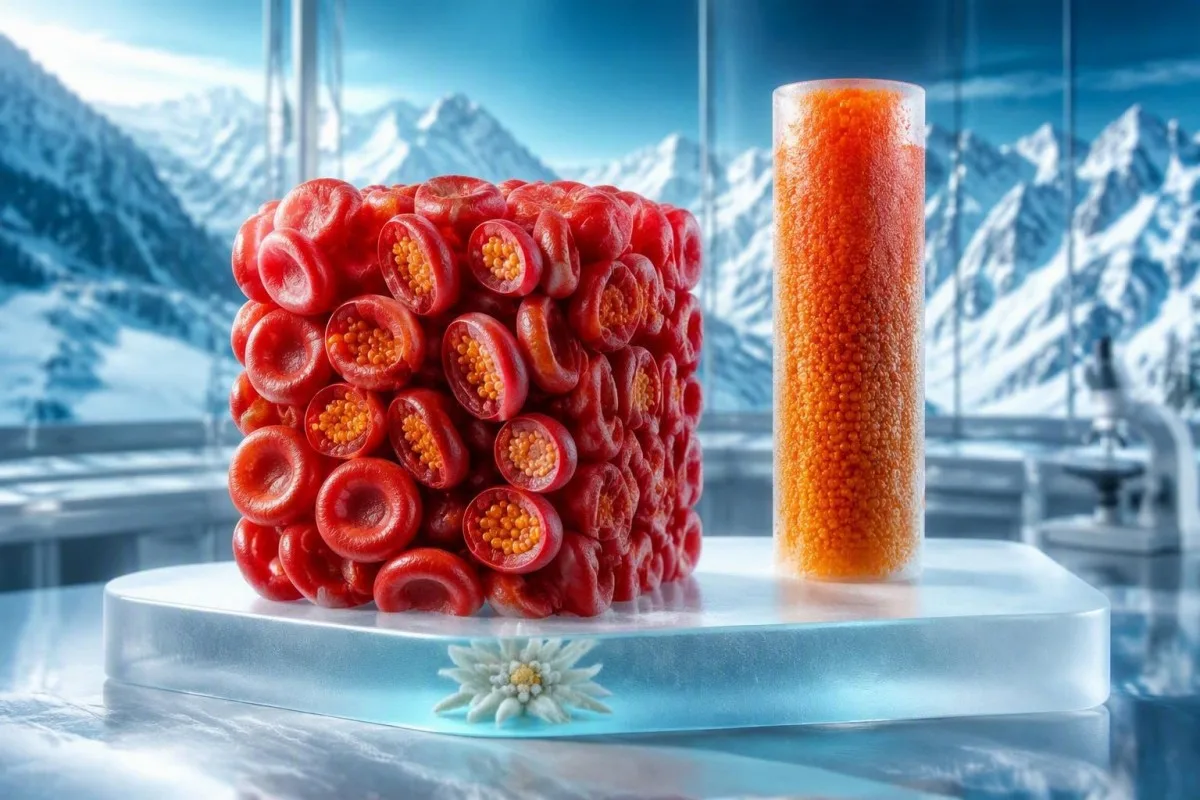
Гематокрит үлчәме эритроцитларның кан күләмендәге өлешен, гемоглобин исә аларның кислородны ташучы аксымын күрсәтә. Алар гадәттә бергә баралар, ләкин алар арасындагы аермалар клиник яктан файдалы булырга мөмкин.


- Гематокрит эритроцитлар белән тулы кан күләменең проценты; хатын-кызлар өчен гадәти олылар диапазоны якынча 36-46%, ир-атлар өчен 41-53%.
- Гемоглобин кислородны ташучы аксым концентрациясе, гадәттә йөксез хатын-кызлар өчен 12.0-15.5 г/дл, ир-атлар өчен 13.5-17.5 г/дл.
- Өчле кагыйдә гематокритны якынча гемоглобинның өчләтә дип бәяли (г/дл); зуррак аерма күзәнәк зурлыгының үзгәрүен, липемияне, салкын агглютининнарны яки аналитик проблеманы күрсәтергә мөмкин.
- Нормаль гемоглобинлы түбән гематокрит еш кына макроцитозны, гидратацияне яки клиник яктан әһәмиятле анемиягә караганда чик аермасын чагылдыра.
- Югары гематокритның сәбәпләре гипогидратация, биеклеккә чыгу, тәмәкегә бәйле гипоксия, йокы апноэсы, тестостерон терапиясе, һәм сирәгрәк полицитемия вераны үз эченә ала.
- Күзәтү чиге ир-атларда 16,5 г/дл яки хатын-кызларда 16,0 г/длдан артык гемоглобин булганда, аеруча югары гематокрит һәм түбән эритропоэтин белән көчлерәк.
- Ашыгыч симптомнар кебек күкрәк авыртуы, хәлсезлек, яңа буталчыклык, ял иткәндә сулыш алу, кара төстәге эчәклек, яки авыр туктаусыз кан китү кебек сәбәпләрне CBC саныннан irrespective of карамастан, тиз арада шәхси карау таләп итә.
Гематокрит һәм гемоглобин нәрсә үлчи
Гематокрит vs гемоглобин күләм белән аксымны чагыштыру: гематокрит - кан торбасының кызыл күзәнәкләренең өлеше, ә гемоглобин - кан децилитрына кислород бәйләүче аксым граммнары. Алар еш кына параллель хәрәкәт итәләр, чөнки икесе дә кызыл күзәнәк массасына бәйле, ләкин алар алмашынмыйлар.
Күпчелек лабораторияләр гематокритны процент һәм гемоглобинны g/dL итеп хәбәр итә. 14.0 g/dL гемоглобин һәм 42% тирәсе гематокрит - олы кеше өчен гадәти пар, лабораториянең үз интервалы тәрҗемә итүне контроль итсә дә. Гематокритны центрифугалаудан соң яки кызыл күзәнәкләр саны һәм уртача күзәнәк күләменнән исәпләп чыгарырга мөмкин, ә заманча анализаторлар күзәнәк элементларын лизинглаганнан соң гемоглобинны фотометрик рәвештә үлчиләр.
Практик аерма - кислород бирү. Гемоглобин кислородны ташый, ә гематокрит вискозлыкка тәэсир итә һәм кызыл күзәнәкләрнең күпме урын алуын әйтә; шуңа күрә кеше нормаль гемоглобинга ия булырга мөмкин, әмма кызыл күзәнәкнең зурлыгы үзгәргәндә бераз гадәти булмаган гематокритка да ия булырга мөмкин. Киң CBC сүзлеге өчен безнең CBC компонентларына кулланма MCV, MCH, һәм RDW кайда урнашканлыгын күрсәтә.
2026 елның 14 сентябренә, мин әле дә пациентларны “анемия” дип атауларын күрәм, чөнки бу күрсәткечләрнең берсе чиктән тыш зуррак. Доктор Томас Клейның алымы азрак драматик: гемоглобинның яше, җенесе, йөккә узу, һәм биеклек өчен азмы-күпме икәнен раслау, аннары гематокритны MCV, RDW, ретикулоцитлар, симптомнар, һәм алдагы CBC белән бергә уку.
Ни өчен бер үк CBC икесен дә үз эченә ала
CBC ике тестны да хәбәр итә, чөнки һәрберсе төрле төрлелекне төшерә. Гемоглобин, гадәттә, анемияне билгеләү өчен иң туры индексы, ә гематокрит сыеклык балансы һәм кызыл күзәнәк күләме турында подсказкалар өсти ала.
Нормаль күрсәткечләр һәм өчле кагыйдә
Олылар гемоглобины еш кына хатын-кызларда якынча 12.0-15.5 g/dL һәм ир-атларда 13.5-17.5 g/dL, ә гематокрит гадәттә тиешенчә 36-46% һәм 41-53%. Гемоглобинның өч тапкыр азрак гематокриты - диагноз түгел, ә кирәкле тикшерү.
“Өчлек кагыйдәсе” дигән сүз, гемоглобин 12 g/dL гематокрит якынча 36% белән, һәм гемоглобин 15 g/dL гематокрит якынча 45% белән парлы була. Ул MCV бик аз яки югары булганда, триглицеридлар шактый күтәрелгәндә, яки кызыл күзәнәкләр суык үрнәктә агглютинат булганда азрак ышанычлы була. Мин аны лаборатория соравын бирү өчен тиз флаг сыман кулланам, ә хәбәр ителгән нәтиҗәне алыштыру өчен түгел.
WHOның 2024 елгы кулланмасы, йөкле булмаган хатын-кызларда гемоглобинны 12.0 g/dLдан азрак, ә ир-атларда 13.0 g/dLдан азрак анемия дип билгели, йөккә узу, тәмәке тарту һәм биеклек өчен төзәтмәләр белән. Гематокрит чикләре лаборатория буенча күбрәк үзгәрә, шуңа күрә клиницистлар, гадәттә, анемия карарларын гемоглобинга яки универсаль гематокрит кисүгә (WHO, 2024) бәйлиләр.
Кантести - ЯИ анализы ул гемоглобинны, гематокритны, MCV, MCHC, һәм алдагы нәтиҗәләрне бер CBC шаблоны буларак, кызыл флагны карар сыман карамыйча тикшерә. Бу шаблон-беренче карау, бигрәк тә төрле лабораторияләр бераз төрле чикләр кулланганда файдалы; ничек икәнен карагыз җенескә бәйле лаборатория чикләре аерыла.
Ни өчен ике күрсәткеч гадәттә бергә арта һәм кими
Hemoglobin and hematocrit usually fall together in iron deficiency, blood loss, kidney-related anemia, and bone-marrow suppression because each reflects reduced circulating red-cell mass. They usually rise together when plasma volume contracts or red-cell production increases.
A 1-litre saline infusion can lower both hemoglobin and hematocrit within hours through dilution without destroying a single red cell. Conversely, vomiting, diarrhoea, fever, diuretics, or a hard endurance event with inadequate fluid replacement can concentrate both values temporarily. That is why I ask about fluid intake, recent illness, and timing before labeling a mildly high result as disease.
True anemia develops when red-cell production cannot keep pace with loss or destruction. Iron deficiency often first lowers ferritin and transferrin saturation, then reduces MCV and hemoglobin; hematocrit follows. Camaschella’s New England Journal of Medicine review explains why iron deficiency must be traced to intake, menstrual loss, gastrointestinal loss, absorption, or inflammation rather than simply treated with tablets (Camaschella, 2015).
A high hemoglobin plus high hematocrit deserves a different branch of reasoning. The high RBC count and dehydration guide explains why repeating a CBC after normal hydration can separate hemoconcentration from sustained erythrocytosis in many otherwise well adults.
Ни өчен гематокрит һәм гемоглобин килешмәскә мөмкин
A meaningful hematocrit-hemoglobin mismatch usually points to altered red-cell size, altered plasma composition, or a measurement artifact rather than two unrelated illnesses. The fastest clue is whether MCV, MCHC, RDW, and the sample quality flags support the result.
Because calculated hematocrit equals red-cell count multiplied by MCV, unusually large cells can raise hematocrit relative to hemoglobin. Macrocytosis from vitamin B12 deficiency, folate deficiency, alcohol exposure, liver disease, hypothyroidism, or certain medicines may therefore make the ratio look “off” before hemoglobin becomes frankly low. An MCV above 100 fL warrants context, especially when RDW is also rising.
Very small cells can produce the opposite impression: a relatively low hematocrit with hemoglobin that is less reduced than expected. Iron deficiency and thalassemia trait commonly produce microcytosis, but ferritin, transferrin saturation, family history, and red-cell count distinguish the patterns better than MCV alone. Our low MCV follow-up guide lays out that decision point.
Laboratory artifacts are real. Severe lipemia may falsely increase measured hemoglobin, while cold agglutinins can distort red-cell count, MCV, and calculated hematocrit until the specimen is warmed and rerun. A mismatch that appears suddenly, with no clinical explanation, merits a repeat sample or laboratory review before extensive testing.
Нормаль гемоглобинлы түбән гематокрит: гадәти аңлатмалар
Нормаль гемоглобинлы түбән гематокрит is most often a mild calculation or volume issue, but persistent discordance should prompt review of MCV, MCHC, red-cell count, and hydration. It does not automatically mean hidden bleeding or anemia.
A simple example is hemoglobin 13.2 g/dL with hematocrit 38% in an adult whose laboratory lower limit is 39%. If MCV is 102 fL and RDW is elevated, macrocytosis is more informative than the isolated hematocrit flag. In my clinic, I would review alcohol intake, thyroid function, liver enzymes, B12, folate, and medicines such as hydroxyurea, methotrexate, or antiseizure treatment rather than rush to iron.
Overhydration can lower hematocrit by expanding plasma volume, especially after intravenous fluids, pregnancy, endurance exercise, or compulsive water intake. A fall of 2-3 percentage points after a large fluid load can be physiological dilution; it should recover as fluid balance normalizes. Pregnancy requires pregnancy-specific intervals, because plasma volume expands more than red-cell mass.
Kantesti’s AI кан анализы нәтиҗәләрен аңлату платформасы flags low hematocrit with normal hemoglobin as a pattern to contextualize, not a diagnosis to self-treat. If iron markers are needed, compare ferritin with transferrin saturation using our тимер тикшеренүләре буенча белешмә кулланма and discuss the result with a clinician.
Ике түбән күрсәткеч анемияне күрсәткәндә
Low hemoglobin and low hematocrit together usually indicate anemia or dilution, and the next decisive tests are MCV, reticulocyte count, ferritin, kidney function, and a focused bleeding history. Symptoms and speed of change matter more than a single borderline value.
Hemoglobin below 8 g/dL often causes exertional breathlessness, tachycardia, dizziness, or chest discomfort, although chronic anemia can be tolerated better than an abrupt fall. A value below 7 g/dL is a common restrictive transfusion threshold for stable hospitalized adults, but active bleeding, heart disease, symptoms, and local protocols change that decision. This is hospital medicine, not a threshold for home management.
Reticulocytes show whether marrow response is appropriate. High reticulocytes with falling hemoglobin suggest blood loss or hemolysis; low or inappropriately normal reticulocytes suggest underproduction from iron deficiency, kidney disease, inflammation, B12/folate deficiency, medications, or marrow disorders. The ретикулоцитлар саны буенча кулланма explains how an immature reticulocyte fraction adds timing information.
Dr. Thomas Klein advises same-day assessment for low CBC values accompanied by fainting, breathlessness at rest, chest pain, black tarry stools, vomiting material that resembles coffee grounds, or heavy ongoing menstrual or gastrointestinal bleeding. Anemia itself is a finding; the underlying cause determines the safe next step.
Югары гематокрит сәбәпләре: концентрация, гипоксия яки артык җитештерү
High hematocrit causes fall into three useful groups: reduced plasma volume, chronic low-oxygen signaling, and autonomous marrow overproduction. A repeat CBC when well hydrated separates many transient results from sustained erythrocytosis.
Dehydration is the commonest reversible explanation for a modest rise, particularly when urea, albumin, and urine specific gravity are also concentrated. Smoking, obstructive sleep apnea, chronic lung disease, cyanotic heart disease, high-altitude residence, and testosterone therapy can raise erythropoietin-driven red-cell production. Even a few nights of severe sleep-apnea hypoxia may complicate interpretation, though it rarely explains a dramatic isolated value alone.
Persistent hemoglobin above 16.5 g/dL in men or 16.0 g/dL in women meets one World Health Organization major criterion used in evaluating polycythemia vera. The diagnosis still requires clinical assessment and usually JAK2 mutation testing, erythropoietin level, and sometimes marrow evaluation; it cannot be made from hematocrit alone. Barbui et al. (2018) emphasize thrombosis prevention and risk-based treatment once a myeloproliferative neoplasm is confirmed.
For a deeper differential, read our high hematocrit causes article һәм polycythemia testing pathway. A persistent result is worth a routine appointment even when you feel completely well.
Кайчан югары нәтиҗә тиз медицина ярдәмен таләп итә
A high hematocrit needs urgent evaluation when it occurs with new neurologic symptoms, chest pain, shortness of breath, one-sided leg swelling, visual change, or a previous clot. The number alone does not predict danger perfectly, but hematocrit near or above 55% is not a result I would leave unreviewed.
Blood becomes more viscous as hematocrit rises, although the relationship is nonlinear and individual risk differs. In confirmed polycythemia vera, the CYTO-PV trial found fewer cardiovascular deaths and major thromboses when hematocrit was maintained below 45% than when it was allowed in the 45-50% range (Marchioli et al., 2013). That trial does not mean every person with dehydration needs venesection.
Headache, facial flushing, fatigue, and itch after a warm shower are sometimes reported in polycythemia vera, but they are nonspecific. More concerning is a new focal neurologic deficit, sudden severe headache, altered speech, collapse, or acute breathlessness; these require emergency services rather than a repeat test next week. Do not donate blood or start aspirin solely because an app or one CBC is high.
Kantesti AI uses trend analysis to distinguish a one-off concentration effect from a recurrent pattern, but our output is educational and cannot replace urgent assessment. Our медицина валидациясе фреймворкы describes why clinically significant flags are designed for follow-up, not self-diagnosis.
Аерманы аңлатучы CBC индекслары
MCV, MCHC, RDW, and the red-cell count often explain a hematocrit-hemoglobin disagreement better than either headline number. MCV measures average red-cell volume, MCHC estimates hemoglobin concentration inside cells, and RDW measures size variation.
An MCV below 80 fL is microcytosis in most adult laboratories, while an MCV above 100 fL is macrocytosis. Low MCV plus low ferritin strongly supports iron deficiency; low MCV with a relatively high red-cell count and normal iron stores makes thalassemia trait more plausible. Neither pattern should be inferred from hematocrit alone.
MCHC is normally roughly 32-36 g/dL in many laboratories. A genuinely high MCHC is uncommon and can occur with spherocytes, but cold agglutinins, sample issues, and lipemia are more frequent explanations for a surprising value. Our high MCHC interpretation guide explains why a smear or redraw may be more useful than anxiety.
RDW often rises early during iron deficiency and can temporarily increase after iron treatment as new cells differ in size from older cells. That mixed-cell population may make ratios untidy for several weeks, which is why a CBC trend and RDW үрнәкләре буенча кулланма can be more informative than a snapshot.
Йөклелек, биеклек, күнегүләр интерпретацияне үзгәртә
Pregnancy, high-altitude exposure, and endurance training can shift hematocrit and hemoglobin without representing the same disease process. The correct reference interval depends on physiology, timing, and whether the change is stable or progressive.
During pregnancy, plasma volume expands by roughly 40-50%, while red-cell mass rises less; hemoglobin and hematocrit commonly fall through dilution. WHO uses hemoglobin below 11.0 g/dL in the first and third trimesters and below 10.5 g/dL in the second trimester to define anemia, though local maternity pathways may vary. Ferritin is especially useful when anemia is suspected.
At altitude, lower oxygen pressure stimulates erythropoietin and raises hemoglobin over days to weeks. WHO specifically recommends altitude adjustment when interpreting anemia prevalence, and individual clinical care should also consider how long someone has lived or trained at elevation. A blood draw 24 hours after a mountain race can be more affected by dehydration than true acclimatization.
Endurance athletes may have “sports anemia,” meaning plasma-volume expansion lowers concentration measures despite normal or increased total red-cell mass. I usually pair CBC results with ferritin, transferrin saturation, diet, menstrual history, and training load; our чыдамлык спортчысы кан анализы кулланмасы covers RED-S warning patterns.
Тестостерон, тәмәке тарту, йокы апноэсы махсус сорауларга лаек
Testosterone therapy, tobacco exposure, and untreated obstructive sleep apnea can raise hemoglobin and hematocrit through different pathways, so a generic “high red cells” explanation is not enough. Medication timing and oxygen status are often more revealing than another iron panel.
Exogenous testosterone stimulates erythropoiesis, and many prescribing protocols intervene when hematocrit reaches 54% or rises rapidly from baseline. The exact response may include dose adjustment, route change, temporary cessation, or assessment for sleep apnea and other contributors; it should be managed by the prescribing clinician. Injectable formulations can produce larger peak-and-trough effects than some transdermal regimens.
Smoking can elevate carboxyhemoglobin and reduce oxygen delivery, which may stimulate erythropoietin over time. Pulse oximetry can look deceptively normal in carbon monoxide exposure because standard devices cannot reliably distinguish oxyhemoglobin from carboxyhemoglobin. That little detail is easy to miss in a remote review.
Кантести - AI нигезендәге кан анализы тикшерү коралы that incorporates declared medicines and prior CBCs when it identifies a high-result pattern. If a new high result follows a medication change, record the dose, route, start date, smoking status, and sleep symptoms before your appointment; our slightly high hemoglobin guide can help organize the questions.
Аерманы имитацияләүче преаналитик һәм анализатор проблемалары
Poor mixing, delayed processing, cold agglutinins, lipemia, and recent intravenous fluids can create a hematocrit-hemoglobin mismatch that is not biologically real. A laboratory comment, delta check, and repeat properly handled sample are often the safest first response.
CBC samples are collected in EDTA tubes, which must be adequately mixed and processed within the laboratory’s validated stability window. Cellular swelling with prolonged storage can raise MCV and calculated hematocrit, while hemolysis or turbidity can interfere with photometric hemoglobin methods. These are uncommon but matter when the result conflicts with the person in front of you.
A delta check compares a current value with prior results and alerts laboratories to abrupt, implausible movement. A hematocrit falling from 45% to 32% overnight without symptoms, fluid administration, bleeding, or an accompanying hemoglobin shift deserves verification before anyone pursues invasive testing. Our delta-check аңлатмасы describes how this safety process works.
Dr. Thomas Klein has seen cold agglutinin cases where warming the sample corrected a bizarre MCV and hematocrit within the same day. The lesson is reassuring but not dismissive: unusual patterns should be confirmed, and genuine anemia or hemolysis still needs a clinician-led evaluation.
Гадәттән тыш CBC үрнәге өчен практик күзәтү планы
A sensible follow-up plan starts by confirming the result, then uses the pattern to choose targeted tests rather than ordering everything. For mild, symptom-free abnormalities, repeat CBC timing is often 2-8 weeks depending on the suspected cause and clinical history.
For low hemoglobin or hematocrit, ask whether MCV is low, normal, or high. Low MCV often leads to ferritin and transferrin saturation; normal MCV may lead to reticulocytes, kidney function, CRP, and bleeding review; high MCV may lead to B12, folate, TSH, liver tests, medication review, and sometimes a blood film. A clinician should tailor this list to age and symptoms.
For high values, repeat the CBC when normally hydrated and not immediately after intense exercise, vomiting, diarrhoea, or a long flight. If elevation persists, clinicians commonly assess oxygen saturation, smoking/carbon monoxide exposure, sleep-apnea risk, testosterone or diuretic use, erythropoietin, and JAK2 testing where indicated. The erythropoietin result guide explains why a low level shifts concern toward autonomous marrow production.
Kantesti AI interprets hematocrit and hemoglobin through trends, indices, and linked results in about 60 seconds after a report upload. Our AI технологиясе буенча кулланма explains the workflow, while your own clinician remains the right person to examine you and decide on testing.
Бу нәтиҗәләрне караучы клиницистка нәрсә алып килергә
The most useful appointment preparation is a timeline: prior CBCs, recent illnesses, hydration, altitude, exercise, menstrual or gastrointestinal loss, medicines, supplements, and family history. Those details often explain more than one extra decimal point on hematocrit.
Bring at least two prior CBCs when possible, including the laboratory reference ranges. A stable hematocrit of 48% over five years in a high-altitude resident is a different problem from a new rise from 42% to 52% in six months. The кан анализы үзгәреше буенча кулланма explains why normal biological variation can still move a result modestly.
Write down supplements, especially iron, B12, folate, testosterone-related products, diuretics, and high-dose zinc. Excess zinc can cause copper deficiency and anemia over time, while iron taken shortly before testing may alter serum iron without correcting underlying stores. Our zinc and copper anemia guide covers that less obvious connection.
Kantesti-ның медицина эчтәлеге безнең Медицина консультатив советы, but no online interpretation can assess pallor, heart rate, oxygenation, spleen size, or active bleeding. If symptoms are substantial or the CBC changes quickly, seek in-person care rather than waiting for a perfect data set.
Күзәтүгә иң еш кына китерә торган CBC үрнәкләре
Follow-up is most warranted for persistent low hemoglobin, a fast CBC change, high hemoglobin with high hematocrit, abnormal MCV or RDW, additional low cell lines, or symptoms that fit anemia, clotting, or bleeding. A single slight hematocrit deviation with normal hemoglobin and indices is often rechecked rather than treated.
A hemoglobin below 12.0 g/dL in a non-pregnant adult woman or below 13.0 g/dL in an adult man meets WHO anemia criteria and merits cause-focused evaluation when confirmed. The concern increases when MCV is below 80 fL or above 100 fL, RDW rises, platelets or white cells are also abnormal, or the result has changed materially from baseline. This is where a CBC becomes a pattern, not a list of flags.
Persistent hemoglobin above 16.0 g/dL in women or 16.5 g/dL in men, particularly with hematocrit above 48% or 49% respectively, warrants assessment for secondary erythrocytosis and occasionally polycythemia vera. Clinicians disagree on exactly when to initiate molecular testing in low-risk people, so context matters more than one cutoff. Symptoms, duration, smoking, oxygenation, and medication exposure refine the decision.
The bottom line from Dr. Thomas Klein: hematocrit versus hemoglobin is rarely a contest over which value is “right.” Hemoglobin usually defines anemia more directly; hematocrit and the indices explain why it happened. For safe trend review and source-aware interpretation, see Kantesti’s clinical standards.
Еш бирелә торган сораулар
Гемоглобин нормаль булганда гематокрит түбән була аламы?
Әйе. МКӨ үзгәргәндә, плазма күләме киңәргәндә яки лаборатория чигенә якын булганда, нормаль гемоглобин белән гематокритның түбән булуы мөмкин. Мәсәлән, гематокрит 38% булган 13,2 г/дл гемоглобин клиник яктан әһәмиятсез булырга мөмкин, ләкин 100 фл өстендә яки 80 фл астындагы МКӨ күзәтүне үзгәртә. Даими туры килмәү кызыл кан күзәнәкләре саны, МКӨ, МКНС, РДВ, гидратация тарихы һәм алдагы ЦБКлар белән каралырга тиеш. Бу үзе кан югалтуын яки тимер җитмәүчәнлеген исбатламый.
Анемияне ачыклау өчен гематокрит яки гемоглобин кайсысы күбрәк төгәл?
Гемоглобин гадәттә анемияне билгеләү өчен өстенлекле үлчәү булып тора, чөнки ул кислород ташучы аксым концентрациясен турыдан-туры үлчи. БСО 2024 чикләре кошмерьтәге хатын-кызларда 12,0 г/дл астында һәм ир-атларда 13,0 г/дл астында анемияне, шулай ук кошмерьтәге хатын-кызлар өчен махсус көйләүләрне билгели. Гематокрит әле дә кыйммәтле, чөнки ул кызыл кан тәнчекләре күләмен күрсәтә һәм сыеклану яки тәнчекләрнең зурлыгын ачып бирә ала. Табиблар MCV һәм ретикулоцитлар белән бергә икесен дә интерпретациялиләр.
Югары гематокрит һәм гемоглобин бергә нәрсә китерә?
Югары гематокрит һәм гемоглобин, иң еш очракта, сусызлану, тәмәке тарту, йокы апноэсы, хроник гипоксия, югары биеклек яки тестостерон терапиясеннән килеп чыга. Ир-атларда 16,5 г/дл яки хатын-кызларда 16,0 г/дл югарырак гемоглобин озак сакланса, эритроцитозны бәяләү таләп ителергә мөмкин, моңа кислород статусы, эритропоэтин һәм кайвакыт JAK2 тесты керә. Полицитемия вера сирәгрәк, ләкин клиник яктан мөһим, чөнки гематокрит югары булганда тромблар куркынычы арта. Симптомнар булмаганда, су балансы нормальләшкәч, кабатланган CBC еш кына беренче адым булып тора.
Гематокрит гемоглобиннан өч тапкыр артыгракмы?
Гематокрит еш кына гемоглобинның g/dL белән бирелгән очрагында өч тапкыр диярлек була, шуңа күрә 14 г/дл гемоглобин гадәттә 42% якынлыгында гематокрит белән парлаштырыла. Бу нормальлек тесты түгел, ә якынча кагыйдә. Микроцитоз, макроцитоз, салкын агглютининнар, липемия һәм анализатор ысуллары бу бәйләнешне азрак төгәл итә ала. Даими аерма MCV, MCHC, RDW һәм үрнәк сыйфатын карап чыгуны таләп итәргә тиеш.
Никакви кан гематокриты дәрәҗәсендә тиз медицина ярдәме алырга кирәк?
Гематокрит 55% яки аннан югары булганда, бигрәк тә ул даими булса яки ир-атларда гемоглобин 16,5 г/дл яки хатын-кызларда 16,0 г/дл дан артса, тиз медицина тикшерүе таләп ителә. Гематокрит күрсәткеченә карамастан, күкрәк авыртуы, көтмәгәндә сулыш бетү, хәлсезлек, берьяклы көчсезлек, яңа сөйләм авырлыгы, көчле баш авыртуы яки күрү югалу очракларында шундук ашыгыч ярдәмгә мөрәҗәгать итегез. Түбәнрәк кыйммәт тә тиз күтәрелсә яки кан оешу вакыйгасыннан соң барлыкка килсә, шулай ук мөһим булырга мөмкин. Табиб киңәшләшмичә югары нәтиҗәләрне аспирин яки кан бирү белән үз-үзеңне дәвалама.
Дегидратация гематокритны күтәрергә мөмкин, ләкин гемоглобинны күтәрмичә?
Дәгъдәрләнү, гадәттә, гематокритны да, гемоглобинны да күтәрә, чөнки азрак плазма әйләнештәге кызыл кан күзәнәкләре компонентларын концентрацияли. Кечкенә аермалар булырга мөмкин, чөнки гематокрит кызыл кан күзәнәкләре санына һәм MCVга бәйле, ә гемоглобин башка ысул белән үлчәнә. Косу, эч китү, диуретик, температура һәм көчле физик күнегүләр кыска вакытлы концентрация йогынтысын тудыра ала. Нормаль сыеклык кабул иткәннән һәм сәламәтләнгәннән соң CBCны кабатлау, бер тест буенча эш итүгә караганда еш кына күбрәк мәгълүмат бирә.
Бүген үк AI белән эшләнгән кан анализы тикшерүе
Дөнья буенча 2 миллионнан артык кулланучы кушылыгыз: алар Kantestiны тиз һәм төгәл лаборатория анализы өчен ышана. Кан анализы нәтиҗәләрегезне йөкләгез һәм 15,000+ биомаркерларын секундлар эчендә тулы аңлатма белән алыгыз.
📚 Сылтама бирелгән тикшеренү басмалары
Klein, T., Mitchell, S., & Weber, H. (2026). Urobilinogen in Urine Test: Complete Urinalysis Guide 2026. Zenodo. https://doi.org/10.5281/zenodo.18226379. ResearchGate: https://www.researchgate.net/ Academia.edu: https://www.academia.edu/. Kantesti AI медицина тикшеренүе.
Klein, T., Mitchell, S., & Weber, H. (2026). Iron Studies Guide: TIBC, Iron Saturation & Binding Capacity. Zenodo. https://doi.org/10.5281/zenodo.18248745. ResearchGate: https://www.researchgate.net/ Academia.edu: https://www.academia.edu/. Kantesti AI медицина тикшеренүе.
📖 Тышкы медицина белешмәләре
Бөтендөнья сәламәтлек саклау оешмасы (2024). Анемияне шәхесләрдә һәм популяцияләрдә билгеләү өчен гемоглобин кисемнәре буенча күрсәтмә. Бөтендөнья сәламәтлек саклау оешмасы.
⚕️ Медицина кисәтүе
Бу мәкалә бары тик белем бирү максатларында гына һәм медицина киңәше булып тормый. Диагноз һәм дәвалау карарлары өчен һәрвакыт квалификацияле сәламәтлек саклау белгеченә мөрәҗәгать итегез.
E-E-A-T ышаныч сигналлары
Тәҗрибә
Табиб җитәкчелегендә лаборатория нәтиҗәләрен аңлату эш процессларын клиник тикшерү.
Белгечлек
Лаборатория медицинасы: биомаркерларның клиник контекстта үз-үзләрен тотышын аңлау.
Авторититет
Доктор Томас Кляйн тарафыннан язылган, доктор Сара Митчелл һәм профессор доктор Ханс Вебер тарафыннан тикшерелгән.
Ышанычлылык
Ачык күзәтү юллары белән куркуны киметү өчен дәлилләргә нигезләнгән аңлату.