
A positive stool PCR does not automatically mean you need medication. Treatment decisions depend on persistent symptoms, alternative explanations, and the uncertain relationship between clearing the organism and feeling better.

Төп нәтиҗәләр
- Уңай ПЦР detects Dientamoeba fragilis genetic material; 1 positive result does not establish that the organism caused your digestive symptoms.
- Симптомнар юк usually means no treatment is needed, even when a stool test detects Dientamoeba fragilis.
- Persistent diarrhea lasting 14 days or longer deserves reassessment, but duration alone does not prove that Dientamoeba fragilis is responsible.
- Treatment evidence includes a randomized trial of 96 children in which metronidazole did not improve clinical outcomes more than placebo.
- Paromomycin is a clinician-selected option; CDC adult guidance lists 25–35 mg/kg/day in 3 divided doses for 7 days.
- Калпротектин below 50 µg/g is a common adult laboratory reference threshold, not a test that confirms or excludes symptomatic Dientamoeba fragilis.
- Warning signs such as blood in stool, severe abdominal pain, dehydration, or unintentional weight loss require assessment beyond the positive PCR.
- Кабат элемтә should measure symptoms as well as test results; organism clearance and symptom recovery are 2 different outcomes.
Does a Dientamoeba fragilis positive result need treatment?
A dientamoeba fragilis positive stool PCR does not automatically require treatment. People without symptoms usually do not need medication; clinicians may consider treatment when digestive symptoms persist, the organism is plausibly relevant, and other explanations have been assessed.
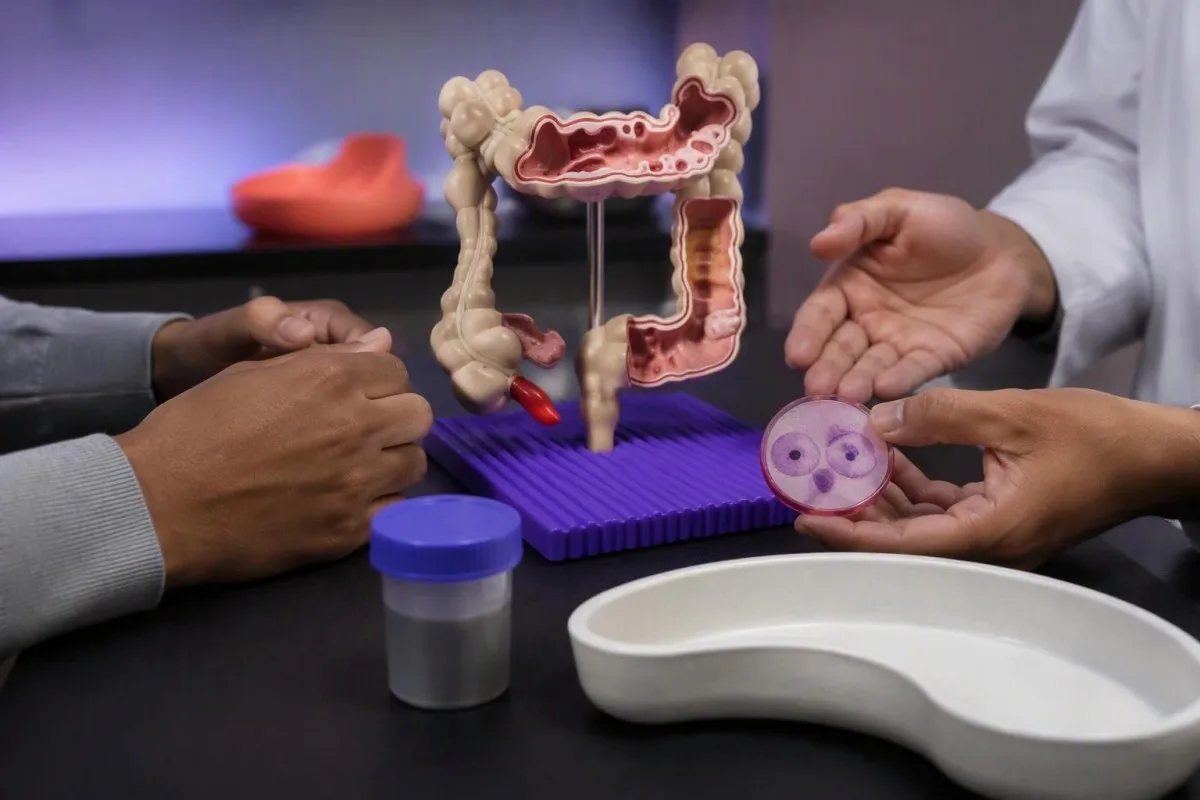
Detection and causation are separate questions. A stool panel can identify an organism accurately without establishing why someone has abdominal pain or diarrhea, so 1 positive result is a finding to interpret rather than a prescription trigger; the organism may be incidental, contributory, or unrelated to the current illness.
.Әр сүзнең CDC clinical care guidance says asymptomatic Dientamoeba fragilis detection generally does not require treatment and that medication may help some symptomatic people when it is the only organism found (CDC, 2024). Finding only 1 organism strengthens a possible explanation, but it still does not exclude celiac disease, medication effects, or a functional bowel disorder.
For example, consider a hypothetical adult with 2 days of loose stools after a household stomach bug whose panel detects Dientamoeba fragilis. If symptoms are already settling and hydration is adequate, observation may be more sensible than immediately adding an antimicrobial that can itself cause nausea or diarrhea.
Kantesti is an AI blood test analyzer that can explain accompanying laboratory findings, but it cannot determine from a stool PCR whether this organism caused your symptoms. We explain that boundary through our organizational information; the clinical decision depends on more than 1 laboratory result.
What does a Dientamoeba fragilis stool test actually detect?
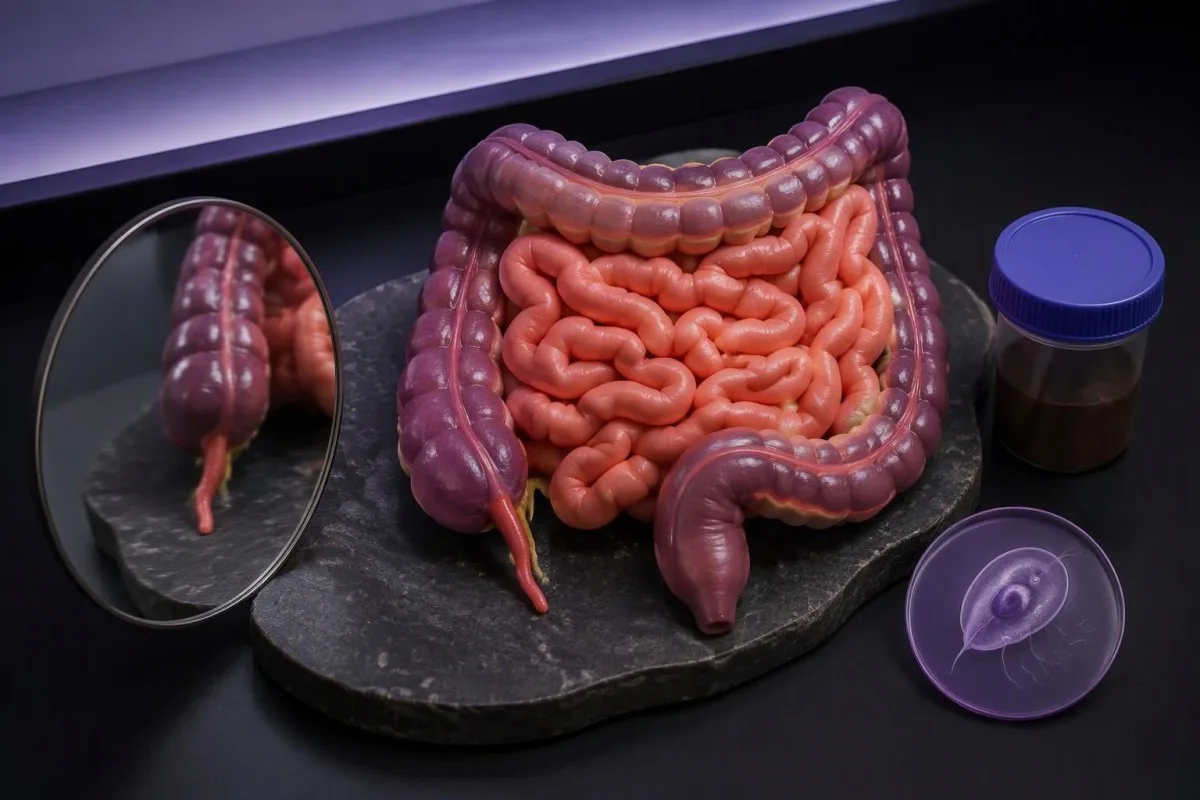
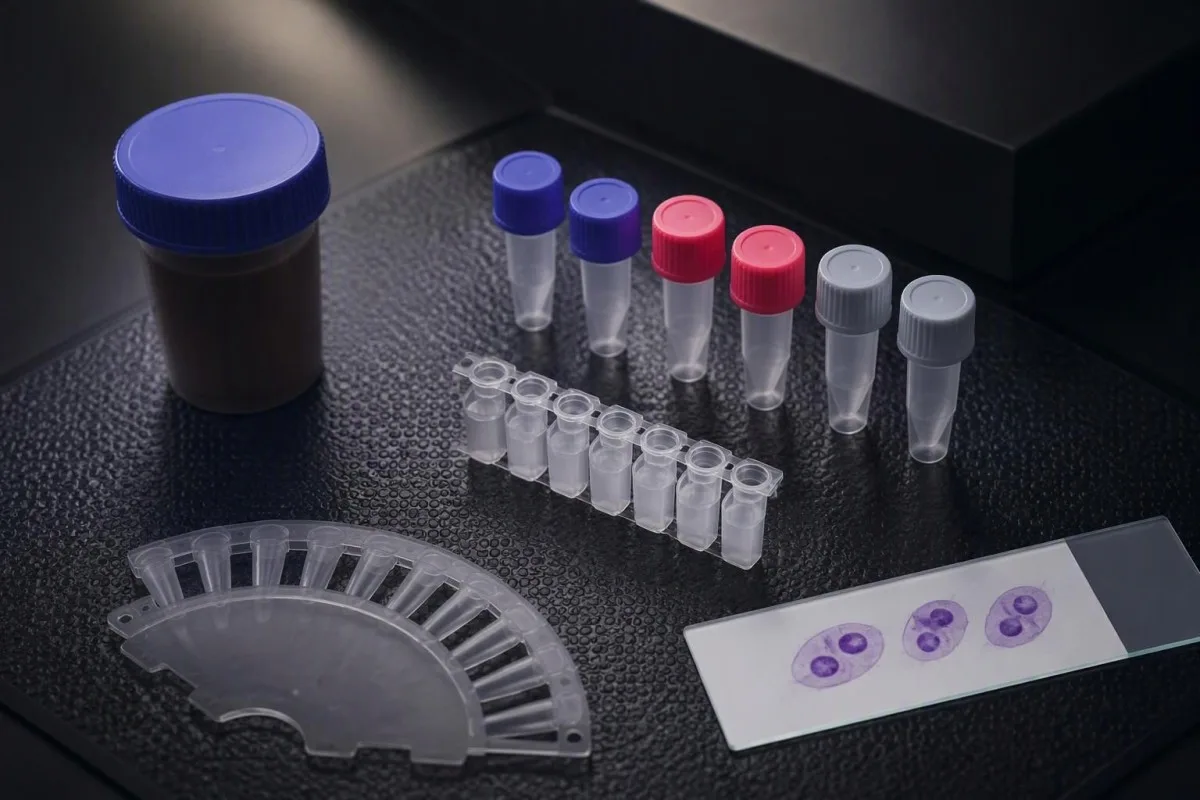
A Dientamoeba fragilis stool PCR detects genetic material from the organism in the submitted sample. It does not directly establish organism viability, tissue damage, or symptom causation, and there is no validated universal PCR cutoff that determines whether treatment is necessary.
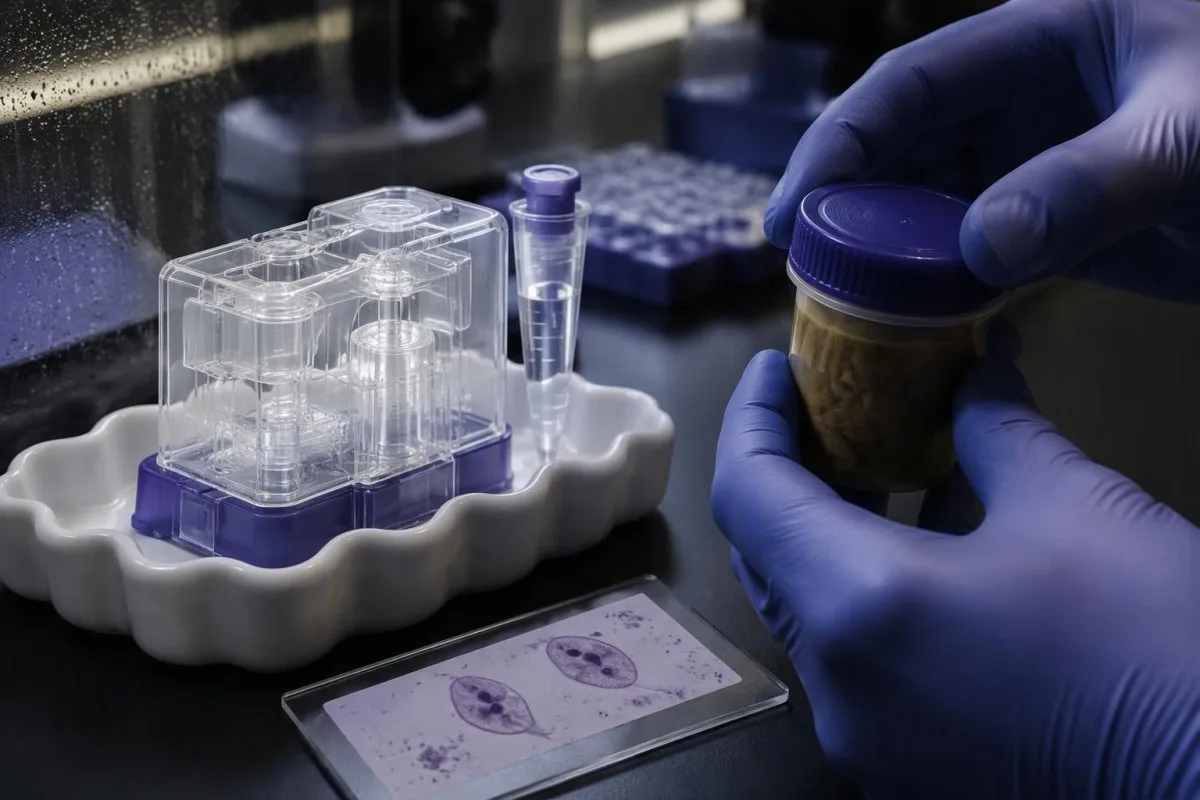
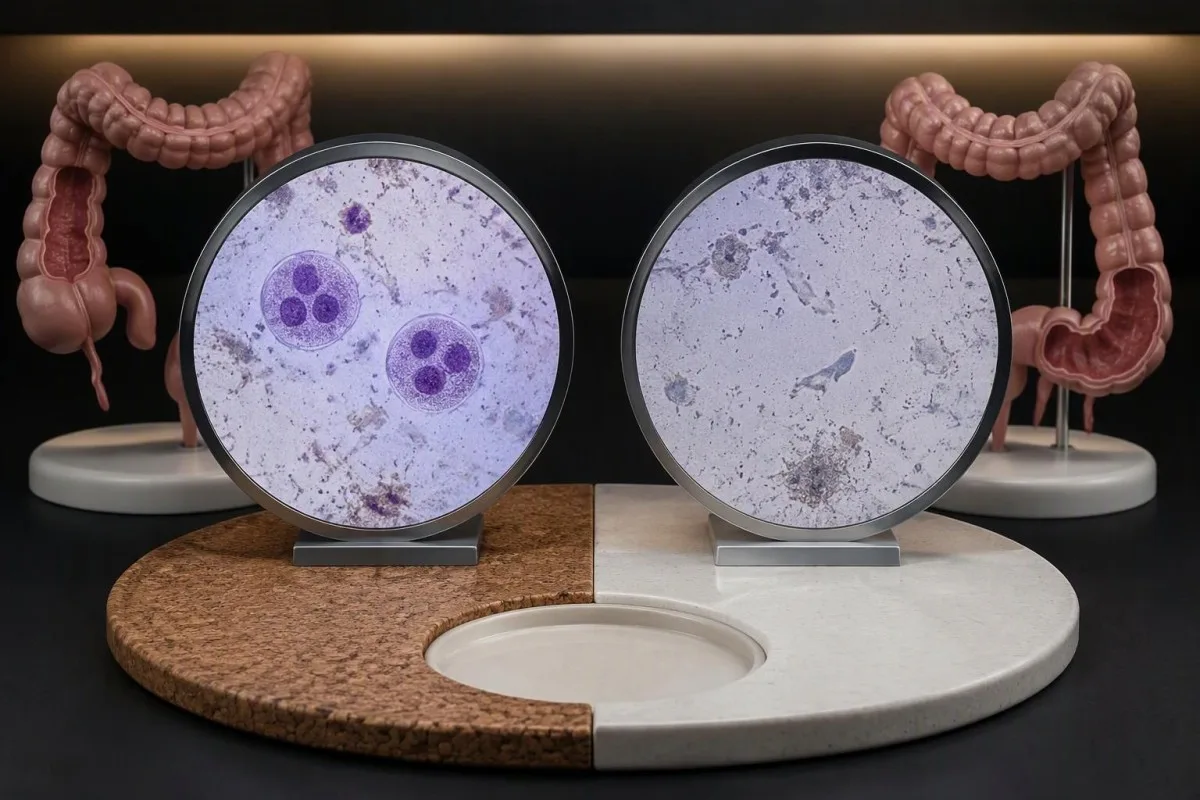
Dientamoeba fragilis is an intestinal protozoan, not a worm. Its name can be misleading: it belongs to a group related to trichomonads rather than ordinary amoebae, and microscopic trophozoites commonly have 1 or 2 nuclei; seeing the name on a report does not imply an invasive infection throughout the body.
Most clinical reports use detected/not detected, rather than a clinically validated severity scale. If a laboratory supplies a cycle threshold, a lower value usually indicates more target material within that assay, but differences in extraction, stool consistency, and platforms prevent a number from functioning as a universal treatment threshold; our сыйфат һәм сан нәтиҗәләре буенча белешмәمىز хисап бирү аермасын аңлата.
PCR and microscopy can disagree without either result being meaningless. PCR is generally more sensitive, whereas microscopy depends on preservation, staining, and expertise; traditional parasite microscopy may require specimens collected on 3 separate days because organism shedding and visibility vary, while a validated molecular assay may use a single specimen.
Check the actual panel contents before assuming other infections were excluded. A negative result for 5 listed pathogens says nothing about an organism the panel never tested, and some gastrointestinal panels do not include Dientamoeba fragilis at all; ask whether your result came from a targeted assay or a broader panel.
When is positive PCR more likely to be incidental carriage?
Incidental carriage is more likely when the person has no symptoms, symptoms have already resolved, or another explanation fits better. A repeated positive result can demonstrate ongoing detection, but 2 positive samples still do not establish that Dientamoeba fragilis is causing illness.
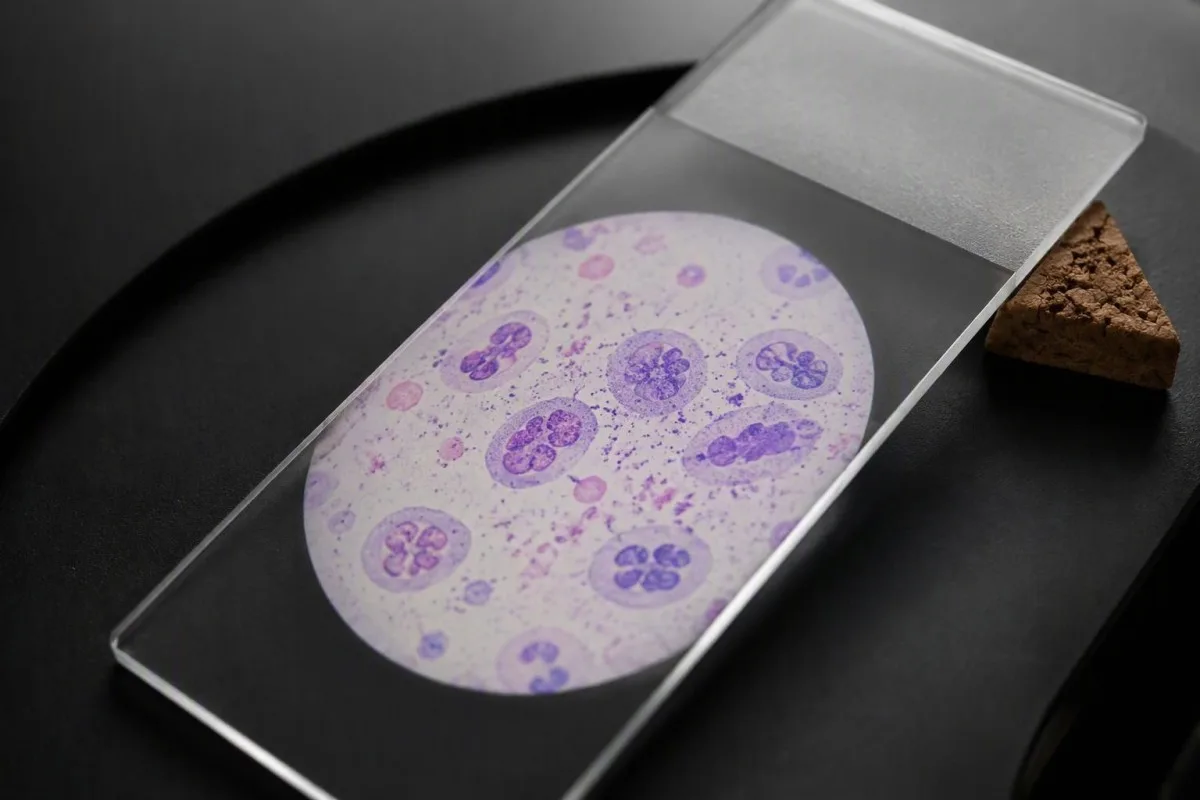
Asymptomatic detection is real, not automatically a laboratory error. Sensitive PCR testing finds organisms that older methods missed, including in people who feel well; because prevalence differs substantially between settings, age groups, and assays, a single percentage from 1 population should not be used to estimate your personal likelihood of illness.
.Әр сүзнең timing of symptoms can weaken an apparent association. A hypothetical person with 5 years of alternating constipation and diarrhea who receives a first positive stool PCR has not necessarily acquired a new explanation for those longstanding symptoms; the test cannot date acquisition or show whether the organism was present before symptoms started.
A positive commercial microbiome report is not equivalent to a clinical diagnosis. Relative abundance, proprietary risk scores, and organisms reported outside validated pathogen testing may not have established treatment implications; before acting on 1 highlighted finding, review our discussion of микробиомны тикшерүнең чикләүләре.
Бер asymptomatic household contact is not automatically a treatment candidate. Screening and treating every family member after 1 positive result can create avoidable medication exposure; contact testing is more reasonably discussed when several people have persistent compatible symptoms, or when a specialist or local public-health team identifies a specific reason.
Which Dientamoeba fragilis symptoms could be relevant?
Reported Dientamoeba fragilis symptoms include loose stools, abdominal discomfort, bloating, and sometimes nausea or reduced appetite. None is specific to this organism, so clinicians assess the symptom pattern, duration, and functional impact rather than assuming that 1 positive PCR explains everything.
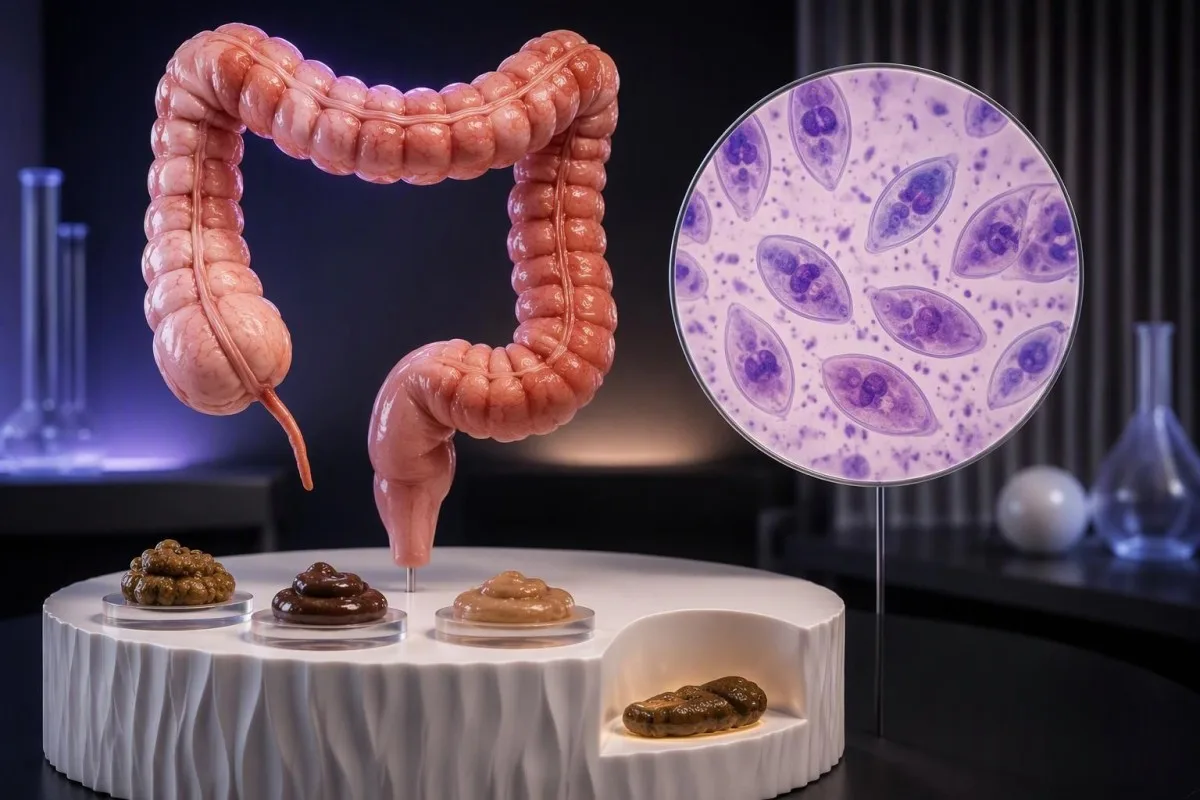
Stool consistency is often more useful than the word diarrhea. On the 7-category Bristol Stool Chart, types 6 and 7 describe mushy and watery stools; recording those types alongside frequency helps distinguish persistent loose stools from frequent but formed bowel movements, as explained in our тизәк консистенциясе турындагы кулланмабыз.
A 7-day symptom diary can clarify whether the illness is continuous or meal-related. Record bowel frequency, stool type, nighttime waking, abdominal discomfort, medicines, and missed activities; a pattern that repeatedly follows a particular food may suggest malabsorption or intolerance, although dietary associations alone do not diagnose either condition.
Stool color does not identify Dientamoeba fragilis. Yellow stools can accompany rapid transit, dietary changes, or fat malabsorption, and 1 unusual bowel movement is not a parasite-specific sign; our explanation of yellow stool causes helps separate color changes from more informative accompanying features.
For example, a hypothetical adult with 4 loose stools daily for 6 weeks, stable weight, and no other pathogen detected has a more plausible treatment discussion than someone whose brief illness has ended. Even then, the assessment should consider medication effects, celiac disease, and inflammatory or functional conditions before assigning causation.
Which symptoms should not be blamed on Dientamoeba fragilis?
Blood in stool, substantial dehydration, severe or localized abdominal pain, persistent fever, and unintentional weight loss need assessment beyond a positive Dientamoeba fragilis result. These findings can signal another condition, and clinicians should not allow 1 detected organism to delay appropriate investigation.
Seek urgent medical help for severe pain, collapse, confusion, or inability to keep fluids down. A temperature around 38°C or higher combined with significant illness deserves prompt advice, although age, immune status, and other symptoms matter more than a single cutoff; emergency symptoms should not wait for a repeat parasite test.
Күренә red blood or black, tarry stool is not a typical finding to dismiss as uncomplicated dientamoebiasis. Iron tablets and some foods can change stool color, but 1 episode accompanied by dizziness, weakness, or significant pain warrants prompt assessment; our нәҗестәге канга бәйле кисәтүче билгеләр explain why appearance and accompanying symptoms matter.
Diarrhea that wakes someone from sleep and progressive weight loss broaden the differential diagnosis. Unintentional loss of more than 5% of body weight over 6–12 months is a commonly used clinical warning threshold, but smaller losses can still matter in children, frail adults, or someone losing weight rapidly.
Reduced urine output can indicate сусызлану, especially when accompanied by thirst, dizziness, or dry mouth. Do not wait for a precise number of hours if the person appears unwell; infants, older adults, pregnant people, and those with kidney disease need a lower threshold for clinical advice than a healthy adult with 1 mild loose stool.
What if the stool panel detects another pathogen too?
When another pathogen is detected, clinicians compare its established disease pattern with the symptoms before prioritizing Dientamoeba fragilis treatment. A panel with 2 positive targets may reflect coinfection, persistent shedding, or incidental carriage; it does not automatically justify treating both organisms.
Giardia has a better-established relationship with persistent diarrhea and malabsorption than Dientamoeba fragilis. If both are detected in a hypothetical person with 3 weeks of loose, greasy stools after untreated-water exposure, a clinician may prioritize Giardia-directed care; our Giardia treatment and recovery guide explains the different evidence base.
Campylobacter detection does not automatically require antibiotics either, despite its established role in gastroenteritis. Severity, illness duration, and vulnerability determine the decision, so 2 detected organisms still require 2 separate clinical judgments; compare our discussion of Campylobacter antibiotic decisions rather than assuming all stool positives follow one rule.
Соңгы antibiotic exposure changes the assessment because it raises concern for antibiotic-associated diarrhea and C. difficile. A positive screening assay with a negative toxin result creates another detection-versus-disease problem, particularly when someone does not have at least 3 unformed stools in 24 hours; our C. difficile буенча туры килмәгән нәтиҗәләр guide describes that distinction.
A negative panel is not a complete gastrointestinal evaluation. Even a panel covering 20 organisms cannot identify bile acid diarrhea, microscopic colitis, celiac disease, or every travel-related infection; the test menu, exposure history, and symptom duration determine whether additional microbiology or a noninfectious workup makes more sense.
Does Dientamoeba fragilis treatment reliably improve symptoms?
Dientamoeba fragilis treatment does not reliably produce symptom improvement, and the evidence is mixed. A randomized, placebo-controlled trial involving 96 children found that metronidazole did not improve clinical outcomes more than placebo, even though treatment initially increased organism eradication.
Röser et al. reported the trial in Clinical Infectious Diseases in 2014. Children aged 3–12 years received a 10-day course of metronidazole or placebo, and the study did not establish a clinical benefit from metronidazole; that result argues against routine treatment of every symptomatic child with a positive test.
The trial does not prove that all treatments are ineffective in every patient. It evaluated 1 medication in a particular pediatric population, so its findings cannot automatically be extended to paromomycin, every adult presentation, or unusual clinical circumstances; uncertainty should narrow claims rather than be converted into either universal treatment or universal dismissal.
Before-and-after improvement is weaker evidence than a randomized comparison. Over a 2-week period, symptoms may improve naturally, fluctuate, or respond to changes in diet and other medicines; an uncontrolled report of feeling better after treatment cannot reliably separate those explanations from a specific effect on Dientamoeba fragilis.
Вакытында Кантести, we distinguish organism eradication, symptom recovery, and study design as 3 separate issues when explaining this uncertainty. Our digestive symptom research guide provides broader context, but it is not direct evidence that antimicrobial treatment improves outcomes in Dientamoeba-positive patients.
Which medicines may clinicians use, and what are the limits?
Clinicians may use paromomycin or metronidazole for selected symptomatic patients, but medication choice does not resolve uncertainty about causation. CDC adult guidance lists paromomycin at 25–35 mg/kg/day in 3 divided doses for 7 days; this is prescribing information, not an instruction to self-treat.
Paromomycin mainly acts within the intestinal lumen. A retrospective adult study by van Hellemond et al. in 2012 found better eradication with paromomycin than some alternatives, but the nonrandomized design cannot establish superior symptom relief; its findings support a medication discussion, not a guaranteed cure for abdominal discomfort.
.Әр сүзнең CDC adult metronidazole regimen is 500–750 mg orally 3 times daily for 10 days (CDC, 2024). Nausea, altered taste, medication interactions, and occasional neurologic adverse effects matter; pediatric dosing differs, and pregnancy, breastfeeding, liver disease, or other medical conditions require a prescriber to assess the specific choice.
Medication reconciliation should happen before prescribing. Metronidazole can increase warfarin's anticoagulant effect, so a person taking warfarin may need an individualized INR monitoring plan rather than merely a routine 10-day prescription; our guide to антибиотиклар һәм INR үзгәрешләре explains the mechanism and monitoring considerations.
A penicillin allergy label does not automatically prohibit either of these medicines because they are not penicillins. However, any previous reaction to the proposed drug itself needs review, and 1 vague historical allergy label should not substitute for a full medication history; our allergy label reassessment guide explains that separate issue.
When do clinicians investigate other causes before prescribing?
Clinicians often investigate other causes before prescribing when symptoms are longstanding, atypical, associated with warning signs, or poorly explained by the stool result. Diarrhea lasting 4 weeks or longer is commonly classified as chronic, making a structured noninfectious assessment particularly useful.
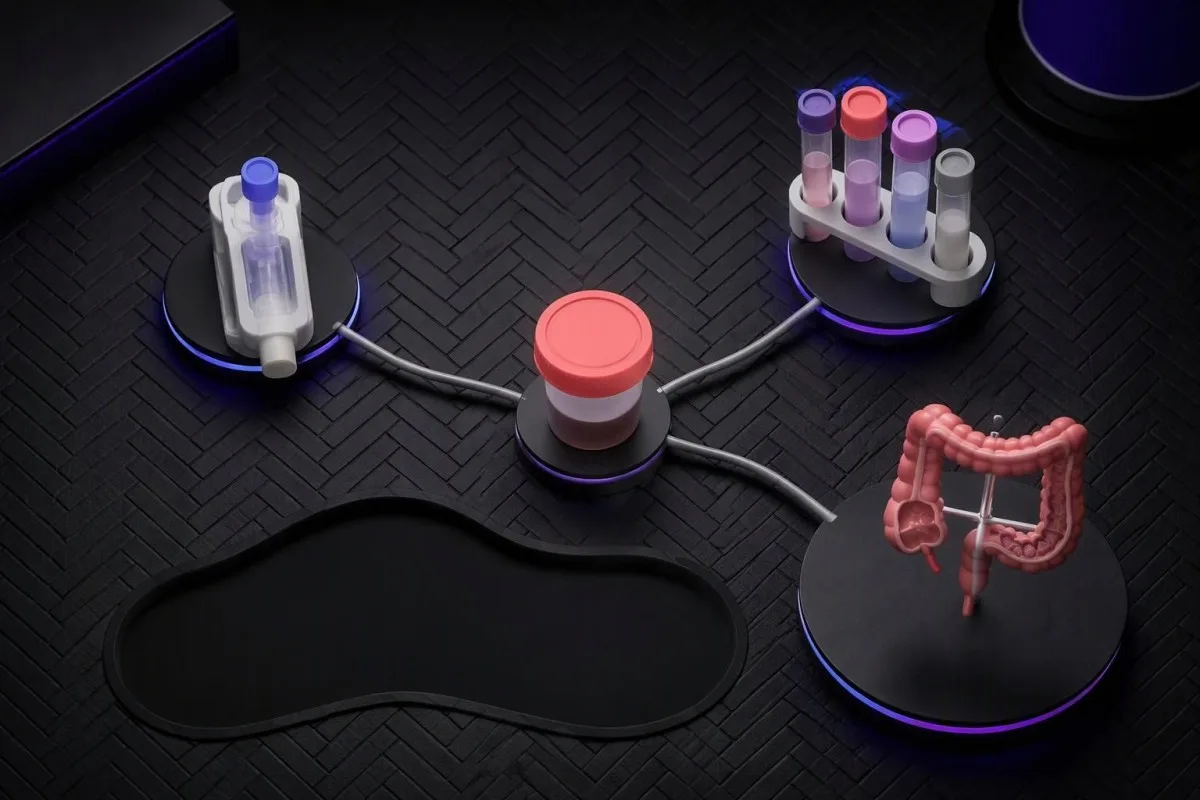
Medication effects are a high-yield starting point. Metformin, magnesium-containing products, laxatives, and some antibiotics can cause loose stools; if a hypothetical person develops diarrhea 1 week after a dose increase, that timeline may be more informative than incidental parasite detection, although prescribed medicines should not be stopped without advice.
A fecal calprotectin below 50 µg/g is a common adult laboratory reference threshold, while values above roughly 250 µg/g may strengthen concern for intestinal inflammation in an appropriate clinical pathway. These are not universal diagnostic boundaries: age, infection, NSAID use, and laboratory methods affect interpretation, as discussed in our borderline calprotectin follow-up белешмәләрне кулланырга тиеш.
Celiac screening commonly combines tissue transglutaminase IgA with total IgA. Reducing gluten before testing can make results falsely reassuring, and IgA deficiency changes which antibody tests are appropriate; if gluten has already been removed for several weeks, our gluten challenge planning guide explains why clinicians individualize the next step.
A normal initial workup does not make every alternative disappear. In someone with 6 months of watery diarrhea, clinicians may consider bile acid diarrhea or microscopic colitis; the latter can require colon examination with tissue sampling even when the bowel looks normal, while an IBS diagnosis depends on a compatible pattern and appropriate exclusion of warning features.
Can blood tests show whether Dientamoeba fragilis is causing illness?
Routine blood tests cannot establish that Dientamoeba fragilis caused digestive symptoms. They can identify consequences or competing explanations, such as dehydration, anemia, inflammation, or nutrient deficiency; no validated CBC, CRP, or eosinophil cutoff confirms symptomatic disease from this organism.

CBC and ferritin can reveal an alternative reason for fatigue. In otherwise healthy adults, ferritin below 15 µg/L strongly supports depleted iron stores, although inflammation can raise ferritin and obscure deficiency; fatigue with low iron should not automatically be attributed to 1 stool finding, as our түбән ферритин симптомнары буенча кулланма аңлата.
For example, imagine an adult with ferritin 9 µg/L and hemoglobin 108 g/L alongside a positive stool PCR. Those hypothetical results warrant investigation of iron deficiency and its cause, not an assumption that treating the protozoan will correct the anemia; our тимерне өйрәнүләрне аңлату юллыгы shows why multiple markers matter.
Eosinophilia is not a reliable marker of Dientamoeba fragilis disease. An eosinophil count above 0.5 × 10^9/L is commonly considered elevated, but allergies, medicines, and some helminth infections are more typical explanations; a positive Dientamoeba test should not stop clinicians from investigating substantial or persistent eosinophilia separately.
Kantesti is an AI blood test interpretation platform that explains CBC, ferritin, CRP, and kidney-function results without treating them as proof of parasite causation. A CRP of 3 mg/L may fall within a laboratory's standard reference interval, yet normal inflammatory markers do not exclude celiac disease, microscopic colitis, or other explanations for persistent diarrhea.
How do treatment decisions differ for children and vulnerable adults?
Children, pregnant people, frail adults, and immunocompromised patients need individualized assessment rather than an automatic response to positive PCR. In children, growth, hydration, and symptom severity matter especially; the randomized metronidazole trial in 96 children supports caution about routine prescribing.

Growth faltering should prompt a broader pediatric evaluation. A hypothetical child with 6 weeks of loose stools and a falling growth trajectory needs assessment of intake, celiac disease, inflammation, and other causes; Dientamoeba fragilis detection may be relevant, but it should not become the only explanation considered.
Children can become dehydrated more quickly than healthy adults, particularly when vomiting accompanies diarrhea. Oral rehydration solution prepared exactly as directed is preferable to guessing electrolyte amounts, and 1 clearly unwell child with reduced urine, unusual drowsiness, or inability to drink needs prompt advice rather than waiting for a medication trial.
Pregnancy changes medication selection, not the meaning of PCR. A positive result still does not establish causation, while gestational stage, symptom burden, and drug-specific safety information influence prescribing; a person who is 10 weeks pregnant should discuss treatment with the maternity or prescribing team rather than using another household member's medication.
Immunosuppression lowers the threshold for evaluating other opportunistic causes, but it does not make this organism automatically responsible. Kantesti AI does not replace pediatric or specialist assessment; our discussion of AI балалар өчен интерпретациясе explains why adult reference ranges and 1 abnormal result can be misleading.
Should you repeat the stool test after treatment?
Repeat testing is not automatically necessary after symptoms resolve, and a test-of-cure plan should be agreed with the treating clinician. Persistent symptoms require reassessment; 1 repeat positive PCR does not by itself justify another course, and a negative result does not explain ongoing symptoms.
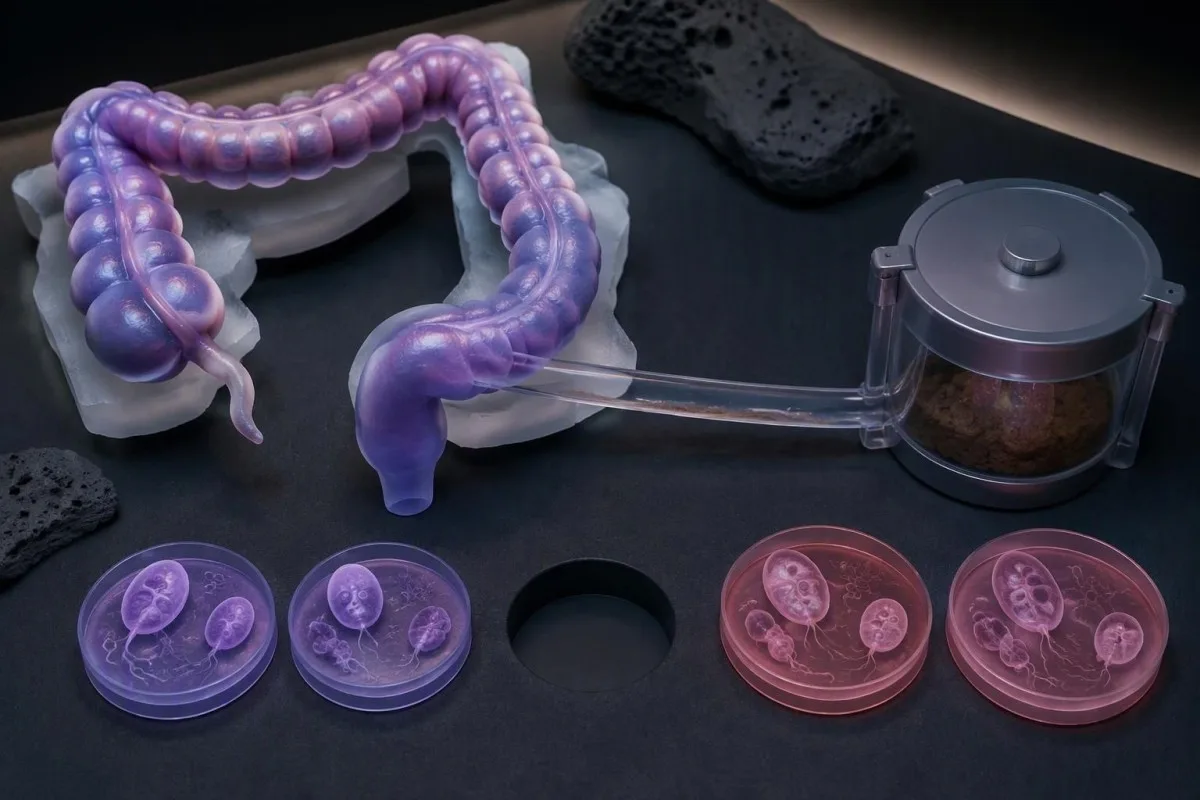
Testing immediately after treatment can be difficult to interpret. PCR detects genetic material rather than directly measuring living organisms, and there is no universal Dientamoeba-specific interval that makes every result definitive; instead of choosing an arbitrary day 3 test, ask what question the repeat test is intended to answer.
A positive repeat result may reflect persistence, reacquisition, or assay-related timing considerations. Those possibilities have different implications, so before prescribing course 2 a clinician should review adherence, the original symptom pattern, household exposures, and whether the first course changed anything that mattered to the patient.
A negative PCR with ongoing bloating shifts attention toward other explanations rather than proving treatment failure. Selected patients with risk factors may warrant a breath-test discussion, but bloating alone should not trigger indiscriminate SIBO testing; our breath test preparation guide explains why protocol and pretest probability matter.
Define success before treatment starts. For a hypothetical adult, improvement from 5 watery stools per day to 1–2 formed stools is a meaningful outcome, whereas an unchanged symptom diary with a negative PCR is laboratory clearance without demonstrated symptom benefit; documenting both prevents repeated medication from becoming the default response.
What practical steps help without unnecessary household treatment?
Handwashing, careful bathroom hygiene, safe food handling, and clear follow-up records are reasonable steps after a positive result. The exact transmission routes of Dientamoeba fragilis remain incompletely resolved, so 1 positive household test does not justify promises that a particular cleaning routine will prevent recurrence.

Wash hands with soap and water after toilet use and before preparing food. Scrubbing for about 20 seconds is a standard general hygiene recommendation, not a Dientamoeba-specific eradication method; gloves do not replace handwashing, and bathrooms should be cleaned using ordinary product instructions rather than improvised chemical mixtures.
The proposed connection with pinworm transmission is not settled. Nighttime anal itching may justify a separate assessment, sometimes involving a morning tape test on 3 occasions, but a positive Dientamoeba PCR alone is not a reason to give everyone a deworming medicine or assume pinworms are present.
Kantesti is an AI-powered blood test analysis tool that can help explain accompanying laboratory results while stool-management decisions remain with the clinician. Keep the symptom diary, medicine list, and test dates together as 3 distinct records; our үрнәк аңлату эш агымнарын карый ала describe educational workflows rather than evidence that our service treats intestinal parasites.
A shared household record should respect consent and minimize unnecessary identifiers. If 2 family members have symptoms, each person's clinical assessment and treatment decision remain separate; our хосусыйлык һәм мәгълүмат белән эш итү тәртибе explain how we approach information handling, but your clinician's secure communication channel should be used for prescribing and urgent advice.
What should you ask your clinician, and which research supports the decision?
Ask whether Dientamoeba fragilis plausibly explains your symptoms, which alternatives need checking, and what benefit would justify treatment. The most useful evidence separates symptom outcomes from organism eradication; a 10-day treatment course and a negative follow-up test are not, by themselves, proof of clinical benefit.

Bring 4 items to the appointment: the full stool report, a medication list, a symptom timeline, and any relevant accompanying laboratory results. Ask what would change the decision—another pathogen, celiac antibodies, a concerning calprotectin result, or spontaneous improvement—and agree on when to return if symptoms persist or warning signs develop.
A 7-day diary can make observation an active plan rather than doing nothing. Maintain fluids and tolerated foods; oral rehydration solution can help replace diarrheal losses, but restrictive diets, herbal parasite cleanses, and supplements have no established role in eradicating Dientamoeba fragilis and should not delay investigation of persistent symptoms.
.Әр сүзнең 3 external sources below have different evidentiary roles: CDC provides clinical prescribing guidance, Röser et al. provide randomized pediatric symptom-outcome evidence, and van Hellemond et al. provide retrospective adult eradication data. Кантести applies медицина эчтәлегенә стандартлар that distinguish these study designs instead of presenting them as equally strong proof.
.Әр сүзнең 2 Figshare publications listed below are general educational resources, not trials of Dientamoeba fragilis treatment; the women's health guide does not provide direct evidence for this decision. A DOI establishes a persistent identifier, not clinical validation, and our technical and clinical methodology should likewise not be mistaken for proof that AI can establish the cause of digestive symptoms.
Еш бирелгән сораулар
Dientamoeba fragilis өчен PCR анализы уңай нәтиҗә күрсәтсә, миңа антибиотиклар кирәкме?
Dientamoeba fragilis өчен PCR нәтиҗәсе уңай булу антимикроб препаратлар белән дәваланырга кирәк дигәнне автоматик рәвештә аңлатмый. Симптомнары булмаган кешеләргә, гадәттә, дару кирәкми, һәм 1 уңай нәҗес анализы нәтиҗәсе ашкайнату симптомнарының сәбәбен ачыклый алмый. Симптомнар озакка сузылганда, башка сәбәпләр тикшерелгәндә һәм организмның симптомнарга сәбәп булуы ихтимал дип саналганда, табиблар дәвалау билгеләүне карарга мөмкин. Көчле авырту, сусызлану яки нәҗестә кан булу PCR нәтиҗәсеннән тыш тикшерүне таләп итә.
Dientamoeba fragilis дәвалаусыз гына бетә аламы?
0 Dientamoeba fragilis-ны ачыклау дәваланусыз да тискәре булырга мөмкин, ә ашкайнату симптомнары организмнан арынуга бәйсез рәвештә дә басылырга мөмкин. Күзәтү урынлы булганда, 7 көнлек симптомнар көндәлеге яхшыруны теркәргә ярдәм итә ала. Үзеннән-үзе савыгу да, соңрак алынган тискәре PCR нәтиҗәсе дә организмның баштагы авыруны китереп чыгарганын исбатламый. Симптомнар дәвам итсә яки көчәя барса, чиксез көтү урынына хәлне яңадан бәяләргә кирәк.
Dientamoeba fragilis өчен иң яхшы дәвалау нинди?
Dientamoeba fragilis уңай нәтиҗәле һәр пациентта симптомнарны җиңеләйтү өчен иң яхшы дәвалау ысулы бертөрле билгеләнмәгән. CDCның олылар өчен күрсәтмәсендә паромомицин 25–35 мг/кг/тәүлек күләмендә, 3кә бүлеп, 7 көн дәвамында кабул итү тәкъдим ителә, ә метронидазол — башка бер вариант. Ретроспектив дәлилләр организмны юк итүдә паромомицинның өстен булуын күрсәтә, ләкин организмны юк итү симптомнарның яхшыруы белән бер үк нәрсә түгел. Табиб препарат сайлаганда яшьне, йөклелекне, медицина шартларын һәм дарулар белән бәйләнешләрне исәпкә алып, һәр очракка аерым карар кабул итәргә тиеш.
Ни өчен Dientamoeba fragilis дәвалавыннан соң да симптомнарым кала?
Dientamoeba fragilis белән дәваланганнан соң симптомнарның саклануы микроорганизмның төп сәбәп булмавын, башка бер халәт булуын яки дәвалауның аны ачыклауны бетермәвен аңлатырга мөмкин. PCR нәтиҗәсенең тискәре булуы целиакияне, дару белән бәйле диареяне, микроскопик колитны яки функциональ эчәк бозылышын кире какмый. 4 атна яки аннан озаграк дәвам иткән диарея, гадәттә, хроник диареяне структуралы бәяләүне таләп итә. Симптомнар дәвам иткәнгә генә кабат дару курсы билгеләү урынына, башта яңадан бәяләү үткәрелергә тиеш.
Dientamoeba fragilis булган балаларны дәваларгамы?
Dientamoeba fragilis булган балаларны табуретка PCR нәтиҗәсе уңай булуга гына нигезләнеп автоматик рәвештә дәваларга ярамый. 3–12 яшьлек 96 бала катнашкан рандомизацияләнгән тикшеренүдә 10 көнлек метронидазол курсы плацебо белән чагыштырганда клиник нәтиҗәләрне яхшыртмаган. Балаларны дәвалау турында карар кабул иткәндә симптомнарның дәвам итүен, организмның сусызлануын, үсешен, башка диагнозларны һәм препаратның куркынычсызлык үзенчәлекләрен исәпкә алырга кирәк. Үсешнең тоткарлануы яки баланың ачык чирле булуы, паразит нәтиҗәсенә карамастан, клиник бәяләүне таләп итә.
Should my family be tested or treated if my result is positive?
A single Dientamoeba fragilis-positive household member does not automatically justify testing or treating every contact. Asymptomatic detection generally does not require treatment, while 2 or more people with persistent compatible symptoms may justify a household discussion with a clinician. Soap-and-water handwashing for about 20 seconds is reasonable general hygiene, but it is not a proven guarantee against Dientamoeba recurrence. Pinworm assessment is a separate decision rather than an automatic consequence of positive PCR.
Кан анализы нәтиҗәләрен аңлатып алыгыз
Лаборатория хисабыгызны йөкләгез, һәм Kantesti AI һәр биомаркерны секундлар эчендә гади тел белән аңлатыр. Дөнья буйлап 2 миллионнан артык кеше куллана.
Сылтамалар
- Klein, T., Mitchell, S., & Weber, H. (2026). Ач торганнан соң эч китү, тизәктәге кара нокталар һәм ашказаны-эчәк системасы буенча белешмәлек, 2026. Kantesti AI медицина тикшеренүләре. DOI
- Klein, T., Mitchell, S., & Weber, H. (2026). Хатын-кызлар сәламәтлеге буенча белешмәлек: овуляция, менопауза һәм гормональ симптомнар. Kantesti AI медицина тикшеренүләре. DOI
- Авыруларны контрольдә тоту һәм профилактикалау үзәкләре (2024). Clinical Care of Dientamoeba fragilis. CDC Clinical Guidance.
- Röser D et al. (2014). Metronidazole Therapy for Treating Dientamoebiasis in Children Is Not Associated With Better Clinical Outcomes: A Randomized, Double-Blinded and Placebo-Controlled Clinical Trial. Клиник йогышлы авырулар. DOI
- van Hellemond JJ et al. (2012). Is paromomycin the drug of choice for eradication of Dientamoeba fragilis in adults? International Journal for Parasitology: Drugs and Drug Resistance.
- 2М +Анализланган тестлар
- 127+Илләр
- 100+Телләр
Медицина командасы турында


E-E-A-T ышаныч сигналлары
Тәҗрибә
Табиб җитәкчелегендә лаборатория нәтиҗәләрен аңлату эш процессларын клиник тикшерү.
Белгечлек
Лаборатория медицинасы: биомаркерларның клиник контекстта үз-үзләрен тотышын аңлау.
Авторититет
Доктор Томас Кляйн медицина ягыннан тикшерде; доктор Сара Митчелл һәм профессор доктор Һанс Вебер үз өлешләрен кертте.
Ышанычлылык
Ачык күзәтү юллары белән куркуны киметү өчен дәлилләргә нигезләнгән аңлату.





Медицина турында кисәтү
Бу мәкалә бары тик белем бирү максатларында гына һәм медицина киңәше булып тормый. Диагноз һәм дәвалау карарлары өчен һәрвакыт квалификацияле сәламәтлек саклау белгеченә мөрәҗәгать итегез.
Басылып чыкты · Редакция командасына мөрәҗәгать итегез
Kantesti Ltd нәшер итә, Англия һәм Уэльста теркәлгән, компания №. 17090423, Лондон, Бөекбритания.
