
Jákvætt PCR-próf úr hægðum þýðir ekki sjálfkrafa að þú þurfir lyfjameðferð. Ákvarðanir um meðferð ráðast af viðvarandi einkennum, öðrum mögulegum skýringum og óvissu um tengsl þess að útrýma lífverunni og þess að líða betur.

Helstu niðurstöður
- Jákvæð PCR greinir erfðaefni Dientamoeba fragilis; 1 jákvæð niðurstaða staðfestir ekki að lífveran hafi valdið meltingareinkennum þínum.
- Engin einkenni þýðir yfirleitt að meðferðar sé ekki þörf, jafnvel þótt hægðapróf greini Dientamoeba fragilis.
- Viðvarandi niðurgangur sem varir í 14 daga eða lengur þarf endurmat, en tímalengdin ein og sér sannar ekki að Dientamoeba fragilis sé orsökin.
- Meðferðargögn fela í sér slembiraðaða rannsókn á 96 börnum þar sem metrónídazól bætti klínískar niðurstöður ekki meira en lyfleysa.
- Parómómýsín er meðferðarúrræði sem læknir velur; leiðbeiningar CDC fyrir fullorðna tilgreina 25–35 mg/kg/dag í 3 skömmtum á dag í 7 daga.
- Kalkprótín undir 50 µg/g er algeng viðmiðunarmörk fyrir rannsóknarstofumælingar hjá fullorðnum, ekki próf sem staðfestir eða útilokar Dientamoeba fragilis með einkennum.
- Viðvörunarmerki á borð við blóð í hægðum, mikla kviðverki, vökvaskort eða óviljandi þyngdartap kalla á mat umfram jákvæðu PCR-niðurstöðuna.
- Eftirfylgni ætti að meta einkenni jafnt sem niðurstöður rannsókna; útrýming sýkils og bati einkenna eru 2 ólíkar útkomur.
Þarf að meðhöndla jákvæða niðurstöðu fyrir Dientamoeba fragilis?
Jákvæð PCR-niðurstaða fyrir Dientamoeba fragilis í hægðum kallar ekki sjálfkrafa á meðferð. Fólk án einkenna þarf yfirleitt ekki lyf; læknar geta íhugað meðferð þegar meltingareinkenni vara, sýkillinn gæti með trúverðugum hætti tengst þeim og aðrar skýringar hafa verið metnar.
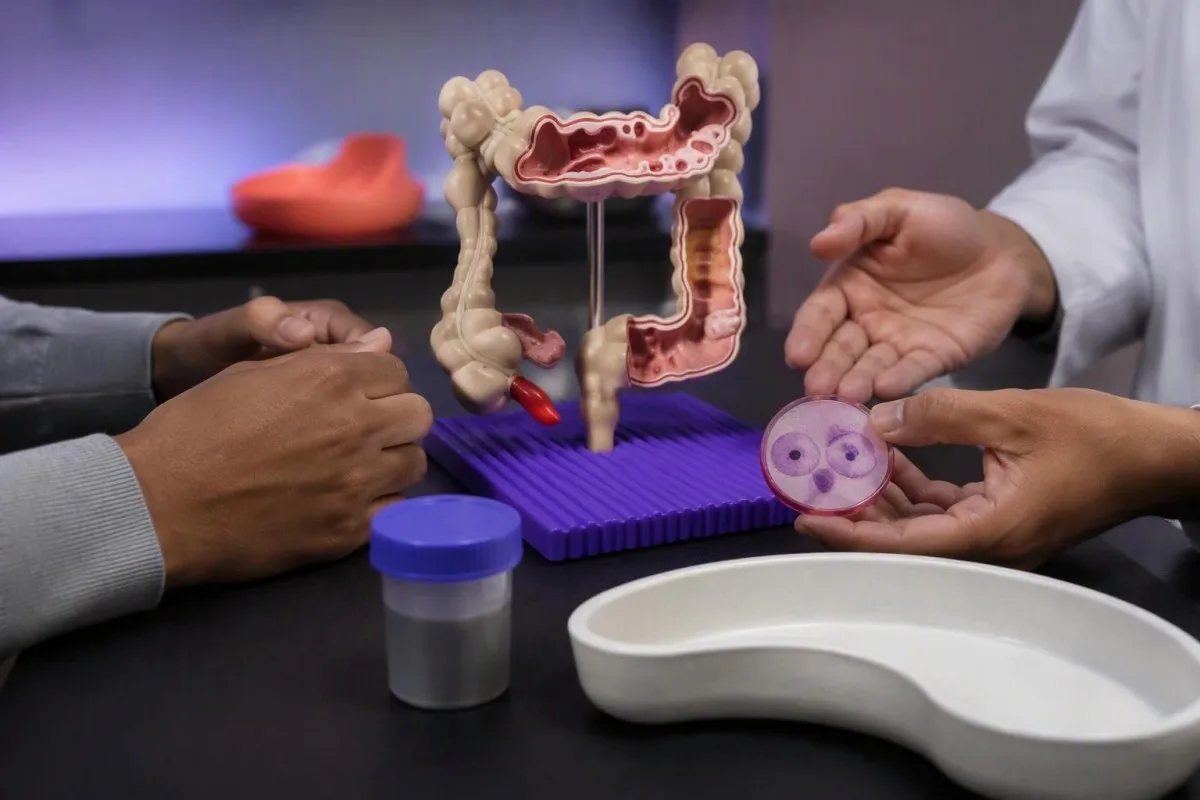
Greining og orsakasamband eru tvær aðskildar spurningar. Hægðapróf getur greint sýkil með nákvæmum hætti án þess að skera úr um hvers vegna einhver er með kviðverki eða niðurgang, þannig að 1 jákvæð niðurstaða er atriði sem þarf að túlka fremur en sjálfvirk ábending um lyfseðil; sýkillinn getur verið tilfallandi, átt þátt í einkennum eða verið ótengdur núverandi veikindum.
The Klínískar leiðbeiningar CDC segja að greining á Dientamoeba fragilis hjá einkennalausum kalli almennt ekki á meðferð og að lyf geti hjálpað sumum með einkenni þegar það er eini sýkillinn sem finnst (CDC, 2024). Það að aðeins 1 sýkill finnist styrkir mögulega skýringu, en útilokar samt ekki glútenóþol, áhrif lyfja eða starfræna þarmaröskun.
Tökum sem dæmi ímyndaðan fullorðinn einstakling sem hefur verið með lausar hægðir í 2 daga eftir magapest sem gekk á heimilinu og þar sem Dientamoeba fragilis greinist í sýnaprófi. Ef einkennin eru þegar farin að lagast og vökvun er nægileg gæti verið skynsamlegra að fylgjast með en að bæta strax við örverueyðandi lyfi sem getur sjálft valdið ógleði eða niðurgangi.
Kantesti er gervigreindarblóðprófslesari sem getur útskýrt tengdar rannsóknarniðurstöður, en hann getur ekki ákvarðað út frá PCR-prófi á hægðum hvort þessi sýkill hafi valdið einkennum þínum. Við útskýrum þessi mörk í gegnum upplýsingar um starfsemina okkar; klínísk ákvörðun byggist á meira en 1 rannsóknarniðurstöðu.
Hvað greinir hægðapróf fyrir Dientamoeba fragilis í raun?
PCR-próf á hægðum fyrir Dientamoeba fragilis greinir erfðaefni sýkilsins í innsenda sýninu. Það staðfestir ekki með beinum hætti lífvænleika sýkilsins, vefjaskemmdir eða hvort hann valdi einkennum, og engin almennt viðurkennd PCR-viðmiðunarmörk hafa verið staðfest til að skera úr um hvort meðferð sé nauðsynleg.
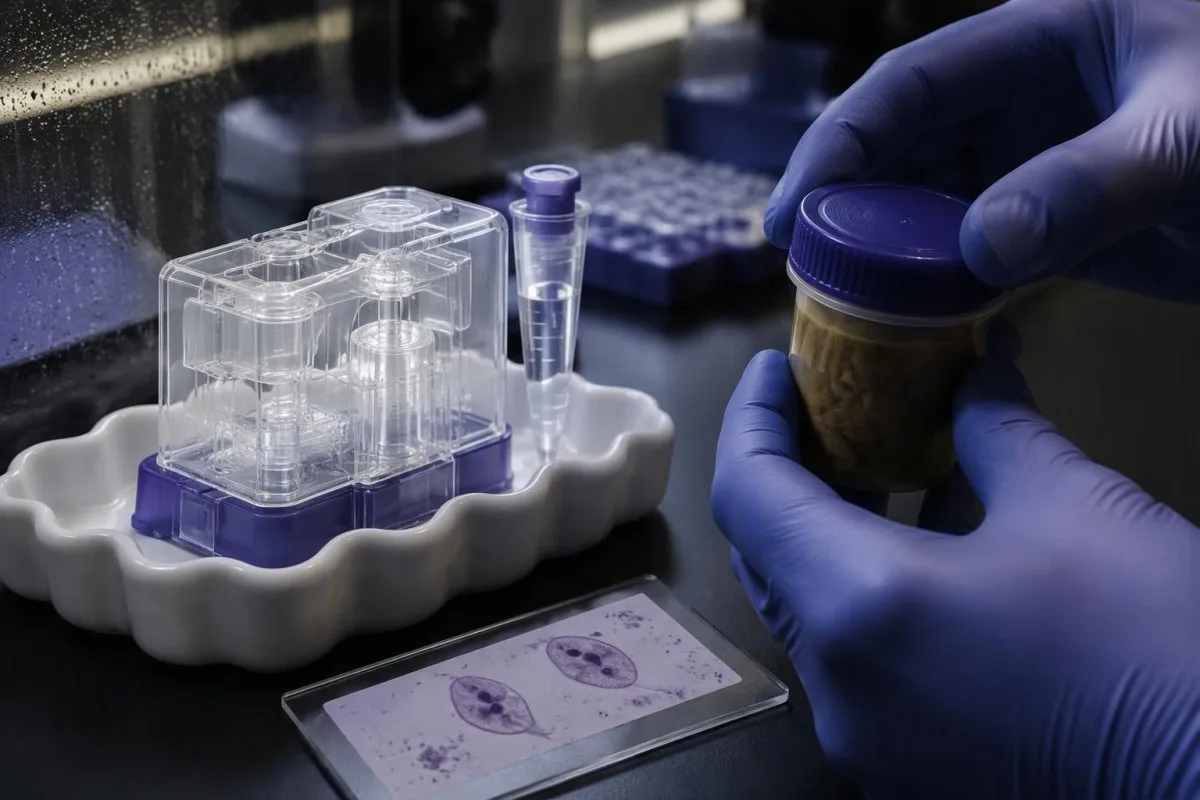
Dientamoeba fragilis er frumdýr í þörmum, ekki ormur. Nafnið getur verið villandi: það tilheyrir hópi sem er skyldur tríkómónöðum fremur en hefðbundnum amöbum, og trophozoítar þess hafa oft 1 eða 2 kjarna; það að sjá nafnið á rannsóknarskýrslu felur ekki í sér ífarandi sýkingu um allan líkamann.
Í flestum klínískum skýrslum er notað greint/ekki greint, fremur en klínískt staðfestur alvarleikakvarði. Ef rannsóknarstofa gefur upp þröskuldsgildi hringrásar gefur lægra gildi yfirleitt til kynna meira markefni í viðkomandi prófi, en munur á útdrætti, þéttleika hægða og prófunarkerfum kemur í veg fyrir að tala geti talist almenn viðmiðunarmörk fyrir meðferð; okkar eigindlegar og megindlegar niðurstöður útskýrir muninn á tilkynningu.
PCR og smásjárskoðun geta gefið ósamhljóða niðurstöður án þess að önnur hvor niðurstaðan sé merkingarlaus. PCR is generally more sensitive, whereas microscopy depends on preservation, staining, and expertise; traditional parasite microscopy may require specimens collected on 3 separate days because organism shedding and visibility vary, while a validated molecular assay may use a single specimen.
Check the actual panel contents before assuming other infections were excluded. A negative result for 5 listed pathogens says nothing about an organism the panel never tested, and some gastrointestinal panels do not include Dientamoeba fragilis at all; ask whether your result came from a targeted assay or a broader panel.
Hvenær er líklegra að jákvætt PCR-próf endurspegli einkennalausa sýklaburði?
Incidental carriage is more likely when the person has no symptoms, symptoms have already resolved, or another explanation fits better. A repeated positive result can demonstrate ongoing detection, but 2 positive samples still do not establish that Dientamoeba fragilis is causing illness.
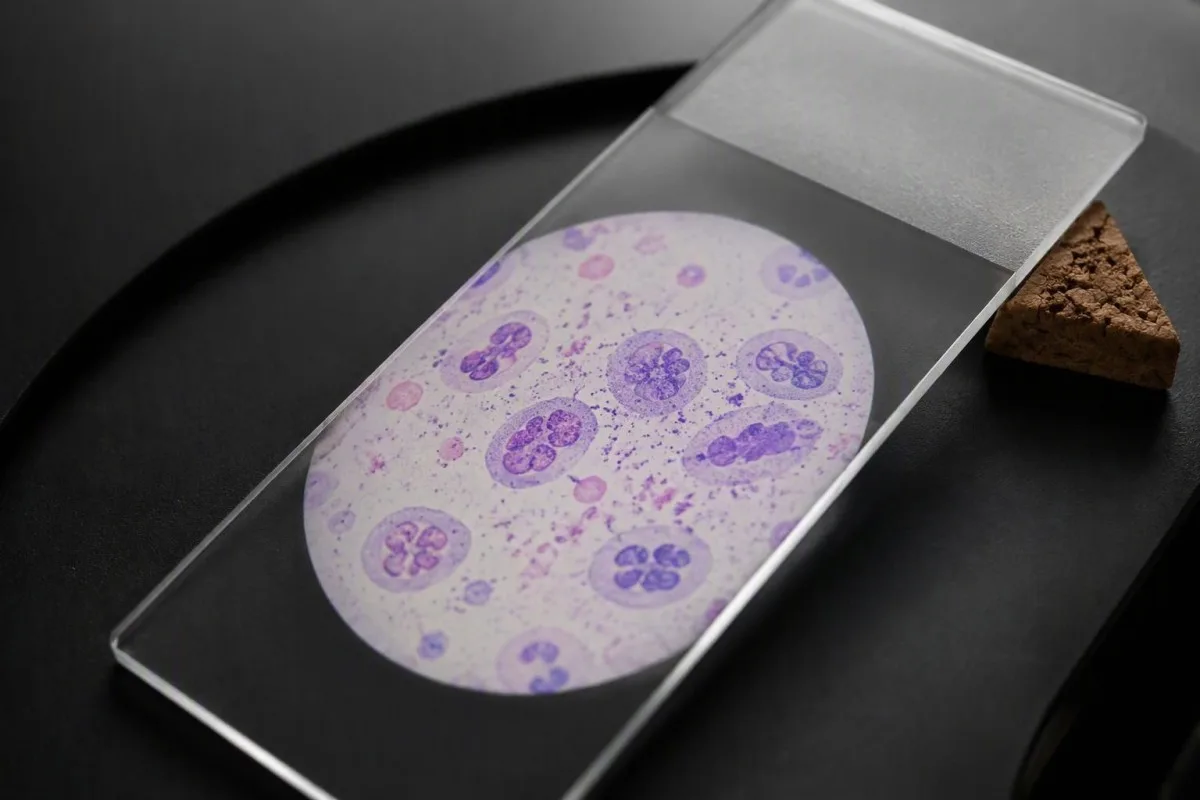
Asymptomatic detection is real, not automatically a laboratory error. Sensitive PCR testing finds organisms that older methods missed, including in people who feel well; because prevalence differs substantially between settings, age groups, and assays, a single percentage from 1 population should not be used to estimate your personal likelihood of illness.
The timing of symptoms can weaken an apparent association. A hypothetical person with 5 years of alternating constipation and diarrhea who receives a first positive stool PCR has not necessarily acquired a new explanation for those longstanding symptoms; the test cannot date acquisition or show whether the organism was present before symptoms started.
A positive commercial microbiome report is not equivalent to a clinical diagnosis. Relative abundance, proprietary risk scores, and organisms reported outside validated pathogen testing may not have established treatment implications; before acting on 1 highlighted finding, review our discussion of takmarkanir örveruflóruprófa.
An asymptomatic household contact is not automatically a treatment candidate. Screening and treating every family member after 1 positive result can create avoidable medication exposure; contact testing is more reasonably discussed when several people have persistent compatible symptoms, or when a specialist or local public-health team identifies a specific reason.
Hvaða einkenni Dientamoeba fragilis gætu skipt máli?
Reported Dientamoeba fragilis symptoms include loose stools, abdominal discomfort, bloating, and sometimes nausea or reduced appetite. None is specific to this organism, so clinicians assess the symptom pattern, duration, and functional impact rather than assuming that 1 positive PCR explains everything.

Stool consistency is often more useful than the word diarrhea. On the 7-category Bristol Stool Chart, types 6 and 7 describe mushy and watery stools; recording those types alongside frequency helps distinguish persistent loose stools from frequent but formed bowel movements, as explained in our samkvæmni hægða.
A 7-day symptom diary can clarify whether the illness is continuous or meal-related. Record bowel frequency, stool type, nighttime waking, abdominal discomfort, medicines, and missed activities; a pattern that repeatedly follows a particular food may suggest malabsorption or intolerance, although dietary associations alone do not diagnose either condition.
Stool color does not identify Dientamoeba fragilis. Yellow stools can accompany rapid transit, dietary changes, or fat malabsorption, and 1 unusual bowel movement is not a parasite-specific sign; our explanation of yellow stool causes helps separate color changes from more informative accompanying features.
For example, a hypothetical adult with 4 loose stools daily for 6 weeks, stable weight, and no other pathogen detected has a more plausible treatment discussion than someone whose brief illness has ended. Even then, the assessment should consider medication effects, celiac disease, and inflammatory or functional conditions before assigning causation.
Hvaða einkenni ætti ekki að kenna Dientamoeba fragilis um?
Blood in stool, substantial dehydration, severe or localized abdominal pain, persistent fever, and unintentional weight loss need assessment beyond a positive Dientamoeba fragilis result. These findings can signal another condition, and clinicians should not allow 1 detected organism to delay appropriate investigation.
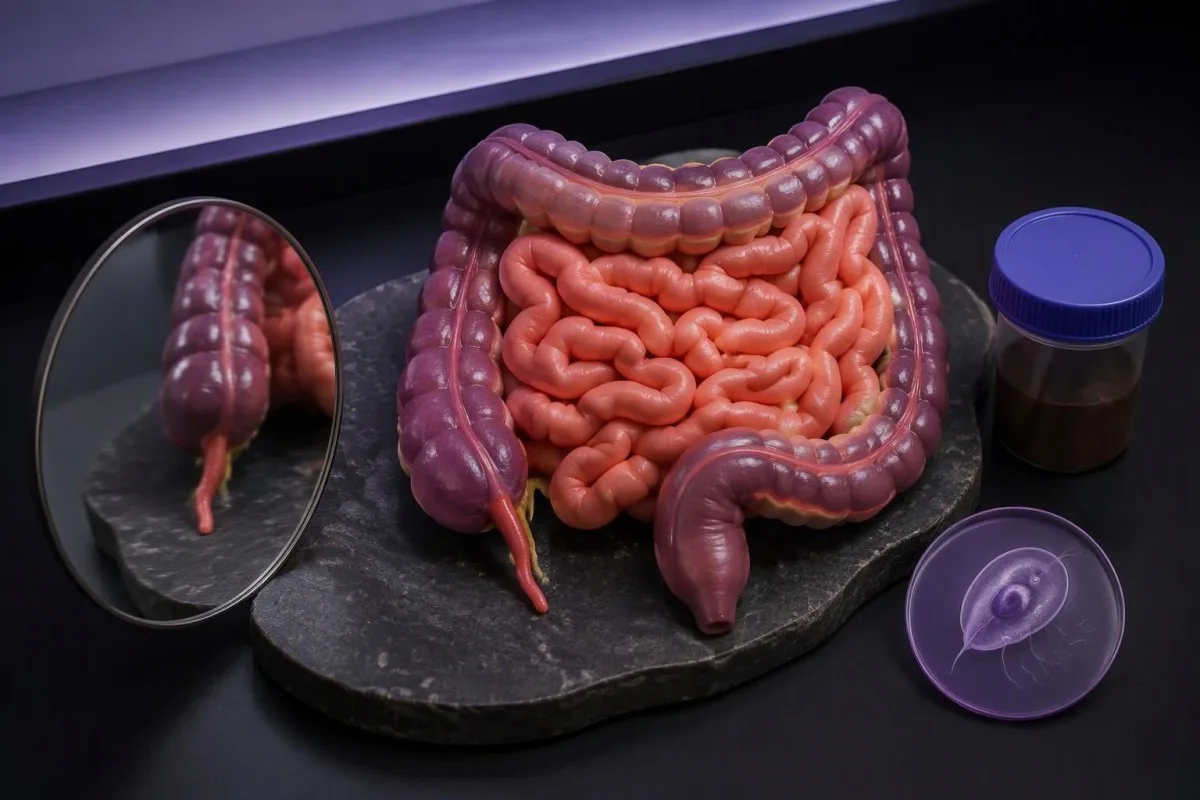
Seek urgent medical help for severe pain, collapse, confusion, or inability to keep fluids down. A temperature around 38°C or higher combined with significant illness deserves prompt advice, although age, immune status, and other symptoms matter more than a single cutoff; emergency symptoms should not wait for a repeat parasite test.
Sýnilegt red blood or black, tarry stool is not a typical finding to dismiss as uncomplicated dientamoebiasis. Iron tablets and some foods can change stool color, but 1 episode accompanied by dizziness, weakness, or significant pain warrants prompt assessment; our viðvörunarmerki um blóð í hægðum explain why appearance and accompanying symptoms matter.
Diarrhea that wakes someone from sleep and progressive weight loss broaden the differential diagnosis. Unintentional loss of more than 5% of body weight over 6–12 months is a commonly used clinical warning threshold, but smaller losses can still matter in children, frail adults, or someone losing weight rapidly.
Reduced urine output can indicate ofþornunar, especially when accompanied by thirst, dizziness, or dry mouth. Do not wait for a precise number of hours if the person appears unwell; infants, older adults, pregnant people, and those with kidney disease need a lower threshold for clinical advice than a healthy adult with 1 mild loose stool.
Hvað ef hægðapróf greinir einnig annan sýkingarvald?
When another pathogen is detected, clinicians compare its established disease pattern with the symptoms before prioritizing Dientamoeba fragilis treatment. A panel with 2 positive targets may reflect coinfection, persistent shedding, or incidental carriage; it does not automatically justify treating both organisms.
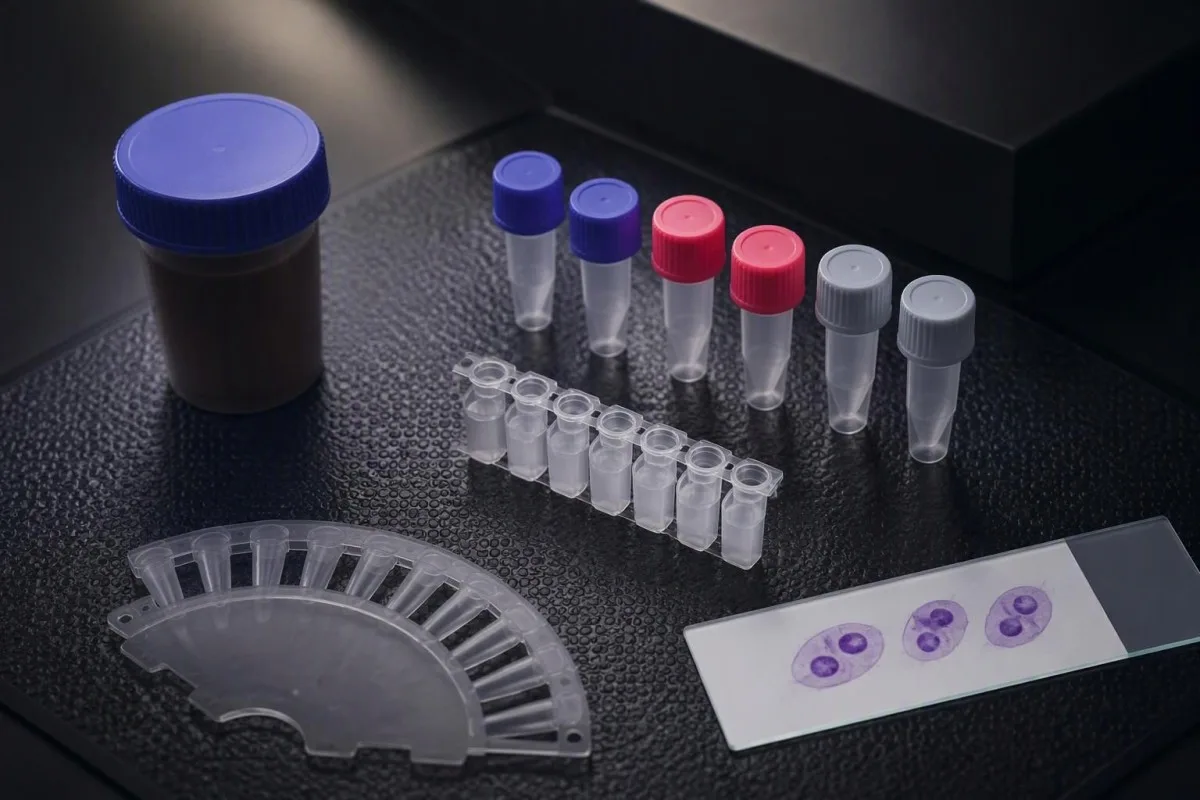
Giardia has a better-established relationship with persistent diarrhea and malabsorption than Dientamoeba fragilis. If both are detected in a hypothetical person with 3 weeks of loose, greasy stools after untreated-water exposure, a clinician may prioritize Giardia-directed care; our Giardia treatment and recovery guide explains the different evidence base.
Campylobacter detection does not automatically require antibiotics either, despite its established role in gastroenteritis. Severity, illness duration, and vulnerability determine the decision, so 2 detected organisms still require 2 separate clinical judgments; compare our discussion of Campylobacter antibiotic decisions rather than assuming all stool positives follow one rule.
Nýleg antibiotic exposure changes the assessment because it raises concern for antibiotic-associated diarrhea and C. difficile. A positive screening assay with a negative toxin result creates another detection-versus-disease problem, particularly when someone does not have at least 3 unformed stools in 24 hours; our ósamræmdar niðurstöður fyrir C. difficile guide describes that distinction.
A negative panel is not a complete gastrointestinal evaluation. Even a panel covering 20 organisms cannot identify bile acid diarrhea, microscopic colitis, celiac disease, or every travel-related infection; the test menu, exposure history, and symptom duration determine whether additional microbiology or a noninfectious workup makes more sense.
Dregur meðferð við Dientamoeba fragilis áreiðanlega úr einkennum?
Dientamoeba fragilis treatment does not reliably produce symptom improvement, and the evidence is mixed. A randomized, placebo-controlled trial involving 96 children found that metronidazole did not improve clinical outcomes more than placebo, even though treatment initially increased organism eradication.
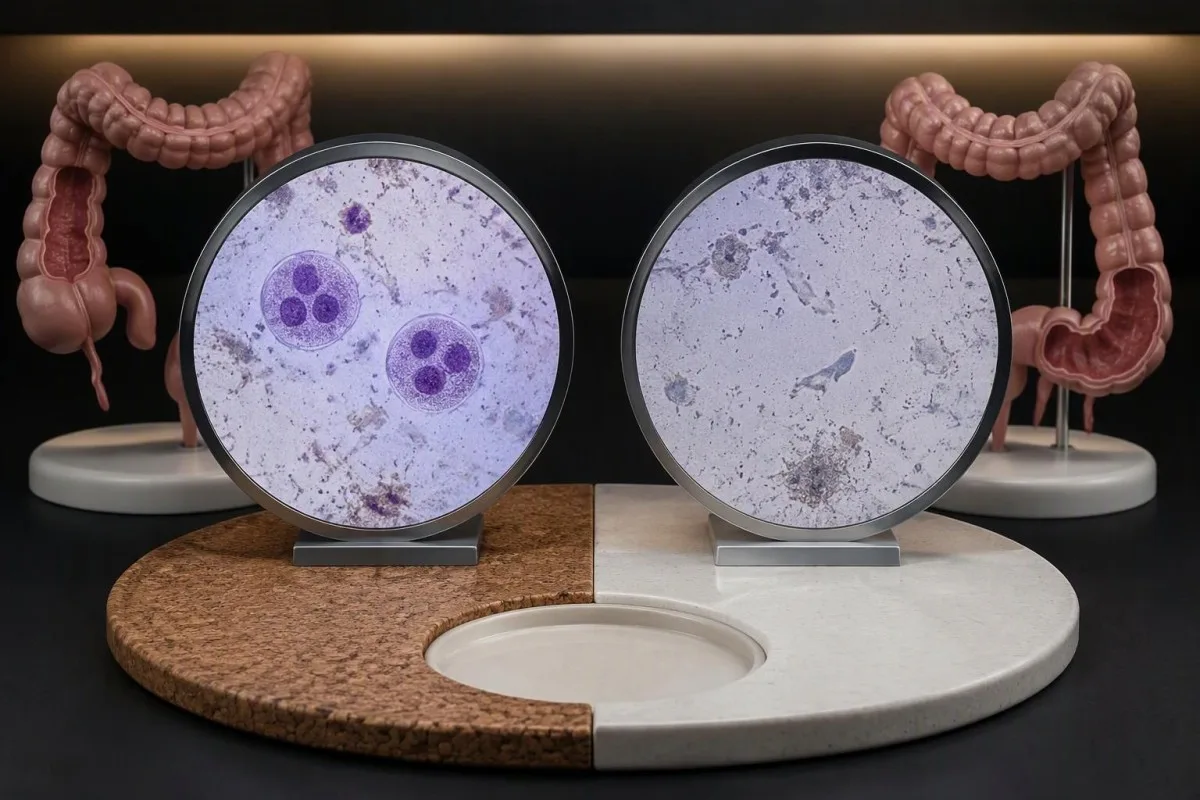
Röser et al. reported the trial in Clinical Infectious Diseases in 2014. Children aged 3–12 years received a 10-day course of metronidazole or placebo, and the study did not establish a clinical benefit from metronidazole; that result argues against routine treatment of every symptomatic child with a positive test.
The trial does not prove that all treatments are ineffective in every patient. It evaluated 1 medication in a particular pediatric population, so its findings cannot automatically be extended to paromomycin, every adult presentation, or unusual clinical circumstances; uncertainty should narrow claims rather than be converted into either universal treatment or universal dismissal.
Before-and-after improvement is weaker evidence than a randomized comparison. Over a 2-week period, symptoms may improve naturally, fluctuate, or respond to changes in diet and other medicines; an uncontrolled report of feeling better after treatment cannot reliably separate those explanations from a specific effect on Dientamoeba fragilis.
Kl Kantesti, we distinguish organism eradication, symptom recovery, and study design as 3 separate issues when explaining this uncertainty. Our digestive symptom research guide provides broader context, but it is not direct evidence that antimicrobial treatment improves outcomes in Dientamoeba-positive patients.
Hvaða lyf kunna læknar að nota og hverjar eru takmarkanir þeirra?
Clinicians may use paromomycin or metronidazole for selected symptomatic patients, but medication choice does not resolve uncertainty about causation. CDC adult guidance lists paromomycin at 25–35 mg/kg/day in 3 divided doses for 7 days; this is prescribing information, not an instruction to self-treat.
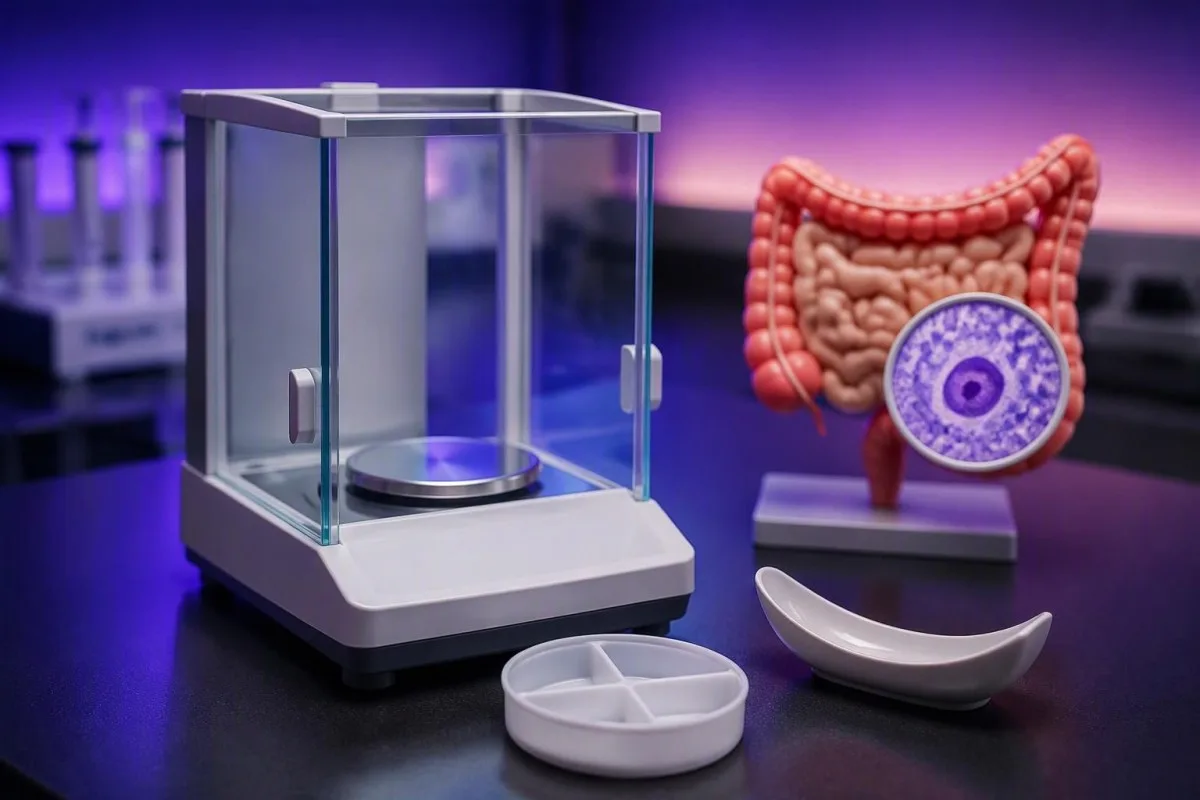
Paromomycin mainly acts within the intestinal lumen. A retrospective adult study by van Hellemond et al. in 2012 found better eradication with paromomycin than some alternatives, but the nonrandomized design cannot establish superior symptom relief; its findings support a medication discussion, not a guaranteed cure for abdominal discomfort.
The CDC adult metronidazole regimen is 500–750 mg orally 3 times daily for 10 days (CDC, 2024). Nausea, altered taste, medication interactions, and occasional neurologic adverse effects matter; pediatric dosing differs, and pregnancy, breastfeeding, liver disease, or other medical conditions require a prescriber to assess the specific choice.
Medication reconciliation should happen before prescribing. Metronidazole can increase warfarin's anticoagulant effect, so a person taking warfarin may need an individualized INR monitoring plan rather than merely a routine 10-day prescription; our guide to sýklalyf og breytingar á INR explains the mechanism and monitoring considerations.
A penicillin allergy label does not automatically prohibit either of these medicines because they are not penicillins. However, any previous reaction to the proposed drug itself needs review, and 1 vague historical allergy label should not substitute for a full medication history; our allergy label reassessment guide explains that separate issue.
Hvenær rannsaka læknar aðrar orsakir áður en þeir ávísa lyfjum?
Clinicians often investigate other causes before prescribing when symptoms are longstanding, atypical, associated with warning signs, or poorly explained by the stool result. Diarrhea lasting 4 weeks or longer is commonly classified as chronic, making a structured noninfectious assessment particularly useful.
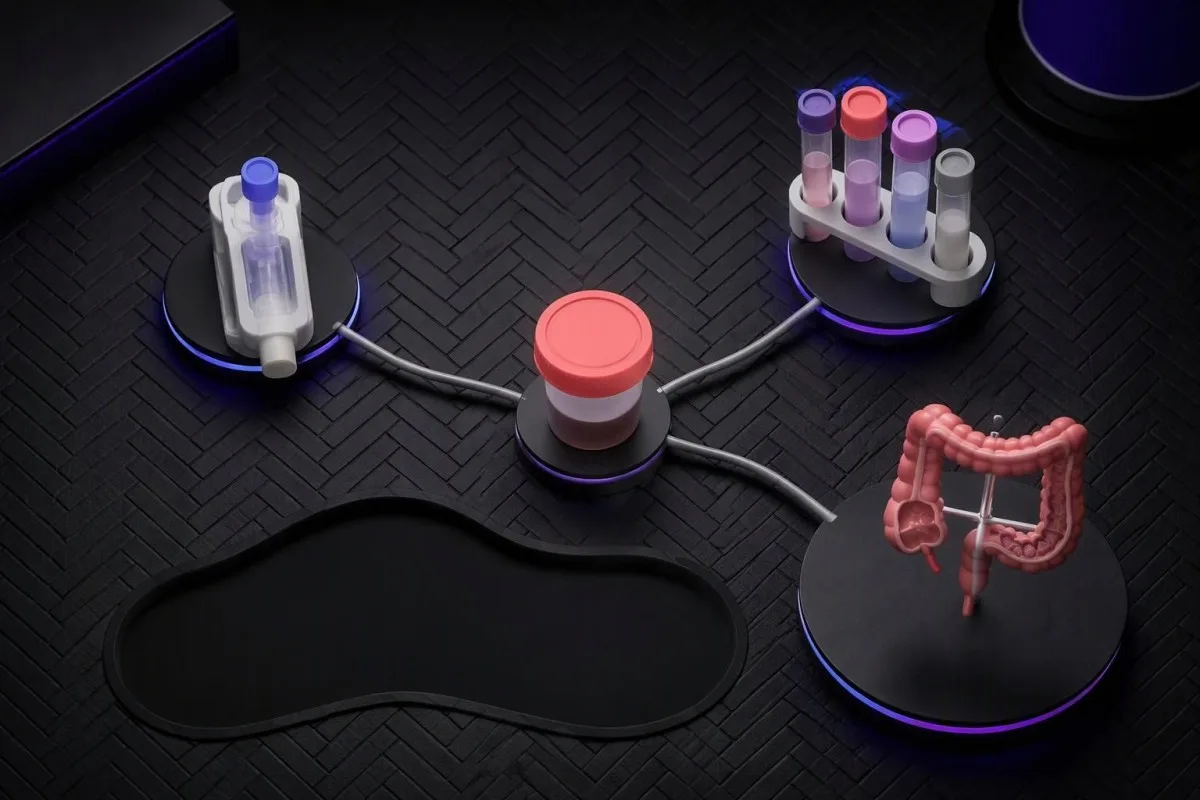
Medication effects are a high-yield starting point. Metformin, magnesium-containing products, laxatives, and some antibiotics can cause loose stools; if a hypothetical person develops diarrhea 1 week after a dose increase, that timeline may be more informative than incidental parasite detection, although prescribed medicines should not be stopped without advice.
A fecal calprotectin below 50 µg/g is a common adult laboratory reference threshold, while values above roughly 250 µg/g may strengthen concern for intestinal inflammation in an appropriate clinical pathway. These are not universal diagnostic boundaries: age, infection, NSAID use, and laboratory methods affect interpretation, as discussed in our borderline calprotectin follow-up leiða.
Celiac screening commonly combines tissue transglutaminase IgA with total IgA. Reducing gluten before testing can make results falsely reassuring, and IgA deficiency changes which antibody tests are appropriate; if gluten has already been removed for several weeks, our gluten challenge planning guide explains why clinicians individualize the next step.
A normal initial workup does not make every alternative disappear. In someone with 6 months of watery diarrhea, clinicians may consider bile acid diarrhea or microscopic colitis; the latter can require colon examination with tissue sampling even when the bowel looks normal, while an IBS diagnosis depends on a compatible pattern and appropriate exclusion of warning features.
Geta blóðpróf sýnt hvort Dientamoeba fragilis valdi veikindum?
Routine blood tests cannot establish that Dientamoeba fragilis caused digestive symptoms. They can identify consequences or competing explanations, such as dehydration, anemia, inflammation, or nutrient deficiency; no validated CBC, CRP, or eosinophil cutoff confirms symptomatic disease from this organism.

CBC and ferritin can reveal an alternative reason for fatigue. In otherwise healthy adults, ferritin below 15 µg/L strongly supports depleted iron stores, although inflammation can raise ferritin and obscure deficiency; fatigue with low iron should not automatically be attributed to 1 stool finding, as our leiðbeiningar um einkenni lágs ferritins útskýrir.
For example, imagine an adult with ferritin 9 µg/L and hemoglobin 108 g/L alongside a positive stool PCR. Those hypothetical results warrant investigation of iron deficiency and its cause, not an assumption that treating the protozoan will correct the anemia; our leiðbeiningar um túlkun blóðrannsókna shows why multiple markers matter.
Eosinophilia is not a reliable marker of Dientamoeba fragilis disease. An eosinophil count above 0.5 × 10^9/L is commonly considered elevated, but allergies, medicines, and some helminth infections are more typical explanations; a positive Dientamoeba test should not stop clinicians from investigating substantial or persistent eosinophilia separately.
Kantesti is an AI blood test interpretation platform that explains CBC, ferritin, CRP, and kidney-function results without treating them as proof of parasite causation. A CRP of 3 mg/L may fall within a laboratory's standard reference interval, yet normal inflammatory markers do not exclude celiac disease, microscopic colitis, or other explanations for persistent diarrhea.
Hvernig eru meðferðarákvarðanir mismunandi fyrir börn og viðkvæma fullorðna?
Children, pregnant people, frail adults, and immunocompromised patients need individualized assessment rather than an automatic response to positive PCR. In children, growth, hydration, and symptom severity matter especially; the randomized metronidazole trial in 96 children supports caution about routine prescribing.

Growth faltering should prompt a broader pediatric evaluation. A hypothetical child with 6 weeks of loose stools and a falling growth trajectory needs assessment of intake, celiac disease, inflammation, and other causes; Dientamoeba fragilis detection may be relevant, but it should not become the only explanation considered.
Children can become dehydrated more quickly than healthy adults, particularly when vomiting accompanies diarrhea. Oral rehydration solution prepared exactly as directed is preferable to guessing electrolyte amounts, and 1 clearly unwell child with reduced urine, unusual drowsiness, or inability to drink needs prompt advice rather than waiting for a medication trial.
Pregnancy changes medication selection, not the meaning of PCR. A positive result still does not establish causation, while gestational stage, symptom burden, and drug-specific safety information influence prescribing; a person who is 10 weeks pregnant should discuss treatment with the maternity or prescribing team rather than using another household member's medication.
Immunosuppression lowers the threshold for evaluating other opportunistic causes, but it does not make this organism automatically responsible. Kantesti AI does not replace pediatric or specialist assessment; our discussion of AI túlkun fyrir börn explains why adult reference ranges and 1 abnormal result can be misleading.
Ættir þú að endurtaka hægðaprófið eftir meðferð?
Repeat testing is not automatically necessary after symptoms resolve, and a test-of-cure plan should be agreed with the treating clinician. Persistent symptoms require reassessment; 1 repeat positive PCR does not by itself justify another course, and a negative result does not explain ongoing symptoms.
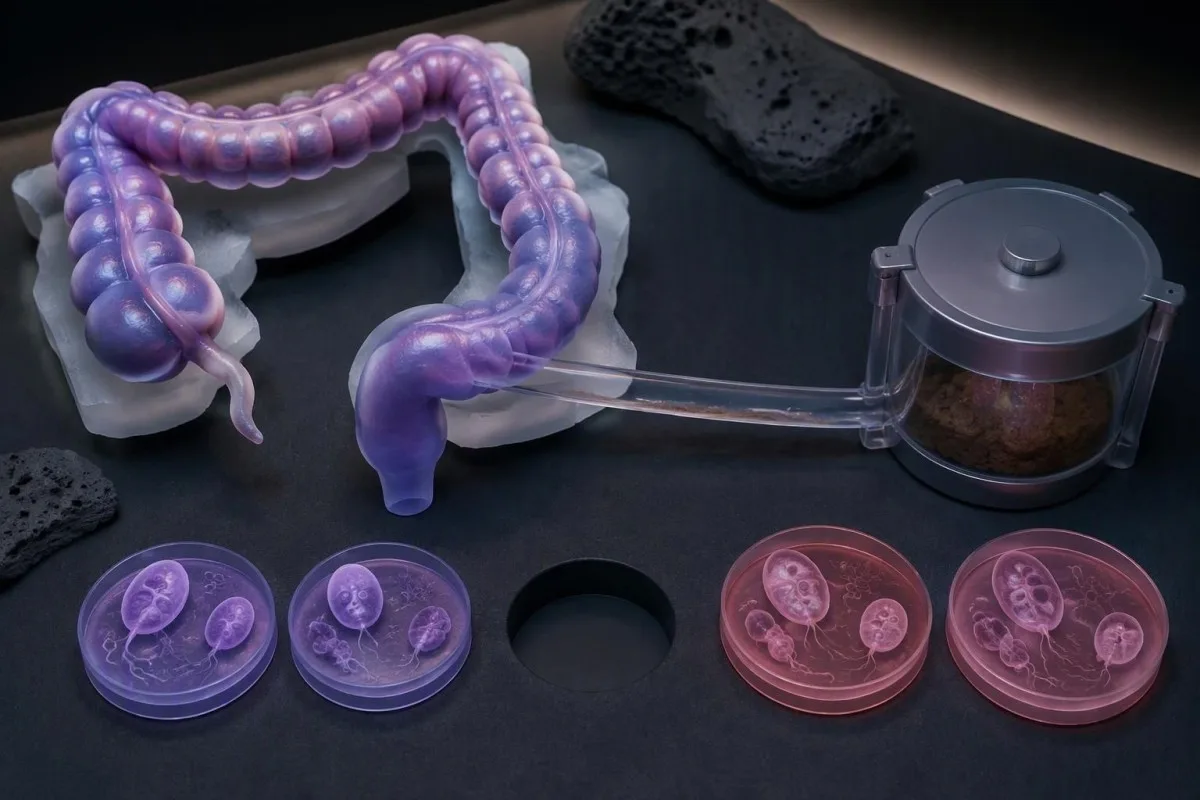
Testing immediately after treatment can be difficult to interpret. PCR detects genetic material rather than directly measuring living organisms, and there is no universal Dientamoeba-specific interval that makes every result definitive; instead of choosing an arbitrary day 3 test, ask what question the repeat test is intended to answer.
A positive repeat result may reflect persistence, reacquisition, or assay-related timing considerations. Those possibilities have different implications, so before prescribing course 2 a clinician should review adherence, the original symptom pattern, household exposures, and whether the first course changed anything that mattered to the patient.
A negative PCR with ongoing bloating shifts attention toward other explanations rather than proving treatment failure. Selected patients with risk factors may warrant a breath-test discussion, but bloating alone should not trigger indiscriminate SIBO testing; our breath test preparation guide explains why protocol and pretest probability matter.
Define success before treatment starts. For a hypothetical adult, improvement from 5 watery stools per day to 1–2 formed stools is a meaningful outcome, whereas an unchanged symptom diary with a negative PCR is laboratory clearance without demonstrated symptom benefit; documenting both prevents repeated medication from becoming the default response.
Hvaða hagnýtu ráðstafanir hjálpa án óþarfrar meðferðar heimilisfólks?
Handwashing, careful bathroom hygiene, safe food handling, and clear follow-up records are reasonable steps after a positive result. The exact transmission routes of Dientamoeba fragilis remain incompletely resolved, so 1 positive household test does not justify promises that a particular cleaning routine will prevent recurrence.

Wash hands with soap and water after toilet use and before preparing food. Scrubbing for about 20 seconds is a standard general hygiene recommendation, not a Dientamoeba-specific eradication method; gloves do not replace handwashing, and bathrooms should be cleaned using ordinary product instructions rather than improvised chemical mixtures.
The proposed connection with pinworm transmission is not settled. Nighttime anal itching may justify a separate assessment, sometimes involving a morning tape test on 3 occasions, but a positive Dientamoeba PCR alone is not a reason to give everyone a deworming medicine or assume pinworms are present.
Kantesti is an AI-powered blood test analysis tool that can help explain accompanying laboratory results while stool-management decisions remain with the clinician. Keep the symptom diary, medicine list, and test dates together as 3 distinct records; our dæmi um túlkunarvinnuflæði describe educational workflows rather than evidence that our service treats intestinal parasites.
A shared household record should respect consent and minimize unnecessary identifiers. If 2 family members have symptoms, each person's clinical assessment and treatment decision remain separate; our persónuverndar- og gagnavenjur explain how we approach information handling, but your clinician's secure communication channel should be used for prescribing and urgent advice.
Hvað ættir þú að spyrja lækninn þinn um og hvaða rannsóknir styðja ákvörðunina?
Ask whether Dientamoeba fragilis plausibly explains your symptoms, which alternatives need checking, and what benefit would justify treatment. The most useful evidence separates symptom outcomes from organism eradication; a 10-day treatment course and a negative follow-up test are not, by themselves, proof of clinical benefit.

Bring 4 items to the appointment: the full stool report, a medication list, a symptom timeline, and any relevant accompanying laboratory results. Ask what would change the decision—another pathogen, celiac antibodies, a concerning calprotectin result, or spontaneous improvement—and agree on when to return if symptoms persist or warning signs develop.
A 7-day diary can make observation an active plan rather than doing nothing. Maintain fluids and tolerated foods; oral rehydration solution can help replace diarrheal losses, but restrictive diets, herbal parasite cleanses, and supplements have no established role in eradicating Dientamoeba fragilis and should not delay investigation of persistent symptoms.
The 3 external sources below have different evidentiary roles: CDC provides clinical prescribing guidance, Röser et al. provide randomized pediatric symptom-outcome evidence, and van Hellemond et al. provide retrospective adult eradication data. Kantesti applies staðlar fyrir læknisfræðilegt efni that distinguish these study designs instead of presenting them as equally strong proof.
The 2 Figshare publications listed below are general educational resources, not trials of Dientamoeba fragilis treatment; the women's health guide does not provide direct evidence for this decision. A DOI establishes a persistent identifier, not clinical validation, and our technical and clinical methodology should likewise not be mistaken for proof that AI can establish the cause of digestive symptoms.
Algengar spurningar
Þýðir jákvætt PCR-próf fyrir Dientamoeba fragilis að ég þurfi sýklalyf?
Jákvætt PCR-próf fyrir Dientamoeba fragilis þýðir ekki sjálfkrafa að þú þurfir örverueyðandi meðferð. Fólk án einkenna þarf almennt ekki lyfjameðferð og ein jákvæð hægðaniðurstaða getur ekki staðfest hvers vegna meltingareinkenni komu fram. Læknar geta íhugað meðferð ef einkenni eru viðvarandi, aðrar skýringar hafa verið metnar og sýkillinn virðist líklega tengjast einkennunum. Mikill verkur, ofþornun eða blóð í hægðum krefst mats umfram PCR-niðurstöðuna.
Getur Dientamoeba fragilis horfið án meðferðar?
0 Dientamoeba fragilis getur reynst ógreinanlegt án meðferðar og meltingareinkenni geta einnig gengið til baka án þess að sýkingarvaldurinn hverfi. Einkennadagbók yfir 7 daga getur hjálpað til við að skrá bata þegar viðeigandi er að fylgjast með. Hvorki sjálfkrafa bati né síðar neikvæð PCR-prófun sannar að sýkingarvaldurinn hafi valdið upphaflegu veikindunum. Viðvarandi eða versnandi einkenni ættu að leiða til endurmats fremur en að beðið sé endalaust.
Hver er besta meðferðin við Dientamoeba fragilis?
Engin ein allsherjar viðurkennd meðferð er til við einkennaléttingu hjá öllum sjúklingum sem eru jákvæðir fyrir Dientamoeba fragilis. Leiðbeiningar CDC fyrir fullorðna mæla með parómómýsíni í skammtinum 25–35 mg/kg á dag, skipt í 3 skammta, í 7 daga, en metrónídazól er annar valkostur. Afturskyggnar rannsóknir benda til þess að parómómýsín sé betra til að uppræta lífveruna, en uppræting er ekki það sama og að einkennin batni. Sá sem ávísar lyfinu verður að aðlaga valið að aldri, meðgöngu, heilsufari og milliverkunum lyfja.
Hvers vegna er ég enn með einkenni eftir meðferð við Dientamoeba fragilis?
Viðvarandi einkenni eftir meðferð við Dientamoeba fragilis geta þýtt að sníkjudýrið hafi ekki verið meginorsökin, að annað heilsufarsvandamál sé til staðar eða að meðferðin hafi ekki eytt greinanleika þess. Neikvætt PCR-próf útilokar ekki glútenóþol, lyfjatengdan niðurgang, smásæja ristilbólgu eða starfræna þarmasjúkdóma. Niðurgangur sem varir í 4 vikur eða lengur kallar oft á skipulegt mat á langvinnum niðurgangi. Ákvörðun um aðra lyfjameðferð ætti að byggjast á endurmati en ekki eingöngu á því að einkennin haldi áfram.
Ætti að meðhöndla börn með Dientamoeba fragilis?
Börn með Dientamoeba fragilis ætti ekki að meðhöndla sjálfkrafa á grundvelli jákvæðrar PCR-rannsóknar á hægðum. Í slembirannsókn á 96 börnum á aldrinum 3–12 ára reyndist 10 daga metronídazólmeðferð ekki skila betri klínískum árangri en lyfleysa. Við ákvarðanir um meðferð barna ætti að taka mið af viðvarandi einkennum, vökvun, vexti, öðrum mögulegum greiningum og öryggi viðkomandi lyfs. Barn sem vex illa eða er greinilega veikt þarf klínískt mat óháð niðurstöðu um sníkjudýrið.
Ætti að prófa fjölskyldu mína eða meðhöndla hana ef niðurstaðan mín er jákvæð?
0 Einn heimilismaður með jákvæða niðurstöðu fyrir Dientamoeba fragilis réttlætir ekki sjálfkrafa prófun eða meðferð fyrir alla aðra á heimilinu. Einkennalaus greining krefst almennt ekki meðferðar, en ef 2 eða fleiri einstaklingar eru með viðvarandi einkenni sem samræmast sýkingunni getur verið ástæða til að ræða málið á heimilinu við lækni. Almennt er ráðlegt að þvo hendur með sápu og vatni í um 20 sekúndur, en það er ekki sannað að það komi í veg fyrir endurkomu Dientamoeba. Mat á njálgsýkingu er sérstök ákvörðun en ekki sjálfgefin afleiðing jákvæðrar PCR-niðurstöðu.
Fáðu útskýringar á niðurstöðum blóðrannsókna
Hladdu upp rannsóknarskýrslunni þinni og AI Kantesti útskýrir hvert lífmerki á mannamáli á nokkrum sekúndum. Yfir 2 milljónir manna um allan heim nota þjónustuna.
Heimildir
- Klein, T., Mitchell, S., & Weber, H. (2026). Niðurgangur eftir föstu, svört korn í hægðum og leiðarvísir um meltingarveginn 2026. Kantesti AI Medical Research. DOI
- Klein, T., Mitchell, S., & Weber, H. (2026). Leiðarvísir um heilsu kvenna: egglos, tíðahvörf og hormónaeinkenni. Kantesti AI Medical Research. DOI
- Centers for Disease Control and Prevention (2024). Clinical Care of Dientamoeba fragilis. CDC Clinical Guidance.
- Röser D et al. (2014). Metronidazole Therapy for Treating Dientamoebiasis in Children Is Not Associated With Better Clinical Outcomes: A Randomized, Double-Blinded and Placebo-Controlled Clinical Trial. Clinical Infectious Diseases. DOI
- van Hellemond JJ et al. (2012). Is paromomycin the drug of choice for eradication of Dientamoeba fragilis in adults? International Journal for Parasitology: Drugs and Drug Resistance.
- 2M+Greindar rannsóknir
- 127+Lönd
- 100+Tungumál
Um læknateymið


E-E-A-T traustmerki
Reynsla
Læknastýrð klínísk yfirferð á vinnuferlum við túlkun rannsóknarniðurstaðna.
Sérþekking
Áhersla á rannsóknarstofulækningar: hvernig lífmarkarar hegða sér í klínísku samhengi.
Yfirvald
Dr. Thomas Klein fór yfir efnið læknisfræðilega, með framlagi frá Dr. Sarah Mitchell og Prof. Dr. Hans Weber.
Traustleiki
Rökstudd túlkun byggð á gögnum með skýrum eftirfylgnileiðum til að draga úr ávörun.





Fyrirvari um læknisfræðilegt efni
Þessi grein er eingöngu til fræðslu og felur ekki í sér læknisráðgjöf. Leitaðu alltaf til hæfs heilbrigðisstarfsmanns vegna ákvarðana um greiningu og meðferð.
Gefið út · Hafðu samband við ritstjórnarteymið
Gefið út af Kantesti Ltd, skráðu í Englandi og Wales, fyrirtækisnúmer. 17090423, London, Bretlandi.
