
Gorotzietako PCR emaitza positiboak ez du automatikoki esan nahi botikak behar dituzunik. Tratamendu-erabakiak sintomek irauten duten, bestelako azalpenak dauden eta organismoa desagerraraztearen eta hobeto sentitzearen arteko lotura zalantzazkoa den kontuan hartuta hartzen dira.

Ondorio nagusiak
- PCR positiboa Dientamoeba fragilis-en material genetikoa detektatzen du; emaitza positibo batek ez du frogatzen organismoak zure digestio-sintomak eragin dituenik.
- Sintomarik ez Normalean, ez da tratamendurik behar, gorotz-proba batek Dientamoeba fragilis detektatzen duenean ere.
- Beherakoa iraunkorra 14 egun edo gehiago irauten badu, berriz ebaluatu behar da, baina iraupenak bakarrik ez du frogatzen Dientamoeba fragilis denik erantzulea.
- Tratamenduaren ebidentziak 96 haurrekin egindako ausazko saiakuntza bat barne hartzen du; hartan, metronidazolak ez zituen emaitza klinikoak plazeboak baino gehiago hobetu.
- Paromomizina klinikariak hautatzen duen aukera da; CDCren helduentzako gidalerroek 25–35 mg/kg/egun zerrendatzen dute, 3 dositan banatuta, 7 egunez.
- Kalprotektina 50 µg/g-tik beherakoa helduentzako laborategiko erreferentzia-atalase arrunta da, baina ez da Dientamoeba fragilis sintomatikoa baieztatzen edo baztertzen duen proba bat.
- Abisu-seinaleak hala nola gorozkietan odola, sabeleko min handia, deshidratazioa edo nahigabeko pisu-galera, PCR positiboaz harago ebaluatu behar dira.
- Jarraipena sintomak eta proben emaitzak neurtu behar ditu; organismoa desagertzea eta sintomak sendatzea 2 emaitza desberdin dira.
Dientamoeba fragilis-en emaitza positiboak tratamendua behar al du?
Dientamoeba fragilis-en gorozki-PCR positibo batek ez du automatikoki tratamendua beharrezkoa egiten. Sintomarik ez duten pertsonek normalean ez dute botikarik behar; klinikoek tratamendua azter dezakete digestio-sintomek irauten dutenean, organismoa arrazoiz lotu daitekeenean eta bestelako azalpenak ebaluatu direnean.
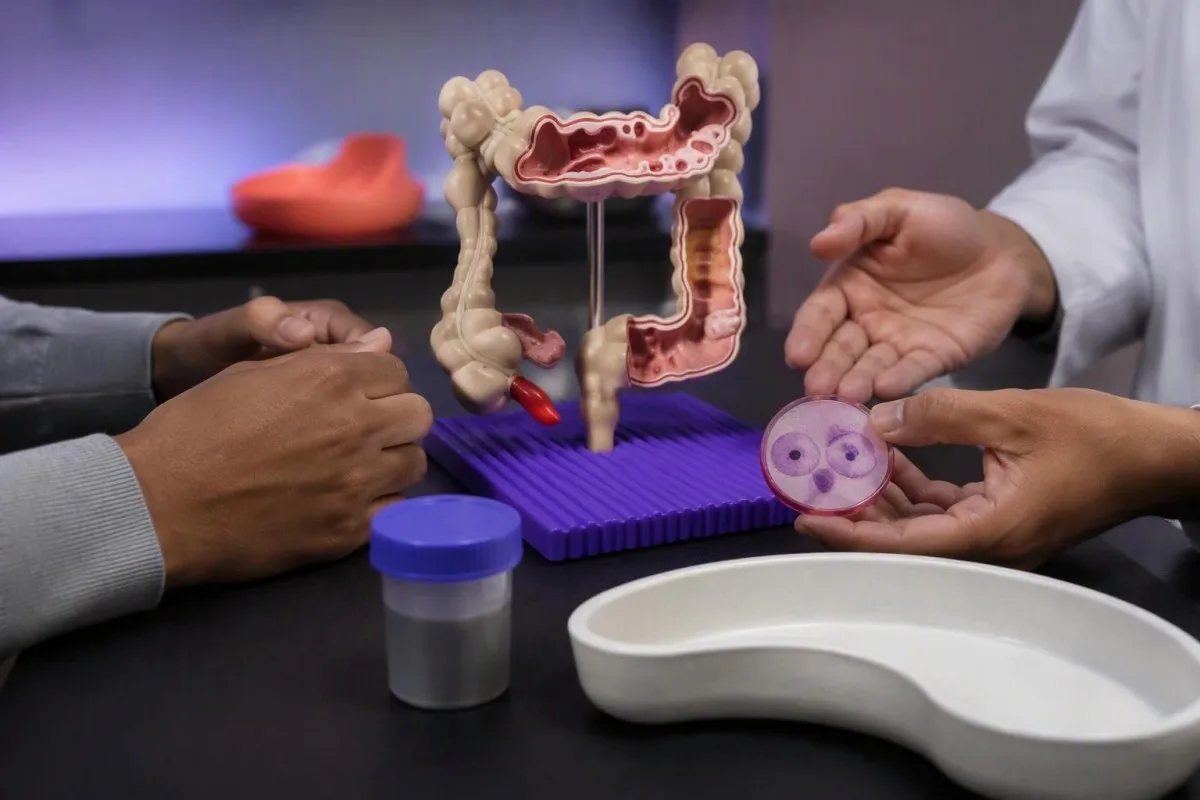
Detekzioa eta kausalitatea galdera bereiziak dira. Gorozki-panel batek organismo bat zehaztasunez identifika dezake, norbaitek sabeleko mina edo beherakoa zergatik duen ezarri gabe; beraz, emaitza positibo bakarra interpretatu beharreko aurkikuntza da, ez preskripzioa eragiten duen seinalea; organismoa ustekabeko aurkikuntza, eragile lagungarria edo egungo gaixotasunarekin zerikusirik gabea izan daiteke.
The CDCren arreta klinikorako jarraibideak dio sintomarik gabeko Dientamoeba fragilis detekzioak, oro har, ez duela tratamendurik behar, eta botikek sintomak dituzten pertsona batzuei lagun diezaieketela aurkitutako organismo bakarra denean (CDC, 2024). Organismo bakarra aurkitzeak azalpen posible bat indartzen du, baina ez ditu baztertzen gaixotasun zeliakoa, botiken ondorioak edo hesteetako nahasmendu funtzional bat.
Adibidez, pentsa dezagun etxeko norbaitek izan duen urdaileko infekzioaren ondoren gorozki bigunak dituen heldu hipotetiko batengan; sintomek 2 egun iraun dute, eta panelak Dientamoeba fragilis detektatu du. Sintomak dagoeneko baretzen ari badira eta hidratazioa egokia bada, behatzea zentzuzkoagoa izan daiteke, goragalea edo beherakoa eragin dezakeen mikrobioen aurkako botika berehala gehitu ordez.
Kantesti odol-analisiak aztertzeko AI tresna bat da, eta harekin batera datozen laborategiko aurkikuntzak azal ditzake; baina ezin du gorozki-PCR baten bidez zehaztu organismo horrek eragin dituen zure sintomak. Muga hori azaltzen dugu gure erakundeari buruzko informazioaren bidez; erabaki klinikoa laborategiko emaitza bakar bat baino gehiagoren mende dago.
Zer detektatzen du benetan Dientamoeba fragilis-en gorotz-probak?
Dientamoeba fragilis-en gorozki-PCR batek organismoaren material genetikoa detektatzen du bidalitako laginean. Ez du zuzenean ezartzen organismoa bideragarria denik, ehun-kalterik dagoenik edo sintomen kausa denik; gainera, ez dago tratamendua beharrezkoa den erabakitzeko PCRaren muga unibertsal baliozkoturik.
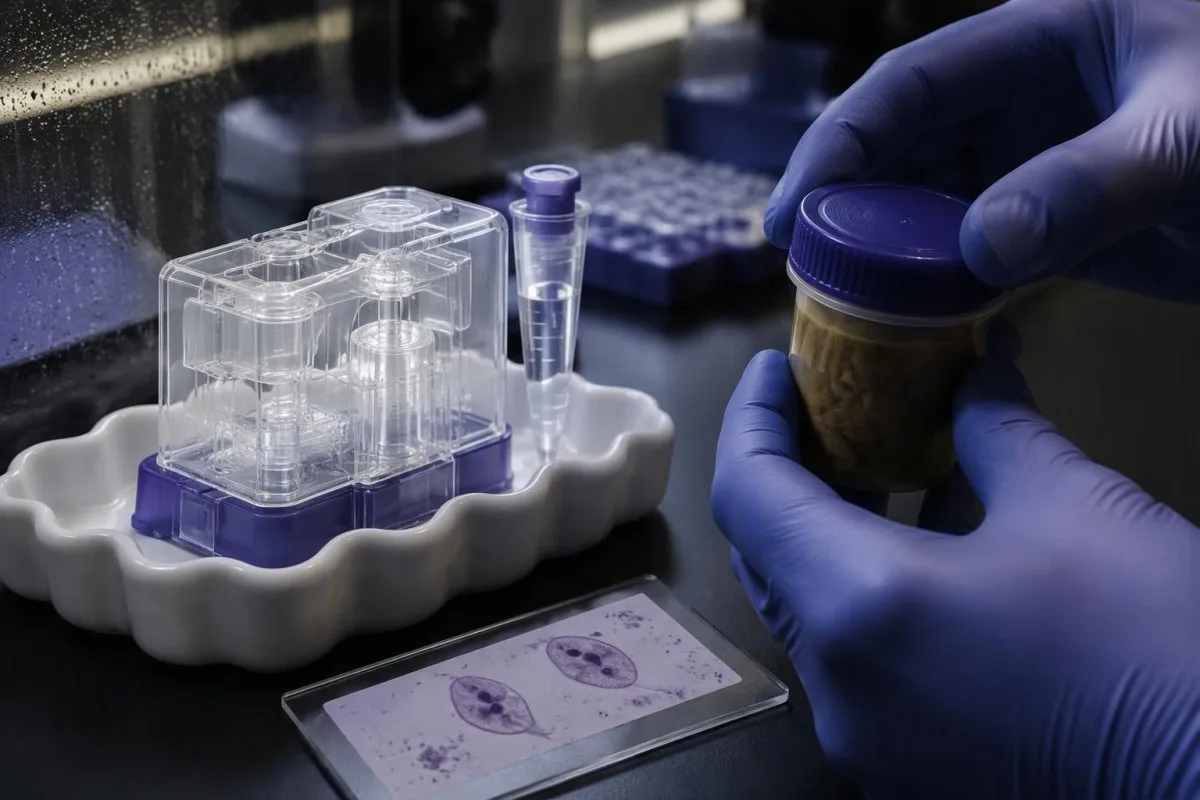
Dientamoeba fragilis hesteetako protozoo bat da, ez har bat. Izenak nahasgarriak izan daitezke: trikomonaden taldearekin ahaidetutako talde batekoa da, ez ohiko amebena; trofozoito mikroskopikoek normalean 1 edo 2 nukleo dituzte; izena txosten batean agertzeak ez du esan nahi infekzio inbaditzailea gorputz osoan dagoenik.
Txosten kliniko gehienek honako hau erabiltzen dute: detektatua/detektatu gabe, larritasun-eskala klinikoki baliozkotu baten ordez. Laborategi batek ziklo-atalasea ematen badu, balio txikiagoak normalean saiakuntza horretan xede-material gehiago dagoela adierazten du; hala ere, erauzketaren, gorozkien trinkotasunaren eta plataformen arteko aldeek eragotzi egiten dute zenbakiak tratamendu-atalase unibertsal gisa balio izatea; gure emaitza kualitatibo eta kuantitatiboen gida txostenaren bereizketa azaltzen du.
PCRa eta mikroskopia bat ez etortzeak ez du esan nahi emaitzetako bat ere baliogabea denik. PCRa, oro har, sentikorragoa da; mikroskopia, berriz, kontserbazioaren, tindaketaren eta espezializazioaren mende dago. Parasitoen mikroskopia tradizionalak 3 egun desberdinetan bildutako laginak eska ditzake, organismoen iraizpena eta ikusgarritasuna aldatu egiten baitira; saiakuntza molekular baliozkotu batek, aldiz, lagin bakarra erabil dezake.
Check the actual panel contents before assuming other infections were excluded. A negative result for 5 listed pathogens says nothing about an organism the panel never tested, and some gastrointestinal panels do not include Dientamoeba fragilis at all; ask whether your result came from a targeted assay or a broader panel.
Noiz da litekeena PCR positiboa ustekabeko eramailetza izatea?
Incidental carriage is more likely when the person has no symptoms, symptoms have already resolved, or another explanation fits better. A repeated positive result can demonstrate ongoing detection, but 2 positive samples still do not establish that Dientamoeba fragilis is causing illness.
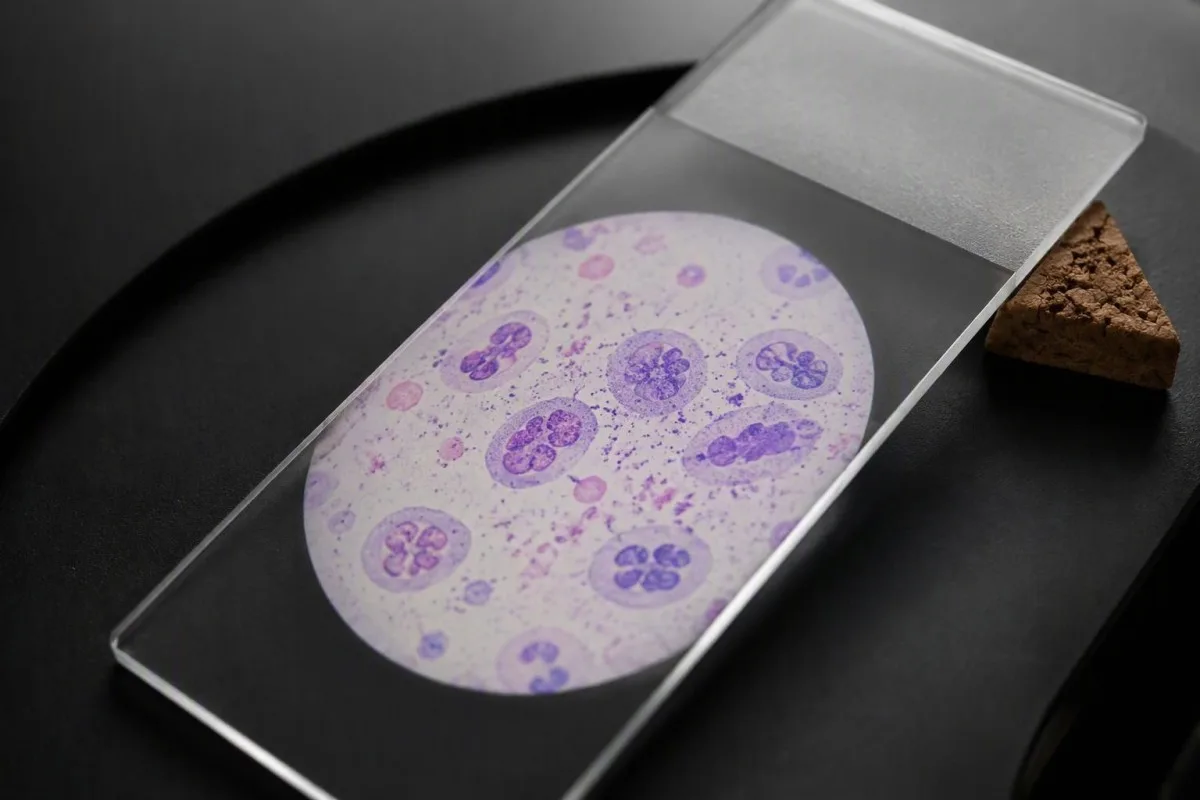
Asymptomatic detection is real, not automatically a laboratory error. Sensitive PCR testing finds organisms that older methods missed, including in people who feel well; because prevalence differs substantially between settings, age groups, and assays, a single percentage from 1 population should not be used to estimate your personal likelihood of illness.
The timing of symptoms can weaken an apparent association. A hypothetical person with 5 years of alternating constipation and diarrhea who receives a first positive stool PCR has not necessarily acquired a new explanation for those longstanding symptoms; the test cannot date acquisition or show whether the organism was present before symptoms started.
A positive commercial microbiome report is not equivalent to a clinical diagnosis. Relative abundance, proprietary risk scores, and organisms reported outside validated pathogen testing may not have established treatment implications; before acting on 1 highlighted finding, review our discussion of mikrobiomaren proben mugak.
Bat asymptomatic household contact is not automatically a treatment candidate. Screening and treating every family member after 1 positive result can create avoidable medication exposure; contact testing is more reasonably discussed when several people have persistent compatible symptoms, or when a specialist or local public-health team identifies a specific reason.
Dientamoeba fragilis-en zer sintoma izan daitezke esanguratsuak?
Reported Dientamoeba fragilis symptoms include loose stools, abdominal discomfort, bloating, and sometimes nausea or reduced appetite. None is specific to this organism, so clinicians assess the symptom pattern, duration, and functional impact rather than assuming that 1 positive PCR explains everything.
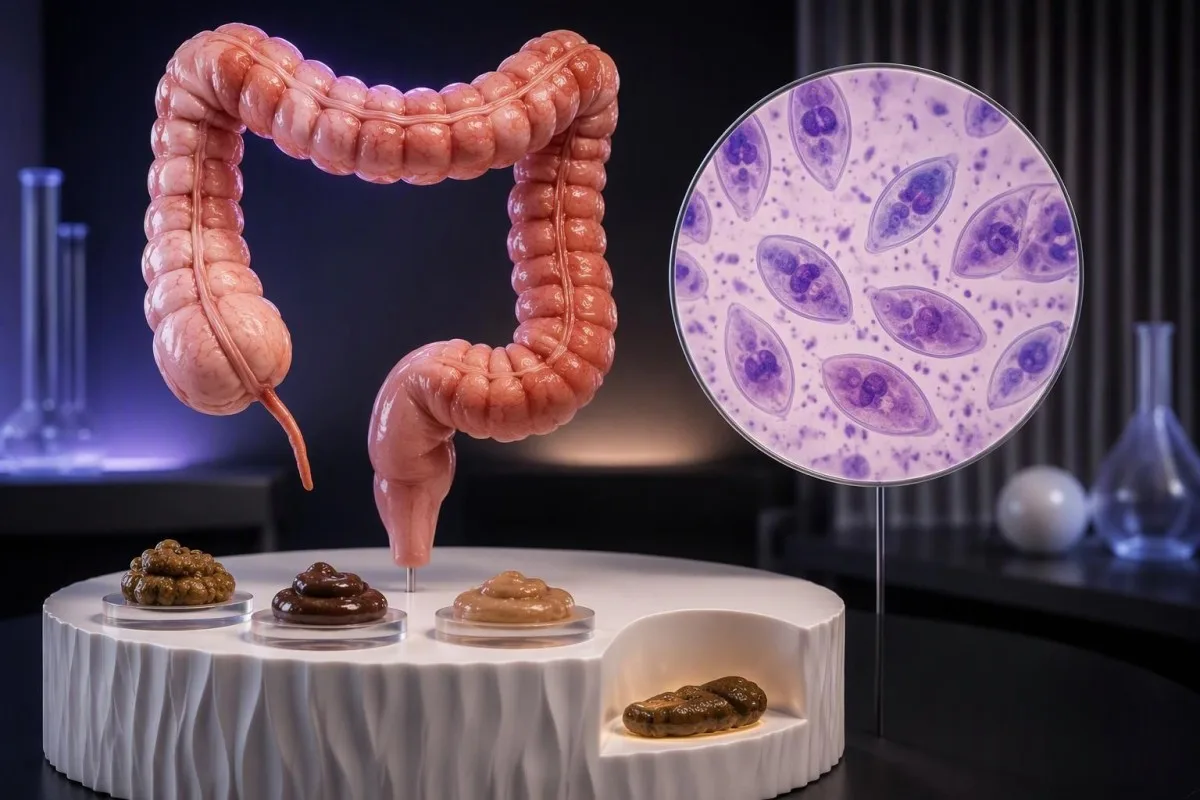
Stool consistency is often more useful than the word diarrhea. On the 7-category Bristol Stool Chart, types 6 and 7 describe mushy and watery stools; recording those types alongside frequency helps distinguish persistent loose stools from frequent but formed bowel movements, as explained in our gorozkien trinkotasunari buruzko gidak.
A 7-day symptom diary can clarify whether the illness is continuous or meal-related. Record bowel frequency, stool type, nighttime waking, abdominal discomfort, medicines, and missed activities; a pattern that repeatedly follows a particular food may suggest malabsorption or intolerance, although dietary associations alone do not diagnose either condition.
Stool color does not identify Dientamoeba fragilis. Yellow stools can accompany rapid transit, dietary changes, or fat malabsorption, and 1 unusual bowel movement is not a parasite-specific sign; our explanation of yellow stool causes helps separate color changes from more informative accompanying features.
For example, a hypothetical adult with 4 loose stools daily for 6 weeks, stable weight, and no other pathogen detected has a more plausible treatment discussion than someone whose brief illness has ended. Even then, the assessment should consider medication effects, celiac disease, and inflammatory or functional conditions before assigning causation.
Zer sintoma ez lirateke Dientamoeba fragilis-i egotzi behar?
Blood in stool, substantial dehydration, severe or localized abdominal pain, persistent fever, and unintentional weight loss need assessment beyond a positive Dientamoeba fragilis result. These findings can signal another condition, and clinicians should not allow 1 detected organism to delay appropriate investigation.
Seek urgent medical help for severe pain, collapse, confusion, or inability to keep fluids down. A temperature around 38°C or higher combined with significant illness deserves prompt advice, although age, immune status, and other symptoms matter more than a single cutoff; emergency symptoms should not wait for a repeat parasite test.
Ikusgarria red blood or black, tarry stool is not a typical finding to dismiss as uncomplicated dientamoebiasis. Iron tablets and some foods can change stool color, but 1 episode accompanied by dizziness, weakness, or significant pain warrants prompt assessment; our gorozkietako odolaren abisu-seinaleek explain why appearance and accompanying symptoms matter.
Diarrhea that wakes someone from sleep and progressive weight loss broaden the differential diagnosis. Unintentional loss of more than 5% of body weight over 6–12 months is a commonly used clinical warning threshold, but smaller losses can still matter in children, frail adults, or someone losing weight rapidly.
Reduced urine output can indicate deshidratazioagatik, especially when accompanied by thirst, dizziness, or dry mouth. Do not wait for a precise number of hours if the person appears unwell; infants, older adults, pregnant people, and those with kidney disease need a lower threshold for clinical advice than a healthy adult with 1 mild loose stool.
Zer gertatzen da gorotz-panelak beste patogeno bat ere detektatzen badu?
When another pathogen is detected, clinicians compare its established disease pattern with the symptoms before prioritizing Dientamoeba fragilis treatment. A panel with 2 positive targets may reflect coinfection, persistent shedding, or incidental carriage; it does not automatically justify treating both organisms.
Giardia has a better-established relationship with persistent diarrhea and malabsorption than Dientamoeba fragilis. If both are detected in a hypothetical person with 3 weeks of loose, greasy stools after untreated-water exposure, a clinician may prioritize Giardia-directed care; our Giardia treatment and recovery guide explains the different evidence base.
Campylobacter detection does not automatically require antibiotics either, despite its established role in gastroenteritis. Severity, illness duration, and vulnerability determine the decision, so 2 detected organisms still require 2 separate clinical judgments; compare our discussion of Campylobacter antibiotic decisions rather than assuming all stool positives follow one rule.
Azken antibiotic exposure changes the assessment because it raises concern for antibiotic-associated diarrhea and C. difficile. A positive screening assay with a negative toxin result creates another detection-versus-disease problem, particularly when someone does not have at least 3 unformed stools in 24 hours; our C. difficile emaitza diskordanteak guide describes that distinction.
A negative panel is not a complete gastrointestinal evaluation. Even a panel covering 20 organisms cannot identify bile acid diarrhea, microscopic colitis, celiac disease, or every travel-related infection; the test menu, exposure history, and symptom duration determine whether additional microbiology or a noninfectious workup makes more sense.
Dientamoeba fragilis-en tratamenduak sintomak hobetzen al ditu modu fidagarrian?
Dientamoeba fragilis treatment does not reliably produce symptom improvement, and the evidence is mixed. A randomized, placebo-controlled trial involving 96 children found that metronidazole did not improve clinical outcomes more than placebo, even though treatment initially increased organism eradication.

Röser et al. reported the trial in Clinical Infectious Diseases in 2014. Children aged 3–12 years received a 10-day course of metronidazole or placebo, and the study did not establish a clinical benefit from metronidazole; that result argues against routine treatment of every symptomatic child with a positive test.
The trial does not prove that all treatments are ineffective in every patient. It evaluated 1 medication in a particular pediatric population, so its findings cannot automatically be extended to paromomycin, every adult presentation, or unusual clinical circumstances; uncertainty should narrow claims rather than be converted into either universal treatment or universal dismissal.
Before-and-after improvement is weaker evidence than a randomized comparison. Over a 2-week period, symptoms may improve naturally, fluctuate, or respond to changes in diet and other medicines; an uncontrolled report of feeling better after treatment cannot reliably separate those explanations from a specific effect on Dientamoeba fragilis.
-n Kantesti, we distinguish organism eradication, symptom recovery, and study design as 3 separate issues when explaining this uncertainty. Our digestive symptom research guide provides broader context, but it is not direct evidence that antimicrobial treatment improves outcomes in Dientamoeba-positive patients.
Zer botika erabil ditzakete klinikariek, eta zer muga dituzte?
Clinicians may use paromomycin or metronidazole for selected symptomatic patients, but medication choice does not resolve uncertainty about causation. CDC adult guidance lists paromomycin at 25–35 mg/kg/day in 3 divided doses for 7 days; this is prescribing information, not an instruction to self-treat.
Paromomycin mainly acts within the intestinal lumen. A retrospective adult study by van Hellemond et al. in 2012 found better eradication with paromomycin than some alternatives, but the nonrandomized design cannot establish superior symptom relief; its findings support a medication discussion, not a guaranteed cure for abdominal discomfort.
The CDC adult metronidazole regimen is 500–750 mg orally 3 times daily for 10 days (CDC, 2024). Nausea, altered taste, medication interactions, and occasional neurologic adverse effects matter; pediatric dosing differs, and pregnancy, breastfeeding, liver disease, or other medical conditions require a prescriber to assess the specific choice.
Medication reconciliation should happen before prescribing. Metronidazole can increase warfarin's anticoagulant effect, so a person taking warfarin may need an individualized INR monitoring plan rather than merely a routine 10-day prescription; our guide to antibiotikoak eta INR aldaketak explains the mechanism and monitoring considerations.
A penicillin allergy label does not automatically prohibit either of these medicines because they are not penicillins. However, any previous reaction to the proposed drug itself needs review, and 1 vague historical allergy label should not substitute for a full medication history; our allergy label reassessment guide explains that separate issue.
Noiz ikertzen dituzte klinikariek beste kausa batzuk errezetatu aurretik?
Clinicians often investigate other causes before prescribing when symptoms are longstanding, atypical, associated with warning signs, or poorly explained by the stool result. Diarrhea lasting 4 weeks or longer is commonly classified as chronic, making a structured noninfectious assessment particularly useful.
Medication effects are a high-yield starting point. Metformin, magnesium-containing products, laxatives, and some antibiotics can cause loose stools; if a hypothetical person develops diarrhea 1 week after a dose increase, that timeline may be more informative than incidental parasite detection, although prescribed medicines should not be stopped without advice.
A fecal calprotectin below 50 µg/g is a common adult laboratory reference threshold, while values above roughly 250 µg/g may strengthen concern for intestinal inflammation in an appropriate clinical pathway. These are not universal diagnostic boundaries: age, infection, NSAID use, and laboratory methods affect interpretation, as discussed in our borderline calprotectin follow-up gidatzen den moduan.
Celiac screening commonly combines tissue transglutaminase IgA with total IgA. Reducing gluten before testing can make results falsely reassuring, and IgA deficiency changes which antibody tests are appropriate; if gluten has already been removed for several weeks, our gluten challenge planning guide explains why clinicians individualize the next step.
A normal initial workup does not make every alternative disappear. In someone with 6 months of watery diarrhea, clinicians may consider bile acid diarrhea or microscopic colitis; the latter can require colon examination with tissue sampling even when the bowel looks normal, while an IBS diagnosis depends on a compatible pattern and appropriate exclusion of warning features.
Odol-analisiek erakuts al dezakete Dientamoeba fragilis gaixotasuna eragiten ari den?
Routine blood tests cannot establish that Dientamoeba fragilis caused digestive symptoms. They can identify consequences or competing explanations, such as dehydration, anemia, inflammation, or nutrient deficiency; no validated CBC, CRP, or eosinophil cutoff confirms symptomatic disease from this organism.

CBC and ferritin can reveal an alternative reason for fatigue. In otherwise healthy adults, ferritin below 15 µg/L strongly supports depleted iron stores, although inflammation can raise ferritin and obscure deficiency; fatigue with low iron should not automatically be attributed to 1 stool finding, as our ferra-gutxieneko sintomaen gida -ek azaltzen duen moduan.
For example, imagine an adult with ferritin 9 µg/L and hemoglobin 108 g/L alongside a positive stool PCR. Those hypothetical results warrant investigation of iron deficiency and its cause, not an assumption that treating the protozoan will correct the anemia; our burdina aztertzeko interpretazio-gida shows why multiple markers matter.
Eosinophilia is not a reliable marker of Dientamoeba fragilis disease. An eosinophil count above 0.5 × 10^9/L is commonly considered elevated, but allergies, medicines, and some helminth infections are more typical explanations; a positive Dientamoeba test should not stop clinicians from investigating substantial or persistent eosinophilia separately.
Kantesti is an AI blood test interpretation platform that explains CBC, ferritin, CRP, and kidney-function results without treating them as proof of parasite causation. A CRP of 3 mg/L may fall within a laboratory's standard reference interval, yet normal inflammatory markers do not exclude celiac disease, microscopic colitis, or other explanations for persistent diarrhea.
Nola aldatzen dira tratamendu-erabakiak haurrentzat eta heldu zaurgarrientzat?
Children, pregnant people, frail adults, and immunocompromised patients need individualized assessment rather than an automatic response to positive PCR. In children, growth, hydration, and symptom severity matter especially; the randomized metronidazole trial in 96 children supports caution about routine prescribing.

Growth faltering should prompt a broader pediatric evaluation. A hypothetical child with 6 weeks of loose stools and a falling growth trajectory needs assessment of intake, celiac disease, inflammation, and other causes; Dientamoeba fragilis detection may be relevant, but it should not become the only explanation considered.
Children can become dehydrated more quickly than healthy adults, particularly when vomiting accompanies diarrhea. Oral rehydration solution prepared exactly as directed is preferable to guessing electrolyte amounts, and 1 clearly unwell child with reduced urine, unusual drowsiness, or inability to drink needs prompt advice rather than waiting for a medication trial.
Pregnancy changes medication selection, not the meaning of PCR. A positive result still does not establish causation, while gestational stage, symptom burden, and drug-specific safety information influence prescribing; a person who is 10 weeks pregnant should discuss treatment with the maternity or prescribing team rather than using another household member's medication.
Immunosuppression lowers the threshold for evaluating other opportunistic causes, but it does not make this organism automatically responsible. Kantesti AI does not replace pediatric or specialist assessment; our discussion of AI interpretazioa haurrentzat explains why adult reference ranges and 1 abnormal result can be misleading.
Tratamenduaren ondoren gorotz-proba errepikatu behar al duzu?
Repeat testing is not automatically necessary after symptoms resolve, and a test-of-cure plan should be agreed with the treating clinician. Persistent symptoms require reassessment; 1 repeat positive PCR does not by itself justify another course, and a negative result does not explain ongoing symptoms.
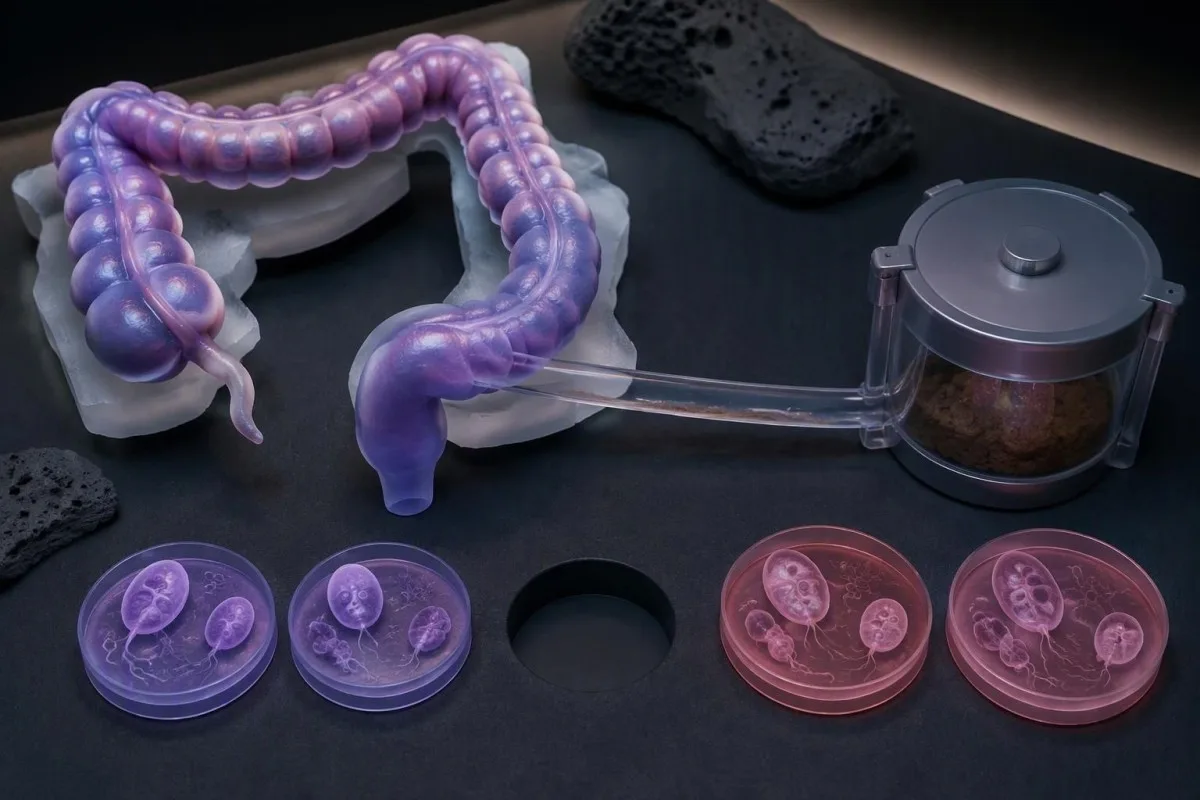
Testing immediately after treatment can be difficult to interpret. PCR detects genetic material rather than directly measuring living organisms, and there is no universal Dientamoeba-specific interval that makes every result definitive; instead of choosing an arbitrary day 3 test, ask what question the repeat test is intended to answer.
A positive repeat result may reflect persistence, reacquisition, or assay-related timing considerations. Those possibilities have different implications, so before prescribing course 2 a clinician should review adherence, the original symptom pattern, household exposures, and whether the first course changed anything that mattered to the patient.
A negative PCR with ongoing bloating shifts attention toward other explanations rather than proving treatment failure. Selected patients with risk factors may warrant a breath-test discussion, but bloating alone should not trigger indiscriminate SIBO testing; our breath test preparation guide explains why protocol and pretest probability matter.
Define success before treatment starts. For a hypothetical adult, improvement from 5 watery stools per day to 1–2 formed stools is a meaningful outcome, whereas an unchanged symptom diary with a negative PCR is laboratory clearance without demonstrated symptom benefit; documenting both prevents repeated medication from becoming the default response.
Zer neurri praktiko dira lagungarriak etxekoen alferrikako tratamendurik gabe?
Handwashing, careful bathroom hygiene, safe food handling, and clear follow-up records are reasonable steps after a positive result. The exact transmission routes of Dientamoeba fragilis remain incompletely resolved, so 1 positive household test does not justify promises that a particular cleaning routine will prevent recurrence.

Wash hands with soap and water after toilet use and before preparing food. Scrubbing for about 20 seconds is a standard general hygiene recommendation, not a Dientamoeba-specific eradication method; gloves do not replace handwashing, and bathrooms should be cleaned using ordinary product instructions rather than improvised chemical mixtures.
The proposed connection with pinworm transmission is not settled. Nighttime anal itching may justify a separate assessment, sometimes involving a morning tape test on 3 occasions, but a positive Dientamoeba PCR alone is not a reason to give everyone a deworming medicine or assume pinworms are present.
Kantesti is an AI-powered blood test analysis tool that can help explain accompanying laboratory results while stool-management decisions remain with the clinician. Keep the symptom diary, medicine list, and test dates together as 3 distinct records; our adibide interpretazio-fluxuak describe educational workflows rather than evidence that our service treats intestinal parasites.
A shared household record should respect consent and minimize unnecessary identifiers. If 2 family members have symptoms, each person's clinical assessment and treatment decision remain separate; our pribatutasunak eta datuen kudeaketarako jardunbideek explain how we approach information handling, but your clinician's secure communication channel should be used for prescribing and urgent advice.
Zer galdetu behar diozu klinikariari, eta zer ikerketak babesten du erabakia?
Ask whether Dientamoeba fragilis plausibly explains your symptoms, which alternatives need checking, and what benefit would justify treatment. The most useful evidence separates symptom outcomes from organism eradication; a 10-day treatment course and a negative follow-up test are not, by themselves, proof of clinical benefit.

Bring 4 items to the appointment: the full stool report, a medication list, a symptom timeline, and any relevant accompanying laboratory results. Ask what would change the decision—another pathogen, celiac antibodies, a concerning calprotectin result, or spontaneous improvement—and agree on when to return if symptoms persist or warning signs develop.
A 7-day diary can make observation an active plan rather than doing nothing. Maintain fluids and tolerated foods; oral rehydration solution can help replace diarrheal losses, but restrictive diets, herbal parasite cleanses, and supplements have no established role in eradicating Dientamoeba fragilis and should not delay investigation of persistent symptoms.
The 3 external sources below have different evidentiary roles: CDC provides clinical prescribing guidance, Röser et al. provide randomized pediatric symptom-outcome evidence, and van Hellemond et al. provide retrospective adult eradication data. Kantesti applies eduki medikoaren estandarrak that distinguish these study designs instead of presenting them as equally strong proof.
The 2 Figshare publications listed below are general educational resources, not trials of Dientamoeba fragilis treatment; the women's health guide does not provide direct evidence for this decision. A DOI establishes a persistent identifier, not clinical validation, and our technical and clinical methodology should likewise not be mistaken for proof that AI can establish the cause of digestive symptoms.
Ohiko galderak
Dientamoeba fragilis-erako PCR positiboak antibiotikoak behar ditudala esan nahi du?
0 Dientamoeba fragilis-en PCR positibo batek ez du automatikoki esan nahi mikrobioen aurkako tratamendua behar duzunik. Sintomarik ez duten pertsonek, oro har, ez dute botikarik behar, eta gorozkien emaitza positibo bakar batek ezin du ezarri zergatik izan ziren digestio-sintomak. Sintomek irauten dutenean, beste azalpen batzuk aztertu direnean eta organismoak zerikusia izan dezakeela dirudienean, klinikariek tratamendua har dezakete kontuan. Min handiak, deshidratazioak edo gorozkietan odola egoteak PCR emaitzaz haragoko balorazioa eskatzen du.
Dientamoeba fragilis tratamendurik gabe desagertu al daiteke?
Dientamoeba fragilis detekzioa negatibo bihur daiteke tratamendurik gabe, eta digestio-sintomak ere konpon daitezke organismoa desagertu gabe. 7 eguneko sintomen egunkari batek hobekuntza dokumentatzen lagun dezake behaketa egokia denean. Ez berezko sendatzeak, ez geroagoko PCR negatibo batek ez dute frogatzen organismoak eragin zuenik hasierako gaixotasuna. Sintomek irauten badute edo okerrera egiten badute, berriz ebaluatu behar da, mugagabe itxaron beharrean.
Zein da Dientamoeba fragilis tratatzeko modurik onena?
Ez dago Dientamoeba fragilis positiboa duen paziente ororentzat sintomak arintzeko tratamendurik onena zein den unibertsalki ezarrita. CDCren helduentzako gidalerroek paromomizina 25–35 mg/kg/eguneko dosian, 3 hartualditan banatuta eta 7 egunez hartzea gomendatzen dute; metronidazola ere beste aukera bat da. Atzera begirako ebidentziaren arabera, paromomizinak organismoa desagerrarazteko emaitza hobeak ematen ditu, baina organismoa desagerraraztea ez da sintomak hobetzea bezalakoa. Preskribatzaileak banan-banan egokitu behar du aukera, adina, haurdunaldia, osasun-egoerak eta botiken arteko interakzioak kontuan hartuta.
Zergatik ditut oraindik sintomak Dientamoeba fragilis-en tratamenduaren ondoren?
0 Sintoma iraunkorrak Dientamoeba fragilis tratatu ondoren, organismoa ez zela kausa nagusia, beste gaixotasun bat dagoela edo tratamenduak ez zuela detekzioa desagerrarazi esan dezakete. PCR negatibo batek ez ditu baztertzen gaixotasun zeliakoa, botikekin lotutako beherakoa, kolitis mikroskopikoa edo hesteetako nahasmendu funtzional bat. 4 aste edo gehiago irauten duen beherakoak normalean beherako kronikoa ebaluatzeko azterketa egituratu bat egitea eskatzen du. Beste botika-kura bat berriro ebaluatu ondoren eman behar da, ez sintomek jarraitzen dutelako bakarrik.
Dientamoeba fragilis duten haurrak tratatu behar al dira?
Dientamoeba fragilis duten haurrei ez zaie tratamendurik automatikoki eman behar, gorozkien PCR positiboan oinarrituta. 3–12 urteko 96 haurri egindako ausazko saiakuntza batean, 10 eguneko metronidazol-tratamenduak ez zuen emaitza kliniko hoberik eman plazeboak baino. Pediatriako erabakietan kontuan hartu behar dira sintoma iraunkorrak, hidratazioa, hazkundea, beste diagnostiko batzuk eta sendagaiaren segurtasun espezifikoa. Hazkundearen geldotzeak edo argi eta garbi gaixorik dagoen haur batek ebaluazio klinikoa behar du, parasitoaren emaitza edozein dela ere.
Nire familiak probak egin behar al ditu edo tratamendua jaso, nire emaitza positiboa bada?
Dientamoeba fragilis positibo duen etxeko kide bakar batek ez du automatikoki justifikatzen kontaktu guztiak aztertzea edo tratatzea. Sintomarik gabeko detekzioak, oro har, ez du tratamendurik behar; aldiz, sintoma bateragarri iraunkorrak dituzten 2 pertsonak edo gehiagok klinikari batekin etxeko kideen inguruko eztabaida justifika dezakete. Eskuak xaboiz eta urez 20 segundo inguruz garbitzea higiene-neurri orokor egokia da, baina ez da Dientamoeba berriz agertzearen aurkako berme frogatua. Oxiuruen ebaluazioa erabaki bereizia da, ez PCR positiboaren ondorio automatikoa.
Jaso odol-analisien emaitzak nola irakurri
Kargatu zure laborategiko txostena, eta Kantesti-ren AIak biomarkatzaile bakoitza hizkera arruntean azalduko du segundo gutxitan. Mundu osoan 2 milioi pertsona baino gehiagok erabiltzen dute.
Erreferentziak
- Klein, T., Mitchell, S., & Weber, H. (2026). Baraualdiaren ondorengo beherakoa, gorozkietako puntu beltzak eta digestio-hestekoen gida 2026. Kantesti AI Ikerketa Medikoa. DOI
- Klein, T., Mitchell, S., & Weber, H. (2026). Emakumeen osasunari buruzko gida: obulazioa, menopausia eta sintoma hormonalak. Kantesti AI Ikerketa Medikoa. DOI
- Gaixotasunen Kontrolerako eta Prebentziorako Zentroak (2024). Clinical Care of Dientamoeba fragilis. CDC Clinical Guidance.
- Röser D et al. (2014). Metronidazole Therapy for Treating Dientamoebiasis in Children Is Not Associated With Better Clinical Outcomes: A Randomized, Double-Blinded and Placebo-Controlled Clinical Trial. Gaixotasun Infekzioso Klinikoak. DOI
- van Hellemond JJ et al. (2012). Is paromomycin the drug of choice for eradication of Dientamoeba fragilis in adults? International Journal for Parasitology: Drugs and Drug Resistance.
- 2M+Aztertutako probak
- 127+Herrialdeak
- 100+Hizkuntzak
Medikuntza-taldeari buruz


E-E-A-T Konfiantza-seinaleak
Esperientzia
Medikuek gidatutako berrikuspen klinikoa laborategiko interpretazioaren lan-fluxuei buruz.
Espezializazioa
Laborategiko medikuntzaren ikuspegia biomarkatzaileek testuinguru klinikoan nola jokatzen duten aztertzean.
Autoritatea
Thomas Klein doktoreak medikoki berrikusia, Sarah Mitchell doktorearen eta Hans Weber irakasle doktorearen ekarpenekin.
Fidagarritasuna
Ebidentzian oinarritutako interpretazioa, alarma murrizteko jarraipen-bide argiekin.





Ohar medikoa
Artikulu hau hezkuntza-helburuetarako da soilik eta ez du mediku-aholkurik ematen. Diagnostiko- eta tratamendu-erabakietarako, beti kontsultatu osasun-profesional kualifikatu bati.
Argitaratua · Jarri harremanetan erredakzio-taldearekin
Kantesti Ltd-k argitaratua, Ingalaterran eta Galesen erregistratua, enpresa zk. 17090423, Londres, Erresuma Batua.
