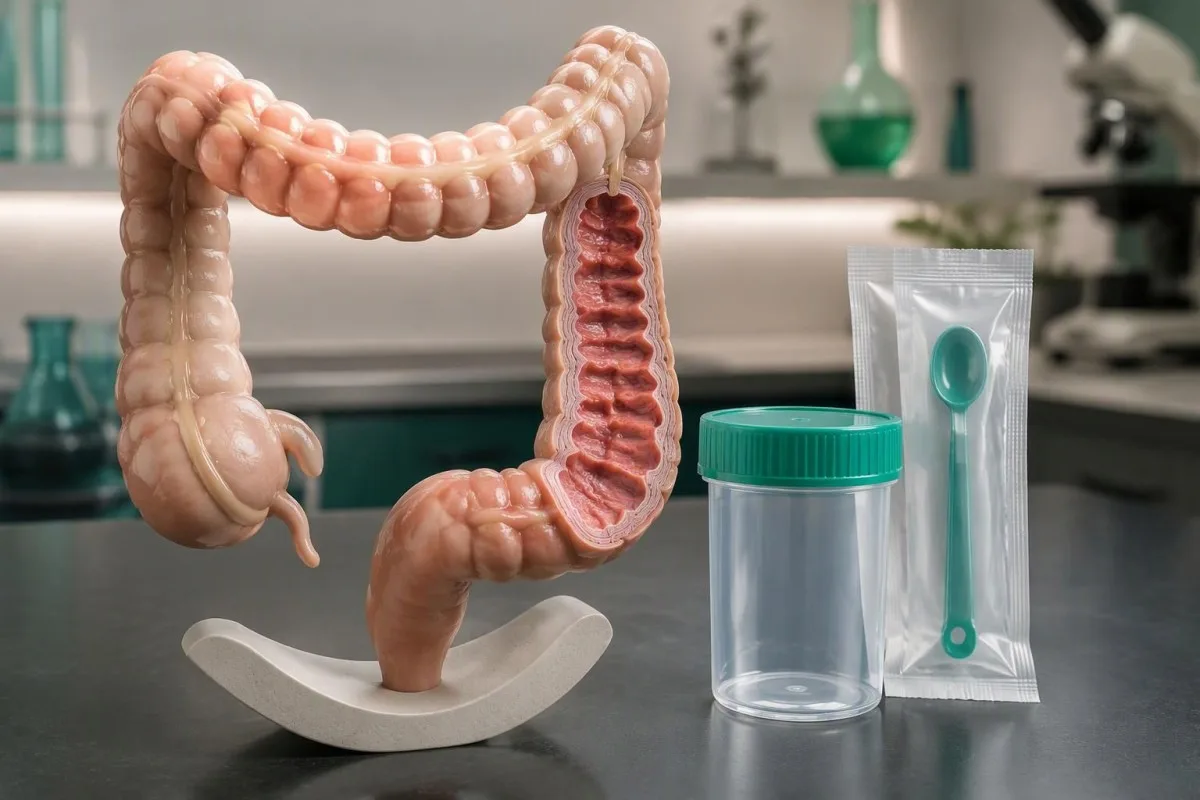
Para sa karamihan ng mga tao, ang pagsusuri sa gut microbiome ay hindi sulit bilhin para sa pag-diagnose ng IBS o pagpili ng mga supplement. Ito ay naglalarawan ng microbial DNA sa isang sample ng dumi, ngunit hindi nito matutukoy ang isang unibersal na healthy-gut score o maaasahang mahuhulaan kung aling paggamot ang makakatulong.


- Halaga sa klinika nakasalalay sa kung ang isang resulta ay nagpapabago sa pangangalaga; walang unibersal na tinatanggap na diagnostic cutoff para sa IBS ang consumer microbiome profiling.
- Relatibong kasaganaan Sinusukat ang bahagi ng mga na-classify na sequence: 10% ay hindi nangangahulugang 10% ng lahat ng buhay na bakterya sa iyong buong digestive tract.
- Mga pamamaraan ng pag-sequence nagkakaiba: ang 16S profiling ay nagta-target ng marker gene ng bakterya, samantalang ang shotgun sequencing ay mas malawak na kumukuha ng mga sample ng DNA.
- Mga score ng diversity nakasalalay sa kalkulasyon at workflow ng laboratoryo; ang score na 70/100 ay hindi isang standardized na medical measurement.
- Diagnosis ng IBS karaniwang gumagamit ng paulit-ulit na sakit ng tiyan na karaniwan ay hindi bababa sa 1 araw bawat linggo sa nakaraang 3 buwan, kasama ang iba pang clinical criteria.
- Fecal calprotectin mas mababa sa 50 µg/g ay karaniwang itinuturing na mababa sa mga matatanda, ngunit mahalaga pa rin ang mga saklaw ng laboratoryo at mga babalang sintomas.
- Stool elastase mas mababa sa 100 µg/g ay sumusuporta sa pancreatic exocrine insufficiency kapag sinusukat sa isang angkop na specimen; ang mga malabnaw na sample ay maaaring magbigay ng mga resulta na maling mababa.
- Pagpili ng pandagdag hindi maaasahang masusundan ng isang bacterial ranking lamang; ang mga sintomas, naitatag na mga diagnosis, mga epekto ng gamot at ipinakitang kakulangan ay mas mahusay na panimulang punto.
Kailan sulit bayaran ang pagsusuri sa gut microbiome?
A pagsusuri sa gut microbiome maaaring sulit bayaran bilang kuryusidad o ehersisyo sa pananaliksik, ngunit karaniwan ay hindi bilang isang diagnostic o tool sa pagpili ng paggamot. Simula Oktubre 5, 2026, ang makatwirang pagkakaiba ay nasa pagitan ng paglalarawan ng 1 stool sample at pagpapakita na ang pagkilos batay sa ulat nito ay nagpapabuti sa kalusugan.
Ang mga consumer sequencing report ay hindi maaasahang nagdi-diagnose ng IBS, nagpapakilala ng sanhi ng pagdumi, o pumipili ng personalized na probiotic. Inilalarawan ng internasyonal na pahayag ng pinagkasunduan sa microbiome testing ang malalaking hadlang sa karaniwang klinikal na aplikasyon, kabilang ang standardisasyon at napatunayang klinikal na pakinabang (Porcari et al., 2025); ang pagtuklas ng mga pagkakaiba sa pagitan ng mga grupo ay hindi kapareho ng pag-diagnose ng 1 indibidwal.
Ang Kantesti ay isang AI blood test analyzer, hindi isang stool-sequencing service. Ako si Thomas Klein, Chief Medical Officer, at ang aking rekomendasyon ay paghiwalayin ang 3 tanong: ano ang nasukat, gaano ito mauulit, at magbabago ba ang sagot sa pangangalaga? Ang aming background ng kumpanya ay nagpapaliwanag ng aming pagtutok sa blood-test.
Ang isang hypothetical na £180 kit ay maaaring maging mas malaking pagbili kung ang ulat ay magrerekomenda ng £60 buwanang pandagdag at paulit-ulit na pagsubok bawat 3 buwan. Ang mga figure na iyon ay naglalarawan ng isang problema sa pagbabadyet, hindi isang pagtatantya ng presyo sa merkado: ang makabuluhang gastos ay kasama ang lahat ng pinaniniwalaan mong bilhin ng paunang ulat.
Ang isang asymptomatic adult na nasisiyahan sa biology ay maaaring makatwirang tanggapin ang kawalan ng katiyakan na iyon. Ang isang taong may 6 na linggo ng patuloy na pagtatae ay nangangailangan ng ibang pag-uusap: medikal na pagsusuri, naka-target na pagsubok, at isang plano na hindi nakasalalay sa pagpapabuti ng isang proprietary wellness score.
Ano ang aktuwal na sinusukat ng pagsusuri sa stool microbiome?
A stool microbiome test karaniwang sumusukat sa microbial DNA na nakuha mula sa isang maliit na stool sample. Ang 2 pangunahing pamamaraan—16S ribosomal RNA gene sequencing at shotgun metagenomic sequencing—ay naiiba sa kung ano ang kanilang matutukoy, ngunit wala sa kanila ang direktang sumusukat sa bawat nabubuhay na organismo o sa aktibidad nito sa buong bituka.
16S sequencing ay nagta-target ng marker gene na ginagamit upang uriin ang bacteria at, na may angkop na mga pamamaraan, archaea. Ang iba't ibang variable regions at primers ay nakakakuha ng iba't ibang organismo; ang pagkakakilanlan sa antas ng genus ay hindi nagpapatunay kung aling species o strain ang naroroon, at ang mga claim sa strain-specific na paggamot ay hindi maaaring awtomatikong sumunod mula sa 1 pangalan ng genus.
Shotgun sequencing ay mas malawak na nagsa-sample ng DNA at maaaring magpakilala ng microbial genes, minsan na may mas mahusay na species resolution. Gayunpaman, ang paghahanap ng 1 gene na nauugnay sa isang metabolic pathway ay hindi nagpapakita na ang pathway ay aktibo, na ang produkto nito ay umaabot sa iyong mga tissue, o na ang pagbabago nito ay magpapabuti sa mga sintomas.
Ang stool ay kumakatawan sa materyal na lumalabas sa colon, hindi isang kumpletong imbentaryo ng maliit na bituka o mga organismo na nakadikit sa mauhog na bituka. Samakatuwid, ang isang sample na nakolekta sa 1 umaga ay maaaring teknikal na nagbibigay-kaalaman habang nawawala ang anatomical na lokasyon na may kaugnayan sa klinikal na tanong—lalo na kapag may nagtatanong tungkol sa mga sintomas ng maliit na bituka.
Ang isang ulat ay maaaring pagsamahin ang mga natukoy na organismo, tinatayang proporsyon, at mga hinulaang function na para bang sila ay magkatumbas na mga sukat. Hindi sila. Ang aming gabay sa qualitative at quantitative results ay nagpapaliwanag kung bakit ang pagtukoy ng isang bagay at pagsukat ng dami nito ay sumasagot sa 2 magkaibang tanong.
Ano ang ibig sabihin ng mga porsyento ng kasaganaan ng bakterya?
Relatibong kasaganaan ay ang proporsyon ng isang organismo sa mga sequence na kasama sa kalkulasyon ng laboratoryo, hindi isang absolutong bilang ng mga nabubuhay na bacteria. Kung 20 sa 100 na na-classify na read ay nabibilang sa isang grupo, ang iniulat na dami nito ay 20%; ang denominator ang nagtatakda kung ano ang ibig sabihin ng porsyentong iyon.
Ang isang porsyento ay maaaring bumaba nang hindi bumababa ang mismong organismo. Sa isang pinasimpleng halimbawa, ang 20 na itinalagang read sa 100 na kabuuang read ay nagbibigay ng 20%, samantalang ang 20 sa 200 ay nagbibigay ng 10%; ang pangalawang resulta ay maaaring sumalamin sa pagpapalawak ng ibang mga grupo sa halip na pagbawas ng una.
Absolute microbial load requires additional measurement, such as calibrated quantitative PCR, flow cytometry or a validated spike-in approach. Even then, stool water content and the reporting denominator matter: copies per gram of wet stool and copies per gram of dry stool are 2 different quantities.
A report stating that an organism is absent usually means it was not detected above that workflow’s threshold. If an organism has a true read fraction of 0.01% and only 1,000 relevant reads are sampled, missing it is unsurprising; non-detection should not trigger a diagnosis of bacterial deficiency.
The same reasoning applies when percentages distract from absolute blood-cell counts, as explained in our count versus percentage guide. For microbiome reports, ask 2 practical questions: what entered the denominator, and were unclassified reads excluded?
Ang mas mataas bang diversity score ng microbiome ay nangangahulugan ng mas mabuting kalusugan?
A higher microbiome diversity score does not automatically mean better digestive health. Diversity summarizes features such as richness and evenness; it does not identify whether organisms are helpful, harmful or clinically relevant, and a proprietary 0–100 score has no universal medical interpretation.
Richness counts detected categories, while evenness describes how balanced their proportions are. A sample with 100 detected species dominated by 1 species may have high richness but low evenness; sequencing depth and the taxonomic level chosen can change both calculations.
The Shannon index combines richness and evenness. Using natural logarithms, 2 equally abundant categories produce approximately 0.69 and 4 produce approximately 1.39; these are mathematical examples, not healthy-gut thresholds, and values calculated at genus level should not be compared directly with species-level values.
Bowel transit complicates the interpretation because stool consistency is associated with microbiome composition. Recording stool form for 7 days can reveal whether a score is being compared across very different bowel states; the Bristol stool chart provides a practical vocabulary.
A reference cohort also shapes the result: a percentile against 500 self-selected customers is not equivalent to a percentile against a carefully characterized population. Ask whether the comparator matches your age, geography, medications and bowel habits before treating an 18th-percentile result as a problem.
Bakit maaaring magbigay ng magkaibang resulta ang dalawang provider ng microbiome?
Two providers can give different results from the same stool because their collection, DNA extraction, sequencing and computational workflows differ. At least 4 layers can change a report before clinical interpretation begins; disagreement does not necessarily mean that either laboratory mixed up the specimen.
DNA extraction is a major source of variation because bacterial cell walls differ in how easily they break open. Costea and colleagues demonstrated why fecal sample processing needs standardization (Costea et al., 2017); insufficient mechanical disruption can under-represent some organisms even when 2 laboratories sequence equal amounts of extracted DNA.
Transport introduces another variable: an unstabilized sample spending 48 hours at room temperature is not equivalent to a sample immediately placed in a validated preservative. The correct handling conditions are kit-specific; refrigeration is not automatically appropriate when a collection system was designed and validated for ambient shipping.
Reference databases and software versions can reassign the same sequence. One provider may report a species while another reports only its genus, and 2 health scores may use different proprietary weighting systems; apparently conflicting recommendations can arise from the scoring rules rather than the underlying biology.
A specimen problem can undermine interpretation even when the instrument works correctly, a principle illustrated by our gabay sa interference ng sample. If comparing results, document collection time, preservative, recent medicines and the pipeline version—not just the final percentage.
Paano mo huhusgahan ang katumpakan ng pagsusuri sa gut microbiome?
Gut microbiome test accuracy has 3 separate meanings: analytical validity, clinical validity and clinical utility. A laboratory may accurately detect microbial DNA without accurately diagnosing a condition or proving that its recommended treatment improves outcomes; a single percentage labelled accuracy cannot resolve those distinctions.
Analytical validity asks whether the workflow measures what it claims to measure. Useful evidence includes known-composition microbial controls, extraction blanks, contamination controls, detection limits and duplicate precision; processing 1 sample twice is helpful, but it does not test every source of variation from home collection onward.
Clinical validity asks whether a result distinguishes people with and without a defined condition in relevant populations. An algorithm evaluated in 200 people already known to have severe disease may perform differently in 200 primary-care patients with overlapping symptoms; spectrum and selection bias matter.
Clinical utility asks whether using the report improves a patient outcome compared with appropriate usual care. Porcari et al. (2025) distinguish research promise from readiness for routine application; a prettier report or a change in 1 bacterial percentage is not itself evidence of less pain or better nutrition.
Ang aming pahina ng mga pamantayang klinikal concerns blood-result interpretation and should not be read as validation of consumer stool sequencing. For any health report, the accuracy assessment checklist helps separate technical performance from claims that require patient-outcome studies.
Maaari bang mag-diagnose ng IBS o magpaliwanag ng paglaki ng tiyan ang ulat ng microbiome?
A consumer microbiome report cannot diagnose irritable bowel syndrome, and no bacterial abundance cutoff reliably establishes IBS in routine practice. Commonly used Rome IV criteria include abdominal pain averaging at least 1 day weekly in the previous 3 months, with symptom onset at least 6 months earlier.
Rome IV also requires pain associated with at least 2 of 3 features: defecation, changed stool frequency, or changed stool form. These criteria support a positive clinical diagnosis, but warning signs and alternative explanations still require assessment; painless bloating alone does not meet the IBS pain criterion.
The ACG guideline supports a positive diagnostic strategy rather than endless exclusion testing, with celiac testing and inflammatory-marker assessment in appropriate patients with diarrhea symptoms (Lacy et al., 2021). A microbiome score is not one of those diagnostic criteria, even if a report associates 1 organism with IBS.
Consider a hypothetical 34-year-old with bloating, loose stools and low iron stores: celiac disease deserves consideration before a recommendation to remove gluten. Testing commonly includes tissue transglutaminase IgA and total IgA, because low IgA can mislead an IgA-based result.
Kantesti AI should not turn an unvalidated stool score into an IBS diagnosis or a claim of small-intestinal bacterial overgrowth. Anyone already avoiding gluten should discuss testing preparation rather than improvise a challenge; our gabay sa paghahanda para sa celiac testing explains why duration and intake affect interpretation.
Aling mga clinical stool test ang sumasagot sa mas kapaki-pakinabang na mga tanong?
Clinical stool diagnostics investigate defined problems, such as intestinal inflammation, pancreatic enzyme output, pathogens or occult bleeding. They are different from microbiome profiling; fecal calprotectin, for example, is commonly reported in µg/g with assay-specific interpretation, whereas a bacterial diversity score has no comparable universal diagnostic threshold.
Fecal calprotectin reflects intestinal neutrophil activity, not microbiome diversity. Many adult laboratories use below 50 µg/g as a low result, but infection, NSAID exposure and other conditions can raise it; our calprotectin and lactoferrin comparison explains their overlapping clinical roles.
An intermediate calprotectin result often needs context and sometimes a repeat after about 2–6 weeks, depending on the local pathway. Persistent symptoms or alarm features may justify earlier investigation, so our borderline calprotectin guide should not be used to postpone assessment.
Fecal elastase estimates pancreatic exocrine output: above 200 µg/g is generally reassuring, 100–200 µg/g is indeterminate, and below 100 µg/g supports insufficiency in an appropriate specimen. The stool elastase interpretation guide explains why dilution and pretest probability matter.
A provider may bundle 1 clinically established assay with several exploratory scores in the same package. That does not validate the entire package: judge each component separately, and remember that normal calprotectin does not exclude every bowel disorder or replace colorectal-cancer evaluation when indicated.
Maaari bang maaasahang maalis ng consumer sequencing ang impeksyon sa bituka?
Consumer microbiome sequencing cannot reliably rule out a gut infection unless the specific pathogen claim has been clinically validated. Targeted stool PCR, antigen assays, toxin testing and culture answer different questions; 3 or more new unformed stools in 24 hours may prompt assessment for C. difficile in the right clinical setting.
C. difficile testing needs symptoms and risk context because detecting a toxin gene can identify colonization as well as illness. Recent antibiotics, healthcare exposure and laxative use influence the decision; 1 positive molecular result does not automatically establish toxin-mediated disease or justify treatment.
Travel-associated diarrhea may require targeted testing for Giardia or other pathogens based on exposure and symptom duration. A report that simply lists an organism among hundreds lacks the same clinical meaning as a validated diagnostic assay, and 1 negative consumer profile cannot safely exclude it.
H. pylori stool antigen testing is an example of a directed assay with established uses. Proton pump inhibitors generally need to be withheld for 2 weeks and antibiotics or bismuth for 4 weeks before testing when clinically safe; prescribed medicines should not be stopped without advice.
Acid-suppressing medicines can also affect symptoms, microbiome composition and other laboratory results. Our PPI and gastrin guide illustrates why medication history belongs in the interpretation rather than being reduced to 1 report note about an altered bacterial community.
Aling mga sintomas ang dapat unahin kaysa sa pagsusuri ng microbiome?
Visible blood, black tarry stool, unexplained weight loss, anemia, persistent nighttime diarrhea or severe abdominal pain should take priority over a consumer microbiome test. A reassuring bacterial score provides no safety clearance; heavy bleeding, fainting, severe dehydration or rapidly worsening pain warrants urgent assessment.
A normal microbiome report cannot exclude colorectal cancer, inflammatory bowel disease or a clinically significant source of bleeding. Even 1 episode of black tarry stool needs assessment when gastrointestinal bleeding is plausible; our stool bleeding urgency guide distinguishes color changes from concerning patterns.
A positive FIT detects human hemoglobin in stool and requires follow-up through the relevant diagnostic pathway; repeating a microbiome kit does not answer why it is positive. The positive FIT next steps explain why a screening or symptomatic result cannot be dismissed by an unrelated score.
Risk depends on age, family history and symptom trajectory, not just a single duration cutoff. A hypothetical 62-year-old with 8 weeks of new bowel-habit change and weight loss needs prompt clinical review even if a consumer report rates diversity as excellent.
Severe diarrhea can cause kidney and electrolyte complications before its cause is known. Fewer trips to urinate, dizziness on standing or inability to keep fluids down for several hours should shift attention toward hydration and medical assessment—not toward whether 1 bacterial genus appears unusually abundant.
Maaari bang pumili ng personalized na probiotics o supplement ang mga resulta ng microbiome?
A microbiome report alone cannot reliably select a personalized probiotic, prebiotic or vitamin regimen. A low bacterial percentage is not a diagnosed deficiency, and benefits depend on the indication, exact formulation and sometimes strain; 1 genus name does not establish which supplement will help.
The ACG guideline suggests against probiotics for global IBS symptoms because the evidence is very uncertain, while supporting soluble fiber (Lacy et al., 2021). That recommendation does not prove that every probiotic is ineffective; it means that confidence in routinely recommending 1 product for IBS remains limited.
A cautious soluble-fiber trial may start with about 3–5 g of psyllium daily and increase gradually according to tolerance and product instructions. Take it with adequate fluid—often at least 250 mL per dose—and seek advice for swallowing difficulty or obstruction risk; adding several fermentable products at once makes symptom attribution harder.
Vitamin or mineral needs require dietary and clinical assessment, not a microbial vitamin-production prediction. In the United States, the adult zinc upper intake level is 40 mg/day from all sources; sustained excess can cause copper deficiency, as our high zinc safety guide na nagpapaliwanag.
Kantesti is an AI blood test interpretation platform that helps place measured blood results in context; microbial genes cannot establish serum B12, iron stores or magnesium status. Our evidence-based food choices can support dietary variety, but 1 restrictive plan is not appropriate for every digestive condition.
Paano nakakaapekto ang pagkolekta, paulit-ulit na pagsusuri, at privacy sa halaga?
Collection quality, repeat-test consistency and data handling affect whether a microbiome purchase is useful. Follow the specific kit instructions, keep a record of relevant exposures, and avoid treating a change between 2 samples as proof of improvement when collection conditions or analytical methods also changed.
Recent antibiotics, bowel preparation, acute diarrhea and major dietary changes can alter the sample’s context. There is no universal evidence-based waiting interval—such as exactly 4 weeks—that makes every microbiome test representative again; document dates and discuss the question rather than stopping a necessary treatment to improve a score.
Repeated samples are easier to interpret when provider, kit, handling and bowel state remain comparable. Keeping a 7-day record of symptoms, stool form, diet changes and medicines may be more useful than purchasing a repeat immediately; our gabay sa sintomas ng pagtunaw explains common contextual clues.
Privacy questions should cover both the physical specimen and the digital data. Ask 4 things before paying: how long each is retained, whether secondary research use is optional, whether third-party sharing occurs, and whether deletion covers raw sequencing files as well as the account.
Shotgun sequencing can capture human DNA alongside microbial DNA, so human-read filtering and retention policies deserve scrutiny. A GDPR-aligned statement alone does not answer every processing question; request the actual consent terms, hosting arrangements and cross-border safeguards before sending 1 specimen that may generate extensive data.
Ano ang dapat mong gawin kung mayroon ka nang ulat ng microbiome?
If you already have a microbiome report, separate established clinical assays from exploratory scores and prioritize symptoms over bacterial rankings. Write down 3 items before making changes: the problem you want to improve, the evidence for the proposed intervention, and the outcome that would justify continuing it.
The first step is to inventory the report rather than accept its overall traffic-light rating. A package containing calprotectin in µg/g, bacterial relative abundance in percent and a wellness score out of 100 contains 3 different types of information; each needs its own interpretation and evidence.
Choose 1 measurable outcome for a reasonable trial: weekly pain days, stool frequency, urgency episodes or the ability to tolerate a food. A hypothetical 4-week intervention that improves symptoms without changing a diversity score may still be useful; the reverse pattern does not establish patient benefit.
Kantesti is an AI-powered blood test analysis tool, not a substitute for a digestive diagnosis. Our paliwanag sa AI technology describes how blood-result interpretation works; ferritin, a CBC or electrolytes may answer specific clinical questions, but there is no validated blood panel that reveals your ideal bacterial balance.
My practical recommendation, as Thomas Klein, is to bring the original report and a 7-day symptom record to the clinician rather than a shopping list of recommended supplements. Do not add antibiotics, antifungals or restrictive diets solely because 1 organism was flagged; agree on what would trigger reassessment or specialist referral.
Mga publikasyong pananaliksik at ang mga limitasyon ng interpretasyon ng AI
Research on AI blood-result interpretation does not validate consumer microbiome diagnosis or personalized supplement selection. The 2 company-supplied Figshare records below concern blood-test workflows; neither title establishes that stool-sequencing recommendations improve digestive symptoms, detect IBS or identify an individual’s optimal probiotic.
Kantesti’s supplied technical benchmark is described as evaluating 100,000 synthetic test cases. Synthetic-case performance can examine defined technical behavior, but it is not equivalent to diagnostic accuracy in consecutive real patients; independent reproduction, representative clinical data and patient outcomes require separate evaluation.
The supplied hantavirus report describes engineering validation and deployment across 50,000 interpreted blood-test reports. Deployment volume does not by itself establish sensitivity, specificity or outcome benefit, and a triage workflow for 1 infectious condition cannot be generalized to microbiome profiling without new evidence.
The formal citations below use n.d. because publication dates were not supplied; their linked records should be checked for authorship, version and review status. ResearchGate and Academia.edu links are DOI search routes, not claims that 2 verified copies exist there, and repository availability should not be mistaken for journal peer review.
Clinical accountability remains separate from publication count or sample volume. Our medical advisory board page describes medical governance; the decision standard remains whether a particular test answers the patient’s question, with limitations explained before purchase rather than after 1 unexpected result.
Mga Madalas Itanong
Sulit ba ang mga pagsusuri sa mikrobyoma ng bituka?
Karaniwang hindi sulit bilhin ang mga pagsusuri sa mikrobyoma ng bituka para masuri ang IBS o pumili ng mga suplementong iniangkop sa indibidwal. Mailalarawan ng mga ito ang DNA ng mga mikrobyo sa 1 sample ng dumi, ngunit karaniwang walang itinatag na mga limitasyon sa pagsusuri at napatunayang silbi sa pagpili ng paggamot ang mga marka para sa mamimili. Isaalang-alang ang kabuuang halaga ng kit, mga paulit-ulit na pagsusuri at mga inirerekomendang produkto bago bumili. Mas mainam na tugunan ang mga nagpapatuloy na sintomas sa pamamagitan ng klinikal na pagtatasa at mga nakatuong pagsusuri na sumasagot sa isang tiyak na tanong.
Gaano katumpak ang pagsusuri sa mikrobyoma ng bituka?
0 Katumpakan ng pagsusuri sa gut microbiome ay nakadepende sa 3 magkakahiwalay na tanong: kung tama bang sinusukat ng laboratoryo ang DNA ng mga mikrobyo, kung nahuhulaan ng resulta ang isang klinikal na kondisyon, at kung napapabuti ng pagkilos batay rito ang mga resulta sa kalusugan. Maaaring magbago ang iniulat na dami dahil sa paraan ng pangangalap ng sample, pagkuha ng DNA, lalim ng sequencing at mga reference database. Hindi awtomatikong nangangahulugan ang resultang teknikal na nauulit na nagbibigay ito ng maaasahang diagnosis. Hilinging patunayan ang partikular na pahayag sa halip na tanggapin ang iisang pangkalahatang porsiyento ng katumpakan.
Maaari bang masuri ng pagsusuri sa microbiome ng dumi ang IBS?
Ang pagsusuri ng microbiome sa dumi ng konsyumer ay hindi maaaring mag-diagnose ng IBS gamit ang itinatag na bacterial cutoff. Ang karaniwang ginagamit na Rome IV criteria ay kinabibilangan ng paulit-ulit na sakit ng tiyan na karaniwang hindi bababa sa 1 araw linggo-linggo sa nakalipas na 3 buwan, simula ng sintomas hindi bababa sa 6 na buwan mas maaga, at mga kaugnay na pagbabago sa bituka. Sinusuri rin ng mga clinician ang mga babalang senyales at isinasaalang-alang ang mga naka-target na pagsusuri, kabilang ang celiac testing sa mga angkop na pasyente na may pagtatae. Ang microbiome profiling ay hindi pumapalit sa pagtatasa na iyon.
Ano ang normal na iskor ng pagkakaiba-iba ng microbiome?
Walang unibersal na normal na marka ng pagkakaiba-iba ng microbiome para sa isang indibidwal na pasyente. Ang isang proprietary score na 70/100 ay makabuluhan lamang sa loob ng pagkalkula ng provider at reference population, hindi bilang isang standardized na diyagnosis. Ang yaman, pagkakapare-pareho, lalim ng pagkasunod-sunod at ang antas ng taxonomic ay nakakaapekto sa mga sukat ng pagkakaiba-iba. Ang mas mataas na pagkakaiba-iba ay hindi awtomatikong mas mahusay, at ang isang mababang marka lamang ay hindi nagbibigay-katwiran sa mga pandagdag o gamot.
Ang microbiome test ba ay kapareho ng stool test mula sa doktor ko?
Ang pag-profile ng microbiome ay naiiba sa klinikal na pagsusuri ng dumi para sa isang tiyak na kondisyon. Ang fecal calprotectin ay karaniwang gumagamit ng mas mababa sa 50 µg/g bilang mababang resulta sa matanda, habang ang fecal elastase na mas mababa sa 100 µg/g ay sumusuporta sa pancreatic exocrine insufficiency sa isang naaangkop na specimen. Sinisiyasat ng targeted pathogen assays at FIT ang iba pang tiyak na mga katanungan. Ang isang komersyal na pakete ay maaaring magsama ng parehong itinatag na mga pagsusuri at mga exploratory score, kaya't ang bawat bahagi ay dapat tasahin nang hiwalay.
Masasabi ba ng resulta ng aking microbiome kung aling probiotic ang dapat kong inumin?
Hindi matitiyak ng mga resulta ng microbiome kung aling probiotic ang pinaka-malamang na makakatulong sa isang indibidwal. Ang pagtuklas ng mababang proporsyon ng 1 uri ng bakterya ay hindi nagpapatunay ng kakulangan o nagpapakita na ang paglunok ng kaugnay na organismo ay magpapabuti sa mga sintomas. Ang ebidensya para sa probiotic ay depende sa indikasyon, pormulasyon at kung minsan sa eksaktong strain. Para sa IBS, ang 2021 ACG guideline ay nagmumungkahi laban sa probiotics para sa mga pangkalahatang sintomas dahil napakakirig ang sumusuportang ebidensya.
Kumuha ng AI-Powered Blood Test Analysis Ngayon
Sumali sa mahigit 2 milyong user sa buong mundo na nagtitiwala sa Kantesti para sa agarang at tumpak na pagsusuri ng lab test. I-upload ang iyong resulta ng blood test at makakuha ng komprehensibong interpretasyon ng mga biomarker ng 15,000+ sa loob ng ilang segundo.
📚 Mga Sanggunian na Publikasyon sa Pananaliksik
Klein, T., Mitchell, S., & Weber, H. (2026). Multilingual AI Assisted Clinical Decision Support para sa Maagang Hantavirus Triage: Disenyo, Pagpapatunay ng Inhinyeriya, at Tunay na Pag-deploy sa Mahigit 50,000 Interpretadong Ulat ng Pagsusuri sa Dugo. Kantesti AI Medical Research.
Klein, T., Mitchell, S., & Weber, H. (2026). Isang Pre-Registered, Rubric-Based Automated Technical Benchmark ng Kantesti Blood-Test Interpretation Engine sa 100,000 Synthetic Test Cases. Kantesti AI Medical Research.
📖 Mga Panlabas na Sanggunian sa Medikal
Porcari S et al. (2025). International consensus statement on microbiome testing in clinical practice. The Lancet Gastroenterology & Hepatology.
Costea PI et al. (2017). Towards standards in human fecal sample processing. Nature Biotechnology.
⚕️ Pagtatanggi sa Medikal
Ang artikulong ito ay para sa mga layuning pang-edukasyon lamang at hindi ito bumubuo ng medikal na payo. Palaging kumonsulta sa isang kwalipikadong tagapagbigay ng pangangalagang pangkalusugan para sa mga desisyon sa diagnosis at paggamot.
Mga Signal ng Tiwala ng E-E-A-T
Karanasan
Pinamumunuan ng manggagamot na klinikal na pagsusuri ng mga daloy ng interpretasyon ng mga pagsusuri sa laboratoryo.
Kadalubhasaan
Pokus sa laboratoryong medisina kung paano kumikilos ang mga biomarker sa kontekstong klinikal.
Pagka-awtoridad
Isinulat ni Dr. Thomas Klein na may pagsusuri ni Dr. Sarah Mitchell at Prof. Dr. Hans Weber.
Pagiging Mapagkakatiwalaan
Interpretasyong nakabatay sa ebidensya na may malinaw na mga susunod na hakbang upang mabawasan ang pag-aalarma.