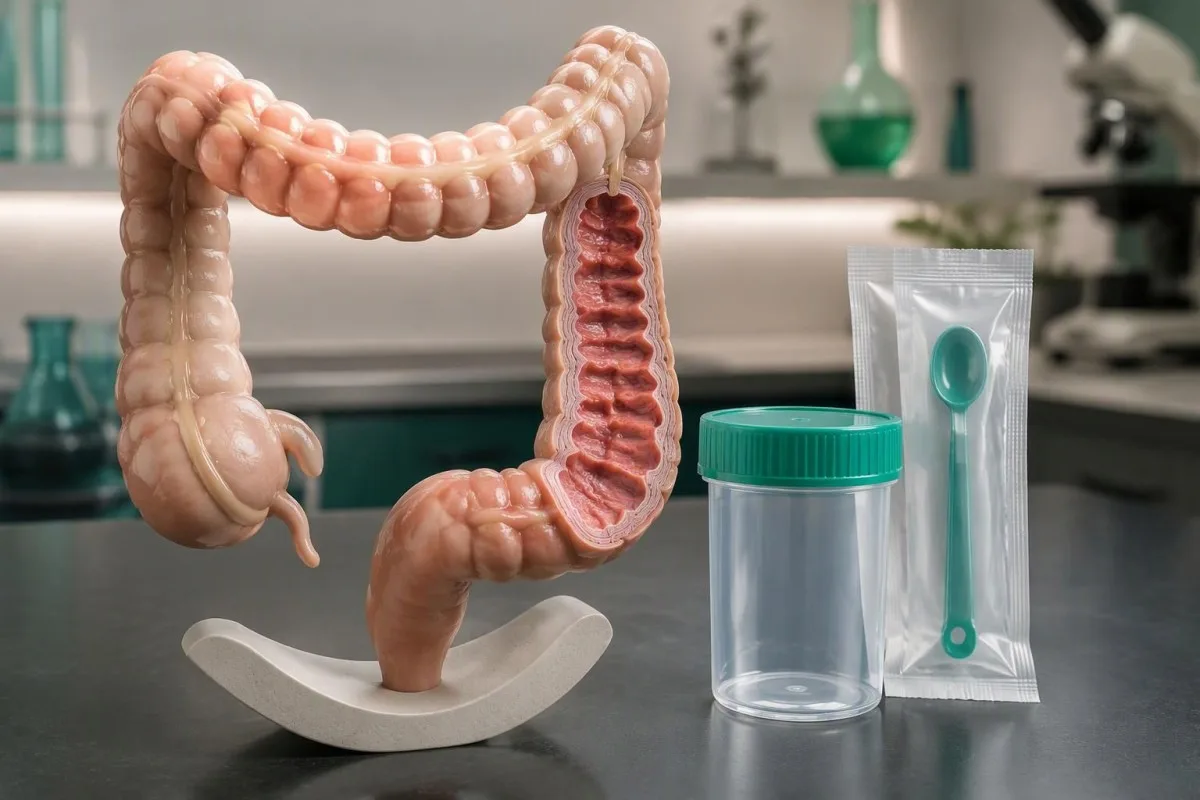
Lielākajai daļai cilvēku zarnu mikrobioma tests nav vērtīgs, lai diagnosticētu IBD vai izvēlētos uztura bagātinātājus. Tas apraksta mikrobu DNS vienā fēču paraugā, taču nevar noteikt vispārēju veselīgas zarnas rādītāju vai uzticami prognozēt, kurš ārstēšanas veids palīdzēs.


- Klīniskā vērtība ir atkarīga no tā, vai rezultāts maina aprūpi; patērētāju mikrobioma profilēšanai nav universāli pieņemtu diagnostikas sliekšņu IBD gadījumā.
- Relatīvais daudzums mēra klasificēto sekvenču daļu: 10% nenozīmē 10% no visām dzīvajām baktērijām visā jūsu gremošanas traktā.
- Sekvenču metodes atšķiras: 16S profilēšana mērķē uz baktēriju gēnu marķieri, savukārt shotgun sekvenču analīze plašāk parauga DNS.
- Daudzveidības rādītāji ir atkarīgi no aprēķina un laboratorijas darba plūsmas; rādītājs 70/100 nav standartizēts medicīnisks mērījums.
- IBD diagnostika parasti ietver atkārtotas vēdera sāpes vidēji vismaz 1 dienu nedēļā iepriekšējo 3 mēnešu laikā, kopā ar citiem klīniskiem kritērijiem.
- Fekālais kalprotektīns zemāk par 50 µg/g pieaugušajiem parasti uzskata par zemu, taču svarīgi ir arī laboratorijas diapazoni un brīdinājuma simptomi.
- Izkārnījumu elastāze zemāk par 100 µg/g, ja tas ir izmērīts atbilstošā paraugā, liecina par aizkuņģa dziedzera eksokrīno mazspēju; ūdeņaini paraugi var radīt kļūdaini zemu rezultātu.
- Papildinājumu izvēle nevar uzticami sekot tikai baktēriju klasifikācijai; simptomi, diagnosticētās slimības, medikamentu ietekme un pierādītie deficīti ir labāki sākumpunkti.
Kad zarnu mikrobioma tests ir tā vērts?
A zarnu mikrobioma tests var būt tā vērts, ja to veic kā interesantu vai pētniecisku vingrinājumu, bet parasti ne kā diagnostikas vai ārstēšanas izvēles rīku. Sākot ar 2026. gada 5. oktobri, pamatotā atšķirība ir starp 1 izkārnījumu parauga aprakstu un pierādījumu, ka rīcība pēc tā ziņojuma uzlabo veselību.
Patērētāju sekvenču ziņojumi nevar uzticami diagnosticēt Kairā (IBS), noteikt vēdera uzpūšanās cēloni vai izvēlēties personalizētu probiotiku. Starptautiskais konsensa paziņojums par mikrobiomu testēšanu apraksta būtiskus šķēršļus ikdienas klīniskajai lietošanai, ieskaitot standartizāciju un pierādītu klīnisko lietderību (Porcari et al., 2025); atšķirību noteikšana starp grupām nav tas pats, kas 1 indivīda diagnosticēšana.
Kantesti ir mākslīgā intelekta asinsanalīžu analizators, nevis izkārnījumu sekvenču pakalpojums. Esmu Thomas Klein, galvenais medicīnas darbinieks, un mans ieteikums ir nodalīt 3 jautājumus: ko izmērīja, cik tas ir reproducējams un vai atbilde mainītu aprūpi? Mūsu uzņēmuma aprakstu izskaidro mūsu asinsanalīžu fokusu.
Hipotētiskais 180 £ komplekts var kļūt par daudz lielāku pirkumu, ja ziņojumā ieteikts ik mēnesi lietot 60 £ maksājošus papildinājumus un atkārtotu testēšanu ik pēc 3 mēnešiem. Šie skaitļi ilustrē budžeta problēmu, nevis tirgus cenas aplēsi: nozīmīgās izmaksās ietilpst viss, ko sākotnējais ziņojums pārliecina jūs iegādāties.
Asimptomātisks pieaugušais, kuram patīk bioloģija, var pamatoti pieņemt šo nenoteiktību. Kādam ar 6 nedēļas ilgu pastāvīgu caureju ir nepieciešama cita saruna: medicīniska izvērtēšana, mērķtiecīga testēšana un plāns, kas nav atkarīgs no sava vērtējuma uzlabošanas.
Ko patiesībā mēra fēču mikrobioma tests?
A izkārnījumu mikrobioma tests parasti mēra mikrobu DNS, kas iegūta no neliela izkārnījumu parauga. 2 galvenās pieejas — 16S ribosomu RNS gēnu sekvenēšana un visaptveroša metagenomiskā sekvenēšana — atšķiras pēc tā, ko tās var identificēt, taču neviena no tām tieši nemēra katru dzīvo organismu vai tā darbību visā zarnu traktā.
16S sekvenēšana mērķē uz marķiera gēnu, ko izmanto baktēriju un, izmantojot piemērotas metodes, arheju klasificēšanai. Dažādi mainīgie reģioni un primeri nosaka dažādus organismus; ģints līmeņa identifikācija nenosaka, kāda suga vai celms ir klātesošs, un ar celmu specifiskām ārstēšanas prasībām nevar automātiski sekot no 1 ģints nosaukuma.
Visaptveroša sekvenēšana plašāk parauga DNS un var identificēt mikrobu gēnus, dažreiz ar labāku sugu izšķirtspēju. Tomēr 1 ar metabolisko ceļu saistīta gēna atrašana nenodrošina, ka ceļš ir aktīvs, ka tā produkts sasniedz jūsu audus vai ka tā maiņa uzlabos simptomus.
Izkārnījumi ir materiāls, kas izdalās no resnās zarnas, nevis pilnīgs tievās zarnas vai zarnu gļotādai pievienoto organismu inventārs. Tādējādi 1 rīta paraugs var būt tehniski informatīvs, bet neiekļaut anatomisko atrašanās vietu, kas ir saistīta ar klīnisko jautājumu — jo īpaši, ja kāds jautā par tievās zarnas simptomiem.
Ziņojums var apvienot noteiktos organismus, aplēstās proporcijas un paredzētās funkcijas, it kā tās būtu līdzvērtīgas mērījumus. Tie nav. Mūsu ceļvedis uz kvalitatīvi un kvantitatīvi rezultāti izskaidro, kāpēc kaut ko identificēt un izmērīt tā daudzumu atbild uz 2 dažādiem jautājumiem.
Ko patiesībā nozīmē baktēriju daudzuma procentuālās attiecības?
Relatīvais daudzums ir organisma proporcija sekvenču vidū, ko iekļauj laboratorijas aprēķinā, nevis absolūts dzīvu baktēriju skaits. Ja 20 no 100 klasificētajiem rādījumiem pieder vienai grupai, tās ziņotais daudzums ir 20%; saucējs nosaka, ko nozīmē šis procentuālais rādītājs.
Procentuālais rādītājs var samazināties, pat ja pats organisms nesamazinās. Vienkāršotā piemērā 20 piešķirtie rādījumi no 100 kopējiem rādījumiem dod 20%, savukārt 20 no 200 dod 10%; otrais rezultāts var atspoguļot citu grupu paplašināšanos, nevis pirmās samazināšanos.
Absolute microbial load requires additional measurement, such as calibrated quantitative PCR, flow cytometry or a validated spike-in approach. Even then, stool water content and the reporting denominator matter: copies per gram of wet stool and copies per gram of dry stool are 2 different quantities.
A report stating that an organism is absent usually means it was not detected above that workflow’s threshold. If an organism has a true read fraction of 0.01% and only 1,000 relevant reads are sampled, missing it is unsurprising; non-detection should not trigger a diagnosis of bacterial deficiency.
The same reasoning applies when percentages distract from absolute blood-cell counts, as explained in our count versus percentage guide. For microbiome reports, ask 2 practical questions: what entered the denominator, and were unclassified reads excluded?
Vai augstāks mikrobioma daudzveidības rādītājs nozīmē labāku veselību?
A higher microbiome diversity score does not automatically mean better digestive health. Diversity summarizes features such as richness and evenness; it does not identify whether organisms are helpful, harmful or clinically relevant, and a proprietary 0–100 score has no universal medical interpretation.
Richness counts detected categories, while evenness describes how balanced their proportions are. A sample with 100 detected species dominated by 1 species may have high richness but low evenness; sequencing depth and the taxonomic level chosen can change both calculations.
The Shannon index combines richness and evenness. Using natural logarithms, 2 equally abundant categories produce approximately 0.69 and 4 produce approximately 1.39; these are mathematical examples, not healthy-gut thresholds, and values calculated at genus level should not be compared directly with species-level values.
Bowel transit complicates the interpretation because stool consistency is associated with microbiome composition. Recording stool form for 7 days can reveal whether a score is being compared across very different bowel states; the Bristolas izkārnījumu skala provides a practical vocabulary.
A reference cohort also shapes the result: a percentile against 500 self-selected customers is not equivalent to a percentile against a carefully characterized population. Ask whether the comparator matches your age, geography, medications and bowel habits before treating an 18th-percentile result as a problem.
Kāpēc divi mikrobioma pakalpojumu sniedzēji var sniegt atšķirīgus rezultātus?
Two providers can give different results from the same stool because their collection, DNA extraction, sequencing and computational workflows differ. At least 4 layers can change a report before clinical interpretation begins; disagreement does not necessarily mean that either laboratory mixed up the specimen.
DNA extraction is a major source of variation because bacterial cell walls differ in how easily they break open. Costea and colleagues demonstrated why fecal sample processing needs standardization (Costea et al., 2017); insufficient mechanical disruption can under-represent some organisms even when 2 laboratories sequence equal amounts of extracted DNA.
Transport introduces another variable: an unstabilized sample spending 48 hours at room temperature is not equivalent to a sample immediately placed in a validated preservative. The correct handling conditions are kit-specific; refrigeration is not automatically appropriate when a collection system was designed and validated for ambient shipping.
Reference databases and software versions can reassign the same sequence. One provider may report a species while another reports only its genus, and 2 health scores may use different proprietary weighting systems; apparently conflicting recommendations can arise from the scoring rules rather than the underlying biology.
A specimen problem can undermine interpretation even when the instrument works correctly, a principle illustrated by our paraugu interferenču ceļvedis. If comparing results, document collection time, preservative, recent medicines and the pipeline version—not just the final percentage.
Kā spriest par zarnu mikrobioma testu precizitāti?
Gut microbiome test accuracy has 3 separate meanings: analytical validity, clinical validity and clinical utility. A laboratory may accurately detect microbial DNA without accurately diagnosing a condition or proving that its recommended treatment improves outcomes; a single percentage labelled accuracy cannot resolve those distinctions.
Analytical validity asks whether the workflow measures what it claims to measure. Useful evidence includes known-composition microbial controls, extraction blanks, contamination controls, detection limits and duplicate precision; processing 1 sample twice is helpful, but it does not test every source of variation from home collection onward.
Clinical validity asks whether a result distinguishes people with and without a defined condition in relevant populations. An algorithm evaluated in 200 people already known to have severe disease may perform differently in 200 primary-care patients with overlapping symptoms; spectrum and selection bias matter.
Clinical utility asks whether using the report improves a patient outcome compared with appropriate usual care. Porcari et al. (2025) distinguish research promise from readiness for routine application; a prettier report or a change in 1 bacterial percentage is not itself evidence of less pain or better nutrition.
Mūsu klīnisko standartu lapā concerns blood-result interpretation and should not be read as validation of consumer stool sequencing. For any health report, the accuracy assessment checklist helps separate technical performance from claims that require patient-outcome studies.
Vai mikrobioma ziņojums var diagnosticēt IBD vai izskaidrot vēdera uzpūšanos?
A consumer microbiome report cannot diagnose irritable bowel syndrome, and no bacterial abundance cutoff reliably establishes IBS in routine practice. Commonly used Rome IV criteria include abdominal pain averaging at least 1 day weekly in the previous 3 months, with symptom onset at least 6 months earlier.
Rome IV also requires pain associated with at least 2 of 3 features: defecation, changed stool frequency, or changed stool form. These criteria support a positive clinical diagnosis, but warning signs and alternative explanations still require assessment; painless bloating alone does not meet the IBS pain criterion.
The ACG guideline supports a positive diagnostic strategy rather than endless exclusion testing, with celiac testing and inflammatory-marker assessment in appropriate patients with diarrhea symptoms (Lacy et al., 2021). A microbiome score is not one of those diagnostic criteria, even if a report associates 1 organism with IBS.
Consider a hypothetical 34-year-old with bloating, loose stools and low iron stores: celiac disease deserves consideration before a recommendation to remove gluten. Testing commonly includes tissue transglutaminase IgA and total IgA, because low IgA can mislead an IgA-based result.
Kantesti AI should not turn an unvalidated stool score into an IBS diagnosis or a claim of small-intestinal bacterial overgrowth. Anyone already avoiding gluten should discuss testing preparation rather than improvise a challenge; our celiakijas testēšanas sagatavošanas ceļvedis explains why duration and intake affect interpretation.
Kuri klīniskie fēču testi sniedz atbildes uz vairāk noderīgiem jautājumiem?
Clinical stool diagnostics investigate defined problems, such as intestinal inflammation, pancreatic enzyme output, pathogens or occult bleeding. They are different from microbiome profiling; fecal calprotectin, for example, is commonly reported in µg/g with assay-specific interpretation, whereas a bacterial diversity score has no comparable universal diagnostic threshold.
Fekālais kalprotektīns reflects intestinal neutrophil activity, not microbiome diversity. Many adult laboratories use below 50 µg/g as a low result, but infection, NSAID exposure and other conditions can raise it; our calprotectin and lactoferrin comparison explains their overlapping clinical roles.
An intermediate calprotectin result often needs context and sometimes a repeat after about 2–6 weeks, depending on the local pathway. Persistent symptoms or alarm features may justify earlier investigation, so our borderline calprotectin guide should not be used to postpone assessment.
Fekālā elastāze estimates pancreatic exocrine output: above 200 µg/g is generally reassuring, 100–200 µg/g is indeterminate, and below 100 µg/g supports insufficiency in an appropriate specimen. The stool elastase interpretation guide explains why dilution and pretest probability matter.
A provider may bundle 1 clinically established assay with several exploratory scores in the same package. That does not validate the entire package: judge each component separately, and remember that normal calprotectin does not exclude every bowel disorder or replace colorectal-cancer evaluation when indicated.
Vai patērētāju sekvenču analīze var uzticami izslēgt zarnu infekciju?
Consumer microbiome sequencing cannot reliably rule out a gut infection unless the specific pathogen claim has been clinically validated. Targeted stool PCR, antigen assays, toxin testing and culture answer different questions; 3 or more new unformed stools in 24 hours may prompt assessment for C. difficile in the right clinical setting.
C. difficile testing needs symptoms and risk context because detecting a toxin gene can identify colonization as well as illness. Recent antibiotics, healthcare exposure and laxative use influence the decision; 1 positive molecular result does not automatically establish toxin-mediated disease or justify treatment.
Travel-associated diarrhea may require targeted testing for Giardia or other pathogens based on exposure and symptom duration. A report that simply lists an organism among hundreds lacks the same clinical meaning as a validated diagnostic assay, and 1 negative consumer profile cannot safely exclude it.
H. pylori stool antigen testing is an example of a directed assay with established uses. Proton pump inhibitors generally need to be withheld for 2 weeks and antibiotics or bismuth for 4 weeks before testing when clinically safe; prescribed medicines should not be stopped without advice.
Acid-suppressing medicines can also affect symptoms, microbiome composition and other laboratory results. Our PPI and gastrin guide illustrates why medication history belongs in the interpretation rather than being reduced to 1 report note about an altered bacterial community.
Kuriem simptomiem jāpievērš uzmanība pirms mikrobioma testēšanas?
Visible blood, black tarry stool, unexplained weight loss, anemia, persistent nighttime diarrhea or severe abdominal pain should take priority over a consumer microbiome test. A reassuring bacterial score provides no safety clearance; heavy bleeding, fainting, severe dehydration or rapidly worsening pain warrants urgent assessment.
A normal microbiome report cannot exclude colorectal cancer, inflammatory bowel disease or a clinically significant source of bleeding. Even 1 episode of black tarry stool needs assessment when gastrointestinal bleeding is plausible; our stool bleeding urgency guide distinguishes color changes from concerning patterns.
A positive FIT detects human hemoglobin in stool and requires follow-up through the relevant diagnostic pathway; repeating a microbiome kit does not answer why it is positive. The positive FIT next steps explain why a screening or symptomatic result cannot be dismissed by an unrelated score.
Risk depends on age, family history and symptom trajectory, not just a single duration cutoff. A hypothetical 62-year-old with 8 weeks of new bowel-habit change and weight loss needs prompt clinical review even if a consumer report rates diversity as excellent.
Severe diarrhea can cause kidney and electrolyte complications before its cause is known. Fewer trips to urinate, dizziness on standing or inability to keep fluids down for several hours should shift attention toward hydration and medical assessment—not toward whether 1 bacterial genus appears unusually abundant.
Vai mikrobioma rezultāti var palīdzēt izvēlēties personalizētus probiotikas vai uztura bagātinātājus?
A microbiome report alone cannot reliably select a personalized probiotic, prebiotic or vitamin regimen. A low bacterial percentage is not a diagnosed deficiency, and benefits depend on the indication, exact formulation and sometimes strain; 1 genus name does not establish which supplement will help.
The ACG guideline suggests against probiotics for global IBS symptoms because the evidence is very uncertain, while supporting soluble fiber (Lacy et al., 2021). That recommendation does not prove that every probiotic is ineffective; it means that confidence in routinely recommending 1 product for IBS remains limited.
A cautious soluble-fiber trial may start with about 3–5 g of psyllium daily and increase gradually according to tolerance and product instructions. Take it with adequate fluid—often at least 250 mL per dose—and seek advice for swallowing difficulty or obstruction risk; adding several fermentable products at once makes symptom attribution harder.
Vitamin or mineral needs require dietary and clinical assessment, not a microbial vitamin-production prediction. In the United States, the adult zinc upper intake level is 40 mg/day from all sources; sustained excess can cause copper deficiency, as our high zinc safety guide .
Kantesti is an AI blood test interpretation platform that helps place measured blood results in context; microbial genes cannot establish serum B12, iron stores or magnesium status. Our evidence-based food choices can support dietary variety, but 1 restrictive plan is not appropriate for every digestive condition.
Kā paraugu savākšana, atkārtota testēšana un konfidencialitāte ietekmē vērtību?
Collection quality, repeat-test consistency and data handling affect whether a microbiome purchase is useful. Follow the specific kit instructions, keep a record of relevant exposures, and avoid treating a change between 2 samples as proof of improvement when collection conditions or analytical methods also changed.
Recent antibiotics, bowel preparation, acute diarrhea and major dietary changes can alter the sample’s context. There is no universal evidence-based waiting interval—such as exactly 4 weeks—that makes every microbiome test representative again; document dates and discuss the question rather than stopping a necessary treatment to improve a score.
Repeated samples are easier to interpret when provider, kit, handling and bowel state remain comparable. Keeping a 7-day record of symptoms, stool form, diet changes and medicines may be more useful than purchasing a repeat immediately; our gremošanas simptomu ceļvedis explains common contextual clues.
Privacy questions should cover both the physical specimen and the digital data. Ask 4 things before paying: how long each is retained, whether secondary research use is optional, whether third-party sharing occurs, and whether deletion covers raw sequencing files as well as the account.
Shotgun sequencing can capture human DNA alongside microbial DNA, so human-read filtering and retention policies deserve scrutiny. A GDPR-aligned statement alone does not answer every processing question; request the actual consent terms, hosting arrangements and cross-border safeguards before sending 1 specimen that may generate extensive data.
Ko darīt, ja jums jau ir mikrobioma ziņojums?
If you already have a microbiome report, separate established clinical assays from exploratory scores and prioritize symptoms over bacterial rankings. Write down 3 items before making changes: the problem you want to improve, the evidence for the proposed intervention, and the outcome that would justify continuing it.
The first step is to inventory the report rather than accept its overall traffic-light rating. A package containing calprotectin in µg/g, bacterial relative abundance in percent and a wellness score out of 100 contains 3 different types of information; each needs its own interpretation and evidence.
Choose 1 measurable outcome for a reasonable trial: weekly pain days, stool frequency, urgency episodes or the ability to tolerate a food. A hypothetical 4-week intervention that improves symptoms without changing a diversity score may still be useful; the reverse pattern does not establish patient benefit.
Kantesti is an AI-powered blood test analysis tool, not a substitute for a digestive diagnosis. Our AI tehnoloģijas paskaidrojums describes how blood-result interpretation works; ferritin, a CBC or electrolytes may answer specific clinical questions, but there is no validated blood panel that reveals your ideal bacterial balance.
My practical recommendation, as Thomas Klein, is to bring the original report and a 7-day symptom record to the clinician rather than a shopping list of recommended supplements. Do not add antibiotics, antifungals or restrictive diets solely because 1 organism was flagged; agree on what would trigger reassessment or specialist referral.
Pētniecības publikācijas un mākslīgā intelekta interpretācijas ierobežojumi
Research on AI blood-result interpretation does not validate consumer microbiome diagnosis or personalized supplement selection. The 2 company-supplied Figshare records below concern blood-test workflows; neither title establishes that stool-sequencing recommendations improve digestive symptoms, detect IBS or identify an individual’s optimal probiotic.
Kantesti’s supplied technical benchmark is described as evaluating 100,000 synthetic test cases. Synthetic-case performance can examine defined technical behavior, but it is not equivalent to diagnostic accuracy in consecutive real patients; independent reproduction, representative clinical data and patient outcomes require separate evaluation.
The supplied hantavirus report describes engineering validation and deployment across 50,000 interpreted blood-test reports. Deployment volume does not by itself establish sensitivity, specificity or outcome benefit, and a triage workflow for 1 infectious condition cannot be generalized to microbiome profiling without new evidence.
The formal citations below use n.d. because publication dates were not supplied; their linked records should be checked for authorship, version and review status. ResearchGate and Academia.edu links are DOI search routes, not claims that 2 verified copies exist there, and repository availability should not be mistaken for journal peer review.
Clinical accountability remains separate from publication count or sample volume. Our medicīnas konsultatīvā padome page describes medical governance; the decision standard remains whether a particular test answers the patient’s question, with limitations explained before purchase rather than after 1 unexpected result.
Bieži uzdotie jautājumi
Vai zarnu mikrobioma testi ir tā vērti?
Zarnu mikrobioma testus parasti nav vērts iegādāties, lai diagnosticētu kairinātu zarnu sindromu vai izvēlētos personalizētus uztura bagātinātājus. Tie var raksturot mikrobu DNS 1 izkārnījumu paraugā, taču patērētājiem paredzētajiem rādītājiem parasti nav noteiktu diagnostikas robežvērtību un pierādītas lietderības ārstēšanas izvēlē. Pirms iegādes apsveriet komplekta, atkārtoto testu un ieteikto produktu kopējās izmaksas. Ilgstošu simptomu gadījumā labāk vērsties pie ārsta, lai veiktu klīnisku izvērtēšanu un mērķtiecīgus testus, kas sniedz atbildi uz konkrētu jautājumu.
Cik precīzs ir zarnu mikrobioma tests?
Zarnu mikrobioma testu precizitāte ir atkarīga no 3 atsevišķiem jautājumiem: vai laboratorija pareizi mēra mikrobu DNS, vai rezultāts paredz klīnisko stāvokli un vai rīcība, balstoties uz to, uzlabo rezultātus. Paraugu ievākšana, DNS ekstrakcija, sekvenču dziļums un atsauces datubāzes var mainīt ziņoto daudzumu. Tehniski reproducējams rezultāts automātiski nenodrošina uzticamu diagnozi. Pieprasiet konkrētā apgalvojuma validāciju, nevis pieņemiet vienu kopējo precizitātes procentuālo rādītāju.
Vai fēču mikrobioma tests var diagnosticēt IBS?
Patērētāju izkārnījumu mikrobioma tests nevar diagnosticēt I বৈশিষ্ট्य izmantojot noteiktu baktēriju slieksni. Bieži lietotie Romiešu IV kritēriji ietver atkārtotas sāpes vēderā vidēji vismaz 1 dienu nedēļā iepriekšējos 3 mēnešos, simptomu parādīšanos vismaz 6 mēnešus iepriekš un saistītas zarnu izmaiņas. Klīnicisti arī novērtē brīdinājuma zīmes un apsver mērķtiecīgus testus, tostarp CE testēšanu piemērotos pacientiem ar caureju. Mikrobioma profilēšana neaizstāj šo novērtējumu.
Kāda ir normāla mikrobioma daudzveidības rādītājs?
Nav universāla normāla mikrobioma daudzveidības rādītāja konkrētam pacientam. Komercializēts rādītājs 70/100 ir nozīmīgs tikai pakalpojumu sniedzēja aprēķinā un atsauces populācijā, nevis kā standartizēta diagnoze. Bagātība, vienveidība, sekvenēšanas dziļums un taksonomiskais līmenis ietekmē daudzveidības mērījumus. Augstāka daudzveidība nav automātiski labāka, un zems rādītājs pats par sevi neattaisno uztura bagātinātājus vai medikamentus.
Vai mikrobioma tests ir tas pats, ko izkārnījumu tests no mana ārsta?
Mikrobioma profilēšana atšķiras no klīniskās izkārnījumu testēšanas noteiktam stāvoklim. Fekālās kalprotektīna gadījumā par zemu pieaugušā rezultātu parasti uzskata zem 50 µg/g, savukārt fekālās elastāzes līmenis zem 100 µg/g atbilstošā paraugā norāda uz aizkuņģa dziedzera eksokrīno mazspēju. Mērķtiecīgas patogēnu analīzes un FIT pēta citus specifiskus jautājumus. Komerciāls piedāvājums var ietvert gan esošās analīzes, gan izziņas rādītājus, tāpēc katrs komponents ir jāvērtē atsevišķi.
Vai manas mikrobioma analīzes var pateikt, kādus probiotiskos līdzekļus man lietot?
Mikrobioma rezultāti nevar droši noteikt probiotiku, kas visticamāk palīdzēs konkrētam cilvēkam. Zemas viena baktēriju ģints proporcijas noteikšana nenozīmē deficītu vai to, ka saistīta organisma norīšana uzlabos simptomus. Probiotiku pierādījumi ir atkarīgi no indikācijas, formas un dažreiz precīza celma. IBS gadījumā 2021. gada ACG vadlīnijas iesaka nelietot probiotikas vispārējiem simptomiem, jo apstiprinošie pierādījumi ir ļoti nenoteikti.
Iegūstiet AI vadītu asins analīžu analīzi jau šodien
Pievienojieties vairāk nekā 2 miljoniem lietotāju visā pasaulē, kuri uzticas Kantesti tūlītējai, precīzai laboratorijas analīžu interpretācijai. Augšupielādējiet savas asins analīzes rezultātus un dažu sekunžu laikā saņemiet visaptverošu 15,000+ biomarķieru interpretāciju.
📚 Atsauces pētniecības publikācijas
Kleins, T., Mičels, S., un Vēbers, H. (2026). Daudzvalodu AI palīdzība klīniskās lēmumu pieņemšanas atbalstā agrīnai hantavīrusa noteikšanai: projektēšana, inženierzinātņu validācija un reāllaika ieviešana vairāk nekā 50 000 interpretētu asins analīžu pārskatu gadījumā. Kantesti AI Medicīnas pētījumi.
Kleins, T., Mičels, S., un Vēbers, H. (2026). Iepriekš reģistrēts, uz rubrikām balstīts automatizēts tehniskais etalons Kantesti asins analīžu interpretācijas dzinējam 100 000 sintētisku testa gadījumu. Kantesti AI Medicīnas pētījumi.
📖 Ārējās medicīniskās atsauces
Porcari S et al. (2025). International consensus statement on microbiome testing in clinical practice. The Lancet Gastroenterology & Hepatology.
Costea PI et al. (2017). Towards standards in human fecal sample processing. Nature Biotechnology.
⚕️ Medicīniskā atruna
Šis raksts ir paredzēts tikai izglītojošiem nolūkiem un nav medicīnisks padoms. Vienmēr konsultējieties ar kvalificētu veselības aprūpes speciālistu, lai pieņemtu lēmumus par diagnostiku un ārstēšanu.
E-E-A-T uzticēšanās signāli
Pieredze
Ārstu vadīta klīniskā laboratorijas interpretācijas darbplūsmu pārskatīšana.
Ekspertīze
Laboratorijas medicīnas fokuss uz to, kā biomarķieri uzvedas klīniskā kontekstā.
Autoritāte
Sagatavojis Dr. Thomas Klein, pārskatījusi Dr. Sarah Mitchell un prof. Dr. Hans Weber.
Uzticamība
Uz pierādījumiem balstīta interpretācija ar skaidriem turpmākās rīcības ceļiem, lai mazinātu trauksmi.