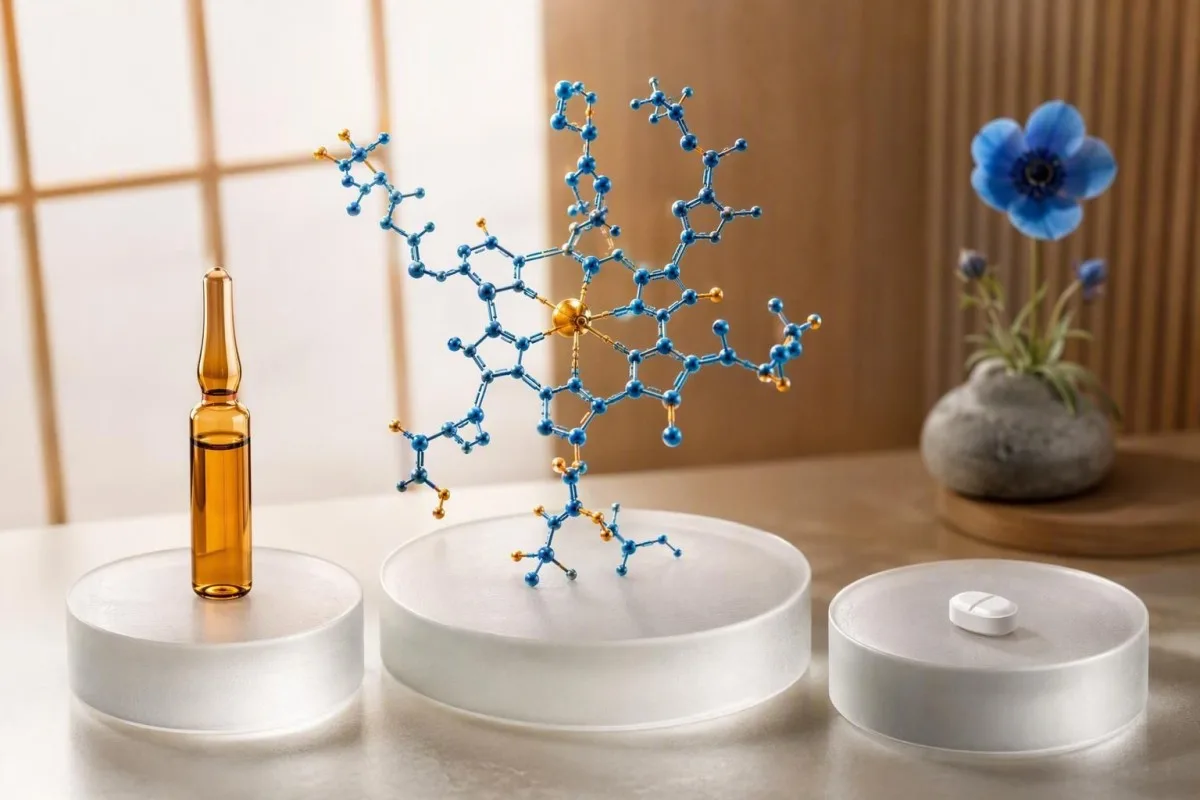
Injekcie dosahujú okamžitý vrchol v sére, ale vysoké dávky perorálneho B12 často rovnako účinne korigujú nedostatok počas týždňov. Rozhodujúcim faktorom je zvyčajne príčina a závažnosť nedostatku – nie samotná preferencia.


- Najrýchlejší nárast v sére: Intramuskulárna injekcia 1 000 mikrogramov B12 zvyšuje cirkulujúci B12 počas niekoľkých hodín, zatiaľ čo tablety sa zvyšujú postupnejšie počas dní.
- Porovnateľná náhrada: Perorálny cyanokobalamín 1 000 – 2 000 mikrogramov denne môže u mnohých dospelých dosiahnuť podobné krátkodobé výsledky v krvi a symptómoch ako intramuskulárna terapia.
- Indikácia injekcie: Závažné neurologické príznaky, ťažká anémia, neschopnosť užívať tablety alebo nespoľahlivá absorpcia zvyčajne oprávňujú injekcie pod vedením lekára.
- Hraničný výsledok: Sérové B12 pod 180 pg/mL (133 pmol/L) sa bežne považuje za nedostatok; 180 – 350 pg/mL často vyžaduje potvrdenie MMA alebo homocysteínu.
- Pasívna absorpcia: Približne 1 % veľkej perorálnej dávky B12 sa vstrebáva pasívnou difúziou, preto aj 1 000 mikrogramová tableta môže účinkovať napriek poškodenému vnútornému faktoru.
- Kedy opakovať vyšetrenie: Vyšetrenie CBC a klinická odpoveď sú zvyčajne užitočnejšie po 4-8 týždňoch ako hladina B12 stanovená ihneď po liečbe.
- Bezpečnostný bod: Nevyliečujte nevysvetlenú necitlivosť samotným folátom; folát môže zlepšiť anémiu, zatiaľ čo poškodenie nervov súvisiace s B12 progreduje.
- Príčina je dôležitá: Metformín, inhibítory protónovej pumpy, vegánske diéty, celiakia, chirurgické zákroky na žalúdku a zhubná anémia si vyžadujú rôzne plány následnej starostlivosti.
Ktorá možnosť rýchlejšie zvyšuje hladinu vitamínu B12?
Injekcie B12 zvyšujú nameranú hladinu séra rýchlejšie ako tablety, často do niekoľkých hodín, pretože obchádzajú črevo. Pre väčšinu stabilných dospelých s potvrdeným deficitom však denná perorálna dávka 1 000 – 2 000 mikrogramov môže doplniť zásoby v tele a zlepšiť krvný obraz v priebehu týždňov klinicky podobnou rýchlosťou.
Injekcia vytvára ostrý skorý vrchol, pretože hydroxokobalamín alebo kyanokobalamín sa dodáva priamo do svalu a potom do obehu. Tento laboratórny vrchol nie je to isté ako obnovené zásoby tkanív alebo opravená nervová funkcia; v mojej praxi sa zotavenie z príznakov meria na týždne až mesiace, nie na nasledujúce ráno.
Praktické porovnanie je často hodín oproti dňom pre koncentráciu v sére, ale približne 4-8 týždňov pre zmysluplnú hematologickú odpoveď s ktoroukoľvek adekvátnou cestou podania. Retikulocyty bežne stúpajú v 3. – 5. deň, hemoglobín sa začína zlepšovať po približne 1 – 2 týždňoch a makrocytóza sa môže upraviť až do 8 týždňov.
Kantesti je Analyzátor krvných testov s umelou inteligenciou ktorá zaraďuje B12 vedľa MCV, hemoglobínu, folátu, kreatinínu a predchádzajúcich výsledkov namiesto liečby post-liečebného nárastu B12 ako dôkazu, že základný problém je vyriešený. Čitatelia si tiež môžu porovnať svoj výsledok s našimi sprievodca referenčným rozsahom B12.
Čo “rýchlejšie” skutočne znamená
Vysoký výsledok po injekcii potvrdzuje nedávnu expozíciu, nie nevyhnutne adekvátne bunkové dodanie. Kyselina metylmalónová, neurologické nálezy a trend CBC sú informatívnejšie, ak bola pôvodná diagnóza neistá.
Ako funguje absorpcia perorálneho B12 pri nízkom vnútornom faktore
Perorálne B12 vo vysokých dávkach môže fungovať aj vtedy, keď je porucha absorpcie vnútorného faktora, pretože malá časť vstupuje pasívnou difúziou. Približne 1% z dávky 1 000 mikrogramov môže byť pasívne absorbované, čo poskytne približne 10 mikrogramov – čo je výrazne nad priemernou dennou potrebou 2,4 mikrogramov pre dospelých.
Normálny B12 viazaný na potravu musí byť uvoľnený žalúdočnou kyselinou, naviazať sa na vnútorný faktor a byť absorbovaný v terminálnom ileu. Tento viacstupňový systém vysvetľuje, prečo dlhodobá potlačenie kyseliny, autoimunitná gastritída, ileálna choroba a bariatrické zákroky môžu spôsobiť deficit; vysvetľuje tiež, prečo štandardný multivitamín často predstavuje príliš nízku dávku na liečbu.
Absorpcie perorálneho B12 je závislá od dávky, ale nie lineárna. Dráha vnútorného faktora sa nasýti pri približne 1,5 – 2 mikrogramoch na jedlo, zatiaľ čo pasívna difúzia je klinicky užitočná len pri tabletách v miligramových rozsahoch. Doplnok s 50 mikrogramami je pre niektorých ľudí primeranou prevenciou, ale nie je ekvivalentný 1 000 mikrogramom pri zavedenom deficite.
U pacientov užívajúcich omeprazol, pantoprazol alebo iný PPI kontrolujem širší obraz – stravu, vek, anémiu a dĺžku užívania – namiesto toho, aby som predpokladal, že liek je celou príčinou. Naša recenzia dlhodobé monitorovanie laboratórnych hodnôt pri užívaní PPI vysvetľuje, prečo horčík a železo môžu byť tiež dôležité.
Čo ukazujú klinické štúdie o tabletách verzus injekciách
Randomizované dôkazy naznačujú, že perorálny B12 v dávke 1 000 – 2 000 mikrogramov denne môže byť pre mnohých ľudí s deficitom rovnako účinný ako intramuskulárny B12. Základ dôkazov nie je rozsiahly a obsahuje menej pacientov so závažným neurologickým ochorením, ako by si klinici priali.
Cochraneova revízia Wang a kolegov zistila, že perorálny B12 vo vysokých dávkach vyvolal podobné hladiny B12 v krvi ako intramuskulárna liečba v malých dostupných randomizovaných štúdiách (Wang et al., 2018). Jedna štúdia použila 2 000 mikrogramov perorálne denne; iná použila 1 000 mikrogramov perorálne po počiatočnom režime, takže “perorálna terapia” neznamená nízkodávkový produkt z supermarketu.
Skôršia štúdia Kuzminského et al. uviedla vyššie koncentrácie B12 v sére pri 2 000 mikrogramoch perorálneho cyanokobalamínu ako pri 1 000 mikrogramovom injekčnom režime, avšak klinické výsledky boli otázkou, na ktorej záležalo (Kuzminski et al., 1998). Dôkazy sú úprimne zmiešané ohľadom ideálneho protokolu, pretože štúdie používali rôzne intervaly injekcií a obdobia sledovania.
Tableta funguje, iba ak sa užije. Zmeškané denné dávky môžu spôsobiť, že injekcia podávaná každých 2-3 mesiace bude v reálnom živote spoľahlivejšia, najmä pre krehkých dospelých alebo ľudí so zložitými liekovými harmonogramami. Naše časovou osou krvných testov môžu pomôcť rozlíšiť skutočnú zmenu liečby od nesprávne načasovaného opakovaného testovania.
Kedy sú injekcie B12 lekársky potrebné
Injekcie B12 sú zvyčajne medicínsky nevyhnutné pri závažnom deficite, prítomnosti neurologických symptómov, nemožnosti perorálneho príjmu, alebo keď nemožno spoľahnúť na absorpciu a dodržiavanie liečby. Nie sú automaticky povinné len preto, že sa podozrieva perniciózna anémia, pokiaľ je vysokodávková perorálna liečba a následné sledovanie uskutočniteľné.
Urgentné lekárske posúdenie je vhodné pri novom nevyvážení chôdze, progresívnom znecitlivení, slabosti, zmätenosti, zmenách zraku, výraznej anémii alebo tehotenstve s významným deficitom. Neurologické poškodenie spôsobené deficitom B12 sa môže stať čiastočne nevratným; v takom prípade by som neodkladal parenterálnu terapiu pri úvahách o pohodlí.
Smernica NICE NG239 odporúča intramuskulárnu liečbu pri podozrení na malabsorpciu alebo po jej potvrdení a v mnohých prípadoch odporúča celoživotnú intramuskulárnu náhradu pri autoimunitnej gastritíde (NICE, 2024). Prax sa medzinárodne líši: niektorí lekári používajú perorálne 1-2 mg denne u spoľahlivých pacientov s pernicióznou anémiou, zatiaľ čo iní uprednostňujú injekcie, pretože dôsledky zlyhania sú vyššie.
Hemoglobín pod 80 g/L, symptomatická dýchavičnosť, tachykardia alebo možný postihnutie miechy si vyžadujú promptné lekárske vyšetrenie namiesto samoliečby. Ak chcete pochopiť, ako sa vzorce anémie objavujú pri bežnom testovaní, pozrite si čo zahŕňa kompletný krvný obraz.
Dávky liečby nedostatku B12, ktoré lekári skutočne používajú
Bežné perorálne dávky sú 1 000 – 2 000 mikrogramov denne, zatiaľ čo bežné intramuskulárne režimy používajú 1 000 mikrogramov na dávku s počiatočnou nasycovacou fázou. Produkt, národná smernica a príčina deficitu určujú presný harmonogram.
V praxi vo Veľkej Británii sa hydroxokobalamín 1 000 mikrogramov intramuskulárne často podáva trikrát týždenne po dobu 2 týždňov, ak nie sú prítomné neurologické prejavy, potom každé 2-3 mesiace na udržiavaciu liečbu; protokoly sa líšia podľa lokálnych služieb. Pri neurologických prejavoch sa počiatočné dávky často podávajú každý druhý deň, kým nedôjde k ďalšiemu zlepšeniu, potom udržiavacia liečba nasleduje podľa odporúčaní špecialistov.
Typický perorálny plán je cyanokobalamín 1 000 mikrogramov denne po dobu 8-12 týždňov, následovaný 1 000 mikrogramami denne alebo nižším udržiavacím režimom, ak bola diéta jedinou príčinou. Sublingválne produkty nepreukázali účinnejšie ako prehltnuté tablety; po rozpustení sa väčšina aj tak prehltne.
Nevymýšľajte si nasycovací režim na základe rád zo sociálnych médií. porovnanie metylovaného B12 s cyanokobalamínom vysvetľuje, prečo dávka a konzistencia vo všeobecnosti znamenajú viac ako marketingové tvrdenia o forme B12.
Ako interpretovať nízky alebo hraničný výsledok B12
Sérová hladina B12 pod 180 pg/mL (133 pmol/L) zvyčajne podporuje deficit, zatiaľ čo hodnoty od približne 180-350 pg/mL sú nejednoznačnou zónou, v ktorej MMA alebo homocysteín môžu objasniť bunkový deficit. Intervaly jednotlivých laboratórií sa líšia a normálna hodnota v sére nevylučuje úplne deficit po nedávnom doplnení.
Kyselina metylmalónová sa zvyšuje pri narušení metabolizmu závislého od vitamínu B12, ale znížená funkcia obličiek môže spôsobiť zvýšenie MMA nezávisle. Homocysteín sa môže zvýšiť pri nedostatku vitamínu B12, nedostatku folátu, nedostatku vitamínu B6, hypotyreóze a poškodení obličiek, takže ani jedna potvrdzujúca testovacia metóda by sa nemala čítať izolovane.
Makrocytóza je podporná, ale nie povinná. Stredné objemové množstvo červených krviniek nad 100 fL zvyšuje podozrenie na nedostatok vitamínu B12 alebo folátu, expozíciu alkoholu, ochorenie pečene, hypotyreózu, poruchy kostnej drene alebo účinky liekov; približne jedna štvrtina symptomatických pacientov s nedostatkom vitamínu B12 môže mať normálne MCV.
Kantesti AI interpretuje výsledky B12 kontrolou vzor MCV, RDW, hemoglobínu, folátu a historických hodnôt, vrátane indícií, že doplnok folátu môže maskovať makrocytózu. Náš článok o sledovanie vysokého MCV pokrýva bežné alternatívy.
Perniciózna anémia mení dlhodobý plán, nie vždy spôsob podania
Periózna anémia je autoimunitná strata funkcie vnútorného faktora a vyžaduje celoživotnú náhradu vitamínu B12 po diagnostikovaní. Injekcie ponúkajú spoľahlivé podanie, ale perorálna terapia vo vysokých dávkach môže stále udržiavať primeraný stav u vybraných, starostlivo sledovaných dospelých.
Najčastejšie používané testy sú protilátky proti vnútornému faktoru a protilátky proti parietálnym bunkám, spolu s B12, CBC a niekedy aj gastrínom. Pozitívna protilátka proti vnútornému faktoru je vysoko špecifická, ale nie veľmi citlivá, takže negatívny výsledok nevylučuje toto ochorenie; toto je jedna z tých oblastí, kde kontext má väčší význam ako jedna protilátka.
Periózna anémia je viac ako problém s absorpciou. Autoimunitná gastritída môže koexistovať s anémiou z nedostatku železa pred tým, ako sa prejaví nedostatok vitamínu B12 a dlhodobé ochorenie nesie so sebou úvahy o sledovaní žalúdka, ktoré by sa mali prediskutovať s ošetrujúcim lekárom. Náš sprievodca testovaním na perióznu anémiu podrobne opisuje diagnostický postup.
Kantesti je platforma na interpretáciu krvného testu AI používané v 127+ krajinách, ale interpretácia AI nemôže diagnostikovať autoimunitnú gastritídu ani zvoliť interval celoživotných injekcií. Lekár musí spojiť symptómy, protilátky, endoskopickú anamnézu a laboratórny obraz.
Prečo neurologické príznaky vyžadujú rýchlejšie klinické opatrenia
Brnenie, strata vedomia vibrácií, neistá chôdza, kognitívne zmeny alebo slabosť pri nízkom B12 by mali viesť k okamžitému osobnému posúdeniu a zvyčajne injekčnej liečbe. Obnova nervov je menej predvídateľná ako obnova anémie a môže zostať neúplná aj po mesiacoch nedostatku.
Dorsálne stĺpce a periférne nervy sú zraniteľné voči nedostatku vitamínu B12, čo v pokročilých prípadoch vytvára obraz, ktorý lekári nazývajú subakútna kombinovaná degenerácia. Normálny hemoglobín proti tomu nechráni; videl som pacientov, ktorých necitlivé nohy a abnormálne vnímanie vibrácií predchádzali akejkoľvek zjavnej anémii.
Zlepšenie často začína do 1 týždňa od účinnej terapie, ale senzorické symptómy môžu trvať 3-12 mesiacov a nemusia sa úplne vyliečiť. Najbezpečnejším prístupom je zaznamenať základnú funkciu – vzdialenosť chôdze, pády, obratnosť rúk, vnímanie vibrácií – pretože samotné zvýšenie sérového B12 nie je skóre obnovy.
Neuropatia má tiež mnoho imitátorov, vrátane cukrovky, poškodenia nervov spôsobeného alkoholom, ochorení štítnej žľazy, nadbytku vitamínu B6 a niektorých liekov. Pacienti s brnením môžu použiť náš sprievodca symptómami nervov pri vitamíne B6 na lepšie formulovanie otázok, ale progresívna slabosť si vyžaduje okamžitú lekársku starostlivosť.
Kedy tablety postačujú pri nedostatku B12 z potravy
Tablety sú zvyčajne dostatočné, keď nízke hodnoty B12 vyplývajú z nedostatočného príjmu a črevo dokáže absorbovať doplnky. Vegáni, ľudia konzumujúci veľmi málo živočíšnych produktov a dospelí s dočasným diétnym obmedzením zvyčajne dobre reagujú na perorálny cyanokobalamín 1 000 mikrogramov denne.
Vitamín B12 je prirodzene koncentrovaný v potravinách živočíšneho pôvodu a obohatených potravinách, takže prísna vegánska strava potrebuje spoľahlivú stratégiu s obohatenými potravinami alebo doplnkami. Rastlinné potraviny uvádzané na trh ako prírodné zdroje B12 sú nekonzistentné; morské riasy a fermentované potraviny môžu obsahovať neaktívne analógy, ktoré nie sú spoľahlivou liečbou.
Diétny nedostatok by mal stále vyústiť do krátkej anamnézy. 23-ročný vegán s hladinou B12 142 pg/mL, normálnym MMA po liečbe a bez črevných symptómov sa líši od 68-ročného s rovnakým výsledkom, stratou hmotnosti a anémiou z nedostatku železa. Vek, lieky a gastrointestinálne symptómy menia postup diagnostiky.
Pri plánovaní stravy, náš sprievodca vitamínmi rozpustnými vo vode oddeľuje preventívne dávky od liečby nedostatku. Nečakajte, že výživa sama o sebe rýchlo odstráni neurologické symptómy.
Lieky a črevné ochorenia, ktoré menia výber liečby B12
Metformín, lieky potláčajúce žalúdočnú kyselinu, celiakia, Crohn's choroba postihujúca ileum, pankreatická insuficiencia a chirurgické zákroky na žalúdku môžu znížiť dostupnosť B12. V niektorých prípadoch môže byť skúšobná liečba tabletami opodstatnená, ale injekcie sa často volia, keď je absorpcia neistá alebo sú symptómy významné.
Nedostatok B12 spojený s metformínom je natoľko častý, že regulačné orgány odporúčajú kontrolovať hladiny u pacientov s neuropatiou, anémiou alebo inými rizikovými faktormi, najmä pri vyšších dávkach alebo dlhodobom užívaní. Mechanizmus pravdepodobne zahŕňa absorpciu komplexu B12-vnútorný faktor závislú od vápnika v ileu, nie len zlú stravu.
Po resekcii rukáva alebo žalúdočnom bypassu by sa rozhodnutia o liečbe mali riadiť protokolom bariatrického tímu, pretože môžu byť súčasne postihnuté železo, folát, tiamín, vitamín D a meď. Hnačka, nízky albumín, nevysvetliteľná strata hmotnosti alebo mastné stolice by mali viesť k vyšetreniu, nie k nekonečným zmenám doplnkov stravy.
Nízka hladina medi môže tiež spôsobiť anémiu a neurologické symptómy, ktoré pripomínajú nedostatok B12, najmä po bariatrickej operácii alebo nadmernom príjme zinku. Naše klinické prejavy nízkej hladiny medi vysvetľujú, prečo samotná kontrola B12 môže prehliadnuť skutočnú príčinu.
Ako skoro pretestovať po liečbe B12
CBC a prehľad symptómov asi 4-8 týždňov sú zvyčajne užitočnejšie ako opakované stanovenie sérového B12 ihneď po injekcii alebo liečbe tabletami. Veľmi vysoká hladina B12 čoskoro po liečbe hlavne odráža podanú dávku.
Retikulocytová odpoveď okolo 3-5 dní poskytuje skorý náznak, že produkcia v kostnej dreni sa zotavuje, zatiaľ čo hemoglobín by mal stúpnuť v nasledujúcich týždňoch, ak bol nedostatok B12 kľúčovým faktorom. Nedostatok zlepšenia by mal znovu otvoriť diferenciálnu diagnostiku: nedostatok železa, pretrvávajúce krvácanie, nedostatok folátu, zápal, ochorenie obličiek alebo nesprávna diagnóza.
Pri nekomplikovanom diétnom deficite často kontrolujem CBC a B12 znovu o 8-12 týždňov, potom potvrdiť udržiavací plán. Pri neurologických ochoreniach, autoimunitnej gastritíde, tehotenstve, renálnom zlyhaní alebo viacerých nedostatkoch je potrebné sledovanie individualizovať a zvyčajne začína skôr.
Kantesti’s Nástroj na analýzu krvných testov poháňaný AI môže porovnať sekvenčné výsledky B12, MCV, RDW a hemoglobínu namiesto zobrazenia každého odberu ako nesúvisiaceho podujatia. sprievodcu porovnaním laboratórnych výsledkov vedľa seba ukazuje, čo zaznamenať medzi testami.
Prečo vysoký výsledok B12 po liečbe nie je vždy upokojujúci
Vysoká hladina B12 po injekcii alebo tabletách s vysokou dávkou zvyčajne odráža suplementáciu a nedokazuje, že symptómy majú inú príčinu. Naopak, nevysvetliteľné pretrvávajúce zvýšenie hladiny B12 bez suplementov si zaslúži klinické preskúmanie, najmä ak súčasne existujú abnormality pečene, obličiek alebo krvného obrazu.
Sérove B12 môže po liečbe prekročiť hornú hranicu laboratória približne 900-1 000 pg/mL, v závislosti od metódy a načasovania. To je očakávané a zvyčajne nie je toxické; B12 nemá stanovenú tolerovateľnú hornú hranicu príjmu u zdravých dospelých, pretože prebytok sa vo veľkej miere vylučuje, hoci sa u malej menšiny vyskytuje vyrážka podobná akné.
Otázka, ktorú si kladiem, je jednoduchá: bol vzorka odobratá po doplnku stravy, injekcii, multivitamíne, energetickom nápoji alebo obohatenom produkte? Ak nie, zvýšená hladina B12 môže sprevádzať ochorenie pečene, znížené obličkové vylučovanie, zápal alebo určité hematologické stavy a vyžaduje si kontext, nie paniku.
Naše sprievodca vysokou hladinou vitamínu B12 vysvetľuje rozdiel medzi očakávaným zvýšením súvisiacim s doplnkami a nevysvetliteľným laboratórnym nálezom.
Bežné chyby pri liečbe B12, ktoré oneskorujú zotavenie
Najzávažnejšou chybou je užívanie samotnej kyseliny listovej, keď nebola vylúčená jej nedostatok spolu s vitamínom B12. Kyselina listová môže normalizovať anémiu, zatiaľ čo umožňuje progresiu poškodenia nervov súvisiaceho s vitamínom B12, najmä ak dávky presahujú bežný diétny rozsah.
Nepoužívajte symptómy samotné na rozhodnutie medzi injekciami a tabletami. Únava, mozgová hmla a zlý nálada sú reálne, ale nespecifické; strata spánku, ochorenie štítnej žľazy, nedostatok železa, depresia, diabetes a účinky liekov môžu vyvolať podobné sťažnosti. Výsledok B12 blízko 250 pg/mL si častejšie vyžaduje potvrdenie ako automatickú injekciu.
Ďalšou chybou je odloženie testu, kým sa nezačnú užívať doplnky, ak je to možné. Aj 50-500 mikrogramov denne môže dostatočne zmeniť hladinu B12 v sére, aby skomplikovalo diagnózu, hoci naliehavé neurologické symptómy by sa mali vždy liečiť ako prvé. vysoký obsah folátu a skrytý problém s B12 je obzvlášť relevantný pre ľudí užívajúcich tehotenské alebo energetické doplnky.
K 27. augustu 2026 je moja rada ako Dr. Thomas Klein nasledovná: zvoľte najmenej zaťažujúcu cestu, ktorá je lekársky spoľahlivá, a potom overte obnovu pomocou symptómov a trendov. Liečba injekciami je vynikajúci liek, keď je indikovaný; nie je to v zásade silnejší liek pre každý nízky výsledok.
Praktický rozhodovací rámec pre injekcie alebo tablety B12
Injekcie zvoľte, keď je riziko vysoké alebo je perorálna spoľahlivosť nízka; zvoľte vysokodávkové tablety, keď je nedostatok mierny až stredne závažný, hlavným problémom je príjem a sledovanie je spoľahlivé. Najlepšia cesta je tá, ktorá napraví nedostatok bez odkladu vyšetrenia jeho príčiny.
Tablety sú najvhodnejšie, keď je hladina B12 nízka z dôvodu stravy, nie sú prítomné neurologické príznaky, prehĺtanie je bezpečné a osoba môže konzistentne užívať 1 000-2 000 mikrogramov denne. Injekcie sú najvhodnejšie pri neurologických nálezoch, závažnej symptomatickej anémii, vracaní, výraznom malabsorpcii, pooperačnej anatómii alebo neistom dodržiavaní liečby.
Prineste si na stretnutie štyri veci: pôvodný výsledok B12 s jednotkami, CBC, všetky doplnky a dávky liekov a časovú os symptómov. Klinické pravidlo Dr. Thomasa Kleina je, že príčina by mala byť pomenovaná pred tým, ako sa udržiavacia liečba stane neurčitou, kedykoľvek to možno bezpečne urobiť.
Kantesti AI je službe na interpretáciu výsledkov AI laboratórnych testov navrhnuté na organizáciu laboratórneho kontextu pre pacientov a lekárov, pričom konečná diagnóza a predpisovanie liekov zostávajú klinickými rozhodnutiami. Naše Lekárska poradná rada a prístup k klinickej validácii opisujú lekársky dohľad za touto hranicou.
Často kladené otázky
Fungujú injekcie B12 rýchlejšie ako tabletky?
Injekcie B12 rýchlejšie zvyšujú sérovú hladinu B12 ako tablety, pretože intramuskulárna dávka 1 000 mikrogramov obchádza črevné vstrebávanie a môže zvýšiť cirkulujúce hladiny v priebehu niekoľkých hodín. Perorálne B12 vo vysokých dávkach, zvyčajne 1 000 – 2 000 mikrogramov denne, môže stále účinne napraviť nedostatok počas niekoľkých týždňov u mnohých dospelých. Zmysluplné koncové body sú zlepšenie symptómov, retikulocytov do 3-5 dní a normalizácia CBC približne za 4-8 týždňov, nie len okamžitý vrchol séra. Injekcie sú preferované pri prítomnosti neurologických symptómov, závažnej anémie alebo nespoľahlivého vstrebávania.
Môže platiť perorálne podávaný vitamín B12 pri pernicious anémii?
Vysokodávkový perorálny vitamín B12 môže u niektorých ľudí s perniciózna anémia fungovať, pretože približne 1% z vysokej dávky sa absorbuje pasívnou difúziou bez vnútorného faktora. Denná perorálna dávka 1 000 – 2 000 mikrogramov preto môže poskytnúť 10 – 20 mikrogramov absorbovaného B12, čo presahuje dennú potrebu dospelých vo výške 2,4 mikrogramu. Usmernenia NICE bežne podporujú celoživotnú intramuskulárnu náhradu pri autoimúnnej gastritíde, najmä ak je spoľahlivosť neistá. Spôsob podávania by mal byť dohodnutý s lekárom, ktorý spravuje diagnózu, a monitorovaný pomocou symptómov a CBC.
Koľko tabletiek B12 sa rovná jednej injekcii?
Neexistuje presný prevod z tabliet na injekcie, pretože injekcie poskytujú takmer úplnú systémovú dostupnosť, zatiaľ čo perorálne vstrebávanie závisí od dávky a je čiastočne nasýtené. Injekcia 1 000 mikrogramov a perorálne podanie 1 000 – 2 000 mikrogramov denne sú bežné liečebné dávky, ale nie sú farmakologicky zameniteľné na základe dávky za dávku. Približne 1% z 1 000 mikrogramovej perorálnej dávky sa môže vstrebať pasívnou difúziou, zatiaľ čo dodatočné vstrebanie prebieha cez vnútorný faktor, keď táto cesta funguje. Reakcia na liečbu a príčina nedostatku by mali usmerňovať akýkoľvek prechod.
Ako dlho trvá, kým injekcie vitamínu B12 zlepšia únavu?
Injekcie B12 môžu zlepšiť energiu v priebehu niekoľkých dní až niekoľkých týždňov, ak je príčinou únavy nedostatok, ale časový rámec sa výrazne líši. Produkcia retikulocytov často stúpa v 3. – 5. dni, hemoglobín zvyčajne začína stúpať po 1. – 2 týždňoch a úplná korekcia makrocytózy môže trvať až 8 týždňov. Necitlivosť, problémy s rovnováhou a kognitívne príznaky často trvajú 3 – 12 mesiacov a môžu byť neúplné, ak bol nedostatok dlhodobý. Pretrvávajúca únava po normalizovaní CBC by mala viesť k preskúmaniu nedostatku železa, ochorení štítnej žľazy, problémov so spánkom a iných príčin.
Mám si vziať tabletky B12 pred odberom krvi?
Ak sa plánuje testovanie na diagnostiku nevysvetleného nedostatku vitamínu B12 a ste klinicky stabilní, vyhnite sa užívaniu doplnkov, kým sa vzorka neodoberie, pretože aj 50-500 mikrogramov denne môže zmeniť hladinu B12 v sére. Neexistuje žiadny univerzálny interval „washout“, pretože sa laboratóriá a dávky líšia, preto sa obráťte na lekára alebo laboratórium pre ich radu ohľadom prípravy. Neodkladajte liečbu, aby ste získali perfektnú základnú líniu, ak máte neurologické príznaky, závažnú anémiu, obavy súvisiace s tehotenstvom alebo výrazné klinické zhoršenie. Zaznamenajte dávku a dátum začatia, aby bolo možné výsledok správne interpretovať.
Je hladina B12 200 pg/mL dostatočne nízka na injekcie?
Hladina B12 200 pg/mL je na hraničnej hodnote nízka a sama o sebe neurčuje potrebu injekcií. Mnohé laboratóriá považujú hodnoty pod 180 pg/mL za zjavný deficit, zatiaľ čo hodnoty od približne 180-350 pg/mL môžu vyžadovať vyšetrenie kyseliny metylmalónovej, homocysteínu, výsledkov CBC a zhodnotenie symptómov. Injekcie sú opodstatnené pri 200 pg/mL, ak sú prítomné neurologické symptómy, anémia, malabsorpcia, tehotenstvo alebo neschopnosť perorálnej liečby. Stabilná osoba s diétnym rizikom a bez neurologických nálezkov môže dobre reagovať na 1 000 – 2 000 mikrogramov perorálneho B12 denne s plánovanou následnou kontrolou.
Získajte analýzu krvných testov s podporou AI už dnes
Pridajte sa k viac než 2 miliónom používateľov na celom svete, ktorí dôverujú Kantesti pri okamžitej a presnej analýze laboratórnych testov. Nahrajte svoje výsledky krvných testov a získajte komplexnú interpretáciu biomarkerov 15,000+ v priebehu sekúnd.
📚 Citované publikácie výskumu
Klein, T., Mitchell, S., & Weber, H. (2026). Kantesti LTD. (2026). Predregistrovaný, rubrikami riadený automatizovaný technický benchmark Kantesti Blood-Test Interpretation Engine na 100 000 syntetických testovacích prípadoch. Figshare.. Kantesti AI Medical Research.
Klein, T., Mitchell, S., & Weber, H. (2026). Kantesti LTD. (2026). Klinický rámec validácie v2.0 (Stránka lekárskej validácie). Zenodo.. Kantesti AI Medical Research.
📖 Externé lekárske referencie
NICE (2024). Nedostatok vitamínu B12 u osôb nad 16 rokov: diagnostika a manažment. NICE Guideline NG239.
⚕️ Vyhlásenie o lekárskej starostlivosti
Tento článok je určený len na vzdelávacie účely a nepredstavuje lekárske poradenstvo. Pri rozhodnutiach o diagnostike a liečbe sa vždy poraďte s kvalifikovaným poskytovateľom zdravotnej starostlivosti.
Signály dôvery E-E-A-T Trust Signals
Skúsenosti
Klinické hodnotenie vedené lekárom pracovných postupov interpretácie laboratórnych výsledkov.
Odbornosť
Laboratórna medicína so zameraním na to, ako sa biomarkery správajú v klinickom kontexte.
Autoritatívnosť
Napísané Dr. Thomasom Kleinom, recenzia Dr. Sarah Mitchell a prof. Dr. Hans Weber.
Dôveryhodnosť
Interpretácia založená na dôkazoch s jasnými následnými krokmi na zníženie poplachu.