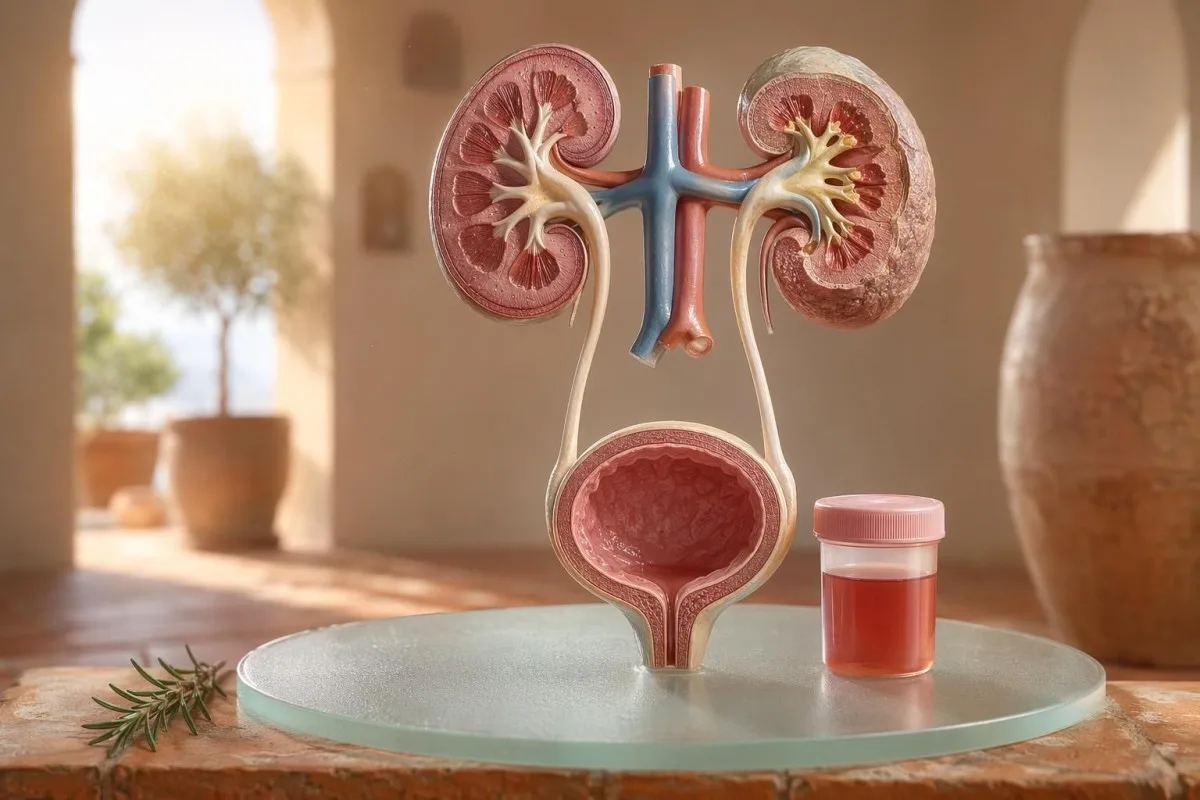
Stiùireadh a tha ag amas air a’ chiad euslainteach airson hematuria faicsinneach is miocroscopach, a’ gabhail a-steach carson nach eil fuil dipstick co-ionann ri ceallan dearga fon mhiocroscop.


- Fuil ann am fual a’ ciallachadh fual dearg faicsinneach, fual dath tì no fual dath cola, no hematuria miocroscopach a lorgar air deuchainn; tha fuil faicsinneach an-còmhnaidh airidh air leantainn meidigeach.
- Hematuria microscopach mar as trice air a mhìneachadh mar 3 no barrachd cheallan fala dearga gach raon àrd-chumhachd air sampall miocroscopadh fual a chaidh a chruinneachadh gu ceart.
- Fuil dipstick a’ lorg gnìomhachd heme, agus mar sin dh’fhaodadh e a bhith deimhinneach bho cheallan dearga slàn, hemoglobin an-asgaidh no myoglobin às dèidh dochann fèithe.
- Comharran UTI a’ gabhail a-steach losgadh, tricead, leukocyte esterase, nitrites agus ceallan geala; bu chòir hematuria a bhith air ath-sgrùdadh nuair a bhios an galar air falbh.
- Sediment fual lorgaidhean leithid ceallan dearga dysmorphic, tilgeanan cheallan dearga no pròtain cudromach a’ comharrachadh tinneas an aonaid sìoltachaidh dubhaig.
- Tilgeanan fual tha iad nan stuthan cumadhte bho thiùban nan dubhagan; tha tilgeanan cealla dearga na chomharra rabhaidh ann an nephrology taobh a-staigh na h-aon seachdain, gu h-àraidh le bruthadh-fala àrd no eGFR a’ tuiteam.
- brataichean dearga aillse a’ gabhail a-steach hematuria faicsinneach gun phian, clotan, aois os cionn 45, eachdraidh smocaidh, foillseachadh ceimigean obrach agus tachartasan ath-aithriseach gun mhìneachadh.
- hematuria às dèidh eacarsaich mar as trice a’ socrachadh taobh a-staigh 48-72 uairean; cha bu chòir fuil leantainneach às dèidh fois a bhith air a cur air ruith no baidhsagal.
- Measadh èiginneach tha feum air airson fuil anns an fhual le fiabhras, pian anns a’ chùl-taobh (flank), clotan a’ cur bacadh air urination, torrachas, trauma no comharraidhean de dhroch anemia.
Na tha fuil ann am fual a’ ciallachadh mus bi thu fo eagal
Fuil ann am fual faodaidh e tighinn bho ghalar, clachan, galar a’ sìolachaidh nan dubhagan, suidheachaidhean a’ phròstain no a’ bhladha, cungaidhean-leigheis, eacarsaich, no truailleadh bho amannan. ’S e riaghailt phractaigeach shìmplidh a th’ ann: feumaidh fuil faicsinneach, hematuria microscopach ath-aithriseach, no hematuria le pian, fiabhras, clotan, bruthadh-fala àrd, pròtain, no gnìomh dubhaig lùghdaichte measadh luath seach feitheamh faiceallach.
Chan eil aon phinc anns a’ bhobhla toileat às dèidh biata-bhroilleach (beetroot) no leasachadh ùr an aon dhuilgheadas clionaigeach ri fual dath cola às dèidh amhach ghoirt. Anns an obair agam, bidh an sgeul dath gu tric ag innse dhomh càite an coimhead mi an toiseach: tha dearg soilleir le clotan buailteach a bhith a’ comharrachadh an t-slighe urinary as ìsle, fhad ’s a dh’ fhaodadh fual donn no dath tì a bhith a’ ciallachadh pigmentan heme nas sine bho shìoltachain nan dubhagan.
Chan e breithneachadh a th’ ann an hematuria; ’s e comharra a th’ ann. hematuria faicsinneach a’ ciallachadh gun urrainn dhut an atharrachadh dath fhaicinn, agus hematuria microscopach a’ ciallachadh gu bheil an fhual a’ coimhead àbhaisteach ach gu bheil ceallan dearga air an lorg le microscop, mar as trice aig 3 no barrachd cheallan fala dearga gach raon àrd-chumhachd.
Tha Kantesti na Anailisiche deuchainn fala AI a chuidicheas euslaintich gus ceangal a dhèanamh eadar lorgaidhean san fhual agus comharran dubhaig leithid creatinine, eGFR, CRP, hemoglobin agus platelets ann an aon loidhne-tìm. Ma tha an dath troimh-chèile, ar stiùireadh dath an fhual a’ mìneachadh carson nach eil fual dearg, donn, orains agus buidhe dorcha uile a’ ciallachadh an aon rud.
Chan eil fuil dipstick co-ionann ri RBCs air miocroscopadh
Tha dipstick an fhual air a chomharrachadh fuil deimhinneach a’ lorg gnìomhachd ceimigeach coltach ri heme, chan ann gu riatanach ceallan fala dearga slàn. Bidh am microscop a’ freagairt a’ cheist a leanas: a bheil RBCan fìor anns an t-sediment fual, agus ma tha, ciamar a tha iad a’ coimhead?
Tha deuchainn dipstick luath oir bidh am pad reagent a’ freagairt ri gnìomhachd peroxidase heme. Tha sin a’ ciallachadh gum faod toradh deimhinneach tachairt le RBCan slàn, hemoglobin an-asgaidh às dèidh briseadh sìos cheallan dearga, no myoglobin às dèidh dochann mòr fèithe.
Tha microscop nas slaodaiche ach nas sònraichte. Nì obair-lann cùramach centrifuge air an fhual, nì e sgrùdadh air an sediment fual, agus aithrisidh e ceallan dearga gach raon àrd-chumhachd; bidh mòran lighichean a’ cleachdadh 0-2 RBC/hpf mar àbhaisteach agus 3 no barrachd RBC/hpf mar neo-àbhaisteach ann an inbhich.
Tha cudrom anns an neo-fhreagarrachd. Bidh dipstick le 3+ fuil agus 0-2 RBC/hpf gam fhàgail a’ faighneachd mu rhabdomyolysis, hemolysis, truailleadh oxidachaidh, agus làimhseachadh an sampall seach a bhith a’ leum gu galar a’ bhladha; tha an diofar coltach ris an reusanachadh anns an ar coimeas anailis fual agus cultair.
Nuair a mhìnicheas comharran UTI hematuria, agus cuin nach dèan iad
Faodaidh galar slighe urinary adhbhrachadh fuil anns an fhual, gu h-àraidh le losgadh, èiginn, tricead, mì-chofhurtachd anns a’ chromag, leukocyte esterase, nitrites agus ceallan geala. Ach bu chòir don hematuria falbh às dèidh làimhseachaidh; ma tha ceallan fola dearga leantainneach an dèidh UTI, feumar sùil eile a thoirt.
Ann an UTI ìosal sìmplidh, tha mi an dùil ri cruinneachadh: dysuria, tricead, leukocyte esterase deimhinneach, pyuria gu tric os cionn 5-10 ceallan geala/hpf, agus uaireannan nitrites. Tha deagh dhearbhadh cultair traidiseanta aig 100,000 CFU/mL, ach ann am boireannaich le comharraidhean, faodaidh cunntasan nas ìsle mar 1,000-10,000 CFU/mL a bhith cudromach gu clionaigeach fhathast.
’S e enzyme cealla-geala a th’ ann an leukocyte esterase, chan e dearbhadh air bacteria. Faodaidh toradh deimhinneach le hematuria tachairt bho ghalar, clachan, truailleadh, no sèid nan dubhagan, agus is ann air sgàth sin a tha an stiùireadh leukocyte esterase a’ sgaradh chomharran feumail bho mhearachdan cumanta.
Tha nitrites nas sònraichte ach nas lugha mothachail, oir chan eil a h-uile bacteria a’ tionndadh nitrate gu nitrite. Ma tha na comharraidhean àbhaisteach ach gu bheil nitrites àicheil, faodaidh cultar fhathast a bhith deimhinneach; tha na mion-fhiosrachadh practaigeach air an còmhdach anns an mhìneachadh air toradh nitrite.
Hematuria faicsinneach: comharran dath, clotan agus àm
Chan eil hematuria faicsinneach riamh rudeigin a chuireas mi às leth, eadhon nuair a thachras e aon turas. Feumaidh measadh ùineail a bhith air fual dearg soilleir, clotan, no bleeding gun phian, oir mar a bhios aois agus nochdadh ri smocadh a’ dol am meud, bidh adhbharan bho shlighe urinary ìosal nas dualtaiche.
Faodaidh an ùine a bhith gu math feumail. Ma tha fuil ann dìreach aig toiseach urination, dh’fhaodadh sin a bhith a’ comharrachadh an urethra; faodaidh fuil tron t-sruth tighinn bho thùsan anns a’ bhladha no anns an dubhaig, agus uaireannan tha fuil aig an deireadh, faisg air deireadh, a’ comharrachadh sgìre amhach a’ bhladha.
Mar as trice tha clotan a’ ciallachadh gu bheil an fhuil a’ tighinn bho shìos fo na sìoltachain dubhaig, oir chan eil clotan a’ cruthachadh gu furasta an dèidh dhaibh a dhol tro na glomeruli agus na tubules. Tha clot a chuireas bacadh air sruth na fual èiginneach: faodaidh distension a’ bhladha a bhith goirt taobh a-staigh uairean, agus dh’fhaodadh gum bi feum air cùram catheter.
Bidh fir uaireannan a’ gabhail ris gu bheil hematuria follaiseach às dèidh comharraidhean urinary dìreach mar thoradh air irioslachadh a’ phròstain. Dh’fhaodadh sin a bhith fìor, ach ma chaidh PSA a sgrùdadh rè no goirid às dèidh galar, faodaidh an mìneachadh a bhith troimh-chèile; ar Stiùireadh PSA às dèidh UTI a’ mìneachadh carson a bhios mòran lighichean a’ feitheamh 6-8 seachdainean mus dèan iad PSA a-rithist.
Crìochan hematuria miocroscopach a bhios dotairean a’ cleachdadh
Tha hematuria microscopach air a mhìneachadh gu cumanta mar 3 no barrachd RBCs gach raon àrd-chumhachd air sampall fual a chaidh a chruinneachadh gu ceart. Bidh stiùireadh AUA/SUFU a’ cleachdadh a’ chrìoch seo agus a’ moladh measadh stèidhichte air cunnart seach a bhith a’ làimhseachadh gach euslainteach san aon dòigh (Barocas et al., 2020).
Cha bu chòir dipstick leis fhèin a chleachdadh gus hematuria microscopach a dhearbhadh. Anns an stiùireadh Barocas et al. 2020 AUA/SUFU, tha am mìneachadh an urra ri microscopy, oir faodaidh dipsticks a bhith deimhinneach bho pigmentan heme gun cheallan dearga slàn.
Chan e laigse a th’ ann an deuchainn a-rithist; ’s e deagh leigheas a th’ ann. Ma tha 3-10 RBC/hpf aig cuideigin às dèidh eacarsaich trom, fiabhras, gnè, menstruation, no cruinneachadh truaillte, mar as trice tha mi ag iarraidh sampall glan a-rithist mus òrdaich mi scans, coltach ris mar a tha sinn a’ comhairleachadh airson stiùireadh againn air deuchainnean neo-àbhaisteach ath-aithris.
Bidh atharrachadh air cunnart ag atharrachadh an t-slighe. Chan eil neach 24-bliadhna le 4 RBC/hpf às dèidh leth-fhòghraidh an aon rud ri fear 68-bliadhna a bha na sheann-smocair le 25 RBC/hpf air dà shampall, eadhon ged a tha an dithis gu teicnigeach a’ coinneachadh ri mìneachadh hematuria.
Sediment fual, pròtain agus tilgeanan fual a dh’atharraicheas an sgrùdadh
Sediment fual a’ nochdadh am bi hematuria coltach ri tighinn bho na sìoltachain dubhaig. Bidh ceallan dearga dysmorphic, tilgeanan cheallan dearga, agus gluasad mòr ann am pròtain a’ cur a’ chùis nas fhaide a dh’ionnsaigh galar glomerular seach galar sìmplidh anns a’ bhladha.
Canar RBCs dysmorphic ris na ceallan dearga a tha coltach ri chèile neo-chòmhnard, le bleb no ann an cumadh fàinne, agus tha iad a’ moladh gun deach iad tro shìoltachan glomerular a tha air a shèideadh. Bidh acanthocytes os cionn timcheall air 5% de cheallan dearga urinary gu tric air an làimhseachadh mar chomharra làidir glomerular, ged a tha diofar-lannan ag atharrachadh a thaobh cho misneachail ’s a tha iad gan aithris.
’S e pròtain an dàrna comharra nach leig mi seachad. Tha co-mheas albumin-creatinine ann am fual os cionn 30 mg/g, no mu 3 mg/mmol, neo-àbhaisteach, agus tha hematuria follaiseach còmhla ri pròtain a’ ciallachadh gum bu chòir ath-sgrùdadh nas luaithe a dhèanamh le fòcas air na dubhagan; ar stiùireadh pròtain anns an fhuaim a’ toirt seachad stairsnich aig ìre an euslaintich.
Tilgeanan fual ’S e mollagan beaga a th’ annta a chaidh an cruthachadh am broinn tubules nan dubhagan. Faodaidh tilgeanan hyaline nochdadh às dèidh dìth uisge no eacarsaich, ach tha tilgeanan cheallan dearga neo-àbhaisteach agus mar as trice tha iad a’ comharrachadh glomerulonephritis; airson iomradh nas fharsainge air urinalysis, faic ar stiùireadh iomlan air anailis urine.
Clachan, eacarsaich agus adhbharan sealach airson hematuria
Faodaidh clachan agus eacarsaich dian hematuria adhbhrachadh, ach tha clàran-ama eadar-dhealaichte aca. Bidh hematuria co-cheangailte ri clach gu tric an cois pian anns an taobh (flank) no criostalan, fhad ’s a bu chòir hematuria bho eacarsaich socrachadh taobh a-staigh 48-72 uair a thìde de dh’fhuireach.
Gu clasaigeach, bidh clachan dubhaig ag adhbhrachadh tonnan de phian anns an taobh (flank), nausea, agus hematuria microscopach no follaiseach. Chan eil criostalan calcium oxalate a’ dearbhadh clach, ach bidh iad a’ meudachadh amharas nuair a tha iad còmhla ri pian colicky; ar stiùireadh criostalan calcium oxalate a’ mìneachadh an comharra microscopy anns an fhual.
Tha hematuria bho eacarsaich fìor. Chunnaic mi luchd-rèisidh marathon le 10-20 RBC/hpf an ath mhadainn às dèidh rèis, cultar àbhaisteach, gun phròtain, agus urinalysis ath-aithriseach gu tur àbhaisteach 3 làithean às dèidh sin.
Is e an cunnart a bhith a’ cur a h-uile càil air trèanadh. Ma mhaireas hematuria nas fhaide na 72 uair, ma nochdas e le fual dorcha mar cola, no ma thig e còmhla ri CK àrd, creatinine a’ dol suas, no pian fèithe, coimhead nas fhaide na a’ bhladha; ar stiùireadh creatinine le eacarsaich a’ còmhdach an eadar-cheangail eadar an dubhaig agus an fhèith.
Brataichean dearga dubhaig nach leig dotairean seachad
Hematuria le pròtain, bruthadh-fala àrd, at, eGFR lùghdaichte, castan cealla dearga, no creatinine ag èirigh gu luath ’s e bratach dhearg dubhaig a th’ ann. Tha na lorgaidhean seo a’ moladh gum faodadh na h-aonadan sìoltachaidh a bhith inflamed, agus faodaidh feitheamh mìosan cosg a chur air gnìomh na dubhaig.
Tha KDIGO 2024 a’ mìneachadh galar dubhaig leantainneach le comharran milleadh dubhaig, leithid albuminuria, no eGFR fo 60 mL/min/1.73 m² airson co-dhiù 3 mìosan. Ach ann an suidheachaidhean acrach, tha hematuria còmhla ri àrdachadh ann an creatinine thar làithean no seachdainean gu leòr airson àrdachadh a dhèanamh mus ruigear am mìneachadh 3-mìosan.
Tha albuminuria gu tric na chomharra rabhaidh tràth. Tha ACR de 30-300 mg/g air àrdachadh meadhanach, tha os cionn 300 mg/g air àrdachadh gu mòr, agus le bhith a’ cur an dàrna cuid còmhla ri hematuria ag atharrachadh a’ chòmhraidh; ar stiùireadh ACR dubhag a’ mìneachadh carson a lorgas albumin anns an fhual milleadh mus tig comharraidhean.
Tha bruthadh-fala cudromach an seo. Tha BP ùr de 160/100 mmHg le fual coltach ri cola agus at nan adhbrannan às dèidh galar amhach a’ toirt orm smaoineachadh air glomerulonephritis, chan e cystitis; ma tha eGFR mì-chinnteach, ar stiùireadh ath-sgrùdaidh GFR a’ mìneachadh cuin a dh’fhaodas cystatin C soilleireachadh a dhèanamh air gnìomh na dubhaig.
Comharran cunnart aillse gun eagal
Hematuria faicsinneach gun phian, gu h-àraidh às dèidh aois 45, airidh air measadh èiginneach oir faodaidh aillseachan a’ bhladha agus an t-slighe urinary àrd nochdadh san dòigh seo. Tha NICE NG12 a’ moladh iomradh airson amharas air aillse airson hematuria faicsinneach gun mhìneachadh ann an inbhich 45 agus nas sine, no hematuria faicsinneach a mhaireas às dèidh làimhseachadh UTI.
Chan e aillse a th’ anns a’ mhòr-chuid de hematuria. Ach fhathast, ’s e na cùisean sàmhach a tha cuimhn’ agam: gun phian, gun fhiabhras, gun losgadh, dìreach dà thachartas de fhual dearg ann an neach-smocaidh 56-bliadhna a cha mhòr nach do leig seachad e.
Tha an cunnart cruinnichte, chan e binary. Bidh aois os cionn 45-50, eachdraidh smocaidh, foillseachadh cyclophosphamide, radiotherapy pelvic, hematuria faicsinneach ath-aithriseach, foillseachadh proifeiseanta do amines cùbhraidh, agus clots uile ag àrdachadh an fheum air cystoscopy no ìomhaigheachd.
Chan eil comharran prostate a’ cur às do adhbharan bhon bhladha. Ma tha comharraidhean urinary, atharrachaidhean ann an PSA agus hematuria a’ dol an lùib a chèile, dèan ath-sgrùdadh air an àm agus inbhe an galair gu cùramach; ar stiùireadh comharra prostate a’ mìneachadh carson nach eil PSA ach pàirt den mheasadh urinary fireann.
Leigheasan, anticoagulants agus rabhaidhean meallta
Faodaidh luchd-fuil a dhèanamh nas follaisiche, ach cha bu chòir an cur an cion gu fèin-obrachail airson hematuria. Feumaidh hematuria co-cheangailte ri anticoagulants measadh fhathast, oir ’s dòcha gun nochd an cungaidh clachan, galar, tinneas nan dubhagan no fàs ann an slighe urinary.
Faodaidh warfarin, apixaban, rivaroxaban, aspirin agus clopidogrel bleeding a dhèanamh nas follaisiche. Ma tha an INR os cionn an raoin targaid, tha ceartachadh cudromach, ach chan eil INR àbhaisteach a’ dèanamh hematuria follaiseach gun chron.
Tha grunn adhbharan nach eil a’ dèanamh bleeding a’ coltas hematuria. Faodaidh rifampicin an urine a thionndadh orains-dearg, faodaidh phenazopyridine a dhèanamh orains soilleir, faodaidh beetroot urine a dhath ann an daoine a tha buailteach, agus faodaidh dìth uisge dath a dhèanamh dorcha gu leòr airson eagal a chur air euslaintich; tha sgrùdadh anticoagulant air a chòmhdach anns an deuchainnean sàbhailteachd luchd-fuil.
Faodaidh an dipstick cuideachd a bhith meallta às dèidh eacarsaich cruaidh no leòn fèithe. Ma tha pad heme deimhinneach ann le glè bheag no gun RBCs, tha sin a’ stiùireadh mo smaoineachadh gu myoglobin, gu h-àraidh ma tha CK os cionn 1,000 IU/L agus gu bheil an urine dorcha.
Clann, torrachas agus truailleadh bhon ùine
Feumaidh hematuria ann an clann, torrachas no timcheall air menstruation sampall nas glaine agus stairsneach nas ìsle airson ath-sgrùdadh. Faodaidh an aon thoradh urine ciall eadar-dhealaichte a bhith aige a rèir aois, inbhe torrachais, fiabhras, cuideam-fala agus càileachd a’ chruinneachaidh.
Tha truailleadh menstrual cumanta agus cha bu chòir do dhuine sam bith a bhith nàire mu dheidhinn. Ma tha an toradh ris nach robh dùil, ath-aithnich sampall midstream clean-catch co-dhiù 48 uair an dèidh stad a’ bleeding; ma mhaireas 3 no barrachd RBC/hpf, bidh e nas cudromaiche.
Gu tric feumaidh clann lionsa eile. Faodaidh hematuria às dèidh tinneas viral a bhith sealach, ach feumaidh hematuria le at, cuideam-fala àrd, pròtain, no lùghdachadh ann an toradh urine ath-sgrùdadh luath le péidiatraiceach.
Bidh torrachas a’ togail na postaichean oir faodaidh UTI, clachan, cuideam dubhaig co-cheangailte ri preeclampsia agus truailleadh a bhith a’ dol thairis. Air pàtrain rabhaidh torrachais airson an aon latha a tha a’ buntainn ri dubhagan, grùthan, platelet agus lorgan urine, faic an brataichean dearga obair-lann torrachais.
Na deuchainnean a bhios dotairean mar as trice ag òrdachadh às dèidh hematuria
Is iad na deuchainnean àbhaisteach an ath rud às dèidh hematuria: urinalysis ath-aithris le microscopy, cultar urine ma tha galar comasach, deuchainnean fala gnìomh dubhaig, pròtain urine no ACR, tomhas cuideam-fala, agus ìomhaigheachd no cystoscopy stèidhichte air cunnart. Tha an t-sreath cheart an urra ri comharraidhean agus cunnart.
Airson comharraidhean cystitis neo-fhillte, dh’fhaodadh cultar agus làimhseachadh a thighinn an toiseach, agus an uair sin microscopy urine ath-aithris às dèidh do na comharraidhean socrachadh. Airson hematuria follaiseach gun phian, bidh mòran lighichean a’ gluasad nas luaithe gu ìomhaigheachd agus cystoscopy, oir faodaidh feitheamh ri tachartasan ath-aithriseach dàil a chur air breithneachadh.
Bidh deuchainnean fala a’ cur co-theacsa ris nach urrainn urine a-mhàin a thoirt seachad. Dh’fhaodadh creatinine, eGFR, urea no BUN, electrolytes, CBC, CRP, complement C3/C4 agus comharran fèin-dhìonach a bhith iomchaidh nuair a tha amharas air sèid nan dubhagan; tha an iùl co-mheas BUN/creatinine a’ mìneachadh aon phàtran dubhaig cumanta.
Faodaidh Kantesti AI na toraidhean sin a chur air dòigh ann an sealladh gluasad, ach tha ath-sgrùdadh an dotair fhathast riatanach nuair a tha brataichean dearga ann. Tha ar dòigh-obrach sàbhailteachd clionaigeach air a mhìneachadh ann an Dearbhadh Meidigeach, a’ gabhail a-steach mar a thèid cruinneachaidhean neo-àbhaisteach a làimhseachadh seach àireamhan fa leth.
Mar a chuidicheas Kantesti le bhith a’ cur òrdugh air co-theacsa hematuria
Tha Kantesti na seirbheis eadar-mhìneachaidh deuchainn-lann AI a leughas comharran fala a tha faisg air urine ann an co-theacsa, leithid creatinine, eGFR, CRP, hemoglobin, platelets agus glucose. Chan eil e a’ breithneachadh hematuria, ach tha e a’ cuideachadh euslaintich ullachadh airson geàrr-chunntas nas glaine agus nas fheumaile a thoirt don dotair aca.
Nuair a bhios mi a’ dèanamh ath-sgrùdadh air hematuria, is ann ainneamh a bhios mi a’ coimhead air aon thoradh a-mhàin. Tha creatinine àbhaisteach 0.82 mg/dL, eGFR seasmhach os cionn 90, gun phròtain agus cultar àicheil a’ faireachdainn gu math eadar-dhealaichte bho hematuria le eGFR 48 agus CRP 65 mg/L.
Tha Kantesti na àrd-ùrlar mìneachaidh biomarcadairean AI a dh’fhaodas PDFs deuchainn fala a chaidh a luchdachadh suas no dealbhan a phròiseasadh agus ceanglaichean a dhèanamh eadar comharran dubhaig, sèid agus anemia a tha taobh a-muigh raon le àm nan comharraidhean. Tha na dòighean air cùl leughaidh a’ phàtrain sin air an mìneachadh anns an Stiùireadh Teicneòlais, agus tha còmhdach nas fharsainge de chomharran air a mhìneachadh anns an stiùireadh bith-chomharran.
Aon chomhairle phractaigeach: mus luchdaich thu suas, thoir sùil gu bheil na h-aonadan, na cinn-latha agus na comharraidhean euslaintich air an glacadh gu ceart. Faodaidh mearachdan OCR 0.9 a thionndadh gu 9.0, rud gu tur eadar-dhealaichte mu sgeulachd nan dubhagan; tha an liosta-sgrùdaidh luchdachadh suas PDF a’ sealltainn na mearachdan a dh’iarras mi air euslaintich a ghlacadh an toiseach.
Notaichean rannsachaidh, riaghladh agus an liosta-sgrùdaidh mu dheireadh
Bhon 11 Iuchar 2026, ’s e am plana as sàbhailte do dh’euslaintich dearbhadh a dhèanamh a bheil hematuria fìor, comharran gabhaltachd a chomharrachadh, coimhead airson brataichean dearga nan dubhagan, agus àrdachadh a dhèanamh air hematuria a chithear no a mhaireas. Na bi an urra ri dath an fhuaim a-mhàin.
Is mise Tòmas Klein, MD, agus tha mo chomhairle a dh’aona ghnothach glèidhteach, oir faodaidh hematuria a bhith air a chall cudrom a bhith aige. Tha susbaint meidigeach Kantesti air a sgrùdadh le stiùireadh clionaigeach bhon Bòrd Comhairleachaidh Meidigeach, agus ’s e ar dreuchd cuideachadh a thoirt do dh’euslaintich ceistean nas fheàrr fhaighneachd, chan ann an àite an dotair aca.
Tha Kantesti na Inneal mion-sgrùdaidh deuchainn fala le cumhachd AI air a chleachdadh le milleanan de dhaoine thar 127 dùthaich, agus mar sin feumaidh prìobhaideachd agus soilleireachd clionaigeach a bhith air an togail a-steach don t-sruth-obrach seach a bhith air an cur ris nas fhaide air adhart. Faodaidh tu barrachd leughaidh mu Kantesti LTD, structar companaidh na RA againn agus ar misean clionaigeach air Mu ar deidhinn.
Buidheann Rannsachaidh Clionaigeach AI Kantesti. (2026). Neach-anailis Deuchainn Fala AI: 2.5M Deuchainnean air an Mion-sgrùdadh | Aithisg Slàinte Cruinne 2026. Zenodo. DOI: https://doi.org/10.5281/zenodo.18175532. ResearchGate: https://www.researchgate.net/. Academia.edu: https://www.academia.edu/.
Buidheann Rannsachaidh Clionaigeach AI Kantesti. (2026). Deuchainn Fala RDW: Stiùireadh Coileanta air RDW-CV, MCV & MCHC. Zenodo. DOI: https://doi.org/10.5281/zenodo.18202598. ResearchGate: https://www.researchgate.net/. Academia.edu: https://www.academia.edu/.
Ceistean Bitheanta
A bheil fuil anns an fhuaim an-còmhnaidh dona?
Chan eil fuil anns an fhuaim an-còmhnaidh dona, ach bu chòir a dhearbhadh agus a mhìneachadh. Dh’fhaodadh toradh microscopach aon-ùine de 3-5 RBC/hpf às dèidh eacarsaich no menstruation falbh air deuchainn a-rithist, ach feumaidh fuil fhaicsinneach, clotan, fiabhras, pian anns an taobh (flank), pròtain, bruthadh-fala àrd no eGFR lùghdaichte ath-sgrùdadh luath. Ann an inbhich thairis air 45, tha hematuria fhaicsinneach gun mhìneachadh a’ feumachdainn measadh èiginneach eadhon mura h-eil pian ann.
Dè an diofar eadar fuil air dipstick agus RBCan anns an fhuaim?
Bidh an dipstick a’ lorg gnìomhachd cheimigeach coltach ri heme, fhad ’s a bhios miocroscopachd fual a’ cunntadh fìor cheallan fola dearga. Faodaidh dipstick a bhith deimhinneach bho RBCan slàn, hemoglobin an-asgaidh, no myoglobin às dèidh dochann fèithe, agus mar sin chan eil e co-ionann ri hematuria dearbhte. Mar as trice tha hematuria miocroscopach air a mhìneachadh mar 3 no barrachd RBCan gach raon àrd-chumhachd air sampall a chaidh a chruinneachadh gu ceart.
An urrainn do UTI fuil adhbhrachadh anns an fhuaim?
Tha, faodaidh UTI fuil adhbhrachadh anns an fhuaim, gu h-àraidh nuair a tha e a’ losgadh, còmhla ri tricead, èiginn, esterase leukocyte, nitritan agus ceallan geala cuideachd. Gu traidiseanta, tha deagh thoradh cultair fual gu tric 100,000 CFU/mL, ach faodaidh cunntasan nas ìsle a bhith cudromach ann an euslaintich le comharraidhean. Bu chòir hematuria a bhith air a sgrùdadh a-rithist mar as trice às dèidh làimhseachaidh, oir dh’fhaodadh fuil leantainneach comharrachadh clachan, tinneas nan dubhagan no adhbhar eile co-cheangailte ri slighe urinary.
Cuin a bu chòir dhomh cùram èiginneach a shireadh airson hematuria?
Lorg cùram èiginneach ma tha fuil anns an fhual le fiabhras, pian cruaidh anns an taobh (flank), cuir a-mach, torrachas, trauma o chionn ghoirid, clotan, neo-chomas fual a chur a-mach, fannachadh, no comharraidhean de dhroch anemia. Tha ath-sgrùdadh meidigeach taobh a-staigh na seachdain iomchaidh cuideachd airson hematuria le pròtain, tilgeanan de cheallan dearga (red cell casts), bruthadh-fala ùr àrd, no creatinine a’ dol am meud. Faodaidh sruth fual a bhith air a bhacadh le clotan fàs goirt agus cunnartach taobh a-staigh uairean a thìde.
An urrainn do eacarsaich hematuria microscopach adhbhrachadh?
Faodaidh eacarsaich dian hematuria microscopach adhbhrachadh, gu h-àraidh às dèidh ruith astair fhada, rothaireachd dian no spòrs conaltraidh. Mar as trice bidh hematuria co-cheangailte ri eacarsaich a’ fuasgladh taobh a-staigh 48–72 uair a thìde de dh’fhuireach agus cha bu chòir dha a bhith an cois pròtain leantainneach, eGFR a’ tuiteam no pian fèithean trom. Ma tha fuil air dipstick deimhinneach ach gu bheil glè bheag de RBCan rim faicinn air microscopy, ’s dòcha gun dèan luchd-clionaig sgrùdadh air CK oir faodaidh myoglobin bho leòn fèithe a bhith a’ brosnachadh an dipstick.
Dè tha tilgeadh fual a’ ciallachadh nuair a lorgar fuil?
Tha casts fual nan stuthan cumadhte a thèid a chruthachadh taobh a-staigh tubulan nan dubhagan, agus tha an seòrsa aca ag atharrachadh brìgh hematuria. Faodaidh casts hyaline nochdadh le dìth uisge no eacarsaich, ach tha casts cealla dearga neo-àbhaisteach agus a’ moladh sèid glomerular anns na dubhagan. Bu chòir fuil anns an fhual le casts cealla dearga, pròtain agus bruthadh-fala àrd a làimhseachadh mar “red flag” dubhaig seach mar UTI sìmplidh.
An urrainn dìth uisge a dhèanamh air fual a bhith coltach ri fuil?
Gu tric nì dìth uisge fual buidhe dorcha no òmar, ach mar as trice cha bhith e a’ cruthachadh cheallan dearga ann am fual. Deoch uisge agus cuir air dòigh deuchainn fual ma tha an dath pinc, dearg, donn, no coltach ri cola, gu sònraichte ma chumas e air adhart às deidh uisgeachadh no ma thig e còmhla ri pian.
Faigh Mion-sgrùdadh Deuchainn Fala le Cumhachd AI an-diugh
Thig còmhla ri còrr is 2 mhillean neach air feadh an t-saoghail a tha a’ earbsa Kantesti airson mion-sgrùdadh sa bhad, ceart air deuchainnean obair-lann. Luchdaich suas na toraidhean deuchainn fala agad agus faigh mìneachadh coileanta air biomarcair 15,000+ ann an diogan.
📚 Foillseachaidhean Rannsachaidh le Iomraidhean
Klein, T., Mitchell, S., & Weber, H. (2026). Sgrùdadh Fala AI: Chaidh 2.5M de dheuchainnean a sgrùdadh | Aithisg Slàinte Cruinne 2026. Rannsachadh Leigheis AI Kantesti.
Klein, T., Mitchell, S., & Weber, H. (2026). Deuchainn fala RDW: Iùl coileanta air RDW-CV, MCV & MCHC. Rannsachadh Leigheis AI Kantesti.
📖 Iomraidhean Meidigeach Taobh a-muigh
Institiud Nàiseanta airson Slàinte is Cùram Sàr-mhathais (2015). Aillse fo amharas: aithneachadh agus iomradh. Stiùireadh NICE NG12. Stiùireadh NICE.
Galar nan dubhagan: Buidheann-obrach CKD aig Improving Global Outcomes (2024). Stiùireadh Cleachdaidh Clionaigeach KDIGO 2024 airson Measadh agus Riaghladh Galar Dubhaig Cronach. Kidney International.
⚕️ Àicheadh Meidigeach
Tha an artaigil seo dìreach airson adhbharan foghlaim agus chan eil e a’ dèanamh comhairle mheidigeach. Cuir fios an-còmhnaidh gu solaraiche cùram slàinte teisteanasach airson co-dhùnaidhean breithneachaidh is leigheis.
Comharran earbsa E-E-A-T
Eòlas
Lèirmheas clionaigeach air a stiùireadh le lighiche air sruthan-obrach mìneachaidh obair-lann.
Eòlas
Fòcas air leigheas obair-lann air mar a bhios bith-chomharraidhean (biomarkers) a’ giùlan ann an co-theacsa clionaigeach.
Ùghdarrasachd
Air a sgrìobhadh le Dr. Thomas Klein le ath-sgrùdadh le Dr. Sarah Mitchell agus Prof. Dr. Hans Weber.
Earbsachd
Mìneachadh stèidhichte air fianais le slighean leanmhainn soilleir gus dragh a lughdachadh.