Food can move a low 25-OH vitamin D result, but only when the dose is real, repeated, and absorbed. The lab retest tells you whether your salmon, fortified milk, mushrooms, or supplements actually changed status.


- 25-OH vitamin D is the blood marker used to assess vitamin D stores; many labs flag deficiency below 20 ng/mL or 50 nmol/L.
- Foods high in vitamin D that can meaningfully move labs include salmon, trout, sardines, fortified milk, fortified plant drinks, UV-exposed mushrooms, and cod liver oil.
- Fatty fish often provides 400-700 IU per cooked serving, which is enough to matter if eaten several times weekly.
- Egg yolks usually provide only about 35-45 IU each, so eggs alone rarely correct a 25-OH level of 12 ng/mL.
- Vitamin D3 foods generally raise 25-OH more reliably than vitamin D2 foods, although UV-exposed mushrooms can still help vegetarian diets.
- Diet-only correction often underperforms because many adults need 800-2000 IU/day to produce a clear rise, while typical diets provide far less.
- Retesting 25-OH is most useful after 8-12 weeks of a consistent food or supplement change, because the marker changes slowly.
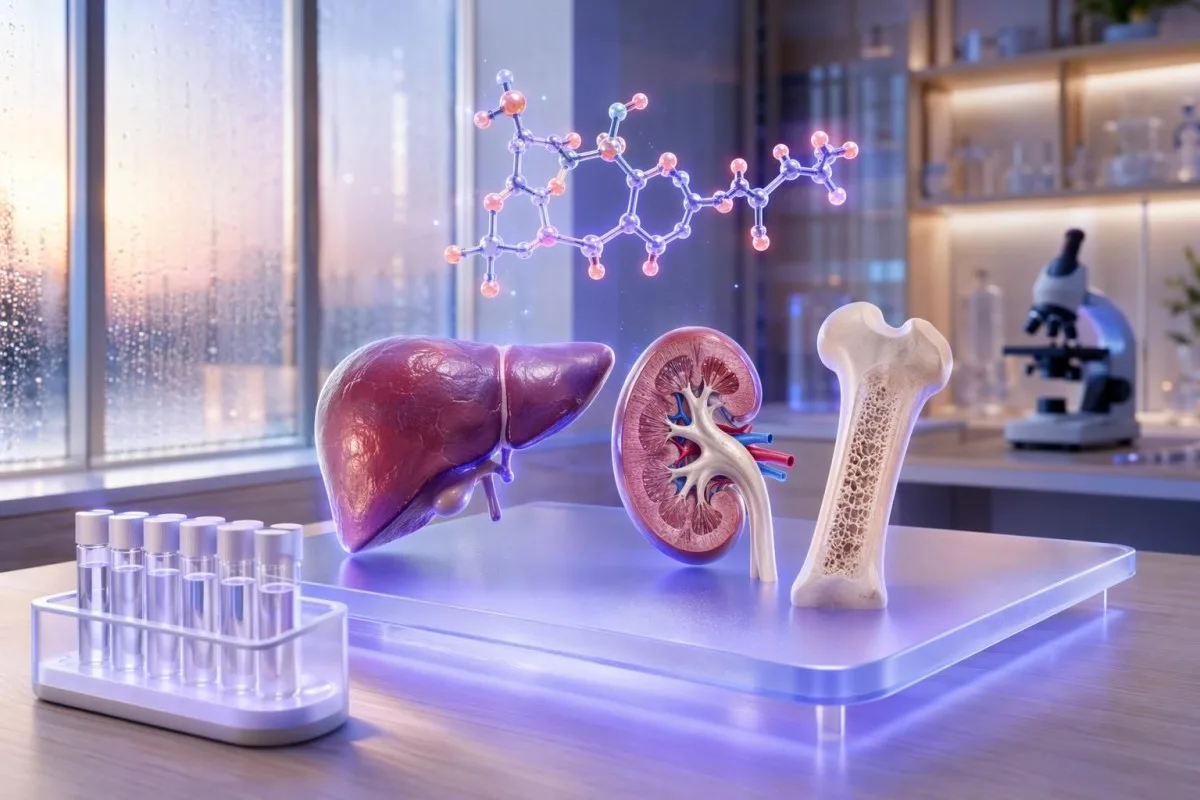
- Safety monitoring matters when high-dose supplements are used; calcium, creatinine or eGFR, and sometimes PTH help identify excess or unusual physiology.
Can foods high in vitamin D raise a low 25-OH result?
Yes, foods high in vitamin D can raise a low 25-OH vitamin D result, but diet alone usually works only for mild deficiency or maintenance. In practice, a person at 24 ng/mL may improve with 800-1000 IU/day from food plus sun exposure; someone at 9 ng/mL usually needs clinician-guided supplementation. Retest after 8-12 weeks, not 8 days.
As of June 19, 2026, the most useful food-first question is not whether a food contains vitamin D; it is whether the serving gives enough IU per week to change 25-OH. I usually see diet move 25-OH by about 2-6 ng/mL over 8-12 weeks when patients add fatty fish 3 times weekly plus fortified foods daily.
A 25-OH vitamin D level below 20 ng/mL, or below 50 nmol/L, is commonly reported as deficient by many laboratories. If your result is low, our plain-English guide to a low vitamin D result explains why symptoms, calcium, PTH, kidney function, and season all change the interpretation.
Kantesti is an AI blood test analyzer that reads 25-OH vitamin D alongside calcium, PTH, kidney function, and supplement history rather than treating one number as the whole story. I’m Thomas Klein, MD, and in clinical review I worry less about one mildly low winter result and more about a flat trend that stays below 20 ng/mL despite a realistic intake plan.
What does 25-OH vitamin D measure, and why not active D?
25-OH vitamin D measures the main circulating storage form of vitamin D, so it is the standard test for low vitamin D status. The active hormone, 1,25-dihydroxyvitamin D, can look normal or high even when stores are low, especially if parathyroid hormone is driving conversion.
Most laboratories report 25-OH vitamin D in ng/mL or nmol/L; to convert ng/mL to nmol/L, multiply by 2.5. A result of 20 ng/mL equals 50 nmol/L, while 30 ng/mL equals 75 nmol/L.
The active vitamin D test is mainly useful in selected kidney disease, granulomatous disease, or rare calcium disorders, not routine diet monitoring. Our deeper guide to 25-OH versus active D explains why a normal active D result can mislead patients with low stores.
The 2024 Endocrine Society prevention guideline recommends against routine vitamin D screening in generally healthy adults and does not set one universal 25-OH target for disease prevention (Demay et al., 2024). That is sensible, but when a patient already has a low result, the clinical job becomes practical: identify the dose, route, and retest window that proves the plan worked.
Which vitamin D foods meaningfully increase levels?
The vitamin D foods most likely to raise 25-OH are fatty fish, fortified dairy or plant drinks, fortified cereals, UV-exposed mushrooms, and cod liver oil. Small amounts in eggs or unfortified dairy help the total, but they rarely correct deficiency by themselves.
A cooked 3-ounce serving of salmon or trout often provides roughly 400-700 IU of vitamin D, depending on species and farming conditions. One cup of fortified milk or fortified plant drink commonly provides 100-144 IU, while one large egg yolk is closer to 35-45 IU.
Here is the clinical arithmetic I use with patients: five eggs add only about 200 IU, but salmon twice weekly plus fortified milk daily can add 1400-2200 IU across a week. For broader nutrient context, our guide to fat-soluble vitamins compares vitamin D with vitamins A, E, and K, which behave very differently on blood testing.
Cod liver oil is potent but not casual food in my book. One teaspoon may contain around 400-450 IU of vitamin D, yet it can also contain preformed vitamin A, so repeated dosing deserves more care than eating sardines or drinking fortified milk.
Do fortified foods work better than natural foods?
Fortified foods can work very well because they are consistent, measurable, and easy to repeat daily. The catch is that the actual vitamin D content varies by country, brand, storage, and whether the drink is shaken before pouring.
A 250 mL serving of fortified milk or plant drink commonly contributes 100-144 IU, but some products contain none. I have reviewed food logs where a patient believed they were getting vitamin D from almond milk, only to find the brand was unfortified in that market.
Fortified foods are most useful when they replace an existing habit, not when they require a new ritual. At Kantesti, we see better adherence when the plan says, for example, one fortified drink at breakfast daily rather than an ambitious fish-heavy menu the patient dislikes; our AI diet planning article explains how lab-guided food choices should fit real routines.
There is a small lab nuance here. If your 25-OH rises from 18 to 23 ng/mL after 10 weeks of fortified foods, that is not failure; it is evidence of absorption, but the dose may be too low for your target.
Does D3 from fish raise 25-OH better than D2 from mushrooms?
Vitamin D3 from animal foods usually raises total 25-OH vitamin D more efficiently than vitamin D2 from mushrooms. D2 still counts, especially for plant-based diets, but the retest is the only honest way to know your response.
Tripkovic and colleagues found in a 2012 systematic review and meta-analysis that vitamin D3 was more effective than vitamin D2 at raising serum 25-OH vitamin D, particularly when given as intermittent bolus dosing (Tripkovic et al., 2012). That does not make mushrooms useless; it means D2-heavy plans need follow-up testing rather than assumptions.
Fatty fish provides D3 along with omega-3 fats, which may improve meal absorption because vitamin D is fat soluble. If fish is also part of your cardiometabolic plan, our D3 versus D2 guide gives the practical lab differences without turning the topic into supplement folklore.
I often use UV-exposed mushrooms for patients who avoid animal products, but I warn them that the dose can be wildly variable. A serving may provide 200 IU in one product and more than 1000 IU in another, depending on UV treatment and storage.
Why does diet alone often underperform?
Diet alone often underperforms because most everyday diets provide only 100-300 IU/day of vitamin D unless fortified foods or fatty fish are deliberately included. A deficient adult may need closer to 1000-2000 IU/day for a visible 25-OH rise, especially in winter or with higher body fat.
Cashman and colleagues described vitamin D deficiency as widespread across Europe, with winter levels especially low in several populations (Cashman et al., 2016). I see the same seasonal pattern in Kantesti uploads: the January result that looks alarming often follows 3-4 months of weak UVB exposure and a diet with no fortified anchor.
Body size matters. Vitamin D is fat soluble, so people with obesity often show a smaller 25-OH rise from the same intake than leaner adults; in clinic, a 1000 IU/day change may barely budge a 25-OH of 14 ng/mL in one person but raise another from 24 to 32 ng/mL.
Gut surgery, chronic diarrhea, untreated coeliac disease, pancreatic insufficiency, cholestatic liver disease, and some medicines can blunt response. Patients after bariatric surgery need a more structured plan than a food list, which is why our bariatric supplement tracking article focuses on repeated labs, not guesswork.
How to raise vitamin D with food without pretending food is a drug
To raise vitamin D with food, aim for a repeatable weekly intake target rather than a heroic one-day meal. For many mildly low adults, a realistic food plan adds 600-1000 IU/day on average; lower than that may maintain levels but not correct deficiency.
A simple food-first plan might include fatty fish 3 times weekly, fortified milk or plant drink daily, and UV-exposed mushrooms twice weekly. That can reach roughly 5000-7000 IU per week, which is enough to test whether diet can move your 25-OH in 8-12 weeks.
The rule of thumb I use carefully is that each additional 100 IU/day may raise 25-OH by about 0.7-1.0 ng/mL after 2-3 months, but the response flattens at higher levels and varies by weight, absorption, baseline level, and season. For people starting very low, the dosing discussion in dose by level is more useful than adding one extra egg.
This is where patients sometimes feel disappointed. A beautiful vitamin D diet may raise 25-OH from 17 to 23 ng/mL, which is biologically real, but still below a clinician’s target if bone risk, high PTH, or pregnancy is part of the picture.
What affects absorption from vitamin D foods?
Vitamin D from food absorbs better with dietary fat and worse when bile flow, pancreatic enzymes, or intestinal surface area are impaired. Taking a fortified drink with a fat-free meal may still work, but a meal containing 10-15 g of fat usually gives a more reliable absorption setting.
A patient who eats salmon at dinner often absorbs vitamin D better than someone who takes a dry low-dose tablet with black coffee. The effect is not magic; vitamin D travels in fat micelles before it enters circulation and eventually becomes 25-OH in the liver.
Medicines and conditions can change the equation. Orlistat, bile acid sequestrants, some anticonvulsants, glucocorticoids, rifampicin, and antiretroviral regimens can lower vitamin D status or alter metabolism; our gut health labs guide covers when low nutrients point beyond diet.
Kantesti AI interprets vitamin D results by looking for neighboring clues such as low albumin, abnormal alkaline phosphatase, low calcium, raised PTH, or kidney markers outside range. A low 25-OH with low albumin and chronic loose stools means something different from an isolated low winter result in a well adult.
Who should not rely on vitamin D foods alone?
People with very low 25-OH vitamin D, bone disease, malabsorption, pregnancy risk factors, chronic kidney disease, or medications that affect vitamin D should not rely on food alone without medical advice. A level below 10-12 ng/mL deserves more urgency than a mild winter dip.
I become more cautious when a patient has fractures, bone pain, muscle weakness, high alkaline phosphatase, raised PTH, or low calcium. A 25-OH result of 8 ng/mL with a PTH of 95 pg/mL is not the same clinical problem as 26 ng/mL in a healthy adult.
Pregnancy and breastfeeding deserve special handling because the goal is maternal safety and fetal or infant mineral health, not just a pretty lab number. Our pregnancy supplement dosing article explains why vitamin D should be reviewed with calcium, iron, iodine, B12, and medication history.
Children need age-specific interpretation. Many paediatric labs use different reference intervals, and severe deficiency in a growing child can affect bone mineralisation before the family notices obvious symptoms.
When should you retest 25-OH vitamin D after diet changes?
Retest 25-OH vitamin D about 8-12 weeks after a consistent diet or dose change. Testing earlier often captures noise, because 25-OH has a biological half-life of roughly 2-3 weeks and the new steady state takes time.
For a 25-OH vitamin D diet experiment, I like one clean baseline, 8-12 weeks of stable intake, and a repeat test using the same unit system when possible. A change from 18 to 27 ng/mL is clinically meaningful even if the lab still flags it as borderline.
Kantesti is an AI lab test interpretation service that helps compare a new 25-OH vitamin D result with the previous one, the lab unit, and the date of the diet change. If several markers are being repeated, our guide to repeat abnormal labs explains why each biomarker has its own retest clock.
Do not retest after one week because you ate fish twice. That is like weighing a pension after one payday; the direction may be right, but the account has not had time to settle.
How do you know whether the food plan worked?
A food plan worked if 25-OH vitamin D rises by at least 3-5 ng/mL after 8-12 weeks and the patient’s intake was truly consistent. No rise suggests poor adherence, inadequate dose, malabsorption, medication effect, wrong product assumptions, or seasonal loss overwhelming intake.
A rise from 21 to 26 ng/mL is not dramatic, but it proves biological response. A flat result of 17 to 17 ng/mL after 10 weeks tells me to check the food label, serving size, missed days, body weight change, gut symptoms, and any medication changes.
Kantesti's neural network treats vitamin D as a trend marker when prior reports are available, which reduces overreaction to one borderline value. Our side-by-side trends guide shows why a slow upward slope is often more reassuring than a one-time normal result from a different lab.
Some European labs use lower sufficiency cutoffs than private wellness panels, and clinicians disagree about whether 20, 25, or 30 ng/mL is the right target for low-risk adults. I tell patients that the right target is the one that matches their risk: bones, PTH, kidney status, symptoms, and safety.
Can too much vitamin D from food or supplements be unsafe?
Vitamin D toxicity is uncommon from food alone but possible with high-dose supplements, dosing errors, or multiple overlapping products. A 25-OH level above 100 ng/mL should prompt dose review, and levels above 150 ng/mL are often considered a toxicity-risk range, especially with high calcium.
The adult tolerable upper intake level used by many authorities is 4000 IU/day from all sources, though clinicians may prescribe more for a defined period. The problem is not salmon; it is the patient taking 5000 IU capsules, a multivitamin, fortified shakes, and cod liver oil without adding the total.
Excess vitamin D can raise calcium, causing thirst, frequent urination, constipation, confusion, kidney stones, or kidney injury. The calcium-PTH pattern is useful because high calcium with suppressed PTH tells a very different story from low vitamin D with high PTH.
Thomas Klein, MD, reviews vitamin D toxicity risk by looking at the cluster, not the headline number. A 25-OH of 82 ng/mL with normal calcium and a clear prescription plan is less concerning than 110 ng/mL with calcium of 10.8 mg/dL and unexplained nausea.
What does a realistic 7-day vitamin D food plan look like?
A realistic 7-day vitamin D food plan uses repeatable anchors: fortified drink daily, fatty fish 2-3 times weekly, UV-exposed mushrooms if plant-based, and eggs as a small supporting source. The goal is not perfection; it is a measurable weekly intake that your retest can verify.
One workable week might include fortified milk or plant drink at breakfast daily, salmon on two dinners, sardines or trout once, UV-exposed mushrooms in two meals, and eggs on two mornings. Depending on portions, that may land near 5000-8000 IU per week before supplements.
Patients who dislike fish can still build a plan, but it is harder. They may need fortified foods twice daily, UV mushrooms, and a clinician-approved supplement if the baseline 25-OH is below 20 ng/mL; our before-and-after diet guide shows how long food-related markers usually take to move.
I ask patients to write down the brand, serving size, and days missed for 2 weeks before retesting. That tiny log often explains the lab better than another internet list of vitamin D foods.
How Kantesti connects vitamin D foods to lab follow-up
Kantesti connects vitamin D foods to lab follow-up by comparing 25-OH vitamin D with related biomarkers, prior results, and the timing of diet or supplement changes. A single number is useful, but a trend with calcium, PTH, kidney function, and alkaline phosphatase is much more clinically honest.
Kantesti is an AI biomarker interpretation platform that turns a single vitamin D value into a trend-based plan across 15,000+ biomarkers and multilingual reports. Our biomarker guide shows why vitamin D should not be read separately from calcium, renal markers, liver enzymes, inflammatory clues, and medication context.
Our clinical standards are reviewed against medical oversight processes, not just software outputs. Readers who want to understand how we test and audit interpretation quality can read our medical validation page, and our engineering methods are described in a pre-registered technical benchmark.
The technology is still a support tool, not a replacement for urgent care or a clinician who knows your case. Kantesti's technology guide explains how our AI reads lab PDFs and photos, while our Medical Advisory Board provides the physician oversight behind patient-facing interpretation.
Frequently Asked Questions
Can food alone raise low 25-OH vitamin D?
Food alone can raise low 25-OH vitamin D when the deficiency is mild and the intake is consistent for 8-12 weeks. A realistic food plan that adds 600-1000 IU/day may raise 25-OH by several ng/mL, but someone starting below 10-12 ng/mL often needs clinician-guided supplementation. Retesting is the only reliable way to confirm that diet changed the blood level.
What foods are highest in vitamin D?
The foods highest in vitamin D are fatty fish such as salmon, trout, sardines, and mackerel, followed by fortified milk or plant drinks, fortified cereals, UV-exposed mushrooms, cod liver oil, and egg yolks. A 3-ounce serving of salmon or trout may provide about 400-700 IU, while one fortified cup of milk commonly provides 100-144 IU. Egg yolks usually provide only about 35-45 IU each, so they are supportive rather than corrective.
How long after eating vitamin D foods should I retest 25-OH?
Retest 25-OH vitamin D about 8-12 weeks after making a consistent food or dose change. The marker changes slowly because 25-OH vitamin D has a biological half-life of roughly 2-3 weeks. Testing after a few days or one week usually cannot show whether the plan worked.
Is vitamin D2 from mushrooms as good as D3 from fish?
Vitamin D2 from UV-exposed mushrooms can raise 25-OH vitamin D, but vitamin D3 from fish and animal sources usually raises total 25-OH more efficiently. A 2012 systematic review by Tripkovic and colleagues found D3 was more effective than D2 at increasing serum 25-OH vitamin D. Plant-based patients can still use mushrooms, but they should retest after 8-12 weeks to confirm response.
What 25-OH vitamin D level is considered low?
Many laboratories flag 25-OH vitamin D below 20 ng/mL, or below 50 nmol/L, as deficient. Results from 20-29 ng/mL are often called insufficient or borderline, although guideline groups disagree about the exact target for low-risk adults. A level below 10-12 ng/mL is more concerning and should be reviewed with a clinician, especially if calcium, PTH, bone pain, or fracture risk is abnormal.
Why did my vitamin D level not rise after eating better?
A vitamin D level may not rise after diet changes because the dose was too low, the plan was inconsistent, the food was not actually fortified, or absorption was impaired. Higher body fat, winter season, gut disease, bile or pancreatic problems, and medicines such as orlistat, anticonvulsants, glucocorticoids, or rifampicin can reduce the 25-OH response. If 25-OH stays flat after 8-12 weeks, review the exact IU intake and related labs rather than simply adding more foods.
Can you get too much vitamin D from foods high in vitamin D?
Vitamin D toxicity from ordinary foods is rare, but excess can occur when high-dose supplements, cod liver oil, multivitamins, and fortified products overlap. Many authorities use 4000 IU/day as the adult tolerable upper intake level from all sources, although clinicians may prescribe more temporarily. A 25-OH level above 100 ng/mL should trigger dose review, and high calcium or kidney symptoms need prompt medical assessment.
Can biotin supplements affect my 25-OH vitamin D blood test?
Possibly. High-dose biotin, often marketed for hair and nails, can interfere with some vitamin D immunoassays; ask your laboratory or clinician whether you should pause it before testing, and do not stop prescribed treatment without advice.
Should I adjust vitamin D intake during winter if I have darker skin?
People with darker skin produce less vitamin D from sunlight under the same conditions, so diet and supplements can matter more when sun exposure is limited, particularly during winter. Check a 25-OH vitamin D result rather than guessing from skin tone; a clinician can tailor a plan if it is low.
Get AI-Powered Blood Test Analysis Today
Join over 2 million users worldwide who trust Kantesti for instant, accurate lab test analysis. Upload your blood test results and receive comprehensive interpretation of 15,000+ biomarkers in seconds.
📚 Referenced Research Publications
Klein, T., Mitchell, S., & Weber, H. (2026). B Negative Blood Type, LDH Blood Test & Reticulocyte Count Guide. Kantesti AI Medical Research.
Klein, T., Mitchell, S., & Weber, H. (2026). Diarrhea After Fasting, Black Specks in Stool & GI Guide 2026. Kantesti AI Medical Research.
📖 External Medical References
Demay MB et al. (2024). Vitamin D for the Prevention of Disease: An Endocrine Society Clinical Practice Guideline. The Journal of Clinical Endocrinology & Metabolism.
⚕️ Medical Disclaimer
This article is for educational purposes only and does not constitute medical advice. Always consult a qualified healthcare provider for diagnosis and treatment decisions.
E-E-A-T Trust Signals
Experience
Physician-led clinical review of lab interpretation workflows.
Expertise
Laboratory medicine focus on how biomarkers behave in clinical context.
Authoritativeness
Written by Dr. Thomas Klein with review by Dr. Sarah Mitchell and Prof. Dr. Hans Weber.
Trustworthiness
Evidence-based interpretation with clear follow-up pathways to reduce alarm.