৩০–৫৯ mmol/Lৰ এক সীমাস্থিত ঘাম ক্লোৰাইডৰ ফলাফল ছিষ্টিক ফাইব্ৰোচিচক নিশ্চিত নকৰে। ইয়াৰ অৰ্থ হৈছে ফলাফলৰ পৰ্যবেক্ষণৰ প্ৰয়োজন: সাধাৰণতে এজন অভিজ্ঞ কেন্দ্ৰত পুনৰ পৰীক্ষা, লক্ষণসমূহৰ পৰ্যালোচনা আৰু নৱজাতকৰ স্ক্রীনিং, আৰু কেতিয়াবা CFTR জেনেটিক বা কাৰ্যক্ষম মূল্যায়ন।.


- কম ঘাম ক্লোৰাইড: ৩০ mmol/L তকৈ কম হ’লে ছিষ্টিক ফাইব্ৰোচিচ হোৱাৰ সম্ভাৱনা কম, কিন্তু লক্ষণ বা জেনেটিক্স নিৰ্দেশিত হ’লে ইয়াক সম্পূৰ্ণৰূপে বাদ দিয়া নাযায়।.
- মধ্যমীয়া ঘাম ক্লোৰাইড: ৩০–৫৯ mmol/L স্তৰ inconclusive – ছিষ্টিক ফাইব্ৰোচিচ নিৰ্দ্ধাৰিত হোৱা নাই আৰু এজন কেৰিয়াৰৰ ফলাফলো নহয়।.
- উচ্চ ঘাম ক্লোৰাইড: ৬০ mmol/L বা তাতকৈ অধিকৰ এক বৈধ পৰিণামে উপযুক্ত ক্লিফিকেল পৰিস্থিতিত ছিষ্টিক ফাইব্ৰোচিচক সমৰ্থন কৰে আৰু বিশেষজ্ঞৰ নিশ্চিতকৰণৰ প্ৰয়োজন হয়।.
- পুনৰ পৰীক্ষা: এটা মধ্যমীয়া পৰিণামৰ বাবে সাধাৰণতে ১-২ মাহৰ ভিতৰত আন এটা ঘাম ক্লোৰাইড পৰীক্ষা কৰা উচিত, লক্ষণ থকা শিশুসকলৰ বাবে বা উদ্বেগজনক লক্ষণৰ বাবে আগতীয়াকৈ মূল্যায়ন কৰা হয়।.
- সকলো বয়সৰ বাবে: বৰ্তমানৰ ছিষ্টিক ফাইব্ৰোচিচ ফাউণ্ডেশন ডায়াগনষ্টিক থ্ৰেশহোল্ডে শিশু, বৰুৱা আৰু প্রাপ্তবয়স্কসকলৰ বাবে ৩০, ৩০–৫৯, আৰু অন্ততঃ ৬০ mmol/L তকৈ কম ব্যৱহাৰ কৰে।.
- সংগ্ৰহৰ মান: পৰ্যাপ্ত নোহোৱা ঘামৰ নমুনা নির্ভরযোগ্য নেগেটিভ ফলাফল হিচাপে প্ৰতিবেদন কৰিব নোৱাৰি; পৃথক সংগ্ৰহৰ স্থানসমূহ একত্ৰিত কৰা উচিত নহয়।.
- CFTR মূল্যায়ন: অন্তর্বর্তীকালীন পৰিণাম, লক্ষণ বা শিশুৰ পৰীক্ষাত সন্দেহজনক ফলাফল দেখা গ’লে জিন বহলাব (sequencing), জিনৰ নোহোৱা/বেছি হোৱা পৰীক্ষা (deletion/duplication analysis) আৰু জেনেটিক পৰামৰ্শ গ্ৰহণ কৰা উচিত।.
- AIৰ সীমা: ঘামৰ ক্লৰাইড (Sweat chloride) ঘাম নিৰীক্ষণ কৰে, তেজ নহয়। লগতে থকা গৱেষণাগাৰৰ ফলাফলৰ AI ব্যাখ্যা চিষ্টিক ফাইব্ৰোসিস নিশ্চিত বা নাকচ কৰিব নোৱাৰে।.
কম, মধ্যমীয়া আৰু উচ্চ পৰিণামৰ অৰ্থ কি?
৩০ mmol/L তকৈ কম ঘামৰ ক্লৰাইড পৰীক্ষাৰ পৰিণাম চিষ্টিক ফাইব্ৰোসিস হোৱাৰ সম্ভাৱনা কম কৰে; ৩০–৫৯ mmol/L অন্তর্বর্তীকালীন; আৰু ৬০ mmol/L বা তাতকৈ বেছি হ’লে উপযুক্ত চিকিৎসাগত পৰিস্থিতিত চিষ্টিক ফাইব্ৰোসিসক সমৰ্থন কৰে।. এক গড় ফলাফল অনুসন্ধানৰ কাৰণ—Diagnosis নহয়, গুৰুত্বৰ মান নহয়, বা নিজৰ চিকিৎসা আৰম্ভ কৰাৰ কাৰণ নহয়।.
২০১৭ চনৰ চিষ্টিক ফাইব্ৰোসিস ফাউণ্ডেশ্বনৰ সন্মতিয়ে বয়সৰ লগত এই ৩টা সীমাৰ ব্যৱহাৰ কৰিছে, ডাঙৰ শিশু আৰু বয়স্কসকলৰ বাবে উচ্চ অন্তর্বর্তীকালীন সীমা ব্যৱহাৰ কৰাৰ সলনি (Farrell et al., 2017)। কিছুমান পুৰণি প্ৰতিবেদনত এতিয়াও শিশুৰ পিছত ৪০–৫৯ mmol/L গড় বুলি বৰ্ণনা কৰা হয়; এটা ফলাফল ৩৫ mmol/L পুৰণি তথ্যৰ ব্যৱহাৰৰ বাবে আওকাণ কৰা উচিত নহয়।.
৫৯ mmol/L আৰু ৬০ mmol/Lৰ এটা ফলাফল পৃথক বিভাগত পৰে, কিন্তু এই সংখ্যাবোৰৰ মাজত জীৱবিজ্ঞান হঠাৎ সলনি নহয়। সংগ্ৰহৰ মান, লক্ষণ, স্ক্রিনিংৰ ইতিহাস, আৰু পুনৰ পৰিমাপৰ দ্বাৰা বিভাগটো কিমান আত্মবিশ্বাসৰ সৈতে ব্যৱহাৰ কৰিব পাৰি সেয়া নিৰ্ধাৰণ কৰা হয়। আমাৰ ব্যাখ্যা সীমাৰ বাহিৰৰ লেবৰেটৰীৰ চিন বুজায় কিয় এটা চিহ্নিত সংখ্যা নিজেই Diagnosis নহয়।.
মই Thomas Klein, MD, Kantestiৰ Chief Medical Officer, আৰু মোৰ চিকিৎসাৰ পৰিকাঠামো হ’ল Diagnosisৰ পৰিমাপ পৃথক কৰা, কোনো এটা আলোচনা কৰাৰ আগতে। Kantesti এটা AI তেজ পৰীক্ষা বিশ্লেষণকাৰী; ঘামৰ ক্লৰাইড এটা পৃথক বিশেষজ্ঞ পৰীক্ষা, তেজৰ বায়োমাৰ্কাৰ নহয়। আমাৰ সংগঠন আৰু চিকিৎসাগত কাৰ্য্যপদ্ধতি সেই পাৰ্থক্য ব্যাখ্যা কৰে, যি বিশেষকৈ গুৰুত্বপূৰ্ণ হয় যেতিয়া কোনোবাই এক মিশ্ৰিত গৱেষণাগাৰৰ প্ৰতিবেদন আপলোড কৰে।.
ঘাম ক্লোৰাইড পৰীক্ষাই প্ৰকৃততে কি পৰিমাপ কৰে?
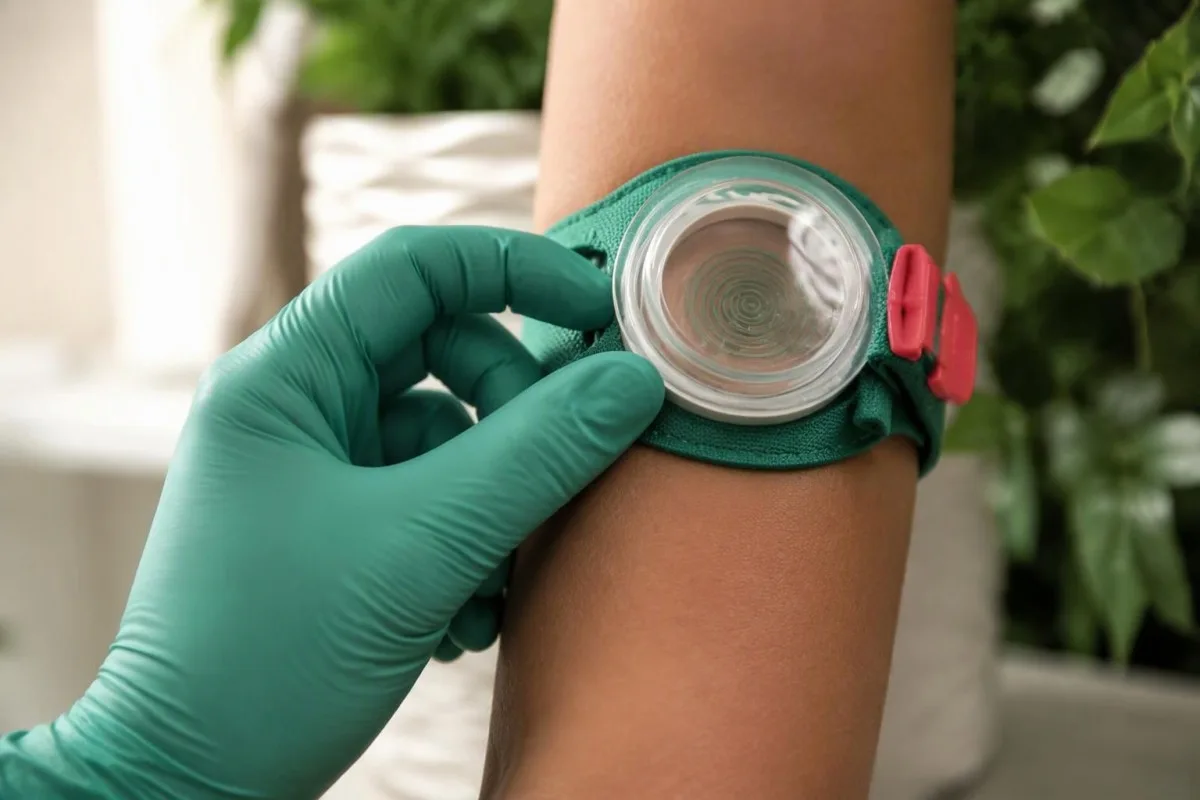
ঘামৰ ক্লৰাইড পৰীক্ষাই পিলকাৰ্পিনৰ দ্বাৰা এটা সৰু সংগ্ৰহৰ স্থানStimulate কৰাৰ পিছত ঘামত ক্লৰাইডৰ ঘনত্ব নিৰীক্ষণ কৰে।. ই CFTR চেনেল কাৰ্যৰ এটা পৰিণাম মূল্যায়ন কৰে: ঘাম পৃষ্ঠত পোৱাৰ আগতে ঘাম নলীয়ে কিমান কাৰ্যকাৰীভাৱে ক্লৰাইড পুনৰ শোষণ কৰে। Diagnosisৰ ফলাফল mmol/Lত প্ৰতিবেদন কৰা হয়, উৎপাদিত ঘামৰ পৰিমাণ হিচাপে নহয়।.
The sweat gland first produces fluid, and its duct then reabsorbs salt. Reduced CFTR function can leave more chloride in the final sweat, producing values of 60 mmol/L or higher in many people with cystic fibrosis. This is a functional clue, but it does not directly measure lung damage, pancreatic function, or the number of genetic variants present.
Sweat chloride and serum chloride describe different compartments. A person can have elevated sweat chloride while the chloride concentration in a metabolic panel is normal—or low after substantial salt loss. Our discussion of serum chloride and fluids concerns blood chemistry; its reference intervals cannot be substituted for the 30–59 mmol/L sweat interval.
The units can also look different without representing different thresholds: for chloride, 1 mmol/L equals 1 mEq/L because chloride has a single electrical charge. Sweat conductivity is another matter—it reflects multiple ions, often expressed as sodium chloride equivalents. A conductivity result must not be interpreted using diagnostic sweat chloride thresholds, even when the report looks reassuringly numerical.
কিয় এটা মধ্যমীয়া পৰিণামে ছিষ্টিক ফাইব্ৰোচিচক নিশ্চিত নকৰে?
An intermediate sweat chloride result does not confirm cystic fibrosis because 30–59 mmol/L overlaps several clinical situations. These include some people with cystic fibrosis, people with other CFTR-associated conditions, and people without a CFTR disorder. The same value can therefore lead to different conclusions depending on the evidence around it.
For an illustrative comparison, consider a thriving infant with 38 mmol/L after newborn screening and an adult with 38 mmol/L plus recurrent pancreatitis and bronchiectasis. Neither number independently proves cystic fibrosis, but the second history raises different diagnostic questions. This is why I would not attach a single percentage probability to every borderline sweat chloride test without knowing the referral context.
Persistent intermediate results on 2 separate occasions can still occur in cystic fibrosis, and the 2017 consensus recommends considering extended CFTR analysis or specialized functional testing in that setting (Farrell et al., 2017). Conversely, 2 intermediate measurements do not automatically convert uncertainty into a confirmed diagnosis. Repetition establishes persistence; it does not explain the cause by itself.
Borderline is also not another word for carrier. A person with 1 identified CF-causing variant may be a carrier, but the initial genetic panel might have missed another variant, or the symptoms may have another explanation. Our discussion of borderline stool test follow-up illustrates the broader distinction between an indeterminate measurement and a named disease; the follow-up tests themselves are different.
এটা ইতিবাচক ঘাম ক্লোৰাইড পৰিণামৰ পিছত কি কৰিব লাগিব?
A properly collected sweat chloride result of at least 60 mmol/L supports a cystic fibrosis diagnosis when there is compatible newborn screening, a relevant family history, or characteristic clinical features. Specialist assessment should follow promptly. Confirmation usually uses repeat testing on a separate date or an independent diagnostic method, such as appropriate CFTR analysis.
A report saying sweat chloride test positive deserves more than a telephone message reading only the flag. Ask for the actual concentration, the collection method, whether the sample was sufficient, and the plan for confirmation. A measured chloride of 72 mmol/L is meaningful evidence; a positive conductivity screening result is not an interchangeable diagnostic finding.
The distinction between a category and a concentration matters at both ends of the scale. Chloride concentrations above roughly 160 mmol/L are outside the expected physiological range for sweat and should trigger immediate laboratory review rather than assumptions about unusually severe disease. The collection and analytical record may be more informative than another decimal place on the report.
Positive-range sweat chloride is not, by itself, an emergency severity score. A clinically stable child with 68 mmol/L needs a timely CF specialist pathway; a child with dehydration or breathing difficulty needs urgent care regardless of the sweat value. Our guide to গুণগত এবং পরিমাণগত ফলাফল explains why the measured number should accompany the positive label.
এটা কম পৰিণামে ছিষ্টিক ফাইব্ৰোচিচক নিশ্চিতভাৱে বাতিল কৰিব পাৰেনে?
Sweat chloride below 30 mmol/L makes cystic fibrosis less likely, but cannot absolutely exclude it when symptoms or CFTR findings are strongly suggestive. A low result is most reassuring when the sample was valid, the person has no characteristic symptoms, and the screening or family-history concern has been adequately addressed.
Certain CFTR variants preserve enough sweat-duct function to produce lower chloride concentrations despite clinically relevant disease. The 2017 consensus therefore allows further evaluation when a value below 30 mmol/L conflicts with genotype or evolving clinical features (Farrell et al., 2017). A normal newborn screen also does not eliminate every possible CF diagnosis in a child who later develops suggestive symptoms.
Age does not create a separate low-result exception: a value of 27 mmol/L has the same diagnostic category in a toddler and an adult. What changes is the history available to interpret it—growth trajectory in a young child, for example, versus years of recurrent pancreatitis or unexplained bronchiectasis in an adult. The referral question should travel with the laboratory result.
A child with 24 mmol/L, persistent greasy stools, and faltering growth still needs an explanation for the symptoms, even if cystic fibrosis becomes less likely. The next step may include pancreatic, gastrointestinal, or nutritional assessment rather than simply repeating every test. Our guidance on শিশুৰ AI নিৰূপণৰ সীমা explains why pediatric decisions require age-specific clinical oversight.
নৱজাতকৰ স্ক্রীনিংৰ পিছত মধ্যমীয়া পৰিণাম কেনেকৈ ব্যৱহাৰ কৰা হয়?
An infant with an abnormal newborn screen and intermediate sweat chloride needs assessment through a CF specialist pathway, but may not have cystic fibrosis. Some clinically well infants receive the designation CRMS/CFSPID, meaning the screening and diagnostic findings remain inconclusive. This designation has specific criteria; it should not be applied to every borderline result.
CRMS/CFSPID generally applies after positive newborn screening when sweat chloride is below 30 mmol/L with 2 CFTR variants, at least 1 of uncertain consequence, or when chloride is 30–59 mmol/L with no more than 1 CF-causing variant. The infant should not have clinical features establishing CF. A symptomatic child or an adult with borderline chloride needs a different diagnostic framing.
The 2024 Cystic Fibrosis Foundation guideline recommends repeat sweat chloride at 6 months and annually through at least age 8 for children with CRMS/CFSPID (Green et al., 2024). Fewer than 10% are reclassified as CF in the evidence summarized by that guideline, although individual risk varies. That estimate describes a defined screened population—not all children with intermediate chloride.
For screen-positive newborns, diagnostic sweat testing is generally arranged after 10 days of age and ideally by 4 weeks, when the infant is over 2 kg and at least 36 weeks corrected gestational age. Feeding, stool pattern, and weight gain help determine urgency. Our explanation of pediatric growth assessment addresses broader growth questions; a borderline sweat result does not itself justify growth-hormone testing.
কিশোৰ-কিশোৰীসকলৰ ক্ষেত্ৰত সীমাস্থিত ঘাম ক্লোৰাইডে কি বুজায়?
Sweat chloride levels 30–59 mmol/L are intermediate in adults, just as they are in children. Persistent intermediate results deserve particular attention when there is unexplained bronchiectasis, recurrent pancreatitis, chronic sinus disease with other suggestive features, or obstructive infertility. Adult diagnosis is possible; age alone does not exclude cystic fibrosis.
Imagine an illustrative 34-year-old with chloride of 44 mmol/L, repeated pancreatitis, and otherwise normal routine blood chemistry. The normal metabolic panel does not settle the CFTR question, because it measures neither sweat-duct transport nor pancreatic duct function. A specialist might pursue extended genetics and pancreatic assessment while also checking more common causes of recurrent pancreatitis.
Bronchiectasis has several possible causes, and 1 intermediate sweat result should not end that investigation. Depending on the history, clinicians may evaluate immune deficiency, aspiration, ciliary disorders, and other inherited respiratory conditions. Our guide to আলফা-১ এন্টিট্ৰিপচিন পৰীক্ষা discusses a different inherited lung-risk pathway; it is complementary only when the clinical pattern supports testing.
Male infertility can occasionally be the first clue to CFTR-associated disease, especially when congenital absence of the vas deferens causes obstruction. A sperm count of 0 is not enough to establish that anatomy or a CF diagnosis, and hormonal explanations require different evaluation. Our semen analysis interpretation guide explains why reproductive assessment must accompany—not be replaced by—CFTR testing.
সংগ্ৰহৰ সমস্যাই পৰিণামক বিপথে পৰিচালিত কৰিব পাৰে নেকি?
Collection problems can make sweat chloride results unreliable, and insufficient sweat is not a negative test. Evaporation, contamination, incorrect handling, and inadequate sample volume can interfere with interpretation. Before drawing conclusions from a borderline result, confirm that the laboratory performed quantitative chloride analysis on an acceptable sample.
Common minimum quantities are 75 mg for gauze or filter-paper collection and 15 µL for a Macroduct collection system; collection generally lasts no more than 30 minutes. Samples from separate sites should not be pooled to reach the minimum. The Cystic Fibrosis Foundation sweat-testing guidance describes these collection safeguards because an apparently precise number cannot rescue an inadequate specimen (LeGrys et al., 2007).
A report marked QNS—quantity not sufficient—means no reliable diagnostic concentration was obtained. If one arm yields an acceptable sample and the other does not, the center should explain which result is valid; the unsuccessful site is not a second negative measurement. Likewise, conflicting bilateral values should prompt a quality review rather than an improvised average that hides disagreement.
Copied reports introduce another avoidable problem: 35 mmol/L can become 85 mmol/L through transcription or image-reading error. Our PDF লিপ্যন্তৰ তালিকা is useful for verifying numbers against the original report, not for validating the sweat procedure. Kantesti’s ক্লিনিকাল মান এবং সীমাবদ্ধতা should also be distinguished from accreditation of the laboratory that collected and measured the sweat.
কেতিয়া এটা স্বীকৃত কেন্দ্ৰত পৰীক্ষা পুনৰ কৰা উচিত?
An intermediate sweat chloride result generally warrants repeat quantitative testing within 1–2 months at an accredited CF center or an appropriately accredited laboratory experienced in sweat testing. Earlier specialist assessment is appropriate for symptomatic infants, poor growth, recurrent pancreatitis, or significant respiratory concerns. Persistent uncertainty should not be managed through repeated low-quality collections.
The right center depends on your country: CF-center accreditation and laboratory accreditation are related but not identical. Ask whether the laboratory regularly performs pediatric and adult sweat chloride testing, monitors insufficient-sample rates, and uses quantitative chloride rather than conductivity alone. For a result of 46 mmol/L, an experienced collection team may be more useful than choosing a laboratory solely for convenience.
Repeat tests can cross categories because of biological and analytical variation. Values of 29 and 33 mmol/L on separate dates deserve context; they do not prove that CFTR function suddenly deteriorated. Our discussion of laboratory changes over time explains the general distinction between variation and disease progression, although sweat testing has its own collection requirements.
For a valid repeat, follow the center’s instructions, maintain normal hydration, and avoid lotions or creams on the collection site. Do not fast, overdrink water, or stop prescribed medicines unless instructed; disclose all medicines, especially CFTR modulators. If the first sample was QNS, the repeat may simply be the first interpretable test—not a confirmation of any earlier diagnostic category.
CFTR জেনেটিক মূল্যায়ন কেতিয়া উপযুক্ত?
CFTR genetic evaluation is appropriate when sweat chloride remains intermediate, newborn screening is abnormal, family history is relevant, or characteristic symptoms persist despite a low result. Testing may need to extend beyond a common-variant panel to sequencing and deletion/duplication analysis. A negative limited panel cannot exclude all clinically relevant CFTR variants.
Finding 2 variants is not automatically equivalent to finding 2 CF-causing variants. Classification matters, and the variants usually need to be on opposite gene copies—in trans—to support the recessive diagnostic explanation. Parental testing can help establish phase; 2 variants on the same copy, in cis, leave the other copy unresolved.
A variant of uncertain significance cannot be promoted to a disease-causing finding simply because sweat chloride is 41 mmol/L. Specialists combine curated variant evidence, the phenotype, family testing, and sometimes functional assessment. Genetic counseling should explain what the result establishes, what it leaves unanswered, and whether relatives or a reproductive partner need targeted evaluation.
Kantesti is an AI blood test interpretation platform, not a CFTR variant-classification laboratory. Our AI প্ৰযুক্তিৰ ব্যাখ্যা describes how laboratory information is organized, but 1 unresolved genetic finding requires qualified interpretation rather than an automated disease label. When I review accompanying chemistry, I treat the genetic report as a separate evidence source with its own method, coverage, and limitations.
কোনবোৰ অতিৰিক্ত পৰীক্ষাই এটা সিদ্ধান্তহীন পৰিণাম স্পষ্ট কৰিব পাৰে?
Specialist CFTR functional tests can help when sweat chloride and genetics remain inconclusive. Nasal potential difference assesses ion transport in nasal epithelium, while intestinal current measurement assesses transport in intestinal tissue. These tests require validated protocols at experienced reference centers; they are not routine blood tests or interchangeable screening tools.
The 2017 consensus recommends that nasal potential difference and intestinal current measurement be performed in validated reference centers when needed for diagnosis (Farrell et al., 2017). Availability varies internationally, and 1 abnormal functional measurement must be interpreted using the center’s protocol and clinical context. Referral is often more sensible than asking a general laboratory to improvise an unfamiliar assay.
Organ-specific tests answer different questions. Fecal elastase below 200 µg/g can suggest pancreatic exocrine insufficiency, but a watery sample may dilute the measurement and a normal result does not exclude pancreatic-sufficient CF. Our মলৰ ইলাষ্টেজ ব্যাখ্যা নিৰ্দেশিকা explains those limitations; pancreatic status is evidence about organ function, not a substitute for establishing CFTR-related diagnosis.
Fat malabsorption may also justify stool-fat assessment, with collection and dietary requirements determined by the laboratory. Adult fecal fat above about 7 g/day on an appropriate standardized intake suggests steatorrhea, but the cause may be pancreatic, intestinal, or biliary. Our fecal fat result guide helps separate documenting malabsorption from naming its cause.
অন্য কোনো ৰোগ বা ঔষধে ঘাম ক্লোৰাইডক প্ৰভাৱিত কৰিব পাৰে নেকি?
Technical problems and some non-CF conditions can produce elevated or intermediate sweat chloride, while medicines can affect sweat production or CFTR function. Severe malnutrition, untreated hypothyroidism, and adrenal insufficiency are among reported non-CF associations. These possibilities require a clinically directed assessment; they should not become an excuse to dismiss a valid result of 60 mmol/L or higher.
Adrenal insufficiency deserves consideration when fatigue, weight loss, low blood pressure, pigmentation changes, or abnormal electrolytes accompany the diagnostic question. A sweat value of 48 mmol/L alone does not justify a cortisol workup, but the combined pattern may. Our guide to adrenal insufficiency warning signs explains when symptoms make that alternative urgent.
Malnutrition can be a confounder and also a consequence of an underlying disorder, so correcting nutrition does not automatically resolve the CF question. A child with 43 mmol/L and chronic diarrhea may need evaluation for celiac disease or another malabsorption cause as well as CFTR assessment. Our explanation of IgA-related celiac testing pitfalls is relevant when negative celiac antibodies conflict with a suggestive history.
CFTR modulators can lower sweat chloride because they improve channel function; a treated value below 30 mmol/L does not erase an established CF diagnosis. Drugs that reduce sweating, such as topiramate in some patients, can make adequate collection harder without providing a reliable prediction of chloride concentration. Give the center a complete medication list, and never stop treatment just to produce an untreated number.
যেতিয়া ৰোগ নিৰ্ণয় অনিশ্চিত থাকে, তেতিয়া পৰিয়ালসমূহে কি কৰা উচিত?
While a borderline result is being clarified, keep specialist follow-up, monitor relevant symptoms, and avoid starting CF-specific treatment without an indication. A sweat chloride value of 30–59 mmol/L does not justify routine pancreatic enzymes, antibiotics, high-dose vitamins, or extra salt on its own. Supportive care should address demonstrated problems rather than a provisional label.
Bring the original sweat report, newborn-screening record if applicable, genetic report, medication list, and growth measurements to the appointment. Recording 2–3 concrete observations—such as stool frequency, weight trend, or repeated chest illnesses—is usually more useful than an exhaustive diary. Ask who will arrange the repeat test and who will explain a result that remains intermediate.
Nutrition testing should be driven by symptoms and growth, not by the sweat number alone. Iron deficiency can accompany restricted intake or malabsorption, but a ferritin result does not confirm CF; iron treatment also needs an appropriate indication. Our complete iron studies guide explains how to distinguish low stores from inflammation-related changes when a clinician requests that assessment.
Routine chemistry can help assess complications: low chloride and bicarbonate elevation may accompany salt depletion, while low albumin needs a separate nutritional, hepatic, or protein-loss explanation. Our ছিৰাম প্ৰোটিন ব্যখ্যাৰ হাতপুথি provides that context. Seek urgent care for breathing difficulty, marked lethargy, repeated vomiting, or substantially reduced urination—do not wait 1–2 months for the planned sweat retest.
পৰিণাম কেনেকৈ ব্যাখ্যা আৰু নথিভুক্ত কৰা উচিত?
A useful sweat chloride explanation records the exact value, units, collection quality, clinical context, and next diagnostic step. As of October 8, 2026, this article uses the 2017 CF diagnostic consensus and the 2024 CRMS/CFSPID management guideline—not a newly invented 2026 cutoff. The central distinction remains unchanged: intermediate is not confirmed CF.
For a result of 42 mmol/L, a clear clinical note might say: intermediate quantitative sweat chloride, adequate sample, CF diagnosis unresolved, repeat at an experienced center and review CFTR testing. That wording is more useful than possible CF without a plan. If the repeat is below 30 mmol/L but symptoms remain concerning, the note should explain why investigation is continuing.
Kantesti is an AI lab test interpretation service that can help explain accompanying blood chemistry, but cannot confirm cystic fibrosis from sweat chloride or genetics. At Kantesti, the safe boundary is to distinguish report explanation from specialist diagnosis; our medical advisory responsibilities describe the role of clinical oversight. A value of 60 mmol/L or higher should trigger a clinical pathway, not an AI-generated treatment prescription.
As Thomas Klein, MD, my practical recommendation is to ask 3 questions: was the specimen valid, does the clinical story fit, and what evidence will resolve the uncertainty? The related Zenodo publications below address general laboratory interpretation, not sweat chloride diagnostic validation. The CF-specific external references are the sources supporting the thresholds, confirmation strategy, and follow-up recommendations in this article.
সঘনাই সোধা প্ৰশ্ন
বৰ্ডাৰলাইন সোৱাদ ক্লোৰাইডৰ অৰ্থ কাইষ্টিক ফাইব্ৰোচিছ হয়নে?
৩০–৫৯ mmol/L এর একটি বর্ডারলাইন ঘাম ক্লোরাইড ফলাফল নিজে থেকেই সিস্টিক ফাইব্রোসিস নির্ণয় করে না। এই ব্যবধান সিএফ, অন্যান্য সিএফটিআর-সম্পর্কিত অবস্থা এবং সিএফটিআর ব্যাধি নেই এমন ব্যক্তিদের মধ্যে ওভারল্যাপ করে। একটি অভিজ্ঞ কেন্দ্রে পুনরাবৃত্তিমূলক পরিমাণগত পরীক্ষা, উপসর্গ পর্যালোচনা এবং স্ক্রীনিং, এবং কখনও কখনও বর্ধিত সিএফটিআর মূল্যায়ন উপযুক্ত। এমনকি ২টি মধ্যবর্তী ফলাফলও স্বয়ংক্রিয় রোগ নির্ণয়ের পরিবর্তে অতিরিক্ত ব্যাখ্যার প্রয়োজন।.
এটা পজিটিভ সোয়েট ক্লোৰাইড টেষ্টৰ ফলাফল কি?
৬০ mmol/L বা তাতোকৈ অধিক ঘামৰ ক্ল'ৰাইডৰ পৰিমাণগত গাঢ়তা ইতিবাচক ৰোগনিৰ্ধাৰক সীমাৰ ভিতৰত পৰে আৰু ই উপযুক্ত ক্লি নিকা বৈশিষ্ট্য, নৱজাতকৰ পৰীক্ষা, বা পৰিয়ালৰ ইতিহাস থকা ছিষ্টিক ফাইব্ৰোচিছক সমৰ্থন কৰে। নমুনাটোৱে সংগ্ৰহ আৰু বিশ্লেষণৰ প্ৰয়োজনীয়তা পূৰণ কৰিব লাগিব। বিশেষজ্ঞৰ নিশ্চিতকৰণত সাধাৰণতে এটা পৃথক তাৰিখত পুনৰ পৰীক্ষা বা এক স্বাধীন ৰোগনিৰ্ধাৰক পদ্ধতি জড়িত থাকে। ঘামৰ পৰিমাণগত পৰিচালনাৰ ইতিবাচক পৰীক্ষা এটা ইতিবাচক পৰিমাণগত ক্ল'ৰাইডৰ ফলাফলৰ সৈতে সলনি কৰিব নোৱাৰি।.
এজন প্ৰাপ্তবয়স্কৰ বাবে 35sweat chlorideৰ ফলাফল কি স্বাভাৱিক?
35 mmol/L এর সোয়েট ক্লোরাইড ফলাফল 2017 এর সিস্টিক ফাইব্রোসিস ফাউন্ডেশন ডায়াগনস্টিক কনসেনসাসের অধীনে একজন প্রাপ্তবয়স্কের জন্য মধ্যবর্তী। বর্তমান বিভাগগুলি হল 30 mmol/L এর নিচে, 30–59 mmol/L, এবং সমস্ত বয়সের জন্য কমপক্ষে 60 mmol/L। কিছু পুরানো পরীক্ষাগার পরিসীমা শৈশবের পরে মধ্যবর্তী সীমানা হিসাবে 40 mmol/L ব্যবহার করত। তাই 35 mmol/L এর একজন প্রাপ্তবয়স্ক ফলাফলকে পুরানো ব্যবধান ব্যবহার করে বাতিল করার পরিবর্তে ক্লিনিকাল প্রেক্ষাপটে পর্যালোচনা করা উচিত।.
অন্তর্বর্তীকালীন ঘাম পৰীক্ষা কিমান সোনকালে পুনৰ কৰা উচিত?
৩০–৫৯ mmol/L ৰ এটা অন্তর্বর্তীকালীন ঘামৰ ক্লৰাইড ফলাফল সাধাৰণতে ১-২ মাহৰ ভিতৰত এটা অভিজ্ঞ, উপযুক্তভাৱে স্বীকৃত কেন্দ্ৰত পুনৰীক্ষাৰ দ্বাৰা পৰিমাণগত পৰীক্ষা কৰা উচিত। লক্ষণযুক্ত কেঁচুৱা, দুৰ্বল বৃদ্ধি, বা গুৰুত্বপূৰ্ণ শ্বাস-প্ৰশ্বাস বা অগ্ন্যাশয়ৰ উদ্বেগৰ বাবে শীঘ্ৰে বিশেষজ্ঞৰ মূল্যায়নৰ প্ৰয়োজন। CRMS/CFSPID হিচাপে নিৰ্দিষ্ট শিশুসকলক এটা দীৰ্ঘম্যাদী সময়সূচী অনুসৰণ কৰা হয় যা ৬ মাহত আৰু ৮ বছৰ বয়স পৰ্যন্ত বছৰেকীয়া ঘামৰ পৰীক্ষাৰ পুনৰীক্ষা অন্তৰ্ভুক্ত কৰে। ৰোগ নিৰ্ণয়ৰ পুনৰীক্ষা আৰু চলিত নিৰীক্ষণ সময়সূচীয়ে ভিন্ন উদ্দেশ্য সাধন কৰে।.
৩০ৰ তলৰ ঘামৰ ক্লৰাইডৰ সৈতে চিষ্টিক ফাইব্ৰোচিছ হ'ব পাৰেনে?
কেচিষ্টিক ফাইব্ৰোচিছ কেতিয়াবা ৩০ mmol/L-ৰ তলৰ ঘামৰ ক্লোৰাইডৰ সৈতেও হব পাৰে, বিশেষকৈ যেতিয়া নিৰ্দিষ্ট CFTR ভেলিয়েন্টবোৰে ঘাম-নলীৰ কাৰ্য্যকাৰিতা বজাই ৰাখে। এটা নিম্ন পৰিণামে CF-ক কম সম্ভাৱনাপূর্ণ কৰে কিন্তু লক্ষণ বা জেনেটিক্স শক্তিশালীভাৱে সূচক হ'লে ইয়াক সম্পূৰ্ণৰূপে নাকচ নকৰে। ধাৰাবাহিক ব্ৰংকিয়েক্টেচিছ, পুনৰাবৃত্ত পিত্তস্থলীৰ প্ৰদাহ, বা অস্পষ্ট ম্যালঅবছৰ্পশনে আৰু বিশেষ বিশেষজ্ঞৰ মূল্যায়নৰ ন্যায্যতা প্ৰদান কৰিব পাৰে। এটা পৰ্যাপ্ত নমুনা আৰু সঠিক পৰিমাণগত পদ্ধতিও নিশ্চিত কৰিব লাগিব।.
এটা CFTR মিউটেশনে বৰ্ডাৰলাইন সোৱেট টেষ্টৰ কাৰণ জানিব পাৰি?
কেৱল এটা সনাক্ত কৰা চিএফ-কাৰক চিএফটিআৰ (CFTR) ভিন্ন নহয়, ইয়ে নিজতে চিষ্টিক ফাইব্ৰোচিছ বা ৩০–৫৯ mmol/L ঘামৰ ক্ল’ৰাইডৰ ফলাফল সম্পূৰ্ণকৈ ব্যাখ্যা নকৰে। এটা সীমিত পেনেলত আন এটা ভিন্নতা বাদ পৰিব পাৰে, আৰু লক্ষণসমূহৰ আন কাৰণো থাকিব পাৰে। সন্দেহ থাকিলে সম্প্ৰসাৰিত অনুক্ৰম, ডিলিশন/ডুপ্লিকেচন বিশ্লেষণ, আৰু জেনেটিক পৰামৰ্শ উপযুক্ত হ’ব পাৰে। যদি ২টা ভিন্নতা পোৱা যায়, তেতিয়া সেইবোৰৰ বৰ্গীকৰণ আৰু সিহঁত বিপৰীত জিন প্ৰতিতো আছে নে নাই, সেয়াও গুৰুত্বপূৰ্ণ।.
সোয়েট টেষ্টত "quantity not sufficient" মানে কি?
Quantity not sufficient, বা QNS, মানে হৈছে যে কোনো ৰোগনিৰ্ণয়ক পৰীক্ষাৰ বাবে পৰ্যাপ্ত ঘাম সংগ্ৰহ কৰা নহ'ল। সাধাৰণতে, Macroduct সংগ্ৰহৰ বাবে ১৫ µL অথবা গজি বা ফিল্টাৰ-কাগজৰ সংগ্ৰহৰ বাবে ৭৫ mg ঘামৰ প্ৰয়োজন হয়। QNS কোনো নেগেটিভ ঘাম ক্লোৰাইড পৰীক্ষা নহয় আৰু ই ছিষ্টিক ফাইব্ৰোচিছক বাতিল কৰিব নোৱাৰে। পুনৰ সংগ্ৰহ কৰা আৱশ্যক, আৰু প্ৰয়োজনীয় পৰিমাণ পূৰণ কৰাৰ বাবে পৃথক সংগ্ৰহৰ স্থানসমূহ একলগ কৰিব নালাগে।.
আজিয়েই AI-চালিত তেজ পৰীক্ষাৰ বিশ্লেষণ লাভ কৰক
বিশ্বজুৰি ২ মিলিয়নতকৈ অধিক ব্যৱহাৰকাৰীয়ে বিশ্বাস কৰা Kantesti-ত যোগদান কৰক—তাৎক্ষণিক আৰু সঠিক লেব পৰীক্ষাৰ বিশ্লেষণৰ বাবে। আপোনাৰ তেজ পৰীক্ষাৰ ফলাফল আপলোড কৰক আৰু কেইছেকেণ্ডমানৰ ভিতৰতে 15,000+ বায়’মাৰ্কাৰৰ সম্পূৰ্ণ ব্যাখ্যা লাভ কৰক।.
📚 উদ্ধৃত গৱেষণা প্ৰকাশনা
Klein, T., Mitchell, S., & Weber, H. (2026)।. মূত্ৰ পৰীক্ষাত ইউৰ’বিলিন’জেন: সম্পূৰ্ণ মূত্ৰ বিশ্লেষণ গাইড 2026.। Kantesti AI Medical Research.
Klein, T., Mitchell, S., & Weber, H. (2026)।. আইৰন ষ্টাডিজ গাইড: টি আই বি চি, আইৰন চেচুৰেচন আৰু বান্ধনি ক্ষমতা.। Kantesti AI Medical Research.
📖 বাহ্যিক চিকিৎসা সম্পৰ্কীয় উৎসসমূহ
Green DM et al. (2024). Cystic Fibrosis Foundation Evidence-Based Guideline for the Management of CRMS/CFSPID. পেডিয়াট্ৰিকছ।.
LeGrys VA et al. (2007). Diagnostic Sweat Testing: The Cystic Fibrosis Foundation Guidelines.। দ্য জাৰ্নেল অৱ পেডিয়েট্ৰিক্স।.
⚕️ চিকিৎসা অস্বীকাৰ
এই লেখাটো কেৱল শিক্ষামূলক উদ্দেশ্যৰ বাবে, আৰু ই চিকিৎসাজনিত পৰামৰ্শ নহয়। ৰোগ নিৰ্ণয় আৰু চিকিৎসাৰ সিদ্ধান্তৰ বাবে সদায় যোগ্য স্বাস্থ্যসেৱা বিশেষজ্ঞৰ সৈতে পৰামৰ্শ কৰক।.
E-E-A-T বিশ্বাস সংকেত
অভিজ্ঞতা
চিকিৎসক-নিৰ্দেশিত লেব ব্যাখ্যা কাৰ্যপ্ৰবাহৰ ক্লিনিকেল পৰ্যালোচনা।.
বিশেষজ্ঞতা
ক্লিনিকেল পৰিপ্ৰেক্ষিতত বায়’মাৰ্কাৰসমূহ কেনেকৈ আচৰণ কৰে—সেই বিষয়ে লেবৰেটৰী মেডিচিনৰ গুৰুত্ব।.
কৰ্তৃত্বশীলতা
ড° থমাছ ক্লেইনৰ দ্বাৰা লিখিত; ড° ছাৰাহ মিচেল আৰু প্ৰফ. ড° হান্স ৱেবাৰৰ দ্বাৰা পৰ্যালোচনা।.
বিশ্বাসযোগ্যতা
স্পষ্ট অনুসৰণ পথৰ সৈতে প্ৰমাণ-ভিত্তিক ব্যাখ্যা—আতংক কমাবলৈ।.