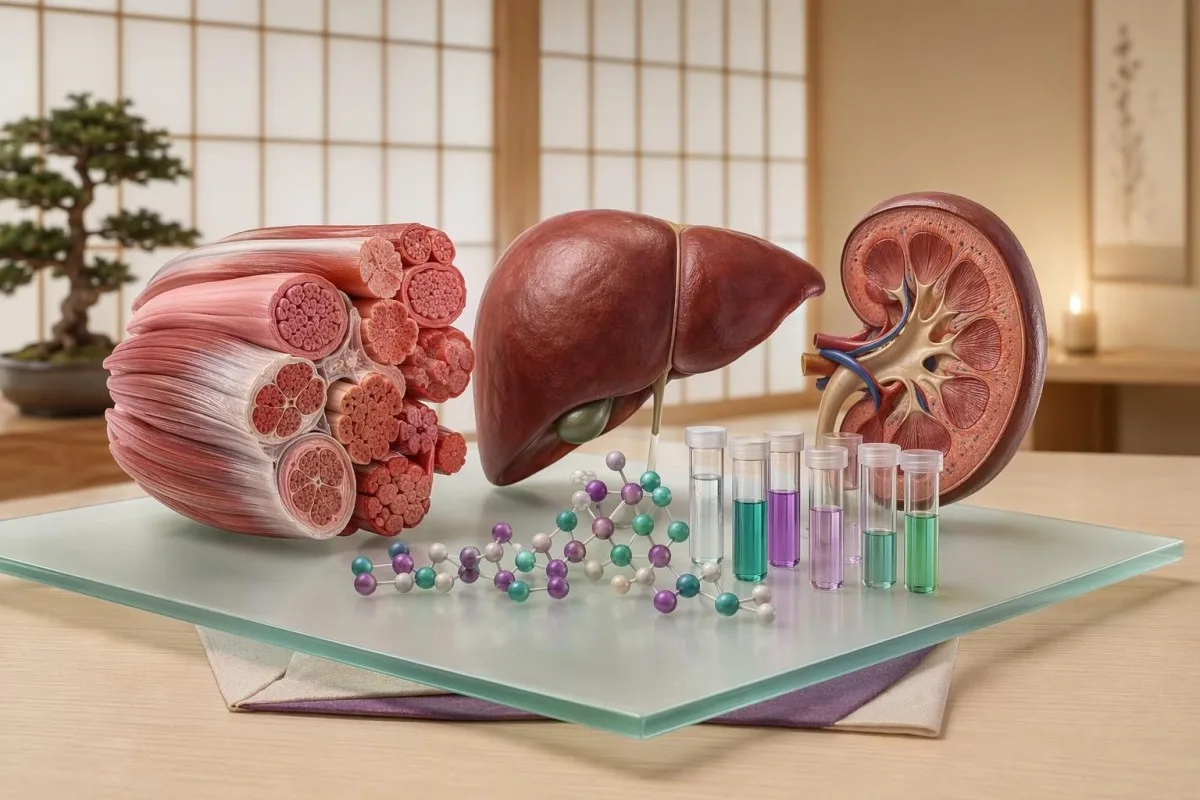
Protein needs are not fixed after adulthood. Muscle loss, dieting, inflammation, surgery, kidney status, and recovery can all change what a routine lab panel seems to be telling you.


- Adult RDA is 0.8 g/kg/day, but this is a minimum for most adults, not a muscle-preserving target.
- Older adults often need 1.0–1.2 g/kg/day, and 1.2–1.5 g/kg/day during illness or rehabilitation.
- Low BUN below about 7 mg/dL can fit low protein intake, but overhydration, pregnancy, and liver disease can look similar.
- Low creatinine below roughly 0.5–0.6 mg/dL often reflects low muscle mass, not excellent kidney function.
- Albumin below 3.5 g/dL is not a simple protein-intake test because CRP-driven inflammation can lower it quickly.
- Total protein below about 6.0 g/dL suggests a protein gap, protein loss, liver synthesis problems, or immune globulin changes.
- Prealbumin below 15–20 mg/dL may support poor recent nutrition in hospital settings, but high CRP can make it misleading.
- Kidney disease changes the protein conversation; people with low eGFR or albuminuria should not raise protein without clinical advice.
Can routine labs show when protein requirements are not being met?
Routine labs cannot diagnose low protein intake by themselves, but they can show a pattern: low BUN, low creatinine for body size, low total protein, falling albumin without a clear inflammatory explanation, and poor recovery markers. In adults, basic protein requirements start around 0.8 g/kg/day; older adults, dieters, and people recovering from illness often need more. Kantesti AI reads these markers together rather than treating one low value as proof.
I see this most often in people who are not obviously undernourished. A 58-year-old patient may have a normal BMI, a BUN of 5 mg/dL, creatinine of 0.52 mg/dL, total protein of 5.8 g/dL, and a history of eating toast, salads, and coffee while trying to lose 8 kg. None of those numbers screams emergency, but together they tell a quieter story.
Low BUN on a routine chemistry panel is one of the most useful early clues, especially when it is repeatedly below 7 mg/dL and kidney function is otherwise normal. Our deeper guide to low BUN patterns explains why a low urea result is often missed when the lab report only flags high values.
Here is the clinical nuance: protein deficiency signs usually appear late. By the time someone has ankle swelling, slow wound healing, frequent infections, or clear muscle wasting, the problem has often been present for weeks to months. Labs help because they show direction before the mirror does.
Protein requirements by age are not the same number for everyone
Protein requirements by age range from about 1.52 g/kg/day in early infancy to 0.8 g/kg/day in healthy adults, with many older adults needing 1.0–1.2 g/kg/day. The Institute of Medicine set the adult RDA at 0.8 g/kg/day in 2005, but that target was designed to prevent deficiency, not necessarily preserve muscle during ageing or illness (Institute of Medicine, 2005).
The usual adult number, 0.8 g/kg/day, equals 56 g/day for a 70 kg adult. A 45 kg older woman at the same RDA needs only 36 g/day on paper, yet in clinic she may lose muscle if that amount is spread poorly or paired with low calories.
For children, we lean on age-specific ranges because growth changes nitrogen balance. When parents send us pediatric reports, we always check whether the lab used child-specific ranges; our pediatric lab range guide shows why adult cutoffs can mislead in growth years.
The PROT-AGE Study Group recommended 1.0–1.2 g/kg/day for healthy adults over 65 and 1.2–1.5 g/kg/day for many older adults with acute or chronic disease (Bauer et al., 2013). That means a 70 kg older adult may need 70–84 g/day when well, and 84–105 g/day during illness or rehabilitation.
Why older adults often need more protein than the adult RDA
Older adults often need more protein because ageing muscle becomes less responsive to small protein doses. This is called anabolic resistance, and it means 15 g at breakfast may not stimulate muscle protein synthesis as reliably as 25–35 g in an older person.
In my practice, the lab clue is often a low creatinine that everyone congratulates. A creatinine of 0.48 mg/dL in an 82-year-old who has lost 6 kg is not necessarily a sign of superb kidneys; it may mean the kidneys have less muscle-derived creatinine to clear.
Low serum creatinine below about 0.5–0.6 mg/dL can suggest low muscle mass, especially in older adults, smaller women, frail patients, and people after prolonged bed rest. We have a separate explainer on low creatinine clues because this pattern is one of the most under-read results on routine panels.
ESPEN experts argued in Clinical Nutrition that older adults should combine adequate protein with resistance activity when possible, because protein without muscle stimulus is less effective (Deutz et al., 2014). The practical clinic version is simple: if walking speed, grip strength, creatinine, and weight are all drifting down, the protein question becomes more urgent.
Dieting and appetite suppression can create a quiet protein gap
Dieting raises protein needs relative to calorie intake because the body is trying to preserve lean tissue while energy is restricted. A person eating 1,200 kcal/day may meet calories poorly and miss protein badly, even when their weight loss looks intentional.
This is the pattern I see with aggressive fasting, post-holiday dieting, and appetite-lowering medication plans. The scale falls, triglycerides may improve, but BUN drops to 4–6 mg/dL, creatinine trends down, and the person feels weaker on stairs.
People using appetite-suppressing medicines need deliberate protein planning because nausea and early fullness often remove the protein portion first. Our guide for GLP-1 lab tracking explains why BUN, creatinine, albumin, electrolytes, and iron markers should be watched together during rapid weight change.
A useful clinical question is not only how much protein you eat in a day, but what happens at breakfast. Many adults tell me they eat 80 g/day, then I discover 55 g arrives at dinner and breakfast is almost protein-free; older muscle usually does not respond as well to that pattern.
Illness changes protein markers, especially albumin
Illness can lower albumin even when protein intake is adequate because inflammation shifts liver protein production away from albumin and toward acute-phase proteins. Albumin below 3.5 g/dL is clinically meaningful, but it is not a clean dietary protein test.
When I review an albumin of 3.2 g/dL, I look immediately at CRP, liver enzymes, urine protein, and fluid status. A CRP of 85 mg/L after pneumonia can pull albumin down even if the patient is eating; the same albumin with CRP under 3 mg/L tells a different story.
CRP above 10 mg/L can make albumin and prealbumin unreliable as pure nutrition markers. Our article on high CRP meaning gives useful context for separating inflammatory signals from dietary ones.
Albumin also falls when protein is lost through the kidneys, gut, or severe skin fluid loss. If swelling appears with low albumin, our low albumin guide is a safer next read than simply adding shakes and hoping the number rises.
Recovery after surgery, injury, or infection raises daily protein needs
Recovery raises daily protein needs because the body is rebuilding tissue, immune proteins, enzymes, and lost muscle. Many adults recovering from surgery, infection, fracture, or hospitalization need around 1.2–1.5 g/kg/day for a limited period, assuming kidney and liver status allow it.
A common example: a 76-year-old after hip surgery eats half portions for 10 days, then arrives with albumin 3.1 g/dL, BUN 6 mg/dL, lymphocytes low-normal, and creatinine down from 0.84 to 0.61 mg/dL. The operation is over, but the metabolic repair bill is still being paid.
Pre-operative and post-operative lab checks can catch risk early, particularly when albumin is below 3.5 g/dL or total protein is below 6.0 g/dL. Our guide to pre-surgery labs covers which abnormalities should be clarified before planned procedures.
The evidence here is not perfectly tidy. Some trials show clear benefit from protein-enriched recovery plans, while others depend heavily on calories, mobility, inflammation, and baseline frailty. Clinically, I worry most when intake is low and the lab trend is moving the wrong way for two tests in a row.
Low BUN plus low creatinine is a muscle-and-intake clue
A repeated pattern of low BUN plus low creatinine often suggests low protein intake, low muscle mass, or both. BUN is commonly 7–20 mg/dL in adult reference ranges, while creatinine often runs about 0.7–1.3 mg/dL in men and 0.5–1.1 mg/dL in women, depending on the lab.
The reason the combination matters is physiology. BUN reflects nitrogen handling from amino acid metabolism, while creatinine reflects muscle creatine turnover; when both are low, the story is less likely to be only hydration.
BUN below 7 mg/dL can fit low protein intake, but it can also occur in pregnancy, severe liver dysfunction, excessive fluid intake, and some SIADH-like dilution states. For readers who want the kidney-versus-diet distinction, our BUN normal range article walks through the high and low ends.
A 52-year-old marathon runner once sent me labs with AST 89 IU/L, creatinine 0.58 mg/dL, and BUN 5 mg/dL after a hard training block and a low-calorie diet. Before panicking about the AST, we had to consider muscle stress, under-fueling, and timing after exercise.
Low total protein is more useful when split into albumin and globulin
Total protein below about 6.0 g/dL can suggest inadequate intake, impaired liver production, kidney or gut protein loss, or low immunoglobulins. It becomes clinically useful only when albumin, globulin, and the albumin-to-globulin ratio are reviewed together.
Albumin is the larger fraction and is commonly reported around 3.5–5.0 g/dL. Globulin is often around 2.0–3.5 g/dL, though ranges differ; a low globulin pattern may point toward immune protein issues rather than simply a small dinner plate.
I use the A/G ratio as a traffic light, not a diagnosis. A low total protein with low albumin and normal globulin feels different from low total protein with low globulin and normal albumin, and our total protein guide shows those splits in more detail.
Some European labs report total protein in g/L rather than g/dL, so 60 g/L equals 6.0 g/dL. Unit confusion is not rare; Kantesti's neural network standardizes units before comparing trends, which prevents a false impression that protein status changed overnight.
Short half-life nutrition markers can help, but CRP changes the answer
Prealbumin, transferrin, and retinol-binding protein can reflect recent nutrition status, but they are strongly affected by inflammation, liver function, kidney status, and fluid shifts. Prealbumin below 15–20 mg/dL supports poor recent intake only when the clinical context fits.
Albumin has a half-life of roughly 20 days, so it is slow to recover after nutrition improves. Prealbumin, also called transthyretin, has a half-life of about 2 days; retinol-binding protein is shorter, around 12 hours, which is why hospitals sometimes use them for trend monitoring.
The trap is that inflammation suppresses these same markers. A prealbumin of 12 mg/dL with CRP 120 mg/L tells me the body is inflamed; a prealbumin of 12 mg/dL with CRP 2 mg/L and low BUN makes inadequate intake more plausible.
Kantesti AI interprets these less-common markers through our biomarker guide logic, looking at chemistry, CBC, CRP, liver enzymes, kidney markers, and unit systems together. That multi-marker context matters more than any single nutrition flag.
CBC, iron, and immune markers can show the cost of too little protein
CBC changes are not specific for protein deficiency, but low intake can worsen anemia recovery, immune cell production, and wound repair. I pay attention when low protein markers appear with low hemoglobin, low lymphocytes, low ferritin, or a rising RDW.
Hemoglobin below about 12 g/dL in many adult women and 13 g/dL in many adult men suggests anemia, but the cause may be iron, B12, folate, inflammation, kidney disease, or mixed undernutrition. Protein is not the first cause I assume, but it can slow the repair process.
When RDW rises before hemoglobin falls, I think about early nutrient mismatch. Our anemia pattern guide is useful because it separates iron deficiency, B12 or folate patterns, inflammation, and recovery reticulocyte changes.
Lymphocytes are another soft clue. A low absolute lymphocyte count below roughly 1.0 x 10^9/L can occur with steroids, viral illness, autoimmune disease, or undernutrition; our CBC differential guide explains why absolute counts matter more than percentages.
Kidney and liver results decide how aggressively protein can be raised
Protein intake should not be increased aggressively when kidney disease, significant albuminuria, advanced liver disease, or uncontrolled metabolic illness is present. eGFR below 60 mL/min/1.73 m² or urine ACR above 30 mg/g changes the risk-benefit conversation.
This is where online advice gets sloppy. A frail 78-year-old with eGFR 82 and low creatinine is different from a 48-year-old with eGFR 43, urine ACR 220 mg/g, and high blood pressure; the protein target should not be copied from one person to the other.
Creatinine-based eGFR can overestimate kidney function when muscle mass is very low. Our guide to eGFR by age explains why cystatin C can be helpful when creatinine and body composition do not match.
For chronic kidney disease, diet advice must include potassium, phosphorus, acid-base status, and albuminuria rather than protein grams alone. Patients with kidney concerns may find our kidney diet guide more practical than generic high-protein meal plans.
Plant-based and low-calorie diets need lab context, not assumptions
Plant-based diets can meet protein requirements, but they require enough total calories, varied protein sources, and attention to iron, B12, zinc, vitamin D, and omega-3 status. The lab risk is not plant foods; it is under-eating plus missing complementary nutrients.
I have seen vegan athletes with beautiful labs and omnivores with clear protein gaps. The useful question is not identity-based; it is whether the diet supplies enough leucine-rich protein across the day and enough energy to spare protein from being burned as fuel.
Routine checks for plant-based eaters often include CBC, ferritin, B12, methylmalonic acid when needed, vitamin D, zinc when clinically relevant, albumin, total protein, and kidney markers. Our vegan lab checklist lays out a sensible yearly framework.
Vegetarians who rely heavily on tea, bread, pasta, and small dairy portions can appear well fed but still miss protein and iron. Before buying random powders, I usually suggest reviewing vegetarian supplement labs so the fix matches the deficiency.
How Kantesti interprets protein-related lab trends
Kantesti AI interprets protein-related labs by comparing BUN, creatinine, eGFR, albumin, total protein, globulin, CRP, CBC indices, and previous results instead of reading one abnormal marker in isolation. This pattern-based approach is useful because inadequate intake, inflammation, kidney loss, liver synthesis, and muscle loss can overlap.
In our analysis of more than 2M blood test reports from 127+ countries, we consistently see the same mistake: a single low albumin is called poor diet, or a low creatinine is called great kidney function. The safer reading asks what changed, how fast, and which nearby markers moved with it.
Our AI blood test platform standardizes units, checks reference ranges, and evaluates trend direction across 15,000+ biomarkers. If BUN falls from 14 to 5 mg/dL over 4 months while creatinine and weight fall too, our AI treats that differently from a one-off low BUN after heavy hydration.
Kantesti's clinical standards are reviewed through our medical validation process, including edge cases where normal ranges can falsely reassure. Dr. Thomas Klein and our medical team focus on these gray-zone patterns because they are exactly where patients get vague answers.
Kantesti research, clinical review, and what to do next
The next step is not to chase a high-protein diet; it is to confirm the pattern, review intake, and recheck the right labs at the right interval. As of May 21, 2026, my usual approach is a 7-day food record, weight and strength trend, CMP, CBC, CRP, urine ACR if albumin is low, and repeat testing in 4–8 weeks when stable.
If swelling, rapid weight loss, persistent diarrhea, jaundice, severe fatigue, or albumin below 3.0 g/dL appears, do not wait for a nutrition experiment. Those patterns need clinician review because protein loss, liver disease, kidney disease, malignancy, or active inflammation can hide behind a simple low-protein explanation.
You can upload a PDF or photo of your results to try Kantesti free and see whether your protein-related markers cluster toward low intake, inflammation, kidney loss, or muscle loss. Our doctors on the medical advisory board help shape how these patterns are presented safely to patients.
Kantesti Ltd is a UK medical AI company; readers who want the organizational background can review about Kantesti. Our research publications include: Kantesti AI Research Group. (2026). Multilingual AI Assisted Clinical Decision Support for Early Hantavirus Triage: Design, Engineering Validation, and Real-World Deployment Across 50,000 Interpreted Blood Test Reports. Figshare. https://doi.org/10.6084/m9.figshare.32230290; and Kantesti AI Research Group. (2026). AI Blood Test Analyzer: 2.5M Tests Analyzed | Global Health Report 2026. Zenodo. https://doi.org/10.5281/zenodo.18175532.
Frequently Asked Questions
How much protein do adults need by age?
Healthy adults need at least 0.8 g/kg/day of protein, which equals about 56 g/day for a 70 kg adult. Many adults over 65 need 1.0–1.2 g/kg/day to preserve muscle, and older adults recovering from illness often need 1.2–1.5 g/kg/day if kidney and liver status allow it. Infants and children have higher per-kg needs because growth increases nitrogen demand.
Can a blood test prove I am not eating enough protein?
No single routine blood test proves low protein intake, but a pattern can strongly suggest it. Repeated low BUN below about 7 mg/dL, low creatinine for body size, total protein below about 6.0 g/dL, and albumin below 3.5 g/dL without high CRP can support concern for inadequate intake. Doctors also look at weight change, muscle strength, swelling, medications, kidney results, liver enzymes, and urine protein.
Does low BUN mean protein deficiency?
Low BUN can suggest low protein intake, especially when it is repeatedly below 7 mg/dL and paired with low muscle markers or weight loss. It can also occur from overhydration, pregnancy, severe liver disease, and some dilutional sodium problems. A low BUN with normal albumin, stable weight, and normal creatinine may be less concerning than a low BUN with falling creatinine and fatigue.
Is low albumin caused by not eating enough protein?
Low albumin can be caused by inadequate protein or calorie intake, but inflammation, kidney protein loss, liver disease, gut protein loss, and fluid overload are often more important. Albumin below 3.5 g/dL should be interpreted with CRP, liver enzymes, urine ACR, total protein, and globulin. When CRP is above 10 mg/L, albumin becomes a poor stand-alone nutrition marker.
Should older adults eat more protein than younger adults?
Many older adults benefit from more protein than the 0.8 g/kg/day adult RDA because ageing muscle has anabolic resistance. Common clinical targets are 1.0–1.2 g/kg/day for healthy adults over 65 and 1.2–1.5 g/kg/day during illness or rehabilitation. People with chronic kidney disease, significant albuminuria, or advanced liver disease should set targets with a clinician.
How quickly do protein-related labs improve after eating better?
BUN may rise within days after protein intake improves, while prealbumin can change over about 2–7 days if inflammation is controlled. Albumin moves slowly because its half-life is roughly 20 days, so it may take weeks to improve. Creatinine can remain low for much longer because rebuilding muscle usually requires months of adequate protein, calories, and resistance activity.
Get AI-Powered Blood Test Analysis Today
Join over 2 million users worldwide who trust Kantesti for instant, accurate lab test analysis. Upload your blood test results and receive comprehensive interpretation of 15,000+ biomarkers in seconds.
📚 Referenced Research Publications
Klein, T., Mitchell, S., & Weber, H. (2026). Multilingual AI Assisted Clinical Decision Support for Early Hantavirus Triage: Design, Engineering Validation, and Real-World Deployment Across 50,000 Interpreted Blood Test Reports. Kantesti AI Medical Research.
Klein, T., Mitchell, S., & Weber, H. (2026). AI Blood Test Analyzer: 2.5M Tests Analyzed | Global Health Report 2026. Kantesti AI Medical Research.
📖 External Medical References
Institute of Medicine (2005). Dietary Reference Intakes for Energy, Carbohydrate, Fiber, Fat, Fatty Acids, Cholesterol, Protein, and Amino Acids. National Academies Press.
⚕️ Medical Disclaimer
This article is for educational purposes only and does not constitute medical advice. Always consult a qualified healthcare provider for diagnosis and treatment decisions.
E-E-A-T Trust Signals
Experience
Physician-led clinical review of lab interpretation workflows.
Expertise
Laboratory medicine focus on how biomarkers behave in clinical context.
Authoritativeness
Written by Dr. Thomas Klein with review by Dr. Sarah Mitchell and Prof. Dr. Hans Weber.
Trustworthiness
Evidence-based interpretation with clear follow-up pathways to reduce alarm.