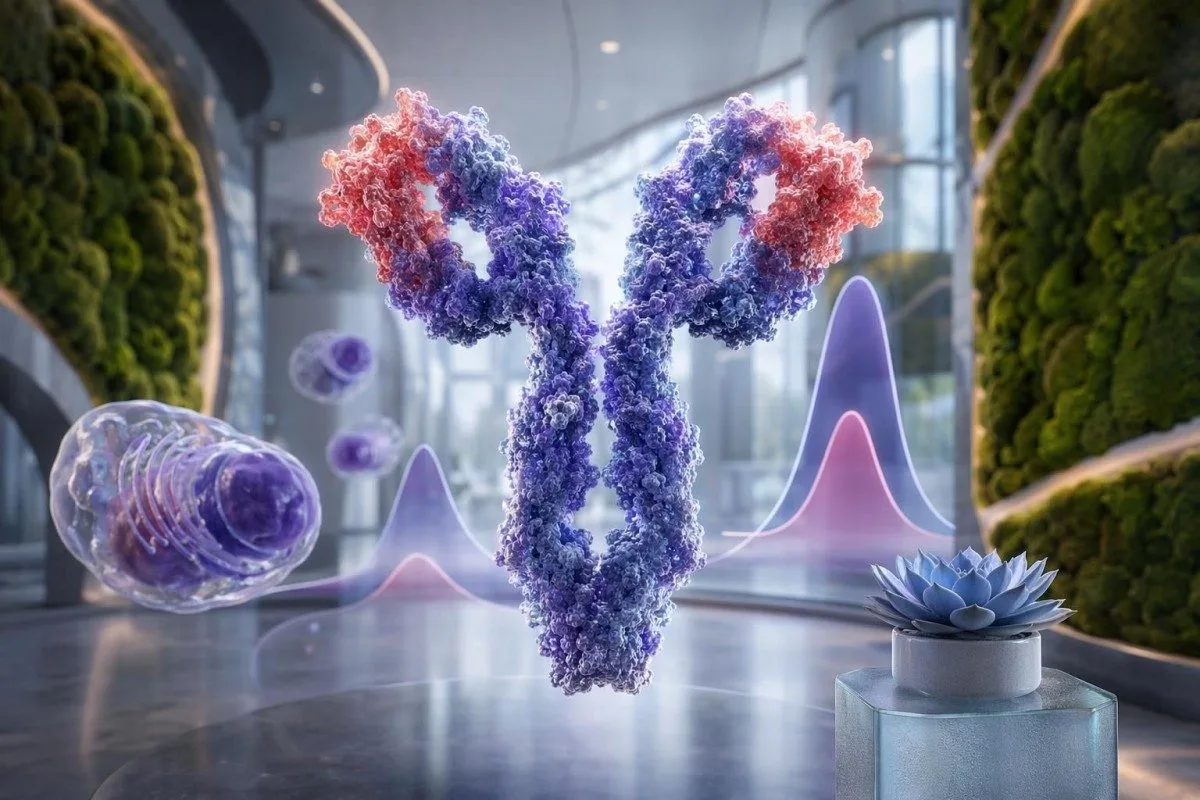
A raised serum IgG is a real immunology marker, not the same thing as food IgG intolerance marketing. Doctors read it alongside globulin, albumin, liver enzymes, inflammation markers and protein electrophoresis.


- High IgG usually means serum immunoglobulin G is above about 1600 mg/dL, or 16 g/L, although each lab range differs.
- Polyclonal IgG points toward broad immune activation from chronic infection, autoimmune disease, liver inflammation or inflammatory disorders.
- Monoclonal IgG is a single antibody clone on SPEP or immunofixation and needs follow-up for MGUS, myeloma or related plasma cell disorders.
- Food IgG panels do not diagnose food intolerance; serum IgG testing is a different medical blood test used in immune and protein evaluation.
- Autoimmune hepatitis often shows high IgG plus elevated ALT and AST, and EASL guidelines treat IgG as a central diagnostic clue.
- Protein gap above roughly 4.0 g/dL can hint at high globulins, but it is not accurate enough to rule in or rule out monoclonal disease.
- Urgent red flags include IgG with anemia, calcium above 11 mg/dL, creatinine above 2 mg/dL, bone pain, recurrent infections or unexplained weight loss.
- Next tests commonly include repeat quantitative immunoglobulins, SPEP, immunofixation, serum free light chains, CBC, CMP, ESR, CRP and infection serology.
High IgG on a blood test: the direct meaning
High IgG means your serum immunoglobulin G is above the laboratory reference range, most often above about 1600 mg/dL, or 16 g/L, in adults. It usually signals ongoing immune stimulation, liver-related inflammation, autoimmune activity, chronic infection, or less commonly a monoclonal antibody clone. As of May 1, 2026, our Kantesti AI blood test analyzer reads IgG only in context, never as a stand-alone diagnosis.
Adult serum IgG is commonly reported around 700-1600 mg/dL, equal to 7-16 g/L, but I have seen European laboratories use lower upper limits near 14.5 g/L. If your result is 1700 mg/dL, that is a mild flag; if it is 3500 mg/dL, the conversation changes. For immune-marker context, our guide to immune system blood tests explains why one immune result rarely tells the whole story.
When I review a high IgG blood test, the first question is not, "how high is it?" The first question is whether the rise is polyclonal or monoclonal, because broad immune activation and a single antibody-producing clone have completely different implications.
Thomas Klein, MD, writing as Kantesti's Chief Medical Officer, usually treats IgG as a pattern marker. An IgG of 1850 mg/dL with normal CBC, normal albumin and normal liver enzymes often leads to a repeat test; the same IgG with ALT 220 IU/L, globulin 4.8 g/dL and fatigue deserves faster medical review.
Serum IgG is not a food intolerance IgG panel
A high serum IgG blood test is a medical immune-protein result; a food IgG panel is a different commercial test that often reflects exposure or tolerance rather than disease. I separate these every week because patients understandably see the same three letters and assume they mean the same thing.
Quantitative serum IgG measures the total amount of immunoglobulin G circulating in the serum, usually in mg/dL or g/L. Food IgG panels measure IgG or IgG4 binding to dozens of foods; high values frequently mean the immune system has seen that food, not that the food is harming you.
This is why a person can have a normal serum IgG of 1100 mg/dL and still receive a long list of "positive" food IgG results. If that happened to you, our separate review of food IgG testing limits is worth reading before you cut out half your diet.
True food allergy is usually investigated through IgE, clinical history, and sometimes supervised challenge testing, not total IgG. In my experience, unnecessary food restriction after IgG panels can cause low ferritin, low B12 or weight loss within 3-6 months, especially in teenagers and endurance athletes.
Polyclonal versus monoclonal IgG: the fork in the road
Polyclonal high IgG means many antibody-producing cell lines are active; monoclonal high IgG means one clone is producing a dominant antibody. This distinction is usually made with serum protein electrophoresis, immunofixation and serum free light chains.
Polyclonal IgG elevation usually creates a broad gamma-region rise on SPEP. Monoclonal IgG usually creates a narrow M-spike, sometimes as small as 0.2 g/dL, and that small spike can matter when paired with abnormal free light chains.
Kantesti AI interprets immunoglobulin G high results by comparing IgG with albumin, globulin, A/G ratio, calcium, creatinine, hemoglobin and liver enzymes. The same lab flag can mean one thing in someone with chronic hepatitis and another in someone with unexplained anemia.
Rajkumar et al. updated the International Myeloma Working Group criteria in The Lancet Oncology in 2014, adding biomarkers such as involved/uninvolved free light chain ratio ≥100 when the involved light chain is ≥100 mg/L (Rajkumar et al., 2014). That is why a doctor may order free light chains even when the IgG result is only moderately high.
Chronic infection patterns that raise IgG
Chronic infections can raise IgG because the immune system keeps producing antibodies over months or years. The pattern is usually polyclonal and becomes more persuasive when ESR, CRP, lymphocytes, liver enzymes or infection-specific serology are abnormal.
Hepatitis B, hepatitis C, HIV, tuberculosis, chronic sinus or lung infection, and endocarditis can all produce elevated IgG causes. A result of 1800-2600 mg/dL is not unusual in sustained antigen exposure, although the number does not tell you which organism is involved.
The trap is antibody timing. A positive IgG antibody to an infection can mean past exposure, vaccine response or chronic infection depending on the test; our article on hepatitis antibody patterns shows why surface antigen, core antibody and viral load change the interpretation.
I see this pattern in patients who feel only vaguely unwell: CRP 12 mg/L, ESR 48 mm/hr, mild anemia, globulin 4.5 g/dL and IgG 2100 mg/dL. In that setting, the clinician is usually not chasing IgG itself; they are looking for the persistent inflammatory driver, and an infection blood test strategy may be more useful than repeating random panels.
Autoimmune disease clues hidden in high IgG
Autoimmune diseases can cause high IgG when B cells are persistently stimulated by self-directed inflammation. The strongest clues come from matching IgG with symptoms, ANA, ENA, dsDNA, complement C3/C4, rheumatoid factor, anti-CCP, ESR and CRP.
Sjögren disease, lupus, rheumatoid arthritis, mixed connective tissue disease and vasculitis can all raise IgG, often into the 1700-3000 mg/dL range. The high number is less specific than patients hope; the accompanying antibody pattern does the real diagnostic work.
A positive ANA at 1:80 with high IgG and no symptoms is not the same as ANA 1:1280, low C3, low C4, urine protein and joint swelling. For a practical map of what these panels include and miss, see our autoimmune panel guide.
One patient I remember had IgG 2460 mg/dL, ESR 72 mm/hr, anti-CCP over 200 U/mL, and only mild morning stiffness because she had normalised the symptoms as "getting older." In rheumatoid patterns, an anti-CCP result can carry more predictive weight than IgG itself.
Liver inflammation: why IgG matters with ALT and AST
High IgG with elevated ALT and AST raises concern for inflammatory liver disease, especially autoimmune hepatitis. In autoimmune hepatitis, IgG above the upper limit of normal is part of the diagnostic scoring system, and values more than 1.1 times the upper limit carry extra weight.
The EASL autoimmune hepatitis guideline describes raised IgG as a characteristic feature, although acute presentations can occasionally have normal IgG (EASL, 2015). A typical clue is IgG 2200 mg/dL with ALT 180 IU/L, AST 140 IU/L, positive smooth muscle antibody or ANA, and exclusion of viral hepatitis.
Not every liver-related IgG rise is autoimmune hepatitis. Chronic hepatitis C, alcohol-associated liver disease, metabolic fatty liver with inflammatory overlap, and cirrhosis can all raise globulins; our liver function test guide helps separate hepatocellular, cholestatic and mixed enzyme patterns.
Clinicians disagree on how aggressively to pursue mild IgG elevation when ALT is only 45-65 IU/L. In my practice, persistence over 3 months, rising bilirubin, low albumin, high INR or platelet decline shifts the case from "watch and repeat" to formal liver workup; the AST ALT ratio is one useful piece of that puzzle.
IgG subclasses and IgG4: when the detail helps
IgG subclass testing splits total IgG into IgG1, IgG2, IgG3 and IgG4, but it is not needed for every high IgG result. Doctors usually order it when recurrent infections, suspected IgG4-related disease or unusual immune patterns make total IgG too blunt.
IgG1 is usually the largest subclass, often around 60-70% of total IgG, while IgG4 is normally a small fraction. Serum IgG4 above 135 mg/dL is often used as a screening clue for IgG4-related disease, but it is not diagnostic by itself.
The 2020 ACR/EULAR classification criteria for IgG4-related disease combine clinical organ findings, serology, imaging and tissue features rather than relying on a single IgG4 cutoff (Wallace et al., 2020). This matters because allergy, infection and autoimmune disease can also raise IgG4 mildly.
In recurrent sinus or chest infections, the issue may be low IgG2 or poor vaccine response despite normal total IgG, not high total IgG. That is one reason Kantesti's neural network flags when a "normal" total immunoglobulin result still deserves context from vaccine antibody titres or specialist immunology review.
Protein gap, globulin and A/G ratio clues
A high IgG often shows up indirectly as high globulin, high total protein or a low albumin-to-globulin ratio before quantitative IgG is ordered. The protein gap is total protein minus albumin, and a gap above roughly 4.0 g/dL often prompts further evaluation.
If total protein is 8.6 g/dL and albumin is 4.0 g/dL, the protein gap is 4.6 g/dL. That gap may come from high immunoglobulins, dehydration, inflammation or a monoclonal protein, so it is a clue rather than an answer.
A normal A/G ratio is often around 1.1-2.2, depending on the lab. When the ratio falls below 1.0, I look at albumin loss, liver synthesis, kidney protein loss and globulin expansion together; our serum proteins guide walks through those moving parts.
Here is the part many online summaries miss: a normal protein gap does not exclude monoclonal gammopathy. A small IgG-kappa M-spike can sit inside a total protein of 7.2 g/dL, which is why symptoms or unexplained anemia may still justify SPEP and immunofixation.
What doctors usually order after elevated IgG
After elevated IgG, doctors usually confirm the result and then look for source, pattern and organ impact. The common next tests are repeat quantitative IgG, IgA, IgM, SPEP, immunofixation, serum free light chains, CBC, CMP, ESR, CRP and targeted infection or autoimmune tests.
A repeat IgG in 6-12 weeks is reasonable when the elevation is mild and the patient is well. If IgG is above 2500-3000 mg/dL, or if hemoglobin, creatinine, calcium or liver enzymes are abnormal, waiting that long may not be sensible.
Kantesti AI maps high IgG to adjacent markers in your uploaded report, including CBC differential, albumin, globulin, calcium, creatinine, ALT, AST and CRP. You can compare how our models are clinically benchmarked in our medical validation materials.
A practical panel often includes CBC with differential, CMP, ESR, CRP, SPEP, immunofixation and serum free light chains. If symptoms point to inflammation, our guide to CRP versus hs-CRP helps because standard CRP and cardiac hs-CRP answer different questions.
Red flags that make high IgG more urgent
High IgG becomes more urgent when it appears with anemia, kidney dysfunction, high calcium, bone pain, recurrent infections, weight loss, night sweats or abnormal protein electrophoresis. These combinations raise concern for plasma cell disorders, lymphoma, active autoimmune disease or serious chronic infection.
A hemoglobin below 10 g/dL, calcium above 11 mg/dL, creatinine above 2 mg/dL, or eGFR below 40 mL/min/1.73 m² changes the risk calculation. These are not subtle wellness flags; they can reflect organ involvement.
Hyperviscosity is uncommon with IgG compared with IgM, but it can occur when immunoglobulin levels become very high, often above 5000-6000 mg/dL depending on antibody type. New severe headache, visual disturbance, confusion or mucosal bleeding with a marked paraprotein needs same-day medical assessment.
If high IgG comes with enlarged lymph nodes, abnormal lymphocytes or unexplained LDH elevation, clinicians may look beyond plasma cells. Our lymphoma blood test guide explains why CBC and LDH can raise suspicion but cannot diagnose lymphoma alone.
Temporary or benign reasons IgG can look high
Mild high IgG can be temporary after recent infection, vaccination, IVIG therapy or a flare of chronic inflammation. The key is whether the result falls back toward baseline over weeks to months and whether other markers remain reassuring.
IgG has a biological half-life of roughly 21-28 days, so it does not bounce overnight. After IVIG, total IgG can remain above range for several weeks, and the exact decline depends on dose, usually 0.4-2 g/kg per course.
Dehydration can concentrate total protein and albumin, making globulin look higher, but it usually does not create a true isolated immunoglobulin surge. If your albumin is 5.2 g/dL and BUN/creatinine ratio is high, our article on dehydration false highs may explain part of the pattern.
The most reassuring pattern is mild IgG elevation, normal SPEP, normal CBC, normal CMP and a falling trend on repeat testing. Even then, I prefer documenting the trend rather than dismissing it; small changes matter less than persistent direction over 2-3 measurements.
Age, pregnancy and medications change interpretation
IgG interpretation changes with age, pregnancy, immune-suppressing drugs and recent antibody therapy. A value that looks mildly high in one person may be expected or misleading in another, especially when albumin and fluid balance are shifting.
Newborn IgG largely reflects maternal transfer, while infants gradually build their own antibody profile during the first 6-12 months. In older adults, the bigger concern is often whether a new monoclonal band has appeared, not whether total IgG is a little above range.
Pregnancy can lower measured serum proteins through hemodilution, so a high-normal IgG with low albumin may still deserve context. When pregnancy-related labs are involved, our prenatal blood tests guide gives a more realistic view of trimester-specific interpretation.
Rituximab and some other B-cell therapies often lower immunoglobulins rather than raise them, and recovery can take 6-12 months or longer. A patient with high IgG despite immune suppression is a different case from someone tested two weeks after a respiratory infection.
MGUS, myeloma and monoclonal IgG risk
Monoclonal IgG can represent MGUS, smouldering myeloma, active myeloma or another plasma cell disorder, but total IgG alone cannot distinguish them. MGUS is usually defined by M-protein below 3 g/dL, bone marrow plasma cells below 10%, and no myeloma-related organ damage.
Classic MGUS progresses to myeloma or a related disorder at about 1% per year on average, but risk varies by M-protein size, immunoglobulin type and free light chain ratio. IgG MGUS is generally lower risk than IgA or IgM MGUS when other factors are equal.
Active myeloma requires clonal plasma cells plus CRAB features or myeloma-defining events, including calcium elevation, renal dysfunction, anemia, bone lesions, clonal plasma cells ≥60%, or free light chain ratio ≥100 with involved light chain ≥100 mg/L (Rajkumar et al., 2014). That is why a normal calcium and creatinine result is reassuring but not the entire evaluation.
Patients sometimes ask whether an IgG of 2200 mg/dL means cancer. Usually, no; many cases are inflammatory or liver-related. But if SPEP shows an IgG-kappa spike and the free light chain ratio is 8.0, a hematologist may monitor every 3-6 months at first.
Why the IgG trend matters more than one result
The trend of IgG over time is often more clinically useful than one isolated number. A stable IgG of 1750 mg/dL for two years with normal supporting labs is different from a rise from 1100 to 2300 mg/dL in four months.
Laboratory variation for quantitative immunoglobulins is commonly around 5-10%, depending on assay and lab. A move from 1600 to 1680 mg/dL may be noise; a move from 1600 to 2400 mg/dL is not usually noise.
Our platform supports trend comparison from PDFs and photos, which helps when results come from different countries and units. If you want to understand how Kantesti's 2.78T AI engine was benchmarked on anonymised blood test cases, see the Kantesti validation benchmark and the linked pre-registered study.
Thomas Klein, MD, often tells patients to bring the old labs, not just the newest abnormal flag. A historical globulin of 3.2 g/dL rising to 4.9 g/dL alongside falling albumin can be more revealing than the IgG number printed in bold.
How Kantesti reads high IgG safely
Kantesti reads high IgG by pattern recognition across the full blood report, not by treating immunoglobulin G as an isolated score. Our AI looks for liver, inflammatory, kidney, protein, CBC and monoclonal-risk signals before suggesting what the result may mean.
Kantesti AI does not diagnose myeloma, autoimmune hepatitis or chronic infection from IgG alone. It can, however, flag combinations such as IgG 2800 mg/dL, low A/G ratio, ALT 190 IU/L, ESR 65 mm/hr or creatinine 1.8 mg/dL that deserve clinician review.
Our medical review process involves physicians and clinical advisors, including the team listed on our Medical Advisory Board. The goal is simple: give patients a clearer interpretation within about 60 seconds while still pointing them back to a doctor when the pattern is high-stakes.
If you are comparing several abnormal proteins, our biomarkers guide can help decode adjacent terms such as albumin, globulin, total protein, A/G ratio and free light chains. That context is where many missed clues live.
What to ask your doctor after high IgG
After a high IgG result, ask whether the pattern looks polyclonal or monoclonal, whether liver or autoimmune markers are abnormal, and whether SPEP with immunofixation is needed. Bring symptoms, medications, recent infections and prior lab results, because those details change the next step.
A useful first question is: "Was my IgG elevation confirmed, and were IgA and IgM measured too?" If only total protein or globulin was high, the next step may be quantitative immunoglobulins rather than repeating the same basic panel.
Ask about organ clues: hemoglobin, creatinine, calcium, albumin, ALT, AST, ALP, bilirubin, ESR and CRP. If you want a plain-language review before the appointment, upload your report to Try Free AI Blood Test Analysis and save the explanation to discuss with your clinician.
Bottom line: high IgG is a clue, not a verdict. Use Kantesti to organise the pattern, but do not ignore persistent values above 2000 mg/dL, a confirmed M-spike, or high IgG with anemia, kidney changes, liver inflammation or systemic symptoms.
Frequently Asked Questions
What does high IgG mean on a blood test?
High IgG on a blood test means serum immunoglobulin G is above the lab reference range, commonly above about 1600 mg/dL or 16 g/L in adults. The most common causes are chronic immune stimulation, autoimmune disease, chronic infection, liver inflammation, or a monoclonal antibody protein. The result is interpreted with albumin, globulin, CBC, liver enzymes, ESR, CRP, SPEP and free light chains. A mild isolated elevation is often repeated, while IgG above 2500-3000 mg/dL or high IgG with anemia, kidney changes or high calcium needs faster review.
Is high IgG the same as a food intolerance IgG result?
High serum IgG is not the same as a food intolerance IgG panel. Serum IgG measures total immunoglobulin G in blood, usually around 700-1600 mg/dL in adults, and helps doctors assess immune activation or protein disorders. Food IgG panels measure antibody binding to foods and often reflect exposure or tolerance rather than disease. A person can have normal serum IgG and many positive food IgG results, so the two tests should not be treated as equivalent.
What level of IgG is concerning?
The level of concern depends on the pattern, but IgG above 2000 mg/dL is usually worth structured review if it persists. IgG above 3000 mg/dL is more concerning, especially if SPEP shows an M-spike or if hemoglobin, creatinine, calcium or liver enzymes are abnormal. Urgent red flags include calcium above 11 mg/dL, creatinine above 2 mg/dL, hemoglobin below 10 g/dL, bone pain, recurrent infections or unexplained weight loss. Mild results around 1600-1800 mg/dL may simply need repeat testing and clinical correlation.
Can liver disease cause high IgG?
Yes, liver disease can cause high IgG, particularly autoimmune hepatitis and chronic inflammatory liver conditions. Autoimmune hepatitis often shows IgG above the upper limit of normal together with elevated ALT and AST, and values above 1.1 times the upper limit are used in diagnostic scoring. Chronic viral hepatitis, cirrhosis and other inflammatory liver diseases can also raise globulins and IgG. Doctors usually interpret IgG with ALT, AST, bilirubin, ALP, albumin, INR and hepatitis serology.
Does high IgG mean cancer or myeloma?
High IgG does not automatically mean cancer or myeloma. Many high IgG results are polyclonal and caused by autoimmune disease, chronic infection or liver inflammation. Concern rises when SPEP or immunofixation shows a monoclonal IgG protein, especially with an abnormal serum free light chain ratio, anemia, kidney dysfunction, high calcium or bone lesions. MGUS is often monitored because average progression risk is about 1% per year, but risk varies by M-protein size, type and light chain ratio.
What tests should follow an elevated IgG result?
Common follow-up tests after elevated IgG include repeat quantitative IgG, IgA and IgM, serum protein electrophoresis, immunofixation, serum free light chains, CBC, CMP, ESR and CRP. If liver enzymes are abnormal, doctors often add hepatitis testing, autoimmune liver antibodies and sometimes imaging. If autoimmune symptoms are present, ANA, ENA, dsDNA, complement C3/C4, rheumatoid factor or anti-CCP may be considered. A repeat interval of 6-12 weeks is common for mild isolated elevation, but abnormal organ markers justify faster evaluation.
Can high IgG go back to normal?
Yes, high IgG can return to normal if it was triggered by a temporary immune stimulus such as recent infection, vaccination or IVIG therapy. IgG has a half-life of roughly 21-28 days, so meaningful improvement may take several weeks rather than days. Persistent elevation over 3 months is more likely to need investigation for autoimmune, liver, chronic infection or monoclonal causes. Tracking IgG with albumin, globulin, CBC, liver enzymes and inflammatory markers is more useful than repeating IgG alone.
Can high IgG itself make me feel unwell?
Usually, no: a raised IgG level is a laboratory clue rather than the direct cause of symptoms. Very high levels from a monoclonal protein can rarely contribute to hyperviscosity; seek urgent care for new confusion, visual changes, severe headache, chest pain, or shortness of breath.
Can a recent vaccine make total IgG look high?
Vaccines are designed to raise specific protective antibodies, but they usually do not raise total serum IgG enough to explain a clearly abnormal result. Tell your doctor if testing was done within a few weeks of vaccination, especially if the elevation is mild.
Can exercise or stress raise IgG on a blood test?
Hard exercise or short-term stress usually does not cause a meaningful, sustained IgG rise by itself. If your result is high, your doctor will look for immune, liver, infection, or monoclonal protein patterns rather than blaming stress alone.
Get AI-Powered Blood Test Analysis Today
Join over 2 million users worldwide who trust Kantesti for instant, accurate lab test analysis. Upload your blood test results and receive comprehensive interpretation of 15,000+ biomarkers in seconds.
📚 Referenced Research Publications
Klein, T., Mitchell, S., & Weber, H. (2026). Women's Health Guide: Ovulation, Menopause & Hormonal Symptoms. Kantesti AI Medical Research.
Klein, T., Mitchell, S., & Weber, H. (2026). Clinical Validation of the Kantesti AI Engine (2.78T) on 100,000 Anonymised Blood Test Cases Across 127 Countries: A Pre-Registered, Rubric-Based, Population-Scale Benchmark Including Hyperdiagnosis Trap Cases — V11 Second Update. Kantesti AI Medical Research.
📖 External Medical References
⚕️ Medical Disclaimer
This article is for educational purposes only and does not constitute medical advice. Always consult a qualified healthcare provider for diagnosis and treatment decisions.
E-E-A-T Trust Signals
Experience
Physician-led clinical review of lab interpretation workflows.
Expertise
Laboratory medicine focus on how biomarkers behave in clinical context.
Authoritativeness
Written by Dr. Thomas Klein with review by Dr. Sarah Mitchell and Prof. Dr. Hans Weber.
Trustworthiness
Evidence-based interpretation with clear follow-up pathways to reduce alarm.