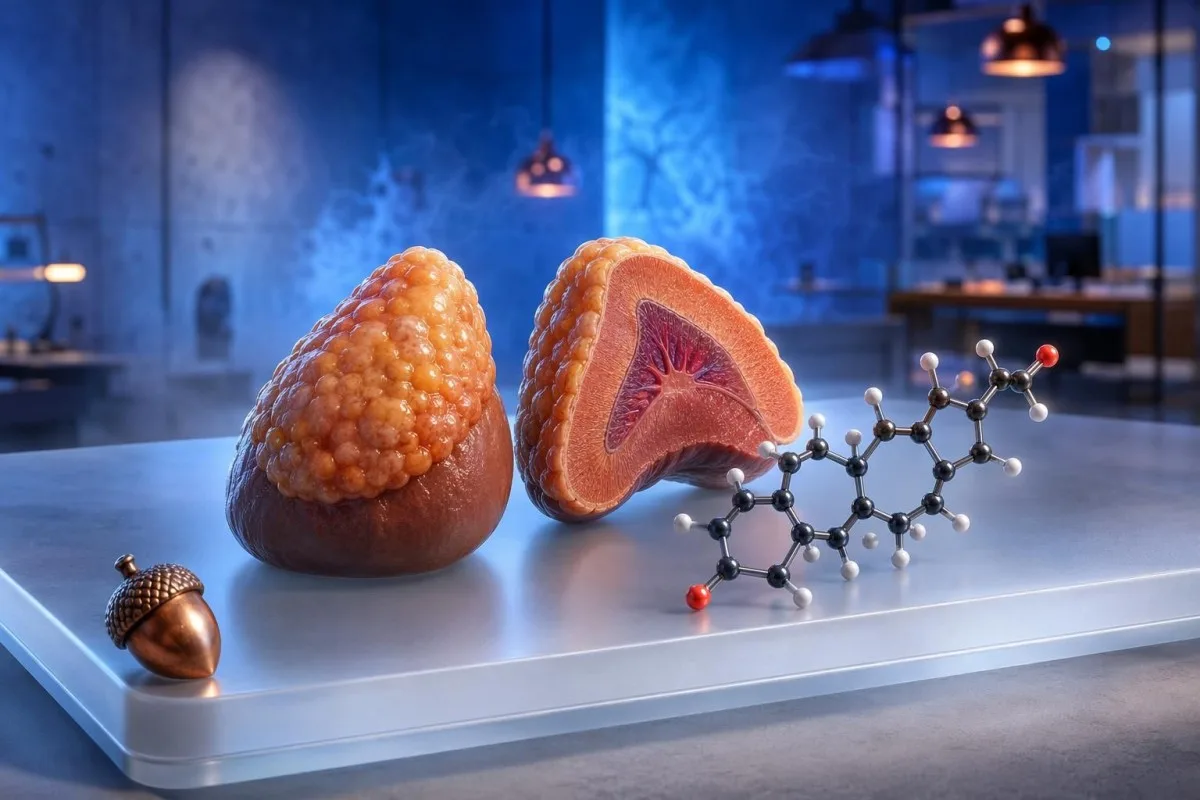
DHEA is an adrenal hormone with a short lifespan in the bloodstream; DHEA-S is its more stable, more commonly tested form. The letters look similar, but the distinction changes how clinicians interpret a result.


- DHEA stands for dehydroepiandrosterone, an adrenal steroid hormone that can be converted into testosterone and oestrogens in body tissues.
- DHEA-S means dehydroepiandrosterone sulfate; it is the stable storage form and is usually the better adrenal-androgen blood test.
- Preferred test is usually DHEA-S because its circulating half-life is about 7 to 10 hours, compared with roughly 15 to 30 minutes for DHEA.
- Age effect is substantial: DHEA-S normally peaks in early adulthood and can fall by 70% to 80% by later life.
- High result above roughly 600 to 700 µg/dL, especially with rapidly developing androgenic symptoms, needs timely adrenal assessment.
- Low result alone does not diagnose adrenal insufficiency; clinicians interpret it with 8 a.m. cortisol, ACTH, symptoms, and sometimes a stimulation test.
- Supplements can raise DHEA-S and testosterone or oestradiol, so report every product and dose before testing.
- Lab context matters because age-, sex-, assay-, and laboratory-specific reference intervals differ markedly.
DHEA full name: the direct answer behind the acronym
DHEA stands for dehydroepiandrosterone, a steroid hormone made chiefly by the adrenal glands. DHEA-S means dehydroepiandrosterone sulfate, a chemically sulfated, longer-lasting version that laboratories usually measure when investigating adrenal androgen production.
The practical distinction is simple: DHEA is the active precursor with a blood half-life of roughly 15 to 30 minutes, while DHEA-S circulates for about 7 to 10 hours. That stability makes a single DHEA-S measurement more representative of average adrenal output than a single DHEA value. Our biomarker reference guide helps place hormone names beside their units and laboratory intervals.
About 90% to 95% of circulating DHEA-S in adults comes from the adrenal cortex, particularly its zona reticularis. Smaller amounts arise from gonadal tissues, and peripheral tissues can convert DHEA into testosterone, dihydrotestosterone, or oestrogens depending on the enzymes present.
Kantesti is an AI blood test analyzer that reads DHEA-S alongside age, recorded sex, testosterone, cortisol, and the laboratory’s own reference interval rather than treating an H or L flag as a diagnosis. That approach matters because a result of 250 µg/dL can be unremarkable at age 25 and unexpectedly high at age 75.
DHEA vs DHEA-S: why one extra letter matters
DHEA-S is DHEA with a sulfate group attached, which makes it far more abundant and less variable in circulation. Most routine adrenal-androgen panels therefore order DHEA-S rather than unconjugated DHEA.
DHEA-S concentrations are commonly reported in µg/dL or µmol/L; 1 µg/dL is approximately 0.0271 µmol/L. A laboratory may measure DHEA in ng/dL, which is one reason patients sometimes think two very different-looking numbers are contradictory when they are not.
The sulfate group is added largely in the adrenal gland by the enzyme SULT2A1 and can later be removed in tissues by steroid sulfatase. In plain language, DHEA-S functions as a circulating reserve that tissues may draw on, whereas DHEA is more of a short-lived intermediary.
When I review a hormone panel, I do not assume that a normal DHEA-S rules out every androgen issue. Ovarian androgen production, medication exposure, and assay limitations can still produce symptoms with a DHEA-S result inside range.
Where DHEA comes from and what it does in the body
The adrenal glands produce most DHEA and DHEA-S from cholesterol through pregnenolone and 17-hydroxypregnenolone. These hormones act mainly as precursors; their downstream effect depends on which tissues convert them and which receptors are active.
DHEA production rises during adrenarche, usually between ages 6 and 8, before pubertal gonadal maturation is complete. This is why a mildly increased DHEA-S in a child with early body odour or pubic hair deserves paediatric endocrine context, not an adult reference range.
DHEA itself does not work like a replacement dose of testosterone or oestradiol. It is converted variably in skin, fat, bone, brain, and reproductive tissues, so 25 mg of an over-the-counter product can produce different testosterone and oestradiol changes in different people.
Dr. Thomas Klein’s clinical rule is to read adrenal androgens with the stress axis, not separately: a low morning cortisol plus low DHEA-S is more informative than low DHEA-S alone. For that paired logic, see our guide to cortisol and ACTH patterns. The Endocrine Society guideline by Bornstein et al. (2016) similarly bases adrenal-insufficiency evaluation on cortisol dynamics and ACTH testing, not DHEA-S in isolation.
How DHEA-S changes from childhood to older age
DHEA-S normally rises in childhood, peaks in the late teens or twenties, then declines steadily with age. A 70% to 80% decline between peak adulthood and older age can be physiological rather than evidence of an adrenal disorder.
Reference intervals are unusually age-sensitive. One large United States laboratory, for example, lists adult female DHEA-S intervals of 83 to 377 µg/dL at ages 18 to 30 and 5.3 to 124 µg/dL at age 71 or older; local intervals can differ, so the report’s range wins.
Men generally have higher DHEA-S values than women at younger ages, but overlap is wide and narrows later in life. A change of 40 µg/dL may be meaningless at age 22 yet a substantial proportion of the upper reference limit at age 72.
A menopause-related fall in DHEA-S does not prove that low DHEA causes fatigue, reduced libido, or low mood. These symptoms have broad causes, including thyroid dysfunction, anaemia, sleep loss, medication effects, and changing oestradiol; our overview of testosterone ranges in women explains why one hormone rarely settles the question.
Why clinicians order a DHEA hormone test
Clinicians order DHEA-S mainly to locate a possible source of excess androgen or to add context to suspected adrenal insufficiency. It is not a standard screening test for tiredness, ageing, or general wellness in otherwise well adults.
For new coarse facial hair, severe acne, scalp hair thinning, irregular periods, or virilisation, DHEA-S helps distinguish an adrenal contribution from an ovarian one. DHEA-S above approximately 600 to 700 µg/dL, depending on the assay and age, raises concern for an adrenal androgen-secreting source and usually prompts targeted endocrine evaluation.
A high result is not automatically a tumour. Polycystic ovary syndrome can cause mild to moderate DHEA-S elevation, and anticonvulsants, nicotine exposure, and DHEA products can shift results; rapid voice deepening, increased muscle mass, or symptoms progressing over months are the features that make me move faster.
Kantesti AI is an AI blood test interpretation platform that can identify a DHEA-S result as part of an androgen cluster, especially when testosterone or 17-hydroxyprogesterone is also abnormal. Patients with clearly high results should also review our clinical guide to high testosterone in men, but laboratory interpretation never replaces an endocrine examination.
What a high DHEA-S result can mean
High DHEA-S most often reflects increased adrenal androgen production, supplement use, or a laboratory-context issue. The urgency depends on the degree of elevation, age, symptoms, and whether testosterone or cortisol is also abnormal.
In women, mild DHEA-S elevation can occur with PCOS, particularly alongside irregular cycles, acne, or insulin resistance. PCOS is a diagnosis of a pattern after excluding alternatives; an isolated DHEA-S of 420 µg/dL does not establish it, particularly when the laboratory upper limit is 430 µg/dL.
Values more than twice the laboratory upper limit deserve a more deliberate review of medications, supplements, onset of symptoms, total testosterone, androstenedione, and sometimes 17-hydroxyprogesterone. In my experience, the history often changes the interpretation: a 38-year-old taking 50 mg DHEA daily can have an abnormal panel that normalises after a clinician-supervised washout.
DHEA-S is usually normal or only modestly elevated in PCOS, while very high levels are less typical and point attention toward the adrenal glands. Our explanation of high free testosterone in women shows why SHBG and assay method can alter the apparent severity of androgen excess.
What a low DHEA-S result can and cannot tell you
Low DHEA-S commonly reflects normal ageing and does not by itself diagnose adrenal insufficiency. A low result becomes more meaningful when it accompanies low 8 a.m. cortisol, high ACTH, weight loss, salt craving, low sodium, or skin darkening.
Primary adrenal insufficiency can lower DHEA-S because damage to the adrenal cortex affects both cortisol and adrenal-androgen production. Yet no single DHEA-S cutoff can confirm the diagnosis; a cosyntropin stimulation test is often needed when morning cortisol results are indeterminate.
In adults over 65, a low DHEA-S may simply fall inside the expected age-adjusted interval. Conversely, an unexpectedly low result in a younger adult using long-term oral glucocorticoids may reflect suppression of the hypothalamic-pituitary-adrenal axis rather than permanent adrenal disease.
Symptoms that warrant prompt care include vomiting, marked dizziness on standing, confusion, severe weakness, or low blood pressure, particularly in someone who has recently stopped steroid medication. Read our guide to Addison disease clues for the sodium, ACTH, and cortisol pattern that carries more weight than DHEA-S alone.
Symptoms linked to DHEA are real but nonspecific
DHEA-related symptoms are nonspecific, so clinicians use the test to explain a pattern rather than to label fatigue or libido changes as a hormone deficiency. Acne, excess terminal hair, irregular periods, and scalp hair loss can fit androgen excess; none is unique to DHEA-S.
An elevated DHEA-S can contribute to androgenic skin changes because skin follicles convert adrenal precursors into more potent androgens locally. The same DHEA-S concentration may cause noticeable acne in one person and no visible change in another because receptor sensitivity and enzyme activity differ.
Low energy is a particularly unreliable reason to self-diagnose low DHEA. A basic evaluation often yields more actionable findings: haemoglobin, ferritin, TSH, glucose, sleep pattern, medication review, and depression screening may each matter more than an age-appropriate low DHEA-S.
If central weight gain, easy bruising, proximal muscle weakness, and new high blood pressure occur with androgen changes, clinicians may also assess cortisol excess. The diagnostic approach in our article on high cortisol causes explains why a random cortisol is usually not a useful screening answer.
How to prepare for a DHEA-S blood test
Most DHEA-S tests do not require fasting, but supplements and timing details can materially change interpretation. Morning collection is often preferred when DHEA or cortisol is drawn alongside DHEA-S, even though DHEA-S itself has less day-to-day variation.
Tell the ordering clinician about DHEA, pregnenolone, testosterone, anabolic products, hormonal contraception, corticosteroids, and anti-seizure medicines. Do not stop prescribed treatment on your own; instead, ask whether a pause is medically safe and how long it should be before sampling.
Biotin can interfere with some hormone immunoassays, although the direction and extent depend on the platform. For high-dose biotin products, many laboratories advise stopping for at least 48 hours, while doses of 5 to 10 mg daily may require longer discussion with the laboratory or clinician.
Document exercise, acute illness, sleep disruption, and the exact supplement dose for the preceding 7 days. If testosterone is also being tested, our testosterone test preparation guide explains why a morning sample after an ordinary night of sleep is more comparable over time.
DHEA supplements: what the evidence supports and what it does not
DHEA supplements are not proven anti-ageing therapy, and they can raise androgen and oestrogen exposure. Typical retail doses range from 10 to 50 mg daily, but blood-level responses vary enough that unsupervised dosing is a poor substitute for clinical evaluation.
For primary adrenal insufficiency, some clinicians consider a carefully monitored 25 to 50 mg daily trial in selected women with persistent impaired quality of life despite optimised replacement therapy. The benefit is modest and inconsistent; acne, oily skin, facial hair growth, and hair loss are common reasons to stop.
The Endocrine Society guideline by Wierman et al. (2014) recommends against routine DHEA use for women with normal adrenal function because evidence for sexual function, cognition, bone, and general wellbeing is limited. I agree with that cautious stance in day-to-day practice, particularly for patients with acne, PCOS, liver disease, or hormone-sensitive cancer history.
Kantesti is an AI lab test interpretation service that flags declared DHEA supplementation as a possible explanation for altered DHEA-S, testosterone, and oestradiol values. Before buying products marketed for adrenal fatigue, consider our evidence-based review of adrenal fatigue supplements; the term itself is not a recognised diagnosis.
DHEA-S in irregular periods, acne, and fertility workups
DHEA-S is useful in an irregular-period or acne workup when clinicians need to assess whether adrenal androgen excess is contributing. It does not measure fertility directly, predict egg quality, or diagnose PCOS without clinical criteria.
A common initial panel for new androgenic symptoms includes total testosterone, SHBG or calculated free testosterone, DHEA-S, prolactin, TSH, and pregnancy testing where relevant. Depending on the symptoms, 17-hydroxyprogesterone should be collected in the early morning, often during the follicular phase, to screen for non-classic congenital adrenal hyperplasia.
DHEA supplementation before fertility treatment is controversial. Small studies have explored 75 mg daily in diminished ovarian reserve, but study populations, treatment protocols, and outcomes are inconsistent; it should be managed by a reproductive endocrinology team, not added independently.
Timing still matters for companion hormones even though DHEA-S is relatively stable. Our guide to blood tests for irregular periods maps which tests are most useful early in the cycle and which need separate timing.
DHEA-S reference ranges: age, sex, units, and assay method
There is no single normal DHEA-S range for all adults because values vary strongly by age, sex, laboratory platform, and units. Always use the reference interval printed beside your own result before comparing it with an online chart.
As an illustration rather than a universal standard, female DHEA-S intervals at some laboratories fall from about 83 to 377 µg/dL at ages 18 to 30 to about 16 to 195 µg/dL at ages 51 to 60. Male intervals are generally higher in early adulthood, but laboratory methods and population selection create substantial variation.
Immunoassays are convenient but can show cross-reactivity and calibration differences at low concentrations. Liquid chromatography-tandem mass spectrometry can improve steroid specificity in selected situations, although it is not automatically required for every DHEA-S result.
Kantesti’s neural network preserves the original unit, collection date, and laboratory interval before comparing a result with previous tests. Sex-specific reference intervals are not cosmetic details; see why in our guide to male and female lab ranges.
How clinicians read DHEA-S with other hormone results
DHEA-S becomes clinically useful when paired with testosterone, cortisol, ACTH, 17-hydroxyprogesterone, and the symptom timeline. A single borderline result should usually be confirmed or contextualised before imaging or treatment is considered.
High DHEA-S plus high testosterone and rapidly progressive virilisation increases concern for clinically significant androgen excess. High DHEA-S with normal testosterone and stable, mild acne is more often approached with repeat testing, medication review, and targeted outpatient assessment.
Low DHEA-S plus low morning cortisol and high ACTH supports primary adrenal failure more than any of those values alone. Low DHEA-S plus low or inappropriately normal ACTH can suggest central suppression, but dynamic testing and clinical history remain decisive.
Kantesti AI can arrange dated values into a trend, which is often more revealing than a one-off flag after starting or stopping a supplement. Before relying on automated interpretation, use our AI report accuracy checklist to verify the OCR-captured unit, decimal point, assay date, and reference range.
What to do after receiving a DHEA or DHEA-S result
The next step after a DHEA-S result is usually to verify the range, list supplements and medicines, and decide whether the value fits symptoms or other hormones. Urgent assessment is appropriate for rapidly developing virilisation, severe weakness with vomiting or fainting, or suspected adrenal crisis.
For a mildly abnormal result without red-flag symptoms, clinicians commonly repeat the test under comparable conditions within 4 to 12 weeks. Repeating sooner makes sense if a result is very high, symptoms are changing quickly, or the original sample followed a recent supplement change or acute illness.
Bring a medication list, photographs of supplement labels, the first day of your last menstrual period if relevant, and prior hormone reports to the appointment. A good question is not simply “Is my DHEA-S high?” but “Is this level high for my age and assay, and does the pattern point to adrenal, ovarian, medication, or benign variation?”
As of July 19, 2026, Kantesti supports contextual review of uploaded laboratory reports across 75+ languages, but it does not diagnose adrenal disease or replace a clinician who can examine you. Our technology and methodology guide explains how result extraction and context checks work, while our medical validation framework describes the clinical safeguards behind them. Dr. Thomas Klein and the Medical Advisory Board recommend prompt in-person assessment for the red flags above.
Frequently Asked Questions
What does DHEA stand for on a blood test?
DHEA stands for dehydroepiandrosterone, a steroid hormone produced mainly by the adrenal glands. It can be converted in body tissues into testosterone and oestrogens, but a DHEA result itself is not a direct testosterone or oestrogen measurement. Unconjugated DHEA has a short circulating half-life of about 15 to 30 minutes, so clinicians often prefer DHEA-S for a steadier view of adrenal androgen production.
What is the difference between DHEA and DHEA-S?
DHEA-S is dehydroepiandrosterone sulfate, the sulfated and more stable form of DHEA. DHEA-S typically remains in circulation for about 7 to 10 hours, whereas DHEA may vary over 15 to 30 minutes. For that reason, DHEA-S is the common test for suspected adrenal androgen excess, while DHEA may be used in selected specialist evaluations.
What is a normal DHEA-S level?
A normal DHEA-S level depends on age, sex, laboratory method, and unit, so the interval printed on the report is the correct comparator. As an example, some laboratories use approximately 83 to 377 µg/dL for women aged 18 to 30 and 16 to 195 µg/dL for women aged 51 to 60. A value outside range is not a diagnosis because supplements, medicines, PCOS, adrenal conditions, and assay differences can all affect it.
What DHEA-S level is considered high?
A DHEA-S level above the laboratory upper limit is high, but a value around 600 to 700 µg/dL or higher is more concerning for substantial adrenal androgen excess in many adult testing contexts. The exact threshold varies by laboratory and is less meaningful without age and symptoms. Rapidly worsening facial hair, acne, voice changes, scalp hair loss, or high testosterone should prompt timely endocrine assessment even if the result is below a generic online cutoff.
Can low DHEA-S cause fatigue?
Low DHEA-S may coexist with fatigue, but it does not prove that DHEA deficiency is the cause. DHEA-S falls by roughly 70% to 80% from young-adult peak levels to older age, so a low value can be normal for age. Clinicians investigate fatigue with symptoms, sleep, medicines, haemoglobin, ferritin, thyroid tests, glucose, and sometimes 8 a.m. cortisol and ACTH rather than treating DHEA-S alone.
Should I take DHEA if my DHEA-S is low?
Most people should not start DHEA solely because DHEA-S is low, especially when the result is age-appropriate. Retail doses of 10 to 50 mg can increase acne, facial hair, scalp hair loss, testosterone, and oestrogen exposure, and the response is unpredictable. Endocrine Society guidance recommends against routine DHEA use in women with normal adrenal function; any trial for confirmed adrenal insufficiency should be clinician-supervised, often at 25 to 50 mg daily.
Can birth control pills affect a DHEA-S blood test?
Yes. Estrogen-containing birth control can lower measured DHEA-S and alter other hormone results, so clinicians need to know what you use. Do not stop contraception solely for testing unless your clinician specifically asks, because the best timing depends on the question being evaluated.
Get AI-Powered Blood Test Analysis Today
Join over 2 million users worldwide who trust Kantesti for instant, accurate lab test analysis. Upload your blood test results and receive comprehensive interpretation of 15,000+ biomarkers in seconds.
📚 Referenced Research Publications
Klein, T., Mitchell, S., & Weber, H. (2026). BUN/Creatinine Ratio Explained: Kidney Function Test Guide. Kantesti AI Medical Research.
Klein, T., Mitchell, S., & Weber, H. (2026). Urobilinogen in Urine Test: Complete Urinalysis Guide 2026. Kantesti AI Medical Research.
📖 External Medical References
⚕️ Medical Disclaimer
This article is for educational purposes only and does not constitute medical advice. Always consult a qualified healthcare provider for diagnosis and treatment decisions.
E-E-A-T Trust Signals
Experience
Physician-led clinical review of lab interpretation workflows.
Expertise
Laboratory medicine focus on how biomarkers behave in clinical context.
Authoritativeness
Written by Dr. Thomas Klein with review by Dr. Sarah Mitchell and Prof. Dr. Hans Weber.
Trustworthiness
Evidence-based interpretation with clear follow-up pathways to reduce alarm.