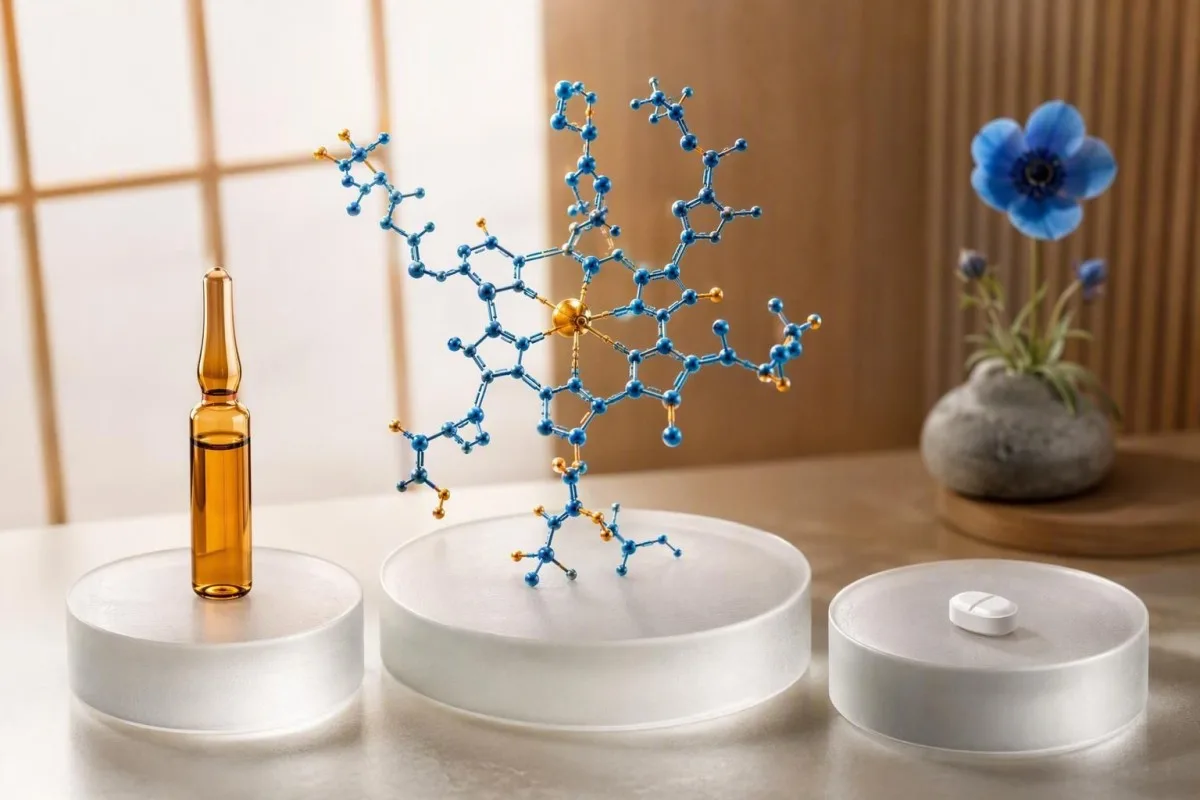
Ін'єкції забезпечують негайний пік у сироватці крові, але високі дози вітаміну B12 перорально часто так само ефективно коригують дефіцит протягом тижнів. Вирішальним фактором зазвичай є причина та тяжкість дефіциту, а не лише вподобання.


- Найшвидший підйом у сироватці крові: Внутрішньом'язова ін'єкція B12 у дозі 1000 мікрограмів підвищує рівень B12 у крові протягом годин, тоді як таблетки підвищують його поступово протягом днів.
- Порівнянне заміщення: Пероральний ціанокобаламін у дозі 1000-2000 мікрограмів щодня може досягти подібних короткострокових результатів у крові та симптомах, як і внутрішньом'язова терапія для багатьох дорослих.
- Показання до ін'єкцій: Важкі неврологічні симптоми, виражена анемія, неможливість приймати таблетки або ненадійне всмоктування зазвичай виправдовують ін'єкції під наглядом лікаря.
- Граничний результат: Рівень B12 у сироватці крові нижче 180 pg/mL (133 pmol/L) зазвичай вважається дефіцитним; 180-350 pg/mL часто потребує підтвердження за допомогою ММА або гомоцистеїну.
- Пасивне всмоктування: Приблизно 1% великої дози B12 перорально всмоктується шляхом пасивної дифузії, тому таблетка 1000 мікрограмів може діяти, незважаючи на порушення внутрішнього фактора.
- Коли повторно перевіряти: Загальний аналіз крові (ЗАК) та клінічна відповідь зазвичай є більш інформативними через 4-8 тижнів, ніж рівень B12, визначений одразу після лікування.
- Аспект безпеки: Не лікуйте нез'ясовне оніміння лише фолієвою кислотою; фолати можуть покращити анемію, тоді як пошкодження нервів, пов'язане з B12, прогресує.
- Причина має значення: Метформін, інгібітори протонної помпи, веганська дієта, целіакія, хірургічні втручання на шлунку та перніціозна анемія потребують різних планів подальшого спостереження.
Який варіант швидше підвищує рівень вітаміну B12?
Ін'єкції B12 швидше підвищують виміряний рівень у сироватці, ніж таблетки, часто протягом кількох годин, оскільки вони оминають кишечник. Для більшості стабільних дорослих із підтвердженим дефіцитом, однак, щоденна пероральна доза 1000-2000 мікрограмів може поповнити запаси організму та покращити показники крові протягом тижнів із клінічно подібною швидкістю.
Ін'єкція створює різкий ранній пік, оскільки гідроксокобаламін або ціанокобаламін доставляються безпосередньо в м'яз, а потім у кровообіг. Цей лабораторний пік не те саме, що відновлені тканинні запаси або відновлена функція нервів; на моїй практиці відновлення симптомів вимірюється тижнями або місяцями, а не наступним ранком.
Практичне порівняння часто таке: години проти днів для концентрації в сироватці, але приблизно 4-8 тижнів для значущої гематологічної відповіді при будь-якому адекватному шляху введення. Ретікулоцити зазвичай підвищуються на 3-5 день, гемоглобін починає покращуватися приблизно через 1-2 тижні, а макроцитоз може нормалізуватися до 8 тижнів.
Кантесті – це Аналізатор крові зі штучним інтелектом що ставить B12 поруч із MCV, гемоглобіном, фолатом, креатиніном та попередніми результатами, а не розглядає пост-лікувальний сплеск B12 як доказ того, що основна проблема вирішена. Читачі також можуть порівняти свій результат з нашими Посібником з референтних діапазонів B12.
Що насправді означає “швидше”
Високий результат після ін'єкції підтверджує нещодавній вплив, а не обов'язково адекватну доставку до клітин. Метилмалонова кислота, неврологічні дані та динаміка ЗАК є більш інформативними, коли початковий діагноз був невизначеним.
Як відбувається всмоктування B12 перорально при низькому внутрішньому факторі
Високі дози перорального B12 можуть діяти навіть при порушенні всмоктування внутрішнього фактора, оскільки невелика частина надходить шляхом пасивної дифузії. Приблизно 1% від 1000 мікрограмів дози може бути абсорбовано пасивно, що дає близько 10 мікрограмів — значно вище середньої добової потреби 2,4 мікрограмів для дорослих.
Нормальний зв'язаний з їжею B12 повинен бути вивільнений шлунковою кислотою, зв'язатися з внутрішнім фактором і поглинутися в термінальному відділі клубової кишки. Ця багатоступенева система пояснює, чому тривале пригнічення кислотності, аутоімунний гастрит, захворювання клубової кишки та баріатричні процедури можуть спричинити дефіцит; це також пояснює, чому стандартний полівітамін часто має занадто низьку дозу для лікування.
Всмоктування перорального B12 залежить від дози, але не є лінійним. Шлях внутрішнього фактора насичується приблизно при 1,5-2 мікрограмах на прийом їжі, тоді як пасивна дифузія стає клінічно корисною лише при таблетках міліграммового діапазону. Добавка 50 мікрограмів є розумною профілактикою для деяких людей, але вона не еквівалентна 1000 мікрограмів при встановленому дефіциті.
Для пацієнтів, які приймають омепразол, пантопразол або інший ІПП, я перевіряю ширшу картину — дієту, вік, анемію та тривалість прийому — а не вважаю, що препарат є єдиною причиною. Наш огляд довгострокового лабораторного моніторингу ІПП пояснює, чому магній та залізо також можуть мати значення.
Що показують клінічні випробування щодо таблеток порівняно з ін'єкціями
Рандомізовані докази свідчать, що пероральний прийом вітаміну B12 у дозі 1000-2000 мікрограмів на день може бути таким же ефективним, як і внутрішньом'язовий вітамін B12 для багатьох людей із дефіцитом. Доказова база не є великою, і вона містить менше пацієнтів із важкими неврологічними захворюваннями, ніж хотілося б клініцистам.
Огляд Cochrane, проведений Вангом та колегами, виявив, що високі дози перорального вітаміну B12 спричинили подібні реакції рівня вітаміну B12 у крові до внутрішньом'язового лікування у невеликих доступних рандомізованих дослідженнях (Wang et al., 2018). В одному дослідженні використовувалося 2000 мікрограмів перорально щодня; в іншому – 1000 мікрограмів перорально після початкового режиму, тому “пероральна терапія” не означає низькодозовий продукт із супермаркету.
Раніше проведене дослідження Kuzminski et al. повідомило про вищі концентрації вітаміну B12 у сироватці крові при прийомі 2000 мікрограмів перорального ціанокобаламіну порівняно з режимом ін'єкцій 1000 мікрограмів, але клінічні результати були питанням, яке мало значення (Kuzminski et al., 1998). Докази чесно змішані щодо ідеального протоколу, оскільки дослідження використовували різні інтервали ін'єкцій та періоди спостереження.
Таблетка працює лише тоді, коли її приймають. Пропущені щоденні дози можуть зробити ін'єкцію, введену кожні 2-3 місяці, більш надійною в реальному житті, особливо для слабких дорослих або людей зі складними графіками прийому ліків. Наша посібник з хронології аналізів крові може допомогти відрізнити справжню зміну лікування від невдалого повторного тестування.
Коли ін'єкції B12 є медично необхідними
Ін'єкції вітаміну B12 зазвичай медично необхідні, коли дефіцит є серйозним, присутні неврологічні симптоми, пероральне споживання неможливе, або не можна покладатися на всмоктування та дотримання режиму. Вони не є автоматично обов'язковими просто тому, що є підозра на перніціозну анемію, за умови, що висока доза перорального лікування та спостереження є здійсненними.
Термінова оцінка лікарем доцільна при новій невпевненості ходи, прогресуючому онімінні, слабкості, сплутаності свідомості, зміні зору, вираженій анемії або вагітності зі значним дефіцитом. Неврологічне пошкодження вітаміну B12 може стати частково незворотним; в такому випадку я б не відкладав парентеральну терапію, обговорюючи зручність.
Керівництво NICE NG239 рекомендує внутрішньом'язове лікування при підозрі або підтвердженні мальабсорбції та рекомендує довічне внутрішньом'язове заміщення при аутоімунному гастриті у багатьох випадках (NICE, 2024). Практика варіюється на міжнародному рівні: деякі лікарі використовують перорально 1-2 мг на день у надійних пацієнтів з перніціозною анемією, тоді як інші віддають перевагу ін'єкціям, оскільки наслідки пропуску вищі.
Гемоглобін нижче 80 г/л, симптоматична задишка, тахікардія або можливе ураження спинного мозку вимагають негайного медичного огляду, а не самолікування. Щоб зрозуміти, як патерни анемії відображаються на звичайному тестуванні, дивіться що включає повний аналіз крові.
Дози лікування B12, які фактично використовують клініцисти
Звичайні дози перорального лікування становлять 1000-2000 мікрограмів на день, тоді як поширені внутрішньом'язові режими використовують 1000 мікрограмів на дозу з початковою фазою навантаження. Продукт, національне керівництво та причина дефіциту визначають точний графік.
У практиці Великої Британії гідроксокобаламін 1000 мікрограмів внутрішньом'язово часто вводять тричі на тиждень протягом 2 тижнів при відсутності неврологічних уражень, потім кожні 2-3 місяці для підтримки; протоколи відрізняються залежно від місцевої служби. При наявності неврологічних ознак початкові дози часто вводяться через день до тих пір, поки не буде подальшого поліпшення, потім підтримка здійснюється за порадою спеціаліста.
Типовий пероральний план – це ціанокобаламін 1000 мікрограмів щодня протягом 8-12 тижнів, а потім 1000 мікрограмів щодня або нижчий підтримуючий графік, якщо дієта була єдиною причиною. Сублінгвальні продукти не довели своєї ефективності порівняно з ковтаними таблетками; після розчинення більшість все одно ковтається.
Не імпровізуйте схему навантаження за порадами з соціальних мереж. порівняння метильованого B12 та ціанокобаламіну пояснює, чому доза та послідовність зазвичай важливіші за маркетингові заяви про форму B12.
Як інтерпретувати низький або граничний результат B12
Рівень B12 у сироватці крові нижче 180 пг/мл (133 пмоль/л) зазвичай підтверджує дефіцит, тоді як значення від приблизно 180-350 пг/мл є невизначеною зоною, в якій MMA або гомоцистеїн можуть прояснити клітинний дефіцит. Індивідуальні лабораторні інтервали відрізняються, і нормальний показник сироватки не виключає повністю дефіциту після нещодавнього прийому добавок.
Метилмалонова кислота підвищується при порушенні метаболізму, залежного від вітаміну B12, але знижена функція нирок може підвищувати ММА незалежно. Гомоцистеїн може підвищуватися при дефіциті B12, дефіциті фолієвої кислоти, дефіциті вітаміну B6, гіпотиреозі та нирковій недостатності, тому жоден з підтверджуючих тестів не слід інтерпретувати ізольовано.
Макроцитоз є допоміжним, але не обов'язковим. Середній об'єм еритроцитів вище 100 фл викликає підозру на дефіцит B12 або фолієвої кислоти, вплив алкоголю, захворювання печінки, гіпотиреоз, захворювання кісткового мозку або медикаментозний вплив; приблизно чверть пацієнтів із симптоматичним дефіцитом B12 може мати нормальний MCV.
Kantesti AI інтерпретує результати B12, перевіряючи шаблон MCV, RDW, гемоглобін, фолієву кислоту та історичні значення, включаючи підказки про те, що добавка фолієвої кислоти може маскувати макроцитоз. Наша стаття про подальше спостереження за високим MCV охоплює поширені альтернативи.
Перніціозна анемія змінює довгостроковий план, але не завжди шлях введення
Перніціозна анемія — це аутоімунна втрата функції внутрішнього фактора, яка вимагає довічної заміни B12 після діагностики. Ін'єкції забезпечують надійну доставку, але високі дози пероральної терапії все ще можуть підтримувати адекватний статус у вибраних, ретельно контрольованих дорослих.
Найчастіше використовувані тести — це антитіла до внутрішнього фактора та антитіла до тім'яних клітин, поряд з B12, CBC та іноді гастрином. Позитивні антитіла до внутрішнього фактора є високоспецифічними, але не дуже чутливими, тому негативний результат не виключає захворювання; це одна з тих областей, де контекст має більше значення, ніж одне антитіло.
Перніціозна анемія – це більше, ніж проблема всмоктування. Аутоімунний гастрит може співіснувати з залізодефіцитом до того, як стане очевидним дефіцит B12, а тривале захворювання несе в собі міркування щодо спостереження за шлунком, які слід обговорити з лікуючим лікарем. Наш посібник з тестування на перніціозну анемію деталізує діагностичну послідовність.
Кантесті – це Платформа для розшифровки аналізу крові AI використовується в 127+ країнах, але інтерпретація ШІ не може діагностувати аутоімунний гастрит або визначити інтервал довільних ін'єкцій. Клініцист повинен пов'язати симптоми, антитіла, ендоскопічну історію та лабораторну картину.
Чому неврологічні симптоми потребують швидшого клінічного втручання
Поколювання, втрата відчуття вібрації, нестійка хода, когнітивні зміни або слабкість при низькому рівні B12 повинні спонукати до термінового очного огляду та зазвичай до ін'єкційного лікування. Відновлення нервів менш передбачуване, ніж відновлення анемії, і може залишитися неповним після місяців дефіциту.
Задні канатики та периферичні нерви вразливі до дефіциту B12, що призводить до картини, яку клініцисти називають підгострою комбінованою дегенерацією в запущених випадках. Нормальний рівень гемоглобіну не захищає від цього; я бачив пацієнтів, у яких оніміння ніг і аномальне відчуття вібрації передували будь-якій явній анемії.
Поліпшення часто починається протягом 1 тижня ефективної терапії, але сенсорні симптоми можуть зайняти 3-12 місяців і можуть не повністю зникнути. Найбезпечніший підхід – це запис вихідної функції – відстань ходьби, падіння, спритність рук, відчуття вібрації – оскільки зростання рівня B12 в сироватці крові саме по собі не є показником одужання.
Нейропатія також має багато імітаторів, включаючи діабет, ушкодження нервів, пов'язані з алкоголем, захворювання щитоподібної залози, надлишок вітаміну B6 та деякі ліки. Пацієнти з поколюванням можуть скористатися нашим посібником з неврологічних симптомів вітаміну B6 для кращої підготовки запитань, але прогресуюча слабкість потребує негайної медичної допомоги.
Коли таблеток зазвичай достатньо для дефіциту B12, спричиненого дієтою
Таблетки зазвичай достатні, коли низький рівень B12 є результатом недостатнього споживання, а кишечник може засвоювати добавки. Вегани, люди, які вживають дуже мало продуктів тваринного походження, та дорослі з тимчасовими дієтичними обмеженнями зазвичай добре реагують на пероральний ціанокобаламін 1000 мікрограмів на день.
Вітамін B12 природним чином концентрується в продуктах тваринного походження та збагачених продуктах, тому сувора веганська дієта потребує надійної стратегії збагачених продуктів або добавок. Рослинні продукти, що продаються як природні джерела B12, є непослідовними; морські водорості та ферментовані продукти можуть містити неактивні аналоги, які не є надійним лікуванням.
Дефіцит харчування все ж таки має спонукати до короткого збору анамнезу. 23-річна веганка з рівнем B12 142 pg/mL, нормальним MMA після лікування та без кишкових симптомів відрізняється від 68-річної людини з таким же результатом, втратою ваги та залізодефіцитною анемією. Вік, прийом ліків та шлунково-кишкові симптоми змінюють підхід до обстеження.
Для планування харчування, наш посібник з водорозчинних вітамінів розділяє профілактичні дози від лікування дефіциту. Не слід вважати, що лише харчування швидко усуне неврологічні симптоми.
Ліки та захворювання кишечника, які впливають на вибір методу лікування B12
Метформін, ліки, що пригнічують кислотність, целіакія, хвороба Крона, що вражає клубову кишку, недостатність підшлункової залози та операції на шлунку можуть зменшити доступність B12. Спроба застосування таблеток може бути доцільною в деяких випадках, але ін'єкції часто обирають, коли всмоктування невизначене або симптоми значні.
Дефіцит B12, пов'язаний з метформіном, є досить поширеним, тому регуляторні органи радять перевіряти рівень у пацієнтів з нейропатією, анемією або іншими факторами ризику, особливо при вищих дозах або тривалому прийомі. Механізм, ймовірно, включає кальцій-залежне поглинання комплексу B12-внутрішнього фактора в клубовій кишці, а не просто погане харчування.
Після рукавної гастректомії або шунтування шлунка рішення щодо лікування повинні відповідати протоколу баріатричної команди, оскільки залізо, фолієва кислота, тіамін, вітамін D та мідь можуть бути вражені одночасно. Діарея, низький рівень альбуміну, незрозуміла втрата ваги або жирний стілець повинні спонукати до розслідування, а не до нескінченних змін добавок.
Низький рівень міді також може викликати анемію та неврологічні симптоми, схожі на дефіцит B12, особливо після баріатричної хірургії або надмірного споживання цинку. Наші клінічні ознаки дефіциту міді пояснюють, чому перевірка лише B12 може пропустити справжню причину.
Коли слід повторно здавати аналіз після лікування B12
Загальний аналіз крові (CBC) та огляд симптомів приблизно через 4-8 тижнів, як правило, більш корисні, ніж повторне визначення сироваткового B12 одразу після ін'єкції або курсу таблеток. Дуже високий результат B12 незабаром після лікування головним чином відображає прийняту дозу.
Відповідь ретикулоцитів приблизно на 3-5 день дає ранній натяк на відновлення продукції кісткового мозку, тоді як гемоглобін повинен зрости протягом наступних тижнів, якщо дефіцит B12 був ключовим фактором. Відсутність покращення повинна спонукати до перегляду диференціального діагнозу: залізодефіцит, тривала крововтрата, дефіцит фолієвої кислоти, запалення, захворювання нирок або помилковий діагноз.
При неускладненому харчовому дефіциті я часто повторно перевіряю CBC та B12 через 8-12 тижнів, а потім підтверджую стійкий план підтримки. При неврологічних захворюваннях, аутоімунному гастриті, вагітності, нирковій недостатності або множинних дефіцитах подальше спостереження має бути індивідуалізованим і зазвичай починається раніше.
Kantesti’s Інструмент для аналізу результатів аналізу крові на основі AI може порівнювати послідовні результати B12, MCV, RDW та гемоглобіну, а не відображати кожне взяття крові як окрему подію. покрокове керівництво для порівняння аналізів пліч-о-пліч показує, що записувати між тестами.
Чому високий результат B12 після лікування не завжди заспокоює
Високий рівень B12 після ін'єкції або таблетки у високій дозі зазвичай відображає прийом добавок і не доводить, що симптоми мають іншу причину. Навпаки, незрозуміле стійке підвищення B12 без добавок потребує клінічного огляду, особливо коли співіснують аномалії печінки, нирок або крові.
Сироватковий B12 може перевищувати верхню межу норми лабораторії приблизно 900-1000 pg/mL після лікування, залежно від методу визначення та часу взяття. Це очікувано і зазвичай не токсично; B12 не має встановленої допустимої верхньої межі споживання у здорових дорослих, оскільки надлишок значною мірою виводиться, хоча у невеликої меншості виникають акнеїформні висипання.
Питання, яке я ставлю, просте: чи зразок було взято після прийому добавки, ін'єкції, мультивітаміну, енергетичного напою чи збагаченого продукту? Якщо ні, підвищений рівень B12 може супроводжувати захворювання печінки, знижений нирковий кліренс, запалення або певні гематологічні стани, і це потребує контексту, а не тривоги.
Наш посібник з високого рівня вітаміну B12 пояснює відмінність між очікуваним підвищенням, пов'язаним із добавками, та невизначеним лабораторним показником.
Поширені помилки в лікуванні B12, що затримують одужання
Найбільш серйозна помилка — приймати фолієву кислоту окремо, коли дефіцит B12 не виключений. Фолієва кислота може нормалізувати анемію, дозволяючи при цьому прогресувати ушкодженню нервів, пов'язаному з B12, особливо коли дози перевищують звичайний харчовий діапазон.
Не використовуйте симптоми самі по собі для визначення, чи потрібні ін'єкції чи таблетки. Втома, "туман в голові" та поганий настрій є реальними, але неспецифічними; втрата сну, захворювання щитоподібної залози, дефіцит заліза, депресія, діабет та вплив медикаментів можуть викликати подібні скарги. Результат B12 близько 250 пг/мл вимагає підтвердження частіше, ніж автоматична ін'єкція.
Ще одна помилка — відтермінування тестування до початку прийому добавок, коли це можливо. Навіть 50-500 мікрограмів щодня можуть змінити рівень B12 в сироватці крові достатньо, щоб ускладнити діагностику, хоча гострі неврологічні симптоми завжди слід лікувати в першу чергу. високий рівень фолатів та прихована проблема B12 особливо актуальні для людей, які приймають пренатальні або енергетичні добавки.
Станом на 27 серпня 2026 року моя порада як доктора Томаса Кляйна полягає в тому, щоб вибрати найменш обтяжливий шлях, який є медично надійним, а потім перевірити одужання за допомогою симптомів і тенденцій. Ін'єкційне лікування є чудовим медичним засобом, коли воно показане; воно не є незмінно сильнішим засобом для кожного низького результату.
Практична система прийняття рішень щодо ін'єкцій або таблеток B12
Вибирайте ін'єкції, коли ризик високий або надійність прийому перорально низька; вибирайте таблетки у високих дозах, коли дефіцит легкий або помірний, основною проблемою є споживання, а подальше спостереження є надійним. Найкращий шлях – це той, який коригує дефіцит, не відкладаючи дослідження його причини.
Таблетки найкраще підходять, коли B12 низький через дієту, немає неврологічних ознак, безпечно ковтати, і людина може послідовно приймати 1000-2000 мікрограмів щодня. Ін'єкції найкраще підходять при неврологічних ознаках, тяжкій симптоматичній анемії, блювоті, вираженому порушенні всмоктування, післяопераційній анатомії або невизначеному дотриманні режиму.
Принесіть на прийом чотири речі: оригінальний результат B12 з одиницями виміру, CBC, усі добавки та дози ліків, а також хронологію симптомів. Клінічне правило доктора Томаса Кляйна полягає в тому, що причину слід назвати до того, як підтримуюче лікування стане нескінченним, коли це можна зробити безпечно.
Kantesti AI — це сервісі інтерпретації тестів AI розроблений для організації лабораторного контексту для пацієнтів та клініцистів, тоді як остаточний діагноз та призначення залишаються клінічними рішеннями. Наша Медична консультативна рада і підхід до клінічної валідації описують медичний нагляд за цим кордоном.
Часті запитання
Чи вітамін B12, введений ін'єкційно, діє швидше, ніж таблетки?
Ін'єкції вітаміну B12 підвищують рівень B12 у сироватці крові швидше, ніж таблетки, оскільки внутрішньом'язова доза 1000 мікрограмів оминає кишкове всмоктування та може підвищити циркулюючі рівні протягом кількох годин. Високі дози перорального B12, зазвичай 1000-2000 мікрограмів на день, все ще можуть ефективно коригувати дефіцит протягом кількох тижнів у багатьох дорослих. Значущими кінцевими точками є покращення симптомів, ретикулоцитів до 3-5 дня та відновлення CBC приблизно за 4-8 тижнів, а не лише негайний пік сироватки. Ін'єкції надаються перевага, коли присутні неврологічні симптоми, важка анемія або ненадійне всмоктування.
Чи може пероральний вітамін B12 допомогти при перніціозній анемії?
Високі дози перорального прийому вітаміну B12 можуть бути ефективними у деяких пацієнтів з перніціозною анемією, оскільки приблизно 1% від великої дози абсорбується шляхом пасивної дифузії без внутрішнього фактора. Щоденна пероральна доза 1 000–2 000 мікрограмів, отже, може забезпечити 10–20 мікрограмів абсорбованого вітаміну B12, що перевищує добову потребу дорослих у 2,4 мікрограма. Рекомендації NICE зазвичай підтримують довічну внутрішньом'язову замісну терапію при аутоімунному гастриті, особливо коли надійність є невизначеною. Шлях введення слід узгоджувати з лікарем, який керує діагностикою, та контролювати за симптомами та CBC.
Скільки таблеток B12 дорівнює одній ін'єкції?
Немає точної відповідності між таблетками та ін’єкціями, оскільки ін’єкції забезпечують майже повну системну біодоступність, тоді як пероральне всмоктування залежить від дози та частково насичується. Ін’єкція 1000 мікрограмів та пероральне введення 1000-2000 мікрограмів щодня є поширеними терапевтичними дозами, але вони не є фармакологічно взаємозамінними на основі доза за дозою. Приблизно 1% від пероральної дози 1000 мікрограмів може надходити шляхом пасивної дифузії, тоді як додаткове всмоктування відбувається через внутрішній фактор, коли цей шлях працює. Відповідь на лікування та причина дефіциту повинні керувати будь-яким переходом.
Як довго триває процес покращення втоми від ін'єкцій вітаміну B12?
Ін'єкції вітаміну B12 можуть покращити рівень енергії протягом кількох днів або тижнів, якщо дефіцит є справжньою причиною втоми, але терміни варіюються. Вироблення ретикулоцитів часто підвищується на 3-5 день, гемоглобін зазвичай починає підвищуватися через 1-2 тижні, а повне виправлення макроцитозу може зайняти до 8 тижнів. Оніміння, проблеми з рівновагою та когнітивні симптоми часто займають 3-12 місяців і можуть бути неповними, якщо дефіцит був тривалим. Стійка втома після нормалізації CBC повинна спонукати до перевірки на дефіцит заліза, захворювання щитоподібної залози, проблеми зі сном та інші причини.
Чи слід приймати таблетки B12 перед аналізом крові?
Якщо планується тестування для діагностики нез'ясованого дефіциту вітаміну B12, а ви перебуваєте в стабільному клінічному стані, уникайте прийому добавок до забору зразка, оскільки навіть 50-500 мікрограмів на день можуть змінити рівень B12 у сироватці крові. Не існує універсального періоду виведення, оскільки лабораторії та дози відрізняються, тому зверніться до лікаря або лабораторії за порадою щодо підготовки. Не відкладайте лікування для отримання ідеального базового показника, якщо у вас є неврологічні симптоми, важка анемія, підозра на вагітність або значне погіршення стану. Задокументуйте дозу та дату початку прийому, щоб результат можна було правильно інтерпретувати.
Чи є рівень B12 200 пг/мл достатньо низьким для ін'єкцій?
Рівень B12 200 пг/мл є низьким на межі і сам по собі не визначає, чи потрібні ін'єкції. Багато лабораторій вважають значення нижче 180 пг/мл явно дефіцитними, тоді як для значень приблизно 180-350 пг/мл може знадобитися аналіз метилмалонової кислоти, гомоцистеїну, результати CBC та аналіз симптомів. Ін'єкції доцільні при 200 пг/мл за наявності неврологічних симптомів, анемії, мальабсорбції, вагітності або неможливості приймати пероральну терапію. Стабільна людина з дієтичним ризиком і без неврологічних ознак може добре відреагувати на 1000-2000 мікрограмів перорального B12 щодня з плановим спостереженням.
Отримайте аналіз крові з підтримкою ШІ вже сьогодні
Приєднуйтесь до понад 2 мільйонів користувачів у всьому світі, які довіряють Kantesti для миттєвого та точного аналізу лабораторних тестів. Завантажте результати аналізу крові та отримайте комплексну інтерпретацію біомаркерів 15,000+ за секунди.
📚 Дослідження з посиланнями на публікації
Klein, T., Mitchell, S., & Weber, H. (2026). Kantesti LTD. (2026). Попередньо зареєстрований, рубрикатор-орієнтований автоматизований технічний бенчмарк Kantesti Blood-Test Interpretation Engine на 100,000 синтетичних тестових випадках. Figshare.. Медичні дослідження ШІ Kantesti.
Klein, T., Mitchell, S., & Weber, H. (2026). Kantesti LTD. (2026). Структура клінічної валідації версії 2.0 (сторінка медичної валідації). Zenodo.. Медичні дослідження ШІ Kantesti.
📖 Зовнішні медичні посилання
NICE (2024). Дефіцит вітаміну B12 у людей віком понад 16 років: діагностика та ведення. Настанова NICE NG239.
⚕️ Медична відмова від відповідальності
Ця стаття призначена лише для освітніх цілей і не становить медичної поради. Завжди консультуйтеся з кваліфікованим медичним працівником щодо рішень про діагностику та лікування.
Сигнали довіри E-E-A-T
Досвід
Лікарський клінічний огляд робочих процесів інтерпретації лабораторних показників.
Експертиза
Лабораторна медицина з акцентом на те, як біомаркери поводяться в клінічному контексті.
Авторитетність
Написано доктором Томасом Кляйном за редакційного перегляду докторки Сари Мітчелл і професора доктора Ганса Вебера.
Довірливість
Інтерпретація на основі доказів із чіткими шляхами подальших дій, щоб зменшити тривогу.