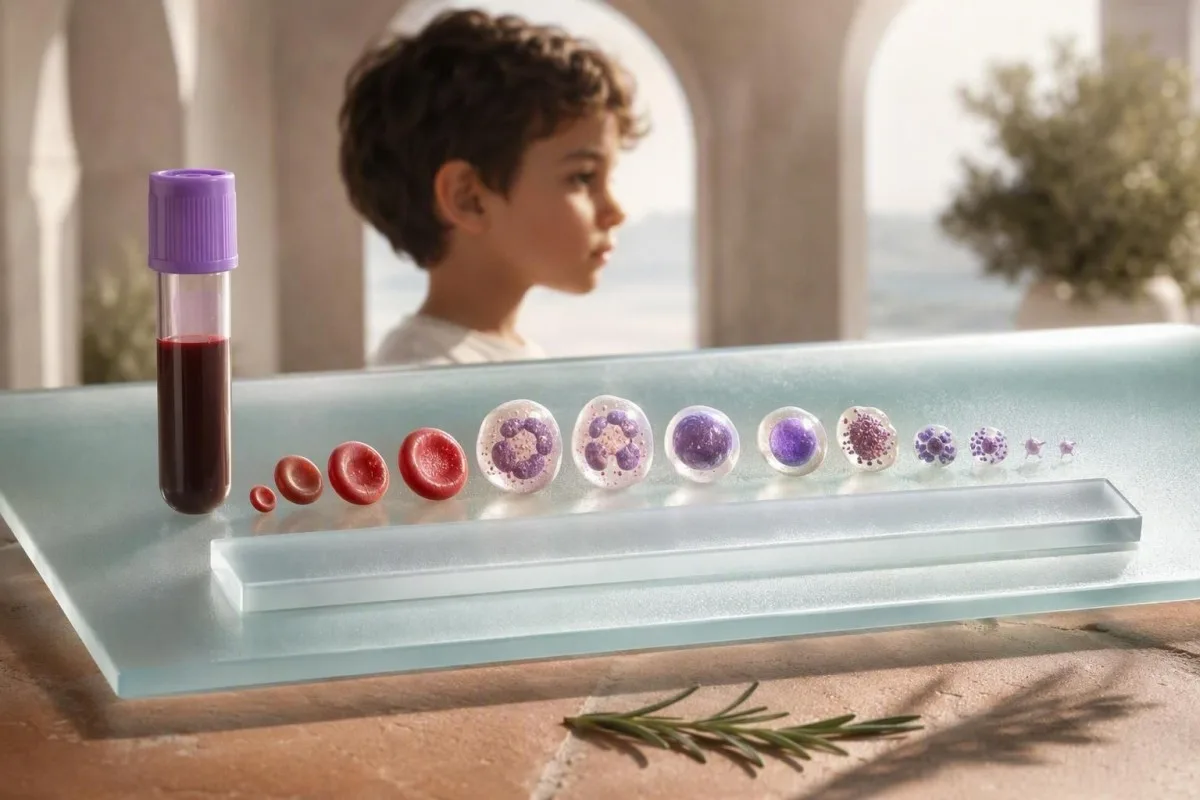
AI inaweza kupanga matokeo ya maabara ya mtoto na kuelezea istilahi ambazo hazijulikani, lakini haiwezi kumrithi daktari wa watoto ambaye anajua umri wa mtoto, muundo wa ukuaji, uchunguzi, na dalili.


- Jibu la moja kwa moja: AI inaweza kutafsiri ruwaza za vipimo vya damu kwa watoto kama nyongeza ya elimu, lakini daktari wa watoto lazima afanye maamuzi ya utambuzi na matibabu.
- Safu maalum za umri: Hesabu ya lymphocyte ambayo inatarajiwa kwa umri wa miaka 2 inaweza kuashiriwa kama ya juu na safu ya rejeleo ya watu wazima.
- Puberty ni muhimu: Fosfatase ya alkali inaweza kupanda juu ya 300 IU/L wakati wa ukuaji wa mfupa bila ugonjwa wa ini.
- Dalili za dharura: Ugumu wa kupumua, kuchanganyikiwa, kifafa, midomo ya bluu, upungufu mkubwa wa maji mwilini, au mtoto mgonjwa sana huhitaji huduma ya haraka ya kimatibabu bila kujali ripoti ya AI.
- Ubora wa sampuli: Uharibifu wa damu, ucheleweshaji wa usindikaji, na kuganda kwa chembechembe za damu za EDTA kunaweza kusababisha matokeo ya potasiamu, LDH, au chembechembe za damu yenye udanganyifu.
- Thamani ya mwelekeo: Kulinganisha matokeo kutoka kwa maabara moja kwa wiki au miezi mara nyingi ni muhimu zaidi kuliko kuguswa na matokeo moja ya mpaka.
- Hakuna matibabu binafsi: Wazazi hawapaswi kuanza matibabu ya chuma, vitamini D, tezi, au virutubisho vya electrolyte kutoka kwa tafsiri ya matokeo ya maabara mtandaoni pekee.
- Faragha: Ripoti ya mtoto inapaswa kupakiwa tu kwa idhini ya mzazi au mlezi halali na kuondolewa kwa uangalifu kwa vitambulisho visivyo vya lazima.
Nini AI inaweza na haiwezi kufanya na kipimo cha damu cha mtoto
AI inaweza kutafsiri matokeo ya vipimo vya damu kwa watoto kama maelezo yaliyopangwa tu, sio kama utambuzi au badala ya ukaguzi wa watoto. Inaweza kutambua thamani iliyotiwa alama, kubadilisha vitengo, kuelezea sababu za kawaida, na kuibua maswali kwa daktari; haiwezi kutathmini maji mwilini, hatua ya ukuaji, matokeo ya uchunguzi, au jinsi mtoto anavyoonekana mgonjwa. Kufikia Septemba 6, 2026, tofauti hiyo inabaki mpaka wa usalama ninaojadili mara nyingi na wazazi.
Mimi ni Daktari Thomas Klein, na katika ukaguzi wa kimatibabu nimeona CBC ya kawaida ya mtoto mchanga ikisababisha hofu isiyo ya lazima wakati safu za watu wazima zilipotumiwa. Matokeo yaliyo nje ya safu iliyochapishwa sio ya kawaida kiotomatiki kwa mtoto, kwa sababu ripoti nyingi huweka viwango vya upana au vilivyotokana na watu wazima. Ripoti ya afya ya AI yenye busara inapaswa kusema ni kipindi gani cha rejeleo ilichotumia na kuelekeza familia kurudi kwa daktari anayeagiza.
Kantesti ni Mchambuzi wa mtihani wa damu wa AI iliyoundwa ili kupanga data ya maabara na kuelezea ruwaza kwa lugha rahisi; kwa ripoti za watoto, matokeo yetu yanapaswa kuchukuliwa kama kichocheo cha mazungumzo kwa daktari wa watoto, sio ruhusa ya kuchukua hatua bila uhuru. Mtoto wa miezi 18 mwenye homa na ripoti ya kuaminika bado anaweza kuhitaji tathmini siku hiyo hiyo ikiwa ana uchovu, anapumua kwa shida, au anakunywa vibaya.
Tafsiri ya matokeo ya maabara mtandaoni husaidia zaidi wakati inapoendeleza PDF yenye machafuko kuwa maswali ya vitendo: Je, mtoto alikuwa amefunga? Je, kulikuwa na ugonjwa wa virusi wa hivi karibuni? Je, urefu au uzito unavuka asilimia? Wazazi wanaweza pia kukagua hundi za usalama za ripoti ya matibabu ya AI kabla ya kutegemea maelezo yoyote ya kiotomatiki.
Kwa nini watoto wanahitaji vipimo vya kurejelea kulingana na umri
Watoto wanahitaji vipindi vya marejeleo vinavyolingana na umri, jinsia, hatua ya kubalehe, kipimo, na wakati mwingine umri wa ujauzito. Nambari inaweza kusonga kwa kiasi kikubwa kati ya utoto, umri wa shule, na ujana wakati mtoto anabaki vizuri.
Hemoglobin ya mtoto mchanga huwa karibu 14 hadi 22 g/dL, wakati safu ya kawaida ya mtoto wa miezi 1 hadi 5 ni takriban 11.0 hadi 13.5 g/dL; maabara huweka vipindi vyao vilivyothibitishwa. Kushuka kwa kisaikolojia baada ya kuzaliwa kunatarajiwa, lakini hemoglobin sawa ya 9 g/dL inahitaji tathmini tofauti ya uharaka kwa mtoto wa miezi 2 anayestawi kuliko kwa mtoto wa miaka 8 mwenye rangi ya kijani kibichi, anayepiga kwa kasi.
Vipimo kamili vya seli za limfu hutegemea pia umri. Kipimo cha karibu 4.0 × 10⁹/L kinaweza kuwa cha kawaida kwa mtoto wa shule ya awali lakini kiko juu ya vipimo vingi vya watu wazima, ndiyo maana uchunguzi tofauti lazima usomwe kulingana na umri badala ya asilimia pekee; yetu mwongozo wa vipimo vya seli za limfu kulingana na umri inaeleza tofauti.
Soldin na washirika walielezea jinsi fisiolojia ya ukuaji inavyofanya vipindi vya watoto kuwa tofauti kiasi na maadili ya watu wazima katika vipimo vingi (Soldin et al., 2005). Kwa vitendo, ninataka kipimo cha maabara kwanza, kisha umri kamili wa mtoto wakati wa kukusanya – sio kipimo cha jumla cha mtandaoni.
Jinsi ukuaji na pubertal hubadilisha matokeo ya maabara
Ukuaji na ujana vinaweza kubadilisha fosfatazi ya alkali, hemoglobin, feritini, lipids, na homoni za ngono vya kutosha kuonekana kama ugonjwa kwenye ripoti ya mtu mzima. Wakati wa kasi ya ukuaji wa mtoto mara nyingi huleta maelezo zaidi kuliko nambari moja iliyoangaziwa.
Wakati wa ukuaji wa kasi wa mifupa, fosfatazi ya alkali (ALP) inaweza kuzidi 300 IU/L na kubaki kawaida kwa umri kwa sababu shughuli ya osteoblast iko juu. ALP iliyoinuka yenye kiwango cha kawaida cha bilirubini, GGT, kalsiamu, fosfeti, dalili, na historia ya ukuaji ni muundo tofauti sana na ugonjwa wa mfumo wa nyongo wa cholestatic; angalia maelezo yetu ya ALP baada ya ukuaji wa mfupa.
Ujana huongeza safu nyingine. Hemoglobin mara nyingi huongezeka kwa wavulana kadiri testosterone inavyoongeza uzalishaji wa seli nyekundu, wakati vijana wanaopata hedhi wanaweza kupata upungufu wa chuma na feritini chini ya 15 ng/mL hata kabla ya hemoglobin kushuka. Mwongozo wa watoto wa NHLBI wa 2011 wa moyo pia unakubali kuwa maadili ya lipid hutofautiana na kukomaa na yanapaswa kutathminiwa kwa kutumia vipunguzi vya watoto (Jopo la Wataalam, 2011).
Kantesti ni jukwaa la tafsiri ya vipimo vya damu la AI ambayo inaweza kuonyesha maonyo haya ya maendeleo, lakini haiwezi kuaminika kuteka kiwango cha Tanner kutoka kwa PDF ya maabara. Daktari anaweza kuuliza kwa busara kuhusu vipindi, kasi ya ukuaji, lishe, mafunzo ya riadha, dawa, na muda wa familia wa ujana kabla ya kutafsiri paneli ya homoni au chuma.
Kwa nini matokeo ya watoto wachanga na waliolazwa huhitaji uhakiki wa kitaalamu
Matokeo ya maabara ya watoto wachanga na watoto wachanga kabla ya wakati hayapaswi kutafsiriwa na akili bandia ya jumla pekee kwa sababu fiziolojia ya kawaida hubadilika kwa masaa na siku baada ya kuzaliwa. Bilirubin, sukari, kalsiamu, hematocrit, na uchunguzi wa tezi huathiri zote zinahitaji muktadha wa watoto wachanga unaohitaji muda.
Mkusanyiko wa jumla wa bilirubini wa 12 mg/dL (205 µmol/L) unaweza kufuatiliwa au unaweza kuhitaji matibabu ya haraka kulingana na umri baada ya kuzaliwa kwa masaa, mimba, kulisha, hatari ya uharibifu, na kasi ya kupanda. Ndiyo sababu maamuzi ya manjano kwa watoto wachanga hutumia nomograms maalum kwa saa na tathmini ya kimatibabu badala ya kizingiti kimoja cha ulimwengu.
Sukari ya plasma chini ya 47 mg/dL (2.6 mmol/L) hutumiwa sana kama kizingiti cha uendeshaji katika itifaki za watoto wachanga walio hatarini, lakini usimamizi unategemea dalili, kulisha, kipimo cha kurudia, na mwongozo wa ndani wa watoto wachanga. Matokeo ya kuchomwa kisigino yanaweza pia kutofautiana na thamani ya plasma ya maabara iliyochakatwa mara moja.
Wazazi wanapaswa kutibu ujumbe usio wa kawaida wa uchunguzi wa watoto wachanga kama njia ya haraka ya mawasiliano, sio shida ya utafiti mtandaoni. Muhtasari wetu wa bendera za uchunguzi wa watoto wachanga unaeleza kwa nini matokeo mengine yanahitaji mawasiliano siku hiyo hiyo wakati mengine yanahitaji kurudiwa kwa mpangilio.
Jinsi ya kusoma CBC ya mtoto bila kukasirika kupita kiasi
Hesabu kamili ya damu ya mtoto ni muhimu inaposomeka kama muundo: hemoglobin, MCV, reticulocytes, utofauti wa seli nyeupe za damu, chembe za damu, dalili, na trajectory huenda pamoja. Bendera moja ya juu au ya chini mara chache hutoa utambuzi.
Hemoglobini iliyo chini ya 11.0 g/dL kwa mtoto mchanga mara nyingi husababisha tathmini ya upungufu wa chuma, lishe, hatari ya kuathiriwa na risasi, kuvimba kwa muda mrefu, hemoglobinopathy, na upotezaji wa damu; MCV na ferritin husaidia kupunguza swali. Ferritin inaweza kuonekana kuwa ya kuaminisha kwa uwongo wakati wa maambukizi kwa sababu huongezeka kama kiwanja cha awamu ya papo hapo.
Hesabu kamili ya neutrophil chini ya 1.5 × 10⁹/L huitwa neutropenia katika mipangilio mingi, lakini uharaka hubadilika kwa kasi na umri, asili, muda, homa, na kina cha kupungua. Mtoto mzima aliye na ANC ya 1.2 × 10⁹/L baada ya virusi sio hali sawa ya kimatibabu kama mtoto aliye na homa na ANC chini ya 0.5 × 10⁹/L; soma yetu mwongozo wa kiwango cha neutrophil.
Ninapopitia CBC baada ya ugonjwa wa utumbo, huangalia ikiwa hemoconcentration inaelezea hemoglobin ya juu kidogo au hesabu ya chembe za damu kabla ya kudhani shida ya marongo. Kurudia baada ya kupona mara nyingi ni salama kuliko upimaji mpana, isipokuwa kung'aa, homa inayoendelea, maumivu ya mfupa, kupoteza uzito, au rangi ya ajabu hubadilisha hatari.
Kwa nini utunzaji wa sampuli unaweza kudanganya AI na wataalamu
Mkusanyiko duni au usindikaji uliocheleweshwa unaweza kufanya matokeo ya damu ya mtoto kuwa mabaya kabla ya mtu au algorithm yeyote kuyaona. Hemolysis, mkusanyiko mgumu, muda mrefu wa tourniquet, na bomba lisilo sahihi vinaweza kubadilisha matokeo ya kutosha kusababisha kengele za uwongo.
Hemolysis hutenga potasiamu ya ndani ya seli na LDH kwenye sampuli, kwa hivyo matokeo ya juu ya potasiamu yenye bendera ya hemolysis inaweza kuhitaji kurudiwa kwa haraka badala ya matibabu ya haraka. Hata hivyo, mtoto mwenye udhaifu, mapigo ya moyo, ugonjwa wa figo, au wasiwasi wa ECG bado anahitaji tathmini ya haraka ya kimatibabu; onyo la sampuli halithibitishi kuwa potasiamu haina madhara.
Chembechembe za EDTA zinazogongana zinaweza kuzalisha hesabu ya chini ya chembechembe, wakati mwingine chini ya 100 × 10⁹/L, licha ya chembechembe za kawaida kwa mtoto. Uhakiki wa filamu ya damu ya maabara au kurudiwa katika mirija ya citrate kunaweza kufafanua mtego huu wa kawaida wa kabla ya uchambuzi; makala yetu kuhusu kushikana kwa platelets za EDTA inaonyesha kwa nini nambari pekee inaweza kudanganya.
Kantesti’s Zana ya uchambuzi wa vipimo vya damu inayotumia AI inaweza kuashiria kutokwenda sambamba kwa ndani na maoni yanayoonekana ya maabara, lakini haiwezi kukagua mirija au kuchunguza ukusanyaji mgumu. Wazazi wanapaswa kupiga picha ripoti nzima, ikiwa ni pamoja na maoni ya ubora wa sampuli, muda wa ukusanyaji, na masafa ya marejeleo—sio tu ukurasa ulioashiriwa.
Jinsi homa, upungufu wa maji mwilini, na virusi hubadilisha vipimo kwa muda
Ugonjwa wa papo hapo unaweza kubadilisha kwa muda sukari, sodiamu, kreatini, hesabu za seli nyeupe, CRP, feritini, na vimeng'amuzi vya ini kwa watoto. Matokeo wakati wa homa mara nyingi yanapaswa kulinganishwa na kurudiwa baada ya kupona badala ya kutibiwa kama msingi wa mtoto.
Kutapika na ulaji mdogo unaweza kuzidisha hemoglobin na urea, wakati kuhara kali kunaweza kupunguza bicarbonate na kuvuruga sodiamu au potasiamu. Sodiamu chini ya 130 mmol/L, hasa ikiwa na mchanganyiko, maumivu makali ya kichwa, kifafa, au kutapika mara kwa mara, kunahitaji tathmini ya haraka ya kimatibabu badala ya maelezo ya mtandaoni.
CRP huongezeka na kushuka haraka kuliko ESR, lakini hakuna kipimo kinachoonyesha sababu maalum peke yake. CRP ya 40 mg/L inaweza kutokea na ugonjwa wa virusi au bakteria, jeraha la tishu, na ugonjwa wa uchochezi; mwonekano wa mtoto, muda wa homa, uchunguzi, na nyakati nyingine tamaduni ni muhimu zaidi kuliko alama moja.
Sheria ya vitendo ya Dk. Thomas Klein ni rahisi: rekodi siku ya ugonjwa, dawa, ulaji wa maji, na joto kando ya matokeo. Rekodi hiyo ndogo hufanya mabadiliko ya maabara kati ya ziara kuwa rahisi zaidi kwa daktari wa watoto kuelewa.
Dalili zinazofuta ripoti yoyote ya kutia moyo ya AI
Dalili za haraka hupuuza ripoti ya AI inayoonekana ya kawaida kwa sababu paneli za maabara haziondoi dharura nyingi za watoto. Mtoto anayepumua kwa shida, vigumu kuamka, hudhurungi kote midomoni, anapata kifafa, au anaonyesha dalili za upungufu mkali wa damu anahitaji tathmini ya dharura sasa.
Tafuta huduma ya haraka kwa mtoto mwenye upele usiokolea pamoja na homa, shingo ngumu, maumivu makali ya kichwa yanayoendelea, tabia iliyobadilika, au utoaji wa damu mdogo kama mikono baridi iliyopauka na mkojo uliopungua sana. CBC au CRP haiwezi kutenga kwa usalama sepsis ya awali, uti wa mgongo, uvimbe wa vyoo, ketoacidosis ya kisukari, au dharura ya mzio.
Kwa hatari ya kisukari, kutapika pamoja na kupumua kwa kina au kwa kasi, maumivu ya tumbo, usingizi, au ketoni za wastani hadi kubwa zinahitaji tathmini ya haraka. Sukari ya damu ya 200 mg/dL (11.1 mmol/L) ikiwa na dalili za kawaida inasaidia tathmini ya kisukari, lakini tathmini ya ketoacidosis inahitaji sukari, ketoni, electrolytes, hali ya asidi-basa, na daktari.
Matokeo hayawezi kuhukumu kazi ya kupumua au uwekaji wa kapilari. Wazazi wanaohangaika kuhusu dalili za kifua wanaweza kutumia mwongozo wa dalili za vipimo vya damu vya haraka kwa muktadha, lakini hawapaswi kusubiri uchanganuzi wa kiotomatiki wakati mtoto anaonekana kuwa mgonjwa sana.
Dawa, vitamini, na virutubisho vinavyobadilisha vipimo vya watoto
Dawa na virutubisho vya kawaida vinaweza kubadilisha au kuingilia vipimo vya maabara vya watoto, kwa hivyo akili bandia inahitaji orodha kamili ya dawa ili kuepusha maelezo ya kupotosha. Biotin, corticosteroids, anticonvulsants, chuma, vitamini D, na maji ya hivi karibuni ya ndani ya mishipa ni mifano ya mara kwa mara.
Biotin ya kipimo cha juu inaweza kuingilia baadhi ya vipimo vya kinga na kutoa matokeo ya tezi au homoni ya kupotosha; familia zinapaswa kumwambia daktari kuhusu bidhaa za nywele, kucha, au vitamini vingi. Kipimo huathiri: ulaji wa kawaida wa chakula hutofautiana na virutubisho vilivyo na 5,000 hadi 10,000 micrograms kila siku.
Chuma hakipaswi kuanzishwa kwa sababu tu mtoto anaonekana kuchoka au ana kiwango cha chini cha kawaida cha ferritin. Chuma kingi kinaweza kuwa na madhara, na uchunguzi wa utambuzi hutofautiana kwa upungufu wa chuma, sifa ya thalassemia, kuvimba kwa muda mrefu, na kukaribia kwa risasi; yetu mwongozo wa uchunguzi wa chuma unaonyesha kwa nini uhamishaji wa transferrin na ferritin hufasiriwa pamoja.
Matibabu ya vitamini D ni eneo lingine ambapo muktadha huathiri. Kijicho cha 25-hydroxyvitamin D chini ya 20 ng/mL (50 nmol/L) mara nyingi huchukuliwa kuwa na upungufu, lakini kipimo cha watoto hutegemea umri, saizi ya mwili, lishe, hatari ya utapiamlo, kalsiamu, na mwongozo wa ndani—sio mpango wa lishe wa akili bandia wa jumla.
Kwa nini mitindo kwa kawaida ni salama zaidi kuliko matokeo moja ya mtoto
Matokeo yanayorudiwa kutoka kwa maabara sawa mara nyingi huonyesha zaidi kuliko thamani moja ya watoto wa mpaka. Mitindo inaweza kufichua kupona, mabadiliko yanayohusiana na ukuaji, athari za dawa, au muundo unaoendelea unaostahili uchunguzi wa wataalamu.
Mabadiliko ya ferritin kutoka 8 hadi 28 ng/mL baada ya matibabu inayoongozwa na daktari huonyesha hadithi wazi zaidi kuliko matokeo moja ya 18 ng/mL, hasa ikiwa CRP ilianguka kwa wakati mmoja. Kwa uchunguzi wa tezi, mabadiliko ya TSH yana maana tu wakati muda wa ukusanyaji, uchunguzi, ugonjwa, na kufuata dawa zinazingatiwa.
Kantesti ni huduma ya kutafsiri vipimo vya maabara ya AI ambayo inaweza kuweka ripoti za kihistoria kando na kuonyesha mabadiliko makubwa, lakini mfumo haupaswi kudai kamwe kwamba mwelekeo unathibitisha utambuzi. Mabadiliko ya uchambuzi wa maabara na mabadiliko ya kawaida ya kibiolojia yanaweza kueleza mabadiliko madogo, hasa karibu na kizingiti cha uamuzi.
Hifadhi PDF asili na kumbuka ikiwa mtoto alikuwa na homa, michezo mingi, kufunga, ukuaji wa kasi, au mabadiliko ya dawa. Yetu wa matokeo ya muda mrefu inaelezea maelezo ambayo hufanya upimaji wa marudio utumike kimatibabu.
Nini wazazi wanapaswa kujumuisha kabla ya kutumia tafsiri ya vipimo mtandaoni
Wazazi wanapaswa kupakia ripoti kamili, umri kamili, jinsia iliyotolewa wakati wa kuzaliwa inapohusika, tarehe na wakati wa ukusanyaji, na vipindi vya marejeleo vya maabara yenyewe. Picha za skrini zilizopunguzwa bila vitengo au maoni ya sampuli ni chanzo cha kawaida cha uchanganuzi usio salama wa ripoti ya matibabu ya akili bandia.
Mawasilisho muhimu hujumuisha umri wa mtoto kwa miaka na miezi, mwelekeo wa urefu na uzito ikiwa unahusika, ugonjwa wa hivi karibuni, hali ya kufunga, dawa za sasa, virutubisho, na swali la kimatibabu lililosababisha uchunguzi. Usijumuishe anwani kamili ya mtoto, maelezo ya shule, au vitambulisho visivyo vya lazima.
Kantesti AI inasaidia upakiaji wa ripoti katika lugha nyingi na inaweza kutoa maelezo kwa takriban sekunde 60, lakini kasi si idhini ya kimatibabu. Yetu ya ukaguzi wa upakiaji wa PDF ni muhimu sana kwa komasi za desimali, picha hafifu, paneli zinazorudiwa, na kutolingana kwa vitengo.
Ikiwa ripoti inasema ‘mhimili,’ ‘piga simu matokeo,’ ‘tathmini ya haraka,’ au ina ombi la maabara kwa kuchora upya mara moja, wasiliana na huduma inayoagiza kwanza. Tafsiri ya mtandaoni haipaswi kuchelewesha njia ya upandishaji wa maabara yenyewe.
Maswali ya kuchukua kutoka kwa ripoti ya AI kwenda kwa daktari wa watoto
Matumizi salama zaidi ya ripoti ya AI ni kutoa maswali yaliyoanza kwa daktari, sio kutoa mpango wa matibabu. Uliza ikiwa safu ni ya watoto wachanga, ikiwa muundo unalingana na ugonjwa wa hivi karibuni au ukuaji, na ikiwa jaribio la kurudia linahitajika.
Maswali mazuri ni pamoja na: ‘Ni thamani gani muhimu zaidi?’ ‘Je, maabara hii hutumia muda unaolingana na umri?’ ‘Je, tunapaswa kurudia wakati mtoto wangu akiwa vizuri?’ na ‘Ni dalili gani itakufanya ututazame mapema zaidi?’ Maswali hayo ni muhimu zaidi kuliko kuuliza ikiwa kila bendera inamaanisha ugonjwa.
Kwa hemoglobin ya chini, uliza ikiwa reticulocytes, MCV, ferritin, usawa wa transferrin, lishe, na nasaba ya familia hubadilisha tofauti. Kwa ALT ya juu, uliza kuhusu ugonjwa wa virusi wa hivi karibuni, dawa, mwelekeo wa uzito, uharibifu wa misuli, na ikiwa ALT na AST za kurudia zinahitajika; yetu maelezo ya ALT huwapa wazazi msamiati bila kuchukua nafasi ya tathmini.
Ikiwa jibu la AI na daktari wa watoto wachanga wanatofautiana, tafsiri ya daktari inapaswa kuongoza kwa sababu wana mtoto mbele yao. Maoni ya pili ya watoto wachanga ni busara wakati upungufu unaendelea, maelezo bado hayako wazi, au dalili hazilingani na mpango uliopendekezwa.
Sheria za faragha na idhini kwa ripoti za maabara za watoto
Ripoti ya maabara ya mtoto ni habari nyeti ya afya na inapaswa kushirikiwa tu na mzazi au mlezi halali kwa kutumia huduma inayozingatia faragha. Familia zinapaswa kuelewa ni nani anayeweza kufikia ripoti, inahifadhiwa kwa muda gani, na maombi ya kufuta hufanyaje kazi.
Ondoa vitambulisho vya shule, anwani za nyumbani, na habari zisizohusiana za familia kabla ya kupakia ripoti. Weka tarehe ya ukusanyaji, jina la maabara, vipindi vya marejeleo, na maoni ya daktari kwa sababu kuondoa maelezo hayo kunaweza kufanya tafsiri ya watoto wachanga kuwa salama.
Kantesti AI hutumia utunzaji wa data unaozingatia faragha unaolingana na GDPR, lakini walezi bado wanapaswa kuamua kwa uangalifu ikiwa uchambuzi wa mtandaoni unafaa kwa hali ya mtoto. Upatikanaji wa familia ulioshirikiwa unapaswa kuwa wa makusudi na mdogo; mwongozo wetu wa kushiriki matokeo ya familia unashughulikia maamuzi ya vitendo ya idhini.
Vijana wanastahili kuwa na sauti katika jinsi habari zao za afya zinavyoshirikiwa, hasa kwa upimaji nyeti. Sheria za ndani hutofautiana kuhusu usiri na idhini, kwa hivyo familia zinapaswa kuuliza huduma inayotibu jinsi matokeo yatakavyowasilishwa kwa wazazi na kwa kijana.
Usimamizi salama wa AI kwa watoto unapaswa kuonekana vipi
Tafsiri salama ya AI ya watoto wachanga inapaswa kufichua mipaka yake, kuhifadhi data halisi ya maabara, kutambua bendera nyekundu za haraka, na kuelekeza watumiaji kwenye ukaguzi wa kliniki wa kibinadamu. Haipaswi kamwe kumgundua mtoto kutoka kwa paneli moja, kuagiza dawa, au kuwahakikishia familia mbali na huduma ya dharura.
Usahihi una tabaka kadhaa: kusoma PDF kwa usahihi, kulinganisha analiti na vitengo, kuchagua kipindi kinachofaa, na kutafsiri muundo katika muktadha wa kimatibabu. Usanifu sahihi unaoonekana bado unaweza kutoa hitimisho lisilo salama ikiwa hatua ya kubalehe ya mwenye umri wa miaka 14, homa, au historia ya dawa haipo.
Katika Kantesti, timu yetu ya matibabu hupitia mipaka ya usalama na lugha ya kuongeza; wasomaji wanaweza kuona mbinu yetu ya uthibitisho wa kimatibabu na wataalamu wa kliniki kwenye Bodi ya Ushauri wa Matibabu. Kantesti ni jukwaa la tafsiri ya viashiria vya AI ambayo inapaswa kufanya mazungumzo yafuatayo ya kimatibabu kuwa wazi zaidi, kamwe isiichukue nafasi.
Msimamo wangu wa mwisho baada ya miaka 15 ya mazoezi ni rahisi: tumia AI kuelewa ripoti, uhifadhi mwelekeo, na uandae maswali. Tumia mtaalamu wa watoto kuamua maana ya matokeo kwa mtoto huyu mahususi, leo.
Maswali Yanayoulizwa Mara Kwa Mara
Je, AI inaweza kutafsiri vipimo vya damu kwa watoto?
AI inaweza kutafsiri vipimo vya damu kwa watoto kama msaada wa kielimu, lakini haiwezi kumtambua au kumtibu mtoto kwa usalama bila tathmini ya kitabibu ya watoto. Matokeo ya watoto yanahitaji vipindi vya marejeo vinavyolingana na umri, muktadha wa kubalehe, dalili, matokeo ya uchunguzi, na ujuzi kuhusu ubora wa sampuli. Kwa mfano, thamani ya ALP iliyo juu ya IU/L 300 inaweza kutarajiwa wakati wa kasi ya ukuaji, ilhali matokeo hayo hayo yanaweza kuhitaji tathmini tofauti kwa mtu mzima. Wazazi wanapaswa kutumia maelezo ya AI kuandaa maswali ya kumuuliza daktari aliyeagiza kipimo.
Kwa nini viwango vya vipimo vya damu vya watu wazima si salama kwa watoto?
Viwango vya maabara vya watu wazima si salama kwa watoto kwa sababu hemoglobini, limfosaiti, fosfatazi ya alkali, kreatinini, homoni na vipimo vingine vingi hubadilika kadiri ya ukuaji. Mtoto wa umri wa kabla ya kwenda shule anaweza kwa kawaida kuwa na hesabu kamili ya limfosaiti karibu 4.0 × 10⁹/L, ambayo ripoti ya mtu mzima inaweza kuashiria kuwa iko juu. Bilirubini ya mtoto mchanga pia inahitaji kutafsiriwa kulingana na umri wa mtoto kwa saa, si kwa kutumia nambari moja ya jumla. Inapowezekana, litumike kundi la viwango vya watoto la maabara husika pamoja na umri kamili wa mtoto.
Ni wakati gani ninapaswa kutafuta huduma ya dharura badala ya kusubiri matokeo ya maabara yanayotolewa na AI?
Tafuta huduma ya dharura mara moja ikiwa mtoto ana shida ya kupumua, midomo ya buluu, kifafa, kuchanganyikiwa, ni vigumu kumwamsha, ana upungufu mkubwa wa maji mwilini, au anaonekana kuwa mgonjwa sana. Kiwango cha sodium chini ya 130 mmol/L pamoja na dalili za mfumo wa neva, au kutapika pamoja na kupumua kwa kina na ketoni, pia kunahitaji tathmini ya haraka ya kitabibu. CBC, CRP, au ripoti ya afya ya AI iliyo ya kawaida haiwezi kuondoa uwezekano wa dharura nyingi. Dalili na hali ya mtoto vina kipaumbele kuliko tafsiri ya matokeo ya maabara mtandaoni.
Je, uchukuaji wa damu ulio mgumu unaweza kusababisha matokeo ya uwongo yasiyo ya kawaida kwa watoto?
Ndiyo, ukusanyaji mgumu wa sampuli unaweza kusababisha matokeo yasiyo ya kawaida ya uongo kwa watoto. Hemolysis inaweza kuongeza kwa uongo viwango vya potasiamu na LDH, huku kugandamana kwa chembe sahani kunakosababishwa na EDTA kukitoa hesabu ya chembe sahani iliyo chini kwa uongo, wakati mwingine chini ya 100 × 10⁹/L. Maabara inaweza kuongeza maelezo kuhusu hemolysis au kugandamana, na sampuli inayorudiwa au uchunguzi wa filamu ya damu unaweza kusaidia kufafanua matokeo hayo. Familia hazipaswi kamwe kudhani kuwa thamani iliyoainishwa ni ya kweli au ya uongo bila ushauri wa kitabibu.
Je, wazazi wanapaswa kumpa mtoto madini ya chuma au vitamini D baada ya ripoti ya maabara ya AI?
Wazazi hawapaswi kuanzisha chuma au vitamini D ya kiwango cha juu pekee kutoka kwa ripoti ya maabara ya AI. Ferritin chini ya 15 ng/mL inaweza kuunga mkono upungufu wa chuma, lakini maambukizi yanaweza kuongeza ferritin na upungufu wa damu una sababu zingine kadhaa zinazohitaji utunzaji tofauti. Kiwango cha 25-hydroxyvitamin D chini ya 20 ng/mL mara nyingi huhitaji usimamizi unaoongozwa na daktari, na kipimo kulingana na umri, saizi ya mwili, hali ya kalsiamu, lishe, na historia ya matibabu. Zaidi ya chuma na vitamini D zote zinaweza kusababisha madhara.
Pata Uchambuzi wa Vipimo vya Damu kwa AI Leo
Jiunge na zaidi ya watumiaji 2 milioni duniani kote wanaoamini Kantesti kwa uchambuzi wa papo hapo na sahihi wa vipimo vya maabara. Pakia matokeo yako ya vipimo vya damu na upate tafsiri ya kina ya viashiria vya 15,000+ ndani ya sekunde.
📚 Machapisho ya Utafiti Yanayorejelewa
Klein, T., Mitchell, S., & Weber, H. (2026). Mwongozo wa Protini za Seramu: Kipimo cha Damu cha Globulini, Albumini na A/G. Kantesti uchambuzi wa damu kwa AI ya utafiti wa matibabu.
Klein, T., Mitchell, S., & Weber, H. (2026). Mwongozo wa Kipimo cha Damu cha C3 C4 Complement & Kipimo cha ANA Titer. Kantesti uchambuzi wa damu kwa AI ya utafiti wa matibabu.
📖 Marejeo ya Nje ya Tiba
⚕️ Kanusho la Kimatibabu
Makala haya ni kwa madhumuni ya elimu tu na si ushauri wa kimatibabu. Wasiliana na mtoa huduma aliyehitimu kila wakati kwa maamuzi ya utambuzi na matibabu.
E-E-A-T Trust Signals
Uzoefu
Mapitio ya kimatibabu inayoongozwa na daktari ya mifumo ya tafsiri ya maabara.
Utaalamu
Kuzingatia dawa za maabara kuhusu jinsi viashiria (biomarkers) vinavyobadilika katika muktadha wa kliniki.
Mamlaka
Imeandikwa na Dk. Thomas Klein kwa mapitio ya Dk. Sarah Mitchell na Prof. Dk. Hans Weber.
Uaminifu
Tafsiri inayotegemea ushahidi yenye njia zilizo wazi za ufuatiliaji ili kupunguza tahadhari za hofu.