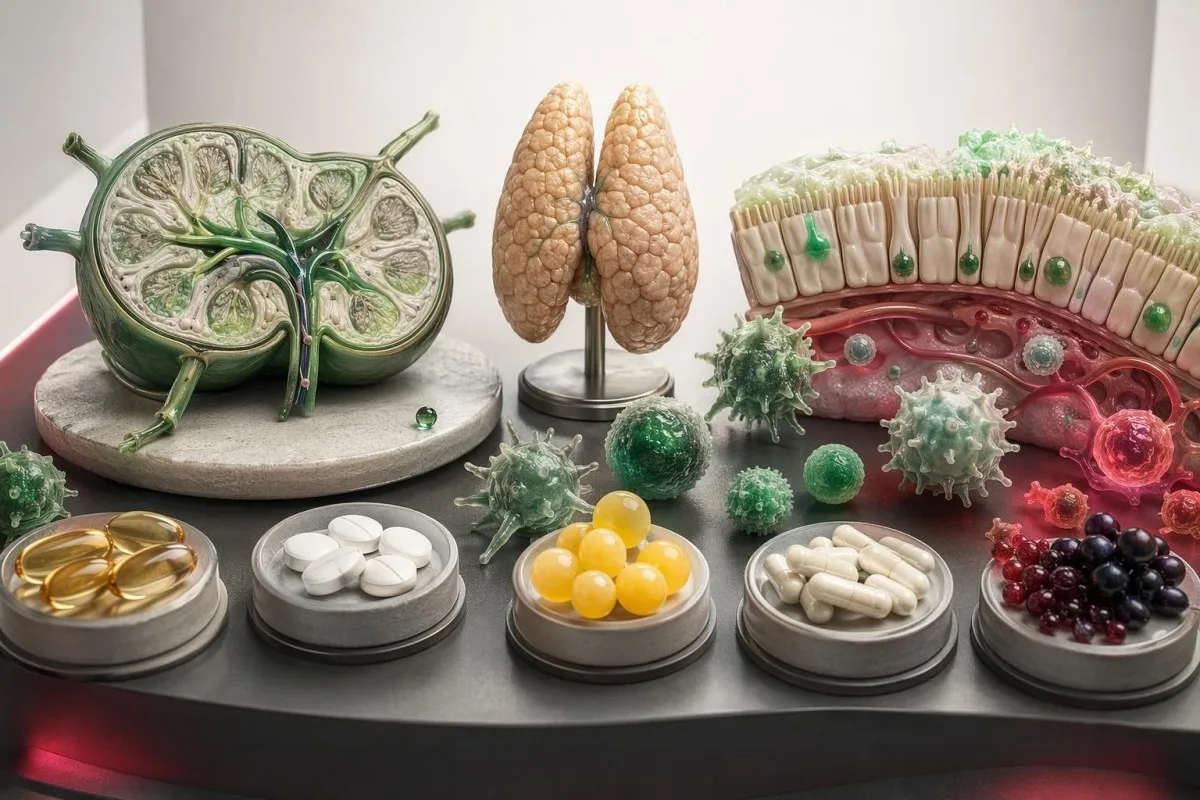
Immune support is not just about adding more capsules. The safer approach is to match zinc, vitamin D, vitamin C, elderberry and probiotics to CBC, inflammation, kidney, liver and nutrient patterns.


- 25-OH vitamin D below 20 ng/mL usually means deficiency; levels above 100 ng/mL raise toxicity concern, especially with high calcium.
- Zinc upper limit is 40 mg/day for most adults; chronic higher doses can lower copper and cause anemia or low neutrophils.
- Vitamin C immune support has modest evidence: Cochrane data found routine use shortened colds by about 8% in adults, not prevented most colds.
- CBC with differential helps separate viral patterns, bacterial patterns, steroid effects and true low immune cell counts before adding supplements.
- Ferritin below 30 ng/mL suggests depleted iron stores, but ferritin above 200 ng/mL in women or 300 ng/mL in men can reflect inflammation or overload.
- CRP and ESR can warn that an immune-stimulating herb may be the wrong move during an autoimmune flare or unresolved infection.
- eGFR below 60 mL/min/1.73 m² changes the safety conversation for high-dose vitamin C, magnesium, potassium-rich products and some herbal blends.
- Probiotics are not automatically safe in severe immunosuppression; neutropenia, central lines and low albumin change the risk-benefit calculation.
- Retesting usually makes sense 8-12 weeks after changing vitamin D or zinc, and 2-4 weeks after an acute infection has resolved.
Which immune supplements are worth considering first?
Supplements for immune system support are safest when labs show a clear need: low 25-OH vitamin D, low zinc with normal copper, low ferritin, or a diet pattern that predicts deficiency. Stacking vitamin D, zinc, elderberry, probiotics and vitamin C without CBC, kidney, liver, calcium and inflammation markers can backfire.
I’m Thomas Klein, MD, and in clinical review I worry less about a single 500 mg vitamin C tablet than about the patient taking 12 products with no baseline. A normal WBC count of 4.0-11.0 x10⁹/L does not prove immunity is perfect, but it gives us a safer starting point than guessing.
Kantesti is an AI blood test interpretation platform that reads immune supplement decisions through CBC differential, vitamin D, ferritin, copper-zinc balance, CRP, liver enzymes and kidney function together. For a plain-language map of the core tests, our guide to immune system blood tests is a useful companion.
The best supplements for immune system support are often boring: correct a measurable deficiency, avoid megadoses, retest, then stop what is not moving a marker or symptom. In my experience, the patient who takes 1,000-2,000 IU/day vitamin D for a documented low level usually does better than the patient who alternates 10,000 IU, zinc 100 mg and elderberry during every sniffle.
As of May 27, 2026, the evidence is strongest for correcting deficiency and much weaker for boosting an already well-nourished immune system. That distinction matters because an inflamed, autoimmune or kidney-impaired body can react very differently to the same supplement dose.
What baseline labs should come before stacking products?
A practical immune-supplement baseline includes CBC with differential, CMP, 25-OH vitamin D, ferritin with iron saturation, CRP or hs-CRP, B12, folate, zinc and copper when zinc is planned. These tests do not diagnose every immune problem, but they catch the common safety traps.
The CBC differential gives absolute neutrophils, lymphocytes, monocytes, eosinophils and platelets; percentages alone can mislead when total WBC is high or low. Kantesti AI maps those results against age, sex, units and trend direction using the biomarker guide rather than treating one red flag as the whole story.
A CMP checks creatinine, eGFR, AST, ALT, alkaline phosphatase, bilirubin, albumin and calcium, which is why I like it before fat-soluble vitamins or concentrated herbal blends. Serum calcium is commonly about 8.6-10.2 mg/dL, and high calcium plus high vitamin D is a very different problem from isolated low vitamin D.
Ferritin adds a second layer. Ferritin below 30 ng/mL usually suggests depleted iron stores, but ferritin can climb during infection, fatty liver, autoimmune activity or heavy alcohol use; adding iron because someone feels tired can be the wrong move when ferritin is already 400 ng/mL.
I also look at glucose and A1c before recommending sweetened gummies, syrups or high-dose niacin-containing immune blends. It sounds fussy, but I have seen an A1c of 6.4% missed because the conversation stayed focused on elderberry and not the metabolic pattern sitting on page 2 of the lab report.
How do vitamin D labs guide immune-support dosing?
Vitamin D decisions should be based on 25-OH vitamin D, calcium, creatinine/eGFR and sometimes PTH. A 25-OH vitamin D below 20 ng/mL is usually called deficient, while values above 100 ng/mL raise toxicity concern, especially when calcium is high.
The Endocrine Society’s 2011 guideline defined deficiency as 25-OH vitamin D below 20 ng/mL and insufficiency as 21-29 ng/mL, although clinicians still debate whether 30 ng/mL is necessary for every healthy adult (Holick et al., 2011). Our practical guide to vitamin D dosing by level explains why the same dose can be reasonable for one person and excessive for another.
I rarely start with 10,000 IU/day unless there is a documented need and a retest plan. Most adults with mild deficiency are treated with 1,000-2,000 IU/day, while higher short courses are sometimes used medically, then checked again after 8-12 weeks.
The safety signal is not the vitamin D number alone. A 25-OH vitamin D of 72 ng/mL with calcium 9.5 mg/dL and eGFR 95 is usually less worrying than 52 ng/mL with calcium 11.1 mg/dL, kidney stones and suppressed PTH.
Vitamin D is not an antibiotic, and it will not rescue poor sleep, low protein intake or uncontrolled diabetes. Still, I have seen patients with winter levels of 12-16 ng/mL report fewer respiratory infections after steady repletion, though that clinical observation is not the same as proof for every person.
When do zinc supplement benefits outweigh the risks?
Zinc supplement benefits are most plausible when intake is low, taste or wound-healing issues exist, or labs suggest low zinc without copper depletion. Chronic zinc above 40 mg/day can reduce copper absorption and may lead to anemia, neuropathy or low neutrophils.
Adult serum zinc is often reported around 70-120 µg/dL, but the result is sensitive to fasting status, albumin and recent supplements. If someone takes 50 mg/day for months, I want copper checked too; copper is commonly about 70-140 µg/dL, depending on the lab.
A CMAJ meta-analysis by Science et al. in 2012 found that zinc lozenges started within 24 hours may shorten common cold duration, but nausea and bad taste were common and the trials were heterogeneous (Science et al., 2012). For lab context, our article on zinc and copper clues explains why more zinc is not always better.
The pattern I dislike is low-normal hemoglobin, rising MCV, falling neutrophils and months of high-dose zinc. An absolute neutrophil count below 1.5 x10⁹/L is neutropenia, and if zinc is high while copper is low, the supplement cabinet becomes part of the differential diagnosis.
Some European laboratories use slightly different zinc ranges and specimen handling rules, so a borderline result should not trigger panic. I usually repeat zinc and copper after stopping nonessential supplements for 1-2 weeks, unless the patient has a clear deficiency risk such as bariatric surgery, malabsorption or a very restricted diet.
What do labs say about vitamin C immune support?
Vitamin C immune support is usually low-risk at food-level or moderate supplemental doses, but high-dose use deserves kidney and iron-context checks. The adult upper intake limit is 2,000 mg/day, and doses above that commonly cause diarrhea and may increase urinary oxalate.
The Cochrane review by Hemilä and Chalker found routine vitamin C did not prevent most colds, but it shortened cold duration by about 8% in adults and 14% in children; in heavy physical stress groups, incidence fell by roughly half (Hemilä & Chalker, 2013). That is useful, not miraculous.
Before high-dose vitamin C, I check creatinine, eGFR, urinalysis history and stone history. An eGFR below 60 mL/min/1.73 m² changes the conversation, and our kidney function checks guide explains why creatinine alone can miss early risk.
Vitamin C can also increase non-heme iron absorption, which is helpful when ferritin is 12 ng/mL and harmful if iron saturation is already high. I once reviewed a patient taking 3,000 mg/day vitamin C with ferritin 620 ng/mL and transferrin saturation 58%; the right answer was not another immune blend.
Most patients do fine with 100-500 mg/day if diet is poor or during short periods of heavy training. If a person eats citrus, peppers, potatoes and leafy vegetables daily, a huge vitamin C dose usually adds more urine than immunity.
Can elderberry and immune-stimulating herbs backfire?
Elderberry and immune-stimulating herbal blends can backfire in people with autoimmune disease, transplant medicines, unexplained high CRP or active inflammatory symptoms. The evidence for elderberry is honestly mixed, and safety depends more on context than marketing claims.
If someone has joint swelling, mouth ulcers, photosensitive rash or unexplained fatigue with ESR 70 mm/hr, I do not want them escalating immune stimulants before evaluation. ANA, ENA, dsDNA and complement C3/C4 can reframe the story, and our ANA and complement patterns guide covers those warning signs.
CRP is often normal or below 3 mg/L in low-inflammatory states, though reference ranges vary by assay. A CRP above 10 mg/L during fever, chest symptoms or urinary symptoms should make people think infection assessment first, supplement second.
Elderberry syrup also has a practical issue: sugar. A patient with fasting glucose 118 mg/dL and A1c 6.2% may not need a sweetened syrup three times daily during the winter, particularly if the product hides carbohydrate content behind serving language.
My own threshold is simple. If a patient uses immunosuppressants, has known lupus, inflammatory bowel disease, rheumatoid arthritis, multiple sclerosis, recent transplant, chemotherapy, or an unexplained abnormal CBC, immune-stimulating herbs should be discussed with the treating clinician rather than self-stacked.
When are probiotics sensible versus risky?
Probiotics are most sensible when there is a defined goal, such as antibiotic-associated diarrhea prevention, and less sensible when severe immunosuppression, neutropenia or central lines are present. Strain, dose and host risk matter more than the word probiotic.
A normal adult absolute neutrophil count is usually above 1.5 x10⁹/L; below 0.5 x10⁹/L is severe neutropenia and changes probiotic safety. Patients with central venous catheters, pancreatitis, ICU-level illness or very low albumin deserve individualized advice.
Kantesti AI interprets gut-related blood patterns by linking CBC differential, albumin, CRP, eosinophils, IgA when available and nutrient markers instead of calling probiotics universally good. Our gut health blood tests article explains what routine labs can and cannot show.
Albumin below 3.5 g/dL can signal poor protein status, liver disease, kidney protein loss or inflammation, all of which alter immune resilience. Probiotics will not correct low albumin from nephrotic-range protein loss or untreated bowel inflammation.
For generally healthy adults, a short probiotic course around antibiotics may be reasonable, especially if prior diarrhea was severe. I still ask patients to stop and call if fever, rigors, worsening abdominal pain or persistent diarrhea develops after starting a product.
Why do ferritin and iron status matter for immunity?
Iron status matters because both deficiency and excess can impair immune function or mimic infection symptoms. Ferritin below 30 ng/mL often reflects depleted iron stores, while ferritin above 200 ng/mL in women or 300 ng/mL in men can reflect inflammation, liver disease or iron overload.
Kantesti is an AI biomarker interpretation platform that reads ferritin alongside transferrin saturation, TIBC, CRP, ALT, MCV, RDW and hemoglobin. The full iron studies guide is where I send patients before they buy iron plus vitamin C combinations.
A classic early iron deficiency pattern is ferritin 12 ng/mL, rising RDW and normal hemoglobin. That patient may feel breathless on stairs and catch every daycare virus, but their CBC may still look deceptively acceptable.
Excess iron is a different immune problem. Many bacteria use iron, and a transferrin saturation above 45-50% with ferritin elevation deserves proper assessment rather than self-treatment with vitamin C and iron-rich tonics.
The confusing bit is ferritin as an acute-phase reactant. A ferritin of 380 ng/mL during pneumonia may fall after recovery, while ferritin 380 ng/mL with transferrin saturation 62% and family history of iron overload needs a different workup.
Which extra immune nutrients cause the most trouble?
Vitamin A, vitamin E, selenium and iodine are immune-relevant nutrients that can cause harm when taken above need. Fat-soluble vitamins accumulate, and mineral excess can distort thyroid, liver, clotting or neurologic markers before patients feel clearly unwell.
Vitamin A toxicity can cause headache, dry skin, hair loss, liver enzyme elevation and birth-defect risk in pregnancy. Serum retinol is not a perfect screening tool, but very high intake plus ALT or AST elevation should make people pause; our fat-soluble vitamin labs guide goes deeper.
Selenium is another quiet one. The adult upper limit is about 400 µg/day, and chronic excess can cause brittle nails, garlic-like breath, neuropathy and gastrointestinal symptoms, while deficiency is more relevant in specific geographic and dietary settings.
Iodine can swing thyroid labs in either direction. A patient with TPO antibodies and normal TSH may become hyperthyroid or hypothyroid after aggressive kelp tablets, especially when each tablet contains several hundred micrograms and the label is vague.
Vitamin E above usual dietary levels can interact with anticoagulant effects and bleeding risk, particularly when combined with fish oil, garlic extracts or warfarin. A normal platelet count of 150-450 x10⁹/L does not rule out medication-supplement interaction.
Which supplement combinations need spacing or avoidance?
Zinc, iron, magnesium and calcium often need spacing from thyroid medication, quinolone antibiotics, tetracyclines and some osteoporosis medicines. Vitamin K, fish oil, vitamin E, garlic and herbal blends also matter when blood thinners or surgery are involved.
The usual spacing rule is 4 hours between levothyroxine and minerals such as iron, calcium, magnesium or zinc. It is not elegant, but it prevents a common pattern: TSH rises after a patient starts a multivitamin with breakfast and takes thyroid medicine at the same time.
Our supplement timing conflicts article covers the practical combinations patients actually use. I ask about powders, gummies, teas and drops because many people do not count those as supplements.
Warfarin patients need special caution with vitamin K changes, cranberry concentrates, high-dose vitamin E and some botanicals. The INR target is often 2.0-3.0 for common indications, and sudden diet or supplement shifts can push a stable INR out of range.
Before elective surgery, many clinicians ask patients to stop nonessential supplements 1-2 weeks beforehand, though the exact list varies. If a product affects clotting, sedation, glucose or blood pressure, the anesthetic team needs to know.
What lab patterns say stop and call a clinician?
Stop stacking immune supplements and seek medical advice when labs show severe neutropenia, very high WBC, unexplained anemia, high calcium, rising liver enzymes, kidney decline or high inflammatory markers with symptoms. Supplements should not delay diagnosis of infection, autoimmune disease or malignancy.
An absolute neutrophil count below 0.5 x10⁹/L is severe neutropenia and can be dangerous with fever. Our guide to low neutrophil patterns explains why the absolute count matters more than the neutrophil percentage.
A WBC above 30 x10⁹/L, especially with immature granulocytes, blasts, severe night sweats or weight loss, is not an elderberry problem until proven otherwise. Likewise, platelets below 50 x10⁹/L raise bleeding concern and should not be managed with online supplement advice.
Rising ALT or AST to more than 3 times the upper limit of normal after a new supplement is a common reason to stop and reassess. Green tea extracts, multi-herb immune formulas and concentrated mushrooms are not harmless just because they are sold without prescription.
High calcium is another hard stop. Calcium above 10.5 mg/dL with thirst, constipation, confusion, kidney stones or vitamin D use deserves prompt evaluation, particularly if PTH is not appropriately suppressed.
How soon should immune supplement labs be retested?
Most nutrient labs should be retested after 8-12 weeks, while CBC and CRP after infection usually make more sense 2-4 weeks after recovery. Testing too early creates noise; testing too late lets avoidable toxicity or deficiency persist.
Vitamin D, zinc-copper balance and ferritin usually need 8-12 weeks to show a meaningful supplement response. A single-day swing is less useful than a slope, which is why our trend analysis workflow matters for supplement safety.
CBC changes after viral infections can lag. Platelets may dip and rebound over 2-6 weeks, lymphocytes can stay reactive for a while, and CRP often falls faster than ESR because ESR is influenced by fibrinogen, anemia and immunoglobulins.
Kantesti is an AI-powered blood test analysis tool used by 2M+ people across 127+ countries to compare old and new lab PDFs, photos and units in about 60 seconds. I still tell patients that trend software supports clinical judgment; it does not replace urgent care when fever, chest pain or shortness of breath appears.
My practical retest rule is one change at a time. If a patient starts vitamin D, zinc, probiotic and elderberry all on Monday, nobody can tell which product helped, harmed or did nothing by the next lab draw.
What are the best supplements for immune system goals?
The best supplements for immune system goals are the ones matched to a person’s deficiency pattern, illness risk, medicines and retest plan. A runner with ferritin 18 ng/mL, a vegan with low B12, and a steroid-treated patient with lymphopenia need different strategies.
Kantesti AI interprets supplement suitability by looking for clusters: low vitamin D with normal calcium, low ferritin with high TIBC, zinc excess with low copper, or inflammation with high ferritin. Our AI supplement recommendations page describes the workflow without pretending that supplements are diagnosis.
A vegetarian patient with B12 of 180 pg/mL, MCV 101 fL and tingling needs B12 evaluation more than elderberry. A patient with A1c 6.6%, triglycerides 260 mg/dL and recurrent skin infections needs glucose control addressed because high glucose impairs immune cell function.
Athletes are a separate phenotype. During heavy endurance blocks, vitamin C around 200 mg/day from food or modest supplement may help some people, but chronic megadoses can blunt some training adaptations in certain studies, so I avoid automatic high-dose advice.
Older adults often need medication review as much as nutrients. Proton pump inhibitors, metformin, diuretics, steroids and immunosuppressants can shift B12, magnesium, sodium, potassium, glucose and white cell patterns; no single immune supplement corrects all of that.
What research and review standards guide our advice?
Our immune supplement advice is built around pattern recognition, clinician review and repeatable lab thresholds rather than one-size-fits-all supplement lists. The safest next step is to upload recent labs, check for red-flag patterns, then discuss abnormal results with a qualified clinician.
Thomas Klein, MD, reviews Kantesti content with our clinical team because YMYL medical advice needs more than attractive wellness language. Our medical validation standards emphasize pattern-based interpretation, unit checking and conservative escalation when red flags appear.
Kantesti’s neural network has been evaluated in a pre-registered benchmark using anonymised blood test cases and hyperdiagnosis trap cases; the clinical benchmark is part of how we pressure-test unsafe over-interpretation. That matters for supplements because false reassurance can be just as harmful as false alarm.
Our doctors and advisors also push back when a lab pattern is outside supplement territory. The medical advisory board reviews clinical standards so that a patient with ANC 0.4 x10⁹/L, calcium 11.3 mg/dL or ALT 190 IU/L is guided toward medical care, not another capsule.
Bottom line: correct measured deficiencies, avoid chronic megadoses, retest at the right interval and stop products that worsen labs or symptoms. If your lab story does not make sense, that uncertainty is a reason to slow down, not stack more.
Frequently Asked Questions
What labs should I check before taking immune supplements?
Before taking multiple immune supplements, a reasonable baseline includes CBC with differential, CMP, 25-OH vitamin D, ferritin with iron saturation, CRP or hs-CRP, B12 and folate. If you plan to take zinc for more than 2-4 weeks, serum zinc and copper are useful because chronic zinc above 40 mg/day can lower copper. People with kidney disease should know their eGFR, because an eGFR below 60 mL/min/1.73 m² changes the safety of high-dose vitamin C and some mineral products.
Can zinc supplements weaken the immune system?
Yes, zinc can weaken immune function when taken in excessive doses for long periods because it can cause copper deficiency. The adult tolerable upper intake level for zinc is 40 mg/day, and chronic intake above that can lead to anemia, neuropathy and low neutrophils. A falling absolute neutrophil count below 1.5 x10⁹/L while taking high-dose zinc should prompt copper, CBC and supplement review.
What vitamin D level is best for immune support?
Many clinicians consider 25-OH vitamin D around 30-50 ng/mL a reasonable range, although guideline targets differ and not every healthy adult needs aggressive dosing. A level below 20 ng/mL is usually considered deficient, while levels above 100 ng/mL raise concern for excess, especially if calcium is high. Vitamin D dosing should be paired with calcium and kidney function checks rather than based on symptoms alone.
Does vitamin C really help the immune system?
Vitamin C has modest but real evidence for shortening common cold duration, not preventing most colds in the general population. The Cochrane review by Hemilä and Chalker found routine vitamin C shortened colds by about 8% in adults and 14% in children. The adult upper limit is 2,000 mg/day, and people with kidney stones, low eGFR or high iron saturation should be cautious with high-dose vitamin C.
Is elderberry safe if I have autoimmune disease?
Elderberry is not automatically safe in autoimmune disease because it is marketed as immune-stimulating and the evidence base is mixed. People with lupus, rheumatoid arthritis, inflammatory bowel disease, multiple sclerosis, transplant medicines or unexplained high CRP should ask their clinician before using it. A CRP above 10 mg/L, high ESR or abnormal ANA/complement pattern should be evaluated rather than covered with immune-stimulating herbs.
Are probiotics safe for a weak immune system?
Probiotics are usually tolerated by healthy adults, but they are not automatically safe in severe immunosuppression. People with severe neutropenia, central venous catheters, ICU-level illness, pancreatitis or very low albumin need clinician guidance before probiotic use. An absolute neutrophil count below 0.5 x10⁹/L with fever is urgent and should not be managed with supplements.
How long after starting supplements should I recheck labs?
Vitamin D, zinc-copper balance and ferritin are usually rechecked after 8-12 weeks because nutrient stores change gradually. CBC and CRP after an acute infection are often more meaningful 2-4 weeks after symptoms resolve, unless symptoms are severe or worsening. Retesting one supplement change at a time makes it much easier to identify benefit, harm or no effect.
Are immune supplements safe during pregnancy or breastfeeding?
Use a prenatal vitamin recommended by your maternity clinician rather than adding high-dose zinc, vitamin D, herbal blends, or probiotics on your own. Doses and product safety need individual review, especially with kidney disease, anemia, thyroid disease, or prescription medicines.
Can extra immune supplements improve how well a vaccine works?
Vaccines remain the proven way to prevent specific infections; no over-the-counter immune stack reliably boosts vaccine protection. Correcting a documented nutrient deficiency is sensible, but avoid starting high-dose products around vaccination unless your clinician recommends them.
Can immune supplements interfere with blood test results?
Yes. High-dose biotin can distort some thyroid, hormone, and heart-related lab tests, and large vitamin C doses may affect some urine glucose or stool blood tests. Tell the lab and clinician what you take; they may ask you to pause certain products for 2–3 days.
Get AI-Powered Blood Test Analysis Today
Join over 2 million users worldwide who trust Kantesti for instant, accurate lab test analysis. Upload your blood test results and receive comprehensive interpretation of 15,000+ biomarkers in seconds.
📚 Referenced Research Publications
Klein, T., Mitchell, S., & Weber, H. (2026). C3 C4 Complement Blood Test & ANA Titer Guide. Kantesti AI Medical Research.
Klein, T., Mitchell, S., & Weber, H. (2026). Nipah Virus Blood Test: Early Detection & Diagnosis Guide 2026. Kantesti AI Medical Research.
📖 External Medical References
⚕️ Medical Disclaimer
This article is for educational purposes only and does not constitute medical advice. Always consult a qualified healthcare provider for diagnosis and treatment decisions.
E-E-A-T Trust Signals
Experience
Physician-led clinical review of lab interpretation workflows.
Expertise
Laboratory medicine focus on how biomarkers behave in clinical context.
Authoritativeness
Written by Dr. Thomas Klein with review by Dr. Sarah Mitchell and Prof. Dr. Hans Weber.
Trustworthiness
Evidence-based interpretation with clear follow-up pathways to reduce alarm.