
रॉकी माउंटन स्पॉटेड फिव्हरची चाचणी पहिल्या आठवड्यात नकारात्मक येऊ शकते, कारण प्रतिपिंडे अद्याप तयार झालेली नसतात. एकच सकारात्मक IgG टायटर तीव्र संसर्ग निश्चित करू शकत नाही; टायटरमध्ये चारपट वाढ दर्शवणारे जोड नमुने अलीकडील संसर्गाला पुष्टी देतात. RMSF चा संशय आल्यास डॉक्टरांनी उपचार त्वरित सुरू करावेत—प्रयोगशाळेतील पुष्टीची वाट पाहू नये.

मुख्य मुद्दे
- सुरुवातीचे चुकीचे नकारात्मक निकाल: आजाराच्या पहिल्या 7 दिवसांत RMSF प्रतिपिंड चाचण्यांचे निकाल वारंवार नकारात्मक येतात; याच काळात उपचाराबाबतचे निर्णय सर्वाधिक तातडीचे असतात.
- प्राधान्याची प्रतिपिंड पद्धत: IgG अप्रत्यक्ष फ्लुरोसंट प्रतिपिंड चाचणी, किंवा IFA, स्पॉटेड फीव्हर गटातील रिकेट्सियल प्रतिजनांविरुद्धच्या प्रतिपिंड टायटरची तुलना करते.
- जोड नमुने: सुरुवातीला तीव्र अवस्थेतील नमुना आणि नंतर बरे होत असतानाचा नमुना गोळा करा; CDC च्या मार्गदर्शनानुसार नमुन्यांमधील अंतर 2–10 आठवडे असते.
- चारपट वाढ: 1:64 वरून 1:256 पर्यंतचा बदल चारपट वाढ दर्शवतो आणि लक्षणे अनुरूप असलेल्या आजारात स्पॉटेड फीव्हर गटातील रिकेट्सियल संसर्ग अलीकडे झाल्याला पुष्टी देतो.
- एकच सकारात्मक IgG: प्रतिपिंडे वर्षानुवर्षे टिकू शकतात; 1:256 इतका टायटरदेखील संसर्गाचा संपर्क कधी आला हे स्वतंत्रपणे ठरवू शकत नाही किंवा रिकेट्सियल प्रजाती ओळखू शकत नाही.
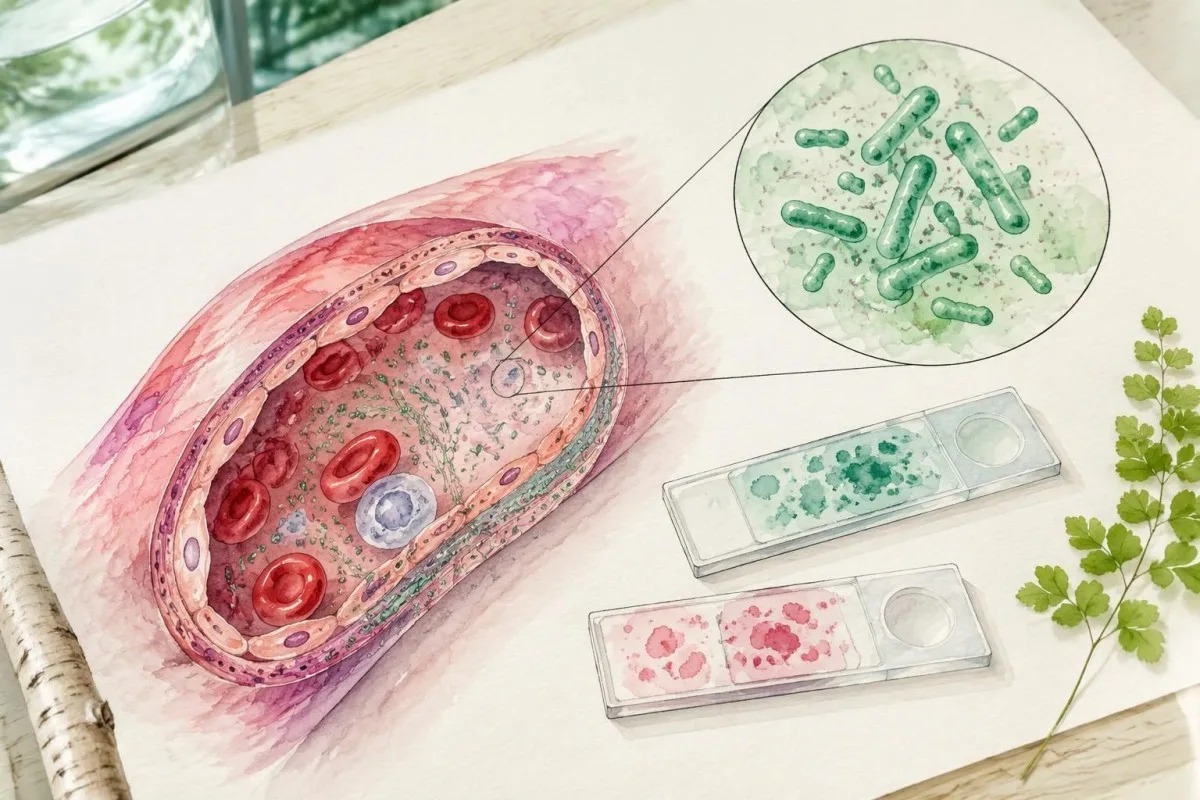
- PCR नकारात्मक: संपूर्ण रक्ताच्या PCR चाचणीत RMSF आढळून न येण्याची शक्यता असते, कारण Rickettsia rickettsii मुख्यतः रक्ताभिसरणातील पांढऱ्या पेशींऐवजी रक्तवाहिन्यांच्या अंतःस्तर पेशींवर परिणाम करते.
- उपचाराची वेळ: प्रौढ आणि कोणत्याही वयाच्या मुलांमध्ये संशयित RMSF साठी डॉक्सीसायक्लिन हा प्रथम-पंक्तीचा उपचार आहे; डॉक्टरांनी चाचणीच्या निकालांची वाट पाहू नये.
- प्रौढांसाठी नेहमीची औषधयोजना: CDC च्या मार्गदर्शक सूचनांनुसार दर 12 तासांनी 100 mg डॉक्सीसायक्लिन देण्याची शिफारस केली जाते; साधारणपणे किमान 5–7 दिवस आणि ताप किमान 3 दिवसांपासून उतरलेला असेल व वैद्यकीय स्थितीत सुधारणा झालेली असेल तोपर्यंत.
रॉकी माउंटन स्पॉटेड फिव्हरची कोणती चाचणी प्रथम केली जाते?
यासाठी प्रतिपिंडांची मानक पद्धत RMSF चे निदान म्हणजे अप्रत्यक्ष फ्लुरोसंट प्रतिपिंड चाचणीद्वारे जोड्यांतील IgG चाचणी, जिला सामान्यतः आयएफए (IFA). म्हणतात. तथापि, पहिला निकाल येण्यापूर्वीच डॉक्टर डॉक्सीसायक्लिन सुरू करू शकतात, कारण आजाराच्या 1–7 दिवसांत घेतलेला प्रतिपिंडाचा नमुना अनेकदा आजाराची पुष्टी करू शकत नाही किंवा तो नाकारू शकत नाही.

RMSF हा Rickettsia rickettsii, मुळे होतो; हा टिकद्वारे प्रसारित होणारा जीवाणू लहान रक्तवाहिन्यांना वेगाने नुकसान पोहोचवू शकतो. CDC चे व्यावहारिक मार्गदर्शक दोन कामे वेगळी ठेवते: संभाव्यतः धोकादायक आजारावर त्वरित उपचार करणे आणि नंतर पुष्टीसाठी प्रयोगशाळेतील पुरावे मिळवणे; या कामांची गल्लत केल्यास टाळता येण्याजोगा विलंब होतो (Biggs et al., 2016).
RMSF पॅनेल म्हणून वर्णन केलेल्या चाचणीमध्ये IgG, IgM किंवा दोन्हींचा समावेश असू शकतो आणि स्क्रीनिंगच्या निकालानंतर IFA टायटर काढला जाऊ शकतो. प्रत्येक निकाल कोणत्या पद्धतीने मिळाला हे विचारा, कारण 1 सकारात्मक स्क्रीनिंग निकाल आणि 1 परिमाणात्मक टायटर या परस्पर बदलून वापरता येत नाहीत; आमचे मार्गदर्शक सकारात्मक प्रतिपिंड परिणाम हा फरक स्पष्ट करतो.
कांटेस्टी हा एक एआय रक्त चाचणी विश्लेषक प्रयोगशाळेचे अहवाल समजावून सांगण्यासाठी तयार केले आहे, 1 नकारात्मक निकालावरून RMSF नाकारण्यासाठी नाही. आमचे कंपनीचे पार्श्वभूमी (company background) त्या सेवेच्या मागे असलेली संस्था ओळखते; तपासणी, संसर्ग-संपर्काचे मूल्यमापन, चाचण्या मागवणे आणि प्रतिजैविकांबाबतचे निर्णय ही उपचार करणाऱ्या डॉक्टरांची जबाबदारीच राहते.
RMSF प्रतिपिंड चाचणी लवकर केल्यास नकारात्मक का येते?
एक RMSF चाचणीतील खोटा नकारात्मक निकाल अनेकदा प्रतिपिंडांच्या कालावधीशी संबंधित असतो: रोगप्रतिकारक प्रतिसादाने अद्याप शोधता येण्याइतकी प्रतिपिंडे निर्माण केलेली नसतात. लक्षणांच्या पहिल्या 7 दिवसांत IgG IFA अनेकदा नकारात्मक असते; त्यामुळे वैद्यकीय चित्र RMSF सूचित करत असताना सुरुवातीचा नकारात्मक अहवाल उपचार रोखण्याचे समर्थन करत नाही.

तपासणीचे दिवस मोजणे सुरू होते लक्षणांची सुरुवात, प्रयोगशाळेला नमुना मिळाल्याचा दिवस नव्हे. उदाहरणार्थ, आजाराच्या तिसऱ्या दिवशी चाचणी केलेल्या काल्पनिक व्यक्तीला IgG नकारात्मक असूनही खरोखर RMSF असू शकतो; कित्येक आठवड्यांनंतर आलेल्या त्याच नकारात्मक निकालाचा अर्थ वेगळा असेल, विशेषतः जोड्यांतील चाचणी पूर्ण केली असल्यास.
प्रत्येक व्यक्तीत प्रतिपिंडनिर्मिती नेमक्या एका ठरावीक दिवशी होत नाही. CDC च्या Clinical and Laboratory Diagnosis मार्गदर्शनात स्पष्ट केले आहे की पहिल्या आठवड्यातील सिरोलॉजी अनेकदा नकारात्मक असते; प्रतिपिंडे आधीच सकारात्मक असलेल्या नमुन्यांवरील प्रयोगशाळेची उच्च कामगिरी म्हणजे दिवस 1–7 दरम्यानही तितकीच संवेदनशीलता असते, असा अर्थ नाही.
सुरुवातीचा निकाल नकारात्मक आल्यानंतर केवळ 24–48 तासांनी IgG ची पुनर्चाचणी केल्यास फारसा फायदा होणार नाही, कारण अपेक्षित प्रतिपिंड बदल दिसण्यासाठी हा कालावधी सहसा खूपच कमी असतो. The Monospot testing window illustrates a similar timing principle, although its assay, illness, and recommended follow-up schedule differ from RMSF.
RMSF IgG सकारात्मक असण्याच्या अर्थामध्ये नेमके काय समाविष्ट आहे?
RMSF IgG positive meaning includes previous exposure, recent infection, or antibodies reacting with another spotted fever group rickettsia. A single positive titer—even 1:256 or higher—cannot independently establish acute RMSF, because antibody persistence and cross-reactivity prevent the result from acting as a reliable date stamp.

Antibodies against R. rickettsii can remain elevated for months and sometimes up to 4 years after illness, according to CDC diagnostic guidance. Persistent positivity does not mean bacteria remain active, and the height of a single titer does not reliably distinguish a new infection from an older immune response.
Background antibodies also affect interpretation: CDC notes that 10% or more of healthy people in some areas may have elevated titers from past exposure to spotted fever group rickettsiae. That figure is geographically dependent, not a universal prevalence estimate; testing someone without compatible symptoms increases the chance of finding a clinically misleading positive.
Consider a hypothetical asymptomatic adult with IgG 1:128 on an incidental panel and no recent febrile illness. That 1 result is not a reason by itself to prescribe doxycycline; antibody persistence after exposure is another example of why serology must be matched to the organism, symptoms, and sampling dates.
क्रॉस-रिअॅक्टिव्हिटी किंवा IgM मुळे दिशाभूल करणारा निकाल येऊ शकतो का?
क्रॉस-रिॲक्टिव्हिटी can produce positive RMSF serology after exposure to another spotted fever group rickettsia, and IgM is less specific than IgG for diagnosing recent illness. A positive IgM result on day 5 is therefore not a dependable shortcut around an early negative IgG result.
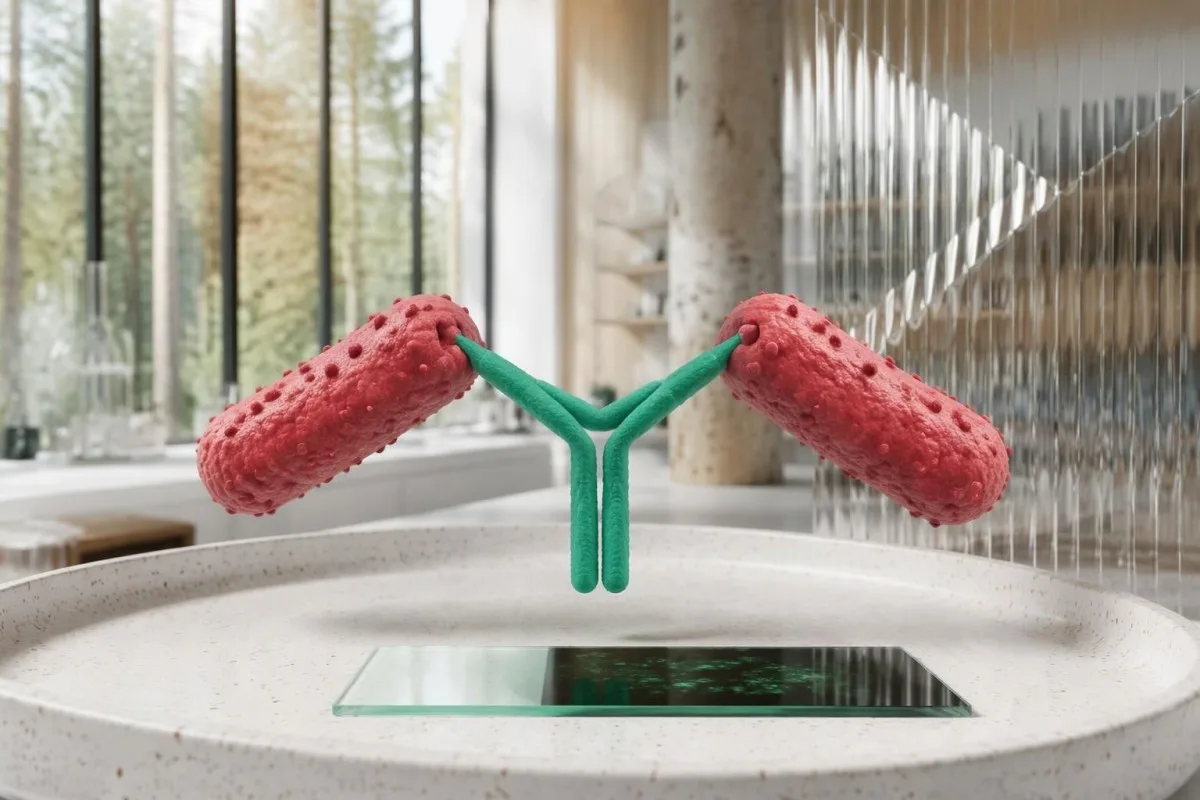
R. rickettsii, R. parkeri, and related organisms share antigenic features that routine commercial serology often cannot distinguish. A 4-fold IgG rise can establish recent spotted fever group rickettsial infection in a compatible illness, but identifying R. rickettsii specifically may require species-specific molecular testing or specialized reference-laboratory investigation.
IgM may appear without convincing evidence of recent rickettsial illness and should not be used as a stand-alone diagnostic marker. The CDC practical guide favors paired IgG IFA for confirmation rather than interpreting 1 isolated IgM positive as proof of acute RMSF (Biggs et al., 2016).
Not all antibody families behave alike: Q fever antibody patterns use phase-specific interpretation that should not be imported into RMSF. For a report showing IgM positive and IgG negative on day 4, ask about clinical suspicion, assay method, and the planned convalescent specimen rather than assuming the sequence proves infection.
जोड नमुने आणि चारपट वाढ निदानाला कशी पुष्टी देतात?
Paired IgG IFA samples support diagnosis by showing whether antibody titers rise substantially between acute illness and recovery. A rise from 1:64 to 1:256 is fourfold; with compatible symptoms, it supports recent spotted fever group rickettsial infection rather than merely documenting an antibody that was already present.
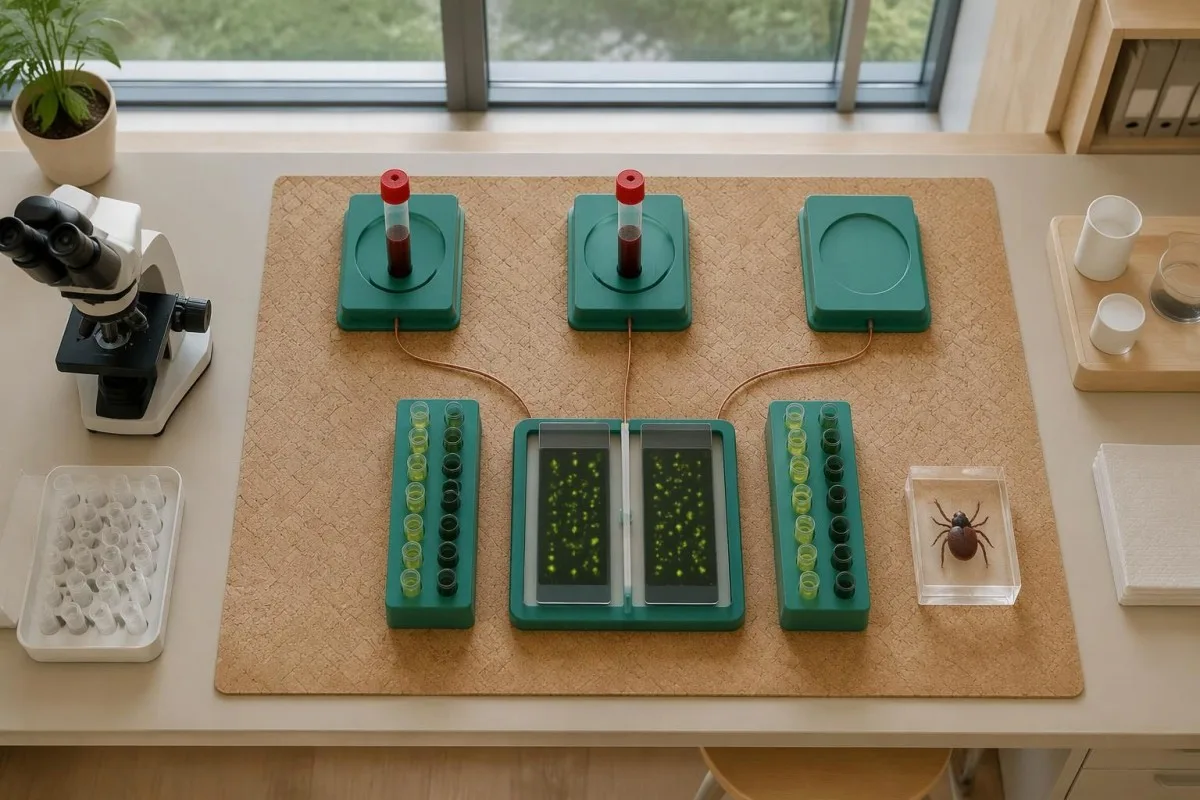
IFA titers describe the highest dilution at which antibody remains detectable; 1:256 means detection after greater dilution than 1:64. In a common 2-fold dilution series, 1:64 to 1:128 is one step, while 1:64 to 1:256 is two steps—the fourfold change used to reduce ambiguity from small fluctuations.
CDC RMSF guidance describes paired specimens collected 2–10 weeks apart, while the 2016 practical guide emphasizes an acute specimen and a convalescent specimen ideally 2–4 weeks later. These recommendations are not competing treatment deadlines; the clinician and laboratory should agree on follow-up timing that can capture the antibody response.
Use the same laboratory and assay when possible, and retain the original reports rather than comparing 2 abbreviated portal flags. Our explanations of मात्रात्मक विरुद्ध गुणात्मक परिणामांचे स्पष्टीकरण आणि प्रयोगशाळा भेटींमध्ये बदलते help distinguish a meaningful paired titer rise from unrelated reporting differences.
| स्तर | श्रेणी | याचा अर्थ |
|---|---|---|
| Early negative | Below laboratory cutoff on days 1–7 | Does not exclude RMSF; antibodies may not yet be detectable. |
| Single positive | Example: 1:128 on one specimen | Shows detectable antibody, not the date or species of infection. |
| Twofold rise | Example: 1:64 → 1:128 | Does not meet the standard fourfold-rise criterion. |
| चारपट वाढ | उदाहरण: 1:64 → 1:256 | Supports recent spotted fever group infection with compatible illness; does not measure severity. |
प्रतिपिंडे दिसण्यापूर्वी PCR द्वारे RMSF शोधता येऊ शकतो का?
PCR can detect rickettsial DNA before antibodies develop, but a negative whole-blood PCR does not exclude RMSF. R. rickettsii mainly targets vascular endothelial cells, so an illness-day-3 blood specimen may contain too little bacterial DNA for detection even when the disease is clinically significant.
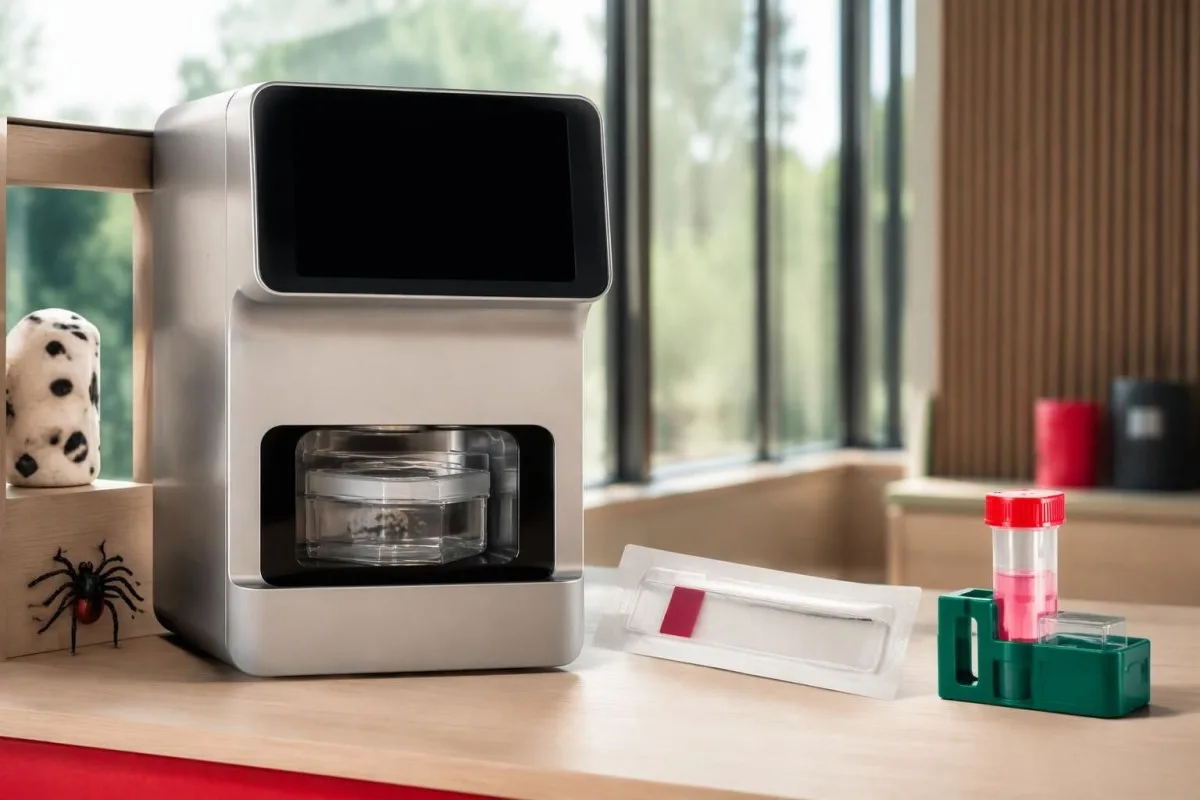
Unlike serology, PCR looks for the organism's genetic material rather than the host's immune response. Its usefulness depends on 3 practical variables: the specimen collected, illness severity and timing, and whether antibiotics have already reduced detectable organisms; there is no single sensitivity percentage applicable to every RMSF PCR order.
A clinician may arrange PCR or immunohistochemical testing of a rash skin biopsy through an appropriate laboratory, because affected tissue can provide evidence unavailable in circulating blood. Even when tissue testing is considered, collecting a specimen before the first doxycycline dose is desirable only if it does not delay urgent treatment.
Ask whether a panel actually includes R. rickettsii and whether it reports species-specific results or a broader rickettsial group. The PCR timing explanation for whooping cough demonstrates why molecular tests have specimen and treatment windows, but its respiratory sampling rules do not apply to RMSF.
RMSF आणि एर्लिकिओसिसच्या चाचण्यांचे परिणाम वेगवेगळे का असतात?
RMSF and ehrlichiosis require different diagnostic reasoning even when the same tick-exposure evaluation includes both. Whole-blood PCR is generally more useful early in ehrlichiosis because Ehrlichia organisms infect white cells, whereas R. rickettsii primarily affects vessel-lining cells; 1 negative tick-borne panel is not a universal exclusion test.

Fever, headache, muscle aches, and abnormal liver enzymes can occur in more than 1 tick-borne illness. Exposure location, platelet count, white-cell count, rash, and illness timing guide test selection; clinicians should not assume that an order called a tick panel covers every relevant organism or uses the best specimen for each.
द ehrlichiosis PCR and titer guide explains why acute PCR and later antibodies may disagree in that illness. For a hypothetical day-4 presentation, an Ehrlichia PCR positive and RMSF IgG negative need interpretation as separate findings—not evidence that all other tick-transmitted illnesses were conclusively excluded.
कांटेस्टी हा एक AI रक्त तपासणी अहवाल समजून घ्या प्लॅटफॉर्म that explains submitted laboratory reports, not a substitute for organism-specific diagnostic assessment. If a report contains 2 negative results from different methods, we emphasize the distinction between the method's target and the clinician's question rather than treating the word negative as a complete answer.
कोणते नियमित रक्त तपासणीचे निकाल RMSF च्या संशयाला पुष्टी देऊ शकतात?
Low platelets, mildly elevated AST or ALT, and low sodium can support suspicion of RMSF, but none confirms the diagnosis and early values may be normal. A platelet count of 110 × 10⁹/L and sodium of 130 mmol/L are contextual clues—not organism-specific thresholds or prerequisites for starting treatment.
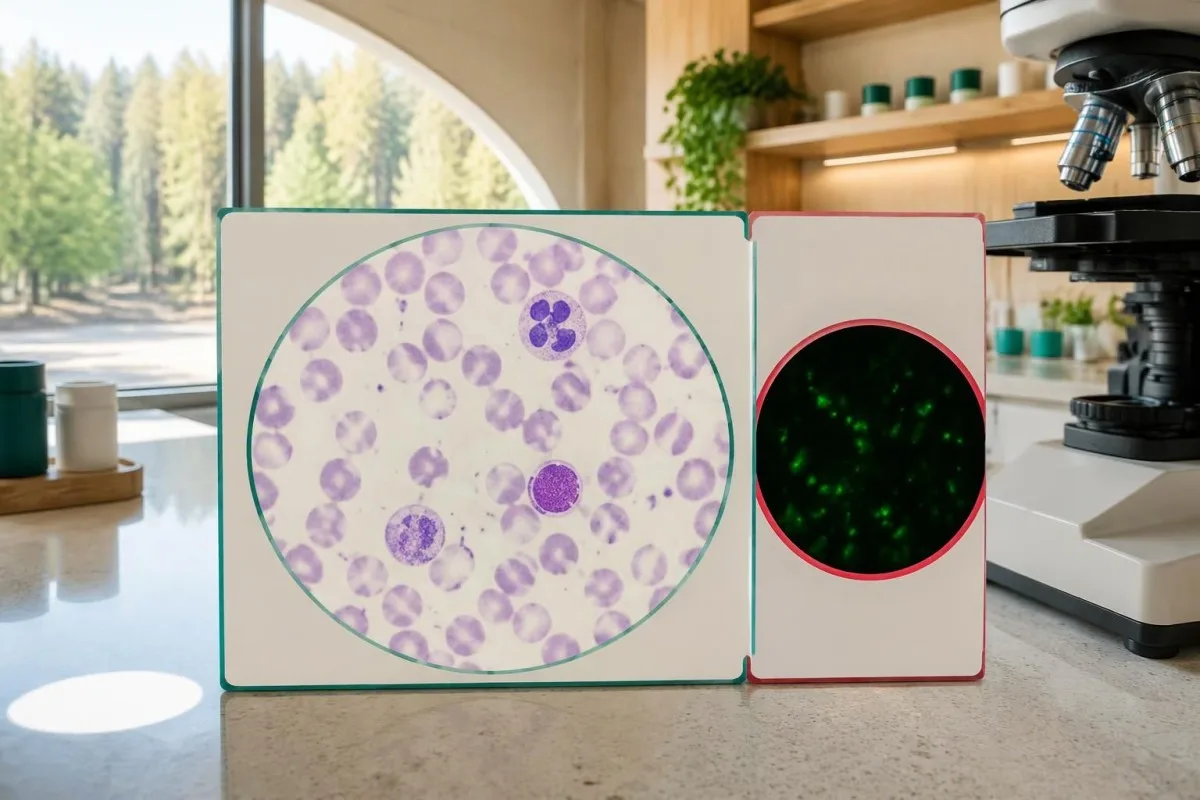
Typical adult platelet reference intervals are approximately 150–450 × 10⁹/L, and serum sodium is commonly 135–145 mmol/L, although local ranges vary. The reason clinicians consider falling platelets together with fever and low sodium is that the combination can suggest systemic illness; it does not distinguish RMSF from several infectious or noninfectious causes.
A hypothetical febrile traveler with platelets 95 × 10⁹/L, AST 82 U/L, and recent outdoor exposure deserves clinical assessment even if white cells are normal. Our WBC आणि CRP तुलना explains why normal inflammatory markers cannot independently clear a person with concerning symptoms.
Unexpectedly low platelets may also reflect sample-related clumping, which requires laboratory verification rather than automatic attribution to RMSF; EDTA मुळे प्लेटलेट्स एकत्र चिकटणे (clumping) explains that artifact. If systemic illness is accompanied by abnormal clotting or organ dysfunction, the रक्त गोठणे चाचणी मार्गदर्शन helps explain additional tests, but a repeat specimen must not postpone urgent care.
RMSF चा संशय असल्यास निकाल येण्यापूर्वी उपचार का सुरू करावेत?
Suspected RMSF requires prompt empiric doxycycline, because early tests can be negative and delayed treatment increases the risk of severe illness and death. Clinicians should not wait for IgG seroconversion, a PCR report, or a convalescent sample 2–10 weeks later before treating a compatible acute presentation.

Treatment timing is a safety issue, not simply a preference for faster symptom relief. Kirkland et al. reported higher mortality with treatment initiated after the first 5 days of illness in their retrospective study; its observational design limits precise causal estimates, but the finding supports the urgency emphasized in CDC guidance (Kirkland et al., 1995).
CDC recommends doxycycline 100 mg every 12 hours for adults and children weighing at least 45 kg; children under 45 kg receive 2.2 mg/kg every 12 hours, up to 100 mg per dose. These are clinician-prescribed regimens, not instructions for self-treatment; oral versus intravenous therapy depends on severity and the ability to retain medication.
Treatment generally lasts at least 5–7 days and continues until fever has resolved for at least 3 days with clinical improvement; complicated cases may need longer care. Pregnancy or suspected doxycycline allergy requires urgent individualized advice rather than automatic delay, and urgent infection assessment illustrates the same need to coordinate testing and treatment, although Listeria requires different antibiotics.
RMSF च्या सामान्य चाचणी निकालांचा अर्थ कसा लावावा?
RMSF test results must be interpreted using symptoms, illness dates, specimen types, and changes between samples. An early negative result may be uninformative, a single positive may reflect old exposure, and a fourfold paired IgG rise can support recent spotted fever group rickettsial infection without proving the species.

Example 1 is hypothetical: a person develops fever and severe headache after outdoor exposure, tests IgG negative on day 3, and begins clinician-directed doxycycline that day. An acute titer below 1:64 followed by a convalescent titer of 1:256 can provide supportive laboratory evidence, but the laboratory must verify the change against its starting dilution and reporting limits.
Example 2 is also hypothetical: an otherwise well person has IgG 1:256 on 2 specimens obtained several weeks apart, without a compatible intervening illness. Stable positivity does not prove new RMSF, and escalating antibiotics to make the titer disappear is not justified; Kantesti explains this as an interpretation limitation, not a declaration that every stable titer is harmless.
Example 3 involves fever, IgG 1:128, and no properly timed acute comparator, leaving recent versus previous exposure uncertain. The next step depends on clinical assessment and possible additional testing; संसर्गाच्या तुलनेत बेबेसियाची प्रतिपिंडे demonstrates a related distinction, but babesiosis needs its own organism-detection approach and is not treated with doxycycline alone.
RMSF चा नकारात्मक निकाल असूनही लक्षणांना कधी प्राधान्य द्यावे?
A negative RMSF result should not override a concerning acute illness with fever, severe headache, gastrointestinal symptoms, or rash after plausible tick exposure. Symptoms typically begin 3–12 days after an infected tick bite, and neither an unremembered bite nor the absence of an early rash reliably excludes RMSF.

The classic rash often develops 2–4 days after fever begins, so waiting for wrist, ankle, palm, or sole spots can delay care. RMSF can occur without a recognized rash, and its name is geographically misleading: clinicians assess exposure beyond the Rocky Mountain region, including travel and locally circulating ticks.
Confusion, breathing difficulty, fainting, rapidly worsening illness, or a spreading purple or pinpoint rash warrant emergency assessment—not a plan to repeat antibodies in 2 weeks. A fever and severe headache after possible tick exposure merit prompt clinical contact even if an online portal marks the first RMSF test negative.
After a tick bite without symptoms, routine antibody screening and preventive antibiotics are not recommended specifically to prevent RMSF; CDC guidance advises symptom monitoring for approximately 14 days. Tick exposure can also lead to conditions with entirely different testing logic, such as टिकमुळे होणारी अल्फा-गॅल ॲलर्जी, which involves allergy assessment rather than RMSF IgG interpretation.
उपचारानंतर RMSF प्रतिपिंडांची चाचणी पुन्हा करावी का?
Repeat RMSF antibodies are useful for diagnostic confirmation, not as a routine test of cure. A convalescent sample collected 2–10 weeks after the acute specimen can document an antibody rise, but persistent IgG after recovery does not by itself mean treatment failed or that more antibiotics are needed.

Fever often improves within 24–48 hours after early appropriate doxycycline treatment, although severe illness may respond more slowly. Failure to improve or clinical deterioration requires reassessment for complications, an alternative diagnosis, inadequate medication absorption, or another illness; it should not be managed by waiting for a titer to fall.
Early antibiotic treatment can sometimes delay or diminish antibody responses in rickettsial illness, so the absence of a fourfold rise is not an absolute retrospective exclusion in every treated case. Do not stop effective treatment to improve test yield; the clinician should interpret the 2 specimens alongside treatment dates, sampling quality, and the original clinical presentation.
Kantesti AI can help organize submitted results for trend review, but a trend graph cannot establish that RMSF is cured or still active. Our रक्त तपासणी टाइमलाइन मार्गदर्शक explains why illness and medication dates matter; persistent symptoms after treatment need clinical reassessment, because lasting complications can occur without evidence of chronic ongoing RMSF infection.
RMSF अहवाल समजावून सांगण्यासाठी AI ला विचारण्यापूर्वी काय तपासावे?
A useful RMSF report explanation requires the assay method, exact titer, collection date, and symptom-onset date, not just the words positive or negative. Before seeking an AI explanation, identify whether 2 reports represent comparable acute and convalescent specimens; urgent symptoms still require clinical care before any upload or interpretation.

Record at least 5 details: symptom onset, sample collection, IgG versus IgM, IFA titer versus screening index, and the first antibiotic dose. Add recent travel and exposure information for the clinician; a numerical index of 2.1 from one assay cannot be mathematically converted into an IFA titer such as 1:128.
कांटेस्टी हा एक AI-चालित रक्त चाचणी विश्लेषण साधन that helps explain submitted laboratory information without replacing clinical diagnosis. Our AI तंत्रज्ञान मार्गदर्शक describes the interpretation approach; for suspected RMSF, 1 negative early result must never become an AI-generated reassurance that postpones medical assessment.
An explanation should separate 3 categories: what the laboratory measured, what that finding can support, and what remains uncertain. Our वैद्यकीय अहवाल स्रोत तपासणी describe that safety boundary; useful questions include whether paired IgG is planned, whether PCR covered the suspected species, and whether treatment has already started.
संशोधन प्रकाशने आणि निदानविषयक पुराव्याच्या मर्यादा
RMSF diagnostic guidance and AI engineering publications answer different questions and should not be treated as interchangeable evidence. The 2016 CDC practical guide supports paired serology and immediate treatment when clinically indicated; 2 Figshare records listed below provide publication context, not proof that an AI system can diagnose or exclude RMSF.
The 1995 therapeutic-delay study and the 2016 CDC recommendations directly address RMSF care, whereas a laboratory's assay validation addresses the particular test it performs. These are 3 different evidence levels—clinical outcomes, diagnostic guidance, and analytical performance—and none makes a first-week negative antibody result a reliable reason to delay treatment.
Kantesti's 2 requested Figshare publication records concern women's health and AI-assisted hantavirus triage, respectively; neither should be cited as an RMSF diagnostic-validation study. A DOI identifies a publication record rather than guaranteeing peer review, clinical accuracy, or applicability to another disease; our वैद्यकीय सामग्री मानके explain the need to distinguish directly relevant sources from contextual material.
For this topic, the practical evidence boundary is straightforward: a 4-fold paired IgG rise supports recent spotted fever group infection, while immediate care depends on clinical suspicion rather than a future titer. Our क्लिनिकल व्हॅलिडेशन फ्रेमवर्क provides broader methodology context, but suspected RMSF still requires a clinician who can examine, prescribe, and arrange appropriate confirmatory testing.
वारंवार विचारले जाणारे प्रश्न
रॉकी माउंटन स्पॉटेड फिव्हरची चाचणी सुरुवातीला नकारात्मक असू शकते का?
होय, आजाराच्या पहिल्या 7 दिवसांत रॉकी माउंटन स्पॉटेड फीव्हरची अँटिबॉडी चाचणी वारंवार नकारात्मक येते, कारण शोधता येण्याजोग्या अँटिबॉडीज अद्याप विकसित झालेल्या नसतात. त्यामुळे IgG IFA चा सुरुवातीचा नकारात्मक निकाल RMSF नाकारत नाही. आजाराची लक्षणे आणि संपर्काचा इतिहास RMSF सूचित करत असल्यास, पुन्हा चाचणीची वाट पाहण्याऐवजी डॉक्टरांनी त्वरित डॉक्सीसायक्लिन सुरू करावे. नंतर घेतलेला आरोग्यलाभाच्या अवस्थेतील नमुना निदान निश्चित करण्यात मदत करू शकतो.
RMSF IgG पॉझिटिव्ह असण्याचा अर्थ मला सक्रिय संसर्ग आहे का?
सकारात्मक RMSF IgG निकालावरून सक्रिय संसर्ग स्वतंत्रपणे सिद्ध होत नाही, जरी टायटर 1:256 असला तरी. प्रतिपिंडे अनेक महिने किंवा वर्षे टिकू शकतात आणि इतर स्पॉटेड फिव्हर गटातील रिकेट्सियाशी प्रतिक्रिया देऊ शकतात. अलीकडील लक्षणे, संपर्क आणि तुलनायोग्य जोड नमुन्यांमधील चारपट वाढ यांमुळे अलीकडील संसर्गाची शक्यता अधिक असते. सुसंगत लक्षणे नसलेल्या व्यक्तीमध्ये केवळ एकट्या सकारात्मक निकालामुळे प्रतिजैविके देणे योग्य ठरत नाही.
0 दुसरा RMSF प्रतिपिंड नमुना कधी गोळा करावा?
CDC RMSF निदान मार्गदर्शनानुसार तीव्र आणि स्वास्थ्यलाभानंतरचे IgG नमुने 2–10 आठवड्यांच्या अंतराने गोळा केले जातात. 2016 च्या CDC व्यावहारिक मार्गदर्शिकेनुसार, स्वास्थ्यलाभानंतरचा नमुना आदर्शतः तीव्र अवस्थेतील नमुन्यानंतर 2–4 आठवड्यांनी घ्यावा. उपचार करणाऱ्या चिकित्सकाने आणि प्रयोगशाळेने योग्य अंतर निवडावे आणि तुलनीय चाचण्या वापराव्यात. दुसऱ्या नमुन्याची वाट पाहत उपचार विलंबित करू नयेत.
RMSF प्रतिपिंड टायटरमध्ये चारपट वाढ म्हणजे काय?
चारपट वाढ म्हणजे नंतरचा IgG टायटर आधीच्या टायटरच्या चार पट असतो, उदाहरणार्थ 1:64 वरून 1:256 पर्यंत वाढणे. सामान्य द्विपटीय विरलीकरण श्रेणीत, हे विरलीकरणाच्या दोन पायऱ्यांचे प्रतिनिधित्व करते. सुसंगत आजारासह, हा बदल स्पॉटेड फीव्हर गटातील रिकेट्सियल संसर्ग अलीकडील असल्याचे सूचित करतो. नियमित सिरोलॉजीद्वारे Rickettsia rickettsii ची विशिष्ट ओळख पटवणे किंवा आजाराची तीव्रता निश्चित करणे तरीही शक्य नसेल.
RMSF PCR निगेटिव्ह आल्याने हा रोग नाकारला जातो का?
संपूर्ण रक्तातील RMSF PCR चा नकारात्मक निकाल रोग नाकारत नाही, कारण Rickettsia rickettsii मुख्यतः रक्तवाहिन्यांच्या आतील अस्तराच्या पेशींवर परिणाम करते, परिभ्रमण करणाऱ्या पांढऱ्या रक्तपेशींवर नव्हे. आजाराच्या तिसऱ्या दिवशी घेतलेल्या नमुन्यात तपासणीसाठी पुरेसे जिवाणू DNA नसू शकते आणि प्रतिजैविकांमुळे चाचणीचा शोधक्षमता-निकाल आणखी कमी होऊ शकतो. योग्य असल्यास, प्रभावित त्वचेच्या ऊतींची विशेष तपासणी अतिरिक्त पुरावा देऊ शकते. PCR चे निकाल मिळवताना किंवा त्यांची प्रतीक्षा करताना डॉक्टरांनी उपचार सुरू करण्यास विलंब करू नये.
RMSF चे निकाल येण्यापूर्वी मुलांना डॉक्सीसायक्लिन द्यावे का?
Children of all ages should receive clinician-prescribed doxycycline promptly when RMSF is suspected, without waiting for laboratory confirmation. CDC guidance recommends 2.2 mg/kg every 12 hours for children under 45 kg, with a maximum of 100 mg per dose. Short courses used for rickettsial disease have not been shown to cause the permanent tooth staining associated with older tetracycline concerns. The child's clinician determines route, duration, and whether hospital care is needed.
उपचारानंतरही माझी RMSF IgG चाचणी पॉझिटिव्ह का आहे?
RMSF IgG आजारानंतर अनेक महिने आणि कधीकधी 4 वर्षांपर्यंत सकारात्मक राहू शकते, त्यामुळे सतत सकारात्मक राहणे हे स्वतःहून उपचार अपयशी ठरल्याचे दर्शवत नाही. अँटिबॉडी चाचणी ही बरे झाल्याची खात्री करण्यासाठीची नियमित चाचणी नाही. टायटर नकारात्मक व्हावा एवढ्याच कारणासाठी अतिरिक्त प्रतिजैविके लिहून देऊ नयेत. लक्षणे कायम राहिल्यास किंवा बिघडल्यास, केवळ अँटिबॉडीच्या संख्येवरून अर्थ लावण्याऐवजी गुंतागुंती किंवा अन्य निदानासाठी नैदानिक पुनर्मूल्यांकन आवश्यक आहे.
तुमचे रक्त तपासणी अहवाल कसे वाचावेत
तुमचा प्रयोगशाळा अहवाल अपलोड करा आणि Kantesti चे AI काही सेकंदांत प्रत्येक जैवचिन्ह सोप्या भाषेत समजावून सांगेल. जगभरातील 2 दशलक्षांहून अधिक लोक वापरतात.
संदर्भ
- Klein, T., Mitchell, S., & Weber, H. (2026). महिलांचे आरोग्य मार्गदर्शक: अंडोत्सर्ग, रजोनिवृत्ती आणि हार्मोनल लक्षणे. Kantesti AI वैद्यकीय संशोधन. डीओआय
- Klein, T., Mitchell, S., & Weber, H. (2026). हंताव्हायरसच्या लवकर वर्गीकरणासाठी बहुभाषिक AI-सहाय्यित नैदानिक निर्णय समर्थन: 50,000 अर्थ लावलेल्या रक्त तपासणी अहवालांद्वारे रचना, अभियांत्रिकी प्रमाणीकरण आणि प्रत्यक्ष-जगातील उपयोजन. Kantesti AI वैद्यकीय संशोधन. डीओआय
- Biggs HM et al. (2016). Diagnosis and Management of Tickborne Rickettsial Diseases: Rocky Mountain Spotted Fever and Other Spotted Fever Group Rickettsioses, Ehrlichioses, and Anaplasmosis — United States. MMWR शिफारसी आणि अहवाल. डीओआय
- Kirkland KB et al. (1995). Therapeutic delay and mortality in cases of Rocky Mountain spotted fever. Clinical Infectious Diseases.
- Centers for Disease Control and Prevention (n.d.). Clinical and Laboratory Diagnosis for Rocky Mountain Spotted Fever. CDC चे वैद्यकीय मार्गदर्शन.
- २० लाख+विश्लेषित केलेल्या चाचण्या
- 127+देश
- 100+भाषा
वैद्यकीय पथकाविषयी


E-E-A-T विश्वास संकेत
अनुभव
प्रयोगशाळेतील अहवाल समजून घेण्याच्या कार्यप्रवाहांचे डॉक्टरांच्या नेतृत्वाखालील क्लिनिकल पुनरावलोकन.
कौशल्य
बायोमार्कर्स क्लिनिकल संदर्भात कसे वागतात यावर प्रयोगशाळा वैद्यकाचा भर.
अधिकृतता
डॉ. Thomas Klein यांनी वैद्यकीय पुनरावलोकन केले; डॉ. Sarah Mitchell आणि प्रा. डॉ. Hans Weber यांचे योगदान.
विश्वासार्हता
पुराव्यावर आधारित अर्थ लावणे, घाबरवणाऱ्या सूचना कमी करण्यासाठी स्पष्ट पुढील मार्गांसह.






वैद्यकीय अस्वीकरण
हा लेख केवळ शैक्षणिक उद्देशांसाठी आहे आणि वैद्यकीय सल्ला ठरत नाही. निदान आणि उपचार निर्णयांसाठी नेहमी पात्र आरोग्यसेवा प्रदात्याशी सल्लामसलत करा.
प्रकाशित · संपादकीय पथकाशी संपर्क साधा
Kantesti Ltd द्वारे प्रकाशित, इंग्लंड आणि वेल्समध्ये नोंदणीकृत, कंपनी क्रमांक. 17090423, लंडन, युनायटेड किंगडम.
