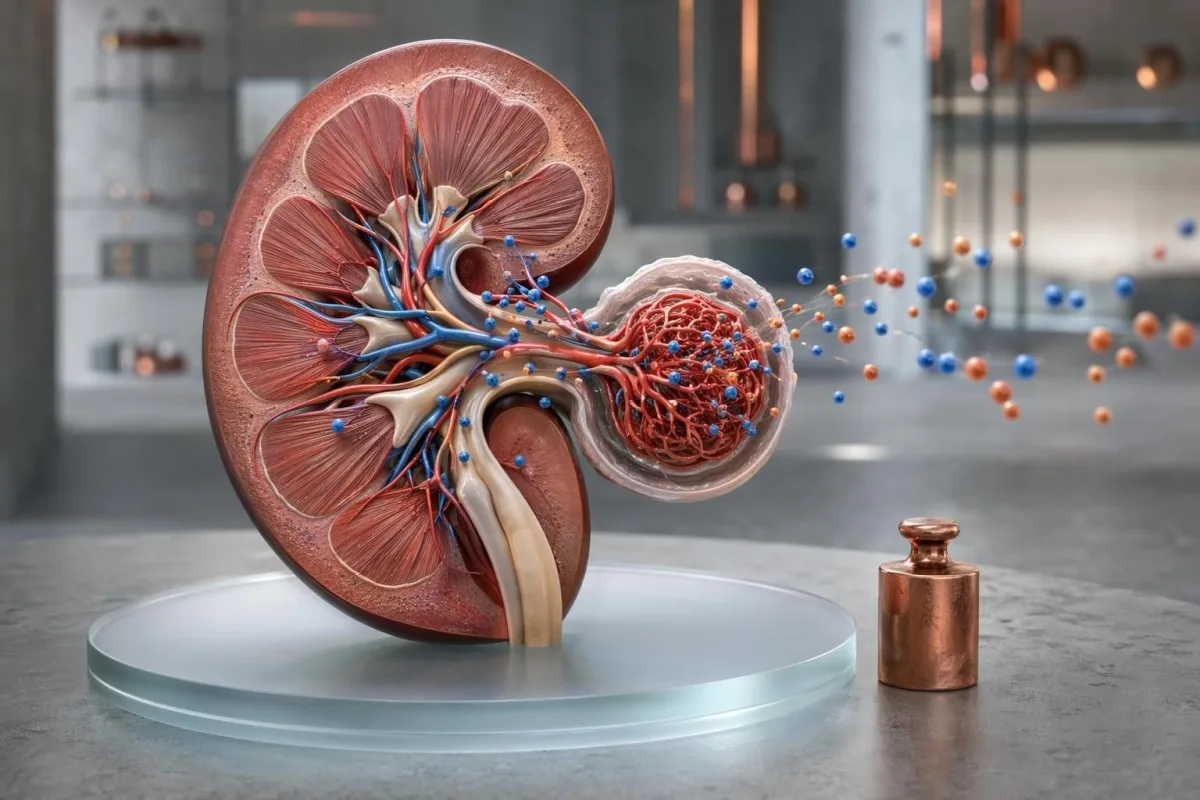
Low complement is usually a pattern of immune-system use, not a diagnosis by itself. The safest interpretation depends on whether C3, C4, CH50, urine, kidney function, and autoimmune markers move together.


- Low complement usually means complement proteins are being consumed by immune complexes, kidney inflammation, infection, or are low because of inherited or acquired deficiency.
- Low C3 low C4 meaning most often points toward classical pathway activation, especially lupus activity, cryoglobulinemia, immune-complex kidney disease, or endocarditis.
- Low C3 with normal C4 is a kidney-first pattern that raises concern for alternative pathway activation, including post-infectious glomerulonephritis and C3 glomerulopathy.
- Low C4 with normal C3 can occur with C1-inhibitor deficiency, inherited C4 copy-number variation, lupus, or cryoglobulin disease.
- Kidney red flags include urine albumin-creatinine ratio above 30 mg/g, proteinuria near or above 500 mg/day, red cell casts, or creatinine rising by 0.3 mg/dL within 48 hours.
- Complement deficiency symptoms include recurrent Neisseria infections, repeated sinus or chest infections, unexplained angioedema, or lupus-like illness starting young.
- Next labs often include urinalysis with microscopy, urine ACR or PCR, creatinine/eGFR, ANA, anti-dsDNA, ENA, CBC, ESR, CRP, CH50, AH50, hepatitis testing, and cryoglobulins.
- False-low results happen if complement samples sit warm or are processed late, so a surprising low C3 or C4 should often be repeated before major decisions.
What low complement means in clinical practice
What does low complement mean? It usually means complement proteins are being used up by immune activity, lost or consumed in kidney inflammation, or are low because the person cannot make enough. A single low C3 or C4 is not a diagnosis; the pattern with urine, kidney function, antibodies, and symptoms tells us whether this is urgent.
As of July 1, 2026, I still treat low complement as a traffic signal, not a disease label. A C3 below about 80 mg/dL or C4 below about 10 mg/dL is low in many adult laboratories, but European labs may report C3 as 0.80 g/L and C4 as 0.10 g/L instead.
Kantesti is an AI blood test analyzer that reads complement alongside kidney, liver, urine, CBC, and inflammatory markers rather than treating C3 or C4 as stand-alone trivia. For the deeper mechanics of C3, C4, ANA, and complement pathways, our complement C3 C4 guide covers the underlying pathway biology.
I’m Thomas Klein, MD, and in clinic the most common mistake I see is over-calling lupus from one mildly low C4. A 32-year-old with C4 at 8 mg/dL, normal C3, normal urinalysis, and no symptoms is a different patient from someone with C3 at 42 mg/dL, C4 at 4 mg/dL, proteinuria, and rising creatinine.
Low C3 and low C4 usually means immune-complex consumption
Low C3 low C4 meaning usually points to classical pathway consumption from immune complexes, especially lupus flare, cryoglobulinemia, immune-complex glomerulonephritis, or chronic infection. The combination is more meaningful when anti-dsDNA rises, urine becomes active, or albumin falls.
A low C3 plus low C4 pattern is one reason doctors look for systemic lupus erythematosus, but it is not lupus by itself. The 2019 EULAR/ACR lupus classification criteria give complement weight: low C3 or low C4 counts for 3 points, while low C3 and low C4 together count for 4 points after a positive ANA entry criterion (Aringer et al., 2019).
The clue I trust most is movement over time. If C3 falls from 105 to 55 mg/dL while anti-dsDNA climbs from 25 to 180 IU/mL and urine protein appears, that is a very different story from a lifelong C4 of 7 mg/dL that never changes; trend reading is exactly why patients should learn the broader blood test numbers meaning.
Chronic infections can look surprisingly autoimmune on paper. I have seen low C3 and C4 with positive rheumatoid factor in hepatitis C cryoglobulinemia, and I have seen endocarditis produce low complement, anemia, microscopic hematuria, and fevers without a dramatic white count.
When both C3 and C4 are low, I usually ask three questions first: is there active urine sediment, is anti-dsDNA or another immune marker rising, and is there infection risk such as fever, new murmur, hepatitis exposure, or unexplained weight loss. That triage prevents a lot of wrong turns.
Low C3 with normal C4 is a kidney-first warning pattern
Low C3 with normal C4 often suggests alternative pathway activation, which commonly shows up through kidney findings. Doctors think about post-infectious glomerulonephritis, C3 glomerulopathy, atypical hemolytic uremic syndrome, and factor H or factor I problems.
The alternative pathway can keep C3 low while C4 stays normal. In practical terms, that means the urine microscopy and kidney panel matter more than a long autoimmune antibody shopping list on day one.
Post-infectious glomerulonephritis often lowers C3 for 6 to 8 weeks after a throat, skin, dental, or systemic infection. If C3 remains low beyond about 8 to 12 weeks, I become more suspicious of C3 glomerulopathy or persistent immune stimulation rather than a simple recovering infection.
C3 glomerulopathy is rare, but missing it is costly because patients may present with proteinuria, hematuria, and a slowly drifting eGFR. The C3 glomerulopathy consensus report by Pickering et al. described dominant C3 deposition as the defining kidney-biopsy feature, and that is why urine plus kidney function drives the pathway, not C3 alone (Pickering et al., 2013).
If your low C3 arrives with borderline creatinine, compare eGFR, cystatin C if available, and urine albumin rather than arguing over one creatinine flag. Our kidney ACR guide explains why albumin-creatinine ratio often catches glomerular injury before creatinine looks alarming.
Low C4 with normal C3 can be hereditary, allergic-like, or autoimmune
Low C4 with normal C3 often points toward C1-inhibitor deficiency, inherited low C4 production, early classical pathway activation, lupus, or cryoglobulinemia. The symptom pattern matters: swelling attacks suggest one pathway, joint rash and urine changes suggest another.
A C4 of 3 to 8 mg/dL with normal C3 and recurrent swelling of lips, tongue, throat, gut, or hands should trigger testing for C1-inhibitor antigen and function. Hereditary angioedema often has normal C3, low C4, and low or dysfunctional C1-inhibitor, even between attacks.
Not all low C4 is dangerous. Some people inherit fewer C4 gene copies and sit just below the lab range for years, with normal CH50 or only mildly reduced CH50, normal urine, and no infections; that is a very different risk profile from new-onset low C4 plus purpura and kidney findings.
Cryoglobulinemia deserves a special mention because the sample handling is fussy and the symptoms are odd. Cold-sensitive proteins can cause purplish leg spots, nerve symptoms, kidney inflammation, and low C4, so a proper cryoglobulin test has to be collected and transported warm before processing.
Kidney red flags that make low complement urgent
Low complement becomes urgent when it appears with active urine findings, rising creatinine, swelling, or high blood pressure. The red flags are proteinuria near 500 mg/day, urine ACR above 30 mg/g, red cell casts, or creatinine rising by 0.3 mg/dL in 48 hours.
The kidney can be inflamed before a person feels ill. I have seen patients with normal energy and a normal-looking CBC who had red cell casts on urine microscopy and a protein-creatinine ratio above 1,000 mg/g, which is not a watch-and-wait pattern.
KDIGO lupus nephritis guidance supports kidney biopsy consideration in suspected lupus when proteinuria is at or above about 500 mg/day, especially with hematuria or casts (KDIGO, 2024). That threshold exists because kidney tissue can show treatable class III or IV lupus nephritis before creatinine becomes obviously abnormal.
Visible tea-colored urine, ankle swelling, blood pressure above 160/100 mmHg, shortness of breath, or rapidly increasing creatinine should not be managed through internet interpretation. If protein shows on dipstick, our protein in urine guide explains which urine numbers deserve same-week follow-up.
A practical tip: ask for the actual urine microscopy report, not just dipstick results. Red cell casts, dysmorphic red cells, and granular casts change the level of concern far more than a vague note saying trace blood.
Autoimmune clues doctors pair with complement trends
Doctors interpret low complement with autoimmune clues such as ANA, anti-dsDNA, ENA antibodies, CBC changes, ESR, CRP, urinalysis, and symptoms. Complement falling while anti-dsDNA rises is more concerning than either result alone.
In lupus follow-up, I pay attention to direction: C3 dropping by 25% from baseline can matter even if the new value barely crosses the laboratory cutoff. A patient whose C3 usually runs 130 mg/dL but is now 86 mg/dL may be changing immunologically before the report shows a red flag.
Anti-dsDNA is not perfect, but pairing it with C3, C4, CBC, and urine reduces guesswork. Thrombocytopenia below 150 x 10^9/L, lymphocytes below 1.0 x 10^9/L, or hemoglobin falling with active urine can make a mild complement drop look more serious.
A negative ANA makes classic lupus less likely, but it does not explain every symptom. If symptoms persist despite negative screening, our guide to negative ANA symptoms lays out why doctors may check ENA, antiphospholipid antibodies, thyroid disease, infection, or vasculitis depending on the story.
CRP also helps separate patterns, though imperfectly. In active lupus, CRP can be modest despite major immune activity, while bacterial infection or serositis may push CRP well above 50 mg/L; this mismatch is one of those areas where context matters more than the number.
Next-step labs after a low complement result
The next labs after low complement should check three things: immune activation, kidney involvement, and complement pathway function. A sensible first pass includes repeat C3/C4, CH50, AH50, urinalysis with microscopy, urine ACR or PCR, creatinine/eGFR, CBC, ANA, anti-dsDNA, ESR, CRP, and infection screening when indicated.
Kantesti is an AI blood test interpretation platform that groups low complement with urine, kidney, inflammatory, and antibody markers so patients can see which follow-up questions are reasonable. Our clinical quality process is described in our medical validation materials because low complement interpretation is exactly where pattern-based review beats single-marker commentary.
If both C3 and C4 are low, I usually include ANA by immunofluorescence if not done, anti-dsDNA, ENA panel, CBC with differential, urinalysis, urine ACR, creatinine/eGFR, albumin, ESR, CRP, hepatitis B and C, HIV when risk fits, and sometimes blood cultures. That list sounds long, but it separates lupus, infection, liver-related immune disease, and kidney inflammation.
If C3 is low and C4 is normal, CH50, AH50, urine microscopy, urine ACR or PCR, C3 nephritic factor, factor H, factor I, and sometimes genetic complement testing enter the discussion. These are not first-line wellness tests; they are ordered when the urine or kidney trajectory justifies them.
If C4 is low and C3 is normal with swelling attacks, C1-inhibitor antigen, C1-inhibitor functional level, and C1q help separate hereditary and acquired angioedema. A C4 below 50% of the lower reference limit during attacks is a strong clue, but normal C4 does not fully exclude angioedema in every patient.
Infection, hepatitis, and cryoglobulin causes of low complement
Infections can cause low complement by forming immune complexes that consume C3 and C4. Hepatitis C, endocarditis, chronic abscesses, and some post-infectious kidney diseases can mimic autoimmune illness on lab results.
Endocarditis is the one I do not want missed. Fever, night sweats, weight loss, anemia, microscopic hematuria, and low complement can appear before anyone hears a clear heart murmur, and blood cultures may be more important than another antibody panel.
Hepatitis C-associated cryoglobulinemia often produces very low C4, positive rheumatoid factor, purpura, nerve symptoms, kidney findings, and fatigue. Patients may focus on the skin spots, but the safer clinical question is whether urine protein, creatinine, and blood pressure are also changing.
If vasculitis is on the table, complement helps sort immune-complex disease from ANCA-associated disease, although overlap happens. Our vasculitis blood tests guide explains why ANCA, urine microscopy, creatinine, ESR, CRP, and complement are often interpreted as a cluster.
A normal white count does not rule out chronic infection. I have seen WBC counts near 6.0 x 10^9/L in patients with low complement and positive blood cultures, which is why symptoms and exposure history still matter.
Complement deficiency symptoms are different from consumption
Complement deficiency symptoms usually involve recurrent unusual infections, lupus-like disease at a young age, or swelling attacks rather than a one-time low lab result. CH50 and AH50 help distinguish pathway deficiency from active complement consumption.
A near-zero CH50 with normal AH50 suggests a classical pathway component problem such as C1, C2, or C4 deficiency. A near-zero AH50 with normal CH50 points more toward alternative pathway issues such as properdin or factor D, though specialist interpretation is needed.
Terminal complement deficiencies involving C5 through C9 increase risk for recurrent Neisseria infections, including meningococcal disease. A history of meningitis, sepsis, or gonorrhea that is recurrent or unusually severe should make clinicians ask about complement pathway testing and vaccination status.
Early classical pathway deficiencies can look autoimmune because immune-complex clearance is impaired. People with C1q, C2, or C4 deficiency may develop lupus-like features, photosensitive rashes, arthritis, kidney inflammation, or positive ANA earlier than expected.
For broader immune context, our article on immune system blood tests explains where complement fits beside immunoglobulins, lymphocyte subsets, vaccine antibody responses, and CBC patterns. Complement is only one arm of immune defense.
False-low complement results happen more often than patients think
Complement can read falsely low if the sample is mishandled, processed late, left warm, or repeatedly thawed. A surprising low C3 or C4 without matching symptoms or other abnormal labs should usually be repeated before major conclusions.
C3 and C4 are more stable than some specialty complement assays, but pre-analytical handling still matters. CH50 is especially sensitive because it measures functional activity, not just protein quantity, so delayed separation can lower activity even when the patient’s pathway is not truly deficient.
Kantesti is an AI-powered blood test analysis tool that can flag mismatched patterns, such as very low CH50 with normal C3, normal C4, normal urine, and no infection history. Our AI technology guide explains how pattern checks reduce overreaction to isolated results.
The recheck should ideally use the same laboratory if you are comparing trends, but a different lab can help if sample logistics were questionable. Some labs freeze complement functional assays quickly; others batch send-outs, which can introduce delays of 24 to 72 hours.
Here is the practical move: repeat C3, C4, CH50, and AH50 when the result does not fit the patient. I would rather repeat a £20 to £80 equivalent test than label someone with an immune disorder they do not have.
Trends tell more than a single low complement value
Complement trends are more clinically useful than one isolated value because each patient has a baseline. A fall of 20% to 30% from personal baseline can matter even when the result remains near the reference range.
I ask patients to save the actual numbers, not screenshots with only red and green flags. If C3 was 132, 118, 92, then 68 mg/dL over 9 months, that slope carries more weight than a single red flag on the last report.
Trends also prevent false reassurance. A C4 of 12 mg/dL may sit technically in range at one lab, but if the person’s usual C4 is 32 mg/dL and anti-dsDNA doubled, I would not call that normal in a lupus patient.
Kantesti AI can compare serial reports across different units, which is useful when a patient moves countries or uses two laboratory networks. Our longitudinal lab analysis guide shows why personal baselines often outperform population reference ranges.
Most outpatient complement trends are rechecked in 4 to 12 weeks, but kidney red flags compress that timeline to days. If creatinine rises, blood pressure jumps, or urine protein increases, waiting for a tidy trend graph is the wrong priority.
Medication, pregnancy, and age change the meaning of low complement
Medication history, pregnancy, age, and recent infection can change how doctors interpret low complement. Immunosuppressants, biologics, estrogen states, liver disease, and recent vaccines or infections may shift the surrounding markers even when complement itself is not the primary problem.
In pregnancy, complement physiology is not as simple as higher or lower. Lupus flare, preeclampsia, antiphospholipid disease, and kidney disease can overlap, so doctors often compare C3, C4, urine protein, platelets, creatinine, AST, ALT, and blood pressure together.
Medication can quiet symptoms while labs still move. A person on prednisone 20 mg daily may have less joint pain and a lower CRP, yet still show falling complement and worsening urine protein, which is why lab surveillance cannot be replaced by symptom tracking.
Older adults deserve a wider differential than lupus alone. Low complement with anemia, weight loss, high globulin, kidney changes, or neuropathy may lead to infection workup, cryoglobulins, immunoglobulins, serum protein electrophoresis, or malignancy screening depending on the story.
When medication timing is confusing, keep a record of start dates, dose changes, and lab dates. Our medication monitoring guide gives a practical way to line up lab changes against steroid bursts, biologic infusions, antibiotics, and new supplements.
Questions to ask your clinician after low complement
After a low complement result, ask whether the pattern suggests consumption, deficiency, kidney involvement, infection, or lab handling error. The safest questions are specific: what changed, what urine findings are present, and what result would trigger urgent review?
Bring the actual C3, C4, CH50, AH50, creatinine, eGFR, urine ACR or PCR, and microscopy numbers. A phrase like low complement is too vague; a C3 of 38 mg/dL with red cell casts is not comparable to C4 of 9 mg/dL on an otherwise normal panel.
I sign these reviews as Thomas Klein, MD, because patients deserve physician accountability for medical interpretation. Our physicians and advisors review high-risk editorial standards through the medical advisory board, especially for kidney, autoimmune, and infection topics.
Seek urgent care if low complement comes with chest pain, shortness of breath, confusion, severe headache with fever, visible blood in urine, rapidly worsening swelling, blood pressure above 180/120 mmHg, or throat swelling. Throat or tongue swelling can be angioedema and is not a routine lab follow-up issue.
For a routine appointment, ask: do I need repeat complement, urine microscopy, ACR or PCR, anti-dsDNA, hepatitis testing, cryoglobulins, CH50/AH50, or nephrology referral? A good plan names both the next test and the time window, usually days, weeks, or 3 months.
How Kantesti organizes low complement follow-up
Kantesti helps organize low complement follow-up by grouping complement, kidney, autoimmune, infection, and trend data into one interpretation workflow. The goal is not to diagnose from C3 or C4 alone, but to show which patterns deserve reassurance, repeat testing, or prompt medical review.
Kantesti is an AI lab test interpretation service built by Kantesti LTD, a UK company, for people who need plain-language interpretation across countries, units, and lab formats. Our platform supports PDF and photo uploads, multilingual explanations, trend analysis, family health risk context, and privacy-focused handling for users in 127+ countries.
Our neural network does not treat low C4 as lupus or low C3 as kidney disease automatically. It checks combinations: anti-dsDNA trend, urine ACR, creatinine slope, CBC changes, CRP behavior, hepatitis markers, and whether a result looks internally inconsistent.
For example, a report with low C3, normal C4, urine ACR of 420 mg/g, and eGFR drifting from 92 to 71 mL/min/1.73 m² gets a different follow-up prompt than isolated C4 of 8 mg/dL in a well patient with normal urine. That distinction is where careful interpretation helps most.
If you want to know who we are and how Kantesti developed from medical and engineering work, our Kantesti team page gives the organizational background. Low complement is exactly the kind of result where structured analysis should support, not replace, a clinician who can examine you.
Frequently Asked Questions
What does low complement mean on a blood test?
Low complement usually means C3, C4, or complement activity is being consumed by immune activity, affected by kidney inflammation, or low because of inherited or acquired deficiency. Many laboratories consider C3 below about 80 mg/dL or C4 below about 10 mg/dL low, but ranges vary by method and country. The result matters most when paired with urinalysis, creatinine/eGFR, ANA, anti-dsDNA, CBC, ESR, CRP, CH50, and AH50.
Does low C3 and low C4 always mean lupus?
Low C3 and low C4 do not always mean lupus, although the pattern is common in active immune-complex lupus. The 2019 EULAR/ACR lupus criteria give 4 points for both low C3 and low C4 after a positive ANA entry criterion, but classification criteria are not the same as diagnosis. Cryoglobulinemia, endocarditis, hepatitis C, immune-complex kidney disease, and severe infection can also lower both complement proteins.
Can low complement mean kidney disease?
Low complement can suggest kidney disease when it appears with proteinuria, hematuria, red cell casts, rising creatinine, or falling eGFR. Urine ACR above 30 mg/g is abnormal, and proteinuria near 500 mg/day in suspected lupus nephritis usually deserves prompt medical review. Low C3 with normal C4 is especially associated with alternative pathway kidney disorders such as post-infectious glomerulonephritis and C3 glomerulopathy.
What are complement deficiency symptoms?
Complement deficiency symptoms include recurrent unusual infections, meningococcal infections, lupus-like illness starting young, repeated sinus or chest infections, and unexplained swelling attacks. Terminal pathway deficiencies involving C5 to C9 increase risk for recurrent Neisseria infections. Low C4 with normal C3 plus recurrent lip, tongue, throat, hand, or abdominal swelling should prompt C1-inhibitor antigen and functional testing.
What tests should be done after low complement?
Common follow-up tests after low complement include repeat C3 and C4, CH50, AH50, urinalysis with microscopy, urine ACR or PCR, creatinine/eGFR, CBC, ANA, anti-dsDNA, ENA antibodies, ESR, CRP, albumin, hepatitis B and C testing, and HIV testing when risk fits. If kidney findings are present, doctors may add C3 nephritic factor, factor H, factor I, or nephrology referral. If swelling attacks are present, C1-inhibitor antigen, C1-inhibitor function, and C1q are more targeted.
Can a low complement result be wrong?
Yes, low complement can be falsely low if the sample is delayed, left warm, processed incorrectly, or repeatedly frozen and thawed. CH50 and AH50 are particularly sensitive because they measure functional complement activity rather than only protein quantity. A surprising low result with normal urine, normal kidney function, and no matching symptoms should often be repeated before major decisions.
When is low complement an emergency?
Low complement is urgent when it comes with red or tea-colored urine, red cell casts, rapidly rising creatinine, severe swelling, blood pressure above 180/120 mmHg, shortness of breath, confusion, fever with severe headache, or throat and tongue swelling. Creatinine rising by 0.3 mg/dL within 48 hours is a standard acute kidney injury signal. Throat swelling may represent angioedema and should be treated as a same-day emergency rather than a routine lab abnormality.
Can my complement levels return to normal after an illness?
Yes. Levels may recover over several weeks once a temporary infection or inflammatory trigger resolves, but timing varies. Arrange repeat testing with your clinician, especially if urine changes, swelling, fever, or joint symptoms continue.
Do I need special vaccines if my complement levels are low?
A low C3 or C4 caused by inflammation does not automatically mean you have a complement deficiency or need extra vaccines. If functional testing confirms a persistent complement-pathway deficiency, particularly one affecting the terminal pathway, your clinician may recommend or update MenACWY and MenB vaccination and discuss an infection plan.
Get AI-Powered Blood Test Analysis Today
Join over 2 million users worldwide who trust Kantesti for instant, accurate lab test analysis. Upload your blood test results and receive comprehensive interpretation of 15,000+ biomarkers in seconds.
📚 Referenced Research Publications
Klein, T., Mitchell, S., & Weber, H. (2026). Urobilinogen in Urine Test: Complete Urinalysis Guide 2026. Kantesti AI Medical Research.
Klein, T., Mitchell, S., & Weber, H. (2026). Iron Studies Guide: TIBC, Iron Saturation & Binding Capacity. Kantesti AI Medical Research.
📖 External Medical References
Kidney Disease: Improving Global Outcomes Lupus Nephritis Work Group (2024). KDIGO 2024 Clinical Practice Guideline for the Management of Lupus Nephritis. Kidney International.
⚕️ Medical Disclaimer
This article is for educational purposes only and does not constitute medical advice. Always consult a qualified healthcare provider for diagnosis and treatment decisions.
E-E-A-T Trust Signals
Experience
Physician-led clinical review of lab interpretation workflows.
Expertise
Laboratory medicine focus on how biomarkers behave in clinical context.
Authoritativeness
Written by Dr. Thomas Klein with review by Dr. Sarah Mitchell and Prof. Dr. Hans Weber.
Trustworthiness
Evidence-based interpretation with clear follow-up pathways to reduce alarm.