B12注射と錠剤:どちらがより早くレベルを上げるか?

カテゴリー
記事
ビタミンB12 検査の解釈 2026年の更新 患者さん向け

Injections produce an immediate serum peak, but high-dose oral B12 often corrects deficiency just as effectively over weeks. The deciding factor is usually the cause and severity of deficiency—not preference alone.

📖 約11分 📅
📝 公開: 🩺 医学的監修: ✅ エビデンスに基づく
⚡ 簡単な概要 v1.0 —
  1. Fastest serum rise: A 1,000 microgram intramuscular B12 injection raises circulating B12 within hours, while tablets rise more gradually over days.
  2. Comparable replacement: Oral cyanocobalamin 1,000-2,000 micrograms daily can achieve similar short-term blood and symptom outcomes to intramuscular therapy for many adults.
  3. Injection indication: Severe neurological symptoms, profound anemia, inability to take tablets, or unreliable absorption usually justify clinician-led injections.
  4. Borderline result: Serum B12 below 180 pg/mL (133 pmol/L) is commonly considered deficient; 180-350 pg/mL often needs MMA or homocysteine confirmation.
  5. Passive absorption: About 1% of a large oral B12 dose enters by passive diffusion, which is why a 1,000 microgram tablet can work despite impaired intrinsic factor.
  6. 再検のタイミング: A CBC and clinical response are usually more useful at 4-8 weeks than a B12 level drawn immediately after treatment.
  7. Safety point: Do not treat unexplained numbness with folic acid alone; folate can improve anemia while B12-related nerve injury progresses.
  8. Cause matters: Metformin, proton-pump inhibitors, vegan diets, coeliac disease, gastric surgery and pernicious anemia call for different follow-up plans.

Which option raises vitamin B12 levels faster?

B12 injections raise the measured serum level faster than tablets, often within hours, because they bypass the gut. For most stable adults with confirmed deficiency, however, a 1,000-2,000 microgram oral dose daily can replenish body stores and improve blood counts over weeks at a clinically similar rate.

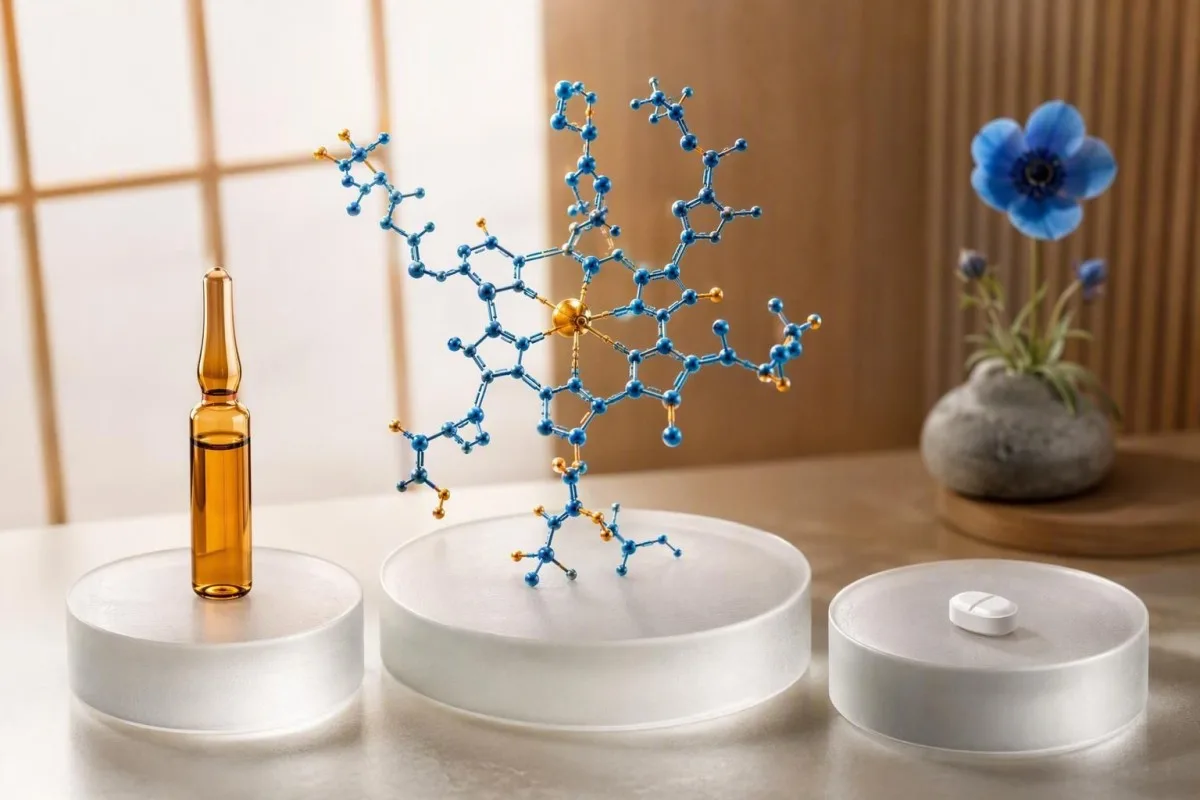
B12 injections vs tablets shown beside a vitamin B12 molecular model in a clinical setting
図1: Injection and tablet routes compared beside a vitamin B12 molecule.

An injection creates a sharp early peak because hydroxocobalamin or cyanocobalamin is delivered directly into muscle and then circulation. That laboratory peak is not the same thing as restored tissue stores or repaired nerve function; in my practice, symptom recovery is measured in weeks to months, not the next morning.

The practical comparison is often hours versus days for serum concentration, but roughly 4-8 weeks for a meaningful hematologic response with either adequate route. Reticulocytes commonly rise by day 3-5, hemoglobin begins improving after about 1-2 weeks, and macrocytosis can take up to 8 weeks to settle.

カンテスティは AI血液検査分析装置 that places B12 beside MCV, hemoglobin, folate, creatinine and prior results rather than treating a post-treatment B12 spike as proof that the underlying problem is solved. Readers can also compare their result with our B12基準範囲ガイド.

What “faster” actually means

A high result after an injection confirms recent exposure, not necessarily adequate cellular delivery. Methylmalonic acid, neurological findings and the CBC trend are more informative when the original diagnosis was uncertain.

How oral B12 absorption works when intrinsic factor is low

High-dose oral B12 can work even when intrinsic-factor absorption is impaired because a small fraction enters by passive diffusion. Approximately 1% of a 1,000 microgram dose may be absorbed passively, yielding around 10 micrograms—well above the average daily requirement of 2.4 micrograms for adults.

Illustrated intestinal vitamin B12 absorption pathway relevant to B12 injections vs tablets
図2: Intrinsic-factor uptake and passive intestinal B12 absorption shown together.

Normal food-bound B12 must be released by stomach acid, bind intrinsic factor, and be taken up in the terminal ileum. This multi-step system explains why long-term acid suppression, autoimmune gastritis, ileal disease and bariatric procedures can cause deficiency; it also explains why a standard multivitamin is often too small a dose for treatment.

Oral B12 absorption is dose-dependent but not linear. The intrinsic-factor pathway saturates at roughly 1.5-2 micrograms per meal, whereas passive diffusion becomes clinically useful only with milligram-range tablets. A 50 microgram supplement is reasonable prevention for some people, but it is not equivalent to 1,000 micrograms for established deficiency.

For patients using omeprazole, pantoprazole or another PPI, I check the wider pattern—diet, age, anemia and duration of use—rather than assuming the drug is the whole story. Our review of long-term PPI laboratory monitoring explains why magnesium and iron may matter too.

What clinical trials show about tablets versus injections

Randomized evidence suggests oral B12 at 1,000-2,000 micrograms daily can be as effective as intramuscular B12 for many people with deficiency. The evidence base is not enormous, and it contains fewer patients with severe neurological disease than clinicians would like.

Clinical trial comparison of B12 tablet and intramuscular replacement routes
図3: Paired treatment routes represent the evidence comparison for B12 replacement.

The Cochrane review by Wang and colleagues found that high-dose oral B12 produced similar B12 blood-level responses to intramuscular treatment in the small randomized trials available (Wang et al., 2018). One study used 2,000 micrograms orally each day; another used 1,000 micrograms orally after an initial schedule, so “oral therapy” does not mean a low-dose supermarket product.

The earlier trial by Kuzminski et al. reported greater serum B12 concentrations with 2,000 micrograms oral cyanocobalamin than with a 1,000 microgram injection regimen, yet clinical outcomes were the question that mattered (Kuzminski et al., 1998). The evidence is honestly mixed on the ideal protocol because trials used different injection intervals and follow-up periods.

A tablet only works if it is taken. Missed daily doses can make an injection administered every 2-3 months more dependable in real life, especially for frail adults or people with complex medication schedules. Our 血液検査のタイムラインガイド can help distinguish a true treatment change from a poorly timed retest.

When B12 injections are medically necessary

B12 injections are usually medically necessary when deficiency is severe, neurological symptoms are present, oral intake is impossible, or absorption and adherence cannot be relied upon. They are not automatically mandatory simply because pernicious anemia is suspected, provided high-dose oral treatment and follow-up are feasible.

Clinician preparing medically supervised B12 injection treatment in a calm consultation room
図4: Clinician-led injection treatment is reserved for higher-risk B12 deficiency scenarios.

Urgent clinician assessment is appropriate for new gait imbalance, progressive numbness, weakness, confusion, visual change, marked anemia, or pregnancy with significant deficiency. Neurological B12 injury can become partly irreversible; in that setting, I would not delay parenteral therapy while debating convenience.

NICE guideline NG239 advises intramuscular treatment when malabsorption is suspected or confirmed and recommends lifelong intramuscular replacement for autoimmune gastritis in many cases (NICE, 2024). Practice varies internationally: some clinicians use oral 1-2 mg daily in reliable patients with pernicious anemia, while others favour injections because the consequences of a lapse are higher.

A hemoglobin below 80 g/L, symptomatic breathlessness, tachycardia, or possible spinal-cord involvement warrants prompt medical review rather than self-treatment. To understand how anemia patterns appear on routine testing, see what a full blood count includes.

B12 deficiency treatment doses clinicians actually use

Common oral treatment doses are 1,000-2,000 micrograms daily, while common intramuscular regimens use 1,000 micrograms per dose with an initial loading phase. The product, national guideline and cause of deficiency determine the exact schedule.

Treatment dosing pathways for B12 injections vs tablets with clinical supplies and blister pack
図5: Oral daily replacement and clinician-directed injection schedules require different planning.

In UK practice, hydroxocobalamin 1,000 micrograms intramuscularly is often given three times weekly for 2 weeks when there is no neurological involvement, then every 2-3 months for maintenance; protocols differ by local service. With neurological features, initial doses are often given every other day until no further improvement, then maintenance follows specialist advice.

A typical oral plan is cyanocobalamin 1,000 micrograms daily for 8-12 weeks, followed by 1,000 micrograms daily or a lower maintenance schedule if diet was the sole cause. Sublingual products are not proven to outperform swallowed tablets; once dissolved, most is swallowed anyway.

Do not improvise a loading regimen from social-media advice. The methylated B12 versus cyanocobalamin comparison explains why the dose and consistency generally matter more than marketing claims about the B12 form.

How to interpret a low or borderline B12 result

Serum B12 below 180 pg/mL (133 pmol/L) usually supports deficiency, while values from about 180-350 pg/mL are an indeterminate zone in which MMA or homocysteine can clarify cellular deficiency. Individual laboratory intervals differ, and a normal serum value does not fully exclude deficiency after recent supplementation.

Laboratory B12 result review with methylmalonic acid and complete blood count markers
図6: B12 interpretation becomes clearer when paired with MMA and CBC findings.

Methylmalonic acid rises when B12-dependent metabolism is impaired, but reduced kidney function can raise MMA independently. Homocysteine may rise with B12 deficiency, folate deficiency, vitamin B6 deficiency, hypothyroidism and renal impairment, so neither confirmatory test should be read in isolation.

Macrocytosis is supportive but not required. A mean corpuscular volume above 100 fL raises suspicion for B12 or folate deficiency, alcohol exposure, liver disease, hypothyroidism, marrow disorders or medication effects; about one quarter of symptomatic B12-deficient patients may have a normal MCV.

Kantesti AI interprets B12 results by checking the パターン of MCV, RDW, hemoglobin, folate and historical values, including clues that a folate supplement may be masking macrocytosis. Our article on MCV高値のフォローアップ covers the common alternatives.

Pernicious anemia changes the long-term plan, not always the route

Pernicious anemia is autoimmune loss of intrinsic-factor function, and it requires lifelong B12 replacement after diagnosis. Injections offer dependable delivery, but high-dose oral therapy may still maintain adequate status in selected, closely monitored adults.

Autoimmune gastritis and intrinsic factor mechanism linked to B12 injections vs tablets
図7: Autoimmune loss of intrinsic factor explains lifelong replacement in pernicious anemia.

The tests most often used are intrinsic-factor antibodies and parietal-cell antibodies, alongside B12, CBC and sometimes gastrin. A positive intrinsic-factor antibody is highly specific but not very sensitive, so a negative result does not rule the condition out; this is one of those areas where context matters more than a single antibody.

Pernicious anemia is more than an absorption problem. Autoimmune gastritis can coexist with iron deficiency before B12 deficiency becomes obvious, and long-standing disease carries gastric surveillance considerations that should be discussed with the treating clinician. Our pernicious anemia testing guide details the diagnostic sequence.

カンテスティは AI血液検査の読み方プラットフォーム used across 127+ countries, but an AI interpretation cannot diagnose autoimmune gastritis or select a lifelong injection interval. A clinician needs to connect symptoms, antibodies, endoscopic history and the laboratory pattern.

Why neurological symptoms need faster clinical action

Tingling, loss of vibration sense, unsteady walking, cognitive change or weakness with low B12 should trigger prompt in-person assessment and usually injectable treatment. Nerve recovery is less predictable than anemia recovery and may remain incomplete after months of deficiency.

Educational neurological assessment for B12 deficiency with balance and sensation testing
図8: Neurological assessment helps identify B12 deficiency requiring prompt injectable treatment.

The dorsal columns and peripheral nerves are vulnerable to B12 deficiency, producing a pattern clinicians call subacute combined degeneration in advanced cases. A normal hemoglobin does not protect against this; I have seen patients whose numb feet and abnormal vibration sense preceded any obvious anemia.

Improvement often starts within 1 week of effective therapy, but sensory symptoms can take 3-12 months and may not resolve completely. The safest approach is to record baseline function—walking distance, falls, hand dexterity, vibration sense—because a rising serum B12 alone is not a recovery score.

Neuropathy also has many mimics, including diabetes, alcohol-related nerve injury, thyroid disease, excess vitamin B6 and some medicines. Patients with tingling can use our vitamin B6 nerve-symptom guide to prepare better questions, but progressive weakness needs medical care now.

When tablets are usually enough for dietary B12 deficiency

Tablets are usually enough when low B12 results from inadequate intake and the gut can absorb supplements. Vegans, people eating very little animal-source food, and adults with temporary dietary restriction commonly respond well to oral cyanocobalamin 1,000 micrograms daily.

B12-rich foods and oral tablet preparation for dietary vitamin B12 replacement
図9: Dietary sources and tablets can correct intake-related B12 deficiency when absorption is intact.

Vitamin B12 is naturally concentrated in animal-derived foods and fortified foods, so a strict vegan diet needs a reliable fortified-food or supplement strategy. Plant foods marketed as natural B12 sources are inconsistent; seaweed and fermented foods can contain inactive analogues that are not dependable treatment.

Dietary deficiency should still prompt a short history. A 23-year-old vegan with B12 of 142 pg/mL, normal MMA after treatment and no bowel symptoms is different from a 68-year-old with the same result, weight loss and iron deficiency. Age, medicines and gastrointestinal symptoms change the work-up.

For food planning, our water-soluble vitamin guide separates prevention doses from deficiency treatment. Do not assume nutrition alone will correct neurological symptoms quickly enough.

Medicines and gut conditions that alter the B12 treatment choice

Metformin, acid-suppressing medicines, coeliac disease, Crohn’s disease affecting the ileum, pancreatic insufficiency and gastric surgery can all reduce B12 availability. A tablet trial may be reasonable in some cases, but injections are often chosen when absorption is uncertain or symptoms are significant.

Medication and digestive absorption factors that influence B12 injection versus tablet decisions
図10: Medication exposure and intestinal conditions influence the reliability of oral B12.

Metformin-associated B12 deficiency is common enough that regulators advise checking levels in patients with neuropathy, anemia or other risk factors, particularly at higher doses or with long duration. The mechanism likely involves calcium-dependent uptake of the B12-intrinsic factor complex in the ileum, not simply poor diet.

After sleeve gastrectomy or gastric bypass, treatment decisions should follow the bariatric team’s protocol because iron, folate, thiamine, vitamin D and copper may be affected together. Diarrhea, low albumin, unexplained weight loss or greasy stools should prompt investigation rather than endless supplement changes.

Low copper can also cause anemia and neurologic symptoms that resemble B12 deficiency, especially after bariatric surgery or excessive zinc. Our low copper clinical clues explain why checking only B12 can miss the real explanation.

How soon to retest after B12 treatment

A CBC and symptom review at about 4-8 weeks are generally more useful than repeating serum B12 immediately after an injection or tablet course. A very high B12 result soon after treatment mainly reflects the dose that was taken.

Serial B12 laboratory results and blood count trend review after treatment
図11: Trend review shows why CBC recovery matters more than an immediate B12 peak.

A reticulocyte response around day 3-5 offers an early clue that marrow production is recovering, while hemoglobin should rise over the following weeks if B12 deficiency was a key driver. Lack of improvement should reopen the differential: iron deficiency, ongoing blood loss, folate deficiency, inflammation, renal disease or an incorrect diagnosis.

For an uncomplicated dietary deficit, I often recheck CBC and B12 at 8-12 weeks, then confirm a sustainable maintenance plan. For neurological disease, autoimmune gastritis, pregnancy, renal impairment or multiple deficiencies, follow-up needs to be individualized and commonly begins earlier.

Kantestiの AI搭載の血液検査解析ツール can compare sequential B12, MCV, RDW and hemoglobin results rather than displaying each draw as a disconnected event. The ラボの比較ガイド(並べて確認) shows what to record between tests.

Why a high B12 result after treatment is not always reassuring

A high B12 level after an injection or high-dose tablet commonly reflects supplementation and does not prove that symptoms have another cause. Conversely, unexplained persistent B12 elevation without supplements deserves clinical review, especially when liver, kidney or blood-count abnormalities coexist.

Post-treatment elevated B12 laboratory result assessed with supporting liver and blood markers
図12: Recent replacement can raise serum B12 without confirming complete clinical recovery.

Serum B12 can exceed a laboratory upper limit of roughly 900-1,000 pg/mL after treatment, depending on assay and timing. This is expected and usually not toxic; B12 has no established tolerable upper intake level in healthy adults because excess is largely excreted, although acneiform eruptions occur in a small minority.

The question I ask is simple: was the sample drawn after a supplement, injection, multivitamin, energy drink or fortified product? If not, elevated B12 can accompany liver disease, reduced renal clearance, inflammation or certain hematologic conditions, and it needs context rather than alarm.

私たちの high vitamin B12 guide explains the distinction between expected supplement-related elevation and an unexplained laboratory clue.

Common B12 treatment mistakes that delay recovery

The most consequential mistake is taking folic acid alone when B12 deficiency has not been excluded. Folic acid can normalize anemia while allowing B12-related nerve injury to progress, particularly when doses exceed the usual dietary range.

Safe vitamin B12 treatment planning with folate, tablets and clinical result review
図13: Folate and B12 require coordinated interpretation to protect neurological health.

Do not use symptoms alone to decide between injections and tablets. Fatigue, brain fog and low mood are real but nonspecific; sleep loss, thyroid disease, iron deficiency, depression, diabetes and medication effects can produce similar complaints. A B12 result near 250 pg/mL warrants confirmation more often than an automatic injection.

Another mistake is delaying a test until after starting supplements when possible. Even 50-500 micrograms daily can shift serum B12 enough to complicate diagnosis, although urgent neurological symptoms should always be treated first. The high folate and hidden B12 issue is particularly relevant for people taking prenatal or energy supplements.

As of August 27, 2026, my advice as Dr. Thomas Klein is to choose the least burdensome route that is medically reliable, then verify recovery with symptoms and trends. Injection treatment is excellent medicine when indicated; it is not inherently stronger medicine for every low result.

A practical decision framework for B12 injections or tablets

Choose injections when risk is high or oral reliability is low; choose high-dose tablets when deficiency is mild-to-moderate, intake is the main issue and follow-up is dependable. The best route is the one that corrects deficiency without postponing investigation of its cause.

Shared clinical decision process for choosing B12 injections vs tablets with laboratory results
図14: Route selection weighs severity, absorption, adherence and follow-up rather than preference alone.

Tablets fit best when B12 is low from diet, there are no neurological signs, swallowing is safe and the person can take 1,000-2,000 micrograms daily consistently. Injections fit best with neurological findings, severe symptomatic anemia, vomiting, major malabsorption, post-operative anatomy or uncertain adherence.

Bring four things to the appointment: the original B12 result with units, a CBC, every supplement and medicine dose, and a symptom timeline. Dr. Thomas Klein’s clinical rule is that the cause should be named before maintenance is made indefinite whenever that can be done safely.

Kantesti AIは、 AIラボ検査解釈サービス designed to organize laboratory context for patients and clinicians, while final diagnosis and prescribing remain clinical decisions. Our 医療諮問委員会 そして 臨床的妥当性の検証アプローチ describe the medical oversight behind that boundary.

よくある質問

B12注射は錠剤よりも早く効きますか?

B12注射は、1000マイクログラムの筋肉内投与は腸管吸収を回避し、数時間以内に循環レベルを上昇させることができるため、錠剤よりも血清B12を速く上昇させます。高用量の経口B12、通常は1日1000〜2000マイクログラムは、数週間かけて多くの成人で欠乏症を効果的に改善できます。意味のあるエンドポイントは、症状の改善、3〜5日目の網状赤血球数、そして約4〜8週間のCBC回復であり、血清ピーク値だけではありません。神経学的症状、重度の貧血、または吸収不良がある場合は、注射が推奨されます。.

悪性貧血でも経口ビタミンB12は効果がありますか?

高用量の経口ビタミンB12は、一部の悪性貧血患者に有効な場合があります。これは、大量投与されたビタミンB12の約1%が、内因子なしで受動拡散によって吸収されるためです。したがって、1日1,000〜2,000マイクログラムの経口投与で、10〜20マイクログラムのビタミンB12が吸収され、成人1日あたりの必要量2.4マイクログラムを上回ります。NICEのガイダンスでは、自己免疫性胃炎に対して、特に信頼性が不確かな場合には、生涯にわたる筋肉内補充が一般的に支持されています。投与経路は、診断を管理する医師と合意し、症状およびCBCでモニタリングする必要があります。.

注射1回分はB12錠何錠に相当しますか?

注射薬から経口薬への正確な換算はありません。注射薬はほぼ完全な全身利用率をもたらしますが、経口吸収は用量依存性があり、一部飽和します。1,000マイクログラムの注射と1,000〜2,000マイクログラムの経口投与はどちらも一般的な治療量ですが、用量あたりでは薬理学的に交換可能ではありません。1,000マイクログラムの経口投与量の約1%は受動拡散で吸収され、その経路が機能する場合は内因子を介した追加吸収も起こります。治療反応と欠乏の原因が、変更の判断基準となるべきです。.

B12注射による疲労の改善にはどのくらい時間がかかりますか?

B12注射は、疲労の原因が真に欠乏症である場合、数日から数週間でエネルギーレベルを改善する可能性がありますが、その時期は大きく異なります。網状赤血球の産生は3〜5日以内に上昇することが多く、ヘモグロビンは一般的に1〜2週間後に上昇し始め、大球症の完全な是正には最大8週間かかることがあります。しびれ、バランスの問題、認知症状は3〜12ヶ月かかることが多く、欠乏が長期間続いた場合は不完全な場合があります。CBCが正常化した後の持続的な疲労は、鉄欠乏、甲状腺疾患、睡眠障害、その他の原因のレビューを促すべきです。.

血液検査の前にB12の錠剤を服用してもよいですか?

原因不明のビタミンB12欠乏症の診断が予定されており、臨床的に安定している場合は、サンプル採取までサプリメントの服用を開始しないでください。なぜなら、1日50~500マイクログラムでさえ血清ビタミンB12値を変化させる可能性があるからです。検査室や用量が異なるため、普遍的な休薬期間はありませんので、準備に関するアドバイスについては、臨床医または検査室にお問い合わせください。神経症状、重度の貧血、妊娠関連の懸念、または臨床的悪化が見られる場合は、完璧なベースラインを得るために治療を遅らせないでください。結果を正しく解釈できるように、用量と開始日を記録してください。.

B12レベルが200 pg/mLであれば、注射は必要ですか?

A B12 level of 200 pg/mL is borderline low and does not by itself determine whether injections are required. Many laboratories consider values below 180 pg/mL clearly deficient, while values from approximately 180-350 pg/mL may need methylmalonic acid, homocysteine, CBC findings and symptom review. Injections are reasonable at 200 pg/mL when neurological symptoms, anemia, malabsorption, pregnancy or inability to take oral therapy is present. A stable person with dietary risk and no neurological findings may respond well to 1,000-2,000 micrograms oral B12 daily with planned follow-up.

今日、AIによる血液検査分析を

いますぐ利用しませんか。即時で正確な検査分析を提供するKantestiを信頼する、世界中の200万人以上のユーザーに参加してください。血液検査結果をアップロードすると、15,000+のバイオマーカーについて数秒で包括的な解釈が得られます。.

📚 Referenced Research Publications

1

Klein, T., Mitchell, S., & Weber, H. (2026). Kantesti LTD.(2026)。100,000件の合成テストケースに基づく、Kantesti血液検査の読み方エンジンのための、事前登録されたルーブリックベースの自動化技術ベンチマーク。Figshare。..。 Kantesti AI Medical Research.

2

Klein, T., Mitchell, S., & Weber, H. (2026). Kantesti LTD.(2026)。臨床的検証の枠組み v2.0(医学的検証ページ)。Zenodo。..。 Kantesti AI Medical Research.

📖 外部の医学的参考文献

3

Wang H ほか (2018)。. ビタミンB12欠乏症に対する、経口ビタミンB12と筋肉内ビタミンB12の比較.。 Cochrane Database of Systematic Reviews。.

4

NICE (2024)。. 16歳以上におけるビタミンB12欠乏症:診断と管理.。 NICE Guideline NG239。.

5

Kuzminski AM et al. (1998). Effective treatment of cobalamin deficiency with oral cobalamin.。.

200万以上分析されたテスト
127+
75+言語

⚕️ 医療免責事項

E-E-A-T 信頼性シグナル

経験

医師主導による、検査結果解釈ワークフローの臨床レビュー。.

📋

専門知識

臨床的な文脈においてバイオマーカーがどのように振る舞うかに焦点を当てた検査医学。.

👤

権威

トーマス・クライン博士が執筆し、サラ・ミッチェル博士およびハンス・ヴェーバー教授によるレビュー。.

🛡️

信頼性

アラームを減らすための明確なフォローアップ経路を備えた、エビデンスに基づく解釈。.

🏢 カンテスティ株式会社 イングランドおよびウェールズに登録 · 会社番号. 17090423 ロンドン、イギリス · kantesti.net
blank
Prof. Dr. Thomas Kleinによる

トーマス・クライン博士は、Kantesti AIにおける最高医療責任者(CMO)を務める、ボード認定の臨床血液専門医です。検査医学における15年以上の経験に加え、「血液検査結果」のAI支援による解釈に強い関心を持ち、新しい技術を日常の臨床実践につなげることに取り組んでいます。関心領域には、バイオマーカー解析、臨床意思決定支援の研究、集団特異的な基準範囲の最適化が含まれます。CMOとして、同プラットフォームの内部ベンチマークに対する臨床的インプットを提供し、Kantestiの教育レポートの医療品質に関する臨床的監督を行います。.

コメントを残す

メールアドレスが公開されることはありません。 が付いている欄は必須項目です
