
Elevated interleukin-6 can reflect infection, immune-mediated inflammation or tissue stress, but one result cannot diagnose infection, autoimmune disease or cancer. Timing, medicines and laboratory methods can substantially change its meaning.

Key takeaways
- Elevated IL-6 indicates increased cytokine signaling or a measurement-related issue; even a result of 100 pg/mL cannot identify the cause by itself.
- Reference ranges belong to the testing laboratory: upper limits such as 5.0 or 6.4 pg/mL are used by some laboratories, but neither is a universal disease cutoff.
- Units matter: 1 pg/mL equals 1 ng/L, while 1 ng/mL equals 1,000 pg/mL.
- Collection timing matters because IL-6 can change within hours; record symptom onset, exercise and medication timing before comparing 2 results.
- Other markers answer different questions: CRP is usually reported in mg/L, whereas IL-6 is commonly reported in pg/mL.
- Treatment effects can reverse expectations: IL-6 receptor blockade may raise measured IL-6 while lowering CRP and inflammatory activity.
- Urgent symptoms outweigh the result: new confusion, severe breathlessness or a systolic blood pressure below 90 mmHg requires urgent assessment regardless of IL-6.
- Next steps should address a specific clinical question; a second IL-6 measurement is useful only when it could change the assessment or management.
What does an elevated interleukin-6 result mean?
An elevated IL-6 blood test can reflect infection, autoimmune inflammation, tissue injury, strenuous exercise or other immune activity. A single value—even 100 pg/mL—cannot establish which cause is present, diagnose cancer or determine whether you need antibiotics.

IL-6 is a cytokine, a signaling protein released by immune cells and several other tissues, including contracting skeletal muscle. Tanaka et al., writing in Cold Spring Harbor Perspectives in Biology in 2014, describe its roles in acute-phase responses, immunity and disease; this range of functions explains why an elevated concentration is not specific to one diagnosis.
A hypothetical result of 18 pg/mL, against a laboratory upper limit of 6 pg/mL, is three times that laboratory's limit—not three times the person's infection risk or cancer risk. Reference limits describe how a result compares with a selected population; they do not convert a cytokine concentration into a probability of disease without additional clinical evidence.
Kantesti is an AI blood test analyzer that helps explain IL-6 alongside the reported units, reference interval and accompanying results, rather than treating one abnormal number as a diagnosis. Information about our organization explains the service behind that interpretation; the practical first step is to preserve the original report, including any laboratory comments.
What does the IL-6 blood test actually measure?
The IL-6 blood test measures circulating interleukin-6 detected by a particular laboratory assay, usually in serum or plasma. It reports a concentration, commonly in pg/mL, rather than directly measuring the total immune response or the amount of IL-6 acting inside an affected tissue.

A concentration of 10 pg/mL describes the material detected in the tested sample at collection, not how much cytokine the body produced throughout the previous day. Local joint, lung or intestinal signaling may not be reflected proportionately in circulation; conversely, circulating IL-6 can rise without locating the source of inflammation.
Serum and plasma are not automatically interchangeable, even when both reports use pg/mL. Serum forms after clotting, while plasma is collected with an anticoagulant; the collection process and the assay's validated specimen type can affect comparability, so a serum result of 8 pg/mL should not be treated as directly equivalent to plasma tested by another method.
Kantesti AI can help organize an IL-6 result beside related markers, but a value such as 12 pg/mL still needs the reason the test was ordered. Our biomarker interpretation guide provides broader laboratory context; ask whether the clinician wanted to investigate current symptoms, monitor a specialist-managed condition or answer a research question.
What is the interleukin-6 reference range?
There is no universal interleukin-6 reference range that applies to every laboratory and patient group. Some laboratories use upper limits such as 5.0 or 6.4 pg/mL, but your result must be interpreted against the interval and specimen type printed on your own report.

A reference interval is not a diagnostic threshold. Many laboratory intervals aim to describe approximately 95% of a selected reference population, although cytokine intervals may instead emphasize an upper reference limit or assay-specific approach; neither construction establishes a boundary between harmless inflammation and sepsis, rheumatoid arthritis or cancer.
Consider a hypothetical 6.0 pg/mL result: it would exceed a limit of 5.0 pg/mL but remain below a limit of 6.4 pg/mL. That disagreement does not prove one laboratory is wrong; different antibodies, calibration systems, specimen requirements and reference populations can produce different flags, especially near the lower end of the measurement range.
A report reading less than 2 pg/mL does not establish that IL-6 is absent; it means the result falls below that assay's stated reporting threshold. Our explanation of quantitative result wording helps distinguish measured values from reporting limits; avoid replacing a less-than result with zero when plotting trends.
| Level | Range | What it means |
|---|---|---|
| Below the reported upper limit | 6.0 pg/mL with an upper limit of 6.4 pg/mL | Hypothetical example: not flagged by this laboratory, but does not exclude illness. |
| Above the reported upper limit | 6.0 pg/mL with an upper limit of 5.0 pg/mL | Hypothetical example: flagged by this laboratory; the cause remains undetermined. |
| Below the reporting threshold | <2 pg/mL, if stated by the laboratory | Not an exact measurement of zero; use the laboratory's explanation of this limit. |
| No universal severity band | 100 pg/mL, illustrative result | Clearly elevated on many assays, but not a stand-alone diagnosis or universal emergency cutoff. |
Why do collection timing and sample handling matter?
IL-6 can change within hours, so collection timing can alter the result even without a new diagnosis. Two samples collected 24 hours apart may capture different phases of an immune response, and handling differences can introduce additional variation before the assay begins.

The clinically useful timestamp is time from symptom onset, not merely the date on the report. A hypothetical 30 pg/mL sample collected two hours after fever began and an 8 pg/mL sample collected the following morning could reflect a changing response; neither establishes whether the illness was bacterial, viral or noninfectious without clinical assessment.
Delayed separation, storage temperature and freeze-thaw exposure can affect cytokine measurements, with the magnitude depending on the specimen and method. There is no single handling instruction suitable for all IL-6 assays; ask whether the specimen met that laboratory's requirements instead of assuming a two-hour delay always raises—or always lowers—the concentration.
Record at least 3 timing details before interpreting a repeat: symptom onset, recent strenuous activity and the most recent relevant medication dose. Our discussion of time-sensitive sample handling illustrates why laboratory instructions differ between analytes; IL-6 needs its own validated instructions rather than an automatically borrowed collection protocol.
Can exercise, poor sleep or body composition raise IL-6?
Strenuous exercise can transiently raise IL-6, and chronic metabolic inflammation may contribute to higher resting concentrations. A result of 15 pg/mL after an endurance event therefore has a different context from the same result during persistent fever, although neither explanation should be assumed without checking symptoms.
Contracting muscle releases IL-6 as a myokine, so a post-exercise rise is not automatically evidence of harmful systemic inflammation. For a nonurgent resting reassessment, avoiding unusually strenuous exercise for 24–48 hours can be a practical preparation step if the clinician agrees; this interval is not a validated universal IL-6 normalization rule.
Poor sleep and disrupted daily rhythms can influence immune signaling, but one short night cannot reliably explain a specific result such as 20 pg/mL. The size and direction of cytokine changes differ between study designs and individuals; our guide to poor-sleep laboratory changes explains why sleep history should modify interpretation rather than replace an investigation.
Adipose tissue and associated immune cells can contribute to IL-6 production, but body mass alone cannot predict a pg/mL result or distinguish metabolic inflammation from another cause. If a hypothetical runner also has elevated ferritin 24 hours after competition, exercise-related ferritin changes may provide useful context; unexplained fever, weight loss or worsening symptoms still need separate assessment.
Does elevated IL-6 mean infection or sepsis?
Elevated IL-6 does not diagnose infection or sepsis, and a low result does not exclude either condition. Fever of 38°C or higher, breathing changes, circulation problems and organ dysfunction are more actionable than applying an isolated cytokine cutoff.
The Surviving Sepsis Campaign 2021 guidelines, published by Evans et al., organize assessment and treatment around clinical suspicion, organ dysfunction, perfusion and timely care—not a diagnostic IL-6 threshold. An adult respiratory rate of 22 breaths per minute or more can be a concerning bedside observation, but it is neither sufficient to diagnose sepsis nor a reason to dismiss slower breathing.
CRP, procalcitonin and IL-6 cannot independently identify a pathogen. A hypothetical combination of IL-6 80 pg/mL and CRP 120 mg/L may support substantial inflammation, yet bacterial infection, immune-mediated disease and tissue injury can overlap; procalcitonin trend interpretation explains another marker's limitations rather than offering a replacement stand-alone diagnostic test.
The correct next test depends on the suspected source: respiratory testing, urine testing, cultures or imaging answer different questions. In a hypothetical person with 2 days of fever and cough, influenza testing and treatment may be more clinically useful than repeating IL-6; do not delay indicated urgent care while waiting for a cytokine result.
Can IL-6 diagnose an autoimmune disease?
IL-6 cannot diagnose an autoimmune disease because the same signaling pathway is activated by infections, injury and other conditions. Persistent elevation on two measurements may justify further assessment, but the pattern of symptoms and disease-specific investigations determines which diagnosis, if any, is supported.

Rheumatoid arthritis is not defined by an IL-6 cutoff, and IL-6 is not a substitute for examination, anti-CCP testing or appropriate imaging. A hypothetical person with IL-6 22 pg/mL and six weeks of swollen small joints presents a different diagnostic question from someone with the same concentration during a short respiratory illness.
An inflammatory marker can be normal even when an immune-mediated condition is present, and an abnormal marker may come from an unrelated process. In a hypothetical adult aged 70 with new shoulder stiffness, the limits of polymyalgia testing are more helpful than labeling IL-6 of 9 pg/mL as proof of polymyalgia rheumatica.
Kantesti is an AI blood test interpretation platform that can organize an IL-6 result alongside related laboratory findings without converting two abnormal markers into an autoimmune diagnosis. Our explanation of rheumatoid factor titers addresses a parallel misconception: a higher concentration does not necessarily mean more severe disease, particularly when symptoms and examination disagree.
Does a high IL-6 level indicate cancer?
A high IL-6 level is not a cancer diagnosis, and there is no validated universal IL-6 cutoff for screening people without symptoms. Even a hypothetical result of 200 pg/mL cannot distinguish a malignancy from severe infection, immune activation or another inflammatory process.

Some malignancies and their surrounding immune cells produce IL-6, so concentrations may be studied as prognostic or treatment-response markers in defined populations. A research association between higher values and outcomes in one cancer type does not establish that an otherwise well person with 12 pg/mL has that cancer; screening performance requires separate evidence.
Persistent symptoms change the investigation, not because they make IL-6 specific, but because they provide a clinical direction. For example, unexplained weight loss of more than 5% over 6–12 months, persistent enlarged lymph nodes or unexplained cytopenias warrants medical review; investigations should follow those findings rather than an indiscriminate tumor-marker panel.
Adding more nonspecific markers can increase uncertainty rather than resolve it: a hypothetical elevated IL-6 plus elevated chromogranin A may have several unrelated explanations. Our guide to chromogranin A confounders explains why medication and kidney function matter; two abnormal tests do not automatically provide independent evidence of cancer.
How should IL-6 be read with CRP, ferritin and CBC?
IL-6 is best interpreted as part of a pattern, alongside symptoms, CRP, a complete blood count and relevant organ-function tests. IL-6 commonly uses pg/mL, while CRP uses mg/L; the numbers cannot be compared directly or combined into an informal inflammation score.

IL-6 stimulates hepatic acute-phase protein production, including CRP, as described by Tanaka et al. in 2014. CRP often begins rising approximately 6–8 hours after an inflammatory stimulus and can peak around 48 hours, depending on the process; an early IL-6 rise with a still-low CRP is therefore biologically plausible rather than automatically a laboratory error.
IL-6 can also stimulate hepcidin, contributing to reduced circulating iron availability during inflammation. A hypothetical pattern of IL-6 25 pg/mL, low serum iron and normal or elevated ferritin may fit inflammatory iron restriction, but iron deficiency can coexist; inflammation-related transferrin changes help explain why one iron marker may be misleading.
Kantesti AI can help identify discordant results, such as hypothetical IL-6 28 pg/mL, CRP 3 mg/L and a normal CBC, without declaring that the normal tests cancel the abnormal one. Our guide to WBC and CRP disagreement explains why timing, medicines and the clinical setting matter; platelet, creatinine or liver-test changes may redirect the assessment.
Why can different laboratories report different IL-6 values?
Different IL-6 assays may produce different numerical results because they use different antibodies, calibration materials and measurement systems. A change from 6 to 10 pg/mL after switching laboratories is not automatically a biological increase, particularly when the result is near an assay's reporting limit.
Single-analyte and multiplex assays are not necessarily interchangeable, even when both detect IL-6 in pg/mL. Research multiplex panels and routine clinical assays may have different analytical performance and validated uses; an apparent 50% increase between methods needs caution because the difference may include method bias as well as genuine change.
Heterophile antibodies or other interfering substances can cause misleading immunoassay results, while biotin effects depend on assay design and do not always cause falsely high values. If a hypothetical result of 500 pg/mL is inconsistent with the rest of the assessment, the clinician can ask the laboratory about dilution studies, interference testing or confirmation by another suitable method.
Kantesti does not independently remeasure your specimen or establish that an IL-6 result is free from interference; a concentration of 40 pg/mL remains dependent on the source laboratory's measurement. Our validation and clinical standards explain the distinction between interpretation methodology and analytical testing; ask which method was used before assigning meaning to a small trend.
How do medicines change IL-6 test interpretation?
Medicines can alter IL-6 production, clearance or downstream signaling, so treatment history is central to interpretation. IL-6 receptor blockers can raise measured circulating IL-6 while reducing inflammatory activity; a rise from 20 to 100 pg/mL during treatment does not automatically mean the medicine has failed.

Nishimoto et al., in Blood in 2008, investigated increased serum IL-6 after tocilizumab treatment in rheumatoid arthritis and Castleman disease. Blocking receptor-mediated consumption helps explain why measured IL-6 may rise; the result must be interpreted with treatment timing and disease-specific monitoring rather than applying untreated reference expectations.
CRP may become less informative during IL-6 pathway blockade, because the medicine directly suppresses a pathway that drives its production. A hypothetical CRP of 2 mg/L does not reliably exclude serious infection in a treated person with new fever or breathing problems; serum amyloid A interpretation illustrates another acute-phase marker that is also context-dependent, not an automatic workaround.
Corticosteroids and other immunomodulators can reduce inflammatory signals, while medicines targeting IL-6 itself may complicate interpretation in assay-specific ways. Record the drug name, dose and number of days since treatment, but do not stop medication to create a more interpretable test; the ordering specialist should decide whether repeat IL-6 measurement adds useful information.
When should an elevated IL-6 result be repeated?
Repeat IL-6 testing is useful when it answers a defined clinical question, not simply because the first result is flagged. There is no universal schedule such as seven days for everyone; the appropriate interval depends on symptoms, the suspected cause, treatment and whether another result would change care.
For a hypothetical well adult with IL-6 9 pg/mL and a laboratory upper limit of 7 pg/mL, reviewing exercise, recent illness and sample conditions may precede another test. If reassessment is agreed, use the same laboratory and validated specimen type when feasible; our baseline collection preparation helps make repeat measurements more comparable.
A second hypothetical adult has IL-6 70 pg/mL, CRP 90 mg/L and worsening breathlessness; waiting for a repeat cytokine result would miss the immediate question of respiratory or systemic illness. Examination, oxygen assessment and targeted investigations are more relevant, showing why identical repeat-testing routines are inappropriate for mildly abnormal incidental results and symptomatic patients.
Kantesti AI can help place serial results on a timeline, but a hypothetical fall from 60 to 15 pg/mL does not by itself prove recovery or exclude a complication. Compare symptoms and accompanying tests, and mark any laboratory-method change; a visually smooth trend is still unreliable when collection conditions or treatment effects have not been accounted for.
When does an elevated IL-6 result need urgent care?
Urgent care is determined by symptoms and physiological instability, not an IL-6 number alone. New confusion, severe breathlessness, fainting or a systolic blood pressure below 90 mmHg requires urgent assessment; do not wait for an IL-6 result or a repeat appointment.

Lactate above 2 mmol/L can indicate physiological stress or impaired perfusion, but it also has non-sepsis causes and requires context. The Evans et al. 2021 sepsis guidelines support clinical evaluation and appropriately timed management; an IL-6 value below the reference limit must not override concerning circulation, breathing, mental status or organ-function findings.
Fever with unusual bruising, rapidly worsening illness or abnormal platelet and coagulation results can indicate a serious systemic process. A hypothetical platelet count of 70 × 10⁹/L during acute illness is not explained away by IL-6 of 10 pg/mL; our discussion of urgent coagulation patterns explains why the wider laboratory pattern may need immediate review.
For nonurgent follow-up, bring 4 questions: why was IL-6 ordered, which assay and specimen were used, what other findings support the proposed explanation, and would repeating it change management? These questions reduce unnecessary testing while preserving safety; pregnant people, immunocompromised people and those receiving cytokine-blocking therapy may need a lower threshold for direct clinical advice.
Research publications and the limits of AI interpretation
IL-6 research and clinical interpretation are not the same thing: findings from a defined study population do not automatically establish a personal diagnostic cutoff. The two background publications listed below concern iron and coagulation testing, not validation of IL-6 screening or treatment thresholds.
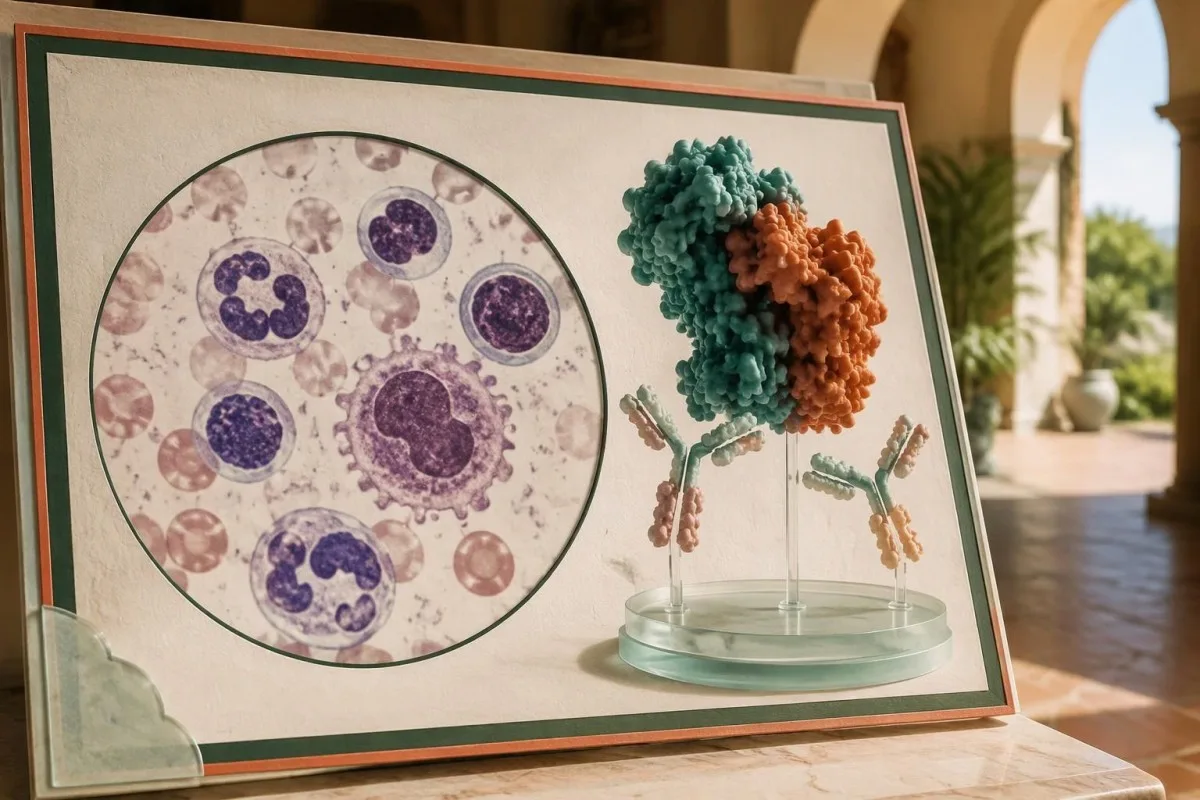
The 2014 review by Tanaka et al. supports the biology connecting IL-6 with acute-phase proteins and iron regulation, while the linked Zenodo publications provide adjacent laboratory education. Our iron studies publication can clarify inflammatory iron restriction; it should not be cited as evidence that a particular IL-6 concentration diagnoses infection, autoimmune disease or cancer.
A DOI identifies a deposited work but does not itself establish peer review, clinical validation or guideline endorsement. Our coagulation testing publication offers background when clotting tests accompany systemic illness; its relevance is the broader assessment, not a numerical conversion between an IL-6 result in pg/mL and clotting risk.
Kantesti is an AI-powered blood test analysis tool that supports understanding of reports, not an independent diagnostic or emergency-triage authority. If a report contains IL-6 of 16 pg/mL, our explanation should keep measurement uncertainty and clinical context visible; our responsible AI approach describes why clinician assessment remains necessary before changing treatment or deciding that an illness is excluded.
Frequently asked questions
What is considered a high IL-6 level?
A high IL-6 level is a result above the reference limit used by the testing laboratory, not above a universal cutoff. Some laboratories use upper limits such as 5.0 or 6.4 pg/mL, so the same concentration can be flagged differently by different assays. A result of 100 pg/mL may be substantially elevated, but it does not identify the cause or establish a universal emergency threshold. Symptoms, specimen type, medicines and accompanying tests determine the next step.
Does elevated interleukin-6 mean I have cancer?
Elevated interleukin-6 does not establish that you have cancer, and IL-6 is not a validated universal cancer-screening test. A value such as 50 pg/mL can occur with several inflammatory conditions, including infection or immune-mediated disease. Some cancer studies investigate IL-6 as a prognostic marker in people with an established diagnosis, which is different from detecting cancer in an otherwise well person. Persistent unexplained symptoms should guide medical evaluation rather than the cytokine result alone.
Can IL-6 be high when CRP is normal?
IL-6 can be elevated while CRP remains within the laboratory reference interval. IL-6 may rise earlier in an acute response, while CRP often begins increasing approximately 6–8 hours after an inflammatory stimulus. IL-6 pathway-blocking treatment can also suppress CRP despite elevated measured IL-6. A hypothetical IL-6 of 20 pg/mL with CRP of 3 mg/L therefore needs timing and medication context, not an automatic conclusion that either result is wrong.
Do I need to fast before an IL-6 blood test?
An IL-6 blood test does not have one universal fasting requirement; follow the instructions of the testing laboratory and ordering clinician. Other tests collected at the same visit may require fasting even when IL-6 itself does not. For a nonurgent resting measurement, avoiding unusually strenuous exercise for 24–48 hours may improve comparability if your clinician agrees, but this is not a guaranteed normalization interval. Do not postpone urgent assessment or stop prescribed medicines to prepare for the test.
Why did my IL-6 increase after tocilizumab?
Tocilizumab blocks the IL-6 receptor and can increase measured circulating IL-6 by reducing receptor-mediated consumption. Nishimoto et al. described this mechanism in Blood in 2008. A hypothetical increase from 20 to 100 pg/mL during treatment does not automatically indicate worsening inflammation or treatment failure. Interpretation should use treatment timing, clinical findings and specialist-selected monitoring, and low CRP during treatment does not reliably exclude infection.
How can I lower an elevated IL-6 result?
The appropriate response to elevated IL-6 is to identify and manage its cause, not to chase a target concentration with supplements. A result of 15 pg/mL after strenuous exercise may require a different approach from 15 pg/mL with persistent fever or swollen joints. Sleep, suitable physical activity and management of metabolic risk can support general health, but they cannot replace assessment of unexplained symptoms. Do not start antibiotics, steroids or cytokine-targeted treatment solely because IL-6 is elevated.
Get your blood test results explained
Upload your lab report and Kantesti's AI explains each biomarker in plain language within seconds. Used by more than 2 million people worldwide.
References
- Klein, T., Mitchell, S., & Weber, H. (2026). Iron Studies Guide: TIBC, Iron Saturation & Binding Capacity. Kantesti AI Medical Research. DOI
- Klein, T., Mitchell, S., & Weber, H. (2026). aPTT Normal Range: D-Dimer, Protein C Blood Clotting Guide. Kantesti AI Medical Research. DOI
- Tanaka T et al. (2014). IL-6 in inflammation, immunity, and disease. Cold Spring Harbor Perspectives in Biology. DOI PubMed
- Evans L et al. (2021). Surviving sepsis campaign: international guidelines for management of sepsis and septic shock 2021. Intensive Care Medicine. DOI
- Nishimoto N et al. (2008). Mechanisms and pathologic significances in increase in serum interleukin-6 (IL-6) and soluble IL-6 receptor after administration of an anti-IL-6 receptor antibody, tocilizumab, in patients with rheumatoid arthritis and Castleman disease. Blood. DOI
- 2M+Tests analysed
- 127+Countries
- 100+Languages
About the medical team


E-E-A-T Trust Signals
Experience
Physician-led clinical review of lab interpretation workflows.
Expertise
Laboratory medicine focus on how biomarkers behave in clinical context.
Authoritativeness
Medically reviewed by Dr. Thomas Klein, with contributions from Dr. Sarah Mitchell and Prof. Dr. Hans Weber.
Trustworthiness
Evidence-based interpretation with clear follow-up pathways to reduce alarm.






Medical disclaimer
This article is for educational purposes only and does not constitute medical advice. Always consult a qualified healthcare provider for diagnosis and treatment decisions.
Published · Contact the editorial team
Published by Kantesti Ltd, registered in England & Wales, company no. 17090423, London, United Kingdom.
