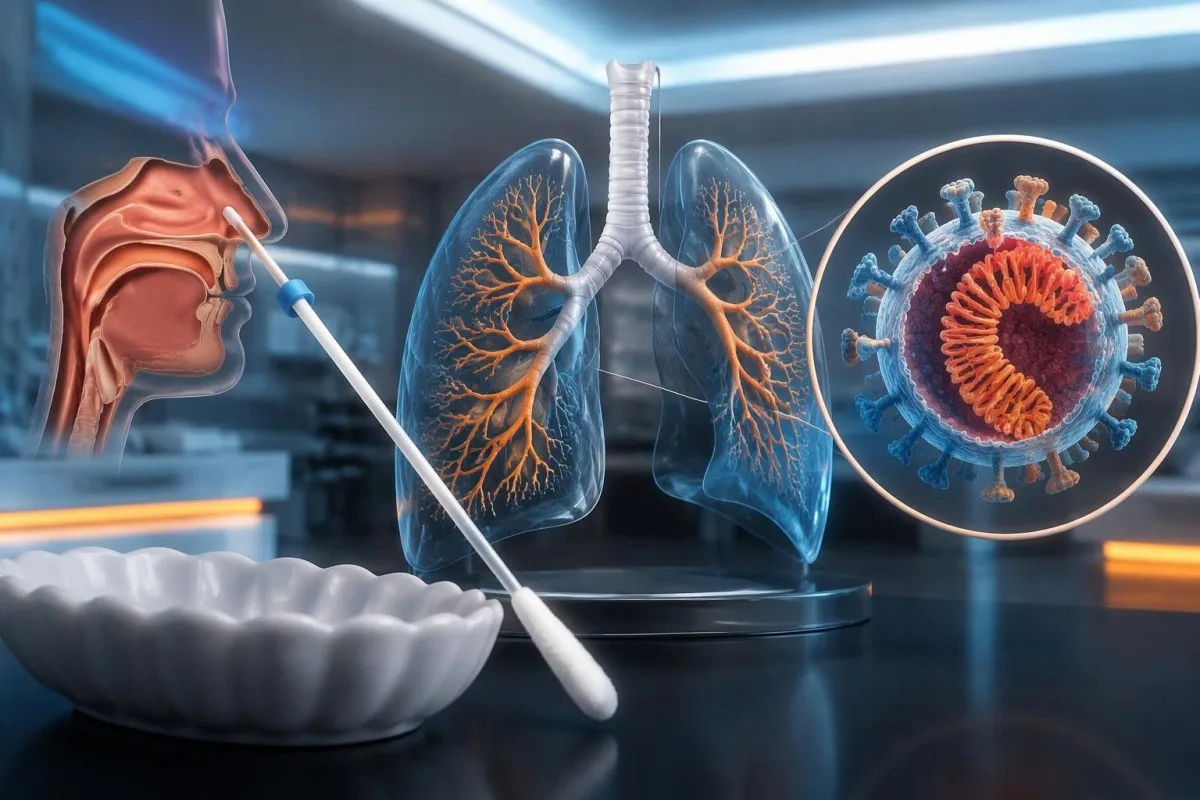
An HMPV PCR positive result means human metapneumovirus RNA was detected in the tested sample. It usually supports a recent respiratory infection when symptoms fit, but cannot predict severity or contagiousness; breathing difficulty, pauses in breathing, or significant dehydration need urgent assessment.

Key takeaways
- Positive result means the human metapneumovirus test detected viral RNA; it does not measure how seriously someone will become ill.
- Test timing matters because HMPV symptoms usually begin about 3–6 days after exposure, while RNA detection can outlast symptoms.
- Treatment usually means fluids, rest, and symptom relief; antibiotics do not treat HMPV itself.
- Infant fever of 38°C or higher in a baby younger than 3 months requires urgent medical assessment, even with a positive viral result.
- Breathing emergencies include blue or grey lips, pauses in breathing, severe chest pulling, confusion, or inability to speak or feed because of breathlessness.
- Oxygen readings persistently at 92% or lower generally need urgent assessment at usual altitude; symptoms override a reassuring device reading.
- Dehydration concerns include taking only 50–75% of usual feeds, markedly reduced urination, or no wet nappy for 12 hours; seek help sooner if the child appears unwell.
- Higher-risk patients include young infants, adults aged 65 and older, and immunocompromised people, who should have a lower threshold for contacting their clinical team.
- Repeat PCR is not usually needed to prove recovery, and neither a positive result nor a cycle-threshold number establishes a safe return-to-contact date.
What does an HMPV PCR positive result actually mean?
HMPV PCR positive means the laboratory detected human metapneumovirus genetic material in your sample, usually a respiratory swab. With compatible symptoms, it supports a current or recent HMPV illness; it does not establish pneumonia, determine contagiousness, or predict whether hospital care will be needed.
The result answers 1 laboratory question: was the assay's HMPV target detected above its reporting threshold? Terms such as detected, positive, and reactive may appear differently across laboratories, but none is a clinical severity grade; a person with a mild cold and someone needing oxygen can receive the same qualitative result.
A hypothetical 34-year-old with 3 days of cough, congestion, and fever has a symptom pattern that makes an HMPV-positive swab clinically plausible. If that person instead has isolated abdominal pain without respiratory symptoms, the result deserves more contextual discussion rather than an assumption that HMPV explains everything.
Most routine HMPV tests use material from the nose or nasopharynx, not a standard venous laboratory sample. Keep the sample type, collection date, and symptom-start date together—these 3 details help a clinician distinguish a well-matched result from an incidental or unexpectedly persistent detection.
Kantesti is an AI blood test analyzer that helps explain accompanying laboratory findings, but a respiratory PCR result is not a substitute for a breathing assessment. Our company background explains our role; we separate the meaning of 1 laboratory result from the clinical decisions it cannot safely make.
Which HMPV symptoms fit a positive respiratory test?
HMPV symptoms commonly include cough, nasal congestion, fever, and tiredness; wheezing or breathlessness can occur when the lower airways are affected. Symptoms usually begin about 3–6 days after exposure, but a positive swab cannot identify the exposure event or reliably distinguish HMPV from other respiratory viruses.
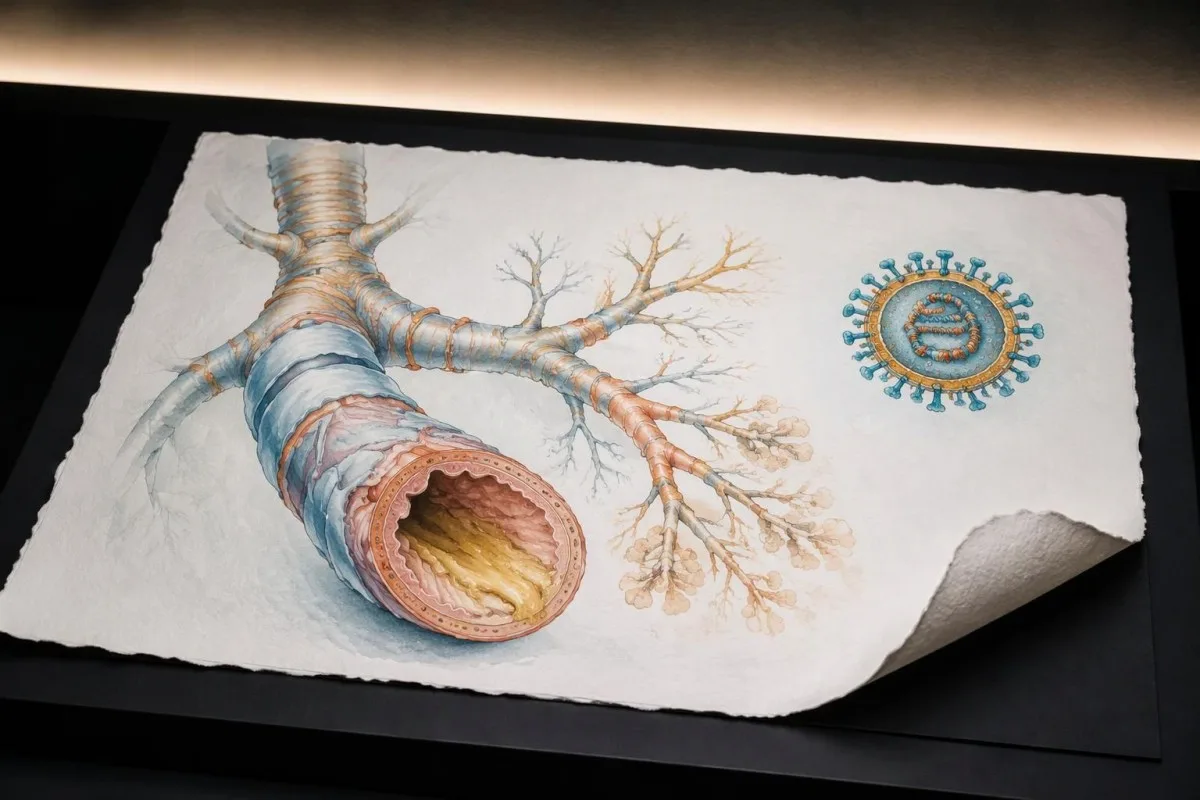
HMPV can cause bronchiolitis or pneumonia rather than only an upper-airway cold. The pediatric study in the New England Journal of Medicine documented HMPV-associated lower respiratory illness in otherwise healthy infants and children (Williams et al., 2004), showing why 1 positive result must be interpreted alongside feeding and breathing.
Wheezing suggests narrowed airways, whereas stridor is a harsher sound usually heard when breathing in and points toward upper-airway narrowing. A barking cough or stridor warrants its own assessment; our parainfluenza and croup explanation describes a different respiratory virus that can appear on the same multiplex panel.
A hypothetical 8-year-old whose fever has settled but whose cough continues may still be recovering from airway irritation. Persistent cough alone is different from a cough accompanied by newly faster breathing, worsening chest pain, or renewed fever after improvement—the second pattern raises concern for a complication or another diagnosis.
Adults may have HMPV without a prominent fever, and a positive result does not exclude asthma or chronic obstructive pulmonary disease as contributors to breathlessness. Compare the direction of change over 24 hours, not just symptom names; our adult RSV symptom guide explains why similar-looking viral illnesses still require clinical triage.
How does the human metapneumovirus test detect RNA?
A human metapneumovirus test commonly uses reverse-transcription PCR because HMPV is an RNA virus. The laboratory converts RNA into a form the assay can amplify, then reports whether its target was detected; most routine reports provide 1 qualitative answer, not a standardized viral-load measurement.
Respiratory panels may test for more than 10 organisms from a single sample, depending on the laboratory. A panel result is only as broad as its target list: HMPV detected does not mean every possible cause of pneumonia was checked, and an unlisted pathogen cannot be considered excluded.
Some reports display a cycle threshold, or Ct, while others omit it entirely. A Ct of 25 from 1 assay cannot be directly compared with 25 from a different assay because collection quality, extraction methods, equipment, and target design alter the measurement.
A low Ct may reflect more target RNA within that particular sample, but it is not a validated bedside rule for infectiousness or disease severity. Our qualitative versus quantitative results guide explains why a yes-or-no assay and a calibrated concentration measurement answer 2 different questions.
We at Kantesti recommend reading the report's method and comments before interpreting any extra number. If 2 reports appear contradictory, ask whether they used the same specimen type and assay; small sampling differences can matter more than a supposed change in the patient's condition.
How do symptom timing and persistent PCR positivity change interpretation?
An HMPV-positive PCR is most straightforward when the sample was collected during a compatible respiratory illness. RNA can remain detectable after symptoms improve, especially in immunocompromised people, so a positive result on day 14 does not automatically establish a new infection or continued infectiousness.
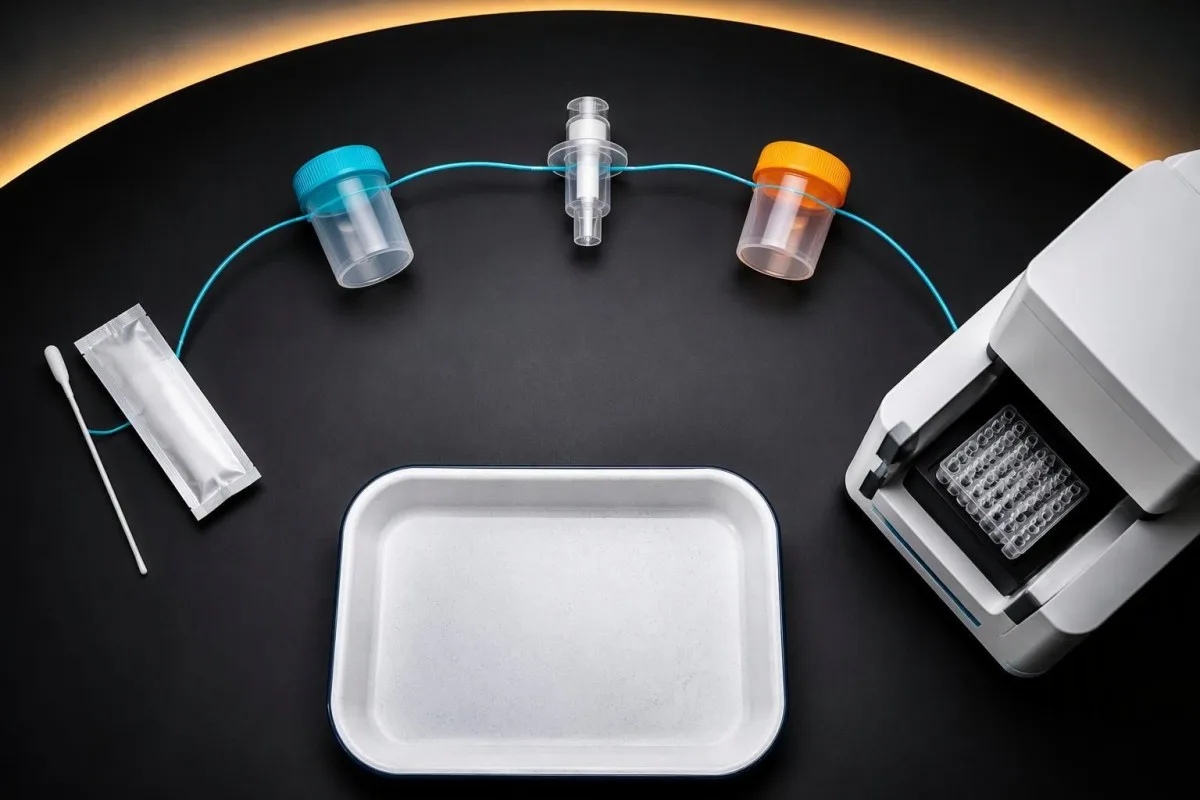
Early collection, poor swab contact, or testing after upper-airway RNA has declined can contribute to a negative result despite a compatible illness. If someone deteriorates 2 days after a negative swab, clinical reassessment matters more than treating that earlier result as permanent reassurance.
A hypothetical 46-year-old tests positive during a cold, improves, and remains positive when retested 2 weeks later for an unrelated appointment. That second result could represent persistent RNA detection; the laboratory result alone cannot distinguish residual genetic material from replication-capable virus.
An unexpected positive deserves verification of the patient identifier, sample site, and collection date before assuming a rare laboratory error. When symptoms do not fit, a clinician may discuss confirmation with the laboratory; repeating every positive test after 48 hours is not a routine requirement.
Different viruses have different persistence patterns, and duration estimates cannot simply be transferred between them. Our adenovirus shedding explanation illustrates the principle; for HMPV, neither 1 positive swab nor a series of Ct values supplies a validated countdown to noncontagiousness.
Why are older adults and people with chronic lung disease higher risk?
Adults aged 65 and older, particularly those with chronic lung disease, heart disease, or frailty, have a greater risk of complications from HMPV. The positive PCR identifies the virus; oxygenation, breathing effort, hydration, and underlying physiological reserve are more useful for assessing the person's current condition.
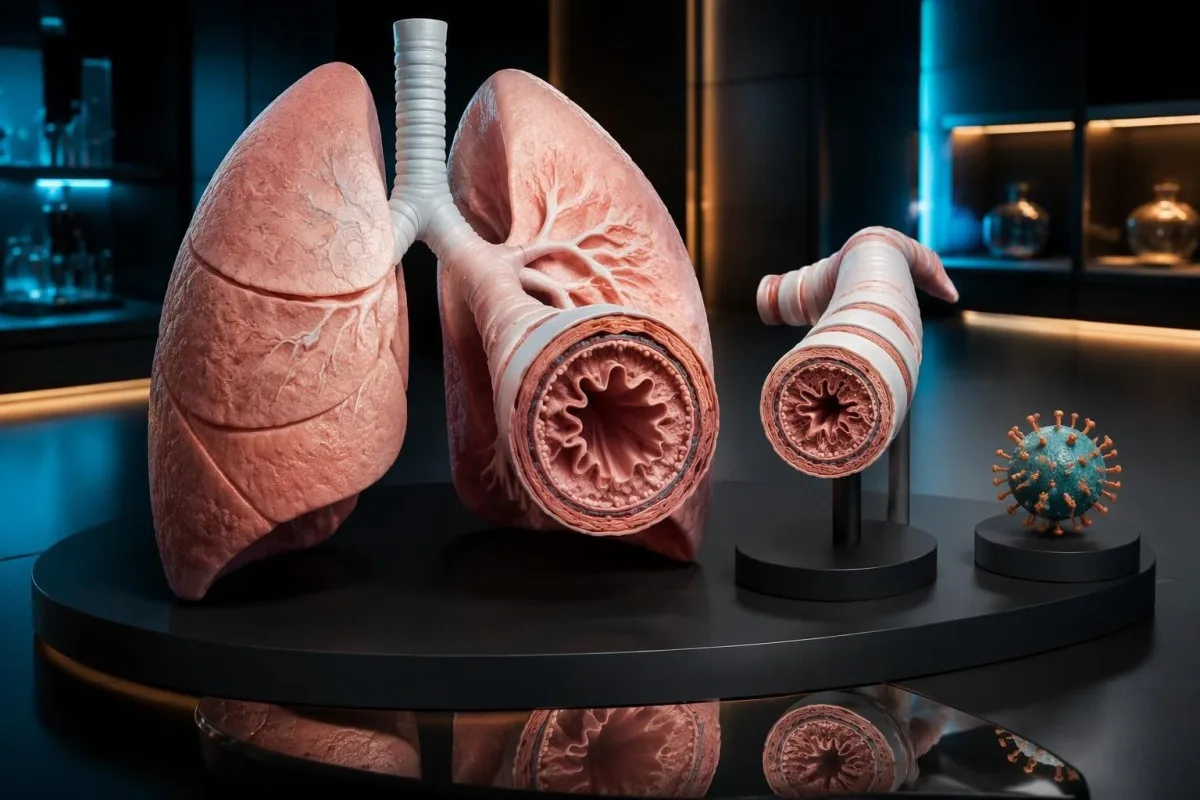
HMPV is an established adult respiratory pathogen, not exclusively a childhood infection. Archives of Internal Medicine described illness across adult cohorts, including older and higher-risk adults (Walsh et al., 2008); that evidence supports closer observation, but does not turn age 65 into an automatic hospital-admission threshold.
New confusion, unusual sleepiness, or inability to manage usual activities can be more revealing than a temperature reading in an older person. A hypothetical 79-year-old with 37.4°C, new confusion, and noticeably faster breathing needs prompt assessment despite the absence of a high fever.
People with asthma or COPD may need their existing action plan assessed when HMPV triggers wheezing. Increased reliever use over 24 hours, a falling peak flow compared with the person's own baseline, or reduced benefit from prescribed inhalers provides more useful context than comparing PCR intensity between patients.
A second virus can be detected alongside HMPV, and some alternatives have pathogen-specific treatments. Our influenza treatment timeline explains why influenza detection may change prescribing decisions; an HMPV-positive line should not cause the other panel results to be ignored.
What makes a positive HMPV result more concerning in infants?
In infants, pauses in breathing, increased breathing effort, and reduced feeding matter more than the positive PCR label. A baby younger than 3 months with a temperature of 38°C or higher needs urgent medical assessment, and a positive HMPV result does not cancel the need to evaluate other serious infections.
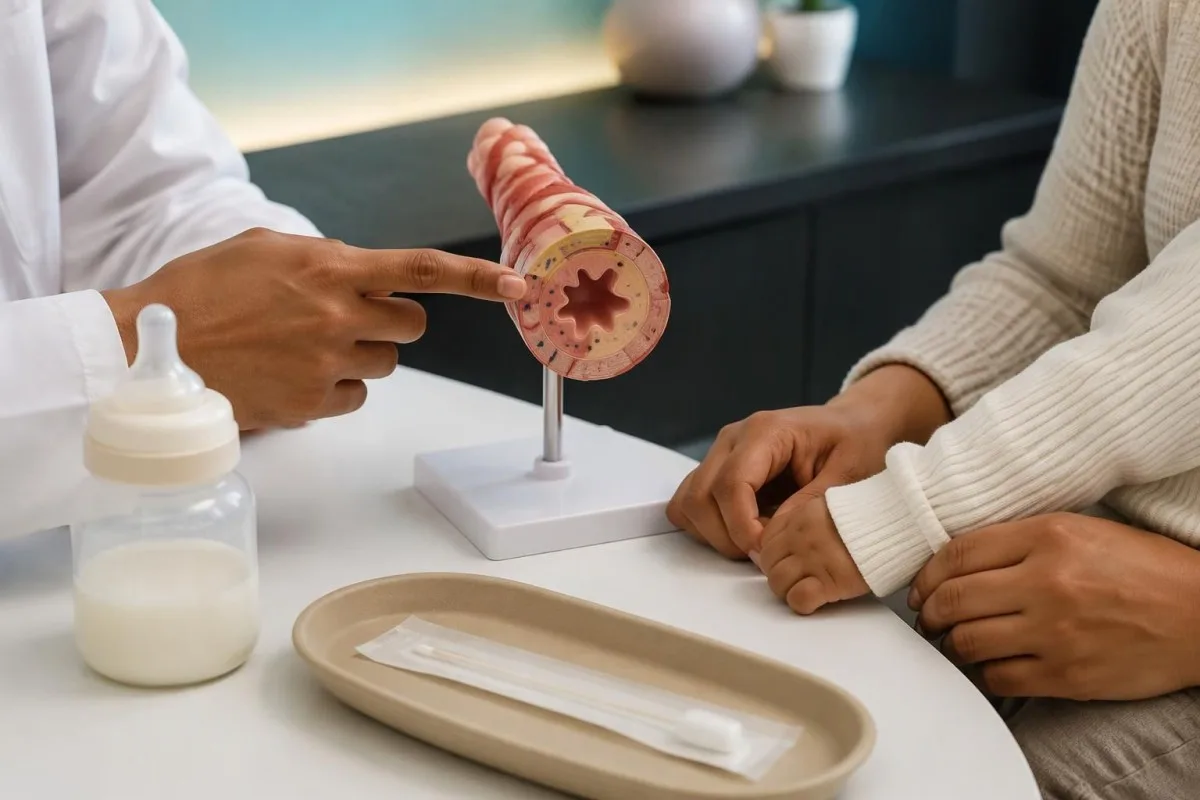
Very young infants may present with apnea before an obvious cough or wheeze. NICE's Bronchiolitis in children guideline, published in 2015 and updated in 2021, specifically highlights apnea in infants younger than 6 weeks; a witnessed breathing pause requires emergency assessment rather than waiting for fever.
Small airway diameter explains part of the risk: the same amount of swelling or mucus takes up a larger proportion of an infant's airway. Prematurity, age under 3 months, significant heart disease, and chronic lung disease add vulnerability, but a positive PCR cannot rank these children by likely outcome.
Feeding is also a breathing test because babies must coordinate sucking, swallowing, and breathing. Taking only 50–75% of usual intake is a NICE concern that can justify referral; a hypothetical baby taking 40 mL instead of a usual 80 mL at repeated feeds needs assessment rather than simply more frequent offers.
Age-specific interpretation is especially relevant when accompanying laboratory results are available. Our children's AI safety guidance explains why adult reference ranges and automated reassurance are inappropriate; no online interpretation should delay assessment of an infant who is harder to wake or struggling to feed.
What should immunocompromised patients do after HMPV is detected?
Immunocompromised patients should contact their treating team promptly after HMPV is detected, particularly with new fever, cough, or breathlessness. Stem-cell transplant, solid-organ transplant, cancer treatment, and substantial immune suppression can change follow-up decisions; 1 positive swab does not quantify the individual risk.

The reason for early contact is not that every case becomes severe, but that deterioration can require earlier investigation and hospital support. A hypothetical transplant recipient with only 1 day of mild symptoms may need a different monitoring plan from a healthy adult with the same report wording.
Anyone given a neutropenic fever plan should follow it immediately rather than assuming HMPV explains the fever safely. For a person known to have severe neutropenia, a temperature of 38°C or symptoms of sepsis can trigger urgent oncology assessment; the team's written threshold may be even more cautious.
Persistent RNA detection can last longer when immune function is impaired, but ongoing positivity is not an automatic instruction to prescribe an experimental antiviral. Some specialist teams have used ribavirin-based approaches in selected cases; evidence is limited, and there is no standard HMPV-specific treatment regimen for patients to start themselves.
Kantesti is an AI lab test interpretation service that explains supporting laboratory results without replacing specialist triage; our validation and clinical limits describe that boundary. Breathlessness may require investigation for more than 1 process, including conditions discussed in our Pneumocystis PCR interpretation guide.
Why do antibiotics usually not help HMPV?
Antibiotics do not treat human metapneumovirus because HMPV is a virus, not a bacterium. Antibiotics may still be appropriate when a clinician identifies bacterial pneumonia, an ear infection, or another bacterial complication; 1 positive viral result does not prove that bacteria are absent.

Green or yellow mucus alone cannot establish bacterial infection, and fever lasting several days is not a reliable antibiotic trigger. A hypothetical patient who improves for 2 days and then develops renewed fever, pleuritic chest pain, and worse breathlessness needs reassessment because the pattern—not mucus colour—changes the concern.
Inflammatory tests can support a decision, but none supplies a universal bacterial-versus-viral switch. A procalcitonin of 0.25 ng/mL appears in some respiratory treatment algorithms, yet it is not an HMPV-specific threshold; our procalcitonin interpretation guide explains why timing and illness severity matter.
A clinician may prescribe antibiotics despite HMPV detection when examination, imaging, or cultures support bacterial disease. Certain pneumonia causes need distinct testing, as our Legionella urine antigen guide explains; a multiplex panel reporting 1 virus cannot replace that reasoning.
Avoid starting leftover antibiotics or stopping an existing prescription without discussing its purpose with the prescriber. Even 1 unnecessary course can cause diarrhoea, allergic reactions, or drug interactions, while an appropriately chosen course for confirmed bacterial disease addresses a problem the viral result does not rule out.
What human metapneumovirus treatment helps at home?
Human metapneumovirus treatment is usually supportive: rest, appropriate fluids, nasal saline, and medication for discomfort when suitable. Many uncomplicated illnesses improve over roughly 7–10 days, although cough can last longer; treatment should follow symptoms and risk factors rather than an attempt to make PCR become negative.

For adults who can safely take it, a usual UK paracetamol dose is 500–1,000 mg, at least 4 hours apart, with no more than 4 doses or 4,000 mg in 24 hours. People weighing under 50 kg, with liver disease, or with relevant alcohol use should ask about a lower maximum rather than assuming the standard limit applies.
Cold-and-flu products may contain the same medicine under another name, including acetaminophen. Check every ingredient before combining products; our acetaminophen safety explanation describes why an accidental extra dose can need urgent advice even when the person initially feels well.
Saline drops and gentle nasal suction before feeds can help infants whose congestion interferes with drinking, but aggressive repeated suction can irritate the nose. Honey may soothe cough in children older than 1 year and adults; never give honey to an infant younger than 12 months because of botulism risk.
Kantesti's medical content separates comfort measures from treatments that alter disease outcomes. Bronchodilators or steroids may be appropriate for a separately assessed asthma or COPD flare, but NICE does not recommend routine bronchodilators or corticosteroids for infant bronchiolitis; use 1 existing action plan, not borrowed medication or an improvised steroid course.
Which breathing signs require urgent or emergency care?
Severe breathing difficulty, blue or grey lips, pauses in breathing, confusion, or inability to speak or feed because of breathlessness require emergency care. At usual altitude, a persistent oxygen saturation of 92% or lower generally needs urgent assessment; a reading of 90% or lower, or severe symptoms at any reading, warrants emergency action.
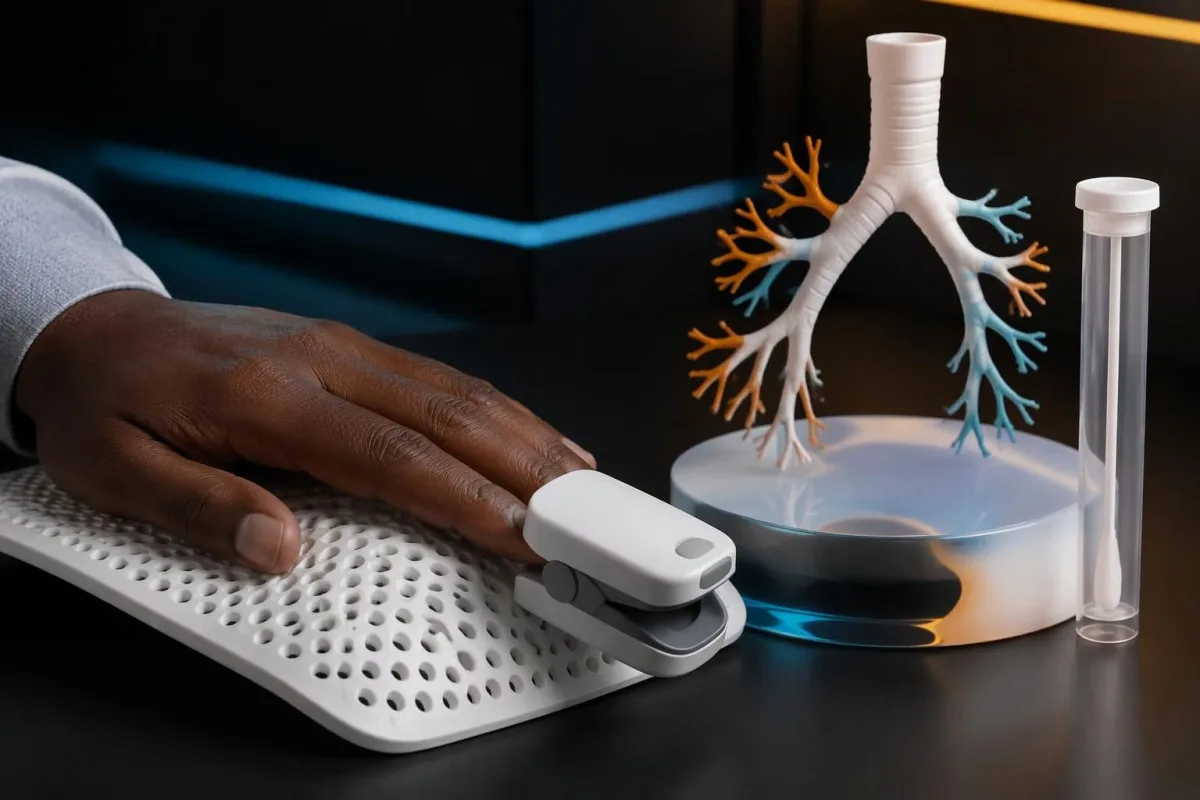
Call the local emergency number for severe symptoms—999 or 112 in the UK, or the appropriate number where you live. Marked chest pulling, grunting, exhaustion, and a child who cannot stay awake are emergencies even if the report says only HMPV and no other pathogen.
A home pulse oximeter can misread with movement, cold fingers, poor circulation, or nail products, and some devices may overestimate oxygenation in people with darker skin. If the person is stable enough, repeat after about 1 minute with a warm, still hand; never spend repeated attempts troubleshooting while breathing is visibly worsening.
Hospital oxygen thresholds for bronchiolitis differ by age and risk: NICE uses persistent saturation below 90% for children aged 6 weeks and over, and below 92% for younger babies or children with underlying conditions. These are supervised clinical thresholds, not permission to keep an unwell infant at home until a device crosses a particular number.
People with chronic lung disease or living at altitude may have an individualized baseline, so their clinical team should define the appropriate target. Pulse oximetry also cannot measure carbon dioxide retention; our arterial blood gas explanation describes why 1 apparently acceptable saturation does not explain all causes of drowsiness or respiratory failure.
Which dehydration signs need medical assessment?
Markedly reduced urination, inability to keep fluids down, unusual drowsiness, or substantially reduced feeding need medical assessment. In children with bronchiolitis, NICE highlights intake of only 50–75% of normal and no wet nappy for 12 hours as warning signs; seek help earlier when other symptoms are concerning.
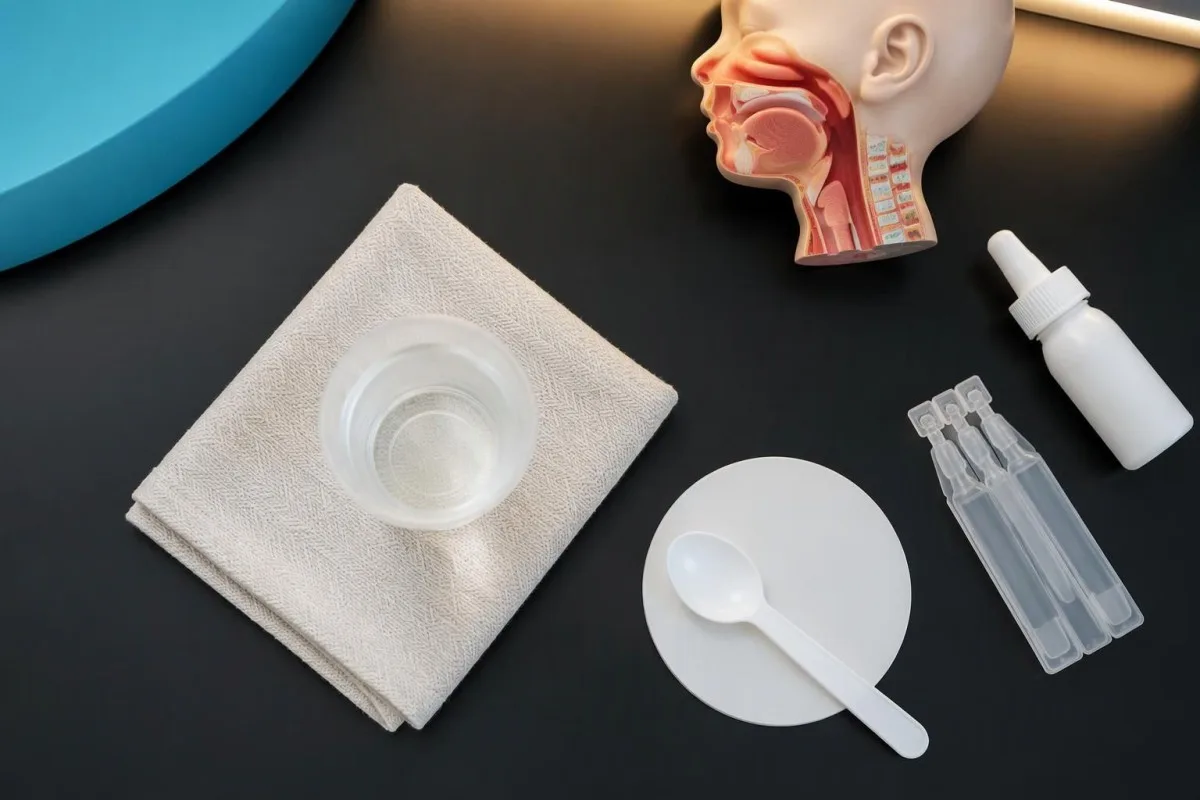
Urine output is useful because fever increases fluid losses while blocked noses and fast breathing can make drinking harder. A hypothetical toddler taking half their usual drinks and passing only 1 small wet nappy through most of the day needs advice; do not wait for a laboratory electrolyte abnormality before asking for help.
Offer small, frequent drinks when the person is alert and breathing comfortably; a child may tolerate 5–10 mL every few minutes better than a large cup. Continue breastfeeding or usual formula, and use a commercially prepared oral rehydration solution when advised—do not dilute formula or force fluid into a breathless child.
Clinical teams may check sodium, potassium, and kidney function when dehydration is substantial or other illness is suspected. Our electrolyte warning-pattern guide explains why confusion and poor intake require context; 1 normal electrolyte result does not prove that ongoing fluid intake is adequate.
Adults with heart failure or kidney disease should not automatically increase fluids to a fixed 2- or 3-litre target, because prescribed restrictions may still apply. Reduced intake can also temporarily affect kidney results, as our dehydration and eGFR guide explains; ask the treating team about both fluid advice and medication safety.
Does a positive PCR tell you how long HMPV is contagious?
A positive HMPV PCR cannot determine how long a person remains contagious. HMPV spreads through respiratory particles and close contact, with contaminated hands or surfaces also contributing; neither 1 positive result nor a Ct number establishes the final day on which transmission is possible.
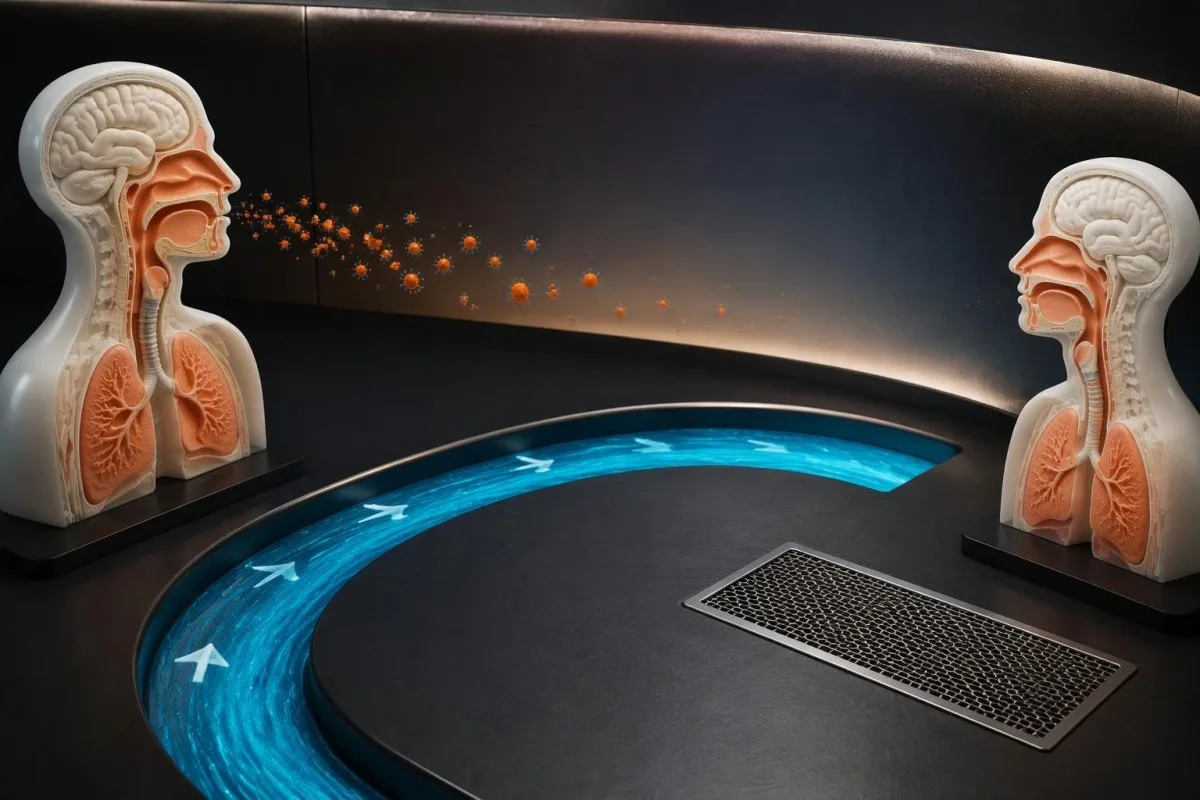
Stay away from others while acutely unwell, improve ventilation, and wash hands after handling respiratory secretions. A well-fitting mask can reduce exposure during necessary close contact; households containing a newborn or an immunocompromised person have a stronger reason to reduce avoidable contact over the next several days.
For ordinary activities, a commonly used respiratory-virus approach is to wait until symptoms are improving overall and fever has been absent for at least 24 hours without fever-reducing medicine. That practical rule is not proof of noninfectiousness; school, workplace, healthcare, and local public-health requirements may differ.
Additional precautions for the next 5 days after returning—such as ventilation, masking where appropriate, and avoiding high-risk contacts—can reduce residual transmission risk. Immunocompromised patients and people working in healthcare may need a specifically agreed plan rather than applying a general community timetable.
Do not import gastrointestinal-virus exclusion rules into respiratory illness simply because both tests use PCR. Our norovirus recovery and testing guide explains a different transmission setting; for HMPV, repeat testing to obtain 1 negative swab is not usually the basis of routine return decisions.
Can blood tests or AI interpretation show whether HMPV is severe?
Blood tests and AI interpretation cannot turn an HMPV-positive swab into a reliable severity forecast. A CBC, CRP, kidney panel, or other requested test can help assess complications and physiological effects, but the clinician must combine those findings with breathing, oxygenation, hydration, and examination.
A high white-cell count can reflect several processes, including stress, bacterial infection, or corticosteroid treatment. Likewise, a CRP of 60 mg/L can occur in more than 1 type of illness; our WBC and CRP comparison explains why these markers do not independently select an antibiotic.
Trend interpretation starts with the actual dates and circumstances of collection. A hypothetical CRP falling from 80 to 35 mg/L over 3 days may fit improvement, but new hypoxia or confusion still requires assessment; laboratory improvement must not override clinical deterioration.
Kantesti is an AI blood test interpretation platform that organizes laboratory values, units, and trends for discussion with a healthcare professional. Our interpretation does not measure live respiratory effort, certify freedom from transmission, or assign a hospital decision from 1 viral result; those boundaries are especially relevant when family members share reports.
Before sharing a document, check that you have the patient's permission and remove unnecessary identifiers when possible. Our privacy and data guidance explains handling considerations; keep the original report available because a cropped image can omit 1 crucial specimen comment, unit, or laboratory qualification.
What should you prepare for follow-up, and which sources support this guide?
For follow-up after an HMPV-positive result, prepare the report, symptom timeline, breathing changes, fluid intake, and relevant medical history. The HMPV evidence supporting this guide comes from condition-specific clinical studies and bronchiolitis guidance; the 2 repository publications below concern other laboratory topics, not HMPV diagnosis or treatment.
Write down when symptoms began, when the sample was collected, and what changed over the last 24 hours. Include oxygen readings only with the device conditions and usual baseline, and record actual feed volumes or drink intake rather than a vague statement that the person is drinking less.
Bring a medication list that includes immune-suppressing drugs and combination cold remedies, with dose and timing where known. For a hypothetical 72-year-old taking diuretics who has poor intake, the follow-up question is not merely whether HMPV is positive—it is whether hydration, renal function, and the medication plan need review.
Our related repository publications cover urinalysis interpretation principles and iron-panel interpretation principles. Both are listed with their DOI links below; neither is evidence that HMPV causes a particular urinary or iron abnormality, and repository availability is not equivalent to independent peer review.
The Kantesti medical content team distinguishes laboratory education from urgent assessment and makes source limitations explicit in our medical content standards. The 2004 pediatric study, 2008 adult study, and NICE bronchiolitis guidance support different parts of this article; none validates PCR as a standalone severity or contagiousness test.
Frequently asked questions
What does HMPV PCR positive mean on my lab report?
HMPV PCR positive means the test detected human metapneumovirus RNA in the submitted sample, usually a respiratory swab. A result collected during cough, congestion, or fever supports a current or recent HMPV illness. Symptoms commonly begin about 3–6 days after exposure, but the result cannot identify the exact exposure date. PCR positivity does not independently diagnose pneumonia or predict severity or contagiousness.
Do I need antibiotics if my human metapneumovirus test is positive?
Antibiotics do not treat HMPV itself because human metapneumovirus is a virus. A clinician may prescribe antibiotics for a separate bacterial complication, and 1 positive viral result does not exclude bacterial pneumonia. Renewed fever after initial improvement, worsening breathlessness, or new chest pain should prompt reassessment rather than self-treatment with leftover antibiotics. Mucus colour or an isolated inflammatory-marker result cannot reliably make that prescribing decision.
How long do HMPV symptoms last?
Many uncomplicated HMPV illnesses improve over roughly 7–10 days, although cough and tiredness may persist longer. Recovery varies with age, underlying lung disease, and immune function. Persistent cough with steady improvement is different from renewed fever, worsening breathing, or declining fluid intake. A positive repeat PCR cannot by itself show that recovery has failed.
How long am I contagious after an HMPV-positive PCR?
An HMPV-positive PCR cannot establish the duration of contagiousness because RNA detection does not directly measure transmission capability. A commonly used community respiratory-virus approach is to resume ordinary activities only after symptoms improve and fever has been absent for at least 24 hours without fever-reducing medicine. Additional precautions for the next 5 days can reduce residual transmission risk, especially around vulnerable people. Local policies and specialist advice may differ, and repeat PCR is not usually required to prove recovery.
When should a baby with HMPV go to hospital?
A baby with HMPV needs emergency assessment for pauses in breathing, blue or grey colour, severe chest pulling, exhaustion, or inability to feed because of breathlessness. A temperature of 38°C or higher in an infant younger than 3 months requires urgent medical assessment even when a viral test is positive. Intake falling to 50–75% of usual feeds or no wet nappy for 12 hours also warrants medical advice, with earlier help if the baby appears unwell. Do not wait for a pulse oximeter reading or repeat test before seeking care.
Does a low HMPV Ct value mean a severe or highly contagious infection?
A low HMPV cycle-threshold value may indicate more target RNA in that particular sample, but it does not provide a validated severity or contagiousness score. A Ct of 25 on 1 assay is not directly comparable with 25 on another assay because methods and sampling differ. Routine HMPV PCR is usually qualitative rather than a standardized viral-load test. Breathing effort, oxygenation, hydration, and underlying conditions should guide clinical assessment instead.
What should an immunocompromised person do after an HMPV-positive result?
An immunocompromised person should contact their treating team promptly after HMPV detection, particularly with fever, cough, or breathlessness. A person given a neutropenic fever plan should follow its threshold immediately; a temperature of 38°C or symptoms of sepsis can require urgent oncology assessment. Specialist teams may arrange closer monitoring or additional investigations, but there is no standard HMPV-specific antiviral regimen for patients to start themselves. Persistent PCR positivity alone cannot determine severity or the need for an experimental treatment.
Get your blood test results explained
Upload your lab report and Kantesti's AI explains each biomarker in plain language within seconds. Used by more than 2 million people worldwide.
References
- Klein, T., Mitchell, S., & Weber, H. (2026). Urobilinogen in Urine Test: Complete Urinalysis Guide 2026. Kantesti AI Medical Research. DOI
- Klein, T., Mitchell, S., & Weber, H. (2026). Iron Studies Guide: TIBC, Iron Saturation & Binding Capacity. Kantesti AI Medical Research. DOI
- Williams JV et al. (2004). Human Metapneumovirus and Lower Respiratory Tract Disease in Otherwise Healthy Infants and Children. New England Journal of Medicine. DOI
- Walsh EE et al. (2008). Another Piece of the Puzzle: Human Metapneumovirus Infections in Adults. Archives of Internal Medicine. DOI
- National Institute for Health and Care Excellence (2021). Bronchiolitis in children: diagnosis and management (NG9; published 2015, updated 2021). NICE Guideline NG9.
- 2M+Tests analysed
- 127+Countries
- 100+Languages
About the medical team


E-E-A-T Trust Signals
Experience
Physician-led clinical review of lab interpretation workflows.
Expertise
Laboratory medicine focus on how biomarkers behave in clinical context.
Authoritativeness
Medically reviewed by Dr. Thomas Klein, with contributions from Dr. Sarah Mitchell and Prof. Dr. Hans Weber.
Trustworthiness
Evidence-based interpretation with clear follow-up pathways to reduce alarm.




Medical disclaimer
This article is for educational purposes only and does not constitute medical advice. Always consult a qualified healthcare provider for diagnosis and treatment decisions.
Published · Contact the editorial team
Published by Kantesti Ltd, registered in England & Wales, company no. 17090423, London, United Kingdom.
