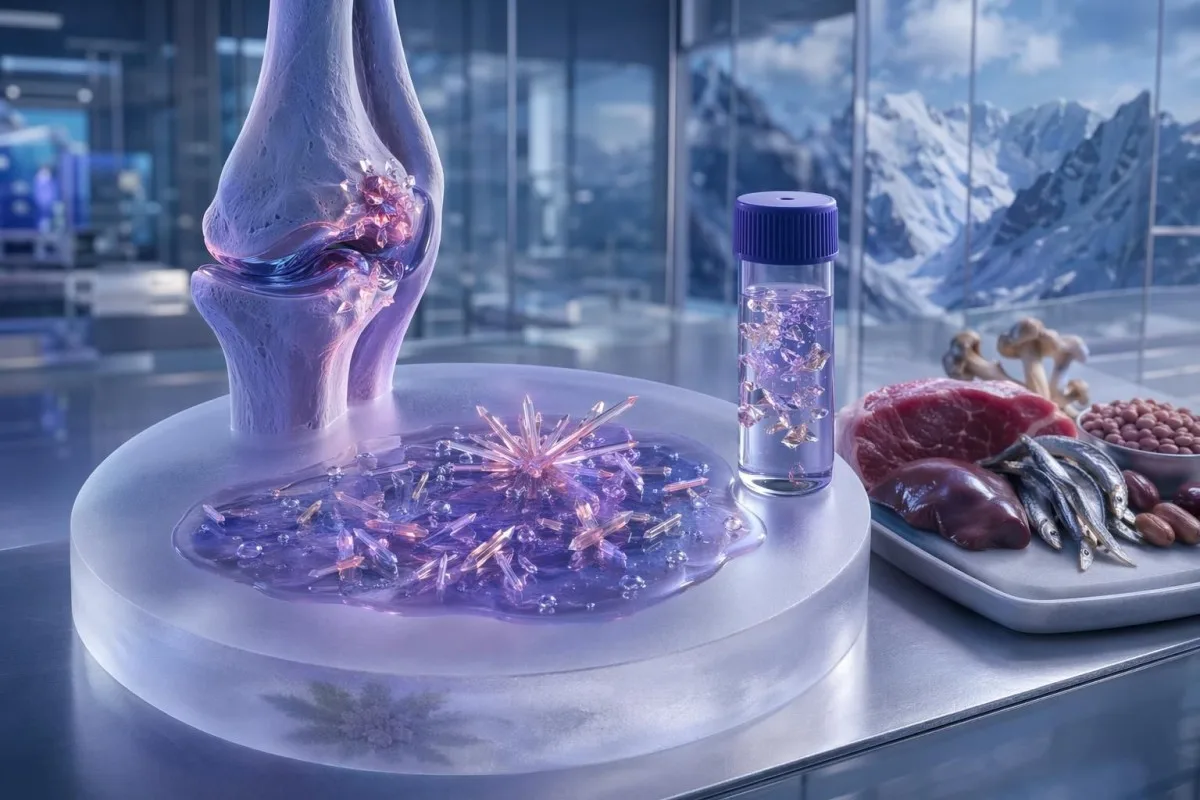
A lab-focused guide to eating when serum urate is high, including what can move the number, what usually cannot, and when a high result deserves a clinician’s eyes.


- Serum urate above 6.8 mg/dL is the level where monosodium urate crystals can form; many gout plans target under 6.0 mg/dL.
- Foods to avoid with high uric acid include organ meats, large portions of red meat, anchovies, sardines, mussels, scallops, and heavy meat gravies.
- Beer, spirits, and sugary drinks can raise uric acid more reliably than most single foods, especially when intake is frequent.
- Diet usually lowers uric acid modestly — often about 0.5–1.0 mg/dL — while medication may be needed for recurrent gout or stones.
- Crash dieting and fasting can temporarily raise uric acid because ketones compete with urate for kidney excretion.
- Repeat high uric acid labs are best checked after 4–8 weeks of stable diet, hydration, weight, alcohol intake, and medication routine.
- A high uric acid lab during a flare can be misleading because serum urate may fall during acute tissue response.
- Medical follow-up is needed for uric acid above 9.0 mg/dL, recurrent flares, kidney stones, low eGFR, tophi, or unexplained joint swelling.
What should a gout diet avoid first?
A gout diet should first limit beer and spirits, sugary drinks, organ meats, large red-meat portions, meat gravies, anchovies, sardines, mussels, and scallops. If your high uric acid labs are above 6.8 mg/dL, diet can help, but recurrent gout, kidney stones, or urate above 9.0 mg/dL usually needs medical follow-up rather than food changes alone.
When I review a panel showing uric acid of 8.4 mg/dL, I do not start by banning every protein food. I ask about beer frequency, sweetened drinks, recent weight loss, diuretics, kidney function, and whether the blood draw happened during a flare; those 5 details often explain more than a long food list.
Kantesti’s AI-powered blood test interpretation reads uric acid beside creatinine, eGFR, glucose, triglycerides, liver enzymes, and medication clues because serum urate is a kidney-handled metabolic marker, not just a diet score. For ranges and unit conversion, our guide to uric acid normal range is the companion piece I point patients to first.
As of May 16, 2026, the clinically useful target for most people with gout remains serum urate below 6.0 mg/dL, while patients with tophi or very frequent flares may be managed toward below 5.0 mg/dL. That target is lower than the crystal saturation point of about 6.8 mg/dL because the goal is not just to stop new crystal formation; it is to dissolve stored crystals over time.
I’m Thomas Klein, MD, and in practice I see two common mistakes: patients avoid tomatoes or beans obsessively while still drinking fruit juice daily, and patients assume one normal uric acid result rules out gout. Neither is true.
How do uric acid lab numbers change gout risk?
Uric acid labs estimate the amount of urate circulating in blood; values above about 6.8 mg/dL can support crystal formation, but risk depends on symptoms, kidney function, sex, medications, and trends. A single high result is a clue, not a diagnosis by itself.
Adult reference intervals vary by laboratory, but many use roughly 3.5–7.2 mg/dL for men and 2.6–6.0 mg/dL for women. In SI units, 6.8 mg/dL is about 404 µmol/L, and 6.0 mg/dL is about 357 µmol/L.
Some European labs flag women at lower thresholds than US labs because estrogen increases urate excretion before menopause. After menopause, the gap narrows, which is why a 62-year-old woman with uric acid of 7.1 mg/dL deserves the same careful gout and kidney review as a man with the same value.
The crystal chemistry is surprisingly practical: monosodium urate becomes less soluble above 6.8 mg/dL, especially in cooler tissues such as the big toe. Our detailed normal range for uric acid explains why a value inside the lab’s reference range can still be too high for someone with proven gout.
A flare can distort the lab. In acute gout, serum urate may drop by 1–2 mg/dL because urate shifts into tissue response and kidney handling changes, so I usually repeat the test at least 2 weeks after symptoms settle if the first result does not fit the story.
Which foods to avoid with high uric acid matter most?
The foods to avoid with high uric acid are mostly high-purine animal foods: liver, kidney, sweetbreads, game meat, large red-meat servings, anchovies, sardines, herring, mussels, scallops, and concentrated meat stocks. The risk comes from purines being broken down into uric acid.
Organ meats sit at the top of my avoidance list because they combine dense nucleic acids with concentrated purines. A 100 g portion of liver can deliver several times the purine load of the same portion of chicken breast, and patients with uric acid above 8.0 mg/dL often see their number move when organ meats stop.
Seafood is uneven. Salmon and white fish are usually moderate choices, while anchovies, sardines, herring, mussels, scallops, trout, and roe are the repeat offenders I ask about when flares continue despite otherwise tidy eating.
The 2004 Health Professionals Follow-up Study in the New England Journal of Medicine found higher gout risk with meat and seafood intake, while dairy intake was associated with lower risk (Choi et al., 2004). That paper is still useful clinically because it separated protein from purine source, which is why I do not tell every patient to eat low protein.
High-protein dieting can confuse the picture when it relies heavily on red meat, whey stacks, and dehydration. If you are eating for muscle gain, our guide to high protein diet labs explains why BUN, creatinine, eGFR, and uric acid should be read together.
Which drinks raise uric acid fastest?
Beer, spirits, fructose-sweetened drinks, fruit juice, and dehydration are the drink-related patterns most likely to raise uric acid. Beer is especially tricky because it adds alcohol plus brewer’s yeast purines.
Beer is not just alcohol in this setting. A patient may drink two beers nightly, cut red meat, and feel cheated when uric acid stays at 8.2 mg/dL; the brewer’s yeast purines and alcohol-driven kidney effects are often enough to keep the lab high.
Fructose is different from ordinary starch because it consumes ATP during metabolism and can increase purine breakdown. In a BMJ prospective cohort, sugar-sweetened soft drinks and fructose intake were associated with higher gout risk in men (Choi and Curhan, 2008).
Fruit juice deserves its own sentence. A large 500 mL bottle of juice can contain 40–55 g of sugar, and even though it looks healthier than soda, the uric-acid pathway sees a fructose load.
High triglycerides commonly travel with high uric acid because insulin resistance reduces kidney urate excretion. If your panel shows both, our article on high triglycerides meaning gives the metabolic context behind that pairing.
Can fasting, keto, or dehydration worsen high uric acid labs?
Yes. Fasting, rapid weight loss, ketogenic dieting, heavy exercise, and dehydration can temporarily raise uric acid because ketones and urate compete for kidney excretion, while lower fluid volume concentrates the result.
This is one of those areas where context matters more than the number. I have seen a 38-year-old runner jump from uric acid 6.4 to 8.1 mg/dL after a 36-hour fast plus a hard hill session, then return near baseline after normal meals and hydration.
Early keto can raise uric acid for 2–6 weeks because acetoacetate and beta-hydroxybutyrate reduce urate clearance in the kidney. Many patients later normalize, but if they already have gout, that early window can be enough to provoke a flare.
Dehydration can falsely exaggerate several blood markers, not just uric acid. Our guide to dehydration false highs covers the pattern I look for: high albumin, high total protein, high hematocrit, and sometimes a higher BUN/creatinine ratio.
If you are using low-carb dieting for weight loss, do it slowly. A loss rate around 0.5–1.0 kg per week is less likely to spike urate than crash dieting, especially if alcohol and sweetened drinks are removed at the same time.
Which foods can lower uric acid or reduce flares?
Low-fat dairy, water, coffee for regular drinkers, whole grains, vegetables, cherries, and modest vitamin C intake may support lower uric acid or fewer flares. These foods do not replace urate-lowering therapy when gout is recurrent.
Low-fat milk and yogurt are practical because dairy proteins may increase urate excretion, and they also replace higher-purine proteins. In clinic, I often suggest one to two servings daily if the patient tolerates dairy and has no reason to avoid it.
Cherries are not magic, but they are a reasonable swap for desserts and juice. The better explanation is probably a mix of lower sugar load, anthocyanins, and displacement of trigger foods rather than a direct drug-like effect.
Vitamin C can lower uric acid modestly, often by 0.2–0.5 mg/dL in supplementation studies, but high-dose vitamin C is not ideal for everyone with kidney-stone risk. If inflammation labs are also high, our diet for high CRP may help you build meals that do not chase uric acid in isolation.
Coffee is a nice example of nuance. Regular coffee intake is associated with lower gout risk in observational data, but starting six espressos a day because of one lab result is not medical wisdom; sleep, reflux, palpitations, and blood pressure still count.
How much can diet change repeat uric acid results?
Diet changes usually lower uric acid by about 0.5–1.0 mg/dL, though larger drops can happen when alcohol, sugary drinks, and rapid weight gain are major drivers. Retest after 4–8 weeks of stable habits for a cleaner signal.
A drop from 8.6 to 7.7 mg/dL after 6 weeks is real progress, but it may still be above the crystal threshold. Patients sometimes feel disappointed by that; I frame it as reducing pressure on the system, not finishing the job.
The biggest lab movements I see come from removing daily beer, sweetened drinks, and crash dieting, not from micromanaging spinach or lentils. A person drinking 1 litre of sugary soda daily may see a more meaningful urate change than someone who only swaps turkey for chicken.
Our blood test before and after diet guide explains why uric acid should be compared on the same kind of day: similar hydration, similar fasting duration, similar exercise load, and no active flare. Small differences of 0.2–0.4 mg/dL can be ordinary analytic and biological variation.
If a patient’s uric acid stays above 8.0 mg/dL after a serious diet trial, I stop blaming willpower. I look harder at eGFR, diuretics, family history, insulin resistance, and whether urate-lowering medication is appropriate.
When do high uric acid labs need medical follow-up?
High uric acid needs medical follow-up when it is above 9.0 mg/dL, occurs with gout flares, kidney stones, low eGFR, tophi, unexplained joint swelling, fever, or persistent abnormal kidney labs. Diet alone is not enough in these situations.
The 2020 American College of Rheumatology guideline recommends a treat-to-target approach with urate-lowering therapy for many patients with recurrent flares, tophi, or gout-related radiographic damage (FitzGerald et al., 2020). The usual target is serum urate below 6.0 mg/dL.
Uric acid above 9.0 mg/dL is not an emergency by itself, but it changes the conversation. At that level, I ask about kidney stones, family gout, psoriasis, chemotherapy history, alcohol intake, diuretics, and kidney function before assuming diet is the main cause.
Use repeat testing wisely. Our article on when to repeat abnormal blood tests explains why retesting too soon after a flare, infection, or medication change can create noisy results that mislead both patient and clinician.
One more clinical warning: a swollen, hot joint with fever is not automatically gout. Septic arthritis can look similar, and that situation needs urgent same-day assessment because joint infection can damage cartilage quickly.
Which labs should be checked with high uric acid?
High uric acid should be interpreted with creatinine, eGFR, BUN, urine albumin-creatinine ratio, glucose or HbA1c, triglycerides, HDL, ALT, AST, CBC, and urinalysis when stones or kidney disease are possible. The pattern often explains the urate.
Kidneys remove most urate, so eGFR is not optional context. A uric acid of 7.8 mg/dL with eGFR 95 mL/min/1.73 m² means something different from the same urate with eGFR 42.
Insulin resistance is the quiet driver many patients miss. High fasting insulin, high triglycerides, low HDL, fatty liver enzymes, and borderline HbA1c can all point toward reduced kidney urate excretion rather than simply too many purines.
Our eGFR normal range guide is useful when creatinine looks normal but kidney filtration is age-adjusted lower than expected. If sugar markers are borderline too, the HbA1c range guide shows why 5.7–6.4% matters even before diabetes.
For suspected stones, urinalysis can reveal blood, crystals, pH clues, and infection markers. Very acidic urine, often below pH 5.5, makes uric-acid stones more likely even when serum urate is only moderately high.
Which medicines and supplements affect uric acid?
Thiazide diuretics, loop diuretics, low-dose aspirin, cyclosporine, tacrolimus, niacin, and some cancer therapies can raise uric acid. Losartan, fenofibrate, SGLT2 inhibitors, and urate-lowering medicines can lower it in selected patients.
Do not stop prescribed medicines because of a uric acid result. A thiazide may raise urate by roughly 0.5–1.5 mg/dL, but it may also be controlling blood pressure well; the safer move is to discuss alternatives or protective treatment with your clinician.
Low-dose aspirin is a classic trap because it can reduce urate excretion, yet it may be essential for cardiovascular prevention in the right patient. The decision depends on heart risk, kidney function, gout severity, and why aspirin was started.
Niacin supplements can raise uric acid and also disturb liver enzymes and glucose in some people. Our medication monitoring blood test guide shows why timing matters when a new tablet, injection, or supplement appears just before an abnormal lab.
Supplements marketed for detox or rapid fat loss are another source of messy results. If a product causes dehydration, diarrhea, fasting, or high-dose vitamin C use, uric acid and kidney-stone risk may shift in opposite directions.
How should a gout diet change with kidney disease, diabetes, or hypertension?
A gout diet should be individualized when kidney disease, diabetes, or hypertension is present because potassium, sodium, protein, sugar, and medication choices all affect safety. The best diet for uric acid is not always safe for every kidney.
Kidney disease changes the food conversation. Beans and lentils may be gout-friendlier than meat, but a patient with advanced CKD and potassium of 5.5 mmol/L may need a potassium plan before increasing plant proteins.
Diabetes changes fruit advice. Whole fruit portions are usually fine, but juice and smoothies can push glucose, triglycerides, and uric acid in the wrong direction at the same time; that three-marker pattern is common in our data review.
Hypertension matters because salt-heavy processed meats, instant soups, and cured foods can worsen blood pressure even when purines are not extreme. Our diet for kidney disease covers the balancing act between urate, potassium, sodium, and protein.
In practice, the safest plate is boring in the best way: water, low-fat dairy if tolerated, vegetables chosen around kidney labs, whole grains, eggs or modest poultry, and smaller portions of fish that are not in the high-purine group.
What does a lab-focused gout diet week look like?
A lab-focused gout diet week removes alcohol and sugary drinks, avoids organ meats and high-purine seafood, keeps protein moderate, adds low-fat dairy if tolerated, and keeps hydration steady. The goal is repeatable habits before the next uric acid test.
For 7 days, I ask patients to do the simple things perfectly: water as the default drink, no beer or spirits, no soda or juice, no organ meats, no anchovies or sardines, and no crash fasting. That alone removes the most lab-active triggers.
Protein can stay moderate rather than tiny. Many adults do well around 0.8–1.0 g/kg/day unless their clinician has set a different kidney or athletic target, with eggs, yogurt, tofu, modest poultry, and lower-purine fish used strategically.
Carbohydrates should be steady, not sugar-heavy. Our low glycemic foods guide helps patients choose starches that are less likely to worsen insulin resistance, which can indirectly improve urate excretion.
A practical tip: keep dinner portions smaller than lunch if evening beer, large meat portions, and dessert tend to cluster. Lab changes often come from breaking that nightly stack, not from finding the perfect breakfast.
How does Kantesti interpret high uric acid labs?
Kantesti AI interprets high uric acid by reading the result with kidney markers, metabolic markers, liver enzymes, CBC patterns, medications, symptoms, and prior trends. A uric acid value alone is too narrow for safe interpretation.
Our AI lab analysis tool can process a blood test PDF or photo in about 60 seconds and flag whether uric acid is isolated or part of a kidney-metabolic pattern. Kantesti AI reads more than 15,000 biomarkers, but the clinically useful part is the relationship between markers, not the marker count.
For gout risk, our neural network looks for pairings such as uric acid 8.3 mg/dL plus eGFR 58, uric acid 7.6 plus triglycerides 260 mg/dL, or uric acid 6.9 during an acute flare with high CRP. That is closer to how clinicians reason at a desk than how a simple reference range works.
Our blood test biomarkers guide explains how units, ranges, and trend direction are normalized across reports from different countries. Kantesti’s clinical standards are described in our medical validation materials, and our broader AI triage research includes multilingual deployment work published with DOI-linked documentation at clinical decision support validation.
Thomas Klein, MD reviews gout-related content with our medical team because uric acid advice can go wrong when it ignores kidney disease, pregnancy status, chemotherapy, or infection mimics. That is also why our platform gives education and triage guidance, not a diagnosis based on one number.
What red flags mean joint pain may not be simple gout?
Joint pain with fever, rapidly spreading redness, inability to bear weight, immune suppression, recent joint procedure, trauma, or a first-ever severe swollen joint needs urgent medical assessment. Gout is common, but infection and fracture can imitate it.
A hot big toe after beer and shellfish may be classic gout. A hot knee with fever of 38.5°C, chills, and inability to walk is a different clinical situation until proven otherwise.
Septic arthritis can permanently damage a joint within days, and serum uric acid cannot distinguish it from gout. If a clinician suspects infection, joint fluid testing and culture matter more than the diet history.
Inflammation labs can help with context but are not definitive. Our guide to blood tests for joint pain explains why CRP, ESR, CBC, uric acid, rheumatoid factor, and anti-CCP answer different questions.
Kidney stones are another red flag pattern. Flank pain, vomiting, fever, or visible blood in urine with high uric acid deserves prompt care because obstruction plus infection can become dangerous quickly.
What should you do after a high uric acid result?
After a high uric acid result, remove the biggest triggers for 4–8 weeks, repeat the lab under stable conditions, and seek medical review if urate is above 9.0 mg/dL or symptoms suggest gout, stones, kidney disease, or infection. Do not treat the number blindly.
Start with the high-yield changes: no beer or spirits, no sugary drinks or juice, avoid organ meats and high-purine seafood, hydrate consistently, and avoid crash fasting. If uric acid falls from 8.1 to 7.0 mg/dL, that is useful evidence even if you still need more care.
Upload your report to Try Free AI Blood Test Analysis if you want a structured read of uric acid alongside eGFR, BUN, glucose, triglycerides, and liver enzymes. Kantesti can also help families compare repeat labs when the question is trend, not just today’s flag.
Our physicians and advisors, including the experts listed on the Medical Advisory Board, review educational standards for lab interpretation topics like this. If your result comes with severe pain, fever, low kidney function, pregnancy, chemotherapy, or a new medication, use Contact Us or your own clinician promptly rather than waiting for a diet experiment.
Bottom line: a gout diet can lower pressure on urate metabolism, but it usually moves the lab modestly. Recurrent gout is a crystal disease, and crystals often require a treat-to-target medical plan as well as better food choices.
Frequently Asked Questions
What foods should I avoid if my uric acid is high?
If your uric acid is high, avoid or sharply limit organ meats, large red-meat portions, meat gravies, anchovies, sardines, herring, mussels, scallops, beer, spirits, soda, and fruit juice. These foods and drinks either add purines, increase uric acid production, or reduce kidney urate excretion. Plant foods such as beans, lentils, spinach, and mushrooms are usually less likely to trigger gout than animal purines, even though they contain some purines.
How much can a gout diet lower uric acid?
A gout diet often lowers serum uric acid by about 0.5–1.0 mg/dL, although some people see a larger change if they stop daily alcohol, sugary drinks, or crash dieting. The usual gout treatment target is below 6.0 mg/dL, which diet alone may not achieve when uric acid starts above 8.0–9.0 mg/dL. Recheck after 4–8 weeks of stable eating, hydration, weight, and medication habits.
Is uric acid 7.5 mg/dL dangerous?
A uric acid of 7.5 mg/dL is above the crystal saturation point of about 6.8 mg/dL, so it can increase gout risk, but it is not automatically dangerous by itself. The meaning depends on symptoms, kidney function, medications, stones, and whether the result is persistent. Medical follow-up is more urgent if you have flares, tophi, kidney stones, low eGFR, or uric acid above 9.0 mg/dL.
Can uric acid be normal during a gout attack?
Yes, uric acid can be normal during an acute gout attack because serum urate may fall temporarily while crystals drive tissue response. A normal result during a flare does not rule out gout. Many clinicians repeat uric acid at least 2 weeks after the flare settles, then interpret it with symptoms and, when needed, joint fluid findings.
Are eggs good for a gout diet?
Eggs are usually a good protein choice in a gout diet because they are low in purines compared with organ meats, red meat, and high-purine seafood. One or two eggs can fit many meal plans unless another condition, such as severe hyperlipidemia or specific clinician advice, changes the plan. The bigger lab wins usually come from removing beer, sugary drinks, and high-purine animal foods.
Should I fast before a uric acid blood test?
You usually do not need prolonged fasting for a uric acid blood test unless your clinician or lab asks for it because other tests are being drawn. Long fasting, keto dieting, dehydration, and hard exercise can temporarily raise uric acid, so they may distort the result. For trend tracking, test under similar conditions each time, ideally with normal hydration and no acute gout flare.
When should high uric acid be treated with medicine?
Medication is commonly considered when gout flares recur, tophi are present, kidney stones occur, kidney function is reduced, or uric acid remains very high, especially above 9.0 mg/dL. The 2020 American College of Rheumatology guideline supports treat-to-target urate lowering for many patients with established gout, usually aiming below 6.0 mg/dL. Diet still matters, but it may not dissolve existing crystal deposits by itself.
Can I drink coffee if I have gout or high uric acid?
Plain coffee is generally acceptable for people with gout and is not considered a typical flare trigger. Choose it without sugary syrups, and keep caffeine moderate if it worsens sleep, palpitations, reflux, or blood pressure.
Can I exercise when a gout flare is active?
Rest and protect the painful joint during a flare, since high-impact exercise can worsen pain. Gentle movement of unaffected areas is usually reasonable, and you can return gradually once swelling and pain have settled.
Do I need to stop beans, lentils, and tofu if my uric acid is high?
Usually no. Plant proteins such as beans, lentils, and tofu contain purines, but they are less likely to trigger gout than organ meats, shellfish, beer, or sugary drinks; keep portions moderate and adjust if your clinician has given kidney-related limits.
Get AI-Powered Blood Test Analysis Today
Join over 2 million users worldwide who trust Kantesti for instant, accurate lab test analysis. Upload your blood test results and receive comprehensive interpretation of 15,000+ biomarkers in seconds.
📚 Referenced Research Publications
Klein, T., Mitchell, S., & Weber, H. (2026). Multilingual AI Assisted Clinical Decision Support for Early Hantavirus Triage: Design, Engineering Validation, and Real-World Deployment Across 50,000 Interpreted Blood Test Reports. Kantesti AI Medical Research.
Klein, T., Mitchell, S., & Weber, H. (2026). C3 C4 Complement Blood Test & ANA Titer Guide. Kantesti AI Medical Research.
📖 External Medical References
⚕️ Medical Disclaimer
This article is for educational purposes only and does not constitute medical advice. Always consult a qualified healthcare provider for diagnosis and treatment decisions.
E-E-A-T Trust Signals
Experience
Physician-led clinical review of lab interpretation workflows.
Expertise
Laboratory medicine focus on how biomarkers behave in clinical context.
Authoritativeness
Written by Dr. Thomas Klein with review by Dr. Sarah Mitchell and Prof. Dr. Hans Weber.
Trustworthiness
Evidence-based interpretation with clear follow-up pathways to reduce alarm.