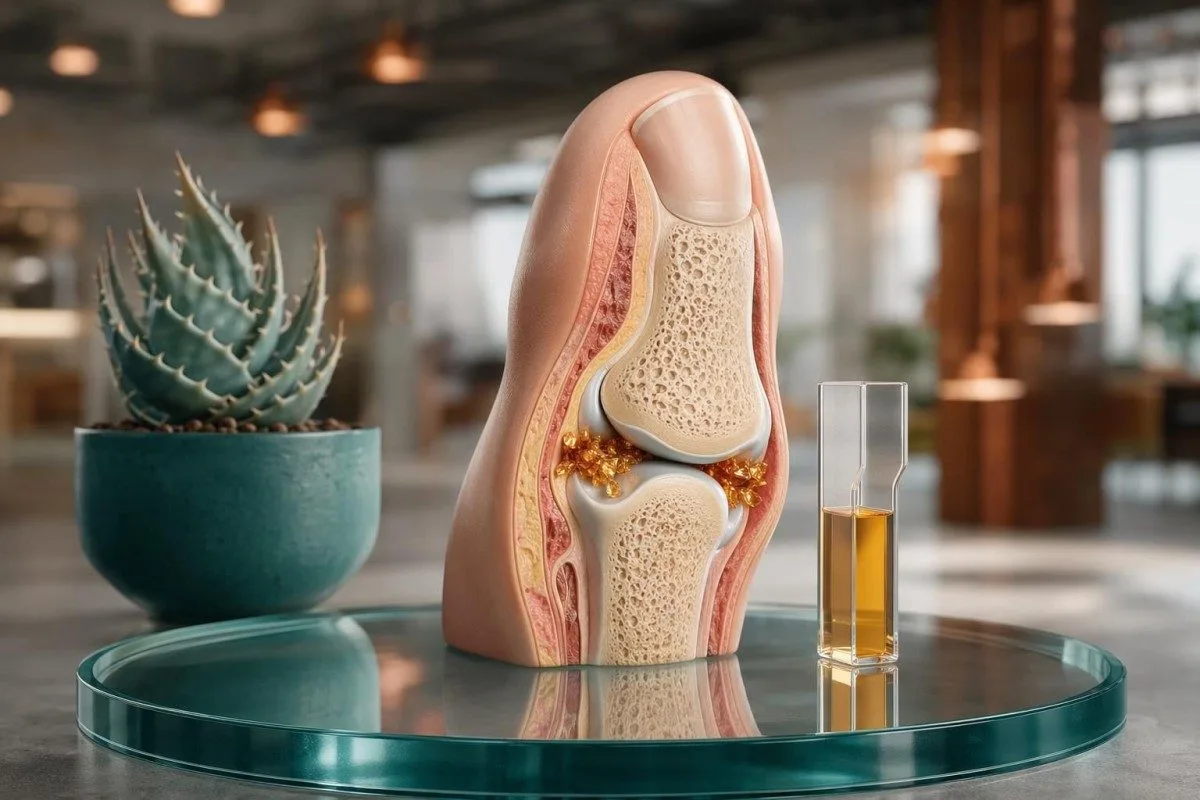
A uric acid result is easy to misread if you ignore sex, kidney function, medication timing, alcohol, hydration, and whether the test was taken during a gout flare.


- Normal range for uric acid is usually 3.4–7.0 mg/dL in adult men and 2.4–6.0 mg/dL in adult women, though laboratories vary.
- High uric acid level usually means serum urate is above about 6.8 mg/dL, the level where urate crystals can form under body conditions.
- Gout is not diagnosed by uric acid alone; many people with high urate never develop gout, and uric acid can be normal during an acute flare.
- Uric acid blood test timing matters because dehydration, fasting, recent alcohol, hard exercise, and acute illness can shift results by roughly 0.5–1.5 mg/dL.
- Kidney function reframes the result because about two-thirds of uric acid removal occurs through the kidneys, so eGFR and creatinine should be reviewed together.
- Medications can raise uric acid; thiazide diuretics, loop diuretics, low-dose aspirin, cyclosporine, tacrolimus, pyrazinamide, ethambutol, and niacin are common culprits.
- Low uric acid level below about 2.0 mg/dL is less common and can reflect urate-lowering drugs, pregnancy, SIADH, tubular kidney disorders, or rare enzyme conditions.
- Treatment targets differ from normal ranges; confirmed gout is usually treated to serum urate below 6.0 mg/dL, and below 5.0 mg/dL may be used for tophaceous gout.
What is the normal range for uric acid by sex?
The normal range for uric acid is usually 3.4–7.0 mg/dL for adult men and 2.4–6.0 mg/dL for adult women, or about 202–416 µmol/L and 143–357 µmol/L respectively. A high result does not diagnose gout by itself. When I review a uric acid blood test, I first ask four questions: sex, kidney function, medications, and whether the sample was taken during a flare. Kantesti AI can help organize those clues through Kantesti AI, but the number still needs clinical context.
Most laboratories flag hyperuricemia above 7.0 mg/dL in men and above 6.0 mg/dL in women, but clinicians often think biologically at 6.8 mg/dL because monosodium urate becomes less soluble around that level. That is why a woman with 6.4 mg/dL may deserve follow-up even if one lab’s printed range looks permissive.
The unit conversion is simple but often causes confusion: 1 mg/dL of uric acid equals about 59.48 µmol/L. A result of 8.0 mg/dL is therefore about 476 µmol/L, which is clearly above the usual solubility threshold.
Reference intervals are not risk cutoffs. Our clinicians see this every week in uploaded reports: a borderline result may be harmless in a well-hydrated 28-year-old, but the same value can be meaningful in someone with declining eGFR, kidney stones, or recurrent first-toe attacks. For a broader explanation of why lab flags mislead, see our guide to blood test normal ranges.
Why do men and women have different uric acid ranges?
Men usually have higher uric acid because they produce more urate and clear less through estrogen-sensitive kidney transport pathways. Premenopausal women often run about 0.5–1.5 mg/dL lower than age-matched men, and that gap narrows after menopause.
Estrogen increases renal urate excretion, so a high uric acid level in a 32-year-old woman catches my attention sooner than the same value in a 62-year-old man. A uric acid of 6.6 mg/dL may be only mildly high on paper, but it is not a typical premenopausal baseline.
After menopause, serum urate often rises by roughly 0.5–1.0 mg/dL over several years. That rise is not automatically dangerous; it becomes more meaningful if it appears alongside higher creatinine, higher triglycerides, new hypertension, or recurrent joint swelling. Hormone shifts are one reason we sometimes pair urate interpretation with an estradiol blood test in complex cases.
Men with high muscle mass are sometimes told their uric acid is high because they are muscular. That explanation is usually incomplete. Muscle mass affects creatinine more directly than uric acid, while urate reflects purine turnover, kidney handling, diet, alcohol, insulin resistance, and genetics.
Why a high uric acid level does not always mean gout
A high uric acid level increases gout risk, but it does not prove gout. Gout is best confirmed by finding monosodium urate crystals in joint fluid, while many people with urate above 7.0 mg/dL never have a single gout attack.
The 2015 ACR/EULAR gout classification criteria include serum urate as one weighted feature, not as a standalone diagnosis (Neogi et al., 2015). In plain terms: urate helps the case, but the joint pattern, flare timing, imaging, and crystal analysis carry the diagnosis.
I often see patients panic over 7.4 mg/dL after a routine wellness panel. If they have no attacks, no kidney stones, and normal kidney function, we usually repeat the test and address reversible causes before discussing medication. For inflammatory markers that sometimes accompany a flare, our CRP interpretation guide gives useful context.
The reason high urate alone is not gout is chemical rather than philosophical. Urate crystals may form silently in tissue for years, but gout begins when the immune system reacts to those crystals with a sudden, intense inflammatory response.
Can uric acid be normal during a gout flare?
Yes, serum uric acid can be normal during an acute gout flare, so a single normal result does not rule out gout. I usually repeat the uric acid blood test at least 2–4 weeks after the flare settles.
During a flare, inflammatory cytokines and temporary changes in kidney excretion can pull serum urate down. In practice, I have seen classic first-toe gout with urate of 5.8 mg/dL in the emergency setting, then 8.2 mg/dL three weeks later.
The 2020 American College of Rheumatology guideline supports a treat-to-target strategy once gout is established, but it does not say to diagnose gout from one serum urate value (FitzGerald et al., 2020). If the joint is hot, swollen, and disabling, clinicians think about infection, fracture, pseudogout, and inflammatory arthritis too.
A practical rule: do not let a normal urate during a flare end the investigation if the story is convincing. ESR can be high in several inflammatory joint conditions, so our ESR range guide may help you understand why inflammation tests are supportive rather than decisive.
How kidney function changes uric acid interpretation
Kidney function strongly changes uric acid interpretation because about two-thirds of urate removal depends on renal filtration, secretion, and reabsorption. A uric acid of 8.0 mg/dL means something different when eGFR is 95 versus 42 mL/min/1.73 m².
When eGFR falls below 60 mL/min/1.73 m² for more than three months, urate retention becomes more common. This does not mean uric acid caused the kidney problem; it often means the kidney has less ability to clear urate.
Creatinine, eGFR, BUN, potassium, bicarbonate, and urine albumin help separate a simple diet-related rise from a kidney-handling issue. If your report shows both high urate and lower eGFR, read our eGFR age guide before assuming the uric acid is the main diagnosis.
The pattern matters. High urate with high BUN and concentrated urine may reflect dehydration, while high urate with falling eGFR and albuminuria suggests a kidney follow-up conversation. The BUN creatinine ratio is one of the small clues I use to avoid overcalling gout from a chemistry panel.
Which medications raise or lower uric acid?
Common medications can raise or lower uric acid by changing kidney urate transport. Thiazide diuretics, loop diuretics, low-dose aspirin, cyclosporine, tacrolimus, pyrazinamide, ethambutol, and niacin can raise uric acid; losartan, fenofibrate, SGLT2 inhibitors, allopurinol, febuxostat, probenecid, and pegloticase can lower it.
A new urate of 8.6 mg/dL after starting hydrochlorothiazide is not the same clinical story as 8.6 mg/dL with no medication change. In my experience, medication timing solves many apparent mysteries, especially in people treated for blood pressure or transplant-related conditions.
Do not stop a prescribed medicine just because uric acid is high. The safer move is to ask whether an alternative exists, whether the benefit outweighs the urate rise, and whether the result should be repeated after hydration and stable dosing.
Kantesti AI flags medication-sensitive patterns when users include the drug list with their upload. Electrolytes matter here too, since diuretics can alter sodium and potassium as well as urate; our BMP blood test guide explains that cluster.
How diet, purines, fructose, and weight change uric acid
Diet can move uric acid, but it usually does not explain the whole result. Purine-rich foods, sugar-sweetened drinks, rapid weight loss, and dehydration can raise urate, while gradual weight loss and lower-fructose eating often reduce it modestly.
A heavy purine meal can raise urate transiently, but persistent results above 8.0 mg/dL usually need more than a food diary. Organ meats, large portions of red meat, some seafood, and yeast-heavy products are common triggers, though individual sensitivity varies.
Fructose is different from ordinary carbohydrate in this conversation because hepatic fructose metabolism consumes ATP and can increase uric acid production. I pay special attention to sweetened drinks because patients often forget to count them as diet exposures.
Crash dieting can backfire. Ketones compete with urate for renal excretion, so a strict fast or very rapid weight loss period may temporarily push uric acid upward; our fasting blood test guide explains why timing can distort several markers.
How alcohol changes uric acid and gout risk
Alcohol can raise uric acid by increasing production, reducing kidney excretion, and worsening dehydration. Beer and spirits tend to raise gout risk more consistently than wine, but quantity and timing matter more than the label on the glass.
Beer contains purines from brewer’s yeast, while ethanol metabolism increases lactate, and lactate competes with urate for excretion in the kidney. That double hit is why a weekend pattern can produce a Monday urate result that looks worse than the person’s usual baseline.
In a patient with recurrent gout, I ask about the previous 72 hours, not just average weekly intake. Two or three drinks plus poor sleep, salty food, and dehydration can be enough to trigger a flare in someone already above 6.8 mg/dL.
If uric acid is high and GGT or ALT is also high, alcohol is not the only possibility, but it becomes a stronger suspect. Our guides to high GGT results and ALT patterns explain how liver clues change the interpretation.
When should you repeat a uric acid blood test?
Repeat a uric acid blood test when the result is unexpected, borderline, taken during illness, taken during a gout flare, or affected by dehydration, alcohol, fasting, or a medication change. A repeat after 2–4 weeks under stable conditions is often more useful than reacting to one value.
Uric acid can vary by roughly 0.5–1.5 mg/dL between draws because of hydration, recent intake, lab method, and acute inflammation. I prefer the same laboratory, morning collection if practical, and normal fluid intake the day before.
Fasting is not always required for uric acid, but it may be bundled with glucose or lipid testing. If your panel includes triglycerides, glucose, or insulin, the fasting rules may be driven by those markers rather than by urate itself.
Trends beat snapshots. Kantesti’s AI lab analysis tool compares prior uploads, units, reference intervals, and related kidney markers so a 6.9 to 7.2 mg/dL drift is not treated the same as a jump from 5.5 to 9.1 mg/dL. Our blood test comparison guide shows how to spot real movement.
What does a low uric acid level mean?
A low uric acid level is usually less common than a high one and is often defined as below about 2.0 mg/dL, or 119 µmol/L. It can be benign, medication-related, pregnancy-related, or a clue to excess renal urate loss.
Allopurinol, febuxostat, probenecid, pegloticase, high-dose salicylates, losartan, and SGLT2 inhibitors can lower urate. A result of 1.8 mg/dL in someone taking urate-lowering therapy has a very different meaning from 1.8 mg/dL in an untreated person with dizziness and abnormal sodium.
Low urate can appear in SIADH, Fanconi-type tubular disorders, rare xanthine oxidase problems, and severe liver synthetic dysfunction. I do not chase every low value, but I do look for sodium, bicarbonate, phosphate, urine findings, and medication history.
One small trap: very low urate is not automatically healthier. Over-suppression can increase xanthine stone risk in rare settings, and kidney context matters; our kidney blood test guide explains early tubular clues that creatinine may miss.
Which uric acid results need medical action?
Persistent uric acid above 9.0 mg/dL, recurrent gout-like attacks, kidney stones, tophi, reduced eGFR, or urate elevation during cancer therapy should prompt medical review. Confirmed gout is usually managed to a serum urate target below 6.0 mg/dL.
The 2020 ACR guideline strongly recommends a treat-to-target approach for patients receiving urate-lowering therapy, with a serum urate target below 6.0 mg/dL (FitzGerald et al., 2020). The 2016 EULAR recommendations also support lower targets, often below 5.0 mg/dL, for severe gout with tophi or frequent attacks (Richette et al., 2017).
Asymptomatic hyperuricemia is the controversial zone. Many clinicians do not start lifelong urate-lowering medicine for one high number alone, but persistent values above 9.0 mg/dL, uric acid stones, or progressive kidney disease shift the risk-benefit conversation.
Urgent interpretation is different in oncology, where rapid cell breakdown can raise urate and threaten the kidneys. If a report is flagged as critical or appears with abnormal potassium, phosphate, calcium, or creatinine, our guide to critical blood test values explains why same-day advice may be needed.
What uric acid says about metabolic risk
Uric acid often travels with metabolic risk, especially insulin resistance, high triglycerides, fatty liver, higher blood pressure, and central weight gain. It is not a stand-alone heart risk test, but it can be a useful metabolic clue.
Insulin reduces renal urate excretion, so early insulin resistance can raise uric acid before glucose becomes frankly diabetic. A urate of 7.8 mg/dL with fasting insulin of 18 µIU/mL tells a different story from 7.8 mg/dL with excellent metabolic markers.
Triglycerides matter here. High urate with triglycerides above 150 mg/dL and low HDL often points toward an insulin-resistance pattern rather than a purely purine-heavy diet. If that pattern fits, our HOMA-IR guide is a practical next read.
I am careful not to oversell uric acid as a cardiovascular treatment target. The evidence that lowering urate prevents heart disease in people without gout remains mixed, but the cluster itself is worth addressing through weight, sleep apnea screening, blood pressure, and glucose follow-up.
How pregnancy, menopause, and female hormones affect uric acid
Pregnancy and menopause change uric acid interpretation because renal filtration and hormone patterns change. Uric acid often falls in early pregnancy, rises later, and increases after menopause as estrogen-related urate excretion declines.
In early pregnancy, uric acid may fall below the non-pregnant baseline because kidney filtration increases. Later in pregnancy it rises gradually, so interpretation depends on gestational timing, blood pressure, urine protein, platelets, liver enzymes, and symptoms.
High uric acid is sometimes seen in preeclampsia, but it is not a screening test by itself. A 6.5 mg/dL result late in pregnancy can be concerning or expected depending on the full obstetric picture, which is why isolated online interpretation can be risky.
In younger women outside pregnancy, high urate often sends me looking for diuretics, kidney clues, insulin resistance, and PCOS-type metabolic patterns. Our prenatal blood test guide and women’s health guide cover the wider lab context.
How Kantesti AI interprets uric acid results
Kantesti AI interprets uric acid by analyzing the value, unit, sex, age, kidney markers, inflammation markers, metabolic markers, medications when provided, and prior trends. Our platform does not label every high urate as gout; it grades the likelihood and explains what would change the interpretation.
As of April 27, 2026, Kantesti has served users across 127+ countries and 75+ languages, which gives our medical team a wide view of how reference ranges differ. Some European labs use slightly different female upper limits, while many US reports still split at 6.0 mg/dL for women and 7.0 mg/dL for men.
Our AI reads uploaded PDFs or photos in about 60 seconds and maps uric acid against creatinine, eGFR, BUN, glucose, HbA1c, lipids, CRP, liver enzymes, and electrolytes. That matters because a urate result without context is one of the easiest chemistry values to overinterpret.
Kantesti’s clinical standards are reviewed through our medical validation process and physician oversight from our medical advisory board. For biomarker coverage, our 15,000+ marker guide shows how uric acid fits inside a larger lab panel.
What should you do next with an abnormal uric acid result?
If uric acid is abnormal, repeat it under stable conditions, review kidney function, list recent medications and alcohol intake, and match the number to symptoms. A persistent abnormality is worth discussing with a clinician, especially above 9.0 mg/dL or with gout attacks, stones, or low eGFR.
My usual patient advice is simple: do not self-diagnose gout from one high uric acid level, and do not ignore a repeat value that remains clearly high. Write down the test date, recent alcohol intake, fasting status, current medicines, kidney results, and whether any joint attack occurred within the last month.
You can upload your report to Try Free AI Blood Test Analysis if you want a structured explanation before your appointment. Kantesti Ltd, UK Company No. 17090423, describes our clinical mission on About Us, and Dr. Thomas Klein reviews these uric-acid patterns with the same caution he uses in clinic.
For transparency, our research and validation materials are publicly linked. The Kantesti AI Engine benchmark includes hyperdiagnosis trap cases because overcalling disease from borderline markers is exactly the error we try to prevent.
Kantesti research publications: Thomas Klein, M.D., Kantesti Clinical AI Research Group. (2026). Clinical Validation of the Kantesti AI Engine (2.78T) on 15 Anonymised Blood Test Cases: A Pre-Registered Rubric-Based Benchmark Including Hyperdiagnosis Trap Cases Across Seven Medical Specialties. Figshare. https://doi.org/10.6084/m9.figshare.32095435. Thomas Klein, M.D., Kantesti Clinical AI Research Group. (2026). C3 C4 Complement Blood Test & ANA Titer Guide. Zenodo. https://doi.org/10.5281/zenodo.18353989.
Frequently Asked Questions
What is the normal range for uric acid in adults?
The normal range for uric acid is usually 3.4–7.0 mg/dL in adult men and 2.4–6.0 mg/dL in adult women, equal to about 202–416 µmol/L and 143–357 µmol/L. Laboratories vary, so the printed reference interval on your report should be checked. Values above about 6.8 mg/dL exceed the biologic solubility threshold where monosodium urate crystals can form more easily.
Does high uric acid always mean gout?
High uric acid does not always mean gout. Many people with uric acid above 7.0 mg/dL never develop gout, and gout can occasionally occur with a normal uric acid result during an acute flare. Gout diagnosis depends on the pattern of joint attacks, examination, imaging when needed, and ideally identification of monosodium urate crystals in joint fluid.
Can uric acid be normal during a gout attack?
Yes, uric acid can be normal during a gout attack because acute inflammation can temporarily lower serum urate. A result such as 5.8 mg/dL during a classic flare does not exclude gout. Clinicians often repeat the uric acid blood test 2–4 weeks after the flare has settled to estimate the true baseline.
What uric acid level is dangerous?
Persistent uric acid above 9.0 mg/dL is generally considered high enough to warrant clinician review, especially with kidney stones, low eGFR, tophi, or recurrent gout-like attacks. In confirmed gout, treatment usually aims for serum urate below 6.0 mg/dL, and below 5.0 mg/dL may be used for severe tophaceous gout. Any high uric acid with rapidly rising creatinine or abnormal potassium, phosphate, or calcium needs more urgent assessment.
What medications raise uric acid?
Thiazide diuretics, loop diuretics, low-dose aspirin, cyclosporine, tacrolimus, pyrazinamide, ethambutol, and niacin can raise uric acid by reducing renal excretion or altering urate handling. Losartan, fenofibrate, SGLT2 inhibitors, allopurinol, febuxostat, probenecid, and pegloticase can lower uric acid. Do not stop a prescribed medication solely because uric acid is high; ask the prescriber whether the result changes the treatment plan.
What causes a low uric acid level?
A low uric acid level is often defined as below about 2.0 mg/dL, or 119 µmol/L. Causes include urate-lowering medicines, pregnancy, SIADH, renal tubular disorders such as Fanconi-type syndromes, severe liver dysfunction, and rare enzyme conditions. A low result is interpreted with sodium, kidney markers, urine findings, medications, and symptoms rather than by the uric acid number alone.
Should I fast before a uric acid blood test?
Fasting is not always required for a uric acid blood test, but many panels include glucose, triglycerides, or insulin, which may require fasting depending on the lab order. Hydration matters because dehydration can raise uric acid and make BUN or creatinine look worse. If a result is unexpected, repeating the test after 2–4 weeks with normal fluids, stable diet, and no recent flare is often more useful than reacting immediately.
Can testing fluid from a swollen joint confirm gout?
Yes. A clinician can remove a small sample of joint fluid; finding monosodium urate crystals confirms gout and helps rule out infection. Seek same-day assessment for a hot, swollen joint with fever or feeling unwell.
Can high uric acid increase the risk of kidney stones?
Yes. Uric acid can contribute to certain kidney stones, especially when urine is acidic, but blood uric acid alone does not predict stones reliably. If you have flank pain, blood in urine, or repeated stones, ask about urine testing and stone analysis.
Can I start or continue allopurinol during a gout flare?
Do not stop allopurinol during a flare unless your clinician tells you to, because stopping can prolong urate swings. If you are not already taking it, many clinicians can start it during a flare when anti-inflammatory treatment is also given.
Get AI-Powered Blood Test Analysis Today
Join over 2 million users worldwide who trust Kantesti for instant, accurate lab test analysis. Upload your blood test results and receive comprehensive interpretation of 15,000+ biomarkers in seconds.
📚 Referenced Research Publications
Klein, T., Mitchell, S., & Weber, H. (2026). Clinical Validation of the Kantesti AI Engine (2.78T) on 15 Anonymised Blood Test Cases: A Pre-Registered Rubric-Based Benchmark Including Hyperdiagnosis Trap Cases Across Seven Medical Specialties. Kantesti AI Medical Research.
Klein, T., Mitchell, S., & Weber, H. (2026). C3 C4 Complement Blood Test & ANA Titer Guide. Kantesti AI Medical Research.
📖 External Medical References
⚕️ Medical Disclaimer
This article is for educational purposes only and does not constitute medical advice. Always consult a qualified healthcare provider for diagnosis and treatment decisions.
E-E-A-T Trust Signals
Experience
Physician-led clinical review of lab interpretation workflows.
Expertise
Laboratory medicine focus on how biomarkers behave in clinical context.
Authoritativeness
Written by Dr. Thomas Klein with review by Dr. Sarah Mitchell and Prof. Dr. Hans Weber.
Trustworthiness
Evidence-based interpretation with clear follow-up pathways to reduce alarm.