
A positive breath result shows limited absorption under test conditions, not a reason to ban every fruit. Symptoms, fructose dose and test quality determine whether the finding should change your diet.

Key takeaways
- Fructose malabsorption test usually involves drinking 25 g of fructose and measuring breath hydrogen for at least 3 hours.
- Positive hydrogen result commonly means a rise of at least 20 parts per million above baseline—not an absolute reading of 20 ppm.
- Symptoms during testing distinguish measured malabsorption from clinically relevant intolerance; record their timing alongside each breath sample.
- Methane measurement helps explain hydrogen patterns, but methane of at least 10 ppm does not independently prove fructose malabsorption.
- Test preparation commonly includes avoiding antibiotics for 4 weeks and fasting for 8–12 hours, following the testing centre’s instructions.
- Fruit tolerance depends on portion size, fructose relative to glucose and accompanying sorbitol; a 25 g fructose drink does not reproduce every fruit serving.
- Dietary management should favour targeted changes and reintroduction; a broader low-FODMAP restriction, when indicated, usually lasts only 2–6 weeks initially.
- Hereditary fructose intolerance is a separate ALDOB-related metabolic disorder, usually involving disease-causing variants in both gene copies; suspected cases must not undergo a fructose challenge.
What does a fructose malabsorption test actually measure?
A fructose malabsorption test measures breath gases after a fructose drink, usually 25 g in adults. A hydrogen rise of at least 20 ppm above baseline supports malabsorption under those test conditions; symptoms determine whether it represents troublesome intolerance. A positive result does not automatically require avoiding all fruit, and the test must not be used when hereditary fructose intolerance is suspected.

Breath hydrogen reflects microbial fermentation of carbohydrate that has escaped absorption, not fructose circulating in your bloodstream. After a 25 g challenge, gas travels from the intestine into the circulation and then into exhaled air; the collection bag therefore samples an indirect biological signal rather than the sugar itself.
Fructose malabsorption describes incomplete intestinal absorption, whereas fructose intolerance describes symptoms attributed to consuming fructose. Those findings can occur separately during a 3-hour test, which is why an isolated positive flag is less useful than the gas curve plus symptom record; our lactose testing guide explains a similar distinction for another carbohydrate.
Kantesti is an AI blood test analyzer that provides educational context for laboratory reports, but a 25 g fructose breath challenge requires a separate gastrointestinal assessment. Our organisation and scope are distinct from a breath-testing laboratory: routine blood chemistry cannot confirm fructose malabsorption, quantify your tolerated fruit portion or replace the testing centre’s interpretation.
Why fructose dose and the food mixture change absorption
Fructose absorption is dose-dependent, and a 25 g fructose-only drink may behave differently from fructose eaten with glucose, fibre and a meal. A positive challenge therefore describes handling of that particular dose, not a permanent inability to absorb every fructose-containing food.
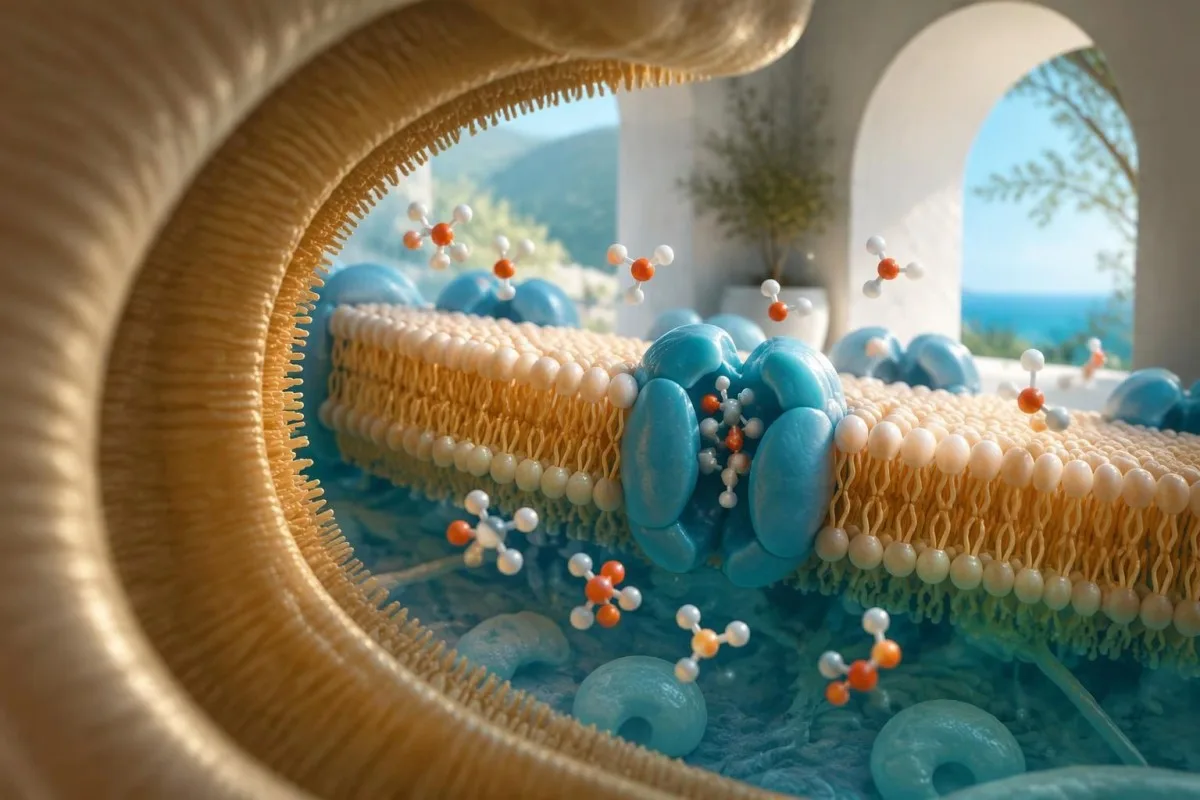
The intestinal transporter GLUT5 helps move fructose across the small-intestinal lining, but transport capacity is finite and varies between people. Increasing a challenge from 25 g to 50 g can produce malabsorption in otherwise healthy individuals; this dose effect is one reason a large challenge should not be interpreted as evidence of a severe disease.
Glucose can improve fructose absorption in some circumstances, while sorbitol can worsen tolerance through its own incomplete absorption and effects on carbohydrate handling. A 25 g fructose solution lacks the mixed-sugar composition of most fruit, so a breath result cannot be converted into a universal list of forbidden foods or an exact daily fructose allowance.
Microbial fermentation and intestinal sensitivity also affect the outcome: two people given the same 25 g dose may generate different gas curves or experience different symptoms. A commercial gut microbiome report does not reliably predict an individual’s fructose tolerance, and a list of bacterial species cannot substitute for a structured dietary assessment.
When does fructose breath testing change dietary management?
Fructose breath testing is most useful when its result will change a specific dietary decision, such as whether to reduce large fructose loads rather than several unrelated food groups. A 1–2-week symptom-and-food record can help establish that decision before testing, although it is a practical tool rather than a validated diagnostic requirement.

A reproducible pattern after juice, honey or large fruit portions makes targeted assessment more useful than unexplained symptoms after every meal. If episodes instead follow milk or sucrose-rich foods, the differential changes; our sucrose digestion assessment explains why a 25 g fructose challenge cannot diagnose a different carbohydrate-digestion problem.
Testing adds less value when a person already tolerates ordinary fruit portions and only reacts to unusually large servings. Likewise, if a carefully supervised dietary adjustment has already produced clear improvement, repeating a 3-hour challenge may not change treatment; the useful question is whether the result would broaden, narrow or end an existing restriction.
Persistent diarrhoea, anaemia, weight loss or a family history of coeliac disease may justify investigation before attributing symptoms to fructose. The ACG IBS guideline recommends coeliac serology in appropriate patients with diarrhoea symptoms (Lacy et al., 2021), and our coeliac testing preparation explains why removing gluten before testing can make a second dietary restriction diagnostically costly.
Fructose malabsorption test preparation: what affects accuracy?
Fructose malabsorption test preparation commonly includes avoiding antibiotics for 4 weeks, restricting fermentable foods the preceding day and fasting for 8–12 hours. Follow the centre’s written protocol rather than combining instructions from different websites, because medication, bowel preparation and sampling policies vary.
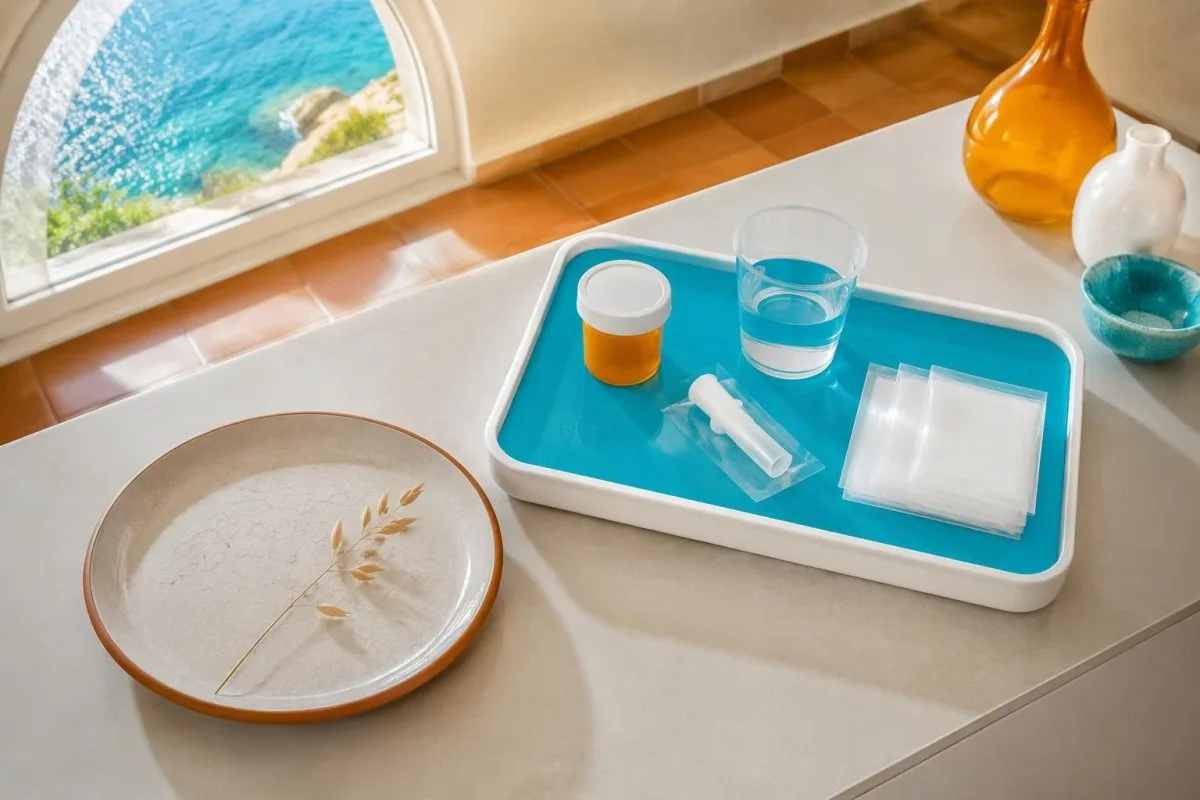
The North American Consensus recommends a 4-week interval after antibiotics and, if tolerated, stopping laxatives and promotility drugs for at least 1 week (Rezaie et al., 2017). These changes need the prescribing clinician’s agreement; withholding essential treatment to obtain a tidier curve is not appropriate, and you should disclose recent antibiotic use even when the course was brief.
The European guideline recommends waiting at least 2 weeks after bowel cleansing, because colonoscopy preparation can alter intestinal microbes and breath-gas production (Hammer et al., 2022). A preceding-day low-fermentation menu is temporary preparation—not an instruction to remain on a restrictive diet—and the laboratory should specify permitted foods, water intake and the exact fasting interval.
Smoking, vaping, chewing gum and strenuous activity can interfere with testing conditions, while residual oral fermentation can affect early readings. Our SIBO breath-test preparation covers overlapping precautions; there is no universally agreed probiotic washout, and the North American Consensus does not require routine proton-pump inhibitor withdrawal simply because a 3-hour breath test is planned.
What happens during the fructose breath test?
A fructose breath test starts with a baseline breath sample, followed by a fructose drink and repeated samples over several hours. The North American protocol uses 25 g of fructose and at least 3 hours of testing; European guidance generally uses 20–25 g in adults and a 3–5-hour observation period.
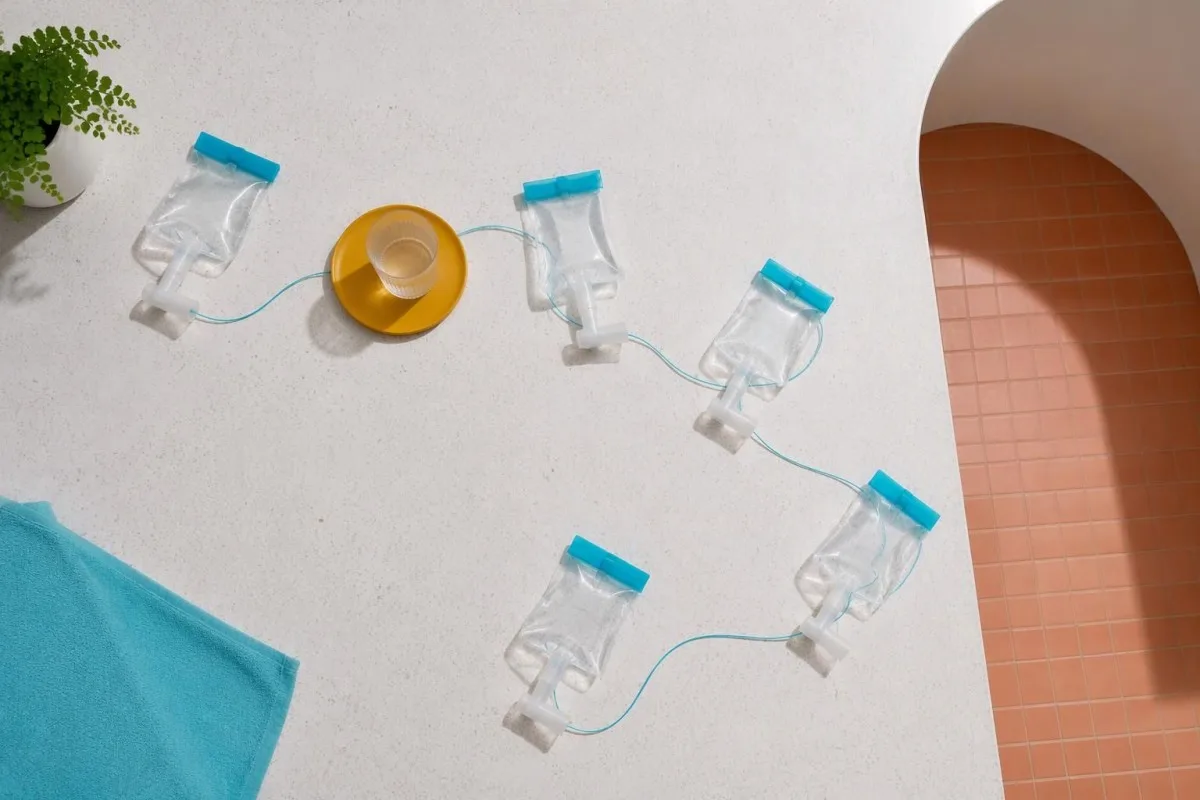
Many centres collect breath every 15–30 minutes, recording hydrogen and often methane at each time point. Proper end-expiratory collection matters because a diluted sample can underestimate gases; some instruments assess sample quality using carbon dioxide or oxygen, and an invalid sample should not quietly be treated as a reassuring low value.
The entire curve matters more than its first abnormal point: a rise at 150 minutes can still meet a fructose malabsorption criterion in a 3-hour protocol. The frequently quoted 90-minute threshold belongs to certain SIBO interpretations, not to a rule that all fructose-related fermentation must occur before that time (Rezaie et al., 2017).
Symptoms may begin before, during or after the gas rise, so tell the staff about bloating, discomfort, nausea and stool urgency rather than waiting until the final sample. Our digestive symptom timing guide explains why fasting-related bowel changes can complicate interpretation; do not add food during the 3-hour sampling period unless staff instruct you to.
How do you read a positive fructose breath test?
A positive fructose breath test commonly means breath hydrogen rises at least 20 ppm above the starting value during the observation period. This is a change-from-baseline criterion, not an absolute hydrogen concentration; methane at or above 10 ppm describes methane positivity but does not independently establish fructose malabsorption.

A baseline hydrogen of 4 ppm followed by a peak of 28 ppm represents a 24 ppm rise and meets the commonly used hydrogen criterion. A baseline of 18 ppm followed by 32 ppm represents only a 14 ppm rise, despite an absolute peak above 20 ppm; our qualitative versus numerical results explains why a report’s positive label should remain traceable to its underlying measurements.
Methane-producing microbes consume hydrogen, so measuring both gases can help explain a low-hydrogen trace. However, the 10 ppm methane threshold in the North American Consensus concerns methane positivity, not a universally validated fructose-specific cutoff; laboratories using a methane rise or combined-gas formula should explain their method rather than imply that all protocols are interchangeable.
Kantesti, an AI blood test interpretation platform, helps explain accompanying laboratory findings, while a 20 ppm breath-hydrogen rise still needs interpretation in its own clinical context. Neither the peak hydrogen value nor a positive flag quantifies intestinal damage, the percentage of fructose unabsorbed or the number of grams of fruit you can safely tolerate.
| Level | Range | What it means |
|---|---|---|
| Hydrogen criterion not met | Rise <20 ppm above baseline | No hydrogen-defined malabsorption demonstrated by this protocol; preparation, sample quality and symptoms still matter. |
| Hydrogen criterion met | Rise ≥20 ppm above baseline | Supports fructose malabsorption at the administered dose; does not independently establish symptomatic intolerance. |
| Methane-positive pattern | Methane ≥10 ppm at any time | Identifies methane positivity under North American guidance, not a stand-alone diagnosis of fructose malabsorption. |
Why do symptoms during testing matter so much?
Symptoms during testing establish clinical relevance, because measurable malabsorption without discomfort does not automatically need treatment. Recording symptom intensity on a 0–10 scale can make changes easier to follow, but no single score on that scale confirms fructose intolerance.

The European guideline explicitly distinguishes carbohydrate malabsorption from intolerance and supports assessing symptoms alongside breath gases (Hammer et al., 2022). Bloating that changes from 1/10 before the drink to 6/10 after it is useful descriptive evidence, especially when it resembles the person’s usual complaint; the score is not a validated disease-severity threshold.
Symptoms without a 20 ppm hydrogen rise are not imaginary or automatically unrelated to the drink. Osmotic effects, intestinal sensitivity, methane-associated hydrogen consumption, unmeasured gases and expectation effects can contribute; an open challenge is not blinded, so it cannot completely separate a sugar effect from anticipation, particularly when the laboratory result and symptom timing disagree.
Alternative food-intolerance tests do not resolve that disagreement by themselves: a low DAO result cannot prove that fructose caused a particular episode. If symptoms develop within 5 minutes, document them rather than dismissing them, but recognise that such early onset does not by itself demonstrate colonic fermentation of the newly consumed fructose.
Four result patterns: hypothetical examples and next steps
Gas results and symptoms create 4 clinically different patterns: both positive, gas positive alone, symptoms alone or neither. These hypothetical examples show why the same hydrogen cutoff can lead to different advice, without implying that a breath test diagnoses every cause of abdominal symptoms.

Suppose a hypothetical adult starts at 3 ppm hydrogen, peaks at 35 ppm and develops their usual bloating rated 7/10. That combination supports a fructose-focused dietary trial; by contrast, a second adult with the same 32 ppm rise but no symptoms has demonstrated malabsorption without demonstrated intolerance, making a blanket fruit ban difficult to justify.
Consider a third hypothetical adult whose hydrogen rises from 5 to 12 ppm while discomfort increases to 6/10. The result does not meet the 20 ppm hydrogen criterion, but review of methane, preparation and sampling may still be useful; if gases and symptoms both remain unchanged in a fourth adult, fructose becomes a less convincing explanation for the complaint reproduced by that challenge.
A symptom diary should also distinguish bloating from unrelated observations such as visible food fragments in stool. Our undigested food explanation describes why fragments alone are not proof of failed fructose absorption; in all 4 patterns, dietary advice should depend on the person’s usual meals and symptom burden rather than the report’s colour coding.
What causes false-positive, false-negative or unclear results?
Fructose breath-test accuracy depends on dose, microbes, transit and sample quality, so false or clinically misleading results are possible. A 50 g challenge, early fermentation from suspected bacterial overgrowth or an inadequately collected breath sample can each alter what a positive or negative result means.

An elevated starting hydrogen value—sometimes above 20 ppm—can reflect incomplete preparation, oral fermentation or other background gas production, but there is no universal baseline rule that resolves every case. The laboratory may repeat the baseline, review preparation or reschedule; do not simply subtract a high starting value and assume the resulting curve is fully reliable.
A low hydrogen trace can occur when microbes produce little hydrogen, consume it or divert fermentation toward gases not measured by that instrument. Recent antibiotics, a test shorter than 3 hours or poor sample collection can further weaken a negative result; hydrogen-sulfide measurement is available in some settings, but there is no broadly established fructose-specific hydrogen-sulfide diagnostic cutoff.
Children require age-appropriate protocols rather than automatic use of the adult 25 g dose, and stool screening cannot substitute cleanly for breath testing. Our childhood stool pH guide explains why acidic stool is nonspecific; published breath-test accuracy estimates also vary because studies use different doses, symptom definitions and imperfect comparison standards.
Fructose malabsorption versus hereditary fructose intolerance
Hereditary fructose intolerance is not fructose malabsorption: it is an inherited metabolic disorder involving aldolase B, usually confirmed by disease-causing ALDOB variants in both gene copies. Suspected hereditary fructose intolerance is a reason to avoid a fructose challenge, because even a routine 25 g test dose may be dangerous.
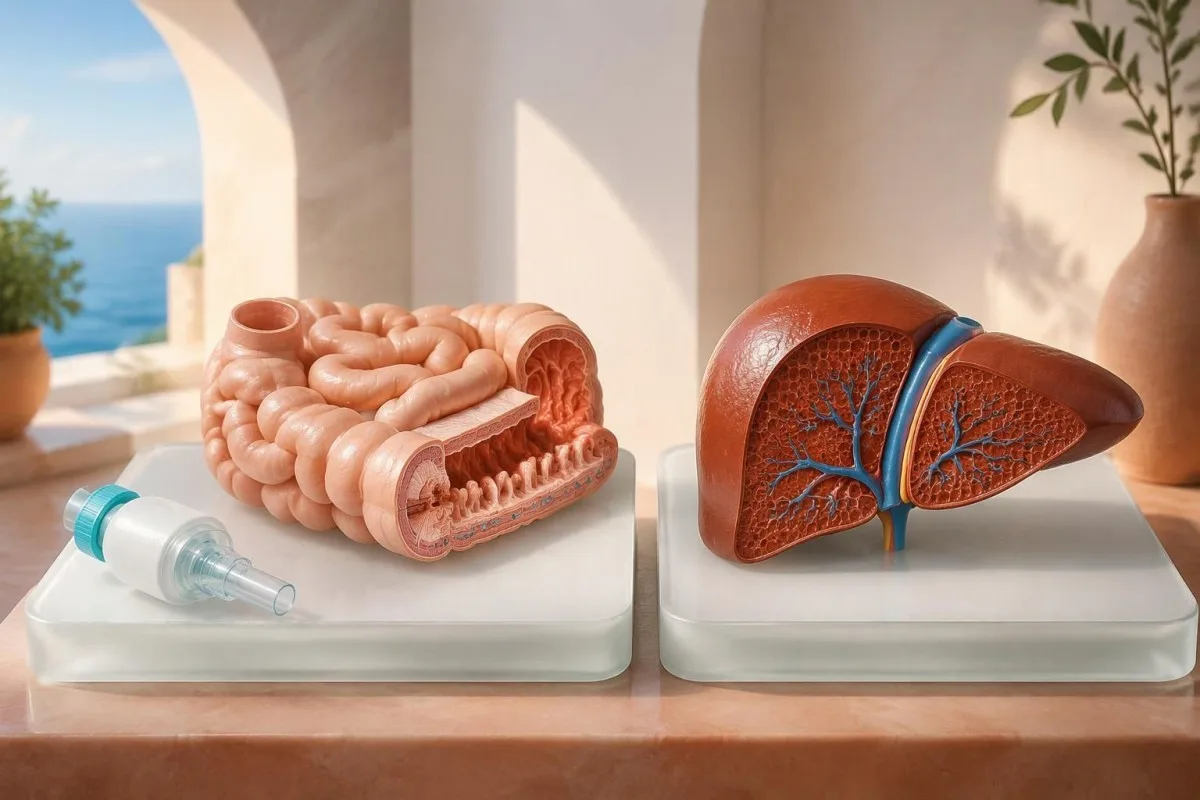
Fructose malabsorption usually causes dose-related bloating, gas or diarrhoea without the metabolic poisoning characteristic of hereditary fructose intolerance. Hereditary intolerance can cause vomiting, hypoglycaemia and liver or kidney dysfunction after fructose, sucrose or sorbitol exposure; our ALDOB result interpretation explains why 2 relevant gene variants matter more than a breath-gas curve.
A history of illness after sweet foods beginning in infancy, strong avoidance of sweets, unexplained low glucose or exposure-related liver abnormalities should prompt specialist assessment before testing. Glucose below 70 mg/dL, equivalent to 3.9 mmol/L, is a common hypoglycaemia alert threshold, but it does not identify the cause; our low glucose causes guide covers other explanations.
Kantesti does not diagnose ALDOB-related disease from routine chemistry results, and 1 abnormal liver enzyme cannot establish hereditary fructose intolerance. Do not attempt a home fructose challenge when the condition is suspected; confusion, collapse, seizures or persistent vomiting after a possible trigger require urgent medical assessment, whereas ordinary malabsorption generally calls for proportionate dietary adjustment rather than metabolic-emergency management.
Does a positive result mean you must avoid all fruit?
A positive fructose breath test does not automatically require avoiding all fruit, because a 25 g fructose-only drink differs from an ordinary mixed-sugar serving. The practical goal is to identify tolerated portions and troublesome combinations, not to remove nutritious foods merely because they contain some fructose.

Many people tolerate modest servings of citrus, kiwi, strawberries or grapes, although cultivar, ripeness and portion size affect carbohydrate content. Apples, pears, mango, honey and some juices can be more troublesome because of excess fructose, sorbitol or concentrated servings; a hypothetical trial of 1 small serving should not be mistaken for a guaranteed safe amount for every person.
Whole fruit and juice are not nutritionally interchangeable: a 250 mL juice serving can deliver sugars from several fruit portions without their original structure. Reducing juice or dried-fruit portions may therefore improve tolerance while preserving whole fruit, but adding glucose or table sugar as an absorption workaround is not a sensible general strategy because it increases sugar intake without establishing everyday tolerance.
Eating 1 fruit portion at a time can help separate a portion effect from the combined carbohydrate load of a large mixed meal. Our evidence-based food choices can support variety, but such lists are not fructose-tolerance certificates; use your own reproducible response and a dietitian’s advice rather than dividing all fruit into permanently safe and unsafe categories.
How should a diet trial and reintroduction work?
Dietary management should start with the narrowest useful change, followed by planned reintroduction rather than indefinite avoidance. When a broader low-FODMAP approach is appropriate for IBS, the initial restriction commonly lasts 2–6 weeks; a fructose-focused adjustment may need fewer exclusions and a separately agreed review date.

The ACG IBS guideline recommends a limited low-FODMAP trial for appropriate patients, not permanent removal of every fermentable carbohydrate (Lacy et al., 2021). Choose 1 main outcome—such as fewer urgency episodes or less meal-related bloating—and keep other major dietary changes stable where practical, so improvement can be attributed to a specific intervention rather than simultaneous elimination of milk, wheat and fruit.
A clearly hypothetical reintroduction might compare one-quarter, one-half and then 1 usual serving of the same fruit on separate suitable days, recording symptoms and avoiding several new foods at once. This is a practical portion-finding exercise, not a validated diagnostic dose schedule; if there is no meaningful improvement during restriction, reconsider the explanation instead of progressively tightening the diet.
Restrictive eating can reduce folate, vitamin C, fibre and overall energy intake, particularly when several food groups disappear together. Our low folate assessment helps distinguish inadequate intake from other causes, while our water-soluble vitamin guide explains nutritional planning; children, pregnant people and anyone losing weight need individual supervision rather than an unsupervised 6-week elimination.
When do symptoms need tests beyond fructose breath testing?
Persistent diarrhoea or warning signs need assessment beyond a fructose breath test, especially with bleeding, weight loss, anaemia, fever or symptoms that wake you at night. A positive response to a 25 g fructose challenge does not exclude coeliac disease, inflammatory bowel disease, infection or bile-acid diarrhoea.

For suspected IBS with diarrhoea and no alarm features, the ACG guideline supports faecal calprotectin and CRP to help exclude inflammatory bowel disease (Lacy et al., 2021). A calprotectin value around 50 µg/g is a common adult laboratory boundary, but assay and clinical context matter; our calprotectin versus lactoferrin guide explains why neither result should be interpreted as a fructose marker.
Iron deficiency deserves its own explanation rather than attribution to fruit avoidance or a positive breath test. Ferritin below 15 µg/L strongly supports depleted iron stores in otherwise healthy adults, although inflammation complicates higher values; our complete iron studies guide explains why haemoglobin, transferrin saturation and inflammatory context help distinguish nutritional restriction from other causes.
Kantesti AI can provide educational context for clinician-ordered blood markers, but 1 normal blood panel cannot rule out every intestinal disorder. Our blood biomarker reference guide helps distinguish blood-based assessments from breath and stool tests; severe dehydration, black stools, substantial visible bleeding or acute severe abdominal pain require prompt care rather than waiting for an elective carbohydrate challenge.
Using your report safely: clinical evidence and research scope
Kantesti is an AI-powered blood test analysis tool, not a fructose breath-testing laboratory; a 25 g challenge must be interpreted using its dose, gas curve, symptoms and preparation. Our clinical validation information concerns our stated blood-report methodology and should not be read as validation of fructose breath-test accuracy.

Bring the full report rather than only the positive or negative label: the administered dose, baseline hydrogen, methane values, sample times and symptom notes are the minimum useful details. A 20 ppm rise has different practical implications when symptoms are absent, preparation was incomplete or the challenge used 50 g instead of the more commonly recommended 25 g.
The 2017 North American Consensus and 2022 European guideline provide the medical foundation for the testing discussion above; the 2021 ACG IBS guideline informs selected differential-diagnosis and dietary recommendations. Kantesti’s 2 Zenodo publications listed below describe platform validation and reporting work, not trials proving that our AI diagnoses fructose malabsorption or predicts which fruit serving will cause symptoms.
A useful follow-up plan should specify 1 dietary question, the smallest justified restriction, a review date and a reintroduction approach agreed with the treating clinician or dietitian. If accompanying blood reports are shared electronically, our privacy and data information explains handling considerations; educational interpretation remains separate from urgent assessment, prescribing and specialist diagnosis.
Frequently asked questions
What is a positive fructose malabsorption test result?
A positive fructose malabsorption test commonly means breath hydrogen rises at least 20 ppm above baseline after the fructose drink. The North American Consensus recommends a 25 g adult fructose dose and at least 3 hours of testing. Methane of at least 10 ppm indicates methane positivity but does not independently diagnose fructose malabsorption. The result is most useful when interpreted alongside symptoms, preparation and the full gas curve.
How do I prepare for a fructose breath test?
Fructose breath-test preparation commonly includes avoiding antibiotics for 4 weeks, following a low-fermentation menu the preceding day and fasting for 8–12 hours. Some protocols ask patients to withhold laxatives or promotility drugs for 1 week if medically safe. European guidance recommends at least 2 weeks after bowel cleansing. Follow your testing centre’s instructions and obtain advice before stopping prescribed medication.
Can I eat fruit after a positive fructose breath test?
A positive fructose breath test does not automatically mean you must avoid all fruit. A 25 g fructose-only drink does not reproduce the glucose, sorbitol, fibre and portion size of every fruit serving. Smaller portions of some fruits may remain well tolerated even when juice, honey or larger servings cause symptoms. A dietitian-guided trial and reintroduction are usually more useful than a permanent blanket ban.
Why did I have symptoms during a negative fructose breath test?
Symptoms can occur even when breath hydrogen does not rise by the commonly used 20 ppm threshold. Possible explanations include osmotic effects, intestinal sensitivity, hydrogen consumption by methane-producing microbes, unmeasured gases or limitations in preparation and sampling. An open challenge can also be influenced by expectation, without making the symptoms unreal. Persistent or significant symptoms need clinical review rather than automatic reassurance from a negative hydrogen result.
Is fructose malabsorption the same as hereditary fructose intolerance?
Fructose malabsorption and hereditary fructose intolerance are different conditions. Hereditary fructose intolerance is an ALDOB-related metabolic disorder, usually involving disease-causing variants in both of the gene’s 2 copies, and can cause hypoglycaemia and organ dysfunction after fructose, sucrose or sorbitol exposure. A 25 g fructose breath challenge must not be used when hereditary intolerance is suspected. Specialist assessment and appropriate genetic testing are the safer diagnostic pathway.
How accurate is the fructose malabsorption test?
There is no single reliable accuracy percentage that applies to every fructose malabsorption test protocol. Results depend on the challenge dose, test duration, breath-sample quality, microbial gas production and the definition of a clinically meaningful positive result. A 50 g challenge can demonstrate limited absorption in healthy people more readily than a 25 g challenge. The test provides stronger dietary guidance when its gas findings reproduce the person’s usual symptoms and lead to a successful, proportionate dietary trial.
Get your blood test results explained
Upload your lab report and Kantesti's AI explains each biomarker in plain language within seconds. Used by more than 2 million people worldwide.
References
- Klein, T., Mitchell, S., & Weber, H. (2026). Clinical Validation Framework v2.0 (Medical Validation Page). Kantesti AI Medical Research. DOI
- Klein, T., Mitchell, S., & Weber, H. (2026). AI Blood Test Analyzer: 2.5M Tests Analyzed | Global Health Report 2026. Kantesti AI Medical Research. DOI
- Rezaie A et al. (2017). Hydrogen and Methane-Based Breath Testing in Gastrointestinal Disorders: The North American Consensus. American Journal of Gastroenterology. DOI PubMed
- Hammer HF et al. (2022). European guideline on indications, performance, and clinical impact of hydrogen and methane breath tests in adult and pediatric patients: European Association for Gastroenterology, Endoscopy and Nutrition, European Society of Neurogastroenterology and Motility, and European Society for Paediatric Gastroenterology Hepatology and Nutrition consensus. United European Gastroenterology Journal. DOI
- Lacy BE et al. (2021). ACG Clinical Guideline: Management of Irritable Bowel Syndrome. American Journal of Gastroenterology. DOI PubMed
- 2M+Tests analysed
- 127+Countries
- 100+Languages
About the medical team


E-E-A-T Trust Signals
Experience
Physician-led clinical review of lab interpretation workflows.
Expertise
Laboratory medicine focus on how biomarkers behave in clinical context.
Authoritativeness
Medically reviewed by Dr. Thomas Klein, with contributions from Dr. Sarah Mitchell and Prof. Dr. Hans Weber.
Trustworthiness
Evidence-based interpretation with clear follow-up pathways to reduce alarm.






Medical disclaimer
This article is for educational purposes only and does not constitute medical advice. Always consult a qualified healthcare provider for diagnosis and treatment decisions.
Published · Contact the editorial team
Published by Kantesti Ltd, registered in England & Wales, company no. 17090423, London, United Kingdom.
