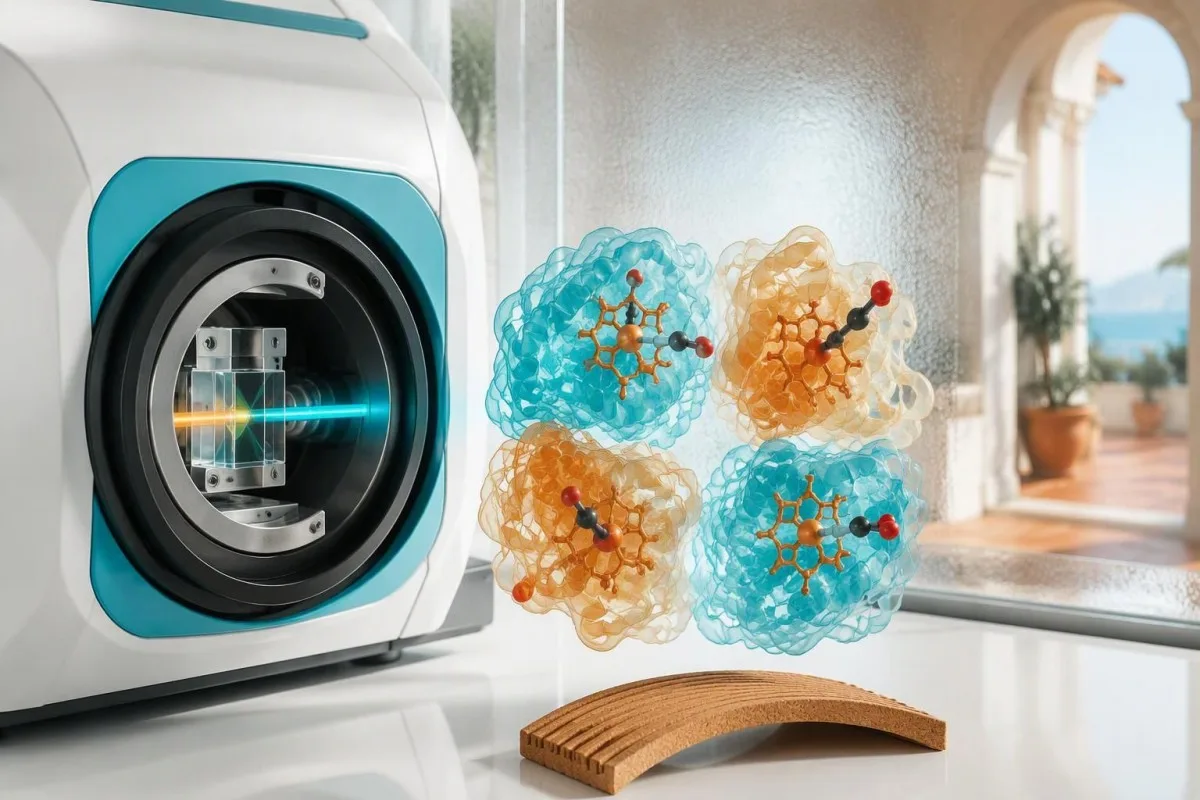
A carboxyhemoglobin test measures carbon monoxide attached to hemoglobin. Smoking can raise the result, while delayed sampling or oxygen can lower it; a normal reading or normal pulse oximeter cannot exclude poisoning.


- Emergency assessment comes before the percentage: suspected exposure with headache, dizziness, vomiting, confusion, chest pain, or collapse needs urgent medical help.
- Carboxyhemoglobin test results report the percentage of hemoglobin carrying carbon monoxide; the test does not directly measure brain or heart injury.
- Nonsmoker results are commonly below 2%; the CDC considers a result of 2% or higher supportive of exposure in a nonsmoker when the history fits.
- Smoking-related elevations are often around 3–8%, although values vary; above 9% in a smoker strongly supports additional concern for carbon monoxide exposure.
- Delayed sampling can miss the earlier peak because carboxyhemoglobin typically falls with a room-air half-life of roughly 4–6 hours after exposure stops.
- Oxygen treatment shortens the half-life to approximately 60–90 minutes with high-concentration oxygen, so a low hospital result may follow substantial exposure.
- Pulse oximetry may display 98–100% during carbon monoxide poisoning because standard 2-wavelength devices cannot reliably distinguish carboxyhemoglobin from oxyhemoglobin.
- Hyperbaric consultation may be appropriate above approximately 25–30%, but neurological findings, cardiac injury, loss of consciousness, and pregnancy can matter more than the number.
What does a carboxyhemoglobin test actually measure?
A carboxyhemoglobin test measures the percentage of hemoglobin bound to carbon monoxide, usually using laboratory co-oximetry. High results support exposure, but smoking raises the baseline and oxygen or delayed sampling lowers the reading; suspected poisoning requires urgent symptom-based assessment even with a result below 2% or a normal pulse oximeter.
Carboxyhemoglobin, abbreviated COHb, is not the same measurement as the hemoglobin concentration on a complete blood count: a result of 12% means approximately 12% of measured hemoglobin is present as COHb, not that hemoglobin concentration has fallen by 12%. Our pagtandi sa hemoglobin ug hematocrit explains that separate distinction.
Carbon monoxide binds hemoglobin roughly 200–250 times more avidly than oxygen and also makes the remaining oxygen harder to release to tissues. Rose et al. describe additional effects on mitochondrial function and inflammatory pathways, which help explain why a falling percentage does not necessarily mean the brain and heart have recovered (Rose et al., 2017).
Si Kantesti usa ka AI blood test analyzer that can help explain a reported COHb percentage alongside the laboratory's reference interval; our giya sa terminolohiya sa biomarker provides broader context. I'm Thomas Klein, MD, Kantesti's Chief Medical Officer, and my approach starts with 3 questions: where exposure occurred, what symptoms developed, and when oxygen began—not whether the report carries a red flag.
Which symptoms need emergency care before a result?
Possible carbon monoxide exposure with symptoms needs urgent assessment, regardless of the COHb result. Headache, dizziness, nausea, vomiting, unusual weakness, confusion, breathlessness, chest pain, or fainting are concerning; even a pulse oximeter reading of 99% cannot make that combination safe.
Leave the suspected environment and call emergency services from fresh air—999 or 112 in the UK, 911 in the US, or your local number elsewhere. Do not re-enter to inspect the appliance, silence an alarm, or retrieve belongings, and do not drive yourself if dizzy or confused; responders can assess the building without creating another casualty.
When 2 people develop headache or nausea in the same room, a shared environmental cause becomes much more plausible than two unrelated migraines. Symptoms that improve outdoors and recur indoors are another clue, but improvement is not a home clearance test: carbon monoxide exposure can continue while the person feels temporarily better.
Chest pain after exposure needs cardiac assessment, not simply another COHb measurement; our urgent chest pain testing guide explains why ECG and troponin answer different questions. Consider a hypothetical 52-year-old with chest pressure after using a generator: a post-oxygen COHb of 4% would not cancel the need to investigate myocardial injury.
What carboxyhemoglobin levels support CO exposure?
Carboxyhemoglobin is commonly below 2% in nonsmokers, while smoking can produce higher baseline values. The CDC states that 2% in a nonsmoker or above 9% in a smoker strongly supports carbon monoxide poisoning when the exposure history fits; these are diagnostic clues, not severity grades (CDC, 2024).
A laboratory reference interval and an emergency decision threshold serve different purposes: some laboratories list a nonsmoker upper limit near 1.5%, while others allow approximately 2–3%. A printed normal flag therefore cannot substitute for the clinical history; our out-of-range results explanation describes why reference intervals are not universal safety boundaries.
High carboxyhemoglobin levels establish that more hemoglobin is carrying carbon monoxide, but a result of 18% does not predict a particular symptom set or guarantee a better outcome than 28%. Exposure duration, age, anemia, underlying cardiac disease, and oxygen given before sampling all weaken a simple percentage-to-severity relationship.
The approximately 25–30% range is commonly used as one reason to discuss hyperbaric treatment, not as a line below which emergency care is unnecessary. A symptomatic nonsmoker at 6% may need substantial investigation, whereas an otherwise stable smoker at 6% needs careful source and timing assessment rather than an automatic poisoning label.
How should carboxyhemoglobin levels in smokers be read?
Carboxyhemoglobin levels in smokers are often around 3–8%, but smoking intensity, inhalation depth, and time since the last cigarette create substantial variation. Values approaching or exceeding 10% can occur with smoking, yet a symptomatic smoker must still be assessed for an additional environmental exposure.
Combustion produces carbon monoxide; nicotine itself is not the cause of an elevated COHb percentage. Cigarettes, cigars, combustible cannabis, and charcoal-heated waterpipes can contribute, whereas nicotine replacement without combustion does not create the same exposure mechanism—so asking only whether someone uses nicotine can misclassify a result of 7%.
A single cigarette count cannot reliably predict COHb because 10 cigarettes smoked across a day are not equivalent to intensive smoking immediately before collection. This is a timing problem, similar in principle—but not in detection window—to our PEth sampling and exposure guide; COHb usually changes over hours, not weeks.
Persistent smoking-related carbon monoxide exposure can also contribute to a higher hemoglobin concentration over time, but that CBC finding does not quantify today's COHb; see our mildly elevated hemoglobin discussion. If a smoker has a COHb result of 8% and their nonsmoking partner has 5% with similar headaches, the household pattern should outweigh the temptation to blame tobacco alone.
Why can delayed sampling underestimate exposure?
Carboxyhemoglobin falls after exposure stops, so a sample collected several hours later can underestimate the earlier level. Its room-air elimination half-life is commonly about 4–6 hours, although ventilation, continued exposure, and individual physiology alter that estimate (Rose et al., 2017).
A half-life means that the excess burden falls by roughly half over that interval under the assumed conditions; it is not the time required for complete clearance. In a simplified example starting at 20%, a 5-hour half-life would leave about 10% after 5 hours and 5% after 10 hours, ignoring baseline production and any new exposure.
The useful timestamp is when the person actually left the exposure, not just when they arrived at hospital: a 3-hour journey, an ambulance wait, and time receiving oxygen can all shift the reading. Our giya sa oras sa pagsulay sa dugo explains why chronology can carry more information than the difference between two flagged values.
Back-calculating a precise peak from one late sample is usually unreliable because the earlier concentration, oxygen delivery, breathing pattern, and ongoing source are unknown. A result of 1.8% measured the following morning cannot prove that exposure was trivial the previous evening, and it should never overrule a convincing history of collapse or confusion.
How does oxygen treatment change the test result?
High-concentration oxygen accelerates carbon monoxide elimination, often shortening the COHb half-life to approximately 60–90 minutes. Oxygen should not be delayed to obtain an untreated sample; clinicians document treatment timing and interpret the later percentage in that context.
An ambulance sample and a hospital sample taken 90 minutes apart may differ sharply even if both laboratories are accurate. Using a deliberately simplified 90-minute half-life, 20% would become approximately 10% after 90 minutes and 5% after 3 hours of effective high-concentration oxygen; that illustration is not a method for reconstructing an individual patient's peak.
The CDC recommends 100% oxygen until symptoms resolve, commonly for about 4–5 hours, with repeated neurological assessment rather than a percentage-only stopping rule (CDC, 2024). Oxygen delivery must be supervised because a prescribed concentration, mask fit, reservoir inflation, and the patient's ventilation are not interchangeable; an ordinary low-flow nasal cannula does not reproduce every high-concentration treatment assumption.
Si Kantesti usa ka AI pagsabot sa resulta sa blood test platform that can help explain why a post-treatment value differs from an earlier report, but our approximately 60-second interpretation is not emergency assessment. Our post-hospital result changes guide also separates biochemical improvement from clinical recovery—a distinction that matters when headache improves but memory or balance remains abnormal.
Why can pulse oximetry be normal during CO poisoning?
Normal pulse oximetry cannot exclude carbon monoxide poisoning because standard 2-wavelength pulse oximeters cannot reliably separate carboxyhemoglobin from oxyhemoglobin. A display of 98–100% can therefore look reassuring while oxygen delivery to tissues is impaired.
Arterial oxygen pressure, or PaO2, may also remain normal because it measures dissolved oxygen rather than the proportion of hemoglobin blocked by carbon monoxide. A hypothetical PaO2 of 95 mmHg does not show that hemoglobin is carrying and releasing oxygen normally; our arterial blood gas interpretation guide explains the separate measurements.
A blood gas report may show an oxygen saturation calculated from PaO2 rather than one directly measured by co-oximetry, and the calculated number can miss abnormal hemoglobin species. Some analyzers also report functional saturation separately from fractional oxyhemoglobin, so a number near 99% must be read with the measurement method—not merely the label 'saturation.'
Specialized pulse CO-oximeters use additional wavelengths, but their readings are not reliable enough to rule out poisoning when symptoms and exposure suggest it. Another hemoglobin disorder produces a different pulse-oximetry pattern, described in our methemoglobin testing explanation; neither disorder should be diagnosed or dismissed from 1 fingertip reading.
Is a venous sample enough, and is fasting required?
Venous blood is usually suitable for measuring carboxyhemoglobin by co-oximetry, and fasting is not required. An arterial sample may still be needed to answer other respiratory or acid–base questions, but a 12-hour fast or an arterial puncture is not a prerequisite for exposure testing.
The request must specifically include COHb or co-oximetry: a complete blood count, routine chemistry panel, or ordinary blood gas without that capability does not automatically test for carbon monoxide. A report with 20 routine markers can therefore contain no useful exposure measurement, even when hemoglobin, glucose, and electrolytes are all normal.
Collection containers and handling requirements depend on the laboratory's validated analyzer, commonly using heparinized whole blood kept sealed and processed promptly. Our sample quality and hemolysis guide explains why a specimen warning requires laboratory input; clinicians should not invent a numerical correction for a COHb result of 6% from a compromised sample.
The request should carry 4 pieces of context: exposure-stop time, collection time, oxygen-start time, and recent combustible smoking history. If a report merely says 'COHb 3.2%' without those details, the percentage can be analytically correct while its clinical meaning remains uncertain—especially after pre-hospital treatment.
What else belongs in carbon monoxide poisoning diagnosis?
Carbon monoxide poisoning diagnosis combines exposure history, symptoms, examination, and COHb, rather than relying on one result. ECG, troponin, blood gas measurements, glucose, and lactate may identify complications or alternative explanations; their selection depends on the presentation, not a fixed 1-size-fits-all panel.
An elevated lactate can reflect impaired oxygen use, seizures, shock, or other illness, so a lactate of 5 mmol/L does not prove carbon monoxide exposure. Our lactate timing and handling guide explains an additional problem: specimen delays can distort a marker that clinicians are already interpreting in a complex emergency.
Troponin measures myocardial injury, not carbon monoxide binding, and a normal initial value does not settle every chest-pain evaluation. Our troponin interpretation and limits guide discusses that distinction; when COHb has fallen from 24% to 4%, an abnormal ECG or rising troponin still deserves attention rather than being dismissed as yesterday's exposure.
Fire exposure can involve several hazards at once, including airway injury and cyanide, while severe anemia or low glucose may worsen symptoms without producing high COHb. Carbon monoxide is odorless and colorless, so identifying 1 competing explanation—such as a viral illness—does not rule out a faulty heater when several occupants become unwell together.
Why do pregnancy, childhood, and heart disease change urgency?
Pregnancy, childhood, anemia, and underlying cardiac disease can increase concern at a given COHb percentage. A maternal result of 5% after oxygen cannot establish fetal safety, and a child or adult with limited oxygen-delivery reserve may need urgent assessment despite a comparatively modest measured elevation.
Fetal hemoglobin binds carbon monoxide avidly, and fetal clearance can lag behind maternal clearance, so maternal improvement and a lower maternal COHb do not guarantee recovery in both patients. The CDC strongly favors hyperbaric oxygen during pregnancy, including less severe poisoning, although the treating team must obtain specialist advice rather than apply a universal 10% maternal cutoff (CDC, 2024).
Children may present with nonspecific vomiting, sleepiness, irritability, or poor feeding rather than describing a headache; 2 affected siblings should prompt a shared-exposure assessment. Our children's result interpretation limits explain why an adult reference interval and a reassuring automated comment are not substitutes for pediatric assessment.
Anemia reduces total oxygen-carrying capacity before any carbon monoxide is added, while coronary disease limits the heart's ability to compensate for reduced delivery. For example, COHb of 8% in someone with hemoglobin of 8 g/dL is not physiologically equivalent to 8% in someone with hemoglobin of 15 g/dL; the percentage alone hides that difference.
When is hyperbaric oxygen considered, and how certain is the benefit?
Hyperbaric oxygen is considered for selected serious carbon monoxide exposures, including neurological impairment, loss of consciousness, cardiac involvement, severe acidosis, pregnancy, or COHb above approximately 25–30%. No single threshold decides treatment, and evidence about preventing delayed neurological problems remains mixed.
Hyperbaric oxygen can shorten COHb elimination to roughly 20–30 minutes under treatment conditions, but faster clearance is not automatically proof of better long-term outcomes. Clinicians must consider safe transfer, chamber availability, potential pressure-related complications, and whether another urgent problem requires treatment where the patient already is.
Weaver et al.'s randomized trial enrolled 152 patients and reported cognitive sequelae at 6 weeks in 25.0% of the hyperbaric group versus 46.1% of the comparison group (Weaver et al., 2002). That approximately 21-percentage-point difference came from a specific treatment protocol and study population; it should not be presented as a guaranteed benefit for every mild exposure.
Different trials and treatment protocols have produced inconsistent findings, as discussed by Rose et al. (2017), which is why honest counseling includes uncertainty rather than promising that a chamber prevents all later problems. Our medical advisory board provides information about clinical oversight, but an urgent toxicology or hyperbaric consultation—not a website review—must guide an individual patient with 1 episode of collapse or persistent confusion.
What should happen after symptoms and COHb improve?
Follow-up is needed because delayed neurological symptoms can appear after apparent recovery, even when COHb has returned to baseline. The CDC recommends warning discharged patients about these problems and repeating medical and neurological assessment at approximately 2 weeks; new confusion, weakness, seizures, or chest pain needs earlier urgent care.
Delayed problems may include memory difficulty, reduced attention, personality change, altered walking, or new problems managing ordinary tasks, emerging over days to weeks. A COHb of 1% during that later period does not exclude an exposure-related complication because the test measures current carbon monoxide binding, not persistent injury from an earlier event.
Persistent breathlessness also needs reassessment rather than being assumed to be anxiety; our giya sa pagsulay sa kakulang sa gininhawa describes why cardiac, pulmonary, and hematologic causes require different investigations. A practical discharge record should preserve at least 3 details: the earliest COHb, treatment received, and the planned follow-up date.
The source must be made safe before anyone returns: do not run a generator indoors, in a garage, or near openings, even with doors open. CDC prevention advice places portable generators at least 20 feet—about 6 metres—from doors, windows, and vents; working carbon monoxide alarms add protection but cannot replace appliance servicing or professional building clearance.
How can AI help interpret a COHb report after emergency care?
AI can help explain a documented COHb result after emergency assessment, but it cannot establish that a home is safe, examine neurological function, or rule out poisoning. A report showing 1.5% after 3 hours of oxygen needs a different explanation from the same percentage collected before treatment.
Si Kantesti usa ka AI-powered blood test analysis tool that accepts laboratory PDFs or photos and helps explain reported values alongside their reference intervals. Before sharing a document, check identifiers and permissions using our result upload privacy checklist; for this test, supplying 4 timing and exposure details is more useful than uploading only a cropped percentage.
Kantesti's role is education and follow-up support, not a carbon monoxide emergency service; our company and clinical mission describes the organization behind that work. If symptoms remain after a result falls from 16% to 2%, the useful next step is clinician reassessment—not repeated uploads until an interpretation sounds reassuring.
For readers checking how interpretation works, our giya sa AI interpretation technology explains the broader approach without making a COHb-specific emergency validation claim. My editorial rule as Thomas Klein, MD, is simple: 1 laboratory percentage should never overrule a convincing exposure history, ongoing symptoms, or a clinician's concern about brain or heart injury.
Which research supports this advice, and what do the linked guides cover?
The carbon monoxide advice here is supported by CDC clinical guidance, Rose et al.'s 2017 review, and Weaver et al.'s 2002 trial, listed separately below. As of October 20, 2026, the 2 additional Zenodo guides listed here are related educational publications—not carbon monoxide studies or evidence validating emergency AI triage.
Clinical guidance, randomized trials, reviews, and educational repositories answer different questions; a DOI identifies a publication but does not itself establish peer review or clinical effectiveness. Our technical and clinical validation overview should be read within its stated scope, and neither of the 2 Zenodo publications below establishes sensitivity for excluding carbon monoxide poisoning.
Kantesti. (n.d.). Giya sa Pagsulay sa Dugo ug Titer sa ANA sa C3 C4 Complement. Zenodo. This publication concerns complement and autoimmune testing, not COHb; Pagpangita sa titulo sa ResearchGate ug pagpangita og titulo sa Academia.edu are discovery links, not claims of verified repository copies, and the DOI is supplied in the publication list below.
Kantesti. (n.d.). Pagsulay sa Dugo sa Nipah Virus: Giya sa Sayo nga Pag-ila ug Pagdayagnos 2026. Zenodo. This publication concerns viral testing rather than carbon monoxide; Paghahanap sa publikasyon sa ResearchGate ug Pagpangita og publikasyon sa Academia.edu provide title-based discovery, while its DOI appears below and should not be interpreted as evidence for COHb treatment thresholds.
Kanunay nga Gipangutana nga mga Pangutana
Unsa ang normal nga lebel sa carboxyhemoglobin?
Kasagaran ubos sa 2% ang carboxyhemoglobin sa mga dili manigarilyo, bisan pa managlahi ang mga referensiyang saklaw sa laboratoryo. Kasagaran mga 3–8% ang mga kantidad sa mga manigarilyo, nga magkalahi depende sa bag-ong paggamit og masunog nga tabako. Giisip sa CDC nga ang 2% sa dili manigarilyo o labaw sa 9% sa manigarilyo lig-ong nagpaila sa pagkaladlad kon nahiuyon ang kasaysayan niini. Ang normal nga resulta human sa nalangan nga pagkuha og sampol o human mahatagan og oksiheno dili makapawala sa posibilidad nga adunay hinungdanong pagkaladlad sa una.
Makapahinabo ba ang pagpanigarilyo og taas nga lebel sa carboxyhemoglobin?
Ang pagsigarilyo og mga nasunog nga produkto makapataas sa carboxyhemoglobin, kasagaran ngadto sa mga 3–8% ug usahay mas taas pa. Ang mga sigarilyo, tabako, nasunog nga cannabis, ug mga tubo sa tubig nga gipainit gamit ang uling mahimong tinubdan sa carbon monoxide. Ang pagpuli sa nikotina nga walay pagsunog dili magpatunghag samang mekanismo. Ang usa ka nanigarilyo nga adunay mga sintomas ug resulta nga 8% kinahanglan gihapon susihon kon adunay dugang nga tinubdan, ilabi na kon dili maayo ang paminaw sa ubang tawo sulod sa samang bilding.
Makasalikway ba ang normal nga sukod sa pulse oximeter sa pagkahilo tungod sa carbon monoxide?
A normal pulse oximeter reading cannot rule out carbon monoxide poisoning. Standard 2-wavelength devices cannot reliably distinguish carboxyhemoglobin from oxyhemoglobin, so they may display 98–100% despite impaired oxygen delivery. A normal arterial oxygen pressure also does not exclude poisoning because it measures dissolved oxygen rather than carbon monoxide-bound hemoglobin. Suspected exposure with symptoms requires urgent assessment and appropriate laboratory co-oximetry.
How quickly does oxygen lower carboxyhemoglobin?
High-concentration oxygen commonly shortens the carboxyhemoglobin half-life to approximately 60–90 minutes, compared with roughly 4–6 hours breathing room air after exposure ends. These are approximate values, not a personal clearance calculator. A sample collected after several hours of oxygen may be much lower than the earlier peak. Oxygen should not be delayed to preserve an untreated test result.
What carboxyhemoglobin level requires hyperbaric oxygen?
A carboxyhemoglobin level above approximately 25–30% is a common reason for hyperbaric oxygen consultation, but it is not the only criterion. Loss of consciousness, neurological impairment, cardiac injury, severe acidosis, or pregnancy may justify specialist consideration at lower levels. Treatment evidence is mixed, and decisions also depend on timing, transfer safety, and chamber access. A value below 25% does not make a symptomatic exposure safe.
Can carbon monoxide poisoning be missed by a delayed blood test?
A delayed carboxyhemoglobin test can miss the earlier peak because the level falls after exposure stops. The room-air half-life is commonly about 4–6 hours, and high-concentration oxygen lowers it faster. A result of 1–2% the next morning cannot exclude substantial exposure the previous evening. Clinicians therefore use the exposure history, symptoms, treatment timeline, and examination rather than relying on one late result.
Karon na ang AI-Powered Blood Test Analysis
Apil sa kapin sa 2 milyon nga mga user sa tibuok kalibutan nga nagsalig sa Kantesti para sa dayon ug tukma nga pag-analisa sa lab test. I-upload ang imong resulta sa blood test ug makadawat og komprehensibong pagsabot sa 15,000+ nga mga biomarker sulod sa mga segundo.
📚 Mga Napangalan nga Research Publications
Klein, T., Mitchell, S., & Weber, H. (2026). Giya sa C3 C4 Complement Blood Test ug ANA Titer. Kantesti AI Medical Research.
Klein, T., Mitchell, S., & Weber, H. (2026). Pagsulay sa Dugo sa Nipah Virus: Giya sa Sayo nga Pag-ila ug Pagdayagnos 2026. Kantesti AI Medical Research.
📖 Mga Panlabas nga Sanggunian sa Medisina
Centers for Disease Control and Prevention (2024). Clinical Guidance for Carbon Monoxide Poisoning Following Disasters and Severe Weather. CDC Carbon Monoxide Poisoning Clinical Guidance.
⚕️ Pagpasabot sa Medikal
Kini nga artikulo para sa katuyoan sa edukasyon ra ug dili kini mosangpot sa medikal nga tambag. Kanunay mokonsulta sa usa ka kwalipikado nga healthcare provider alang sa mga desisyon sa diagnosis ug pagtambal.
Mga E-E-A-T Trust Signals
Kasinatian
Pagsusi sa klinika nga gipangulohan sa doktor sa mga workflow sa interpretasyon sa lab.
Kahanas
Pokus sa medisina sa laboratoryo kung giunsa paglihok ang mga biomarker sa konteksto sa klinika.
Pagka-awtorisado
Gisulat ni Dr. Thomas Klein ug gisusi ni Dr. Sarah Mitchell ug Prof. Dr. Hans Weber.
Kasaligan
Interpretasyon nga base sa ebidensya, nga adunay klaro nga mga agianan sa sunod nga buhat aron makunhuran ang kabalaka.