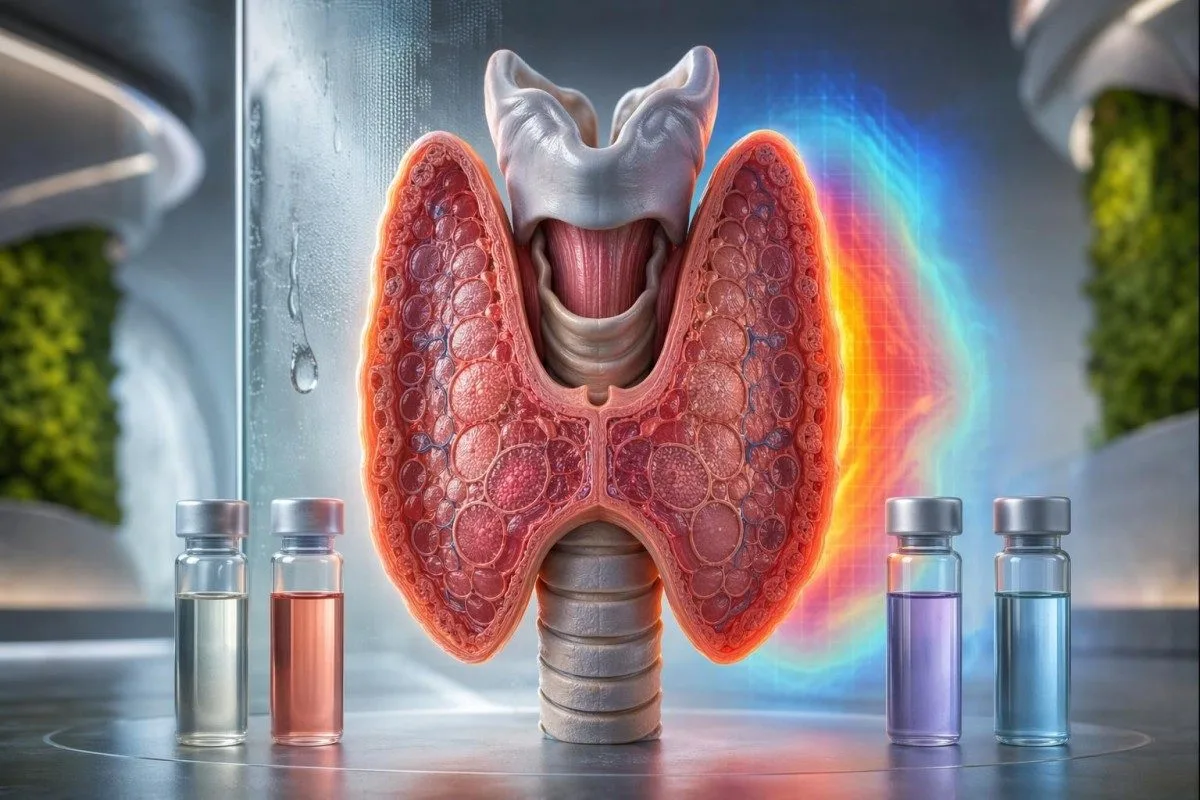
Feeling overheated can be harmless sweating, but certain lab clusters deserve attention. Here is how clinicians separate normal thermoregulation from thyroid, blood, infection, medication, and metabolic patterns.


- Low TSH below 0.1 mIU/L with high free T4 or T3 strongly suggests thyroid overactivity rather than ordinary sweating.
- CBC with differential can flag anemia, infection patterns, steroid effects, and white-cell shifts that change the interpretation of overheating symptoms.
- Ferritin under 30 ng/mL is a common practical cutoff for depleted iron stores, even before hemoglobin falls.
- CRP above 10 mg/L supports active tissue response or infection when paired with fever, chills, or a high neutrophil count.
- Glucose above 250 mg/dL with ketones, bicarbonate below 18 mmol/L, or anion gap above 12 needs same-day medical assessment.
- Creatine kinase above 1,000 IU/L after heat exposure or heavy exertion can signal muscle injury and kidney-risk follow-up.
- Medication review matters because levothyroxine, stimulants, SNRIs, anticholinergics, niacin, and some supplements can cause heat symptoms with different lab signatures.
- Normal sweating after exercise, spicy food, or a hot room is not heat intolerance unless symptoms are disproportionate, recurrent, or occur at ordinary temperatures.
Heat intolerance is not the same as sweating
A blood test for heat intolerance usually starts with TSH and free T4, CBC, ferritin or iron studies, CRP, glucose or A1c, electrolytes, kidney and liver markers, CK, and medication-linked patterns. Low TSH with high free T4 points to thyroid overactivity; low hemoglobin or ferritin points to anemia; high WBC or CRP points to immune response; and high glucose, anion gap, creatinine, or CK can signal metabolic stress.
Normal sweating is a cooling response; heat intolerance is feeling abnormally overheated in conditions most people tolerate, often with palpitations, tremor, weakness, fever, weight loss, or near-fainting. I usually ask whether the symptom happens in a 20–22°C room, because that detail separates ordinary sweating from a physiologic problem better than many questionnaires.
Kantesti is an AI blood test analyzer that reads heat intolerance blood work by looking at marker clusters rather than isolated flags. Our clinical team, described on About Us, sees this often: a patient says they are sweating too much, but the decisive clue is a suppressed TSH, a falling ferritin, or a rising neutrophil count.
A practical distinction: excess sweating means fluid output is high, while overheating can happen with too little sweating, especially with anticholinergic medicines or dehydration. If sweat volume is the main problem, our deeper guide to excessive sweating labs covers a slightly different work-up.
First-line heat intolerance blood work that changes decisions
The first useful heat intolerance blood work is a focused panel: CBC with differential, TSH, free T4, ferritin with iron saturation, CRP, fasting or random glucose, A1c, CMP, magnesium, and sometimes CK. These tests separate endocrine drive, oxygen-delivery problems, immune response, dehydration, electrolyte shifts, and heat-related muscle stress.
A CBC normal range for adult white blood cells is roughly 4.0–11.0 ×10⁹/L, and values above 11.0 ×10⁹/L often shift attention toward infection, inflammation, steroid effect, or acute physiologic stress. Hemoglobin below 13.0 g/dL in men or 12.0 g/dL in nonpregnant women supports anemia work-up, not just reassurance.
A CMP adds sodium, potassium, bicarbonate, creatinine, BUN, AST, ALT, calcium, and albumin; these are not glamour markers, but they often explain why someone feels awful in heat. Our biomarkers guide lists 15,000+ markers, yet in real clinics the first 20–30 values usually carry most of the signal.
Kantesti AI maps these results against age, sex, units, medication context, and prior values in about 60 seconds after a PDF or photo upload. In our analysis of large-scale uploads, the most missed heat pattern is not exotic—it is a borderline low TSH plus a heart rate over 100 bpm that was filed away as anxiety.
If symptoms are new after a heat wave, sauna use, marathon, fever, or medication change, CK and creatinine deserve a low threshold. CK above 1,000 IU/L is not automatically dangerous, but with dark urine, rising creatinine, or potassium above 5.5 mmol/L, I treat it as a same-day safety issue.
Low TSH patterns that point to thyroid overactivity
Thyroid overactivity is the classic lab-confirmed cause of heat intolerance: TSH is usually low, often below 0.1 mIU/L, while free T4 and/or free T3 are high. A low TSH with normal free T4 can still matter if free T3 is high, because some patients have T3-predominant thyrotoxicosis.
A typical adult TSH reference interval is about 0.4–4.0 mIU/L, but the action threshold depends on symptoms, age, pregnancy, and medication. I get more concerned when TSH is <0.1 mIU/L with tremor, resting heart rate above 100 bpm, unintentional weight loss, or new atrial fibrillation.
The 2016 American Thyroid Association guideline describes overt hyperthyroidism as suppressed TSH with elevated thyroid hormones, and it recommends cause-finding rather than treating every low TSH the same way (Ross et al., 2016). For the practical side of fluctuating results, see our guide to why TSH levels fluctuate.
Free T4 is often high in Graves disease or excess levothyroxine, while free T3 may rise earlier in some nodular thyroid disease. A thyroid panel becomes more useful than TSH alone when heat intolerance comes with neck discomfort, recent pregnancy, iodine exposure, amiodarone, or unexplained tachycardia.
One trap I see every month: high-dose biotin can make TSH look falsely low and free T4 look falsely high in certain immunoassays. If someone takes 5–10 mg/day of biotin for hair or nails, repeating thyroid tests after a 48–72 hour hold may prevent a false hyperthyroidism label.
CBC and iron patterns that can mimic overheating
Anemia can make people feel hot, flushed, breathless, or uncomfortably warm during mild exertion because oxygen delivery falls and the heart compensates. The key labs are hemoglobin, hematocrit, MCV, RDW, reticulocyte count, ferritin, transferrin saturation, B12, folate, and sometimes CRP.
Ferritin below 30 ng/mL is a practical marker of iron depletion in many adults, although inflammation can push ferritin upward and hide deficiency. Cappellini et al. described this problem clearly in J Intern Med: ferritin must be interpreted with transferrin saturation and inflammatory markers, not as a lone verdict (Cappellini et al., 2020).
MCV below 80 fL with high RDW points toward iron deficiency, but thalassemia trait can show low MCV with a normal or high RBC count. Our guide to anemia blood patterns explains why a small-cell CBC is not automatically iron deficiency.
A 34-year-old runner I reviewed had hemoglobin 11.6 g/dL, ferritin 9 ng/mL, and normal thyroid tests; she described overheating on stairs, not cold intolerance. After iron repletion and evaluation for heavy menstrual loss, her resting heart rate dropped from 92 to 74 bpm, which told the story better than the symptom label.
Reticulocytes help separate underproduction from recovery or blood loss. A reticulocyte count below 1% with anemia suggests marrow under-response, while a count above 2.5% can appear after treatment, hemolysis, or recent blood loss.
Infection and inflammation labs behind feeling hot
Infection-related heat intolerance usually shows a pattern, not one test: fever, high neutrophils, rising CRP, sometimes elevated procalcitonin, and clinical symptoms such as cough, urinary pain, abdominal pain, or swollen nodes. A WBC above 11.0 ×10⁹/L with neutrophil predominance is a common starting clue.
CRP below 3 mg/L is often low-grade or normal depending on the lab, while CRP above 10 mg/L supports active tissue response when symptoms fit. Procalcitonin above 0.5 ng/mL can support bacterial infection risk, but it is not a screening test for every person who feels hot.
Kantesti is an AI lab test interpretation service that reads WBC, neutrophils, lymphocytes, CRP, ESR, and procalcitonin together when users upload labs for feeling hot all the time. Our infection-focused guide compares procalcitonin and CRP in more detail.
Singer et al. introduced the Sepsis-3 definition in JAMA, emphasizing organ dysfunction rather than fever alone as the dangerous signal (Singer et al., 2016). In plain terms, overheating plus confusion, fast breathing, low blood pressure, rising creatinine, or platelets below 150 ×10⁹/L is a very different situation from a sweaty afternoon.
ESR can stay elevated for weeks after an inflammatory illness, so I rarely use it as the sole explanation for heat symptoms. A CRP falling from 80 to 20 mg/L over 4 days is reassuring in many cases, while a CRP rising despite antibiotics or new pain deserves a clinician’s eyes.
Medication effects that show up in blood work
Medication-related overheating can appear as low TSH from too much thyroid hormone, high glucose from steroids, low sodium from some antidepressants, high CK from serotonin toxicity or exertion, or neutrophilia with low eosinophils after corticosteroids. The medication timeline is often as diagnostic as the lab result.
Levothyroxine excess often produces low TSH before free T4 becomes strikingly high, particularly in older adults or after weight loss. If a patient loses 10–15 kg but keeps the same dose, heat intolerance and palpitations may be the first clue.
Prednisone can raise neutrophils by demargination within 4–24 hours and can push glucose above 180 mg/dL, even in people without known diabetes. Our article on stress or steroids helps separate steroid neutrophilia from infection when the CBC looks alarming.
SSRIs and SNRIs may cause sweating, while anticholinergics can reduce sweating and make overheating riskier in hot weather. If sodium falls below 130 mmol/L after starting an antidepressant, I also think about medication-related SIADH, especially in older patients.
Stimulants, decongestants, excess caffeine, niacin, and some pre-workout supplements can raise heart rate and perceived heat without leaving a dramatic lab signature. That is why I ask for exact doses in mg, start dates, and whether symptoms peak 1–4 hours after a dose.
Metabolic stress and heat illness labs that cannot wait
Metabolic heat stress becomes urgent when overheating is paired with confusion, fainting, temperature near or above 40°C, severe weakness, vomiting, chest pain, or abnormal CK, creatinine, potassium, sodium, glucose, bicarbonate, or anion gap. Blood tests for overheating symptoms should not delay emergency care in that setting.
CK above 1,000 IU/L after heat exposure, intense exercise, or immobilization raises concern for muscle injury; CK above 5,000 IU/L carries higher kidney-risk concern in many clinical protocols. Creatinine rising by 0.3 mg/dL within 48 hours can meet acute kidney injury criteria, depending on baseline.
The electrolyte panel is where heat illness stops being vague. Sodium above 150 mmol/L, potassium above 6.0 mmol/L, bicarbonate below 18 mmol/L, or an anion gap above 12 mmol/L should be interpreted quickly, and our anion gap guide explains why acid-base shifts matter.
I once saw a fit 52-year-old cyclist with AST 89 IU/L, CK 3,800 IU/L, creatinine 1.6 mg/dL, and a normal ALT; the liver was not the main story. Heat exposure and muscle injury explained the pattern, and hydration plus monitoring prevented a small abnormality from becoming a hospital admission.
Do not wait for outpatient lab interpretation if the person is confused, stops sweating during heat exposure, collapses, or has a rectal temperature around 40°C. Labs help after cooling and stabilization; they are not the first treatment.
Glucose swings that make people feel hot and shaky
Glucose swings can cause heat-like symptoms through adrenaline release, dehydration, and metabolic stress. A random glucose above 200 mg/dL with symptoms suggests diabetes evaluation, while glucose below 70 mg/dL can cause sweating, tremor, hunger, and a sudden hot feeling.
A1c of 6.5% or higher is a diabetes-range result if confirmed by standard diagnostic criteria, while 5.7–6.4% is usually considered prediabetes in the United States. Our diabetes blood test guide separates diagnostic values from monitoring targets.
Heat intolerance after meals sometimes turns out to be reactive symptoms: glucose rises, insulin follows, then glucose drops quickly. A fingerstick or CGM trace showing a fall from 170 to 65 mg/dL within 2–3 hours is more informative than a single fasting glucose of 94 mg/dL.
High glucose causes dehydration by osmotic diuresis, so the person may feel hot, thirsty, and weak even without an infection. Glucose above 250 mg/dL with positive ketones, bicarbonate below 18 mmol/L, or vomiting is a same-day safety pattern.
HbA1c can mislead when anemia, recent blood loss, kidney disease, or hemoglobin variants change red-cell lifespan. If heat symptoms and glucose readings disagree with A1c, fructosamine or structured home readings may be the more honest snapshot.
Hormone transitions where labs help but do not settle it
Menopause, perimenopause, postpartum thyroiditis, adrenal stress, pregnancy, and androgen shifts can all change heat perception, but labs do not always give a clean yes-or-no answer. FSH, estradiol, TSH, free T4, morning cortisol, prolactin, and pregnancy testing are chosen by age, cycle pattern, and symptom timing.
FSH above 25–30 IU/L can support ovarian transition, but one normal FSH does not rule out perimenopause because levels swing widely month to month. For cycle-linked heat symptoms, our perimenopause lab guide is more useful than a single hormone snapshot.
Postpartum thyroiditis can cause a hyperthyroid phase within the first 1–6 months after delivery, often with heat intolerance, palpitations, anxiety, and low TSH. The pattern may later flip toward hypothyroidism, which is why repeat testing matters more than one dramatic result.
Morning cortisol is usually interpreted around 8 a.m., and random afternoon values are easy to overread. A very low morning cortisol, especially below 3 µg/dL in the right clinical setting, can be concerning, but most overheated patients do not have adrenal failure.
Pheochromocytoma and carcinoid syndrome are rare, but they enter the conversation when flushing comes with severe episodic hypertension, pounding headaches, diarrhea, or spells lasting 5–30 minutes. In that scenario, plasma free metanephrines or 24-hour urine testing is a targeted test, not a wellness screen.
Supplements and prescriptions that distort heat labs
Supplements and prescriptions can create real heat symptoms, false lab patterns, or both. Biotin can distort thyroid immunoassays, iodine can trigger thyroid dysfunction in susceptible people, and thyroid-support blends may contain active hormone analogues that suppress TSH.
Biotin at 5 mg/day or higher can interfere with some TSH, free T4, troponin, and hormone assays, depending on the lab platform. The safest practical step is to tell the laboratory and clinician exactly what was taken before assuming the thyroid result is real.
Iodine excess can provoke thyroid overactivity in nodular thyroid disease, while iodine deficiency can worsen thyroid hormone production in other contexts. Our urinary iodine test guide explains why spot iodine results are population tools more than perfect individual diagnostics.
Ashwagandha has case reports of thyrotoxicosis-like patterns, although the evidence is mixed and not every product behaves the same. If heat intolerance begins within 2–8 weeks of starting a supplement, I usually repeat TSH, free T4, free T3, liver enzymes, and CK after stopping it with clinician agreement.
Medication reconciliation sounds dull; it prevents mistakes. Bring doses, dates, brand changes, and missed doses to any review, because a 25 mcg levothyroxine increase or a new stimulant may explain more than a broad hormone panel.
Hydration, kidney and electrolyte clues in overheating symptoms
Hydration-related overheating often shows high sodium, high BUN-to-creatinine ratio, concentrated urine, high albumin, or rising creatinine. These findings suggest reduced circulating fluid, kidney strain, or salt-water imbalance rather than a primary thyroid or infection problem.
A BUN-to-creatinine ratio above 20:1 can fit dehydration, gastrointestinal fluid loss, high protein intake, or reduced kidney perfusion. It is a clue, not a verdict, and it needs sodium, urine specific gravity, medications, and baseline creatinine beside it.
Albumin above 5.0 g/dL is commonly a concentration effect from low plasma water rather than excess protein production. Our piece on dehydration false highs shows why calcium, albumin, hemoglobin, and creatinine can all look worse after a dry morning.
Kantesti is an AI biomarker interpretation platform that reads electrolytes with kidney markers, albumin, glucose, and prior baselines instead of treating sodium as a single-line abnormality. That matters because sodium 146 mmol/L may be trivial after a salty meal, but sodium 152 mmol/L with confusion is not.
Magnesium is often overlooked in heat complaints, especially with diuretics, diarrhea, alcohol use, or proton pump inhibitors. Serum magnesium below 1.7 mg/dL can contribute to cramps, palpitations, and weakness, though normal serum magnesium does not always reflect total body stores.
Why trend analysis beats one normal-looking result
Trend analysis is often better than one normal-looking result because heat intolerance develops from movement across a person’s baseline. A TSH drifting from 2.2 to 0.35 mIU/L, ferritin falling from 80 to 18 ng/mL, or creatinine rising from 0.8 to 1.1 mg/dL can be meaningful even before a red flag appears.
Reference ranges are built from populations; symptoms happen in individuals. A lab can call free T4 normal at 1.7 ng/dL, but if that patient’s usual value is 1.0 ng/dL and TSH is falling, I read the pattern differently.
Our blood test trends guide explains why slope matters: ferritin dropping 10–20 ng/mL every 3 months tells a different story from a stable low-normal value. Kantesti AI stores prior uploads so recurring heat intolerance can be compared against the person’s own history.
Season matters too. In hotter months, creatinine, albumin, sodium, and hematocrit may rise slightly from lower fluid intake; in winter, TSH can run modestly higher in some populations. The same value may deserve different concern in August after outdoor work than in January after a fasting morning.
Unit conversion is a hidden source of panic. Free T4 in ng/dL and pmol/L can look wildly different on the page, so trend software must normalize units before declaring a real change.
What to ask your clinician before ordering labs
Before ordering labs for feeling hot all the time, ask which diagnosis each test is meant to confirm or rule out. A focused request usually includes thyroid, CBC, iron, inflammation, glucose, CMP, and medication review, while rare hormone tests should follow specific spells or exam findings.
Ask: Do my symptoms sound like heat intolerance, flushing, fever, hot flashes, panic episodes, or excessive sweating? Those categories overlap, but they point to different tests and different timing.
A sensible first appointment often covers pulse, blood pressure sitting and standing, weight change, temperature pattern, medication list, pregnancy possibility, cycle changes, and recent infections. Our guide to new doctor labs gives a structured way to avoid both under-testing and scattergun panels.
Ask when to repeat abnormal results. TSH may be repeated in 6–8 weeks if mild and stable, ferritin may be rechecked after 8–12 weeks of iron therapy, and CRP may be repeated within days if infection treatment is being monitored.
As of May 28, 2026, I still see patients spend money on broad wellness panels before checking temperature, pulse, CBC, TSH, and glucose. Thomas Klein, MD speaking plainly: the boring basics answer more heat-intolerance cases than rare catecholamine testing.
How Kantesti reads overheating symptoms safely
Kantesti AI interprets overheating symptoms safely by clustering labs into thyroid, CBC, iron, inflammatory, metabolic, kidney, electrolyte, and medication-risk patterns. The system does not diagnose heat stroke or replace urgent care; it highlights combinations that warrant follow-up, repeat testing, or clinician review.
Our medical governance emphasizes pattern recognition with clinical guardrails, and our standards are described on the medical validation page. For heat intolerance blood work, the algorithm treats TSH 0.02 mIU/L plus free T4 elevation very differently from isolated sweating with normal thyroid markers.
Kantesti AI’s clinical benchmark work includes trap cases where a single abnormal value should not trigger overdiagnosis, such as biotin-distorted thyroid tests or exercise-related CK rises. The 2.78T engine validation is summarized in our clinical benchmark, and it is exactly the sort of stress-testing I want in medical AI.
Our doctors review the logic behind high-risk flags, including fever plus abnormal kidney function, glucose plus ketones, and thyroid hormone excess plus tachyarrhythmia risk. You can read more about the physicians behind the system on our Medical Advisory Board.
I, Thomas Klein, MD, would rather see one careful interpretation with medication context than 40 disconnected lab values. Heat intolerance is a symptom, not a diagnosis; good lab interpretation narrows the path without pretending uncertainty has vanished.
Frequently Asked Questions
What blood test for heat intolerance should I ask for first?
A first blood test for heat intolerance usually includes CBC with differential, TSH, free T4, CMP, glucose or A1c, CRP, ferritin with iron studies, and sometimes CK. TSH below 0.1 mIU/L with high free T4 suggests thyroid overactivity, while hemoglobin below 13.0 g/dL in men or 12.0 g/dL in nonpregnant women supports anemia evaluation. If symptoms followed heat exposure, heavy exercise, vomiting, or confusion, CK, creatinine, potassium, sodium, bicarbonate, and anion gap become more urgent.
Can thyroid blood tests explain feeling hot all the time?
Yes, thyroid blood tests can explain feeling hot all the time when the pattern shows low TSH with high free T4 or high free T3. A TSH below 0.1 mIU/L is more concerning when paired with tremor, weight loss, resting heart rate above 100 bpm, or palpitations. Biotin supplements of 5–10 mg/day can distort some thyroid tests, so supplement history should be checked before labeling someone hyperthyroid.
Can anemia make me feel overheated instead of cold?
Yes, anemia can make some people feel overheated, flushed, or unusually warm during exertion because the heart works harder to deliver oxygen. Iron deficiency is supported by ferritin below 30 ng/mL or transferrin saturation below 20%, especially when MCV is below 80 fL or RDW is high. Classic cold intolerance can occur too, but exertional heat discomfort is a real pattern I see in patients with low hemoglobin or depleted iron stores.
Which infection blood tests matter when I feel hot but have no clear fever?
The most useful infection-related tests are CBC with differential, CRP, ESR in selected cases, and procalcitonin when bacterial infection is a serious possibility. A WBC count above 11.0 ×10⁹/L with high neutrophils and CRP above 10 mg/L supports active immune response when symptoms fit. Procalcitonin above 0.5 ng/mL can raise concern for bacterial infection, but it should not be used alone in a well-appearing person with vague warmth.
Can medications cause overheating even when blood tests are normal?
Yes, medications can cause overheating with normal or near-normal labs, especially stimulants, anticholinergics, SNRIs, SSRIs, decongestants, niacin, and excess thyroid hormone. Levothyroxine excess often shows low TSH, steroids can raise glucose above 180 mg/dL and increase neutrophils, and some antidepressants can lower sodium below 130 mmol/L. The timing of symptoms within hours or weeks of a dose change can be as useful as the lab panel.
When are overheating symptoms an emergency rather than a routine lab issue?
Overheating symptoms are an emergency if they occur with confusion, collapse, chest pain, severe weakness, vomiting, temperature around 40°C, stopped sweating during heat exposure, or new neurologic symptoms. Lab danger patterns include CK above 1,000 IU/L with kidney changes, potassium above 6.0 mmol/L, sodium above 150 mmol/L, bicarbonate below 18 mmol/L, or glucose above 250 mg/dL with ketones. In these situations, cooling and urgent care come before outpatient blood test interpretation.
Can sleep apnea make me wake up overheated or sweaty?
Sleep apnea can be linked with night sweats or waking hot, particularly if you snore, gasp during sleep, have morning headaches, or feel unusually sleepy in daytime. Blood tests may be normal, so ask your clinician whether a sleep evaluation is appropriate.
Can anxiety cause heat intolerance when my blood tests are normal?
Anxiety or panic can trigger adrenaline-related flushing, sweating, tremor, and a fast heartbeat, often in brief episodes. Arrange a medical review first if symptoms are new, worsening, occur at rest, or include weight loss, fever, chest pain, or fainting.
Should I stop biotin before thyroid or hormone blood tests for heat intolerance?
Biotin can interfere with some thyroid and hormone immunoassays, sometimes making results look falsely high or low. Ask your clinician or lab, but many patients are advised to pause biotin-containing supplements for at least 48 hours before testing.
Get AI-Powered Blood Test Analysis Today
Join over 2 million users worldwide who trust Kantesti for instant, accurate lab test analysis. Upload your blood test results and receive comprehensive interpretation of 15,000+ biomarkers in seconds.
📚 Referenced Research Publications
Klein, T., Mitchell, S., & Weber, H. (2026). Clinical Validation Framework v2.0 (Medical Validation Page). Kantesti AI Medical Research.
Klein, T., Mitchell, S., & Weber, H. (2026). AI Blood Test Analyzer: 2.5M Tests Analyzed | Global Health Report 2026. Kantesti AI Medical Research.
📖 External Medical References
Cappellini MD et al. (2020). Iron deficiency anaemia revisited. Journal of Internal Medicine.
⚕️ Medical Disclaimer
This article is for educational purposes only and does not constitute medical advice. Always consult a qualified healthcare provider for diagnosis and treatment decisions.
E-E-A-T Trust Signals
Experience
Physician-led clinical review of lab interpretation workflows.
Expertise
Laboratory medicine focus on how biomarkers behave in clinical context.
Authoritativeness
Written by Dr. Thomas Klein with review by Dr. Sarah Mitchell and Prof. Dr. Hans Weber.
Trustworthiness
Evidence-based interpretation with clear follow-up pathways to reduce alarm.