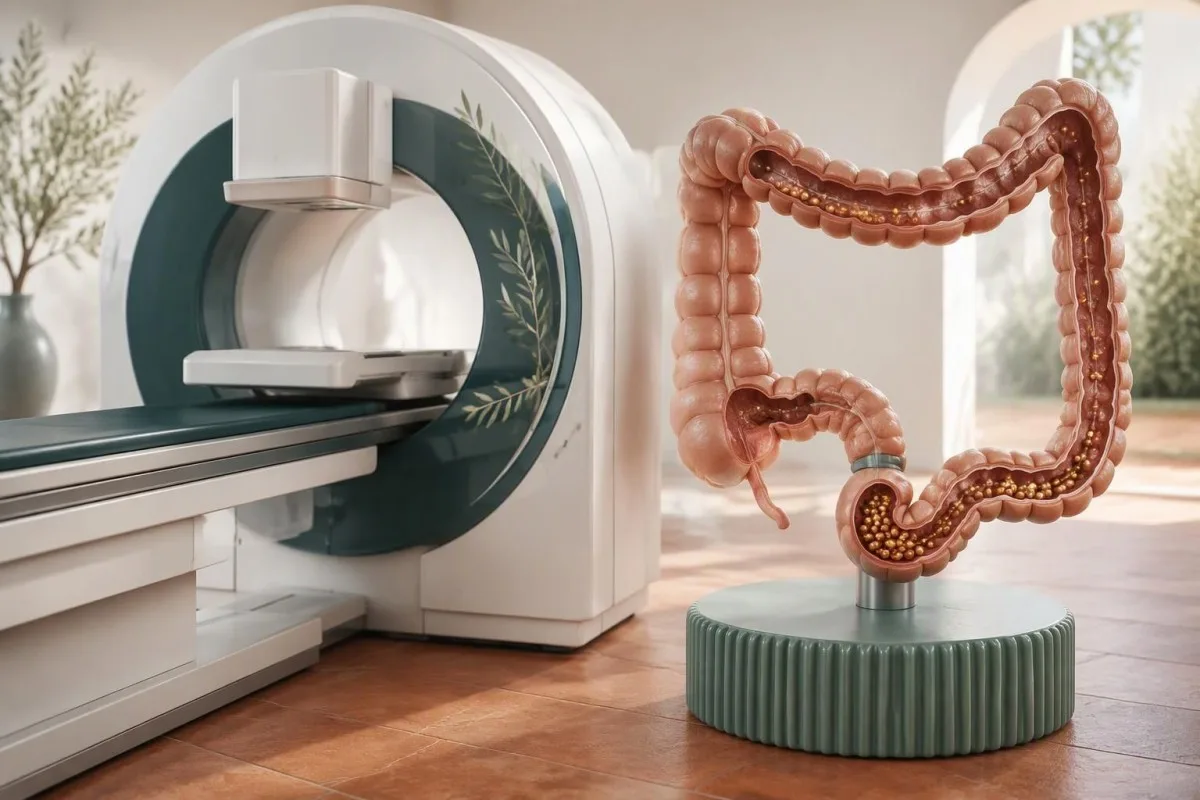
Ниското задържане на SeHCAT на седмия ден подкрепя диагнозата диария, причинена от жлъчни киселини: обичайно използваните диапазони са под 5% за тежка, 5–под 10% за умерена и 10–под 15% за лека. Тези проценти насочват обсъждането на лечението, но сами по себе си не измерват тежестта на симптомите и не установяват основната причина.

Основни изводи
- Ниско задържане под 15% на седмия ден обикновено подкрепя диагнозата диария, причинена от жлъчни киселини, при човек със съответстващи симптоми; прагът на лабораторията, извършила изследването, е с предимство.
- Интензивни ленти обикновено определят стойности под 5% като тежка, 5–под 10% като умерена и 10–под 15% като лека загуба на жлъчни киселини — не непременно леки или тежки симптоми.
- Нормално задържане от 15% или повече обикновено прави значителната загуба на жлъчни киселини по-малко вероятна, но не изключва микроскопски колит, целиакия, проблеми с панкреаса или други причини за диария.
- Лечение обикновено включва секвестранти на жлъчните киселини под наблюдението на лекар; холестираминът може да се започне с 2–4 g дневно и дозата трябва да се коригира индивидуално.
- Серумен C4 означава 7α-хидрокси-4-холестен-3-он при изследване за диария; това не е комплемент C4 — белтък на имунната система.
- Алтернативно изследване включва изследване на серумен C4 на гладно и специализирано измерване на фекалните жлъчни киселини, често събирани в продължение на 48 часа там, където SeHCAT не се предлага.
- Изследване за холестаза използва различен диагностичен подход: ALP, GGT, билирубин и понякога общите серумни жлъчни киселини се изследват за нарушен жлъчен ток, а не за загуба на жлъчни киселини през червата.
- Безопасност зависи от интервалите между приема на лекарствата, оценката на триглицеридите и обема на илеалната операция; сам по себе си много нисък процент не е спешен случай.
Какво означава ниското задържане на SeHCAT за симптомите ви
Ниската ретенция при SeHCAT означава, че тялото ви е задържало по-малко количество радиомаркиран маркер на жлъчна киселина след седем дни. Резултат под 15% обикновено подкрепя диагнозата диария от жлъчни киселини, когато персистиращите воднисти изпражнения съответстват на клиничната картина; по-ниските проценти показват по-голяма загуба на маркера, а не непременно по-опасно заболяване.
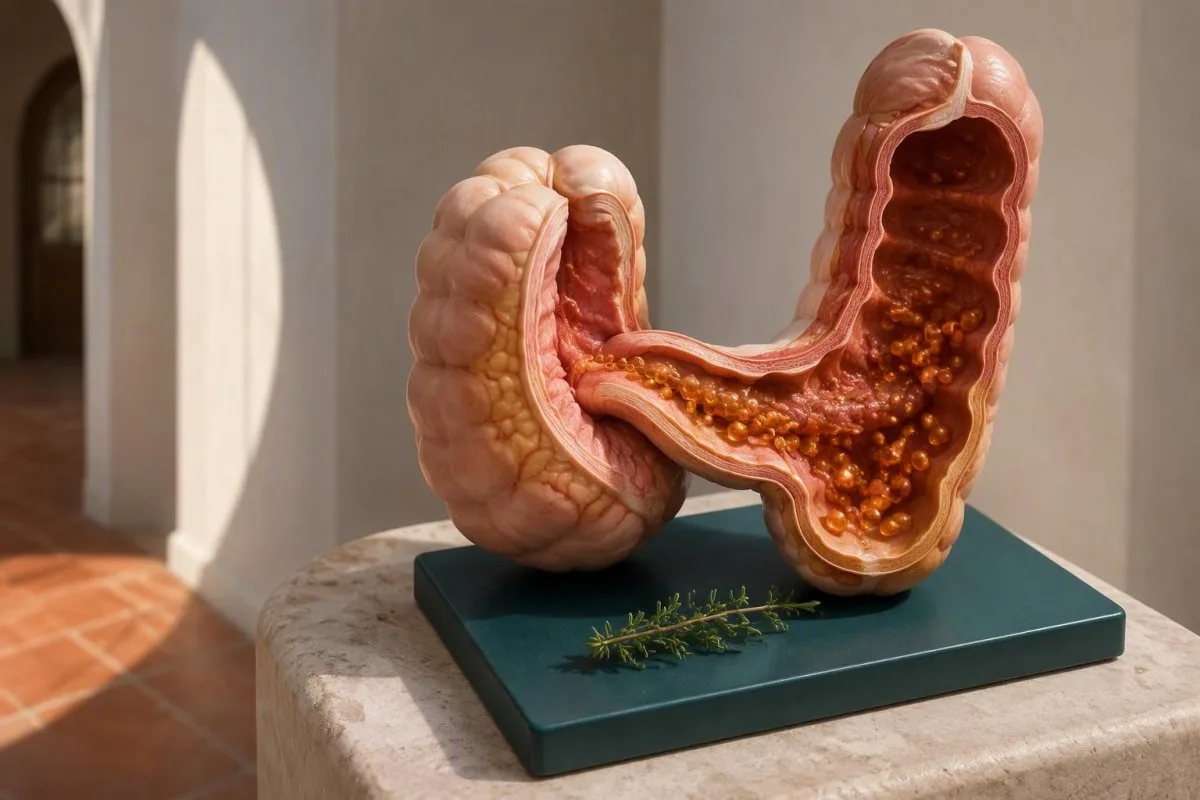
Диария от жлъчни киселини се развива, когато излишъкът от жлъчни киселини достигне дебелото черво и увеличи секрецията на течности и придвижването им през червата. Резултат от 4% за ретенция след седем дни например подкрепя наличието на значителна загуба на жлъчни киселини, но не може да разграничи нарушената илеална абсорбция от прекомерното производство на жлъчни киселини без клиничната анамнеза.
При хипотетичен възрастен с шест воднисти изхождания дневно и ретенция 8% резултатът дава на клинициста правдоподобна терапевтична цел, вместо да бъде просто поредното отклонение в резултатите. Записването на консистенцията на изпражненията с Диаграма на Бристол за изпражненията помага да се разграничат по-редките изхождания от действително по-оформените изпражнения, намалената неотложност и подобрената възможност за излизане от дома.
Кантести е един AI кръвен анализатор които могат да помогнат за обяснението на съпътстващите лабораторни резултати, докато интерпретацията на седемдневното изследване със SeHCAT изисква участието на екипите по нуклеарна медицина и гастроентерология. Нашите организация и цел са отделни от тази диагностична услуга: не извършваме изследвания със SeHCAT, не установяваме основната причина и не предписваме лечение.
Как се измерва процентът на SeHCAT на седмия ден
Ретенцията при SeHCAT сравнява първоначалното измерване на приет с поглъщане маркер на жлъчна киселина, белязан със селен-75, с повторно измерване приблизително седем дни по-късно. Специалистите по нуклеарна медицина коригират показанията спрямо фоновата активност и радиоактивния разпад, така че отчетеният процент оценява биологичната ретенция, а не просто броя на регистрираните от скенера импулси.
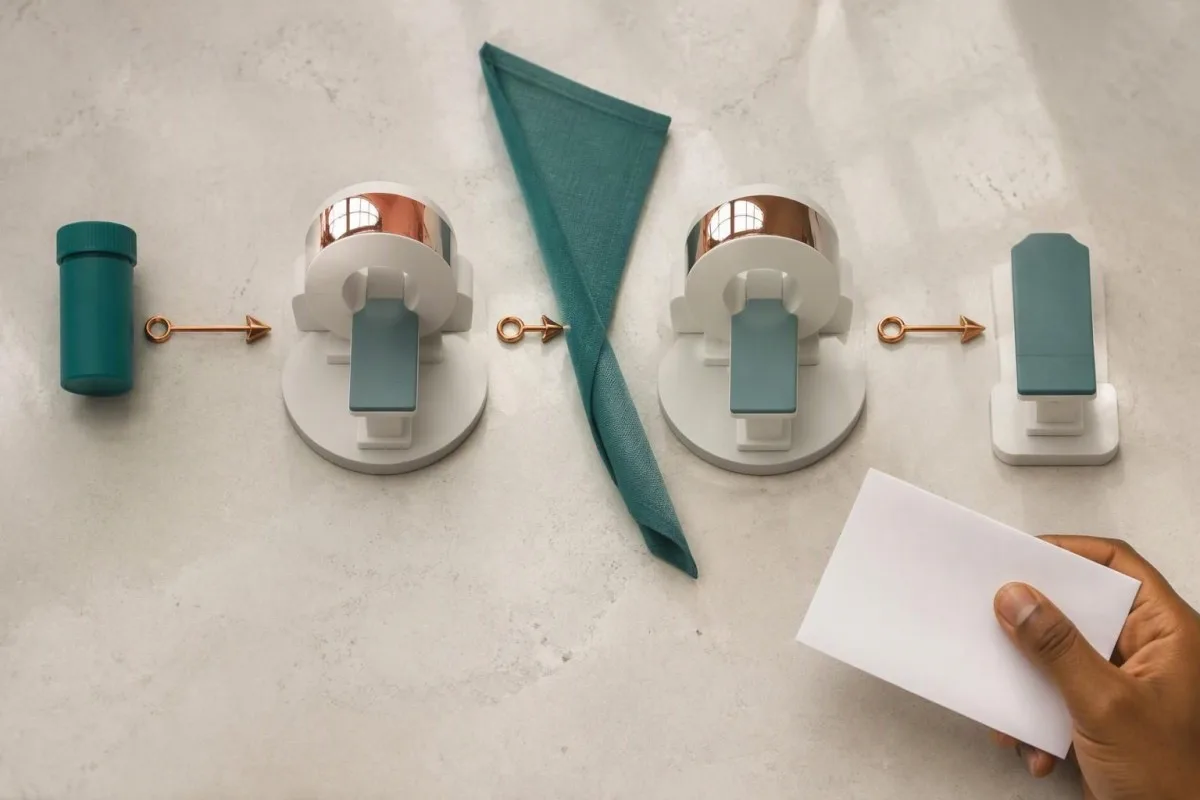
SeHCAT не е кръвен тест. Повечето протоколи включват поглъщане на капсула, първоначално измерване след интервал, определен на местно ниво, и връщане след седем дни; камерата регистрира излъчваната радиация, вместо да прави обичайна снимка на червата, а колоноскопия или събиране на изпражнения обикновено не са част от това конкретно изследване.
Хипотетична коригирана изходна стойност от 10 000 импулса и коригирано измерване на седмия ден от 800 импулса биха дали ретенция 8%: 800, разделено на 10 000 и умножено по 100. Думата „коригирана“ е важна — разделянето на две необработени числа от резултат може да даде грешен отговор, ако корекциите за фон, продължителност на регистрацията, позициониране или разпад се различават.
Секвестрантите на жлъчни киселини могат да попречат на рециклирането на маркера, затова центърът за изследването може да поиска временно прекъсване на приема им преди поглъщането на капсулата и по време на седемдневния интервал. Следвайте точните му указания, вместо сами да спирате лекарства; съобщете вашите модели на храносмилателни симптоми, предишни чревни операции, вероятност за бременност и статус на кърмене преди изследването.
Проценти на задържане на SeHCAT: често използвани прагове за тежест
Обичайните прагове за SeHCAT на седмия ден са под 5% за тежка загуба, от 5 до под 10% за умерена загуба и от 10 до под 15% за лека загуба. Ретенция от 15% или повече обикновено не подкрепя наличието на значителна загуба на жлъчни киселини, въпреки че диагностичните граници и терминологията в резултатите се различават между центровете.
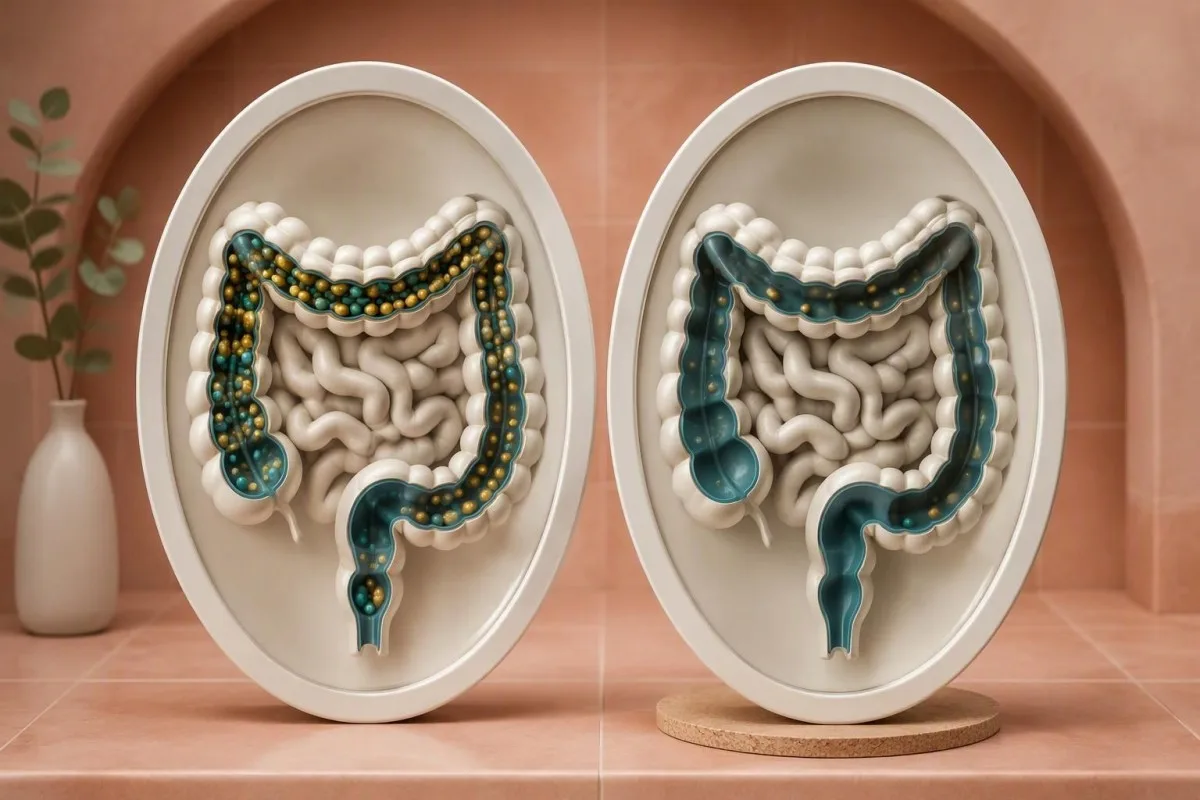
The British Society of Gastroenterology guideline describes the familiar 5%, 10%, and 15% boundaries and their relationship to treatment response (Arasaradnam et al., 2018). These thresholds are practical categories drawn from clinical evidence, not biological cliffs; there is no abrupt switch in bowel function between an otherwise comparable result of 9.9% and 10.1%.
A hypothetical 12% result commonly falls in the mild-loss band, while 3% falls in the severe-loss band. Someone at 12% may still experience disabling urgency or incontinence, whereas another person at 3% may report fewer stools because diet, bowel anatomy, medication, and other conditions modify how tracer loss translates into symptoms.
Exactly 5%, 10%, or 15% may be handled differently if a center uses inclusive boundaries or reports rounded percentages. Ask which cutoff your service applies and whether the displayed number was rounded; our explanation of резултати извън референтните граници shows why a laboratory flag and a clinical diagnosis are not interchangeable.
| Ниво | Диапазон | Какво означава |
|---|---|---|
| Generally not supportive | ≥15% retained at seven days | Significant bile acid loss is less likely under commonly used criteria; other diarrhea causes may still need investigation. |
| Mild bile acid loss | 10% to <15% retained | Supports mild loss in a compatible clinical setting; symptoms can still be substantial. |
| Moderate bile acid loss | 5% to <10% retained | Supports a bile acid contribution and a clinician-supervised treatment discussion. |
| Severe bile acid loss—not an emergency category | <5% retained | Indicates marked tracer loss; assess the cause, nutritional context, and suitability of bile acid-binding treatment. |
Какво не може да докаже ниският или нормалният резултат от SeHCAT
A low SeHCAT result supports abnormal bile acid handling, but does not prove that bile acids explain every symptom. A result of 15% or above usually argues against substantial bile acid loss under common criteria, yet it cannot rule out other causes of persistent diarrhea.
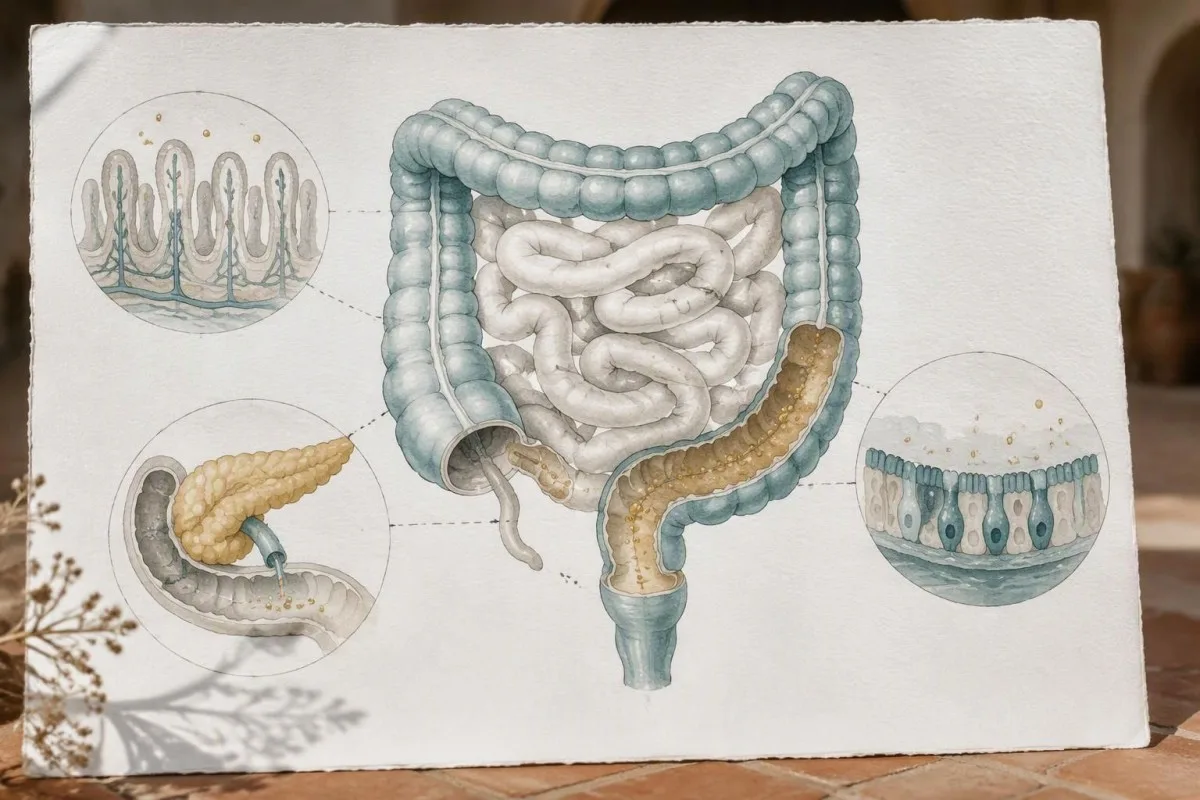
Two conditions can coexist: an adult might have 7% retention and microscopic colitis, celiac disease, or a medication-related problem. Improvement with a sequestrant can identify a treatable bile acid component without resolving the second condition; persistent symptoms therefore deserve reassessment rather than an assumption that the original scan must have been wrong.
A normal 22% result does not explain greasy, bulky stools, especially when weight loss or pancreatic risk factors accompany them. A fecal fat assessment addresses fat malabsorption rather than bile acid retention, and clinicians may add fecal elastase or imaging when the history suggests pancreatic insufficiency.
Rapid transit can alter stool appearance without proving a bile acid disorder; visible food fragments and yellow stool are not substitutes for a seven-day retention measurement. Our guide to несмляна храна в изпражненията explains when appearance is nonspecific and when associated weight loss, nutritional abnormalities, or persistent changes make further investigation more useful.
Защо задържането на жлъчни киселини може да е ниско
Low SeHCAT retention can result from terminal ileal disease or surgery, disturbed feedback that increases bile acid production, or secondary changes after other gastrointestinal conditions. A result below 5% does not identify which mechanism applies; the operative history and associated symptoms often provide the most useful clues.
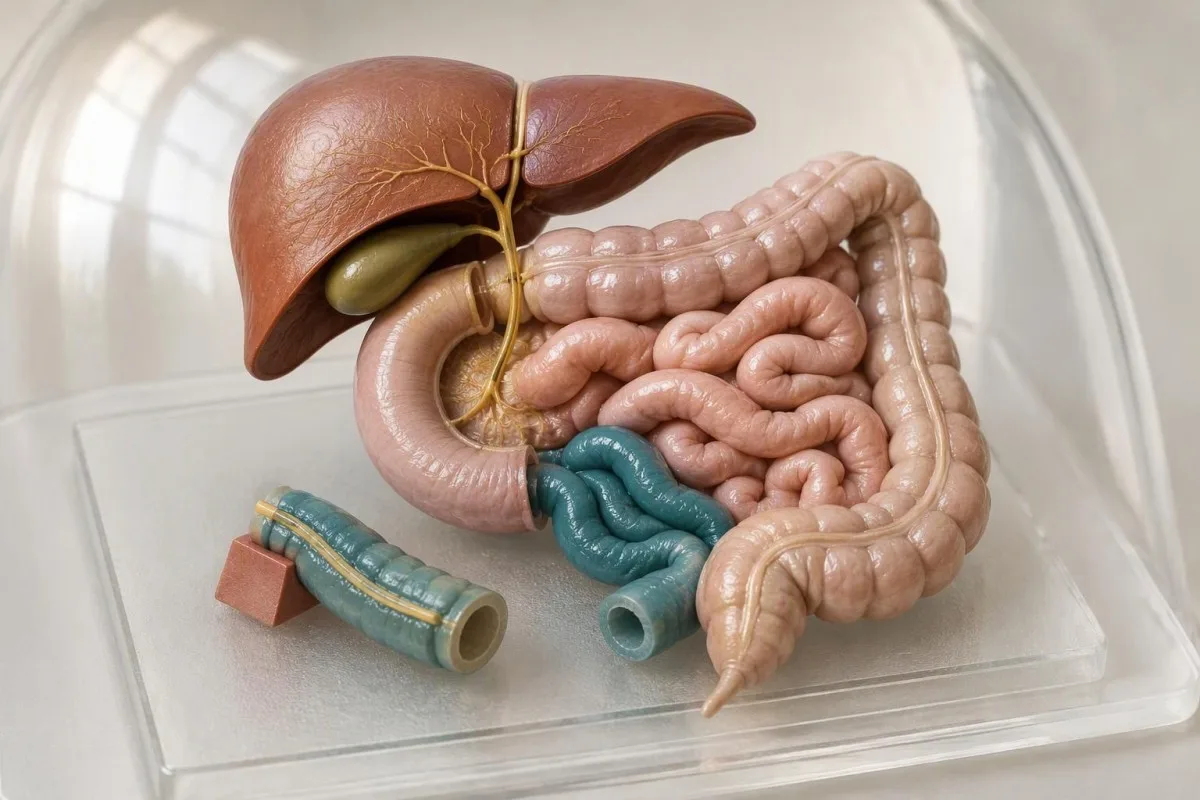
Primary bile acid diarrhea can occur without visible ileal damage because feedback signals fail to restrain liver bile acid synthesis adequately. Wedlake et al. (2009) found abnormal SeHCAT retention below 10% in about 32% of selected diarrhea-predominant IBS study participants; that pooled estimate describes investigated populations, not a screening probability for every person with loose stools.
Terminal ileal Crohn's disease or removal of that segment can reduce recycling directly, whereas diarrhea after gallbladder removal may reflect altered bile delivery and handling rather than intestinal damage. For a hypothetical person with 6% retention after surgery, the clinician should establish whether the operation removed the gallbladder, the terminal ileum, or both before selecting treatment.
Extensive ileal resection—often discussed around lengths exceeding 100 cm—can deplete the bile acid pool and cause fat malabsorption, making sequestrants counterproductive in some patients. The operative details matter more than a rigid length rule; граничен витамин B12 deserves attention because the terminal ileum also has a distinct role in B12 absorption.
Кои други изследвания са част от диагностичната оценка за диария, причинена от жлъчни киселини?
A bile acid diarrhea diagnosis usually requires a symptom history, medication review, and targeted checks for other causes—not SeHCAT alone. Persistent watery diarrhea lasting more than four weeks commonly prompts consideration of celiac testing, stool inflammation markers, and selected infection tests, with endoscopy determined by the clinical picture.
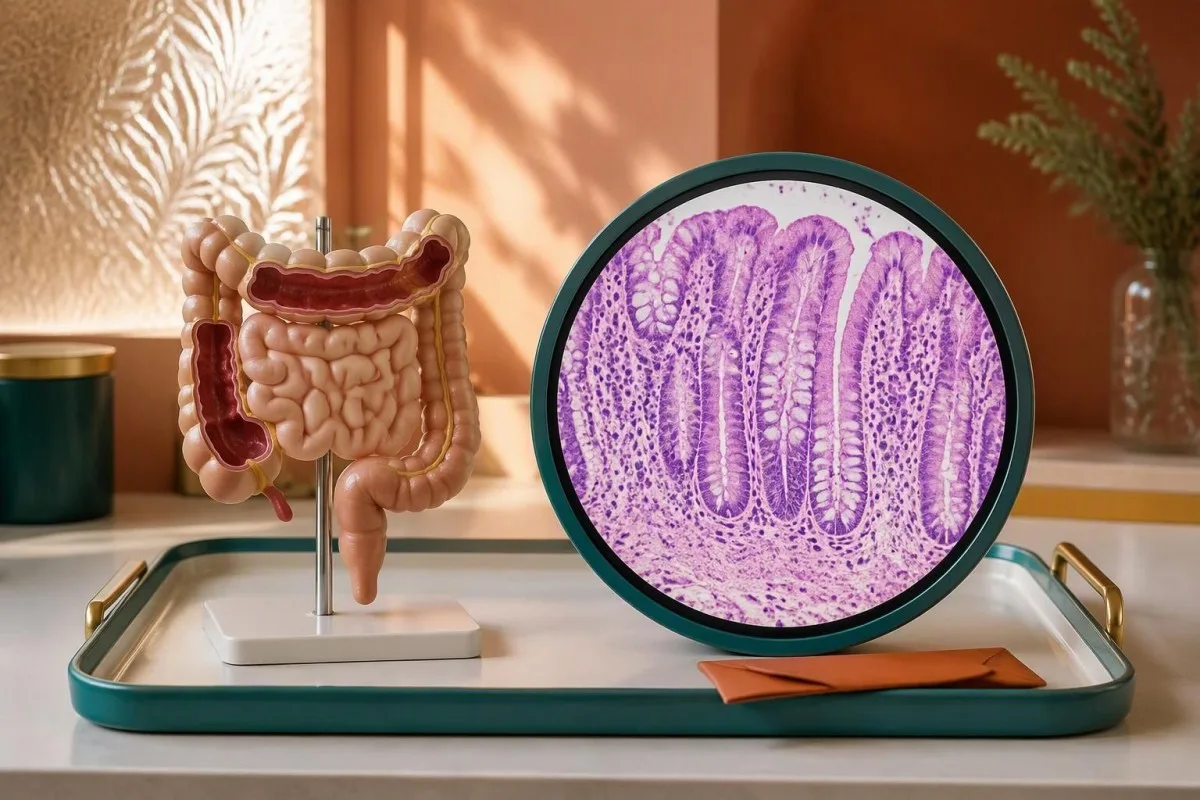
Fecal calprotectin and lactoferrin assess intestinal inflammatory activity; neither measures bile acid loss. A hypothetical adult with 8% retention and elevated stool inflammation markers may need assessment for an accompanying inflammatory condition, while normal markers do not reliably exclude microscopic colitis; our stool inflammation test comparison обяснява тази разлика.
Celiac screening commonly combines tissue transglutaminase IgA with total IgA while the person is eating gluten, because a restricted diet or IgA deficiency can undermine interpretation. The BSG guideline also recommends right- and left-sided colon samples when excluding microscopic colitis in chronic diarrhea, even if the colon looks normal during examination (Arasaradnam et al., 2018).
Travel, untreated water exposure, or a relevant outbreak may justify targeted infection testing rather than an indiscriminate panel. In a hypothetical person with four weeks of diarrhea after camping, a Giardia antigen result could change the treatment plan; a low SeHCAT percentage should not distract from a second, independently treatable explanation.
Серумният C4 при диария не е комплемент C4
Serum C4 for bile acid diarrhea means 7α-hydroxy-4-cholesten-3-one, a marker of liver bile acid synthesis. Complement C4 is a different immune-system protein, usually reported in g/L or mg/dL; a complement C4 result cannot substitute for the specialized diarrhea investigation.
Повишено 7α-hydroxy-4-cholesten-3-one result supports increased bile acid synthesis, which can accompany excessive intestinal bile acid loss. The BSG guideline discusses a threshold above 47.1 ng/mL, while some laboratories use approximately 52.5 ng/mL or their own validated boundaries; these are assay-specific decision limits, not a universal normal range (Arasaradnam et al., 2018).
Sampling usually requires a morning fasting specimen because C4 varies with meals and time of day; liver disease and medicines affecting bile acid metabolism can also complicate interpretation. A report saying only C4 0.22 g/L is more consistent with complement testing, so verify the full analyte name with the laboratory and consult our complement C4 explanation.
Кантести е един Платформа за кръвни изследвания тълкуване с AI that explains reported analyte names, units, and reference intervals, rather than treating two tests called C4 as interchangeable. When reviewing a value such as 55 ng/mL, match it to the laboratory's method and fasting instructions; our ръководство за референтни стойности на кръвни биомаркери provides context but does not establish bile acid diarrhea.
Алтернативи, когато изследването със SeHCAT не е достъпно
Where SeHCAT is unavailable, fasting serum C4 and specialist fecal bile acid measurement are the main objective alternatives. SeHCAT is not routinely available in the United States; selected laboratories instead offer stool collections over 48 hours, while access to all these investigations varies internationally.
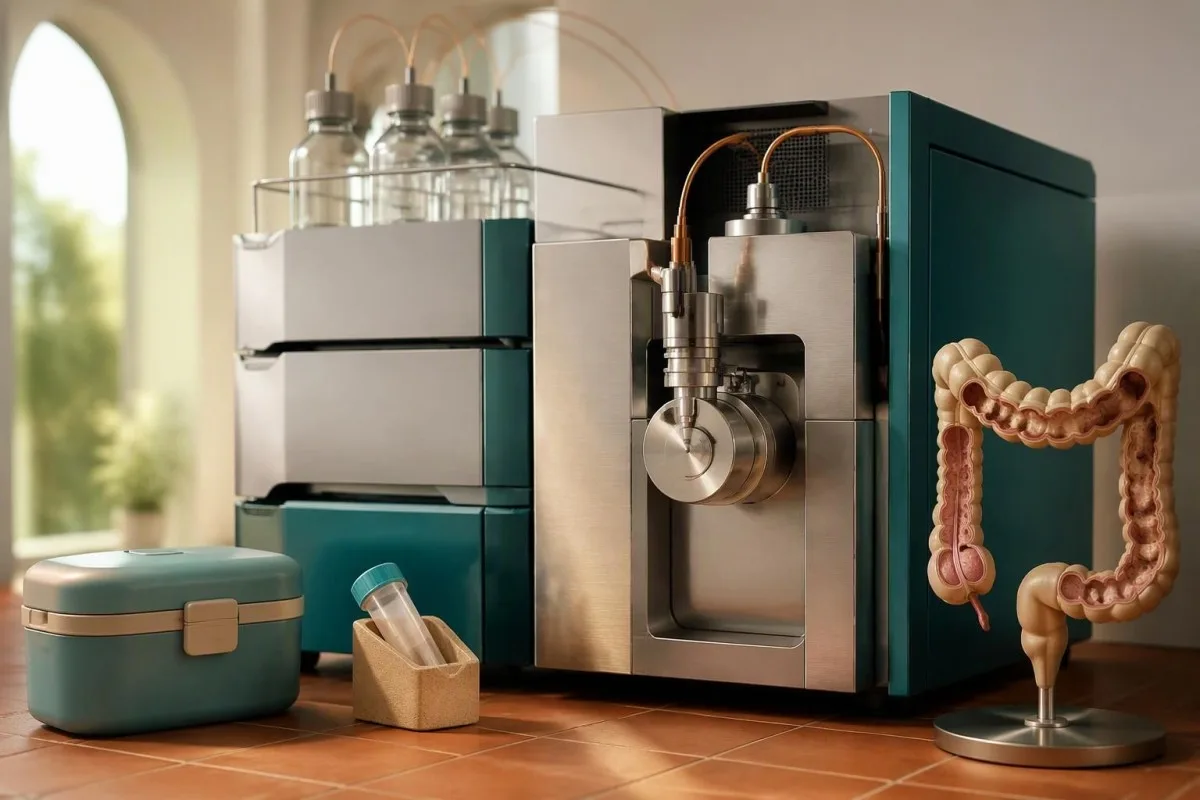
Fecal bile acid testing measures bile acids excreted in stool, not the percentage of a swallowed tracer remaining in the body. One established laboratory approach considers total bile acids above 2,337 µmol/48 hours supportive, with additional criteria based on primary bile acid proportions; use the receiving laboratory's current criteria rather than importing a cutoff from another assay.
Some protocols require approximately 100 g of dietary fat daily for four days, with stool collected during the final 48 hours; this standardized intake can be difficult for someone whose symptoms worsen after fatty meals. Discuss suitability before beginning, because an incomplete collection or a substantially different diet can weaken interpretation and the protocol is not a treatment recommendation.
The Canadian guideline favors objective testing over an empirical sequestrant trial when suitable testing is available, but acknowledges access limitations (Sadowski et al., 2020). FGF19 testing is less standardized for routine care, and a commercial gut microbiome report does not replace SeHCAT, serum C4, or fecal bile acid measurement—even if it lists bile-related organisms.
Изследванията за диария, причинена от жлъчни киселини, се различават от изследванията за холестаза
SeHCAT and specialist serum C4 investigate intestinal bile acid handling; cholestasis testing investigates impaired bile formation or flow. ALP, GGT, bilirubin, and sometimes serum total bile acids address the liver-and-bile-duct pathway, so a normal liver panel does not rule out bile acid diarrhea.
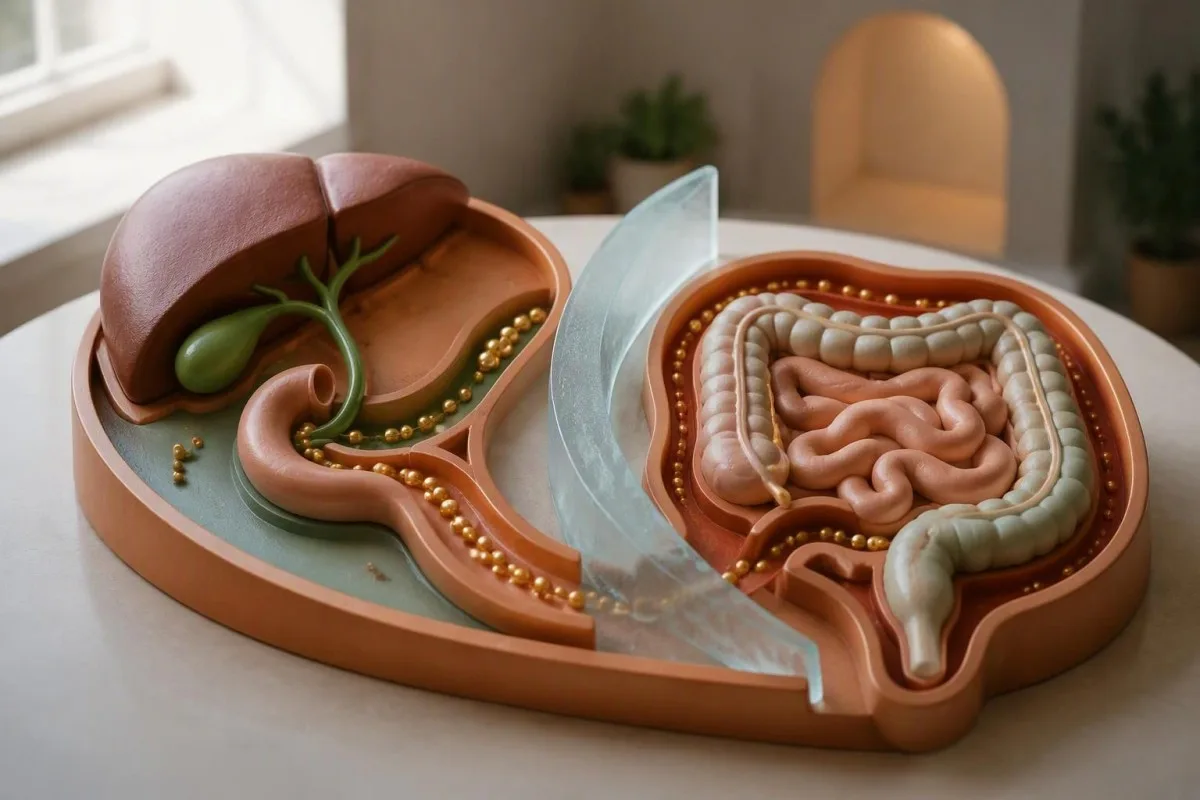
A hypothetical adult with 4% SeHCAT retention and normal ALP, GGT, and bilirubin can still have clinically significant bile acid diarrhea. Conversely, an elevated total bile acids result in someone with generalized itching raises different questions; concentration in serum does not tell a clinician how much tracer remains after seven days.
Serum total bile acids are usually reported in µmol/L, whereas specialist serum C4 is commonly reported in ng/mL. These units help reveal that the investigations measure different substances, not different versions of the same result; substituting total bile acids for C4 can send a diarrhea workup down the wrong diagnostic pathway.
A raised ALP accompanied by raised GGT makes a hepatobiliary source more likely than an isolated bone-related ALP rise, but blood tests alone do not locate an obstruction. Our cholestasis laboratory pattern guide explains the next steps; jaundice with fever or severe abdominal pain needs urgent assessment regardless of a previous 8% SeHCAT result.
Как резултатите от SeHCAT насочват лечението под наблюдението на лекар
Low SeHCAT retention often leads to a supervised trial of a bile acid sequestrant, adjusted to symptom response and tolerability. Cholestyramine is commonly started at 2–4 g daily in guideline-described practice; colesevelam or colestipol may be considered when the first option is unsuitable, unavailable, or poorly tolerated.

Bile acid sequestrants bind bile acids in the intestine rather than repairing the ileum. A hypothetical person with 7% retention might begin a clinician-selected low dose and adjust it over subsequent weeks, using stool consistency and urgency as outcomes; immediately escalating because the percentage is low can produce constipation without improving the person's overall function.
The BSG guideline cites historical pooled cholestyramine responses of approximately 96% at retention below 5% and 70% below 15% (Arasaradnam et al., 2018). Those groups overlap and the underlying studies differ, so these figures are not modern head-to-head comparisons or personal success probabilities; the Canadian guideline also emphasizes the generally limited certainty of treatment evidence (Sadowski et al., 2020).
Kantesti AI does not choose a sequestrant or recommend changing a prescribed dose based on a result such as 3% retention. Keeping a dated medicine and symptom record supports a safer follow-up discussion, while our medication monitoring workflow explains how accompanying laboratory trends can inform questions for the prescribing clinician.
Интервали между приемите на лекарства, странични ефекти и безопасност на лечението
Bile acid sequestrants can cause constipation, bloating, and reduced absorption of other medicines. Cholestyramine labeling commonly advises taking other oral medicines at least one hour before or four to six hours afterward; the correct spacing depends on the specific product and the medicine being protected.
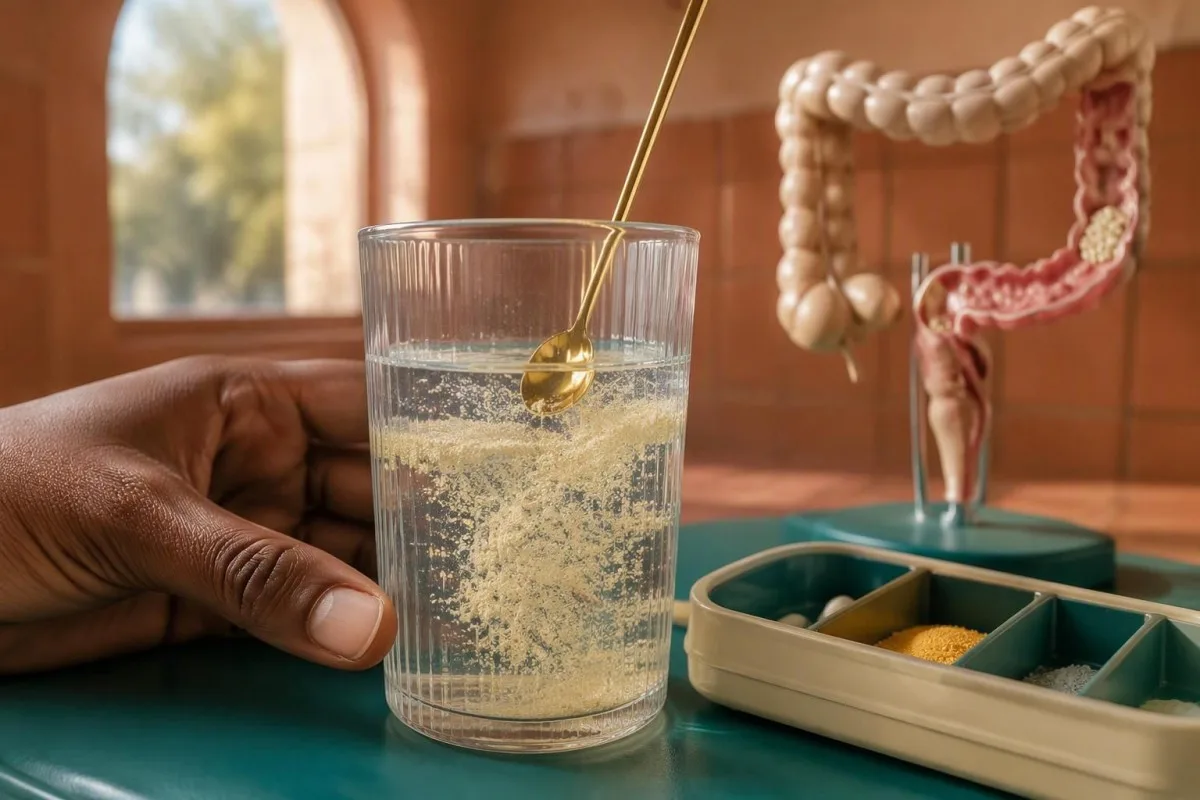
Colesevelam does not eliminate interaction risk. Certain interacting medicines and vitamin supplements should be taken at least four hours before it according to product labeling; a pharmacist should review the complete list, especially levothyroxine, warfarin, oral contraceptives, and medicines where modest absorption changes could matter, rather than applying one timing rule to everything.
Sequestrants can raise triglycerides, which is why a lipid review can be relevant even though treatment targets diarrhea rather than cholesterol. Colesevelam is contraindicated by US labeling when triglycerides exceed 500 mg/dL or there is a history of hypertriglyceridemia-induced pancreatitis; our ръководство за повторно изследване на триглицеридите explains how fasting and context affect interpretation.
A typical cholestyramine sachet contains 4 g of active resin, but products and prescribed amounts differ; dry powder should be mixed exactly as instructed rather than swallowed directly. Long-term treatment may justify selective assessment of fat-soluble vitamins, particularly with malabsorption, while persistent constipation, swallowing difficulty, or severe abdominal symptoms should prompt a medication review instead of further dose escalation.
Може ли диетата да помогне при ниско задържане на SeHCAT?
Reducing large fat loads can lessen bile acid diarrhea symptoms in some people, but diet does not replace investigation or supervised treatment. A hypothetical 14-day food-and-symptom record can show whether meal size or fat distribution affects urgency; no single fat target is appropriate for every person with low retention.
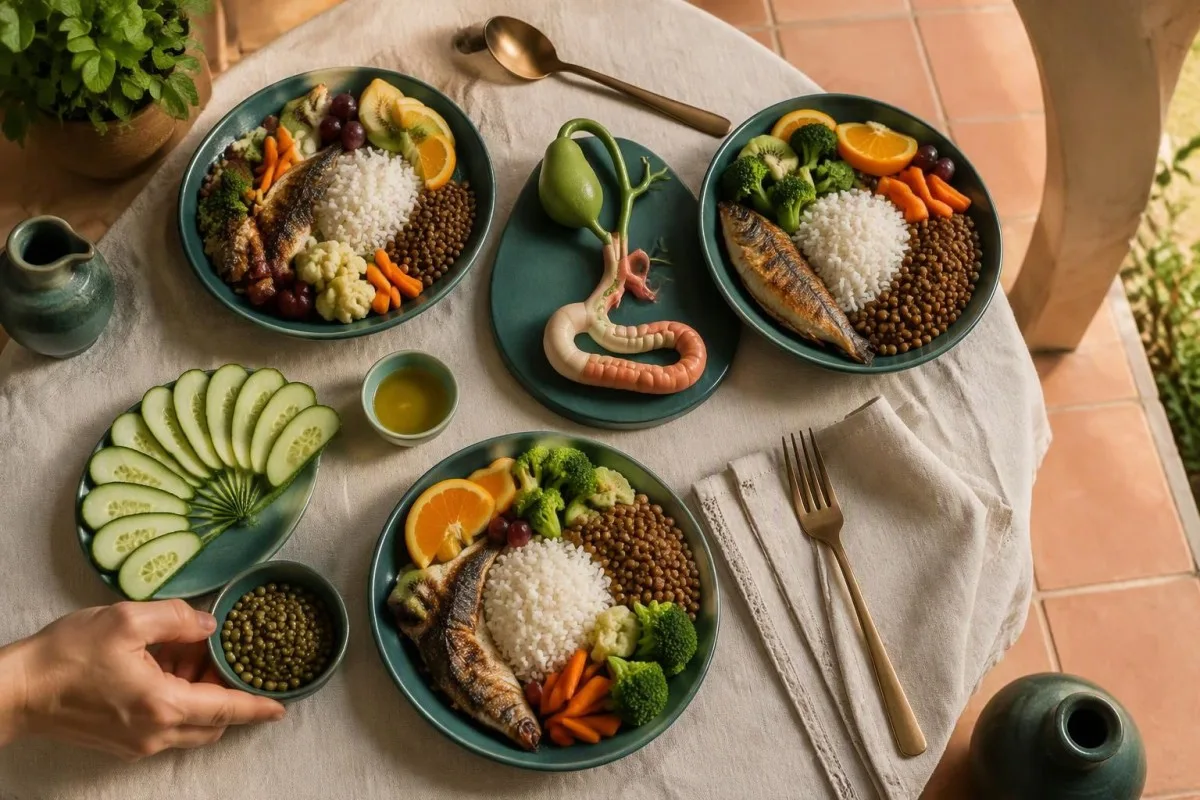
Dietary fat stimulates bile delivery, so a large high-fat meal can expose the colon to a greater bile acid load in susceptible people. Small clinical studies suggest that lower-fat approaches can improve symptoms, but evidence for a universal prescription is limited; spreading intake across three meals may be more practical than eliminating every source of fat.
A hypothetical adult with 11% retention might compare two weeks of usual meals with two weeks of smaller, less fatty meals while keeping prescribed treatment stable. That comparison can help identify a personal pattern, but it does not prove the diagnosis, and the high-fat preparation used for some 48-hour fecal tests should not be confused with dietary symptom management.
Extensive ileal disease, restricted intake, and prolonged sequestrant use can increase nutritional concerns, although a low result such as 4% does not automatically mean vitamin deficiency. A dietitian can protect energy and essential fat intake; when vitamin D is actually low, our vitamin D recheck guidance explains why repeat testing follows the deficiency and treatment plan, not the SeHCAT percentage.
Проследяване след лечението и признаци, налагащи спешна медицинска помощ
Follow-up should assess stool consistency, urgency, hydration, side effects, and whether another diagnosis remains untreated. A very low SeHCAT result alone is not an emergency; fainting, confusion, severe dehydration, bloody or black tarry stools, or severe abdominal pain require prompt assessment independently of the retention percentage.
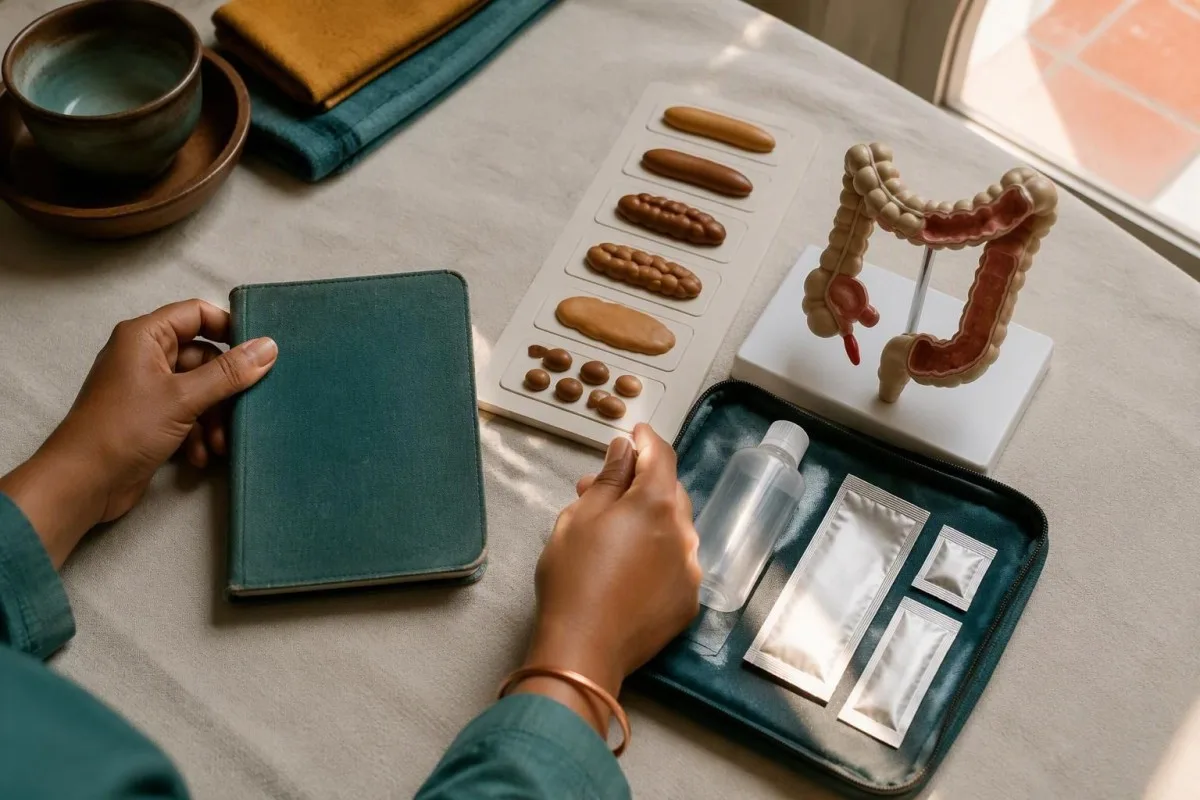
A hypothetical change from six watery stools daily to three formed stools is a useful treatment response, even if SeHCAT retention is never remeasured. Routine repeat scanning is usually unnecessary once the diagnosis and treatment direction are established; persistent urgency or nighttime diarrhea matters because a lower stool count can conceal ongoing impairment or a second gastrointestinal condition.
Continued watery losses can disturb sodium, potassium, magnesium, and kidney function, particularly in older adults or people taking diuretics. A hypothetical creatinine rise after three days of poor intake deserves assessment for dehydration rather than automatic labeling as chronic kidney disease; our ръководство за дехидратация и eGFR explains why reassessment after recovery may change interpretation.
Kantesti AI can help explain accompanying electrolyte or kidney results, but a previous 6% scan cannot make new warning symptoms safe to ignore. Use our stool color warning guide to understand why visible blood, black tarry stool, or bleeding with dizziness needs clinical attention; oral rehydration solution can help replace losses while appropriate care is arranged.
Научни публикации и ограничения при интерпретацията с ИИ
Clinical SeHCAT thresholds and treatment decisions should come from relevant gastroenterology evidence, not from AI performance reports. The 2018 BSG and 2020 Canadian guidelines underpin this article's diagnostic discussion; the two organizational publications listed below describe separate aspects of our blood-test interpretation work.
The two Zenodo references are organizational publications, not independent demonstrations that an AI system can diagnose bile acid diarrhea or interpret nuclear medicine scans accurately. Our информация за валидирането и клиничния надзор information should be read with that distinction in mind: a technical framework cannot replace the seven-day measurement, the reporting center's method, or a clinician's assessment of competing diagnoses.
Кантести е един Инструмент за анализ на кръвни изследвания с AI intended to support understanding of laboratory reports, not to replace specialist interpretation of a 5%, 10%, or 15% retention boundary. Our стандарти за медицинско съдържание describe the editorial approach behind explanations such as this one, including clear separation of established guidance, hypothetical examples, and areas where evidence remains uncertain.
For a useful appointment, bring five items: the complete SeHCAT report, a current medicine list, details of ileal or gallbladder surgery, a stool-and-urgency record, and any relevant laboratory results. Ask which retention cutoff the service uses, whether testing suggests an underlying condition, how medicines should be spaced, and what response would justify continuing or changing treatment; those questions are more actionable than interpreting the percentage in isolation.
Често задавани въпроси
Какъв е нормалният резултат от теста SeHCAT?
Седемдневната задръжка на SeHCAT от 15% или повече обикновено се счита за показател, че няма значителна загуба на жлъчни киселини според често използваните критерии. Някои центрове използват различни диагностични граници, затова тълкуването, посочено в доклада от изследването по нуклеарна медицина, има предимство. Нормалният резултат не изключва микроскопски колит, цьолиакия, панкреатична недостатъчност или други причини за персистираща диария. Продължаващите симптоми все така налагат подходящо клинично изследване.
Какво означава резултат от SeHCAT 3%?
Резултатът от задържането на SeHCAT на седмия ден от 3% попада в често използваната категория за тежка загуба на жлъчни киселини, която е под 5%. Той подкрепя диагнозата диария, причинена от жлъчни киселини, когато симптомите са съвместими, но не установява дали причината е заболяване на илеума, операция или променено производство на жлъчни киселини. Самото число не означава спешност и не предсказва непременно тежестта на симптомите. Лечението трябва да отчита лекарствата, хранителния статус и обхвата на евентуалната резекция на илеума.
Може ли лека малабсорбция на жлъчни киселини да причини тежка диария?
Да — задържане в често използвания диапазон за лека загуба от 10% до под 15% може да се съпровожда от значителна водниста диария, неотложна нужда от дефекация или инконтиненция. Диапазоните на SeHCAT описват задържането на трасера, а не валидирана скала за тежестта на симптомите. Хранителните модели, чревният транзит, лекарствата и съпътстващите заболявания влияят върху степента на засягане. Клиницистите трябва да оценяват ежедневното функциониране и отговора на лечението, вместо да омаловажават симптомите, защото в резултата пише „лека“.
Едно и също ли са серумният C4 и комплементът C4?
Не — серумният C4, използван при диария, причинена от жлъчни киселини, е 7α-хидрокси-4-холестен-3-он, докато комплементният C4 е протеин на имунната система. Маркерът за диария обикновено се отчита в ng/mL, като някои лаборатории използват специфични за метода прагови стойности, например 47.1 или приблизително 52.5 ng/mL. Комплементният C4 обикновено се отчита в g/L или mg/dL и не може да диагностицира загуба на жлъчни киселини в червата. Проверете пълното наименование на аналита, указанията за гладуване и референтния интервал на лабораторията.
Какъв тест може да замени SeHCAT, ако той не е наличен?
Серумният C4 на гладно и специализираното измерване на жлъчните киселини във фекалиите са основните обективни алтернативи, когато SeHCAT не е наличен. Някои протоколи за изследване на фекалии включват 48-часово събиране и специфични за лабораторията критерии, включително общо количество жлъчни киселини над 2,337 µmol/48 часа. Подготовката и интерпретацията зависят от лабораторията, която извършва изследването, и никоя алтернатива не съответства напълно на SeHCAT. Може да се обмисли пробен курс на лечение под наблюдение, когато подходящо изследване не е достъпно, но липсата на отговор не изключва надеждно диарията, причинена от жлъчни киселини.
0 Does cholestyramine not working mean I do not have bile acid diarrhea?
Липсата на подобрение при лечение с холестирамин не изключва надеждно диария, причинена от жлъчни киселини, дори след нисък резултат от SeHCAT, като например 7%. Лошата поносимост, неподходящата доза или схема на прием, взаимодействията, нередовният прием и друга съпътстваща причина за диарията могат да повлияят на отговора. При прием на холестирамин обикновено се налага другите перорални лекарства да се приемат най-малко един час преди или четири до шест часа след него, като се спазват указанията за конкретния продукт. Преди да се отхвърли диагнозата или да се промени лечението, лекар трябва да прецени тези възможности.
Могат ли нормалните чернодробни кръвни изследвания да изключат диария, причинена от жлъчни киселини?
0 Нормалните стойности на ALP, GGT и билирубина не изключват диария, причинена от жлъчни киселини, тъй като чернодробните изследвания и SeHCAT оценяват различни процеси. Възможно е чернодробните изследвания на даден човек да са нормални, а задържането на SeHCAT на седмия ден да е само 4%. Общите серумни жлъчни киселини, обикновено отчитани в µmol/L, също не са взаимозаменяеми със специализираното изследване на серумен C4 в ng/mL. Сърбежът, жълтеницата, тъмната урина или светлите изпражнения може да налагат отделна оценка за холестаза, а не интерпретация, фокусирана върху диарията.
Получете обяснение на резултатите от кръвните си изследвания
Качете лабораторния си доклад и AI на Kantesti ще обясни всеки биомаркер на разбираем език за секунди. Използва се от над 2 милиона души по света.
Референции
- Klein, T., Mitchell, S., & Weber, H. (2026). Клинична рамка за валидация v2.0 (страница за медицинска валидация). Медицински изследвания с Kantesti AI. ДОИ
- Klein, T., Mitchell, S., & Weber, H. (2026). AI анализатор на кръвни изследвания: 2,5M изследвания анализирани | Global Health Report 2026. Медицински изследвания с Kantesti AI. ДОИ
- Arasaradnam RP et al. (2018). Guidelines for the investigation of chronic diarrhoea in adults: British Society of Gastroenterology, 3rd edition. Gut. ДОИ PubMed
- Sadowski DC et al. (2020). Canadian Association of Gastroenterology Clinical Practice Guideline on the Management of Bile Acid Diarrhea. Clinical Gastroenterology and Hepatology.
- Wedlake L et al. (2009). Systematic review: the prevalence of idiopathic bile acid malabsorption as diagnosed by SeHCAT scanning in patients with diarrhoea-predominant irritable bowel syndrome. Alimentary Pharmacology & Therapeutics.
- 2 милиона+Анализирани тестове
- 127+Държави
- 100+Езици
За медицинския екип


Сигнали за доверие E-E-A-T
Опит
Медицински преглед, воден от лекар, на работните процеси за интерпретация на лабораторни резултати.
Експертиза
Фокус в лабораторната медицина върху това как се държат биомаркерите в клиничен контекст.
Авторитетност
Медицинска рецензия от д-р Thomas Klein, с принос от д-р Sarah Mitchell и проф. д-р Hans Weber.
Надеждност
Интерпретация, основана на доказателства, с ясни последващи стъпки за намаляване на тревогата.

Медицински отказ от отговорност
Тази статия е само с образователна цел и не представлява медицински съвет. Винаги се консултирайте с квалифициран медицински специалист за решения относно диагностика и лечение.
Публикувано · Свържете се с редакционния екип
Издава се от Kantesti Ltd, регистрирана в Англия и Уелс, дружество №. 17090423, Лондон, Обединено кралство.
