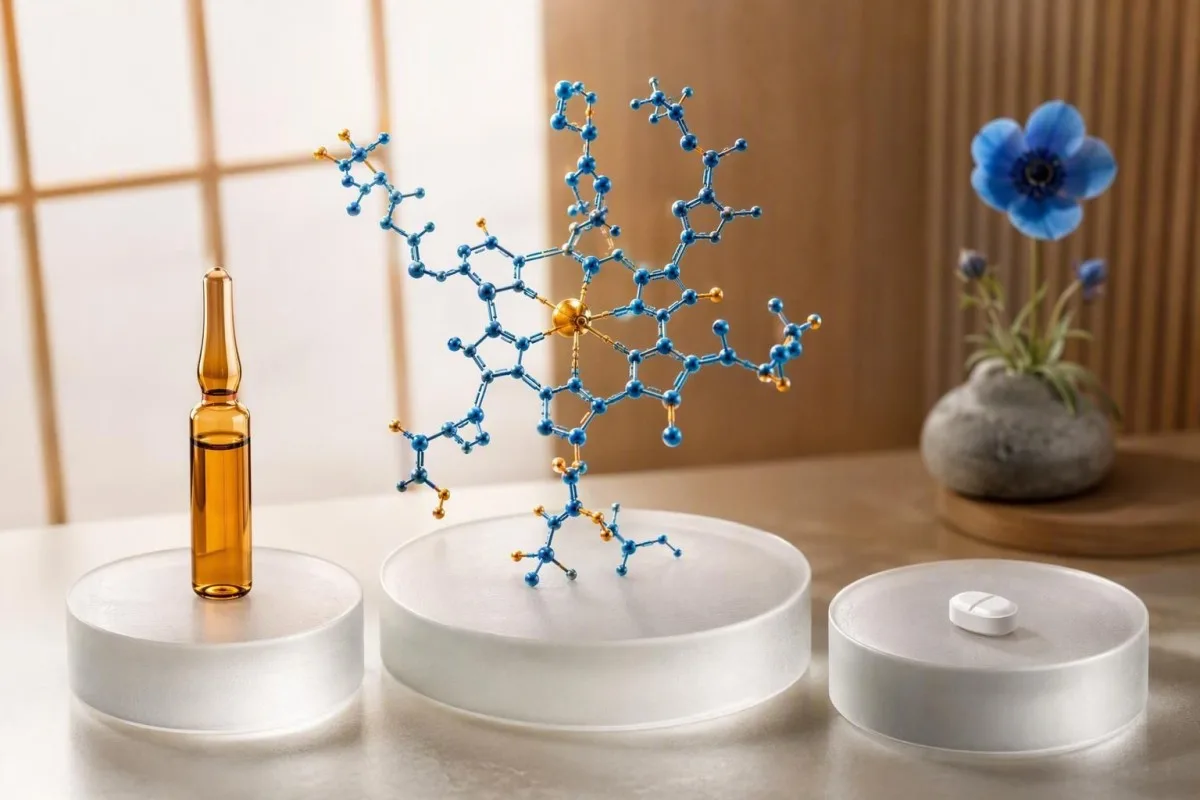
ينتج الحقن ذروة فورية في المصل، ولكن فيتامين ب12 الفموي بجرعة عالية غالباً ما يعالج النقص بنفس الفعالية على مدى أسابيع. العامل الحاسم هو عادة سبب وشدة النقص - وليس التفضيل وحده.


- أسرع ارتفاع في المصل: حقنة فيتامين ب12 داخل العضل بجرعة 1000 ميكروغرام ترفع فيتامين ب12 المتداول في غضون ساعات، بينما ترتفع الأقراص بشكل تدريجي على مدى أيام.
- تعويض مماثل: يمكن أن يحقق سيانوكوبالامين الفموي بجرعة 1000-2000 ميكروغرام يوميًا نتائج مماثلة على المدى القصير في الدم والأعراض للعلاج العضلي للعديد من البالغين.
- مؤشر الحقن: الأعراض العصبية الشديدة، فقر الدم العميق، عدم القدرة على تناول الأقراص، أو الامتصاص غير الموثوق به عادة ما يبرر الحقن تحت إشراف طبي.
- نتيجة حدودية: يعتبر مستوى فيتامين ب12 في المصل أقل من 180 بيكوجرام/مل (133 بيكومول/لتر) نقصًا بشكل شائع؛ غالبًا ما يحتاج 180-350 بيكوجرام/مل إلى تأكيد بواسطة MMA أو الهوموسيستين.
- الامتصاص السلبي: حوالي 1% من جرعة فيتامين ب12 الفموي الكبيرة يتم امتصاصها عن طريق الانتشار السلبي، وهذا هو السبب في أن قرصًا بجرعة 1000 ميكروغرام يمكن أن يعمل على الرغم من ضعف العامل الداخلي.
- توقيت إعادة الفحص: عادةً ما يكون تعداد الدم الكامل (CBC) والاستجابة السريرية أكثر فائدة بعد 4-8 أسابيع من قياس مستوى فيتامين ب12 الذي يتم سحبه فورًا بعد العلاج.
- نقطة السلامة: لا تعالج التنميل غير المبرر بحمض الفوليك وحده؛ يمكن للفولات تحسين فقر الدم بينما يتفاقم تلف الأعصاب المرتبط بفيتامين ب12.
- السبب مهم: الميتفورمين، ومثبطات مضخة البروتون، والأنظمة الغذائية النباتية، ومرض السيلياك، وجراحة المعدة، وفقر الدم الخبيث تتطلب خطط متابعة مختلفة.
أي خيار يرفع مستويات فيتامين ب12 بشكل أسرع؟
حقن فيتامين ب12 ترفع المستوى المقاس في المصل بشكل أسرع من الأقراص، غالبًا في غضون ساعات، لأنها تتجاوز الأمعاء. بالنسبة لمعظم البالغين المستقرين الذين يعانون من نقص مؤكد، ومع ذلك، فإن جرعة فموية يومية تتراوح بين 1000-2000 ميكروجرام يمكن أن تعوض مخزون الجسم وتحسن تعداد الدم على مدى أسابيع بمعدل مشابه سريريًا.
يخلق الحقن ذروة مبكرة حادة لأن هيدروكسوكوبالامين أو سيانوكوبالامين يتم توصيلهما مباشرة إلى العضل ثم الدورة الدموية. تلك الذروة المخبرية ليست نفس الشيء مثل مخزون الأنسجة المستعادة أو وظيفة الأعصاب المصلحة؛ في ممارستي، يتم قياس استعادة الأعراض بالأسابيع إلى الأشهر، وليس في الصباح التالي.
المقارنة العملية غالبًا ما تكون ساعات مقابل أيام لتركيز المصل, ، ولكن تقريبًا 4-8 أسابيع للاستجابة الدموية ذات المغزى مع أي من المسارين الكافيين. عادة ما ترتفع الخلايا الشبكية في اليوم 3-5، ويبدأ الهيموغلوبين في التحسن بعد حوالي 1-2 أسابيع، وقد يستغرق تضخم الكريات الحمر ما يصل إلى 8 أسابيع حتى يستقر.
كانتيستي هو محلل اختبار الدم بالذكاء الاصطناعي الذي يضع B12 بجانب MCV، والهيموغلوبين، والفولات، والكرياتينين، والنتائج السابقة بدلاً من معالجة ارتفاع B12 بعد العلاج كدليل على أن المشكلة الأساسية تم حلها. يمكن للقراء أيضًا مقارنة نتائجهم مع دليل نطاق مرجع B12.
ما يعنيه “أسرع” في الواقع
نتيجة عالية بعد الحقن تؤكد التعرض الأخير، وليس بالضرورة وصول الخلية الكافي. يعتبر حمض الميثيل مالونيك، والفحص العصبي، واتجاه CBC أكثر إفادة عندما يكون التشخيص الأصلي غير مؤكد.
كيف يعمل امتصاص فيتامين ب12 الفموي عندما يكون العامل الداخلي منخفضًا
يمكن لجرعة عالية من فيتامين ب12 الفموي أن تعمل حتى عندما يكون امتصاص العامل الداخلي معطلاً لأن جزءًا صغيرًا يدخل عن طريق الانتشار السلبي. ما يقرب من 1% من جرعة 1000 ميكروغرام يمكن امتصاصه بشكل سلبي، مما ينتج عنه حوالي 10 ميكروغرام - وهو أعلى بكثير من متوسط الاحتياج اليومي البالغ 2.4 ميكروغرام للبالغين.
يجب أن يتم إطلاق فيتامين ب12 المرتبط بالطعام بشكل طبيعي بواسطة حمض المعدة، وأن يرتبط بالعامل الداخلي، وأن يتم امتصاصه في اللفائفي الطرفي. يشرح هذا النظام متعدد الخطوات سبب تسبب قمع الحمض طويل الأمد، والتهاب المعدة المناعي الذاتي، وأمراض اللفائفي، والإجراءات الجراحية لعلاج السمنة في حدوث النقص؛ كما أنه يفسر سبب أن الفيتامينات المتعددة القياسية غالبًا ما تكون جرعة صغيرة جدًا للعلاج.
امتصاص فيتامين ب12 الفموي يعتمد على الجرعة ولكن ليس خطيًا. يصل مسار العامل الداخلي إلى التشبع عند حوالي 1.5-2 ميكروغرام لكل وجبة، في حين أن الانتشار السلبي يصبح مفيدًا سريريًا فقط مع الأقراص في نطاق الملليغرام. يعتبر المكمل بـ 50 ميكروغرامًا وقائيًا معقولًا لبعض الأشخاص، ولكنه لا يعادل 1000 ميكروغرام للنقص الراسخ.
بالنسبة للمرضى الذين يستخدمون أوميبرازول، بانتوبرازول أو أي مثبط آخر لمضخة البروتون، أتحقق من النمط الأوسع - النظام الغذائي، العمر، فقر الدم، ومدة الاستخدام - بدلاً من افتراض أن الدواء هو القصة بأكملها. مراجعتنا لـ مراقبة المختبر لمثبطات مضخة البروتون طويلة الأمد تشرح لماذا قد يكون للمغنيسيوم والحديد أهمية أيضًا.
ماذا تظهر التجارب السريرية حول الأقراص مقابل الحقن
تشير الأدلة العشوائية إلى أن فيتامين ب12 عن طريق الفم بجرعات 1000-2000 ميكروجرام يوميًا يمكن أن يكون فعالًا مثل فيتامين ب12 العضلي للعديد من الأشخاص الذين يعانون من نقصه. قاعدة الأدلة ليست ضخمة، وتحتوي على عدد أقل من المرضى الذين يعانون من أمراض عصبية حادة مما يرغب الأطباء.
وجدت المراجعة المنهجية من قبل وانغ وزملاؤه أن فيتامين ب12 الفموي عالي الجرعة أنتج استجابات مماثلة لمستويات فيتامين ب12 في الدم مثل العلاج العضلي في التجارب العشوائية الصغيرة المتاحة (Wang et al., 2018). استخدمت دراسة واحدة 2000 ميكروجرام عن طريق الفم كل يوم؛ واستخدمت دراسة أخرى 1000 ميكروجرام عن طريق الفم بعد جدول أولي، لذلك “العلاج الفموي” لا يعني منتجًا مخفض السعر من السوبر ماركت.
أبلغت تجربة سابقة أجراها Kuzminski وزملاؤه عن تركيزات أعلى لفيتامين ب12 في المصل مع 2000 ميكروجرام من السيانوكوبالامين عن طريق الفم مقارنة بنظام حقن 1000 ميكروجرام، ومع ذلك كانت النتائج السريرية هي السؤال المهم (Kuzminski et al., 1998). الأدلة مختلطة بصراحة بشأن البروتوكول المثالي لأن التجارب استخدمت فترات حقن مختلفة وفترات متابعة مختلفة.
القرص لا يعمل إلا إذا تم تناوله. الجرعات اليومية الفائتة يمكن أن تجعل الحقنة التي تُعطى كل 2-3 أشهر أكثر موثوقية في الحياة الواقعية، خاصة بالنسبة لكبار السن الضعفاء أو الأشخاص الذين لديهم جداول دوائية معقدة. يوضح دليل توقيت اختبارات الدم يمكن أن تساعد في التمييز بين تغيير حقيقي في العلاج وإعادة اختبار في وقت غير مناسب.
متى تكون حقن فيتامين ب12 ضرورية طبياً
حقن فيتامين ب12 ضرورية طبيًا عادةً عندما يكون النقص شديدًا، أو توجد أعراض عصبية، أو يكون المدخول الفموي مستحيلاً، أو لا يمكن الاعتماد على الامتصاص والالتزام. إنها ليست إلزامية تلقائيًا لمجرد الاشتباه في فقر الدم الخبيث، بشرط أن يكون العلاج الفموي عالي الجرعة والمتابعة ممكنين.
التقييم العاجل من قبل الطبيب مناسب لعدم توازن المشي الجديد، أو التنميل التدريجي، أو الضعف، أو الارتباك، أو تغيرات الرؤية، أو فقر الدم الملحوظ، أو الحمل مع نقص كبير. يمكن أن يصبح تلف فيتامين ب12 العصبي غير قابل للانعكاس جزئيًا؛ في هذه الحالة، لن أؤخر العلاج بالحقن أثناء التفاوض على الراحة.
توصي إرشادات NICE NG239 بالعلاج العضلي عند الاشتباه في سوء الامتصاص أو تأكيده، وتوصي بالاستبدال العضلي مدى الحياة لالتهاب المعدة المناعي الذاتي في العديد من الحالات (NICE, 2024). تختلف الممارسات دوليًا: يستخدم بعض الأطباء 1-2 ملغ فمويًا يوميًا للمرضى الموثوق بهم الذين يعانون من فقر الدم الخبيث، بينما يفضل البعض الآخر الحقن لأن عواقب الانقطاع أعلى.
الهيموجلوبين أقل من 80 جم/لتر، وضيق التنفس المصحوب بأعراض، وسرعة ضربات القلب، أو احتمال إصابة الحبل الشوكي يستدعي مراجعة طبية فورية بدلاً من العلاج الذاتي. لفهم كيفية ظهور أنماط فقر الدم في الاختبارات الروتينية، انظر ما يشمله تعداد الدم الكامل.
جرعات علاج نقص فيتامين ب12 التي يستخدمها الأطباء فعليًا
تتراوح جرعات العلاج الفموي الشائعة بين 1000-2000 ميكروجرام يوميًا، بينما تستخدم أنظمة الحقن العضلي الشائعة 1000 ميكروجرام لكل جرعة مع مرحلة تحميل أولية. يحدد المنتج والإرشادات الوطنية وسبب النقص الجدول الزمني الدقيق.
في الممارسة في المملكة المتحدة، غالبًا ما يُعطى الهيدروكسوكوبالامين 1000 ميكروجرام عن طريق العضل ثلاث مرات في الأسبوع لمدة أسبوعين عند عدم وجود إصابة عصبية، ثم كل 2-3 أشهر للصيانة؛ تختلف البروتوكولات حسب الخدمة المحلية. مع وجود ميزات عصبية، غالبًا ما تُعطى الجرعات الأولية كل يومين حتى لا يحدث المزيد من التحسن، ثم تتبع الصيانة نصيحة الأخصائي.
الخطة الفموية النموذجية هي السيانوكوبالامين 1000 ميكروجرام يوميًا لمدة 8-12 أسبوعًا، يليها 1000 ميكروجرام يوميًا أو جدول صيانة أقل إذا كان النظام الغذائي هو السبب الوحيد. لم يثبت أن المنتجات تحت اللسان تتفوق على الأقراص المبتلعة؛ بمجرد أن تذوب، يتم ابتلاع معظمها على أي حال.
لا تبتكر نظام تحميل من نصائح وسائل التواصل الاجتماعي. مقارنة فيتامين ب12 الميثيلي مقابل السيانوكوبالامين تشرح لماذا الجرعة والاتساق أكثر أهمية بشكل عام من ادعاءات التسويق حول شكل فيتامين ب12.
كيفية تفسير نتيجة فيتامين ب12 منخفضة أو حدودية
عادةً ما يدعم فيتامين ب12 في المصل أقل من 180 بيكو جرام/مل (133 بيكو مول/لتر) النقص، بينما القيم من حوالي 180-350 بيكو جرام/مل هي منطقة غير محددة يمكن أن توضح فيها MMA أو الهوموسيستين النقص الخلوي. تختلف فترات المختبر الفردية، والقيمة الطبيعية في المصل لا تستبعد النقص بشكل كامل بعد المكملات الأخيرة.
يرتفع حمض الميثيل مالونيك عندما يتعطل التمثيل الغذائي المعتمد على فيتامين ب 12، ولكن انخفاض وظائف الكلى يمكن أن يرفع MMA بشكل مستقل. قد يرتفع الهوموسيستين مع نقص فيتامين ب 12، ونقص حمض الفوليك، ونقص فيتامين ب 6، وقصور الغدة الدرقية، واختلال وظائف الكلى، لذلك لا ينبغي قراءة أي من الاختبارين التأكيديين بشكل منعزل.
كثرة الكريات الحمر داعمة ولكنها ليست مطلوبة. حجم الكرية المتوسط فوق 100 fL يثير الشكوك حول نقص فيتامين ب 12 أو حمض الفوليك، أو التعرض للكحول، أو أمراض الكبد، أو قصور الغدة الدرقية، أو اضطرابات نخاع العظم، أو آثار الأدوية؛ حوالي ربع المرضى الذين يعانون من نقص فيتامين ب 12 وأعراض قد يكون لديهم MCV طبيعي.
يفسر Kantesti AI نتائج فيتامين ب 12 عن طريق التحقق من النمط MCV، RDW، الهيموجلوبين، حمض الفوليك، والقيم التاريخية، بما في ذلك مؤشرات على أن مكمل حمض الفوليك قد يخفي كثرة الكريات الحمر. مقالنا حول متابعة ارتفاع MCV يغطي البدائل الشائعة.
فقر الدم الخبيث يغير الخطة طويلة الأجل، وليس دائمًا المسار
فقر الدم الخبيث هو فقدان المناعة الذاتية لوظيفة العامل الداخلي، ويتطلب استبدال فيتامين ب 12 مدى الحياة بعد التشخيص. الحقن توفر توصيلًا موثوقًا، ولكن العلاج الفموي بجرعات عالية قد لا يزال يحافظ على حالة مناسبة لدى البالغين المختارين الذين تتم مراقبتهم عن كثب.
الاختبارات الأكثر استخدامًا هي الأجسام المضادة للعامل الداخلي والأجسام المضادة لخلايا الجدار، جنبًا إلى جنب مع فيتامين ب 12، CBC، وأحيانًا الغاسترين. الأجسام المضادة الإيجابية للعامل الداخلي محددة جدًا ولكنها ليست حساسة جدًا، لذلك لا يستبعد النتيجة السلبية الحالة؛ هذا أحد تلك المجالات التي يكون فيها السياق أكثر أهمية من جسم مضاد واحد.
فقر الدم الخبيث هو أكثر من مجرد مشكلة امتصاص. يمكن أن يتعايش التهاب المعدة المناعي الذاتي مع نقص الحديد قبل أن يصبح نقص فيتامين ب 12 واضحًا، ويحمل المرض طويل الأمد اعتبارات المراقبة المعدية التي يجب مناقشتها مع الطبيب المعالج. دليلنا لـ اختبارات فقر الدم الخبيث يفصل تسلسل التشخيص.
كانتيستي هو منصة تفسير تحليل الدم ديال AI المستخدمة في 127+ دولة، ولكن تفسير الذكاء الاصطناعي لا يمكنه تشخيص التهاب المعدة المناعي الذاتي أو اختيار فترة حقن مدى الحياة. يحتاج الطبيب إلى ربط الأعراض والأجسام المضادة والتاريخ التنظيري ونمط المختبر.
لماذا تحتاج الأعراض العصبية إلى تدخل طبي أسرع
يجب أن تؤدي الوخز، وفقدان الإحساس بالاهتزاز، والمشي غير المتزن، والتغير المعرفي، أو الضعف مع انخفاض فيتامين ب 12 إلى تقييم فوري شخصي وعلاج حقني عادةً. تعافي الأعصاب أقل قابلية للتنبؤ من تعافي فقر الدم وقد يظل غير مكتمل بعد أشهر من النقص.
الأعمدة الظهرية والأعصاب الطرفية عرضة لنقص فيتامين ب 12، مما ينتج عنه نمط يسميه الأطباء التنكس المخي المخي الحاد في الحالات المتقدمة. لا يقي الهيموجلوبين الطبيعي من ذلك؛ لقد رأيت مرضى سبق أن سبقتهم أقدامهم الخدرة وحس الاهتزاز غير الطبيعي أي فقر دم واضح.
غالبًا ما يبدأ التحسن في غضون أسبوع واحد من العلاج الفعال، ولكن الأعراض الحسية يمكن أن تستغرق 3-12 شهرًا وقد لا تتحسن تمامًا. النهج الأكثر أمانًا هو تسجيل الوظيفة الأساسية - مسافة المشي، والسقوط، وبراعة اليد، وحس الاهتزاز - لأن ارتفاع فيتامين ب 12 في المصل وحده ليس مقياسًا للتعافي.
الاعتلال العصبي له أيضًا العديد من المحاكيات، بما في ذلك مرض السكري، وإصابات الأعصاب المرتبطة بالكحول، وأمراض الغدة الدرقية، وزيادة فيتامين ب 6، وبعض الأدوية. يمكن للمرضى الذين يعانون من الوخز استخدام دليلنا لـ أعراض الأعصاب لفيتامين ب 6 لطرح أسئلة أفضل، ولكن الضعف التدريجي يحتاج إلى رعاية طبية الآن.
متى تكون الأقراص كافية عادة لنقص فيتامين ب12 الغذائي
عادة ما تكون الأقراص كافية عندما يكون انخفاض فيتامين ب 12 ناتجًا عن تناول غير كافٍ ويمكن للأمعاء امتصاص المكملات. يستجيب النباتيون، والأشخاص الذين يتناولون القليل جدًا من الأطعمة الحيوانية، والبالغون الذين يتبعون قيودًا غذائية مؤقتة بشكل جيد عادةً باستخدام سيانوكوبالامين الفموي 1000 ميكروغرام يوميًا.
يتركز فيتامين ب 12 بشكل طبيعي في الأطعمة المشتقة من الحيوانات والأطعمة المدعمة، لذلك يحتاج النظام الغذائي النباتي الصارم إلى استراتيجية موثوقة للأطعمة المدعمة أو المكملات. الأطعمة النباتية المسوقة كمصادر طبيعية لفيتامين ب 12 غير متناسقة؛ يمكن أن تحتوي الأعشاب البحرية والأطعمة المخمرة على نظائر غير نشطة لا تعتبر علاجًا موثوقًا.
خاص يكون نقص التغذية سبب لسؤال قصير. شاب عندو 23 سنة نباتي عندو B12 ديال 142 pg/mL، و MMA طبيعي بعد العلاج وما عندوش مشاكل في الأمعاء ماشي بحال شي واحد عندو 68 سنة مع نفس النتيجة، وفقدان الوزن ونقص الحديد. العمر، الأدوية والأعراض الهضمية كيغيرو التحاليل.
لتخطيط الأكل، دليل الفيتامينات اللي كتدوب في الماء كيفرق بين جرعات الوقاية وعلاج النقص. ما تفترضش بلي التغذية بوحدها كافية باش تعالج الأعراض العصبية بسرعة.
الأدوية وحالات الأمعاء التي تغير اختيار علاج فيتامين ب12
الميتفورمين، الأدوية اللي كتنقص حموضة المعدة، الداء الزلاقي، داء كرون اللي كيأثر على اللفائفي، قصور البنكرياس والجراحة المعدية ممكن كلهم ينقصو من امتصاص B12. تجربة قرص ممكن تكون مفيدة في بعض الحالات، ولكن الحقن غالبا ما كنختاروها ملي الامتصاص مشكوك فيه أو الأعراض قوية.
نقص B12 المرتبط بالميتفورمين شائع بما فيه الكفاية لدرجة أن الهيئات التنظيمية كتنصح بفحص المستويات عند المرضى اللي عندهم اعتلال عصبي، فقر دم أو عوامل خطر أخرى، خاصة مع الجرعات العالية أو المدة الطويلة. الآلية غالبا كتشمل امتصاص معقد B12-عامل داخلي بالاعتماد على الكالسيوم في اللفائفي، ماشي غير سوء التغذية.
بعد تكميم المعدة أو تحويل مسار المعدة، قرارات العلاج خاصها تتبع بروتوكول فريق جراحة السمنة لأن الحديد، الفولات، الثيامين، فيتامين D والنحاس ممكن يتأثرو كلهم. الإسهال، نقص الألبومين، فقدان الوزن غير المبرر أو البراز الدهني خاصو يخليك تقلب ماشي تبدل المكملات بلا نهاية.
نقص النحاس حتى هو ممكن يسبب فقر دم وأعراض عصبية اللي كتبان بحال نقص B12، خاصة بعد جراحة السمنة أو زيادة الزنك. أدلة سريرية لنقص النحاس كتشرح علاش فحص B12 بوحدو ممكن يخليك تفوت السبب الحقيقي.
بعد كم من الوقت يجب إعادة الفحص بعد علاج فيتامين ب12
CBC ومراجعة الأعراض بعد حوالي 4-8 أسابيع غالبا كتكون مفيدة أكتر من تكرار B12 في الدم مباشرة بعد حقنة أو دورة أقراص. نتيجة B12 مرتفعة جدا بعد العلاج مباشرة كتعكس بشكل أساسي الجرعة اللي خدتيها.
استجابة الشبكية في حوالي اليوم 3-5 كتعطي مؤشر مبكر على أن إنتاج نخاع العظم كيتعافى، بينما الهيموغلوبين خاصو يزيد خلال الأسابيع التالية إذا كان نقص B12 هو السبب الرئيسي. عدم التحسن خاصو يخليك تعاود تفكر: نقص الحديد، نزيف مستمر، نقص الفولات، التهاب، مرض كلوي أو تشخيص خاطئ.
لنقص غذائي بسيط، غالبا ما كنعاود نcheck CBC و B12 في 8-12 أسابيع، ثم كنأكد خطة صيانة مستدامة. بالنسبة للأمراض العصبية، التهاب المعدة المناعي الذاتي، الحمل، قصور كلوي أو نقص متعدد، المتابعة خاصها تكون فردية وغالبا ما كتبدأ بكري.
Kantesti’s أداة تحليل ديال تحاليل الدم مدعومة بالذكاء الاصطناعي ممكن نقارن نتائج B12, MCV, RDW و الهيموغلوبين المتسلسلة بدلا من عرض كل سحب كحدث منفصل. للمقارنة المختبرية جنبًا إلى جنب كيبين شنو تسجل بين الاختبارات.
لماذا لا تكون نتيجة فيتامين ب12 المرتفعة بعد العلاج مطمئنة دائمًا
مستوى B12 مرتفع بعد حقنة أو قرص بجرعة عالية غالبا كيعكس المكملات وماكيثبتش أن الأعراض عندها سبب آخر. على العكس، ارتفاع B12 المستمر غير المبرر بدون مكملات كيستاهل مراجعة سريرية، خاصة عندما تتواجد تشوهات في الكبد، الكلى أو تعداد الدم.
B12 في الدم ممكن يتجاوز الحد الأعلى للمختبر حوالي 900-1,000 pg/mL بعد العلاج، حسب الفحص والتوقيت. هذا متوقع وعادة ما يكون غير سام؛ B12 ما عندوش مستوى أقصى مقبول ثابت عند البالغين الأصحاء لأن الزائد كيخرج، رغم أن حب الشباب كيظهر عند قلة صغيرة.
السؤال اللي كنسول بسيط: واش العينة خديتها بعد مكمل، حقنة، فيتامين متعدد، مشروب طاقة أو منتج مدعم؟ إذا لا، ارتفاع B12 ممكن يصاحب أمراض الكبد، انخفاض تصفية الكلى، التهاب أو حالات دم معينة، وكيحتاج سياق ماشي خوف.
ملكنا دليل فيتامين B12 مرتفع تشرح التمييز بين الارتفاع المتوقع المرتبط بالمكملات والتشخيص المختبري غير المبرر.
الأخطاء الشائعة في علاج فيتامين ب12 التي تؤخر الشفاء
الخطأ الأكثر خطورة هو تناول حمض الفوليك بمفرده عندما لم يتم استبعاد نقص فيتامين ب 12. يمكن لحمض الفوليك تطبيع فقر الدم مع السماح بتطور إصابات الأعصاب المرتبطة بفيتامين ب 12، خاصة عندما تتجاوز الجرعات النطاق الغذائي المعتاد.
لا تستخدم الأعراض وحدها لاتخاذ قرار بين الحقن والأقراص. التعب، ضبابية الدماغ، والمزاج المنخفض حقيقية ولكنها غير محددة؛ فقدان النوم، أمراض الغدة الدرقية، نقص الحديد، الاكتئاب، السكري، وتأثيرات الأدوية يمكن أن تسبب شكاوى مماثلة. نتيجة فيتامين ب 12 قريبة من 250 بيكوغرام/مل تتطلب تأكيدًا أكثر من الحقن التلقائي.
خطأ آخر هو تأخير الفحص حتى بعد البدء في تناول المكملات عندما يكون ذلك ممكنًا. حتى 50-500 ميكروغرام يوميًا يمكن أن تغير مستوى فيتامين ب 12 في المصل بما يكفي لتعقيد التشخيص، على الرغم من أنه يجب دائمًا علاج الأعراض العصبية العاجلة أولاً. مشكلة ارتفاع الفولات وخفاء فيتامين ب 12 ذات صلة خاصة بالأشخاص الذين يتناولون مكملات ما قبل الولادة أو مكملات الطاقة.
اعتبارًا من 27 أغسطس 2026، نصيحتي بصفتي الدكتور توماس كلاين هي اختيار المسار الأقل عبئًا والموثوق طبياً، ثم التحقق من التعافي بالأعراض والاتجاهات. العلاج بالحقن هو طب ممتاز عندما يكون مؤشرًا؛ فهو ليس بطبيعته طبًا أقوى لكل نتيجة منخفضة.
إطار عمل عملي لاتخاذ القرار بشأن حقن أو أقراص فيتامين ب12
اختر الحقن عندما يكون الخطر مرتفعًا أو الموثوقية عن طريق الفم منخفضة؛ اختر الأقراص عالية الجرعة عندما يكون النقص خفيفًا إلى معتدلًا، والمدخول هو المشكلة الرئيسية، والمتابعة يمكن الاعتماد عليها. أفضل مسار هو المسار الذي يصحح النقص دون تأجيل التحقيق في سببه.
الأقراص تناسب بشكل أفضل عندما يكون فيتامين ب 12 منخفضًا بسبب النظام الغذائي، ولا توجد علامات عصبية، والبلع آمن، ويمكن للشخص تناول 1000-2000 ميكروغرام يوميًا باستمرار. الحقن تناسب بشكل أفضل مع النتائج العصبية، فقر الدم المصحوب بأعراض شديدة، القيء، سوء الامتصاص الكبير، التشريح بعد الجراحة، أو عدم اليقين بشأن الالتزام.
أحضر أربعة أشياء معك إلى الموعد: نتيجة فيتامين ب 12 الأصلية مع الوحدات، CBC، كل مكمل غذائي ودواء وجرعته، وجدول زمني للأعراض. قاعدة الدكتور توماس كلاين السريرية هي أنه يجب تسمية السبب قبل أن تصبح الصيانة غير محددة أجل متى كان ذلك آمنًا.
Kantesti AI هو خدمة تفسير تحاليل مختبر الذكاء الاصطناعي مصممة لتنظيم السياق المخبري للمرضى والأطباء، بينما يظل التشخيص النهائي ووصف الأدوية قرارات سريرية. المجلس الاستشاري الطبي و نهج التحقق السريري تصف الإشراف الطبي وراء هذا الحد.
الأسئلة الشائعة
هل حقن فيتامين ب12 تعمل بشكل أسرع من الأقراص؟
حقن فيتامين ب 12 ترفع مستوى فيتامين ب 12 في المصل بشكل أسرع من الأقراص لأن جرعة 1000 ميكروجرام عن طريق العضل تتجاوز الامتصاص المعوي ويمكن أن تزيد المستويات المتداولة في غضون ساعات. لا يزال فيتامين ب 12 الفموي عالي الجرعة، عادة 1000-2000 ميكروجرام يوميًا، يمكنه تصحيح النقص بشكل فعال على مدى عدة أسابيع لدى العديد من البالغين. النقاط النهائية ذات المعنى هي تحسين الأعراض، وزيادة الخلايا الشبكية في غضون 3-5 أيام، واستعادة CBC في غضون 4-8 أسابيع تقريبًا، وليس فقط الذروة الفورية في المصل. تُفضل الحقن عند وجود أعراض عصبية أو فقر دم حاد أو امتصاص غير موثوق به.
هل يمكن لفيتامين ب12 الفموي أن يعمل إذا كنت أعاني من فقر الدم الخبيث؟
يمكن أن تعمل جرعة فموية عالية من فيتامين ب12 لدى بعض الأشخاص المصابين بفقر الدم الخبيث لأن ما يقرب من 1% من الجرعة الكبيرة يتم امتصاصه عن طريق الانتشار السلبي بدون العامل الداخلي. لذلك، قد توفر جرعة فموية يومية تتراوح بين 1000 و 2000 ميكروغرام ما بين 10 و 20 ميكروغرامًا من فيتامين ب12 الممتص، مما يتجاوز الاحتياج اليومي للبالغين البالغ 2.4 ميكروغرام. تدعم إرشادات NICE بشكل شائع الاستبدال مدى الحياة بالحقن العضلي لالتهاب المعدة المناعي الذاتي، خاصة حيث يكون الاعتماد على الالتزام غير مؤكد. يجب الاتفاق على المسار مع الطبيب المعالج الذي يدير التشخيص ومراقبته بالأعراض و CBC.
كم عدد أقراص فيتامين ب12 التي تساوي حقنة واحدة؟
لا يوجد تحويل دقيق من الجرعة الفموية إلى الحقن لأن الحقن تنتج توافرًا جهازيًا شبه كامل بينما يعتمد الامتصاص الفموي على الجرعة وهو قابل للإشباع جزئيًا. الحقنة التي تبلغ 1000 ميكروغرام و1000-2000 ميكروغرام فموية يوميًا هي جرعات علاجية شائعة، لكنها ليست قابلة للتبادل دوائيًا على أساس جرعة مقابل جرعة. حوالي 1% من جرعة فموية تبلغ 1000 ميكروغرام يمكن أن تدخل عن طريق الانتشار السلبي، بينما يحدث امتصاص إضافي عبر العامل الداخلي عندما تعمل هذه المسار. يجب أن يوجه الاستجابة للعلاج وسبب النقص أي تحول.
كم من الوقت تستغرقه حقن فيتامين ب 12 لتحسين التعب؟
قد تتحسن الطاقة في غضون أيام إلى بضعة أسابيع مع حقن B12 عندما يكون النقص هو السبب الحقيقي للإرهاق، ولكن الجدول الزمني يختلف اختلافًا كبيرًا. غالبًا ما يرتفع إنتاج الخلايا الشبكية في اليوم 3-5، ويبدأ الهيموغلوبين عادةً في الارتفاع بعد 1-2 أسبوع، وقد يستغرق التصحيح الكامل لتضخم الكريات الحمر ما يصل إلى 8 أسابيع. غالبًا ما تستغرق مشاكل الخدر والتوازن والأعراض المعرفية 3-12 شهرًا وقد تكون غير مكتملة إذا كان النقص مطولًا. يجب أن يؤدي الإرهاق المستمر بعد انخفاض CBC الطبيعي إلى مراجعة نقص الحديد، وأمراض الغدة الدرقية، ومشاكل النوم، والأسباب الأخرى.
هل يجب أن أتناول أقراص فيتامين ب12 قبل فحص الدم؟
إذا كان من المخطط إجراء اختبار لتشخيص نقص فيتامين ب 12 غير المبرر وكنت مستقرًا سريريًا، فتجنب البدء بتناول المكملات حتى يتم جمع العينة لأن حتى 50-500 ميكروغرام يوميًا يمكن أن يغير مستويات فيتامين ب 12 في الدم. لا يوجد فاصل زمني قياسي للتوقف عن تناول المكملات، حيث تختلف المختبرات والجرعات، لذا اطلب من الطبيب المعالج أو المختبر نصائحه بشأن التحضير. لا تؤجل العلاج للحصول على خط أساس مثالي إذا كانت لديك أعراض عصبية، أو فقر دم شديد، أو مخاوف متعلقة بالحمل، أو تدهور سريري كبير. وثّق الجرعة وتاريخ البدء حتى يمكن تفسير النتيجة بشكل صحيح.
هل مستوى فيتامين ب12 البالغ 200 بيكوجرام/مل كافٍ لتلقي الحقن؟
يعتبر مستوى فيتامين ب12 البالغ 200 بيكوجرام/مل borderline low (منخفض borderline) ولا يحدد بمفرده ما إذا كانت الحقن ضرورية. تعتبر العديد من المختبرات القيم التي تقل عن 180 بيكوجرام/مل نقصًا واضحًا، بينما قد تحتاج القيم من حوالي 180-350 بيكوجرام/مل إلى فحص حمض الميثيل مالونيك، والهوموسيستين، ونتائج CBC، ومراجعة الأعراض. تعتبر الحقن معقولة عند 200 بيكوجرام/مل عند وجود أعراض عصبية، أو فقر دم، أو سوء امتصاص، أو حمل، أو عدم القدرة على تناول العلاج الفموي. قد يستجيب الشخص المستقر الذي لديه عوامل خطر غذائية ولا يعاني من أعراض عصبية بشكل جيد لـ 1000-2000 ميكروجرام من فيتامين ب12 الفموي يوميًا مع متابعة مخطط لها.
احصل على تحليل الدم بالذكاء الاصطناعي اليوم
انضم إلى أكثر من 2 مليون مستخدم عالمي يثقون في Kantesti لتحليل فوري ودقيق لنتائج التحاليل المخبرية. ارفع نتائج تحليل الدم الخاصة بك واحصل على تفسير شامل لـ 15,000+ للـ biomarkers في ثوانٍ.
📚 أبحاث منشورة مُشار إليها
Klein, T., Mitchell, S., & Weber, H. (2026). Kantesti LTD. (2026). معيار تقني آلي مُسجّل مسبقًا ومبني على Rubric لاختبار محرك Kantesti لتفسير تحليل الدم على 100,000 حالة اختبار اصطناعية. Figshare.. Kantesti بحث طبي بالذكاء الاصطناعي.
Klein, T., Mitchell, S., & Weber, H. (2026). Kantesti LTD. (2026). إطار التحقق السريري v2.0 (صفحة التحقق الطبي). Zenodo.. Kantesti بحث طبي بالذكاء الاصطناعي.
📖 مراجع طبية خارجية
NICE (2024). نقص فيتامين ب12 لدى أكثر من 16 سنة: التشخيص والتدبير. إرشادات NICE NG239.
⚕️ إخلاء مسؤولية طبية
هذه المقالة لأغراض تعليمية فقط ولا تشكل نصيحة طبية. استشر دائمًا مقدم رعاية صحية مؤهلًا لاتخاذ قرارات التشخيص والعلاج.
إشارات الثقة E-E-A-T
خبرة
مراجعة سريرية يقودها الأطباء لسير عمل تفسير التحاليل.
خبرة
تركيز طب المختبر على كيفية سلوك الـ biomarkers في السياق السريري.
السلطة
مكتوب من طرف الدكتور Thomas Klein مع مراجعة من طرف الدكتورة Sarah Mitchell والأستاذ الدكتور Hans Weber.
الجدارة بالثقة
تفسير قائم على الأدلة مع مسارات متابعة واضحة لتقليل الإنذار.