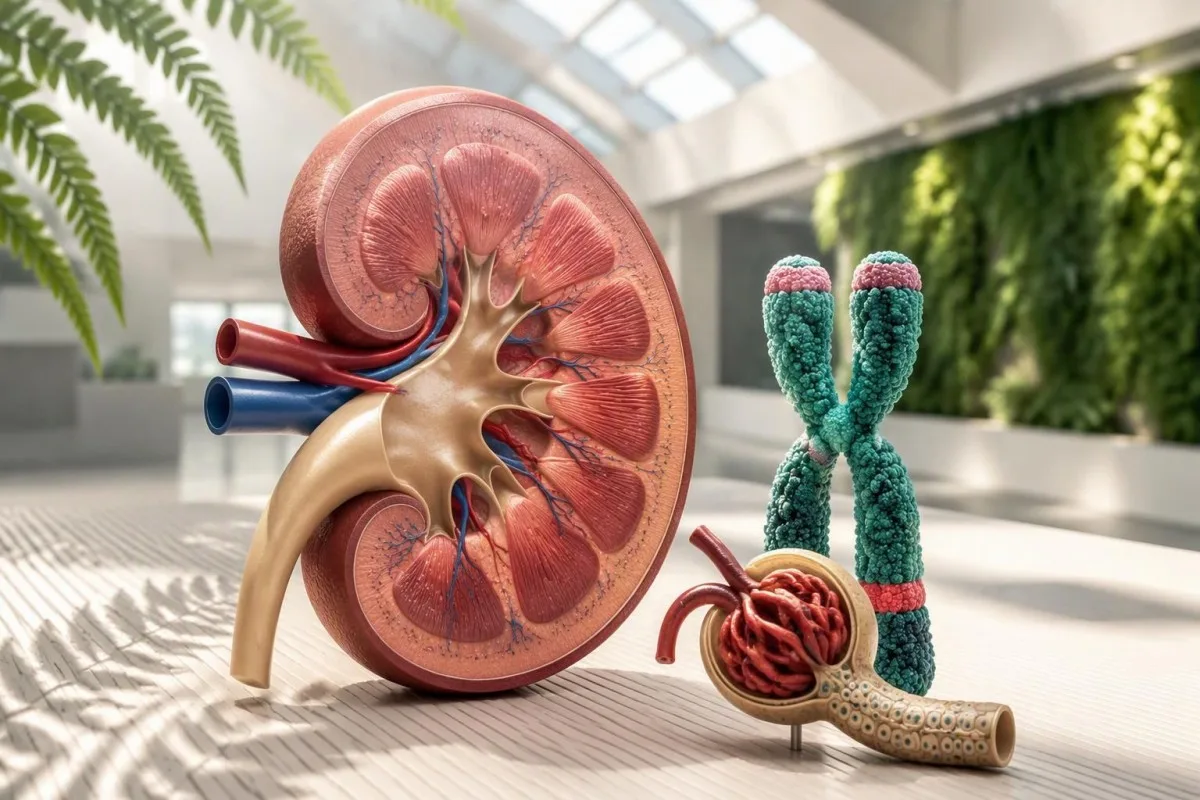
ሁለት የAPOL1 የተጋላጭነት ተለዋጮች—G1/G1፣ G1/G2 ወይም G2/G2—የዘር የኩላሊት በሽታ ተጋላጭነትን ያመለክታሉ እንጂ ምርመራ አይደሉም። ውጤቶቹ የግለሰቡን የወደፊት ሁኔታ በእርግጠኝነት ሳይተነብዩ፣ ምክር አሰጣጥን፣ የኩላሊት ክትትልን እና የሕያው ለጋሽ ግምገማን ሊመሩ ይችላሉ።.


- ሁለት የተጋላጭነት ተለዋጮች G1/G1፣ G1/G2 ወይም G2/G2 ማለት ነው፤ ሦስቱም ከፍተኛ የተጋላጭነት የAPOL1 ጂኖታይፕ ተብለው ይመደባሉ።.
- G1 አንድ የተጋላጭነት አሌል ነው የተለመደው የG1 ሃፕሎታይፕ በተመሳሳይ ክሮሞዞም ላይ ሁለት የተያያዙ የቅደም ተከተል ለውጦችን ቢይዝም።.
- ከፍተኛ ተጋላጭነት ምርመራ አይደለም: የAPOL1 ውጤቶች ሥር የሰደደ የኩላሊት በሽታን፣ ፎካል ሴግመንታል ግሎሜሩሎስክሌሮሲስን ወይም የዳያሊሲስ አስፈላጊነትን አያረጋግጡም።.
- የኩላሊት ግምገማ ሁለት መለኪያዎችን ይፈልጋል: የተገመተው የግሎሜሩላር ማጣሪያ መጠን፣ ወይም eGFR፣ እና የሽንት አልቡሚን-ከክሬቲኒን ጋር ያለው ሬሾ፣ ወይም ACR።.
- ዘላቂ የኩላሊት መዛባቶች ለ3 ወራት ወይም ከዚያ በላይ eGFR ከ60 mL/min/1.73 m² በታች መሆኑን ወይም ACR ቢያንስ 30 mg/g መሆኑን ያካትታሉ።.
- መደበኛ የመነሻ ውጤቶች ብዙ ጊዜ ለግለሰቡ የተበጀ ዓመታዊ የክትትል ዕቅድን ይደግፋሉ፤ ሆኖም ለAPOL1 ብቻ የሚሆን ሁሉን አቀፍ የምርመራ የጊዜ ክፍተት አልተወሰነም።.
- የዘር ግንድ ምንጭ ከዘር ማንነት ይለያል: የዘር ግንድ ምንጭ የምርመራ ውይይትን ሊያግዝ ይችላል፤ መልክና የዘር ማንነት ግን የAPOL1 ጂኖታይፕን ሊወስኑ አይችሉም።.
- በሕይወት እያሉ ኩላሊት መለገስ የተለየ ምክር ይፈልጋል ምክንያቱም አሁን ያሉ የኩላሊት መለኪያዎች መደበኛ ቢሆኑም ሁለት የአደጋ ተለዋጮች ብቁነትን ሊነኩ ይችላሉ።.
- የቤተሰብ ውርስ ሊገመት ይችላል፤ በሽታ ግን አይደለም: እያንዳንዳቸው አንድ የአደጋ አሌል ያላቸው ሁለት ወላጆች፣ በእያንዳንዱ እርግዝና ልጃቸው ሁለት የአደጋ አሌሎችን የመውረስ 25% ዕድል አላቸው።.
ከፍተኛ የተጋላጭነት የAPOL1 ጂኖታይፕ በትክክል ምን ማለት ነው?
የAPOL1 የዘረመል ምርመራ ከኩላሊት በሽታ ተጋላጭነት ጋር የተያያዙ በውርስ የሚተላለፉ ተለዋጮችን ይለያል። መኖሩ ሁለት የAPOL1 የአደጋ ተለዋጮች—G1/G1፣ G1/G2 ወይም G2/G2—አደጋን ያሳድጋል፣ ነገር ግን የኩላሊት በሽታን አይመረምርም ወይም ወደ ኩላሊት ሽንፈት መድረስን ዋስትና አይሰጥም፤ ቀጣይ እርምጃዎች በኩላሊት መለኪያዎች፣ በቤተሰብ ታሪክና ኩላሊት መለገስ እየታሰበ መሆኑ ላይ ይመረኮዛሉ።.
ከፍተኛ የአደጋ የAPOL1 ውጤትና ሥር የሰደደ የኩላሊት በሽታ ሁለት የተለያዩ ግኝቶች ናቸው። አንድ ሰው G1/G2፣ eGFR 105 mL/min/1.73 m² እና የሽንት ACR 6 mg/g ሊኖረው ይችላል፣ አሁን ያለ CKD ማስረጃ ሳይኖር፤ እነዚህ መለኪያዎች የአሁኑን የኩላሊት ጤና ይገልጻሉ እንጂ የዕድሜ ልክ ዋስትና አይደሉም።.
የAPOL1 ምርመራ መለያ ብቻ ከመጨመር ይልቅ ውሳኔን ሲቀይር በጣም ጠቃሚ ነው። እኔ ቶማስ ክላይን፣ የKantesti ዋና የሕክምና ኦፊሰር ነኝ፤ ከመጀመሪያውም ሶስት ጥያቄዎችን ለይቼ እመለከታለሁ፦ ምን እንደተወረሰ፣ የኩላሊት ጉዳት እንዳለ ወይም እንደሌለ፣ እና ውጤቱ የለጋሽነት ወይም የሕክምና ውይይትን እንደሚቀይር።.
ካንቴስቲ እ.ኤ.አ. AI የደም ምርመራ ተንታኝ ከኩላሊት ጋር የተያያዙ የላቦራቶሪ መለኪያዎችን ለማብራራት የሚረዳ፣ ሆኖም መደበኛ የኬሚስትሪ ፓነል የAPOL1 ጂኖታይፕን ሊያሳይ አይችልም። የእኛ የCKD ምደባ መመሪያ eGFR እና የሽንት አልቡሚን በጋራ ለምን መታየት እንዳለባቸው ያብራራል፤ ከሁለቱም መለኪያዎች አንዱ የተለየ የዘረመል ምርመራን አይተካም።.
የG1/G1፣ G1/G2 እና G2/G2 ውጤቶች እንዴት መተርጎም አለባቸው?
G1/G1፣ G1/G2 እና G2/G2 እያንዳንዳቸው ሁለቱም በውርስ የተገኙ የAPOL1 ጂን ቅጂዎች የኩላሊት አደጋ አሌል እንዳላቸው ያመለክታሉ።. G1/G1 ሁለት G1 አሌሎችን፣ G1/G2 ከእያንዳንዱ አንድ አሌልን፣ G2/G2 ደግሞ ሁለት G2 አሌሎችን ይይዛሉ፤ ከእነዚህ አንዱም የኩላሊት ተግባር መለኪያ አይደለም።.
G1 ብዙውን ጊዜ ሁለት የተገናኙ የኮዲንግ ለውጦችን የያዘ ሃፕሎታይፕ ነው፤ እነዚህም ብዙውን ጊዜ S342G እና I384M ተብለው ይገለጻሉ። እነዚህ ለውጦች በአጠቃላይ በአንድ ክሮሞዞም ላይ አብረው ይተላለፋሉ፣ እና እንደ አንድ የG1 የአደጋ አሌል, ይቆጠራሉ፣ እንጂ እንደ ሁለት የተለያዩ በውርስ የተገኙ የአደጋ አሌሎች አይደሉም፤ G2 ከAPOL1 ፕሮቲን ሁለት አሚኖ አሲዶችን የሚያስወግድ የስድስት ቤዝ-ፔር መሰረዝ ነው።.
G0/G0፣ G0/G1 እና G0/G2 ዜሮ ወይም አንድ የታወቀ የአደጋ አሌል ስለሚይዙ በተለምዶ ዝቅተኛ አደጋ ያላቸው የAPOL1 ጂኖታይፖች ተብለው ይመደባሉ። ዝቅተኛ የAPOL1 አደጋ ማለት የኩላሊት በሽታ አደጋ የለም ማለት አይደለም፤ የስኳር በሽታ፣ የደም ግፊት፣ ሌሎች የዘረመል ሁኔታዎችና ከመድኃኒት ጋር የተያያዘ ጉዳት አሁንም ሊኖሩ ይችላሉ፤ ውስን የምርመራ ዘዴዎችም እያንዳንዱን የኩላሊት በሽታ ጂን አይመረምሩም።.
ሶስቱ ከፍተኛ አደጋ ጥምረቶች የግለሰብን የበሽታ ክብደት በታማኝነት ለመደርደር አያስችሉም። ሪፖርት ከአሌል ጥምረት ይልቅ የዲኤንኤ ቅደም ተከተል ለውጦችን ካስቀመጠ፣ ላቦራቶሪው እነዚህን ወደ ግልጽ ጂኖታይፕ እንዲተረጉም እና የትኞቹ ለውጦች በአንድ ክሮሞዞም ላይ እንደሚገናኙ ለመወሰን ያሉትን ገደቦች እንዲገልጽ ይጠይቁ፤ የእኛ result-format explanation helps distinguish categorical genetic findings from numerical laboratory values.
ሁለት የAPOL1 የተጋላጭነት ተለዋጮች ለምን የኩላሊት በሽታን አያረጋግጡም?
APOL1-associated kidney susceptibility has incomplete penetrance: some people with two risk alleles develop kidney disease, while others do not. Age, additional genetic factors, immune signaling, environmental exposures and existing kidney conditions influence outcomes, so a genotype alone cannot provide a dependable personal lifetime percentage.
Parsa and colleagues reported that, among AASK participants who already had hypertension-associated CKD, the composite outcome of kidney failure or doubling serum creatinine occurred in 58.1% of the high-risk group versus 36.6% of the lower-risk group (Parsa et al., 2013). Those figures describe progression in an affected study population—not the chance that a healthy person with G1/G2 will develop CKD.
Relative risk and absolute risk answer different questions. Even a twofold association does not tell a person their probability without a relevant starting risk and a time horizon; a 30-year-old with normal ACR and a 65-year-old with substantial albuminuria should not receive the same prediction simply because their APOL1 results match.
The proposed “second-hit” model is useful but incomplete: certain immune or cellular stresses may increase APOL1-related injury, yet clinicians cannot identify a single required trigger for every patient. This resembles the distinction between susceptibility and diagnosis discussed in our ApoE4 risk explanation, although the genes, organs and predictive evidence are different.
በAPOL1 ምርመራ ውስጥ የዘረመል የዘር ሐረግ ከዘር ምድብ በምን ይለያል?
APOL1 G1 and G2 variants are associated particularly with genetic ancestry from parts of sub-Saharan Africa, not with a racial category itself. Race is a social classification, ancestry describes inherited population history, and neither a person’s appearance nor a single ancestry percentage establishes whether they carry zero, one or two risk alleles.
African ancestry is not one uniform genetic background. G1 and G2 frequencies differ substantially between populations, so a broad label such as “African,” “Black” or “mixed ancestry” is too coarse to establish an individual’s result; a family history extending across two or more regions can also be incomplete or unknown.
An ancestry-informed testing offer should be an invitation to discuss relevance, not a biological assumption about someone’s race. A person who does not identify as Black may carry two risk variants, while a person who does identify as Black may carry neither; asking about family origins is more respectful and clinically useful than inferring genetics from skin tone.
Race should not be used as a substitute for genotype or as an automatic adjustment to kidney-function interpretation. KDIGO 2024 supports avoiding race in eGFR computation; our Duffy-null neutrophil explanation illustrates another setting where a specific inherited finding is more informative than a racial label, although Duffy status does not predict APOL1 status.
ከAPOL1 የዘረመል ምርመራ ማን ሊጠቀም ይችላል?
APOL1 testing may be useful for selected people with unexplained or familial kidney disease, some patients with focal segmental glomerulosclerosis, and potential living kidney donors with relevant ancestry. Testing everyone solely because of race is not an appropriate substitute for individualized consent, clinical assessment and a clear explanation of what the result could change.
An unexplained kidney problem before age 50, several relatives with kidney failure, or a tissue diagnosis showing FSGS can justify a genetics discussion. APOL1 may be only one part of that assessment: other inherited kidney disorders can produce similar findings, and a targeted APOL1 test will not identify all of them.
A positive APOL1 result does not prove that APOL1 caused every abnormality on a kidney panel. For example, G1/G1 in a patient with diabetes and an ACR of 450 mg/g may represent an additional susceptibility rather than a complete explanation; clinicians still assess diabetes duration, retinal findings, urine sediment, medication exposure and the pace of eGFR change.
Testing an unaffected relative should have an agreed purpose, such as counseling or donor evaluation, rather than a promise that it will prevent disease. Our inherited family-risk discussion shows why the question “What will we do differently after either result?” matters before ordering a genetic test; the appropriate answer can differ between two members of the same family.
የAPOL1 ምርመራ እንዴት ይከናወናል፣ ማረጋገጫስ መቼ ያስፈልጋል?
APOL1 genetic testing uses DNA, commonly obtained from a blood, saliva or cheek-swab specimen, to identify G1 and G2 alleles. The genotype normally remains unchanged throughout life, so one adequately performed clinical test is usually sufficient; repeat or confirmatory testing is reserved for uncertainty about specimen identity, assay coverage or the original result.
A clinical report should identify the tested variants, the genotype and the assay’s relevant limitations. Turnaround time varies between laboratories, and the genetic assay is separate from a same-day creatinine result; before paying, ask whether the fee includes counseling, whether both risk alleles are assessed, and whether an inconclusive result requires a second specimen.
An unexpected direct-to-consumer result may need confirmation in an accredited clinical laboratory before a transplant or other consequential decision. A screenshot showing two sequence changes is not necessarily proof of two risk alleles, particularly when the changes belong to the same G1 haplotype; the original report and its method matter more than an automated summary.
Kantesti’s laboratory explanations should preserve the distinction between genetic evidence and biochemical evidence rather than infer an APOL1 result from creatinine. Our ክሊኒካዊ ማረጋገጫ ክፈፍ (clinical validation framework) describes the standards behind laboratory interpretation, while our የመድኃኒት ሪፖርት ደህንነት መመሪያ explains why source verification is necessary before acting on a consequential result.
የAPOL1 የዘረመል ምክር ለቤተሰቦች ምንን ማካተት አለበት?
APOL1 counseling should explain inheritance, uncertain disease prediction, family implications, privacy and the limits of testing. Each child inherits one APOL1 copy from each parent; predictable allele transmission does not translate into a predictable age of onset, disease severity or need for dialysis.
When both parents have one recognized APOL1 risk allele, each pregnancy has a 25% chance of two risk alleles, a 50% chance of one, and a 25% chance of none. These probabilities reset with every pregnancy; four children do not have to divide into those proportions, and a child inheriting two alleles is not thereby diagnosed with kidney disease.
A parent with G1/G2 passes a risk allele to every child: either G1 or G2, each with a 50% chance. If the other parent is G0/G0, none of their children will have two recognized risk alleles; a genetic counselor can explain when partner testing would meaningfully answer a family question rather than merely add anxiety.
Testing children requires a separate discussion about present medical benefit, consent and the child’s future autonomy—not simply applying an adult screening plan at age 8. Our carrier-screening counseling guide illustrates why inheritance terminology needs care, and our የዕድሜ-መሠረት የቤተሰብ ምርመራ መመሪያ helps distinguish targeted care from indiscriminate family screening.
ከከፍተኛ የተጋላጭነት ውጤት በኋላ የትኞቹ የኩላሊት የደም ምርመራዎች አስፈላጊ ናቸው?
Serum creatinine with eGFR is a standard blood-based assessment after an APOL1 high-risk result; cystatin C can improve assessment when creatinine is less reliable. Urine ACR must be added separately because an eGFR above 90 mL/min/1.73 m² does not rule out albumin leakage or early kidney damage.
Creatinine reflects both filtration and factors such as muscle mass, recent meat intake and some medications. A muscular adult with creatinine of 1.3 mg/dL may need a different interpretation from a frail adult with the same concentration; our muscular-adult creatinine guide explains why the laboratory flag alone is not a diagnosis.
A combined creatinine–cystatin C eGFR can be useful when a more accurate estimate could change a decision, including selected donor assessments. Cystatin C has its own influences, including glucocorticoid exposure and thyroid dysfunction, so it is not an infallible correction; our የሲስታቲን C ትርጓሜ መመሪያ discusses the two-marker approach.
ካንቴስቲ እ.ኤ.አ. AI የደም ምርመራ ውጤት ትርጓሜ መድረክ that can help put serial creatinine and eGFR reports into context, but laboratory trends cannot prove APOL1-related disease. KDIGO 2024 states that an eGFR change greater than 20% on a subsequent test in someone with CKD exceeds expected variability and warrants evaluation; a smaller change can still matter when it persists or accompanies rising albuminuria.
የሽንት ACR እና የክትትል ጊዜ አወሳሰን እንዴት መተርጎም አለባቸው?
Urine ACR measures albumin leakage and is essential alongside eGFR when assessing APOL1 susceptibility. KDIGO albuminuria categories are A1 below 30 mg/g, A2 from 30–300 mg/g and A3 above 300 mg/g; persistent abnormalities require assessment even when filtration remains apparently normal.
One elevated ACR is not automatically persistent kidney damage. Strenuous exercise, fever, urinary infection and menstrual contamination can affect a result, so an ACR of 65 mg/g may need a properly timed repeat; our ACR ዝግጅት መመሪያ explains practical collection steps without substituting a negative dipstick for a quantitative ratio.
An individualized annual review of blood pressure, eGFR and ACR is a reasonable discussion for an otherwise well adult with two risk alleles and normal baseline findings. That is a pragmatic monitoring plan, not a universal APOL1-specific guideline; established CKD, pregnancy, new hypertension or an abnormal trend may justify shorter intervals, such as 3–6 months, chosen by the treating clinician.
KDIGO 2024 considers a doubling of ACR on follow-up in someone with CKD a change that warrants evaluation. Urine microscopy adds a different kind of information: cellular casts or persistent red cells can point toward another process, as our የሽንት ዝቃጭ መመሪያ explains; APOL1 testing should not make those findings disappear from the differential diagnosis.
የAPOL1 ውጤት ወደ የኩላሊት ሐኪም መላክን መቼ ያስፈልጋል?
Nephrology referral is driven mainly by kidney abnormalities, progression, unexplained findings and donor questions—not by genotype alone. CKD requires evidence of abnormal kidney structure or function for at least 3 months; a rapidly changing creatinine result or concerning symptoms require prompt assessment without waiting for that chronicity threshold.
Persistent eGFR below 60 mL/min/1.73 m² or ACR at least 30 mg/g can satisfy CKD criteria when present for 3 months or longer. Referral urgency increases with advanced impairment, substantial albuminuria, a sustained downward trend or uncertainty about the cause; a normal eGFR does not make an ACR of 800 mg/g reassuring.
A hypothetical 36-year-old with G1/G2, eGFR 96 mL/min/1.73 m² and ACR 900 mg/g needs evaluation for significant albuminuria, not reassurance based on filtration alone. APOL1 susceptibility does not exclude membranous nephropathy or other glomerular disorders; our PLA2R antibody explanation describes one different diagnostic pathway that may become relevant when the clinical pattern fits.
Rapidly reduced urine output, breathlessness with swelling, or visible urine discoloration alongside worsening kidney measurements calls for urgent assessment. Some antibody-mediated conditions need especially rapid action, as discussed in our anti-GBM result guide; neither a known APOL1 result nor a 3-month CKD definition should delay an acute kidney evaluation.
ከፍተኛ የተጋላጭነት ጂኖታይፕ ሕክምናን ወይም የዕለት ተዕለት ልማዶችን ይለውጣል?
An APOL1 high-risk genotype alone does not automatically justify kidney medication, a restrictive renal diet or supplements. Treatment depends on actual kidney disease, albuminuria, blood pressure and other conditions; proven CKD therapies should not be withheld merely because inherited susceptibility may contribute to the disease.
Blood-pressure control is a practical priority, but the measurement method changes how a target should be interpreted. KDIGO’s CKD guidance includes a standardized office systolic target below 120 mmHg when tolerated for appropriate adults; that is not an instruction to force every routine home reading below 120, especially with dizziness, frailty or other reasons to individualize treatment.
ACE inhibitors or ARBs and SGLT2 inhibitors may be indicated for particular CKD and albuminuria patterns, with monitoring of creatinine and potassium. Two risk alleles with normal eGFR and normal ACR do not automatically establish those indications; medication choices should follow the person’s documented condition and current local guidance rather than a genetic label.
No supplement, “kidney cleanse” or diet has been shown to erase G1 or G2 alleles. Avoid starting potassium restriction or a very-low-protein diet solely after a genetic result, and discuss frequent NSAID use with your clinician; our የኩላሊት ተጨማሪ ደህንነት መመሪያ explains why products marketed for kidney health can create problems rather than prevent them.
ሁለት የAPOL1 የተጋላጭነት ተለዋጮች ለሕያው ለጋሽነት ምን ማለት ናቸው?
Two APOL1 risk variants may change living-kidney-donor eligibility even when current kidney function is normal. The concern is the donor’s future risk after losing kidney reserve, as well as possible implications for the donated kidney; transplant programs differ in how they incorporate the result into acceptance decisions.
The KDIGO living-donor guideline states that APOL1 genotyping may be offered to candidates with sub-Saharan African ancestry and that candidates should understand the uncertainty in predicting post-donation risk (Lentine et al., 2017). Many programs take a conservative approach to two risk alleles, particularly in younger candidates; there is no single internationally uniform APOL1 acceptance rule.
KDIGO 2017 considers donor GFR of at least 90 mL/min/1.73 m² generally acceptable, GFR from 60–89 individually assessable, and GFR below 60 unsuitable for donation. These filtration thresholds do not cancel APOL1 susceptibility; our BUN እና ክሬአቲኒን መመሪያ ይመልከቱ explains why a reassuring chemistry result alone is not a complete donor assessment.
Age, albuminuria, blood pressure, family history and other health risks must be considered alongside the genotype. A young candidate has more remaining years in which disease could emerge, and related donors may share additional inherited risks; a transplant team should explain what a positive result means for eligibility before testing, not after a family has assumed donation will proceed.
የAPOL1 መረጃ በግላዊነትና በደህንነት እንዴት መያዝ አለበት?
APOL1 results are sensitive genetic information with implications for both the tested person and relatives. Before sharing a report with a clinical service or digital tool, check consent, access, retention and deletion options; protections against genetic discrimination differ between countries and between insurance products.
One person’s permission to share their result does not automatically authorize uploading a relative’s report. Remove unnecessary identifiers, consider who can access shared family accounts, and ask whether genetics information becomes part of a medical record; insurance and employment protections are jurisdiction-specific, so obtain local advice before assuming a general privacy statement covers every consequence.
ካንቴስቲ እ.ኤ.አ. የAI ባዮማርከር ትርጓሜ መድረክ that can support understanding of kidney-related laboratory reports, but it does not replace APOL1 testing, genetic counseling or transplant eligibility review. Our የግላዊነትና የውሂብ መረጃ explains data-handling considerations; an AI interpretation taking approximately 60 seconds is not the same service as completing a molecular genetic assay.
Kantesti LTD is a UK company, number 17090423, and our organization information provides context about who operates the service. Family Health Risk features should use consented information rather than infer a relative’s genotype from race, kidney chemistry or another person’s two-allele result; keep the original clinical laboratory report available for professional review.
ወደ ቀጠሮዎ ምን ማምጣት አለብዎት፣ የትኞቹስ ምንጮች ተፈጻሚ ናቸው?
Bring the original APOL1 report, recent eGFR and urine ACR results, a medication list and a family kidney history to your appointment. As of October 19, 2026, this article distinguishes established guidance from uncertain individual prediction; its clinical references include the 2024 KDIGO CKD guideline and the 2017 KDIGO living-donor guideline.
A useful appointment can answer four concrete questions: Is kidney damage present, what is the monitoring interval, should relatives receive counseling, and does the result affect donation? My practical checklist as Thomas Klein, Chief Medical Officer at Kantesti, is to leave with a named clinician and a written next-test plan rather than an unsupported lifetime percentage; our የህክምና አማካሪ መረጃ describes the expertise behind our clinical standards.
Serum albumin and urine albumin answer different questions, and confusing the two can derail a kidney discussion. Our የሴረም ፕሮቲን መመሪያ provides supporting education on circulating proteins, but neither a normal serum albumin of 4.2 g/dL nor a normal albumin-to-globulin ratio excludes urinary albumin loss or determines an APOL1 genotype.
Complement tests are not routine APOL1 surveillance tests; C3 and C4 may become relevant when clinical findings suggest an immune-mediated kidney disorder. Our የተሟሟ ምርመራ መመሪያ is a supporting educational publication, not evidence for APOL1 penetrance; the two Zenodo resources listed below are separate from the directly relevant external medical references, and their ResearchGate and Academia.edu links are discovery searches rather than verified hosted copies.
በተደጋጋሚ የሚጠየቁ ጥያቄዎች
ሁለት የAPOL1 አደጋ ተለዋጮች መኖራቸው የኩላሊት በሽታ ይይዘኛል ማለት ነው?
ሁለት የAPOL1 አደጋ ተለዋጭ ቅርጾች መኖራቸው ለኩላሊት በሽታ ተጋላጭነትን ይጨምራል፣ ነገር ግን በሽታ ወይም የኩላሊት ውድቀት እንደሚከሰት ዋስትና አይሰጥም። G1/G1፣ G1/G2 እና G2/G2 ሁሉም ከፍተኛ አደጋ ያላቸው ጂኖታይፖች ተብለው ይመደባሉ፤ ሆኖም የእያንዳንዳቸው ውጤት ይለያያል። የአሁኑ የኩላሊት ምርመራ eGFR እና የሽንት ACR ያስፈልገዋል፤ eGFR 100 mL/min/1.73 m² እና ACR 5 mg/g መሆናቸው CKD መኖሩን አያረጋግጥም። ቀድሞውኑ የኩላሊት በሽታ በነበራቸው ሰዎች ላይ ከተደረገ ጥናት የተገኘን መቶኛ ከመተግበር ይልቅ ለግል የተዘጋጀ የክትትል ዕቅድ የበለጠ ጠቃሚ ነው።.
G1/G1፣ G1/G2 እና G2/G2 በእኩል ደረጃ ከባድ ናቸው?
G1/G1፣ G1/G2 እና G2/G2 እያንዳንዳቸው ሁለት የታወቁ የAPOL1 አደጋ አሌሎችን ይይዛሉ፣ እናም ከፍተኛ አደጋ ያላቸው ጂኖታይፖች ተብለው ይመደባሉ። የጂኖታይፕ ጥምረቶቹ የአንድን ግለሰብ ወደፊት የበሽታ ክብደት ለመደርደር አስተማማኝ መሠረት አይደሉም። G1 ብዙውን ጊዜ በአንድ ክሮሞዞም ላይ ሁለት የተያያዙ የቅደም ተከተል ለውጦችን ይይዛል፣ ነገር ግን እነዚያ ለውጦች እንደ አንድ የአደጋ አሌል ይቆጠራሉ። ከሦስቱ ጥምረቶች ማንኛውንም ለመተርጎም የኩላሊት መለኪያዎች፣ ዕድሜ እና የሕክምና ታሪክ አሁንም አስፈላጊ ናቸው።.
ከፍተኛ አደጋ የሚያመለክት የAPOL1 ውጤት ከተገኘ በኋላ ኩላሊቶች ምን ያህል ጊዜ መመርመር አለባቸው?
ሁለት የአደጋ ልዩነቶች ላሉት ሁሉም ሰዎች የሚተገበር ሁለንተናዊ APOL1-ተኮር የክትትል ጊዜ ክፍተት የለም። በሌላ ረገድ ጤናማ ለሆነና የመነሻ ውጤቶቹ መደበኛ ለሆኑ አዋቂዎች፣ ዓመታዊ የደም ግፊት፣ eGFR እና የሽንት ACR ምርመራዎችን ማወያየት ተገቢ የመነሻ እርምጃ ነው። ነባር CKD፣ አልቡሚኑሪያ ወይም የሚለወጥ አዝማሚያ እንደ 3–6 ወራት ያሉ አጭር የጊዜ ክፍተቶችን ሊያስፈልጉ ይችላሉ፤ ይህንንም ተገቢ ሐኪሙ ይመርጣል። አዳዲስ ምልክቶች ወይም የኩላሊት ተግባር ፈጣን ለውጥ ከቀጣዩ የታቀደ ምርመራ እስኪደርስ ከመጠበቅ ይልቅ ቀድሞ ግምገማ ያስፈልጋቸዋል።.
ሁለት የAPOL1 የአደጋ ልዩነቶች ካሉኝ ኩላሊት መለገስ እችላለሁ?
ሁለት የAPOL1 የአደጋ ልዩነቶች የአሁኑ የኩላሊት መለኪያዎች መደበኛ ቢሆኑም ሕያው የኩላሊት ለጋሽነት ብቁነትን ሊነኩ ይችላሉ። የንቅለ ተከላ ፕሮግራሞች በመቀበያ ፖሊሲያቸው ይለያያሉ፤ የግለሰብን ከልገሳ በኋላ የሚኖር አደጋ በትክክል መተንበይ ስለማይቻል ብዙዎቹ ጥንቃቄ የተሞላበት አቀራረብ ይከተላሉ። የKDIGO የሕያው ለጋሽ መመሪያ በአጠቃላይ ቢያንስ 90 mL/min/1.73 m² የሆነ GFR ተቀባይነት እንዳለው ይቆጥራል፤ ይሁን እንጂ ይህ ደረጃ የዘረመልና ሌሎች የጤና አደጋዎችን አይሽርም። መደበኛ የክሬአቲኒን ውጤት ለጋሽነት ደህንነትን ያረጋግጣል ብለው ከመገመትዎ በፊት ስለ ፕሮግራሙ የAPOL1 ፖሊሲ ምክር ያግኙ።.
የAPOL1 ምርመራ ራሳቸውን ጥቁር ብለው ለሚገልጹ ሰዎች ብቻ ይመለከታል?
የAPOL1 ምርመራ በዘር ማንነት ላይ ብቻ የተመሠረተ አይደለም፤ ምክንያቱም የዘር ግንድ አመጣጥና ዘር የተለያዩ ጽንሰ-ሐሳቦች ናቸው። G1 እና G2 በተለይ ከሰሃራ በታች ካሉ የአፍሪካ ክፍሎች ከመጣ የዘር ግንድ አመጣጥ ጋር ይያያዛሉ፤ ነገር ግን ውጫዊ መልክ አንድ ሰው ዜሮ፣ አንድ ወይም ሁለት የአደጋ አሌሎች እንዳሉት ሊያረጋግጥ አይችልም። ጥቁር ነኝ ብሎ የማይገልጽ ሰው እነዚህን የጂን ልዩነቶች ሊሸከም ይችላል፤ ጥቁር ነኝ ብሎ የሚገልጽ ሰው ግን ከእነዚህ ምንም ላይኖረው ይችላል። ስለ ምርመራ ሲወያዩ የዘር ግንድ አመጣጥን፣ የኩላሊት ግኝቶችን፣ የቤተሰብ ታሪክን እና ውጤቱ ሊያስቀይረው የሚችለውን ውሳኔ ግምት ውስጥ ማስገባት ይገባል።.
ልጆቼ ሁለት የAPOL1 አደጋ ልዩነቶችን ይወርሳሉ?
የልጅ APOL1 ጂኖታይፕ ከእያንዳንዱ ወላጅ በሚወርሰው አሌል ላይ ይመረኮዛል። ሁለቱም ወላጆች አንድ የአደጋ አሌል ካላቸው፣ በእያንዳንዱ እርግዝና ልጁ ሁለት የአደጋ አሌሎችን የመውረስ 25% ዕድል አለ። አንዱ ወላጅ G1/G2 እና ሌላው G0/G0 ካለው፣ እያንዳንዱ ልጅ አንድ የአደጋ አሌል ይወርሳል፣ እና ማንም ሁለት የታወቁ የአደጋ አሌሎችን አይወርስም። እነዚህ የውርስ ዕድሎች የኩላሊት በሽታ ይከሰታል ወይም መቼ ይከሰታል ብለው አይተነብዩም።.
ዛሬ የAI-የኃይል የደም ምርመራ ትንተና ያግኙ
በፍጥነት እና ትክክለኛ የላቦራቶሪ ምርመራ ትንተና ለማግኘት Kantestiን የሚያምኑ ከ2 ሚሊዮን በላይ ተጠቃሚዎችን ይቀላቀሉ። የደም ምርመራ ውጤትዎን ይስቀሉ እና በ15,000+ ባዮማርከሮች ላይ የተሟላ ትርጓሜን በሰከንዶች ውስጥ ይቀበሉ።.
📚 የተጠቀሱ የምርምር ህትመቶች
📖 ውጫዊ የሕክምና ማጣቀሻዎች
Parsa A et al. (2013). APOL1 Risk Variants, Race, and Progression of Chronic Kidney Disease. የኒው ኢንግላንድ ጆርናል ኦፍ መድሀኒት (New England Journal of Medicine)።.
Lentine KL et al. (2017). KDIGO Clinical Practice Guideline on the Evaluation and Care of Living Kidney Donors. Transplantation.
የኩላሊት በሽታ፦ ዓለም አቀፍ ውጤቶችን ማሻሻል (KDIGO) የCKD የስራ ቡድን (2024)።. KDIGO 2024 ለሥር የሚከሰት የኩላሊት በሽታ (Chronic Kidney Disease) ግምገማ እና አስተዳደር የክሊኒካዊ ልምድ መመሪያ.። Kidney International።.
⚕️ የሕክምና ማስተባበያ
ይህ ጽሑፍ ለትምህርታዊ ዓላማ ብቻ ነው እና የሕክምና ምክር አይደለም። ለምርመራ እና ለሕክምና ውሳኔዎች ሁልጊዜ ብቁ የጤና ባለሙያን ያማክሩ።.
የE-E-A-T እምነት ምልክቶች
ልምድ
በሐኪም መሪነት የላቦራቶሪ ትርጓሜ የስራ ፍሰቶች ክሊኒካዊ ግምገማ።.
ባለሙያነት
በክሊኒካዊ አውድ ውስጥ ባዮማርከሮች እንዴት እንደሚሰሩ ላይ የላቦራቶሪ ሕክምና ትኩረት።.
ስልጣን ያለው
በዶክተር ቶማስ ክላይን የተፃፈ ከዶክተር ሳራ ሚቸል እና ፕሮፌሰር ዶክተር ሃንስ ዌበር ግምገማ ጋር።.
አስተማማኝነት
ለማስጠንቀቂያ ምላሽ መቀነስ ግልጽ የቀጣይ መንገዶች ያለው በማስረጃ የተደገፈ ትርጓሜ።.