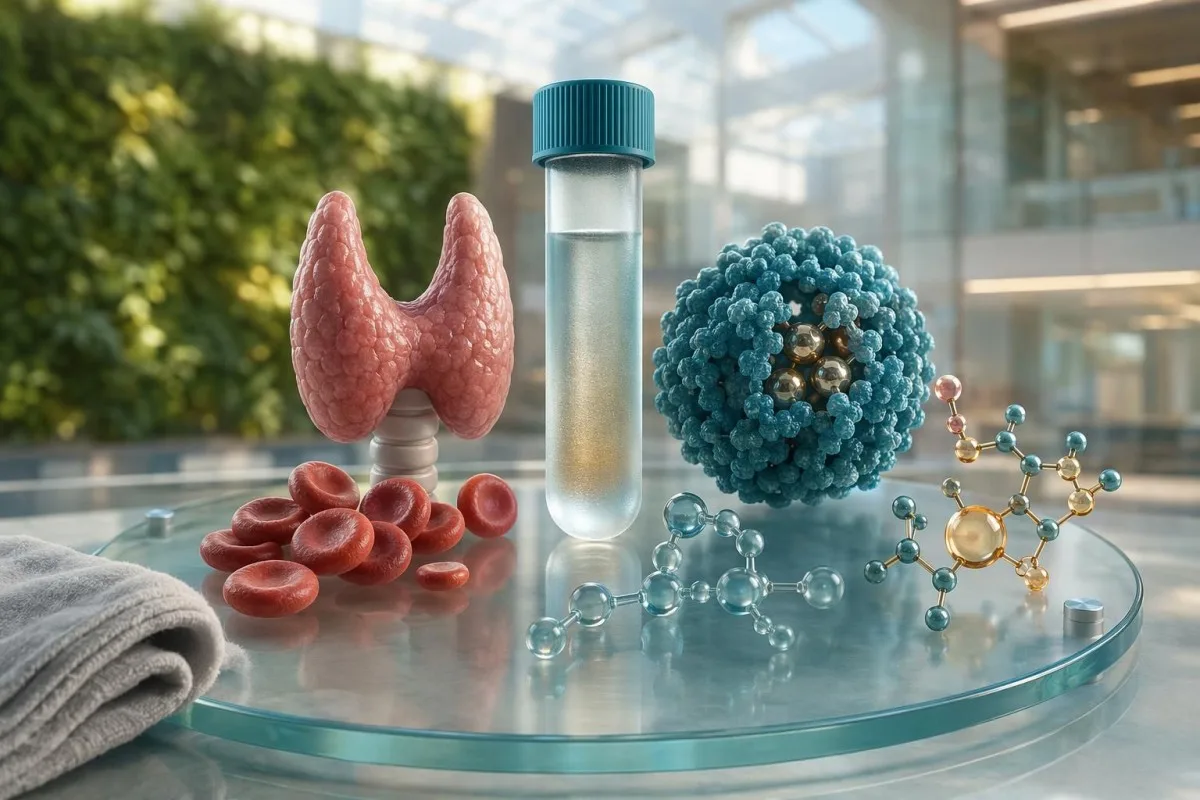
A practical, physician-written guide to postpartum lab checks after birth, C-section, heavy bleeding, breastfeeding, and gestational diabetes.


- CBC is the first-line blood test for new mothers with fatigue, dizziness, heavy bleeding, fever, or shortness of breath; hemoglobin below 10 g/dL often needs active anemia treatment.
- Ferritin below 30 ng/mL usually means depleted iron stores, but infection or C-section tissue response can make ferritin look falsely reassuring.
- TSH and free T4 are the useful first thyroid labs postpartum; postpartum thyroiditis often starts with low TSH, then may swing to high TSH within months.
- A 75-g oral glucose tolerance test is preferred 4-12 weeks postpartum after gestational diabetes because A1c can be misleading after delivery-related blood loss.
- Vitamin B12 below 200 pg/mL supports deficiency, while 200-300 pg/mL is a borderline zone where symptoms and methylmalonic acid matter.
- 25-OH vitamin D below 20 ng/mL is generally deficient, but dose decisions should consider breastfeeding, baseline level, body weight, and calcium results.
- PT/INR, aPTT, fibrinogen and platelets are bleeding-recovery labs, but D-dimer is commonly elevated after birth and is poor as a stand-alone clot screen.
- Kantesti AI can read postpartum lab PDFs or photos in about 60 seconds, compare trends, and flag patterns that a single red or green lab marker can miss.
Which postpartum labs are most useful after birth?
A blood test for new mothers usually starts with CBC, ferritin or iron studies, TSH with free T4, vitamin B12, 25-OH vitamin D, glucose testing after gestational diabetes, and a CMP when symptoms suggest kidney, liver, hydration, or electrolyte strain. I’m Thomas Klein, MD, and in our clinical review work at Kantesti AI, these labs most often explain postpartum fatigue, dizziness, palpitations, hair shedding, heavy bleeding recovery, and unexpected mood or energy crashes.
Postpartum testing is not a repeat of prenatal screening or a generic women’s annual panel. The question is narrower: did delivery, blood loss, lactation, sleep fragmentation, infection, hypertensive disease, or gestational diabetes leave a measurable physiologic footprint?
ACOG describes postpartum care as an ongoing process with contact within 3 weeks and a full assessment by 12 weeks, not a single rushed visit (ACOG Committee Opinion No. 736, 2018). That is why a mother at 10 days postpartum with soaking pads needs a different lab strategy than a mother at 9 weeks postpartum with tremor and weight loss.
In our analysis of 2M+ blood tests across 127 countries, fatigue panels in new mothers often fail when they omit iron stores or thyroid timing. For symptom-focused background, our guide to fatigue blood tests explains why normal hemoglobin alone can miss early iron depletion.
When should new mothers test postpartum labs?
Postpartum labs are usually most informative at three windows: urgent testing in the first 0-14 days for heavy bleeding, fever, severe headache, chest symptoms, or high blood pressure; recovery testing at 4-8 weeks for anemia and metabolic changes; and targeted thyroid or glucose testing at 6-12 weeks. Testing too early can turn normal birth physiology into confusing false alarms.
A CBC drawn within 24 hours of delivery can reflect IV fluids as much as true red cell mass. I have seen a hemoglobin fall from 11.8 to 9.7 g/dL after a long induction with several litres of fluid, then rebound without a second bleed.
By 4-8 weeks, hemoglobin, platelets, creatinine, liver enzymes, and ferritin are easier to interpret because delivery-related fluid shifts are less dominant. If a result is mildly abnormal and symptoms are stable, our physicians often suggest a repeat plan rather than immediate alarm; the logic is similar to our guide on repeating abnormal labs.
Kantesti’s medical review standards are overseen by clinicians listed on our Medical Advisory Board, and we build postpartum interpretation around timing, symptoms, delivery history, and units. A lab value without the postpartum week attached is a half-story.
CBC after birth: anemia, platelets, and white cells
A CBC after birth checks hemoglobin, hematocrit, MCV, RDW, platelets, and white cells; it is the fastest lab snapshot of bleeding recovery, infection clues, and anemia severity. Adult female hemoglobin is often about 12.0-15.5 g/dL outside pregnancy, while postpartum hemoglobin below 10 g/dL commonly changes management.
White cell counts can rise to 20-30 x 10^9/L around labor without infection, especially after prolonged labor or steroids. The number becomes more useful when paired with fever, uterine tenderness, wound symptoms, or a left shift.
Platelets usually sit around 150-450 x 10^9/L in adults, but postpartum platelets can dip after severe preeclampsia or HELLP syndrome and then rebound. A platelet count below 100 x 10^9/L after hypertensive disease deserves prompt clinician review, particularly if AST or ALT is also high.
When I review a CBC showing hemoglobin 9.4 g/dL, MCV 78 fL, and RDW 17%, I think chronic iron depletion plus delivery blood loss, not just normal new-parent tiredness. Our deeper review of low hemoglobin causes explains why indices often reveal the age of the anemia.
Ferritin and iron studies after postpartum bleeding
Ferritin and iron studies tell you whether postpartum fatigue is coming from depleted iron stores, even when hemoglobin is still near normal. Ferritin below 30 ng/mL strongly supports iron depletion in most new mothers, while transferrin saturation below 20% suggests iron is not reaching the marrow efficiently.
Ferritin is an acute-phase reactant, so infection, mastitis, C-section tissue response, and inflammatory conditions can push it upward. A ferritin of 55 ng/mL with CRP 48 mg/L may still hide iron-restricted red cell production.
The WHO postpartum iron guidance supports oral iron for 6-12 weeks after delivery in settings where anemia is common, and many clinicians use 60-120 mg elemental iron daily when anemia is documented. In practice, I recheck CBC and ferritin after 6-8 weeks because constipation and nausea make perfect adherence rare.
If ferritin, serum iron, TIBC, and saturation disagree, read the pattern rather than one marker. Our iron studies guide and the article on low ferritin with normal hemoglobin show why early depletion often appears before a CBC turns frankly abnormal.
Postpartum thyroid labs: TSH, free T4, and antibodies
The most useful postpartum thyroid panel is TSH plus free T4, with TPO antibodies when postpartum thyroiditis or Hashimoto’s risk is plausible. TSH is commonly interpreted against a nonpregnant reference range of about 0.4-4.0 mIU/L after delivery, though some labs use narrower local ranges.
Postpartum thyroiditis often appears in the first year after birth and affects roughly 5-10% of women, with higher risk if TPO antibodies are positive. The 2017 American Thyroid Association guideline describes the classic pattern: transient hyperthyroidism, hypothyroidism, or both phases in sequence (Alexander et al., 2017).
A low TSH with high free T4 at 8 weeks postpartum may look like Graves disease, but painless thyroiditis is often the cause. TRAb antibodies, pulse rate, neck symptoms, and whether free T4 is falling or rising help separate the two.
Kantesti AI interprets thyroid results by comparing TSH, free T4, free T3 when available, antibodies, medication history, biotin use, and postpartum week. For more detail, see our thyroid panel guide and our medical validation standards.
Vitamin B12, folate, and vitamin D in new mothers
Vitamin B12, folate, and 25-OH vitamin D are useful postpartum labs when fatigue, numbness, restless legs, hair shedding, low mood, restricted diet, bariatric surgery, or exclusive breastfeeding are part of the story. B12 below 200 pg/mL supports deficiency, while 25-OH vitamin D below 20 ng/mL is usually classified as deficient.
B12 deficiency can cause tingling, gait changes, mouth soreness, or brain fog before hemoglobin drops. I worry more about B12 230 pg/mL with neurologic symptoms than B12 310 pg/mL in a well patient with a normal methylmalonic acid.
Folate deficiency is less common in countries with fortified grains, but it still appears after hyperemesis, restrictive diets, malabsorption, or anti-seizure medicines. Serum folate can swing quickly with recent meals, while red cell folate better reflects longer-term status in some labs.
Vitamin D dosing is not one-size-fits-all. Our guides to vitamin deficiency markers and vitamin B12 testing explain why symptoms, calcium, kidney function, and baseline level change the follow-up plan.
Glucose labs after gestational diabetes or high pregnancy sugars
After gestational diabetes, the preferred postpartum test is a 75-g oral glucose tolerance test at 4-12 weeks, because fasting glucose and A1c can miss early glucose intolerance. As of May 8, 2026, major diabetes guidance still uses that 4-12 week window for postpartum diabetes screening.
The ADA Standards of Care recommend postpartum testing after gestational diabetes with a 75-g OGTT rather than A1c alone in the early postpartum period (American Diabetes Association, 2024). Delivery blood loss, iron deficiency, transfusion, and changing red cell turnover can all distort A1c.
Fasting glucose of 100-125 mg/dL suggests prediabetes, while 126 mg/dL or higher on repeat testing supports diabetes. A1c of 5.7-6.4% suggests prediabetes and 6.5% or higher supports diabetes, but postpartum anemia can make the number less trustworthy.
A mother who had normal fasting glucose but a 2-hour OGTT of 168 mg/dL is not imagining her sugar swings. Our pages on diabetes blood tests and A1c versus fasting sugar unpack why those results can disagree.
CMP, electrolytes, kidney, and liver markers postpartum
A CMP postpartum checks sodium, potassium, CO2, creatinine, eGFR, albumin, bilirubin, ALT, AST, ALP, calcium, and glucose; it is useful after preeclampsia, C-section complications, dehydration, severe vomiting, infection, or medication exposure. Sodium is usually 135-145 mmol/L and potassium is typically 3.5-5.0 mmol/L in adults.
Creatinine often falls during pregnancy because filtration rises, then returns toward baseline postpartum. A creatinine of 1.05 mg/dL may be normal in one muscular patient but concerning in a small mother whose pregnancy creatinine was 0.55 mg/dL.
ALT and AST elevations after delivery can reflect preeclampsia, HELLP recovery, gallbladder disease, fatty liver, medication effects, or muscle injury from prolonged labor. Values more than 2-3 times the lab upper limit deserve context-driven follow-up rather than a casual wait-and-see.
Kantesti’s neural network reads CMP patterns alongside CBC, urinalysis when available, blood pressure history, and medication timelines. For the basics, compare our CMP versus BMP guide with our plain-English explainer on eGFR meaning.
Bleeding recovery labs: PT, INR, aPTT, fibrinogen
Bleeding recovery labs after birth usually include CBC with platelets, PT/INR, aPTT, fibrinogen, and sometimes von Willebrand testing if bleeding seems excessive or recurrent. D-dimer is frequently elevated after pregnancy and delivery, so it is rarely helpful as a stand-alone postpartum clot or bleeding test.
Normal INR is usually about 0.8-1.2 in people not taking warfarin, and aPTT is often around 25-35 seconds depending on the lab. Fibrinogen rises during pregnancy and a low fibrinogen below 200 mg/dL during significant bleeding is a warning sign, not a minor lab quirk.
The reason we worry about low platelets plus prolonged PT and low fibrinogen is that together they suggest consumptive coagulopathy. One abnormal value alone is much less specific, especially if the sample was delayed or underfilled.
If bruising, nosebleeds, prolonged lochia, or soaking pads continue, ask whether a formal coagulation review is appropriate. Our coagulation test guide explains how PT, INR, aPTT, fibrinogen, and D-dimer differ.
CRP, ESR, and infection markers after delivery
CRP and ESR can support an infection workup postpartum, but neither test diagnoses mastitis, endometritis, wound infection, or sepsis on its own. CRP often rises after C-section or tissue response, while ESR can remain elevated for weeks because pregnancy and anemia affect it.
CRP below 5 mg/L is often considered normal in many adult labs, but postpartum interpretation is messier. A CRP of 38 mg/L on day 2 after C-section can be less alarming than CRP 38 mg/L at week 5 with fever and worsening pelvic pain.
Procalcitonin above 0.5 ng/mL may support bacterial infection in the right clinical setting, but postpartum data are less clean than in general sepsis pathways. I use it as a supporting signal, not a permission slip to ignore a worried mother.
The pattern matters: fever, rising neutrophils, high CRP, low blood pressure, and feeling suddenly unwell belong in same-day care. Our guides on CRP versus hs-CRP and infection blood tests give the lab logic without pretending one marker can do everything.
Hormone testing postpartum: what is useful and what is noise?
A postpartum hormone test for women is useful when it answers a specific question, such as thyroiditis, pituitary injury after severe hemorrhage, persistent amenorrhea after weaning, or suspected prolactin disorder. Random estradiol, FSH, LH, progesterone, and cortisol panels are often noisy in the first months after birth, especially during breastfeeding.
Prolactin varies by feeding pattern, time since last feed, sleep, stress, and medications. A single prolactin value is usually less useful than the clinical pattern: milk supply, headaches, visual symptoms, menstrual recovery, and whether breastfeeding has stopped.
Seehan syndrome is rare, but I still think about it after severe postpartum hemorrhage followed by inability to lactate, persistent low blood pressure, hyponatremia, and profound fatigue. In that scenario, morning cortisol, TSH, free T4, prolactin, sodium, and pituitary hormones may be medically urgent.
For routine cycle or fertility questions, wait until the postpartum endocrine system has a fair chance to settle. Our guides to hormonal imbalance labs and prolactin testing explain why timing beats panel size.
Labs for postpartum mood changes, brain fog, and palpitations
Postpartum mood changes, brain fog, and palpitations deserve medical attention, and labs can rule in or rule out contributors such as anemia, thyroid disease, B12 deficiency, low sodium, glucose swings, infection, and medication effects. Normal labs do not exclude postpartum depression, anxiety, trauma, or sleep deprivation.
I have had patients apologize for being dramatic, then their TSH returns at 0.02 mIU/L with high free T4 and a resting pulse of 118. I have also seen completely normal labs in severe postpartum anxiety, where the correct next step was urgent mental health support.
A practical lab set for brain fog and palpitations often includes CBC, ferritin, TSH, free T4, B12, CMP, magnesium if symptoms fit, and glucose testing when there is shakiness or sweats. Magnesium serum reference ranges often sit around 1.7-2.2 mg/dL, but serum magnesium does not perfectly represent intracellular stores.
If intrusive thoughts, thoughts of self-harm, not sleeping for days, hallucinations, or fear of harming the baby appear, labs should not delay emergency care. Our article on mental health blood tests separates medical rule-outs from psychiatric care that needs speed.
Breastfeeding, nutrition, and supplement monitoring
Breastfeeding changes nutrient demand, but it does not mean every new mother needs a huge supplement panel. The most practical labs are CBC, ferritin, B12, 25-OH vitamin D, calcium, TSH when symptoms fit, and sometimes iodine assessment through dietary review rather than routine serum testing.
Exclusively breastfeeding mothers often need about 500 extra kcal per day, though body size and milk volume vary. If calories are too low, labs may still look normal while milk supply, mood, and recovery suffer.
Vitamin D is one of the few nutrients where both maternal level and infant supplementation plans matter. A 25-OH vitamin D of 14 ng/mL is not just a wellness number; it can guide maternal dosing and a pediatric conversation.
Do not stack iron, calcium, magnesium, and thyroid medication at the same time; absorption can suffer. For dosing logic, see our guides on vitamin D by level and supplement timing conflicts.
How Kantesti reads postpartum lab patterns safely
Kantesti AI reads postpartum labs by combining the result, reference interval, unit, postpartum week, symptoms, medication list, pregnancy complications, and prior trends when available. A green result can still matter if it moved sharply from your baseline, and a red result can be harmless if it reflects normal postpartum timing.
Our platform accepts blood test PDFs or photos and returns interpretation in about 60 seconds across 75+ languages. Kantesti AI is CE Marked, HIPAA and GDPR aligned, and ISO 27001 certified; still, it is a decision-support tool, not a replacement for urgent obstetric care.
Kantesti’s neural network analyzes more than 15,000 biomarkers and flags combinations such as low ferritin plus high RDW, low TSH plus high free T4, or anemia plus borderline A1c distortion. The method is described in our biomarker guide and our clinical benchmark publication on the Kantesti AI Engine.
If you already have results, use AI-powered blood test interpretation to organize them before your postpartum visit. Our article on blood test PDF upload explains how our system reads reports while preserving structure, units, and lab context.
What to ask your clinician before ordering postpartum labs
Before ordering postpartum labs, ask what symptom or risk each test is meant to answer and what action would follow an abnormal result. A focused 8-test plan is often better than a 40-marker panel that creates anxiety without changing care.
Bring five facts: postpartum week, delivery type, estimated blood loss if known, feeding status, and current medications or supplements. Those details can change interpretation more than a lab’s red flag.
Ask whether the lab uses pregnancy, adult female, or local postpartum reference intervals. Some European labs use lower ferritin reference cutoffs than I would accept for a symptomatic new mother, and unit conversions can make results look changed when they are not.
If cost or access is a barrier, prioritize CBC, ferritin, TSH/free T4, CMP, and glucose follow-up when indicated. Our guide to same-day lab timing and our About Us page explain how Kantesti supports patients and clinicians across different healthcare systems.
Records, future pregnancy planning, and Kantesti research notes
Postpartum lab results should be saved because they often become the baseline for a future blood test before pregnancy or a targeted fertility blood test for women. The most useful future record is not just the PDF; it is the trend showing hemoglobin recovery, ferritin rebuilding, thyroid normalization, and glucose risk after gestational diabetes.
If ferritin was 9 ng/mL at 6 weeks postpartum and 42 ng/mL six months later, that trend tells a future clinician far more than either number alone. The same is true for TSH after thyroiditis, A1c after gestational diabetes, and creatinine after preeclampsia.
Kantesti lets families store and compare lab trends over time, which is especially helpful when a new baby’s records, maternal postpartum labs, and future preconception plans all overlap. You can try the workflow with free blood test analysis or read more about family lab tracking.
Kantesti AI. (2026). C3 C4 Complement Blood Test & ANA Titer Guide. Zenodo. https://doi.org/10.5281/zenodo.18353989. ResearchGate: publication search. Academia.edu: publication search. Kantesti AI. (2026). Nipah Virus Blood Test: Early Detection & Diagnosis Guide 2026. Zenodo. https://doi.org/10.5281/zenodo.18487418. ResearchGate: publication search. Academia.edu: publication search.
Frequently Asked Questions
What blood tests should a new mother ask for after birth?
A new mother with fatigue, dizziness, heavy bleeding recovery, palpitations, or brain fog can ask her clinician about CBC, ferritin with iron studies, TSH with free T4, vitamin B12, 25-OH vitamin D, CMP, and glucose testing if she had gestational diabetes. CBC checks anemia and platelets, ferritin checks iron stores, and TSH/free T4 checks postpartum thyroid changes. The best panel depends on postpartum week, delivery type, bleeding amount, breastfeeding status, and symptoms.
When is the best time to do postpartum blood work?
Postpartum blood work is usually most useful at 4-8 weeks for anemia, ferritin, CMP, and vitamin status, while thyroid and gestational diabetes follow-up often fit the 6-12 week window. Testing in the first 0-14 days should be symptom-led, such as heavy bleeding, fever, severe headache, high blood pressure, fainting, or shortness of breath. A 75-g oral glucose tolerance test is commonly recommended 4-12 weeks after gestational diabetes.
Can postpartum blood tests explain extreme tiredness?
Postpartum blood tests can explain some causes of extreme tiredness, especially anemia, ferritin below 30 ng/mL, thyroiditis, B12 deficiency below 200 pg/mL, vitamin D deficiency below 20 ng/mL, electrolyte problems, infection, or glucose swings. Normal labs do not rule out sleep deprivation, postpartum depression, anxiety, trauma, or the strain of infant care. Severe fatigue with chest pain, fainting, shortness of breath, fever, or thoughts of self-harm needs urgent medical help.
Is ferritin or hemoglobin more important after delivery?
Hemoglobin shows the current severity of anemia, while ferritin shows stored iron needed for recovery. Hemoglobin below 10 g/dL postpartum often changes treatment, but ferritin below 30 ng/mL can explain fatigue and hair shedding even when hemoglobin is still near 12 g/dL. Ferritin can rise falsely with infection or inflammation, so transferrin saturation, CRP, and CBC indices sometimes clarify the picture.
Should every new mother get thyroid blood tests postpartum?
Not every new mother needs thyroid testing, but TSH and free T4 are reasonable when symptoms include palpitations, tremor, heat intolerance, unexplained anxiety, weight change, severe fatigue, constipation, low mood, or a history of thyroid disease. Postpartum thyroiditis affects roughly 5-10% of women and is more likely with positive TPO antibodies. A low TSH can suggest a hyperthyroid phase, while high TSH with low free T4 suggests hypothyroidism.
Why can A1c be misleading after pregnancy?
A1c can be misleading postpartum because delivery blood loss, iron deficiency, transfusion, and changing red cell turnover alter how much glucose exposure is reflected in hemoglobin. After gestational diabetes, a 75-g oral glucose tolerance test at 4-12 weeks is preferred by major diabetes guidance because it can detect impaired glucose tolerance that fasting glucose or A1c may miss. A1c of 5.7-6.4% suggests prediabetes and 6.5% or higher supports diabetes, but early postpartum context matters.
Can I upload postpartum blood test results to Kantesti AI?
Yes, Kantesti AI can analyze postpartum blood test PDFs or photos and return structured interpretation in about 60 seconds. The platform reads units, reference ranges, trends, and marker combinations such as low ferritin with high RDW or low TSH with high free T4. Kantesti AI is decision support, so urgent symptoms such as severe bleeding, chest pain, shortness of breath, fever, or severe headache should go directly to medical care.
Get AI-Powered Blood Test Analysis Today
Join over 2 million users worldwide who trust Kantesti for instant, accurate lab test analysis. Upload your blood test results and receive comprehensive interpretation of 15,000+ biomarkers in seconds.
📚 Referenced Research Publications
Klein, T., Mitchell, S., & Weber, H. (2026). C3 C4 Complement Blood Test & ANA Titer Guide. Kantesti AI Medical Research.
Klein, T., Mitchell, S., & Weber, H. (2026). Nipah Virus Blood Test: Early Detection & Diagnosis Guide 2026. Kantesti AI Medical Research.
📖 External Medical References
American Diabetes Association Professional Practice Committee (2024). 15. Management of Diabetes in Pregnancy: Standards of Care in Diabetes—2024. Diabetes Care.
⚕️ Medical Disclaimer
This article is for educational purposes only and does not constitute medical advice. Always consult a qualified healthcare provider for diagnosis and treatment decisions.
E-E-A-T Trust Signals
Experience
Physician-led clinical review of lab interpretation workflows.
Expertise
Laboratory medicine focus on how biomarkers behave in clinical context.
Authoritativeness
Written by Dr. Thomas Klein with review by Dr. Sarah Mitchell and Prof. Dr. Hans Weber.
Trustworthiness
Evidence-based interpretation with clear follow-up pathways to reduce alarm.