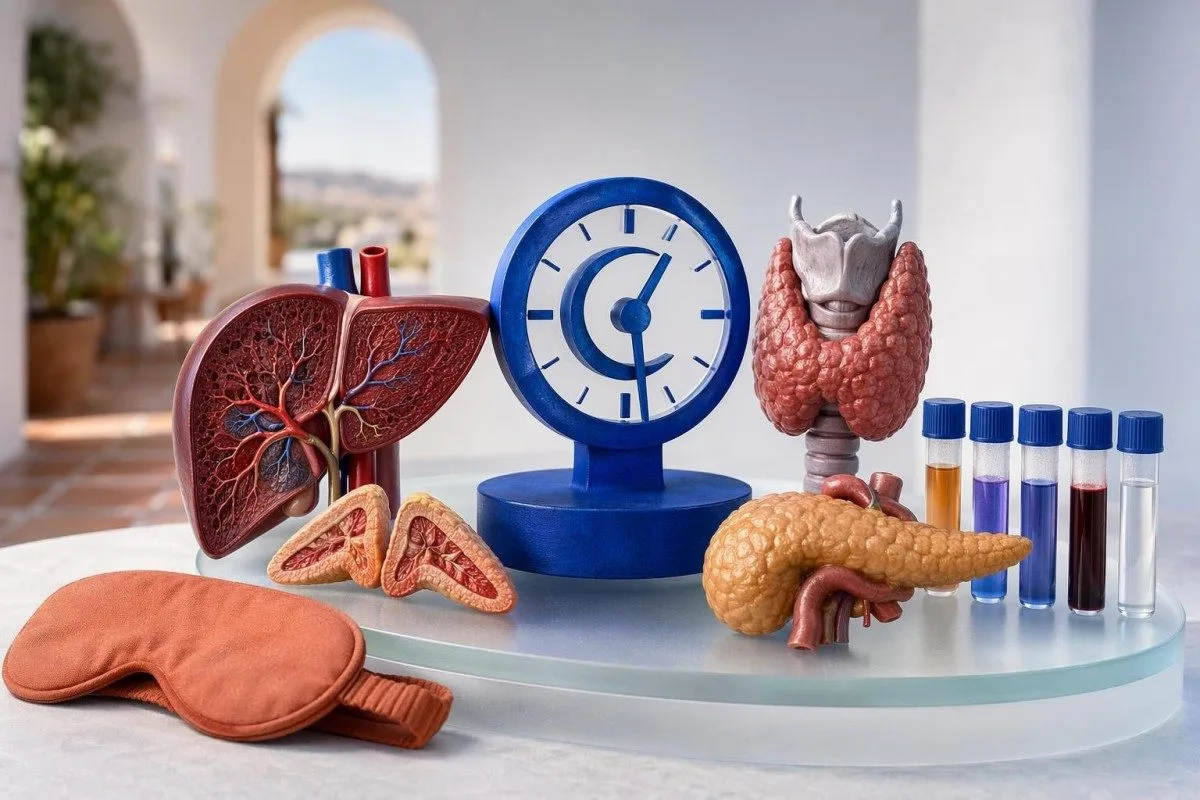
Night work can make ordinary lab results look confusing. The trick is tracking the right biomarkers and recording sleep, meals and sample timing with the same seriousness as the numbers.


- Core panel for night workers usually includes fasting glucose, HbA1c, fasting insulin, lipid panel, hs-CRP, vitamin D, TSH with free T4, CBC, CMP, ferritin, B12 and magnesium.
- Glucose risk is easier to miss after night shifts because HbA1c can look acceptable while fasting insulin or HOMA-IR rises first.
- HbA1c cutoffs remain <5.7% normal, 5.7-6.4% prediabetes and ≥6.5% diabetes when confirmed, but sleep debt can worsen glucose before diagnosis.
- Triglycerides should ideally be <150 mg/dL; repeat a fasting lipid panel if a nonfasting result is >400 mg/dL or unexpectedly high after a shift meal.
- Cortisol timing must be anchored to your main sleep period, not simply the clock, because 08:00 after working all night is biologically unusual.
- Vitamin D deficiency is commonly defined as 25-OH vitamin D <20 ng/mL, with 20-29 ng/mL often treated as insufficiency in symptomatic or high-risk adults.
- hs-CRP below 1 mg/L suggests lower cardiovascular inflammatory risk, 1-3 mg/L intermediate risk and >3 mg/L higher risk if repeated when well.
- TSH interpretation needs timing context because TSH normally rises overnight; testing after a night awake can distort the comparison with standard morning reference ranges.
- Trend tracking beats one-off testing: repeat borderline abnormalities after 2-12 weeks with the same sleep, fasting and sample timing conditions.
What should a blood test for night shift workers include?
A blood test for night shift workers should track fasting glucose or HbA1c, fasting insulin, lipid panel, hs-CRP, vitamin D, TSH with free T4, morning or evening cortisol only when clinically indicated, CBC, CMP, ferritin, B12 and magnesium. The timing matters: a 07:00 sample after a night awake is not the same physiological state as 07:00 after sleep.
At Kantesti AI, our platform reads these markers together because shift work rarely moves one number in isolation. In our analysis of 2M+ blood tests, the pattern I see most often is not dramatic disease; it is a cluster of borderline glucose, triglycerides, vitamin D and inflammation results that becomes meaningful only when sleep timing is added.
The first practical detail is boring but powerful: write down the time of your last main sleep, last meal, caffeine, nicotine, exercise and sample collection. If you are unsure which tests need fasting, our guide to fasting blood tests explains why glucose, insulin and triglycerides are especially sensitive to pre-test behavior.
As of April 30, 2026, I would rather compare 3 well-timed panels over 12 months than overreact to one abnormal value after a brutal run of 4 nights. Thomas Klein, MD, reviews shift-worker panels this way in clinical practice: first confirm the context, then decide whether the number is a health signal or a timing artefact.
When should night shift workers schedule blood tests?
Night shift workers should schedule most routine blood tests after their main sleep period and after a consistent 8-12 hour fast when fasting is required. For a worker who sleeps 08:30-15:30, a 16:00 sample may be more biologically comparable than a standard 08:00 appointment after staying awake all night.
This is one of those details that changes interpretation. A cortisol, glucose or TSH result collected at 08:00 after 10 hours awake on duty may not match the reference population used to build the lab range, because that population usually slept overnight.
Circadian misalignment can alter glucose, insulin, leptin, cortisol rhythm and blood pressure; Scheer et al. showed this under controlled laboratory conditions in PNAS in 2009 (Scheer et al., 2009). In plain language, your body may handle the same breakfast differently at 03:00 than at 09:00.
For repeat testing, use the same rule each time: same shift pattern, same fasting window, same time since waking, and ideally no heavy workout for 24 hours. If two lab reports disagree, our article on blood test variability gives a sensible way to separate biological noise from true change.
Some European labs ask about collection time for endocrine tests; many routine commercial labs do not. I tell patients to write the timing on the PDF before uploading it, because our AI can interpret a 3.8 mIU/L TSH very differently if it was drawn after sleep versus after a night shift.
How do night shifts affect glucose, insulin and HbA1c?
Night shifts can raise glucose and insulin before HbA1c crosses the diabetes threshold. The most useful shift work metabolic blood test pattern is fasting glucose plus HbA1c plus fasting insulin, with HOMA-IR calculated when both glucose and insulin are available.
Fasting glucose below 100 mg/dL is generally normal, 100-125 mg/dL suggests prediabetes, and ≥126 mg/dL on repeat testing supports diabetes. HbA1c below 5.7% is normal, 5.7-6.4% suggests prediabetes, and ≥6.5% supports diabetes when confirmed, according to ADA Standards of Care guidance (American Diabetes Association Professional Practice Committee, 2024).
Fasting insulin is not standardized as tightly as glucose, but in clinic I become curious when fasting insulin is persistently above 8-10 µIU/mL in a tired night worker with central weight gain. HOMA-IR is calculated as fasting glucose in mg/dL multiplied by fasting insulin in µIU/mL divided by 405, and values above about 2.0 often suggest early insulin resistance.
The trap is relying on HbA1c alone. A 36-year-old nurse I reviewed had an HbA1c of 5.4%, which looked reassuring, but her fasting insulin was 18 µIU/mL and triglycerides were 211 mg/dL after 6 months of rotating nights; that combination changed the conversation.
If your fasting glucose and HbA1c disagree, do not assume the lab made a mistake. Our deeper guide on HbA1c versus fasting sugar explains why red cell lifespan, recent sleep disruption and meal timing can pull the two markers apart.
Which lipid patterns matter most in night workers?
Night workers should track triglycerides, HDL-C, LDL-C, non-HDL-C and sometimes ApoB because circadian disruption can worsen post-meal lipid handling. Triglycerides above 150 mg/dL are common after late eating, but repeated fasting elevation is a stronger metabolic warning sign.
A triglyceride level below 150 mg/dL is desirable, 150-199 mg/dL is borderline high, 200-499 mg/dL is high, and ≥500 mg/dL raises concern for pancreatitis risk. If a nonfasting triglyceride result is >400 mg/dL, most clinicians repeat a fasting lipid panel before making long-term decisions.
LDL-C targets depend on personal risk, not just a single normal range. The 2018 AHA/ACC cholesterol guideline treats ApoB ≥130 mg/dL as a risk-enhancing factor, especially when triglycerides are persistently ≥200 mg/dL (Grundy et al., 2019).
I see a recognizable night-shift lipid pattern: normal total cholesterol, HDL drifting down below 40 mg/dL in men or 50 mg/dL in women, and triglycerides slowly climbing from 110 to 190 mg/dL over 2 years. That pattern often improves when the largest meal moves earlier in the wake period, even before weight changes.
For a clean interpretation, compare your results with a full lipid panel reading rather than total cholesterol alone. Kantesti AI also checks whether the lipid pattern fits insulin resistance, thyroid dysfunction, liver enzyme elevation or medication effects.
Should shift workers test cortisol?
Cortisol testing is useful for selected night workers, but only when the sample timing matches the clinical question. A random serum cortisol is often misleading because cortisol normally peaks after waking and falls toward the biological night.
Typical morning serum cortisol is roughly 10-20 µg/dL in many labs, while late-evening cortisol is usually much lower, often below 5 µg/dL. These ranges vary by assay, and a night worker may not have a conventional morning peak at 08:00.
Late-night salivary cortisol is designed to detect loss of the normal cortisol nadir, especially in suspected Cushing syndrome. For a permanent night worker, the correct collection time may be before the main sleep episode, not at midnight, and that nuance is easy to miss on a standard requisition.
When I review cortisol results, I first ask three questions: what time did you wake, what time was the sample collected, and were you using steroid tablets, inhalers or creams. A cortisol of 7 µg/dL could be reassuring, suspicious or uninterpretable depending on those 3 facts.
If your doctor has ordered cortisol because of fatigue, weight gain, blood pressure changes or low sodium, read our detailed guide on cortisol blood test timing before comparing yourself with daytime reference ranges.
Why is vitamin D often low in night shift workers?
Vitamin D is often low in night shift workers because daylight exposure is reduced, sleep may occur during peak sunlight, and diet rarely compensates fully. The best screening marker is 25-hydroxyvitamin D, not active 1,25-dihydroxyvitamin D for routine deficiency checks.
A 25-OH vitamin D level below 20 ng/mL is commonly considered deficient, 20-29 ng/mL is often considered insufficient, and 30-50 ng/mL is a practical target range for many adults. Some guidelines and labs disagree on the ideal cutoff, and I am honest with patients about that uncertainty.
The active vitamin D test, 1,25-OH2 vitamin D, can be normal or high even when 25-OH vitamin D is low. It is mainly used for unusual calcium, kidney or granulomatous disease questions, not routine night shift screening.
Most patients find that 1000-2000 IU vitamin D3 daily moves the number gradually over 8-12 weeks, though body weight, absorption and baseline level matter. I avoid telling people to take 5000 IU forever without checking calcium, kidney function and a repeat 25-OH vitamin D.
If your report lists both 25-OH and active vitamin D, our vitamin D blood test guide will help you avoid mixing them up. Kantesti’s neural network flags this distinction because the two tests answer different clinical questions.
What inflammation markers reveal sleep disruption?
The most useful inflammation markers for sleep disruption are hs-CRP, standard CRP, CBC with differential, and sometimes ESR. Mild hs-CRP elevation is not a diagnosis, but repeated values above 3 mg/L after good health and no infection suggest higher cardiometabolic inflammatory load.
hs-CRP below 1 mg/L suggests lower cardiovascular inflammatory risk, 1-3 mg/L suggests intermediate risk, and above 3 mg/L suggests higher risk when repeated. A standard CRP above 10 mg/L usually points more toward infection, injury, inflammatory disease or recent intense exercise than subtle sleep disruption.
CBC changes are usually nonspecific, but they add texture. A WBC count of 4.0-11.0 x10^9/L is typical in adults, and a neutrophil-heavy differential after sleep deprivation may reflect acute stress rather than bacterial infection if symptoms are absent.
Here is the pattern that makes me pause: hs-CRP 4.2 mg/L, triglycerides 230 mg/dL, ALT 58 IU/L and fasting insulin 16 µIU/mL. The reason we worry about that combination is that together they suggest metabolic inflammation, whereas hs-CRP alone after a cold is usually not very informative.
If you are comparing CRP types, our explainer on CRP versus hs-CRP is worth reading before you panic about a flagged result. Many lab portals do a poor job of showing which assay was actually ordered.
Why can thyroid results look odd after night shifts?
Thyroid results can look odd after night shifts because TSH has a circadian rhythm and normally rises overnight. A TSH drawn after staying awake all night may not be comparable with a TSH drawn after a normal sleep episode.
A typical adult TSH reference range is about 0.4-4.0 mIU/L, though some labs use narrower upper limits near 2.5-3.5 mIU/L. Free T4 is commonly around 0.8-1.8 ng/dL, but the exact range depends on the assay.
The clinical mistake is treating a mildly high TSH as permanent hypothyroidism without repeating it under stable conditions. If a night worker has TSH 4.8 mIU/L, normal free T4 and no thyroid antibodies, I usually want a repeat sample after consistent sleep before anyone labels the thyroid.
Biotin complicates this further. Supplements containing 5-10 mg of biotin can distort some thyroid immunoassays, sometimes making TSH look falsely low and free T4 falsely high, which is why our biotin and thyroid article is linked in many of our thyroid interpretations.
When symptoms are convincing, do not stop at TSH. A complete thyroid panel with free T4, sometimes free T3, TPO antibodies and thyroglobulin antibodies can clarify whether the pattern is true thyroid disease, timing variation or medication interference.
Which liver, kidney and electrolyte clues should be watched?
Night shift workers should watch ALT, AST, GGT, creatinine, eGFR, sodium, potassium, bicarbonate and BUN because late meals, dehydration and stimulant use can shift these results. A CMP or BMP is often the quiet workhorse of night shift health blood tests.
ALT is often considered more liver-specific than AST, and many clinicians investigate persistent ALT above about 35 IU/L in women or 45 IU/L in men, depending on the lab. Night eating, weight gain and insulin resistance can push ALT upward through fatty liver physiology.
Creatinine and BUN are strongly affected by hydration, muscle mass and protein intake. A BUN/creatinine ratio above 20 can reflect dehydration in the right context, while a falling eGFR below 60 mL/min/1.73 m² for 3 months suggests chronic kidney disease rather than a single bad night.
Electrolytes tell stories patients often overlook. Sodium below 135 mmol/L, potassium above 5.5 mmol/L, or bicarbonate below 22 mmol/L should not be dismissed as shift-work fatigue, especially if there are palpitations, weakness, vomiting or medication changes.
If your lab report says CMP or BMP and you are not sure what is included, our CMP versus BMP guide breaks down the difference. Our AI blood test analyzer also checks whether liver enzymes, glucose and triglycerides point in the same metabolic direction.
What deficiency markers mimic shift-work fatigue?
Ferritin, iron saturation, B12, folate and magnesium can reveal treatable deficiencies that mimic shift-work fatigue. A tired night worker is not always simply sleep-deprived; low iron stores or borderline B12 can look exactly like burnout.
Ferritin below 30 ng/mL often suggests depleted iron stores in symptomatic adults, even when haemoglobin is still normal. Ferritin can also rise with inflammation, so a ferritin of 120 ng/mL does not always mean iron stores are perfect if CRP is high and iron saturation is low.
Vitamin B12 below 200 pg/mL is commonly treated as deficient, while 200-350 pg/mL can be borderline in symptomatic patients. I have seen night workers with numb feet, brain fog and normal haemoglobin improve only after methylmalonic acid confirmed functional B12 deficiency.
Serum magnesium is usually about 1.7-2.2 mg/dL, but it is a blunt tool because most magnesium is intracellular. Low-normal magnesium with cramps, poor sleep and proton pump inhibitor use makes me ask more questions rather than declare the case closed.
Restless legs after night shifts deserves iron testing, not just sleep advice. Our guide to ferritin and restless legs explains why many sleep clinicians aim for higher ferritin thresholds than the basic anaemia cutoff.
How should testosterone, DHEA and prolactin be timed?
Testosterone, DHEA-S and prolactin should be interpreted around sleep timing because several hormones follow wake-sleep biology. For night workers, a standard 08:00 testosterone test may be the wrong biological moment if it occurs after a full night awake.
Total testosterone is usually highest in the early biological morning and should be repeated at least twice if low. In a permanent night worker, I often prefer testing within 2-3 hours after the main sleep period, then documenting that timing clearly for the clinician.
DHEA-S is more stable across the day than cortisol, but age and sex ranges are wide. A DHEA-S result that looks low for a 28-year-old may be completely ordinary for a 62-year-old, which is why age-specific interpretation matters.
Prolactin rises during sleep and can be transiently elevated by stress, exercise, sex, nipple stimulation, antipsychotic medicines and some nausea drugs. A mild prolactin elevation, such as 30-40 ng/mL, often needs a calm repeat sample before imaging is discussed.
For men with low libido, poor recovery or low mood after shift work, our article on testosterone timing is a useful companion. Thomas Klein, MD, usually reads testosterone with SHBG, albumin, sleep timing and medication history rather than treating total testosterone as a standalone verdict.
How often should night shift workers repeat labs?
Most night shift workers do well with baseline testing, then repeat labs every 6-12 months if stable, or every 8-12 weeks after a targeted change. Borderline glucose, triglycerides, vitamin D or TSH should usually be confirmed under similar timing conditions before treatment decisions.
A practical baseline includes CBC, CMP, fasting glucose, HbA1c, fasting insulin, lipid panel, hs-CRP, TSH with free T4, ferritin, B12 and 25-OH vitamin D. Add tests only when symptoms, family history, medications or abnormal basics justify them.
The trend is often more honest than the flag. A fasting glucose rising from 86 to 98 mg/dL over 18 months may matter more than a one-off TSH of 4.3 mIU/L after three nights and 4 hours of sleep.
Kantesti AI interprets trend direction by comparing previous results, units, reference ranges and timing notes rather than simply calling a value high or low. If you are building a longitudinal record, our blood test history guide shows which details to save.
I like patients to mark their roster type: permanent nights, rotating nights, early starts, or recovery week. In our platform, that context helps distinguish a true metabolic drift from a predictable wobble after roster changes.
Which abnormal results should not be blamed on shift work?
Some abnormal results should never be explained away as night-shift stress. Glucose above 250 mg/dL with symptoms, potassium above 6.0 mmol/L, sodium below 125 mmol/L, CRP above 100 mg/L, severe anaemia or very abnormal liver enzymes need prompt clinical assessment.
Potassium is the one I never ignore. A potassium above 6.0 mmol/L can be dangerous, although a haemolysed sample can falsely raise it; the safest move is rapid repeat testing or urgent care if symptoms or ECG concerns exist.
Severe anaemia is not normal fatigue. Haemoglobin below about 8 g/dL, new black stools, chest pain, fainting or breathlessness should be handled urgently rather than tracked casually in an app.
Liver enzymes more than 3 times the upper limit of normal, bilirubin with jaundice, or ALT/AST above 500 IU/L deserves same-day medical advice. Shift work can contribute to fatty liver risk, but it does not explain every liver pattern.
If your portal marks a result as critical, our article on critical blood test values explains what usually needs fast follow-up. Our AI can help organize the pattern, but urgent symptoms still belong with a clinician or emergency service.
How does Kantesti AI interpret shift-work lab patterns?
Kantesti AI interprets shift-work lab patterns by combining biomarker values, units, reference ranges, timing notes, age, sex, trends and symptom context. The goal is not to diagnose from one PDF; it is to show which patterns deserve confirmation, lifestyle action or medical review.
Our AI-powered blood test interpretation platform reads over 15,000 biomarkers and gives a structured explanation in about 60 seconds after a PDF or photo upload. For night workers, the most useful feature is pattern recognition across glucose, lipids, thyroid, inflammation and deficiencies.
Kantesti’s clinical standards are reviewed through physician-led governance, and our medical validation page explains how we test accuracy, safety boundaries and escalation language. I am careful about this because a confident answer can be harmful if the timing context is wrong.
Our doctors and advisors also review edge cases where standard reference ranges mislead, including shift work, pregnancy, endurance training and medication monitoring. You can read more about the physicians behind the work on our Medical Advisory Board page.
For technically minded readers, the Kantesti AI Engine has been benchmarked across seven medical specialties, including trap cases designed to catch overdiagnosis errors. The methods are described in our clinical validation benchmark, which is the kind of transparency I wish every medical AI tool offered.
What is a sensible 30-day lab plan after night shifts?
A sensible 30-day plan is to stabilize sleep timing for 1-2 weeks, test after your main sleep period, record fasting and shift details, then review patterns rather than isolated flags. This approach catches metabolic drift without turning every night-shift symptom into a disease label.
Week 1 is for observation: track sleep start, wake time, caffeine, meals and exercise for at least 7 days. Week 2 is for testing: book a fasting morning-for-you sample after the main sleep period, even if that is 15:30 rather than 08:00.
Week 3 is for interpretation. Upload your PDF or photo to Try Free AI Blood Test Analysis if you want a plain-language read, then take concerning results to your clinician with the timing notes attached.
Week 4 is for one change, not twelve. If triglycerides and insulin are high, move the largest meal earlier in the wake period for 4-8 weeks; if vitamin D is low, replace and retest in 8-12 weeks; if TSH is borderline, repeat under steadier sleep conditions.
Bottom line: blood tests for sleep disruption are most useful when the lab result and the body clock are read together. That is how I, Thomas Klein, MD, prefer to practice medicine — precise enough to catch risk early, but humble enough to repeat a number before naming a disease.
Frequently Asked Questions
What blood tests should night shift workers get?
Night shift workers should usually track CBC, CMP, fasting glucose, HbA1c, fasting insulin, lipid panel, hs-CRP, TSH with free T4, ferritin, vitamin B12, magnesium and 25-OH vitamin D. Cortisol, testosterone, DHEA-S or prolactin may be useful when symptoms point that way, but timing must be documented. A fasting insulin above about 8-10 µIU/mL with triglycerides above 150 mg/dL can suggest early insulin resistance even when HbA1c is still below 5.7%.
Can working nights affect blood sugar results?
Yes, working nights can affect glucose handling because circadian misalignment changes insulin sensitivity and post-meal metabolism. Fasting glucose below 100 mg/dL is generally normal, 100-125 mg/dL suggests prediabetes and ≥126 mg/dL on repeat testing supports diabetes. In night workers, HbA1c may look acceptable while fasting insulin or HOMA-IR shows earlier metabolic strain.
When should I do a fasting blood test if I work nights?
If you work nights, schedule fasting blood tests after your main sleep period and after an 8-12 hour fast, rather than automatically testing at 08:00 after staying awake all night. For someone sleeping 08:30-15:30, a 16:00 sample may be more biologically comparable. Use the same sleep, fasting and sample timing for repeat tests so trends are meaningful.
Does night shift work affect thyroid blood tests?
Night shift work can affect thyroid interpretation because TSH normally follows a circadian rhythm and tends to rise overnight. A typical adult TSH range is about 0.4-4.0 mIU/L, but a mildly high result such as 4.5-6.0 mIU/L should often be repeated with free T4 and timing context. Biotin supplements of 5-10 mg can also distort some thyroid assays.
Is cortisol testing useful for shift workers?
Cortisol testing can be useful for shift workers only when the sample is timed to the clinical question and the person’s sleep schedule. Typical morning serum cortisol is often around 10-20 µg/dL, while late-evening cortisol is usually much lower, but these clock-based ranges can mislead permanent night workers. Late-night salivary cortisol should usually be anchored to the biological night, not simply midnight.
Why do night workers often have low vitamin D?
Night workers often have low vitamin D because they sleep during daylight hours and may get little midday ultraviolet exposure. The best routine marker is 25-OH vitamin D, with <20 ng/mL commonly considered deficient and 20-29 ng/mL often considered insufficient. Many adults improve with 1000-2000 IU vitamin D3 daily over 8-12 weeks, but calcium and kidney function should be considered.
How often should night shift workers repeat abnormal blood tests?
Night shift workers should usually repeat borderline abnormal blood tests within 8-12 weeks after stabilizing sleep, meals and fasting conditions. Stable workers with normal results often repeat a core panel every 6-12 months. Urgent abnormalities, such as potassium above 6.0 mmol/L, glucose above 250 mg/dL with symptoms or CRP above 100 mg/L, should not wait for routine follow-up.
Get AI-Powered Blood Test Analysis Today
Join over 2 million users worldwide who trust Kantesti for instant, accurate lab test analysis. Upload your blood test results and receive comprehensive interpretation of 15,000+ biomarkers in seconds.
📚 Referenced Research Publications
Klein, T., Mitchell, S., & Weber, H. (2026). aPTT Normal Range: D-Dimer, Protein C Blood Clotting Guide. Kantesti AI Medical Research.
Klein, T., Mitchell, S., & Weber, H. (2026). Serum Proteins Guide: Globulins, Albumin & A/G Ratio Blood Test. Kantesti AI Medical Research.
📖 External Medical References
American Diabetes Association Professional Practice Committee (2024). 2. Diagnosis and Classification of Diabetes: Standards of Care in Diabetes—2024. Diabetes Care.
⚕️ Medical Disclaimer
This article is for educational purposes only and does not constitute medical advice. Always consult a qualified healthcare provider for diagnosis and treatment decisions.
E-E-A-T Trust Signals
Experience
Physician-led clinical review of lab interpretation workflows.
Expertise
Laboratory medicine focus on how biomarkers behave in clinical context.
Authoritativeness
Written by Dr. Thomas Klein with review by Dr. Sarah Mitchell and Prof. Dr. Hans Weber.
Trustworthiness
Evidence-based interpretation with clear follow-up pathways to reduce alarm.