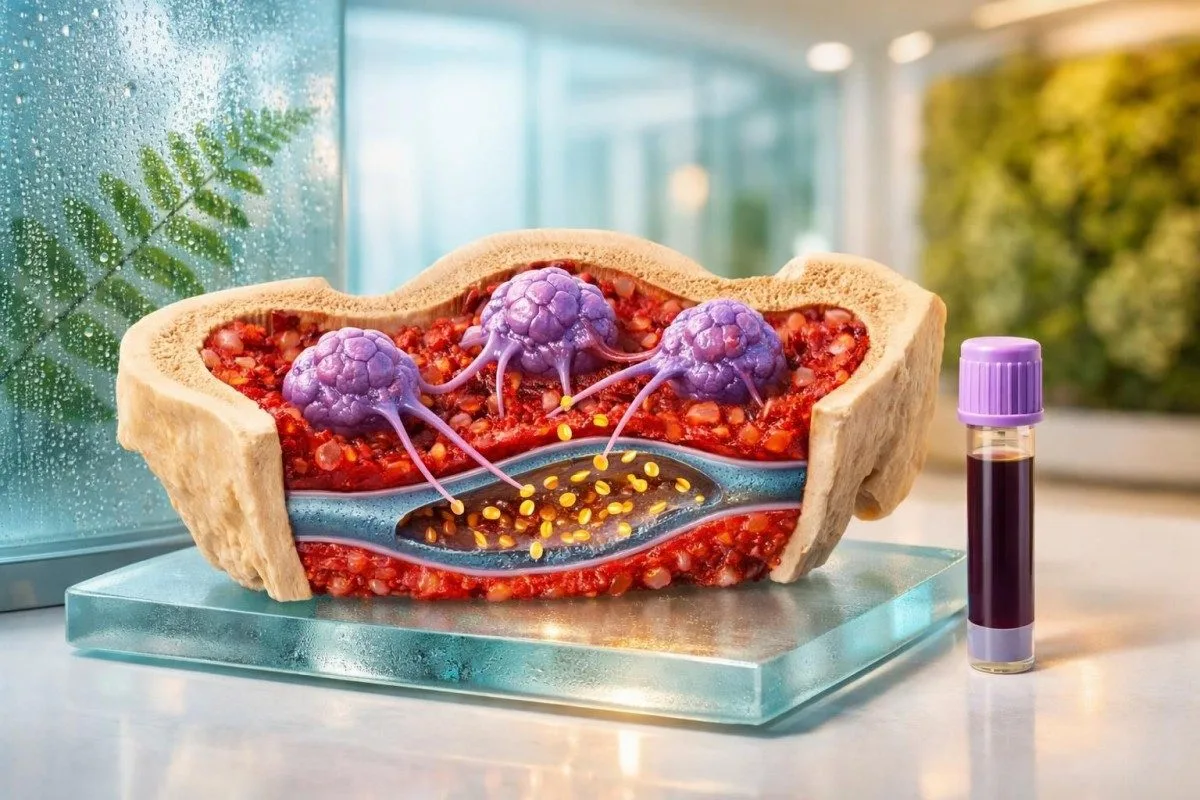
Most elevated platelet results are reactive, not dangerous. The real question is whether the number fits iron deficiency, inflammation, recovery from illness, or a bone marrow disorder.


- Threshold A platelet count above 450 ×10^9/L usually meets the definition of thrombocytosis in adults.
- Platelet normal range Most labs use 150-450 ×10^9/L, though some set the upper limit at 400 ×10^9/L.
- Repeat testing A one-off value of 460-520 ×10^9/L after infection or surgery often normalizes within 2-6 weeks.
- Iron deficiency clue Ferritin below 30 ng/mL or transferrin saturation below 20% can cause reactive thrombocytosis even before hemoglobin falls.
- Inflammation clue CRP above 10 mg/L or an elevated ESR makes a reactive cause more likely, especially with neutrophilia.
- Cancer signal In adults over 40 with unexplained platelets above 400 ×10^9/L, one UK study found 1-year cancer incidence of 11.6% in men and 6.2% in women.
- MPN clue Persistent platelets above 450 ×10^9/L with normal iron and inflammation studies may justify JAK2, CALR, and MPL testing.
- Urgent threshold Platelets above 1,000 ×10^9/L or new chest pain, breathlessness, neurologic symptoms, or unusual bleeding need prompt medical review.
What a high platelet count means on your CBC
High platelet count usually means a platelet count above 450 ×10^9/L or 450,000/µL. Most cases are reactive thrombocytosis from infection, inflammation, recent surgery, or iron deficiency—not cancer. We start to worry more when the count stays high on repeat tests, climbs above 600 to 800 ×10^9/L, or appears with low iron indices, weight loss, abnormal white cells, clotting symptoms, or an enlarged spleen. A value above 1,000 ×10^9/L needs prompt review because bleeding as well as clotting risk can rise. You can sense-check the pattern with Kantesti AI blood test analyzer. If you want the raw cutoffs first, our platelet normal range guide is useful.
The platelet normal range in most adult labs is 150-450 ×10^9/L, although some European labs cap the upper end at 400 ×10^9/L. That is why a result of 430 may be flagged in one lab and left alone in another. If your result sits in that gray zone, our piece on borderline blood test results can help you avoid over-reading one small jump.
A surprisingly common trap is spurious thrombocytosis. Red-cell fragments, severe microcytosis, cryoglobulins, or analyzer misclassification can falsely push the platelet count up, so an unexpected result should usually be repeated with a peripheral smear before anyone labels you with a marrow disorder.
When I review a panel as Thomas Klein, MD, I care far more about the company platelets keep. A platelet count of 510 with low MCV, high RDW, and ferritin depletion points one way; 510 with rising WBC, basophils, and splenomegaly points another. That pattern-based reasoning is what good hematology—and frankly good AI interpretation at Kantesti—does.
Why one number can mislead
A platelet count is not a diagnosis. In my experience, the same number means very different things depending on whether hemoglobin is falling, white cells are shifting, ferritin is low, or the patient just recovered from pneumonia.
Reactive thrombocytosis: the common causes doctors usually find first
Reactive thrombocytosis is the commonest reason for a high platelet count. Infection, surgery, tissue injury, bleeding recovery, smoking, and loss of splenic function can all drive platelets above 450 ×10^9/L, often transiently, and a high white blood cell pattern makes that explanation even more likely.
Platelets are acute-phase responders. Interleukin-6 pushes liver production of thrombopoietin, and counts often peak 7 to 14 days after pneumonia, abdominal surgery, or a major inflammatory flare. That timing matters; a value of 590 two weeks after an operation is common enough that I usually repeat it before escalating.
After splenectomy, the platelet count often rises into the 450-800 ×10^9/L range and may briefly go higher. The spleen normally stores roughly one-third of circulating platelets, so when that reservoir is gone the blood count can look dramatic without implying marrow cancer.
Schafer's classic NEJM review still matches what I see in practice: outside hematology clinics, secondary causes account for most adult thrombocytosis cases rather than essential thrombocythemia or leukemia (Schafer, 2004). A 31-year-old two weeks after appendectomy with platelets 612 is a very different patient from a 68-year-old with 612 on three separate CBCs.
The practical move is usually time, not panic. If there is a clear trigger and you feel well, repeating the CBC in 2 to 6 weeks is often more informative than rushing into advanced tests, though any clotting symptom or a lab calling the result critical deserves faster review. Our overview of critical blood test values explains that distinction.
Why iron deficiency can cause a high platelet count
Iron deficiency is one of the most overlooked causes of a high platelet count, and it can show up even when hemoglobin is still normal. If platelets are high and MCV is low or RDW is high, start by reviewing early iron loss with normal hemoglobin.
A ferritin below 30 ng/mL usually indicates depleted iron stores in adults without inflammation, and a transferrin saturation below 20% supports iron-restricted erythropoiesis. Camaschella's NEJM review remains the cleanest summary: iron deficiency can produce reactive thrombocytosis long before full anemia becomes obvious (Camaschella, 2015).
In real clinics, this is why a menstruating woman with platelets 498, hemoglobin 12.6 g/dL, MCV 78 fL, and ferritin 11 ng/mL does not make me think cancer first. I think blood loss until proven otherwise—heavy periods, frequent donation, endurance training with iron loss, or sometimes occult GI bleeding.
Severe iron deficiency can drive counts into the 700-900 ×10^9/L range, and I have seen values just over 1,000 settle once iron was replaced and the bleeding source fixed. Our guide to iron deficiency anemia labs helps with the early CBC clues. Our ferritin normal range explainer is useful when the iron panel seems contradictory.
Most adults prescribed oral iron receive about 40-65 mg elemental iron once daily or on alternate days, although the exact regimen varies. When treatment is working, the platelet count often drifts down within 2 to 6 weeks, which is sometimes faster than ferritin recovery.
When ferritin looks normal but iron is still low
Ferritin between 30 and 100 ng/mL does not rule out iron deficiency if CRP is elevated. In that situation, I lean more heavily on transferrin saturation, MCV, RDW, symptoms, and whether the platelet count falls after iron repletion.
Why hemoglobin can still be normal
Early iron loss can show up as high platelets, low-normal MCV, or wider RDW before hemoglobin drops below the reference range. That is why a normal hemoglobin does not close the case.
When inflammation is driving the platelet count higher
Inflammation-driven thrombocytosis is common, and the clue is usually the company the platelets keep: CRP, ESR, neutrophils, ferritin, and symptoms all move together. Start with our inflammation lab comparison if your high platelet count arrived with joint pain, bowel symptoms, infection, or an autoimmune flare.
A CRP above 10 mg/L or an ESR above the lab range makes a reactive cause more likely, though it does not tell you which one. The snag is that ferritin is also an acute-phase reactant, so a ferritin of 60 ng/mL can coexist with real iron deficiency when CRP is high. This is where our CRP guide helps. Our separate ESR guide explains why age and sex matter.
Rheumatoid arthritis, inflammatory bowel disease, chronic skin disease, vasculitis, and lingering infection can all raise the platelet count into the 450-650 ×10^9/L zone. If symptoms point autoimmune, our autoimmune panel overview helps patients understand what a clinician may add next.
I see this pattern a lot: platelets 560, CRP 32 mg/L, neutrophils mildly up, ferritin 150 ng/mL, and someone assumes hidden cancer. Most of the time the platelet count falls as the inflammatory driver settles, sometimes by 100 to 200 points over a month.
One sharp point: inflammation makes platelet numbers noisy, but trend beats snapshot. A stable downward slide from 620 to 480 alongside a CRP drop usually reassures me more than a single still-flagged value.
Does a high platelet count mean cancer?
A high platelet count does not usually mean cancer, but persistent unexplained thrombocytosis can be a cancer clue, especially in adults over 40. In a UK primary care cohort, platelet counts above 400 ×10^9/L were associated with a 1-year cancer incidence of 11.6% in men and 6.2% in women, and the risk rose when thrombocytosis persisted (Bailey et al., 2017). That is why I take an unexplained result seriously and also why I do not use it as a cancer diagnosis. See our review of cancer detection blood tests.
When a second elevated test was present, the same study reported cancer rates around 18.1% in men and 10.1% in women over age 40. Those are not small numbers, but they also mean most people with thrombocytosis did not have cancer.
The cancers most often linked to unexplained thrombocytosis are usually solid tumors such as lung, colorectal, upper GI, renal, or endometrial cancers—not just leukemia. If the CBC also shows blasts, marked anemia, or unusual white-cell shifts, then a hematologic cause moves higher on the list. Our leukemia CBC warning signs give patients a more realistic framework than internet panic does.
Here is what changes my level of concern: new iron deficiency without an explanation, unintentional weight loss, night sweats, persistent cough, altered bowel habits, early satiety, or platelets that keep climbing over 4 to 12 weeks. Platelets can be an early alarm bell, but they are a very nonspecific one.
The practical takeaway is boring but effective. Keep age-appropriate screening current, do not ignore symptoms you were already minimizing, and do not let a single platelet count send you straight to the worst-case scenario.
When a high platelet count may point to a bone marrow disorder
Persistent platelets above 450 ×10^9/L without a reactive cause can signal a bone marrow disorder, most often essential thrombocythemia (ET). This is the point where our hematology-reviewed workflows and Medical Advisory Board matter, because the next step is usually molecular testing rather than guesswork.
In ET, about 50-60% of patients carry JAK2 V617F, roughly 20-25% carry CALR, and about 3-5% carry MPL mutations. A normal iron panel and normal CRP do not diagnose ET, but they remove two of the commonest reactive explanations.
Symptoms can be subtle. I ask about headaches, shimmering vision, burning pain or redness in the hands or feet, prior miscarriage, mini-stroke symptoms, or unexplained clot history—even when the platelet count is only 520 or 580.
Counterintuitively, the very highest counts can bring bleeding as well as clotting risk because acquired von Willebrand syndrome becomes more likely once platelets climb above about 1,000 ×10^9/L. That is one reason I dislike people starting aspirin on their own after a lab alert.
The CBC can offer quiet clues before molecular tests return. A look at the CBC differential shows whether other cell lines are joining the story. Our MPV interpretation helps when platelet size is part of the puzzle.
As Thomas Klein, MD, I get more suspicious when the count rises steadily over months—say 470, 545, 622—than when it bounces around after illness. The shape of the curve tells me almost as much as the absolute number.
Why a bone marrow biopsy can still matter
A bone marrow biopsy is sometimes needed because prefibrotic myelofibrosis can masquerade as ET on blood counts alone. If the marrow architecture is different, the long-term clotting and fibrosis risk can be different too.
What makes ET more likely than reactive thrombocytosis
I become more concerned about ET when platelets stay high for more than 3 months, iron and inflammatory markers are unrevealing, the spleen is enlarged, or there is a personal history of clotting. Basophilia, elevated LDH, or a mutation result strengthen that suspicion.
What tests usually come next after a high platelets blood test
The usual next tests after a high platelets blood test are a repeat CBC, peripheral smear, ferritin, iron saturation, and CRP or ESR. If thrombocytosis stays above 450 ×10^9/L with no clear trigger, clinicians often add JAK2 testing and sometimes CALR/MPL later. Our 15,000+ biomarker guide shows how these tests fit together. Our blood test history tracker is useful because context over time matters more than a single flagged row.
If you were ill recently, repeat the CBC in about 2 to 6 weeks. If you feel well and there is no obvious trigger, I usually prefer a faster repeat—often 2 to 4 weeks—because persistent thrombocytosis is more informative than an isolated value.
Ask for the indices that help platelets make sense: hemoglobin, MCV, RDW, WBC differential, ferritin, transferrin saturation, CRP, and sometimes ESR. Trend tools such as our year-over-year lab comparison often reveal whether the count is drifting upward, plateauing, or already falling.
If iron deficiency appears, the next question is source, not just supplement choice. Heavy menstrual bleeding, GI blood loss, frequent donations, pregnancy, vegetarian or vegan intake, and malabsorption all behave differently, which is why I like patients to upload the full report using our PDF lab upload tool rather than type one number from memory.
When platelets remain above 450 for roughly 3 months, or jump above 600 with no reactive explanation, a clinician may add JAK2 V617F, then CALR/MPL if needed, and sometimes BCR-ABL1 when the white-cell pattern looks atypical. That sequence is not identical in every country, but the logic is similar.
High platelet count thresholds that change urgency
Urgency depends on both the platelet count and the symptoms. A stable result of 470 ×10^9/L after a chest infection is usually an outpatient problem; a count above 1,000 ×10^9/L, or any thrombocytosis with chest pain, breathlessness, neurologic symptoms, or unusual bleeding, needs prompt medical attention. It also helps to understand the opposite problem in our guide to low platelets and bleeding risk.
Clinicians disagree on the exact cliff, which is why I use broad buckets rather than pretending there is a magic number. 451-600 ×10^9/L is usually mild; 601-800 deserves a cleaner explanation; 801-1,000 makes me look harder for ET, severe iron deficiency, or major inflammation; and above 1,000 changes the bleeding conversation as well as the clotting one.
Call urgently for one-sided weakness, facial droop, sudden vision change, crushing chest pain, fainting, severe shortness of breath, or a painful swollen calf. Those symptoms matter more than the lab number, and if clot concern is high, tests such as D-dimer next steps are used selectively rather than as a blanket screen.
One nuance patients rarely hear: reactive thrombocytosis with a count of 700 can be less dangerous than ET with a count of 520 if the second person is older, JAK2-positive, and has already had a clot. Risk comes from the disease context, not just the height of the platelet column.
If your lab flags a mild rise and everything else looks stable, do not be fooled by the red highlight alone. Our article on why a normal range can mislead explains why borderline abnormalities need pattern recognition, not alarm.
Common mistakes after seeing a high platelet count
Do not blame dehydration, stress, or a bad night of sleep for repeated platelet counts above 450 ×10^9/L. Those factors can nudge several labs, but they are weak explanations for persistent thrombocytosis. I often send patients our piece on dehydration-related false highs because platelets behave differently from hemoglobin and albumin.
Dehydration can concentrate the blood modestly, yet it usually does not create a convincing isolated platelet rise on its own. A repeat count of 492, 505, and 511 over two months deserves a real work-up even if you were not perfectly hydrated for the first draw.
Heavy exercise is another half-truth. After an ultramarathon or a hard interval session, catecholamines and inflammation can shift the count transiently, but persistent thrombocytosis beyond a few days to a couple of weeks is harder to blame on training alone.
And please do not start aspirin because a forum told you to. If platelets are extremely high, especially near or above 1,000 ×10^9/L, aspirin can worsen bleeding when acquired von Willebrand factor problems are present.
What helps most is dull, organized follow-up: repeat the CBC, compare it with prior values, check iron and inflammation markers, and write down symptoms before the appointment. Boring medicine often wins.
A practical 2- to 8-week plan after a high platelet count
As of April 21, 2026, the safest next step after a high platelets blood test is to confirm the result and interpret the whole pattern, not chase one scary number. Save the CBC, repeat it at the right interval, and look at iron, inflammation, white cells, and symptoms together. If you want a fast second read, you can try our free blood test interpretation before your follow-up.
Kantesti AI reads platelet results alongside ferritin, transferrin saturation, CRP, ESR, hemoglobin, MCV, RDW, kidney markers, and prior trends in about 60 seconds. Across more than 2 million uploads reviewed on our platform, isolated platelet flags are far less helpful than patterns. We explain our quality controls and physician oversight in Medical Validation, which matters because thrombocytosis is a pattern problem, not a keyword problem.
Bring three things to your visit: the original report, any prior CBCs from the last 6 to 24 months, and a short list of triggers such as infection, surgery, menstrual loss, supplements, smoking changes, or new symptoms. Patients who do this usually get to a cleaner answer faster.
I, Thomas Klein, MD, helped build Kantesti because too many people arrive having been told either nothing matters or everything is cancer. Our team described on About Us is trying to fix that middle ground—clear interpretation, appropriate urgency, and a little less unnecessary panic.
Bottom line: most high platelet count results are reactive and fixable, but persistent or very high counts deserve respect. If your platelets stay above 450 ×10^9/L, or especially if they pass 600 without a clear reason, use Kantesti lab interpretation to organize the data and then review it with your clinician.
Frequently Asked Questions
What platelet count is considered high?
A high platelet count usually means more than 450 ×10^9/L, which is the same as 450,000/µL. Most laboratories place the platelet normal range at 150-450 ×10^9/L, although some use 400 as the upper limit. A single value of 460-500 after infection, surgery, or inflammation is often reactive. Persistent results above 450 on repeat testing matter more than one isolated flag.
What platelet count is dangerously high?
There is no single universally agreed danger line, but clinicians become more concerned when platelets are above 600-800 ×10^9/L and clearly more urgent when they exceed 1,000 ×10^9/L. The number alone is not the whole story, because symptoms and the cause matter even more. Chest pain, shortness of breath, one-sided weakness, sudden vision change, or unusual bleeding need urgent review regardless of the exact count. Extremely high platelets can sometimes increase bleeding risk as well as clotting risk because acquired von Willebrand syndrome can occur.
Can iron deficiency cause high platelets even if hemoglobin is normal?
Yes. Iron deficiency can raise platelets before anemia is obvious, so a person may have platelets above 450 ×10^9/L while hemoglobin remains within the lab range. Ferritin below 30 ng/mL and transferrin saturation below 20% make iron deficiency more likely, especially when MCV is low or RDW is high. In many patients, the platelet count starts to fall within 2-6 weeks once iron is replaced and the bleeding source is addressed.
Does a high platelet count mean cancer?
Usually no. Most high platelet counts are reactive and related to infection, inflammation, surgery, or iron deficiency rather than cancer. The reason doctors still pay attention is that persistent unexplained thrombocytosis can be a clue, particularly in adults over 40; one UK study found 1-year cancer incidence of 11.6% in men and 6.2% in women with platelets above 400 ×10^9/L. That means the count should be evaluated, but it should not be treated as a cancer diagnosis by itself.
How long does reactive thrombocytosis last?
Reactive thrombocytosis often settles over days to a few weeks, but the timeline depends on the trigger. After infection or surgery, I often repeat the CBC in 2-6 weeks because that is when transient elevations usually declare themselves as improving or persistent. After iron deficiency treatment, the platelet count may start falling within 2-6 weeks even though ferritin takes longer to recover. If platelets stay above 450 ×10^9/L for roughly 3 months without a clear cause, the workup usually needs to widen.
Should I take aspirin for a high platelet count on my own?
No, not without medical advice. Aspirin is sometimes used in confirmed essential thrombocythemia, but it is not a universal treatment for every high platelet count. If the count is very high, especially near or above 1,000 ×10^9/L, aspirin can actually worsen bleeding when acquired von Willebrand factor problems are present. The cause of the thrombocytosis has to be established before treatment makes sense.
What tests should I ask for after a high platelets blood test?
The usual first steps are a repeat CBC, a peripheral smear, ferritin, transferrin saturation or full iron studies, and CRP or ESR. Those tests help separate reactive thrombocytosis from iron deficiency, inflammation, and false laboratory elevations. If platelets remain above 450 ×10^9/L without a clear trigger, clinicians often move on to JAK2 testing and sometimes CALR or MPL depending on the pattern. The rest of the CBC matters too, especially hemoglobin, MCV, RDW, and the white-cell differential.
Get AI-Powered Blood Test Analysis Today
Join over 2 million users worldwide who trust Kantesti for instant, accurate lab test analysis. Upload your blood test results and receive comprehensive interpretation of 15,000+ biomarkers in seconds.
📚 Referenced Research Publications
Klein, T., Mitchell, S., & Weber, H. (2026). C3 C4 Complement Blood Test & ANA Titer Guide. Kantesti AI Medical Research.
Klein, T., Mitchell, S., & Weber, H. (2026). Nipah Virus Blood Test: Early Detection & Diagnosis Guide 2026. Kantesti AI Medical Research.
📖 External Medical References
Schafer AI. (2004). Thrombocytosis. New England Journal of Medicine.
⚕️ Medical Disclaimer
This article is for educational purposes only and does not constitute medical advice. Always consult a qualified healthcare provider for diagnosis and treatment decisions.
E-E-A-T Trust Signals
Experience
Physician-led clinical review of lab interpretation workflows.
Expertise
Laboratory medicine focus on how biomarkers behave in clinical context.
Authoritativeness
Written by Dr. Thomas Klein with review by Dr. Sarah Mitchell and Prof. Dr. Hans Weber.
Trustworthiness
Evidence-based interpretation with clear follow-up pathways to reduce alarm.